消费电子等

Search documents
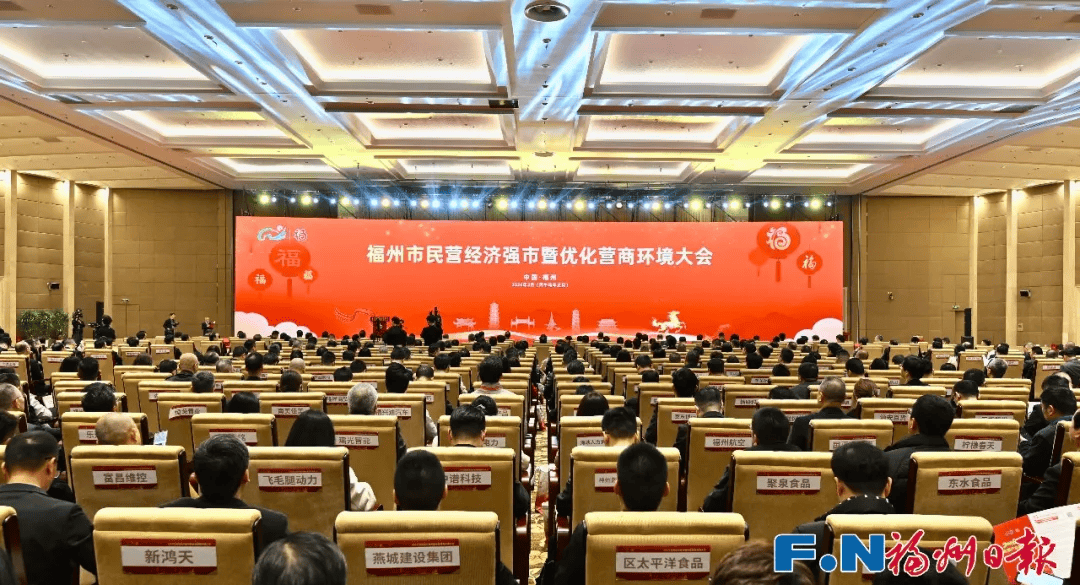
沃土深耕处 骏马踏春疾——从一场大会看福州民营经济的精气神
Sou Hu Cai Jing· 2026-02-25 09:31
Group 1 - The conference in Fuzhou emphasized the importance of the private economy, signaling strong support for private entrepreneurs and a commitment to optimizing the business environment [2][4] - Approximately 700 representatives from various sectors, including private enterprises, government, financial institutions, and academic organizations, attended the event to discuss high-quality development of the private economy [4] - The event showcased a collaborative spirit among local businesses, with leaders from different industries expressing gratitude for the consistent support from the local government [5][6] Group 2 - Fuyao Glass, a local enterprise, highlighted its growth from a small workshop to a multinational company with over 35% market share globally, attributing its success to the support from the local government [6][8] - The chairman of Fuyao Glass suggested that traditional manufacturing should embrace digital transformation and that a mechanism for regular engagement between private enterprises and government should be established to foster a conducive business environment [8] - The chairman of Chunlun Group reflected on the positive changes in the business environment, noting the government's commitment to high-quality development and service to the market [10][12] Group 3 - The conference also focused on emerging industries, with a particular emphasis on the low-altitude economy, which is seen as a strategic area for growth [15][17] - Fujian Lingxin Information Technology Co., a national high-tech enterprise, reported significant advancements in core technology and market positioning within the low-altitude economy, supported by favorable local policies [17] - A total investment exceeding 25.8 billion yuan was announced during the conference, covering key sectors such as new information technology, new energy vehicles, and cultural tourism [19] Group 4 - The event highlighted the return of entrepreneurs to Fuzhou, with local businesses expressing a desire to contribute to the region's development while maintaining their roots [21] - The chairman of Huayao Chuangke Technology Group shared plans to relocate the company's headquarters back to Fuzhou, emphasizing the importance of integrating business growth with local development [21] - The conference illustrated a broader vision for Fuzhou's economic landscape, focusing on inheritance, integrated development, and global outreach [24]

天风策略:科技主线的短期扰动与长期趋势
Xin Lang Cai Jing· 2026-02-24 23:52
Core Viewpoint - The technology sector has experienced a convergence of excess returns over the past month (January 15, 2026 - February 13, 2026), but not all sub-sectors are weakening uniformly. The excess drag is attributed to AI applications influenced by overseas SaaS, while optimistic earnings guidance from recent financial reports has stabilized SaaS stock prices, indicating that the phase of panic may be nearing its end [1][3][9]. Group 1: Market Performance and Trends - Since mid-January, the technology sector has shown relative convergence with the broader market, but not all sub-sectors are experiencing weakness. AI computing reached new highs in the last trading week before the holiday, while AI applications have shown deeper corrections and weaker recoveries, remaining over 5% below their mid-January peak [3][10]. - The software development sector in A-shares has retreated over 13% from its January 14 high, influenced by rapid declines in U.S. SaaS stocks on January 12 and January 25 due to the impact of ClaudeCowork and OpenClaw [3][10]. - The technology sector's ability to remain a key theme for the year will depend on industry trends and actual earnings performance, with a dual drive from technology and cyclical recovery expected to favor technology if earnings verification occurs [3][10]. Group 2: Sector Allocation and Configuration - The current allocation in the electronics industry exceeds 20%, with the overall TMT sector over-allocated by more than 17 percentage points. However, the current level of allocation does not directly impact future excess returns [4][11]. - The marginal changes in allocation are more closely linked to the current quarter's excess, with limited significance for the next quarter's guidance. The excess return convergence threshold for technology sub-sectors is at 2.5 or higher, with most sub-sectors below this level [4][11]. Group 3: Identifying Certainty in Technology - To identify certainty within the technology sector, two dimensions can be explored: forward-looking financial indicators and industry cycle trends. The "deferred revenue + contract liabilities" metric can provide insights into order conditions, highlighting sectors with accelerating improvements or sustained high growth over the past two quarters [5][12]. - Key sectors showing accelerated improvement include semiconductors, communication equipment, and digital chip design, while those with sustained high growth include consumer electronics and optical components. The DRAM and NAND Flash contract prices have been rising rapidly since Q4 2025, supported by long-term demand in AI servers and enterprise storage [5][12].

每日市场观察-20260116
Caida Securities· 2026-01-16 05:10
Market Overview - On January 15, the Shanghai Composite Index fell by 0.33%, while the Shenzhen Component rose by 0.41% and the ChiNext Index increased by 0.56%[2] - The total trading volume on January 15 was 2.94 trillion yuan, a decrease of approximately 1.05 trillion yuan from the previous trading day[1] Sector Performance - The sectors with the largest gains included electronics, chemicals, and non-ferrous metals, while military, media, computer, and pharmaceutical sectors experienced the largest declines[1] - Major capital inflows were observed in the semiconductor, communication equipment, and consumer electronics sectors, while IT services, securities, and aerospace equipment saw significant outflows[3] Regulatory Impact - The exchange raised the margin financing ratio on January 15, indicating regulatory intent to cool down the rapid market rise[1] - The market's reduced trading volume reflects a natural response to regulatory measures, with a pause in aggressive buying rather than panic selling[1] Economic Indicators - As of the end of December, the broad money supply (M2) was 340.29 trillion yuan, showing a year-on-year growth of 8.5%[4] - The total social financing increment for 2025 was reported at 35.6 trillion yuan, an increase of 3.34 trillion yuan compared to the previous year[5] Investment Trends - There has been a notable increase in the issuance of metal-themed funds, with 7 new funds reported in the past week and a net subscription of over 51 billion yuan for metal-themed ETFs over the past year[11] - The total trading volume of ETFs reached a record high of 7487.59 billion yuan on January 15, following a previous peak of 7155.35 billion yuan on January 14[12]
排名下降暴露日本经济深层弊病
Jing Ji Ri Bao· 2026-01-13 00:22
Group 1 - Japan's nominal GDP per capita for 2024 is projected to be approximately $33,800, ranking 24th among the 38 OECD member countries, a decline from 22nd place in 2023, marking a new record low [1] - The International Monetary Fund (IMF) forecasts that Japan's GDP per capita ranking will drop to 38th globally by 2025, reflecting persistent economic issues such as low economic dynamism, population decline, and yen depreciation [1][2] - Japan's average real GDP growth from 1990 to 2023 has been only 1.0%, indicating a shift from high-speed growth to low-speed growth since the early 1990s [2] Group 2 - Japan's total population, excluding foreigners, was reported at 119.61 million as of July 1, 2025, continuing a trend of population decline for 16 consecutive years [2] - The depreciation of the yen by 30% to 40% against the dollar from 2022 to 2024 has contributed to Japan being surpassed in GDP rankings by countries with more stable currencies [2] - Japan's traditional industries are struggling to adapt, while emerging sectors lack innovation, leading to stagnation in total factor productivity and a weakening of economic competitiveness [3] Group 3 - The aging population and declining birth rates are exacerbating demographic imbalances, increasing the dependency ratio and decreasing capital formation rates, which contribute to a downward spiral in economic growth [3] - The unconventional monetary policies implemented during Abe's administration have led to significant yen depreciation without revitalizing economic momentum, resulting in expanded fiscal deficits and a liquidity trap [3] - Recent comments from Japanese citizens suggest that the decline in GDP per capita is seen as a systemic issue rather than an individual failure, indicating broader dissatisfaction with national policies [3]
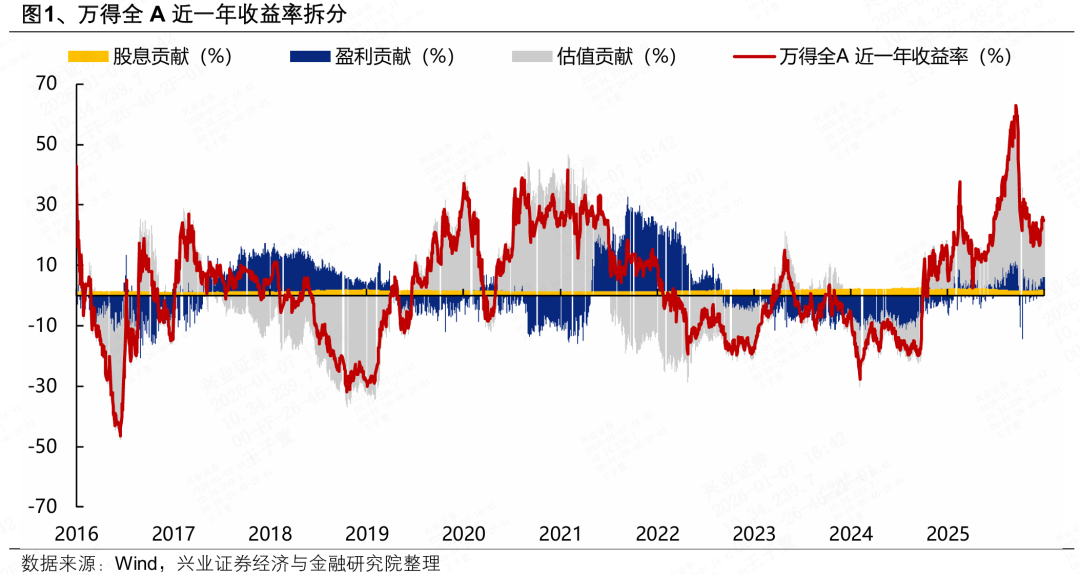
兴业证券:2025年各行业上涨由何贡献?
智通财经网· 2026-01-07 11:17
Group 1 - The core viewpoint of the report by Industrial Securities indicates that the overall A-share market is expected to rise by 27.65% in 2025, with profit contribution at 5.29%, valuation contribution at 20.44%, and dividend contribution at 1.91% [1][6][9] - In the primary industry analysis, profit is identified as the "watershed" determining the performance of various sectors in 2025, with leading sectors such as non-ferrous metals, AI hardware (communication, electronics), new energy, and machinery showing significant profit contributions [1][6][9] - Conversely, sectors like consumer goods, real estate, and dividends are expected to lag, primarily due to profit drag [1][6][9] Group 2 - In the secondary industry analysis, sectors with higher growth rates generally have positive profit contributions, while industries such as military (aerospace equipment, ground weapons, military electronics), steel raw materials, and decoration show negative profit contributions, mainly driven by valuation [9][12][14] - The report highlights that in the Hong Kong stock market, most leading sectors also exhibit positive profit contributions, particularly in non-ferrous metals, agriculture, pharmaceuticals, chemicals, and machinery, while lagging sectors like social services and construction are primarily affected by profit drag [12][14] - The secondary industries in the Hong Kong stock market show a similar trend, with leading sectors having positive profit contributions, while industries like motorcycles, traditional Chinese medicine, and glass fiber are negatively impacted by profit drag [14]

马斯克转发宇树机器人伴舞王力宏视频;内存涨价将致明年PC涨价15-20%;美法院将重审App Store垄断指控 | 极客早知道
Sou Hu Cai Jing· 2025-12-21 01:47
Group 1 - The Delaware Supreme Court ruled that Elon Musk's original $56 billion compensation plan must be reinstated, overturning a lower court's decision [1][2] - The compensation plan, approved by Tesla's board and shareholders in 2018, includes 12 performance goals that Musk can achieve to earn stock options [2] - The value of Musk's compensation plan has increased from $56 billion to approximately $140 billion, and if fully exercised, his stake in Tesla could rise to 18.1% [2] Group 2 - The U.S. Federal Trade Commission (FTC) has approved NVIDIA's $5 billion investment in Intel, aimed at collaboration in AI infrastructure and personal computing products [3] - Intel will customize x86 CPUs for NVIDIA's AI infrastructure, while NVIDIA will integrate its RTX GPU chips into Intel's x86 system-on-chip products [3] Group 3 - Sony has submitted a patent for AI real-time content review in games, allowing content to adapt for players of all ages without altering core game design [4] - The patent includes a second processor dedicated to content review, reducing the main processor's workload and enabling quick AI responses [4] Group 4 - The U.S. Ninth Circuit Court of Appeals will re-examine the 2011 antitrust lawsuit against Apple regarding the App Store, focusing on the validity of the collective lawsuit status [5] - The outcome of the collective lawsuit status is crucial, as maintaining it could lead to billions in damages for Apple, while individual lawsuits would result in minimal compensation [5] Group 5 - Merge Labs, a brain-machine interface company, is pursuing a different approach than Neuralink by using ultrasound technology to interpret brain signals [6][7] - This technology could potentially allow for "whole-brain access" and enhance personalized neurotherapy and augmentation [7] Group 6 - IDC predicts a 15%-20% increase in PC prices next year due to a memory supercycle, impacting consumers looking to purchase new computers [8][9] - The memory shortage coincides with a surge in demand for AI computers and a shift in consumer behavior following the end of support for Windows 10 [8] Group 7 - Google has launched FunctionGemma, a specialized model designed to bring advanced function calling capabilities to mobile devices without relying on cloud computing [10] - FunctionGemma is optimized for edge devices, allowing for efficient processing of user commands and structured function calls [10]



市场分析:金融消费行业领涨,A股小幅整理
Zhongyuan Securities· 2025-12-15 09:38
Market Overview - On December 15, the A-share market experienced a slight consolidation after reaching resistance, with the Shanghai Composite Index encountering resistance around 3896 points[2][3] - The Shanghai Composite Index closed at 3867.92 points, down 0.55%, while the Shenzhen Component Index fell 1.10% to 13112.09 points[7][8] - Total trading volume for both markets was 17,945 billion yuan, above the median of the past three years[3][14] Sector Performance - Strong performers included insurance, securities, food and beverage, and aerospace industries, while shipbuilding, energy metals, semiconductors, and consumer electronics lagged[3][7] - Over 50% of stocks in the two markets declined, with notable gains in insurance, commercial retail, and food and beverage sectors[7][9] Valuation Metrics - The average price-to-earnings (P/E) ratios for the Shanghai Composite and ChiNext indices were 15.97 times and 49.26 times, respectively, above the median levels of the past three years, indicating a suitable environment for medium to long-term investments[3][14] Economic Outlook - The central economic work conference set a tone of "more proactive" economic policies for the upcoming year, while the Federal Reserve's interest rate cuts have led to fluctuating expectations for future easing[3][14] - The domestic economy is in a state of moderate recovery, but the foundation still needs strengthening, supporting the current upward trend in A-shares[3][14] Investment Recommendations - Investors are advised to closely monitor macroeconomic data, changes in overseas liquidity, and policy directions[3][14] - Short-term investment opportunities are suggested in aerospace, food and beverage, insurance, and securities sectors[3][14]

A股午评:创业板指跌1.23%,超3800股下跌,海南本地股逆势上涨
Ge Long Hui· 2025-12-10 04:00
Core Viewpoint - The A-share market experienced a collective decline, with significant drops in major indices and over 3,800 stocks falling, while local stocks in Hainan showed resilience and increased in value due to the release of the "14th Five-Year Plan" [1] Group 1: Market Performance - The three major indices in the A-share market all fell, with the Shanghai Composite Index down 0.72% to 3,881.51 points, the Shenzhen Component Index down 0.56%, and the ChiNext Index down 1.23% [1] - The total market turnover was 1.15 trillion yuan, which is a decrease of 118.4 billion yuan compared to the previous day's trading volume [1] - The North Stock 50 index declined by 1.29% [1] Group 2: Sector Performance - Hainan local stocks rose across the board following the announcement of the "14th Five-Year Plan" [1] - The precious metals and retail sectors showed the largest gains, while sectors such as cultivated diamonds, components, photovoltaic equipment, and consumer electronics experienced declines [1]

“供需适配”将释放多少消费潜力
Sou Hu Cai Jing· 2025-12-02 00:48
Core Viewpoint - The article discusses China's new implementation plan aimed at enhancing the adaptability of supply and demand in consumer goods, focusing on collaborative efforts between supply and demand sides to stimulate consumption potential and drive economic growth [3][5]. Group 1: Implementation Plan Overview - On November 26, six government departments released a plan with 19 key tasks to enhance supply-demand adaptability, focusing on expanding new markets, exploring existing markets, segmenting markets, empowering scenarios, and optimizing the environment [3][5]. - The plan emphasizes a shift from a one-sided consumption stimulation model to a collaborative approach, addressing structural contradictions in consumption and promoting high-quality economic development [3][5]. Group 2: Market Insights and Data - As of now, China has a total of 230 million consumer goods varieties, with over 100 categories like home appliances and furniture leading global production [5]. - The plan aims to create three trillion-yuan-level consumption sectors and ten hundred-billion-yuan-level consumption hotspots by 2027, focusing on areas such as elderly products, smart connected vehicles, and consumer electronics [8][9]. Group 3: Consumer Trends and Needs - The plan highlights the need for supply to match diverse consumer demands, particularly for different age groups and lifestyles, indicating a shift from quantity expansion to structural optimization in the consumer market [11][12]. - The elderly population in China is projected to reach 310 million by the end of 2024, with the elderly goods market expected to grow from 2.6 trillion yuan in 2014 to 5.4 trillion yuan by 2024, reflecting a compound annual growth rate of 7.3% [12]. Group 4: Technological Integration - The plan emphasizes the integration of artificial intelligence (AI) in consumer goods, aiming to enhance precision in supply and demand matching through AI applications across the industry [14][17]. - AI is expected to transform traditional supply methods into personalized manufacturing, allowing for rapid and flexible production that meets evolving consumer preferences [14][16].

到2027年将形成3个万亿级消费领域——推动供给与消费良性互动、相互促进
Ren Min Ri Bao· 2025-11-29 02:52
Core Viewpoint - The implementation plan aims to enhance the adaptability of supply and demand in consumer goods, addressing structural mismatches and promoting high-quality consumption in China [1][2][4]. Group 1: Current State of Consumer Goods Supply - China's consumer goods supply has entered a new development stage characterized by high quality and reasonable pricing, meeting the basic needs of the population, although structural mismatches still exist in certain sectors [2][4]. - High-end brands in sectors such as jewelry, bags, and cosmetics are still relatively scarce, indicating a need for innovation and supply that aligns with the quality and personalization demands of consumers [2][4]. Group 2: Proposed Measures in the Implementation Plan - The plan outlines five key measures to address supply-demand mismatches, including expanding new technology applications, enhancing the supply of unique and new products, and accurately matching different demographic needs [3][4]. - Specific initiatives include promoting flexible production models, developing new product categories in health and green sectors, and creating new consumption scenarios and business models [3][4]. Group 3: Market Potential and Growth Areas - The plan anticipates the emergence of new consumption markets worth trillions of yuan, with goals to establish three trillion-level consumption fields and ten hundred-billion-level consumption hotspots by 2027 [5]. - Key areas identified for growth include elderly products, smart connected vehicles, and consumer electronics, with additional hotspots in children's products, smart wearables, cosmetics, fitness equipment, and more [5][6]. Group 4: Role of Technology and Innovation - The widespread application of artificial intelligence is transforming the consumer market, with a focus on integrating new technologies into the entire supply chain of consumer goods [7]. - The plan emphasizes the need for collaboration among various departments to ensure the effective implementation of policies that enhance the quality of supply and meet consumer demands [8][9]. Group 5: Economic Contribution and Future Goals - By 2030, the plan aims to establish a high-quality development pattern where supply and consumption interact positively, with a steady increase in consumption's contribution to economic growth [8]. - Recent data indicates that retail sales reached 36.6 trillion yuan in the first ten months of the year, reflecting a year-on-year growth of 4.4%, suggesting a stable development trend in consumer spending [8].