
铝冶炼

Search documents
中信期货:股期联动,铜价领涨基本金属
Zhong Xin Qi Huo· 2025-10-10 00:50
Group 1: Investment Rating of the Report - The report does not explicitly provide an overall industry investment rating. However, it offers mid - term outlooks for each metal variety, including "oscillating strongly", "oscillating", etc. [8][11] Group 2: Core Viewpoints of the Report - After the Fed restarts interest rate cuts, investors have a positive macro - outlook. There is a linkage between the stock and futures markets of non - ferrous metals, with copper leading the rise among base metals. In the short - to - medium term, supply disruptions and stock - futures linkage speculation lead to a pulse rise in some varieties, but there is a risk of price decline after a rapid increase. In the long term, potential domestic stimulus policies and supply disruptions in copper, aluminum, and tin will push up base metal prices [1]. - For different metal varieties, the supply - side contraction logic of copper continues to drive up prices; the fundamentals of alumina are weak with price pressure; aluminum prices are boosted by macro - sentiment; aluminum alloy prices are supported by cost; zinc prices rebound with non - ferrous metals despite inventory accumulation; lead prices also rebound with non - ferrous metals with a loosening supply - demand outlook; nickel prices fluctuate widely due to the repeated progress of RKAB quotas; stainless steel prices rise with the strengthening of nickel prices; tin prices oscillate at a high level due to continuous supply disruptions [2]. Group 3: Summary by Variety (According to the Catalog) Copper - **Viewpoint**: The supply - side contraction logic continues to ferment, and copper prices maintain a strong trend. The Grasberg mine in Indonesia has production disruptions, and there are also issues such as the US government shutdown, domestic production changes, and policy - induced production cuts in the recycled copper market. The supply is expected to decrease, while the demand has resilience, and copper prices are expected to oscillate strongly [8][10]. - **Information Analysis**: The production of the Grasberg mine in Indonesia is expected to be severely affected in 2026, with a 35% drop in annual output; the US government shutdown affects economic data release; in August, SMM China's electrolytic copper production decreased slightly month - on - month but increased year - on - year; the spot price of electrolytic copper had a certain premium; the copper inventory increased; the "770 - document" led to production cuts in the recycled copper market; the labor union of Los Pelambres copper mine rejected the contract, increasing the strike risk [8][9]. - **Main Logic**: Macroscopically, the US government shutdown affects data release. On the supply side, mine production disruptions, low processing fees, and policy - induced production cuts lead to a supply reduction expectation. On the demand side, the peak season is approaching, and downstream stocking demand may increase. If the inventory continues to decline, copper prices may remain strong [10]. Alumina - **Viewpoint**: The fundamentals are still weak, and the upward price movement is under pressure. It is expected to oscillate in the short term [11][13]. - **Information Analysis**: On October 9, the domestic and overseas spot prices of alumina changed, with a certain decline in domestic prices; the estimated supply in September exceeded demand by about 430,000 tons; the price of a tender by an electrolytic aluminum plant in Xinjiang decreased; the alumina warehouse receipts increased [11][12]. - **Main Logic**: The macro - sentiment in the non - ferrous sector amplifies price fluctuations. Fundamentally, although some smelters are close to the cost line, the operating capacity is still high, and the strong inventory accumulation trend continues. The price is under pressure, but the limited decline in ore prices in the fourth quarter restricts the downward space. Potential production cuts and Guinea - related disturbances may affect prices [12]. Aluminum - **Viewpoint**: Boosted by macro - sentiment, aluminum prices oscillate strongly. In the short term, they are expected to oscillate, and in the medium term, the price center may rise [13][14]. - **Information Analysis**: On October 9, the price of SMM AOO aluminum increased, and the inventory of aluminum ingots and aluminum rods increased; some aluminum production projects were completed or planned to be put into production [13]. - **Main Logic**: The short - term interest rate cut boosts macro - expectations. On the supply side, replacement capacities are being put into production, and the operating capacity is high. On the demand side, as the peak season approaches, the order outlook improves. The post - holiday demand and inventory trends need to be observed [14]. Aluminum Alloy - **Viewpoint**: Supported by cost, the price oscillates. In the short term, there are opportunities for cross - variety arbitrage, and in the medium term, it is expected to oscillate within a range [14][15]. - **Information Analysis**: On October 9, the price of ADC12 increased, and the price difference between ADC12 and AOO aluminum changed; the registered warehouse receipts increased; the EU may impose a 30% tax on scrap metal exports; the growth rate of the auto market in September slowed down [14][15]. - **Main Logic**: On the cost side, the supply of scrap aluminum is tight, and the cost reduction space is limited. On the supply side, the operating rate is increasing, and the implementation of policies needs to be observed. On the demand side, there is a marginal improvement, but the peak - season effect needs to be verified. The inventory is accumulating, and the price is expected to oscillate within a range [15]. Zinc - **Viewpoint**: Zinc prices rebound with non - ferrous metals despite inventory accumulation. In the short term, they may oscillate at a high level, and in the long term, there is a downward risk [16][17]. - **Information Analysis**: The spot price of zinc has a certain discount; the inventory of zinc ingots increased; a mine in Australia had a seismic event, delaying high - grade zinc ore mining [16]. - **Main Logic**: The non - ferrous sector rebounds with the rise of copper prices. The macro - environment is slightly negative. The short - term zinc ore supply is loose, and smelters have strong production willingness. The demand is in the off - peak to peak transition period, and the overall demand outlook is average. The fundamentals are in surplus, but the Fed's interest rate cut expectation and the "soft squeeze" of LME zinc support short - term prices [17]. Lead - **Viewpoint**: The supply - demand loosening expectation remains unchanged, and lead prices rebound with non - ferrous metals, showing an oscillating trend [17][20]. - **Information Analysis**: The price of waste electric vehicle batteries and the price difference between primary and recycled lead remained stable; the price of lead ingots was stable, and the spot premium decreased; the social inventory of lead ingots decreased, and the warehouse receipts increased; lead smelters had production cuts in September, and downstream enterprises stocked up before the holiday [17][19]. - **Main Logic**: On the spot side, the premium and price difference are stable; on the supply side, the profit of recycled lead smelters improves, and the production increases; on the demand side, the operating rate of lead - acid battery factories is high. After the battery factory's stocking is completed, the demand may decline, and the supply may loosen [19][20]. Nickel - **Viewpoint**: Due to the repeated progress of RKAB quotas, nickel prices fluctuate widely. In the short term, they oscillate widely, and in the long term, it is advisable to wait and see [20][24]. - **Information Analysis**: The LME nickel inventory increased, and the domestic inventory was partially exported; Antam and CATL signed cooperation agreements; the application process of the 2026 RKAB quota was delayed; a nickel - iron plant in Brazil increased its production capacity [20][22]. - **Main Logic**: Market sentiment dominates the market, and the industrial fundamentals are slightly weak. The mine end is relatively stable, but the intermediate product output recovers, and the nickel salt price weakens slightly. The inventory accumulates, and the price pressure is significant. Short - term trading is recommended [22]. Stainless Steel - **Viewpoint**: Stainless steel prices rise with the strengthening of nickel prices and are expected to oscillate within a range in the short term [25]. - **Information Analysis**: The futures warehouse receipts of stainless steel decreased; the spot price had a certain premium; the stainless steel production in September increased [25]. - **Main Logic**: The prices of nickel - iron and chrome - iron are stable. The production increase in September is driven by price and season. The supply - demand imbalance has been alleviated, and the future price trend depends on inventory and cost changes [25]. Tin - **Viewpoint**: Due to continuous supply disruptions, tin prices oscillate at a high level. The supply - side tightness provides strong support for prices, and they are expected to oscillate [26]. - **Information Analysis**: The inventory and trading volume of tin changed; the spot price increased; Indonesia took measures to regulate the tin market, affecting supply [26]. - **Main Logic**: During the National Day, there were continuous supply disruptions in the tin market, including Indonesia's crackdown on illegal mines and quota system adjustments. The supply in key areas such as the Wa State and Indonesia is restricted, and the supply - side tightness supports prices [26].
碳市场是优化资源配置的重要抓手
Zhong Guo Jing Ji Wang· 2025-10-07 01:15
Core Viewpoint - The issuance of the "Opinions on Promoting Green and Low-Carbon Transition and Strengthening National Carbon Market Construction" marks a significant step towards the comprehensive deepening and acceleration of the national carbon market, providing direction for institutional innovation and operational optimization, which is crucial for achieving carbon neutrality goals and enhancing China's carbon governance system [1] Group 1: Carbon Market Structure - The national carbon market consists of a mandatory carbon trading market and a voluntary emission reduction market, which are interconnected through quota clearing and offset mechanisms, each focusing on different aspects while complementing each other [2] - The carbon pricing mechanism is central to the carbon trading market policy, with quota allocation being a key factor influencing carbon pricing [2] Group 2: Quota Allocation and Management - Current quota allocation primarily uses a free distribution method based on carbon emission intensity and actual production volume, avoiding negative impacts on economic growth [2] - As more emission entities are included in the carbon market, the focus will gradually shift from controlling carbon intensity to controlling total carbon emissions, transitioning from free allocation to a mixed approach of "free + paid" allocation [2] Group 3: Monitoring and Verification - A robust monitoring, reporting, and verification (MRV) system is essential for accurately determining historical carbon emissions and their intensity, which supports the effective functioning of the carbon market [3] - Enhancing data quality through comprehensive regulation and automated monitoring is crucial for achieving national emission reduction targets [3] Group 4: Low-Carbon Transition Strategies - Companies can achieve green and low-carbon transformation through energy-saving renovations and clean energy alternatives, fostering a virtuous cycle of emission reduction, revenue generation, and reinvestment in research and development [4] - The development of low-carbon industry clusters, such as clean energy and carbon consulting, can drive industrial structure upgrades and promote economic transition towards a green high-end model [4]
以主要排放企业为重点 钢铁水泥铝冶炼行业配额方案将出炉
Di Yi Cai Jing· 2025-10-06 02:35
Core Viewpoint - The Ministry of Ecology and Environment is developing a quota allocation plan for the national carbon emissions trading market for the steel, cement, and aluminum smelting industries for the years 2024 and 2025, considering various factors such as economic development and historical emissions [1][2] Group 1: Quota Allocation Plan - The quota allocation plan is currently in the consultation phase, with input being sought from relevant parties [1] - The plan aims to align with national greenhouse gas emission control targets and will consider factors like industry development stages and market needs [2] - The allocation will be based on a gradual approach, focusing on major emitting enterprises and processes, with free allocation of quotas for 2024 and 2025 based on carbon emissions per unit output [2][5] Group 2: Industry Emissions and Market Dynamics - The steel industry accounts for 15% of the national carbon emissions, making it the highest-emitting sector in manufacturing [4] - The plan encourages a competitive market environment, rewarding companies with lower carbon emissions and promoting the adoption of green technologies [4] - The allocation method will differ by industry: steel will be based on enterprises, cement on clinker production lines, and aluminum on electrolysis processes, covering direct emissions only [5] Group 3: Market Performance and Statistics - As of September 2025, China's carbon emissions trading market has become the largest globally, covering over 60% of national emissions, with a cumulative trading volume of 714 million tons and a total transaction value of 48.961 billion yuan [6]

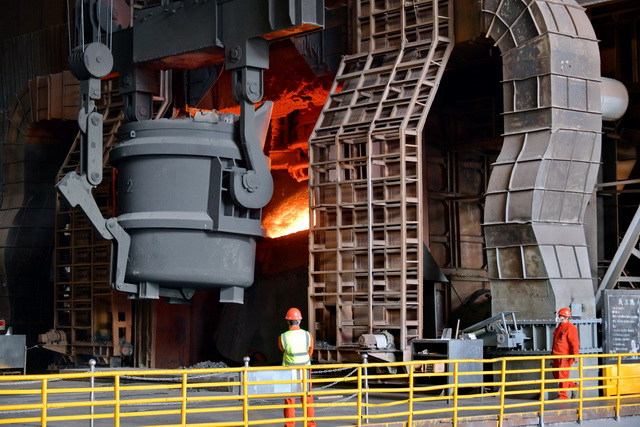
以主要排放企业为重点,钢铁水泥铝冶炼行业配额方案将出炉
Di Yi Cai Jing· 2025-10-06 02:27
Core Viewpoint - The allocation of carbon emission quotas for the steel, cement, and aluminum smelting industries in the national carbon trading market for 2024 and 2025 is being developed, linking the quota amount to actual production levels in 2025 [1][5] Group 1: Quota Allocation Plan - The "Quota Plan" considers factors such as national greenhouse gas emission control targets, economic and social development, industry development stages, historical emission data, market regulation needs, technological innovation, and carbon emission data management to scientifically formulate the total quota and distribution plan [2] - The quota distribution will be implemented gradually, focusing on major emitting enterprises and processes, with free allocation based on carbon emissions per unit of output for 2024 and 2025 [2][5] Group 2: Industry Emission Characteristics - The steel industry accounts for 15% of the national total carbon emissions, making it the highest-emitting sector in manufacturing [4] - The allocation of quotas will be based on specific industry characteristics: steel based on enterprises, cement based on clinker production lines, and aluminum smelting based on aluminum electrolysis processes [5] Group 3: Market Environment and Management - The plan aims to create a fair, competitive, and open market environment, encouraging companies to improve carbon emission management and adopt green low-carbon technologies [4] - The carbon market has been established as the largest globally, covering over 60% of national carbon emissions, with a cumulative transaction volume of 714 million tons and a transaction value of 48.961 billion yuan as of September 2025 [6]
生态环境部公开征求《2024、2025年度全国碳排放权交易市场钢铁、水泥、铝冶炼行业配额总量和分配方案》意见
智通财经网· 2025-09-30 12:01
Core Viewpoint - The Ministry of Ecology and Environment has included the steel, cement, and aluminum smelting industries in the national carbon emissions trading market management, aiming to enhance carbon reduction efforts and achieve carbon peak and carbon neutrality goals [1][3]. Group 1: Overall Requirements - The allocation plan for carbon emission quotas is based on national greenhouse gas emission control targets and considers various factors such as economic development, industry development stages, historical emissions, and technological innovation [3][4]. - The quota distribution will be conducted gradually, focusing on major emitting enterprises and processes, with free allocation based on carbon emissions per unit of output for the years 2024 and 2025 [3][4]. Group 2: Quota Distribution Scope - The plan applies to key emission units in the steel, cement, and aluminum smelting industries for the years 2024 and 2025, excluding newly established units and those that have ceased operations before quota determination [5]. - The greenhouse gases covered include CO2 for steel and cement, and CO2, CF4, and C2F6 for aluminum smelting, with specific calculations for global warming potential [5]. Group 3: Quota Calculation Method - For 2024, the quotas for key emission units will equal their verified actual carbon emissions, while specific conditions apply for the cement industry in 2025 [6][7]. - The calculation method for quotas involves determining the carbon emissions of steel enterprises, cement production lines, and aluminum electrolysis processes, with a focus on balancing industry profits and losses [8][9]. Group 4: Quota Issuance - The pre-allocation of quotas for 2025 will be based on 70% of the verified emissions from the previous year, with specific procedures for reporting and issuing quotas to key emission units [22][23]. - The quota issuance will be managed by provincial ecological environment authorities, with adjustments made based on compliance and verification results [25][26]. Group 5: Quota Compliance - Key emission units must clear their quotas by December 31 each year based on their verified emissions, with provisions for using certified voluntary emission reductions (CCER) to offset their obligations [27][28]. - The compliance process includes support for units facing difficulties in purchasing quotas, ensuring they can meet their obligations [28].
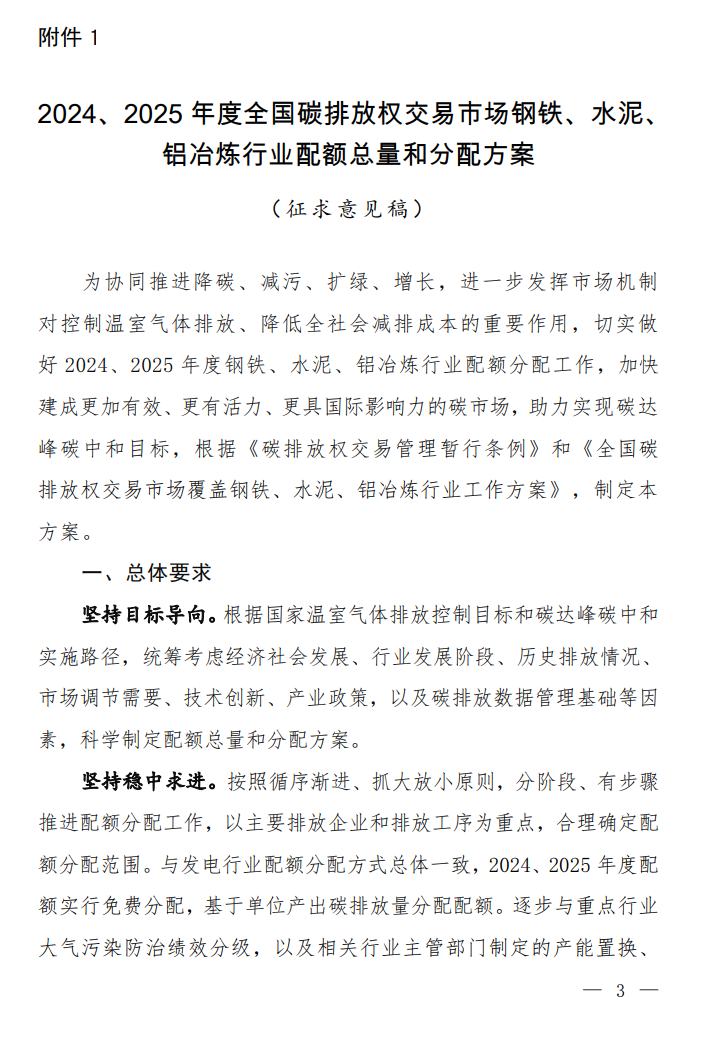
《2024、2025年度全国碳排放权交易市场钢铁、水泥、铝冶炼行业配额总量和分配方案(征求意见稿)》公开征求意见
Zheng Quan Shi Bao Wang· 2025-09-30 11:45
Core Viewpoint - The steel, cement, and aluminum smelting industries have been included in the national carbon emissions trading market management, with a focus on quota allocation for 2024 and 2025 [1] Group 1: Industry Inclusion and Regulation - The inclusion of steel, cement, and aluminum smelting industries in the carbon emissions trading market has been approved by the State Council [1] - The Ministry of Ecology and Environment has prepared a draft for public consultation regarding the total quota and allocation plan for these industries for the years 2024 and 2025 [1] Group 2: Quota Allocation Strategy - The quota allocation will follow a gradual approach, focusing on major emitting enterprises and processes [1] - Quotas for 2024 and 2025 will be allocated for free, based on carbon emissions per unit of output, similar to the method used in the power generation sector [1] Group 3: Market Environment and Policy Direction - The policy aims to create a fair, competitive, and open market environment, emphasizing the importance of market mechanisms in resource allocation [1] - The guiding principle is to "incentivize the advanced and spur the laggards," where lower carbon emissions per unit output will result in higher quota surplus rates [1] - The initiative encourages enterprises to enhance carbon emissions management and adopt green low-carbon technologies, including energy efficiency improvements and alternative raw materials [1]
推动我国碳市场发挥更积极作用(美丽中国)
Ren Min Ri Bao· 2025-09-28 21:56
Core Viewpoint - China has established the world's largest carbon emissions trading market, which is now operating steadily, covering over 60% of the country's carbon emissions, and is entering a new phase of development [1][2]. Market Development - The national carbon emissions trading market has seen steady progress since its pilot phase began in 2011, with the official launch occurring in 2017, following a phased approach [1][3]. - The cumulative trading volume of the national carbon market reached nearly 700 million tons by the end of August [1]. Policy Framework - The issuance of the "Opinions" document aims to enhance the effectiveness, vitality, and international influence of the national carbon market, while also coordinating with local pilot markets [2][3]. - Key tasks include aligning the national carbon market with the national carbon emission control measures, introducing paid allocation of quotas, and strengthening management of registration and trading institutions [2]. Market Structure - The national carbon market consists of a mandatory carbon market and a voluntary carbon market, which operate independently but complement each other [3][5]. - The mandatory market is expected to control over 70% of national carbon emissions, while the voluntary market can help reduce emissions not covered by the mandatory market [3]. Impact on Enterprises - The carbon market creates a consensus among enterprises that "carbon emissions have costs, and carbon reduction has benefits," allowing companies to manage their emissions more effectively [5][6]. - Companies can purchase carbon allowances at lower prices than their own reduction costs, minimizing operational impacts while incentivizing additional reductions when it is economically beneficial [5]. Regulatory Framework - A multi-level and relatively complete regulatory system for the carbon market has begun to take shape, with over 30 regulations and technical standards established [6][7]. - The upcoming "Interim Regulations on Carbon Emission Trading" will clarify responsibilities for companies regarding carbon emissions reporting and compliance [6]. Quota Management - The "Opinions" propose a gradual shift from intensity control to total volume control, prioritizing industries with stable carbon emissions for quota management by 2027 [7]. - Setting total quotas requires careful consideration of national carbon reduction goals and future economic trends [7]. Emission Accounting - Improving the carbon emission accounting system involves ensuring data quality from key emitters and third-party verification agencies, optimizing accounting methods, and enhancing measurement techniques [7][8]. Pricing Mechanism - Factors influencing carbon pricing include national carbon reduction targets and the development of low-carbon technologies [8]. - The pricing mechanism should reflect market dynamics while ensuring effective government regulation through quota allocation and market rules [8].
需求表现不及预期 氧化铝期价或将维持低位震荡
Jin Tou Wang· 2025-09-26 06:12
Core Viewpoints - Aluminum oxide futures are experiencing downward pressure due to high operational capacity and accumulating inventories, leading to a supply surplus [1][2] - The market is expected to maintain low-level fluctuations influenced by weak demand and high supply [1][2] - Short-term strategies suggest a wait-and-see approach, monitoring macroeconomic sentiments and supply-side policies [2] Group 1: Market Conditions - The operational capacity for aluminum oxide is at a historical high, nearing 98 million tons per year, contributing to a clear supply surplus [1] - Social and factory inventories are continuously accumulating, indicating a persistent oversupply situation [1] - Downstream electrolytic aluminum plants are maintaining high operating rates due to strong profits, but overall demand is underperforming expectations [1] Group 2: Price Outlook - The price of aluminum oxide is currently reported at 2922.0 yuan, with a slight decline of 0.17% [1] - Future price movements may be constrained by cost support, limiting the extent of potential declines [1] - The market is likely to remain under pressure from inventory accumulation, supply expansion, and weak demand, with potential price stabilization if production cuts are triggered by cost line breaches [1][2] Group 3: Strategic Recommendations - Companies are advised to adopt a cautious stance in the short term, awaiting further developments in macroeconomic conditions and supply-side policies [2] - The reference operational range for the main contract AO2601 is suggested to be between 2800-3100 yuan per ton [2] - Continuous monitoring of geopolitical events, particularly in Guinea, and U.S. Federal Reserve monetary policy is recommended as they may impact market dynamics [2]
中国提出全经济减排目标
21世纪经济报道· 2025-09-26 04:42
Core Points - China announced a new round of Nationally Determined Contributions (NDC) at the UN Climate Change Summit, aiming for a 7%-10% reduction in greenhouse gas emissions by 2035, with non-fossil energy consumption exceeding 30% of total energy consumption [1][3] - The national carbon market has been operational for over four years, covering more than 2,200 key emission units in the power sector, making it the largest carbon market globally [3][4] - The carbon market's trading volume reached nearly 700 million tons with a transaction value of approximately 48 billion RMB by the end of August 2024, marking a record high since its inception [4][6] Carbon Market Development - The carbon market has seen significant growth, with a 44% increase in daily average transaction volume in 2024 compared to the previous compliance cycle, and a total transaction value of 18 billion RMB [6][4] - The market aims to expand its coverage to include major industrial sectors by 2027, with a focus on implementing total quota control for stable emission sectors [6][7] - New industries, including steel, cement, and aluminum smelting, will be included in the carbon market by 2025, increasing the controlled greenhouse gas emissions by approximately 3 billion tons [10][9] Future Expectations - The Chinese government plans to enhance the carbon market's mechanisms and expand its coverage to additional sectors such as aviation, petrochemicals, and paper manufacturing [9][10] - There is an emphasis on international cooperation and the establishment of cross-border carbon trading systems, with expectations for the upcoming COP30 to facilitate global climate governance [13][15] - The carbon market is seen as a critical tool for achieving carbon neutrality and is expected to play a significant role in the global carbon pricing landscape [6][14]

文字早评2025-09-26:宏观金融类-20250926
Wu Kuang Qi Huo· 2025-09-26 01:25
Report Industry Investment Rating No relevant information provided. Core Viewpoints of the Report - For the stock index, after a continuous rise, high - risk sectors like AI are showing divergence. The market risk preference has decreased, and the short - term index faces uncertainty. However, in the long - term, the policy supports the capital market, and the main idea is to go long on dips [4]. - Regarding national debt, in August, economic data continued to slow down. The "anti - involution" policy led to a price increase, but the export may face pressure. The central bank maintains a loose attitude towards funds. Interest rates are expected to decline, and the bond market may oscillate and recover in the short - term [7]. - For precious metals, after the Fed's interest - rate cut in September, key figures' monetary policy statements are dovish. It is recommended to go long on dips [10]. - In the non - ferrous metals sector, although the Fed's statements are less dovish than expected, if the interest - rate cut progresses, market sentiment may not be significantly suppressed. Each metal has its own supply - demand situation, and short - term price trends vary [13][15][17]. - In the black building materials sector, steel prices may fall if demand fails to recover. Iron ore prices will oscillate. Glass may be bullish in the short - term, while soda ash will continue to oscillate. The black sector may face a short - term correction but may have long - term multi - allocation value [33][36][38][39][44]. - In the energy and chemical sector, rubber is recommended to be observed after the holiday. Crude oil is recommended for multi - allocation. Methanol and urea can be considered for long positions on dips. Other chemical products have different supply - demand and price trends [55][57][59][60]. - For agricultural products, the short - term trends of different products such as pigs, eggs, and grains vary, and corresponding trading strategies are provided according to their supply - demand situations [80][82][84]. Summary by Directory Stock Index - **Market Information**: The state is studying measures to standardize copper smelting capacity construction. The total scale of public funds has exceeded 36 trillion yuan. The China Foreign Exchange Trade System has optimized the "Swap Connect" mechanism. Shangwei New Materials will be suspended for verification [2]. - **Basis Ratio**: The basis ratios of IF, IC, IM, and IH for different periods are provided [3]. - **Strategy**: After a continuous rise, high - risk sectors are showing divergence. The short - term index faces uncertainty, but the long - term is bullish on dips [4]. National Debt - **Market Information**: On Thursday, the main contracts of TL, T, TF, and TS had different price changes. The central bank's deputy governor proposed measures to expand the application scenarios of the Hong Kong RMB bond market [5]. - **Liquidity**: The central bank conducted 4835 billion yuan of 7 - day reverse repurchase operations on Thursday, with a net withdrawal of 35 billion yuan [6]. - **Strategy**: Economic data in August was weak. The "anti - involution" policy affected exports. The central bank maintains a loose attitude towards funds. Interest rates are expected to decline, and the bond market may oscillate and recover in the short - term [7]. Precious Metals - **Market Information**: Domestic and foreign gold and silver prices rose. US economic data exceeded expectations, and the market's recession expectation eased. Fed Chairman Powell's statement implied possible policy adjustments [8][9]. - **Strategy**: After the Fed's interest - rate cut in September, key figures' statements are dovish. It is recommended to go long on dips [10]. Non - Ferrous Metals Copper - **Market Information**: Due to strong US employment and durable goods data, the US dollar index rebounded, and copper prices fell back. LME and domestic copper inventories changed, and the import loss of domestic copper spot increased [12]. - **Strategy**: The Fed's hawkish statement may put short - term pressure on sentiment, but if the interest - rate cut progresses, copper prices are expected to be strong in the short - term [13]. Aluminum - **Market Information**: Domestic social inventories decreased, and aluminum prices stabilized and rebounded. LME aluminum inventories decreased, and the basis changed [14]. - **Strategy**: Although the Fed's statement is less dovish than expected, aluminum prices have strong support below as the holiday approaches [15]. Zinc - **Market Information**: The Shanghai zinc index rose. Domestic and foreign zinc inventories decreased, and the Shanghai - London ratio weakened [16][17]. - **Strategy**: The surplus of zinc ore has eased. After the Fed's interest - rate cut, the sentiment of the non - ferrous metals sector cooled. It is expected that Shanghai zinc will be weak in the short - term [17]. Lead - **Market Information**: The Shanghai lead index rose. Domestic and foreign lead inventories decreased, and the basis changed [18]. - **Strategy**: The shortage of raw materials suppresses the start - up of primary smelting, while the start - up of secondary smelting recovers. Downstream demand increases, and it is expected that Shanghai lead will be strong in the short - term [19]. Nickel - **Market Information**: Nickel prices oscillated. The cost of nickel ore and nickel iron was stable, and the price of MHP increased slightly [20]. - **Strategy**: Although refined nickel inventory pressure drags down nickel prices, in the long - term, there are positive factors. It is recommended to go long on dips [20]. Tin - **Market Information**: The Shanghai tin main contract rose. Domestic and foreign inventories changed. The supply of tin concentrate was tight, and demand was in the peak season [21]. - **Strategy**: The short - term supply - demand of tin is in a tight balance. It is recommended to observe, and the price will continue to oscillate [22]. Carbonate Lithium - **Market Information**: The spot index of carbonate lithium rose, and the futures price also increased [23]. - **Strategy**: The fundamentals of carbonate lithium remain the same. The spot is tight in the peak season, but the supply increase expectation suppresses the upside. It is expected to oscillate and adjust [23]. Alumina - **Market Information**: The alumina index rose. Due to a strike in Guinea, the supply risk of ore increased, and the import window opened [24]. - **Strategy**: Overseas ore disturbances may have a limited short - term impact. The over - capacity pattern in the smelting end is difficult to change. It is recommended to observe [26]. Stainless Steel - **Market Information**: The stainless - steel main contract rose. Spot prices were stable, and inventory decreased [27]. - **Strategy**: Domestic steel mills have a strong willingness to support prices, but consumption has not improved significantly. It is expected to oscillate in the short - term [28]. Cast Aluminum Alloy - **Market Information**: The AD2511 contract rose. The downstream is in the process of transitioning from the off - season to the peak season, and inventory changes [29]. - **Strategy**: The peak - season characteristics are not obvious, and there is delivery pressure. The price is supported by the cost of scrap aluminum [30]. Black Building Materials Steel - **Market Information**: The prices of rebar and hot - rolled coil rose slightly. The registered warehouse receipts and positions of the main contracts changed [32]. - **Strategy**: The commodity market was positive, but the demand for steel was weak. If demand fails to recover, steel prices may fall [33]. Iron Ore - **Market Information**: The main contract of iron ore rose. The spot price and basis changed [34]. - **Strategy**: Overseas iron - ore shipments decreased, and demand increased. Port and steel - mill inventories changed. Iron - ore prices will oscillate [35][36]. Glass and Soda Ash - **Glass Market Information**: The glass main contract rose. Spot prices increased, and inventory decreased [37]. - **Glass Strategy**: Six departments banned new flat - glass production capacity, and prices rose in the short - term. However, demand is weak. It is recommended to be bullish in the short - term [38]. - **Soda Ash Market Information**: The soda - ash main contract rose. Spot prices increased, and inventory decreased [39]. - **Soda Ash Strategy**: The domestic soda - ash market is stable, with limited price fluctuations. It is expected to continue to oscillate in the short - term [39]. Manganese Silicon and Ferrosilicon - **Market Information**: The prices of manganese silicon and ferrosilicon rose. The market was affected by policies [40][41][42]. - **Strategy**: The Fed's interest - rate cut and "anti - involution" sentiment affect the black sector. Although there is a short - term correction risk, there may be long - term multi - allocation value [43][44]. Industrial Silicon and Polysilicon - **Industrial Silicon Market Information**: The price of industrial silicon rose. The spot price and basis changed [45]. - **Industrial Silicon Strategy**: The supply - demand of industrial silicon has not changed significantly. The price is expected to oscillate, and attention should be paid to supply - demand and policy changes [46][47]. - **Polysilicon Market Information**: The price of polysilicon was stable. The spot price and basis changed [48]. - **Polysilicon Strategy**: The polysilicon price is affected by policies and fundamentals. It is expected to oscillate, and there is a risk of decline if expectations are not met [49]. Energy and Chemical Rubber - **Market Information**: Rubber prices were weak. There were factors such as expected state reserves release, changes in the position structure, and weather impacts [51]. - **Strategy**: In the medium - term, it is a long - term idea. In the short - term, it is recommended to observe and look for opportunities after the holiday [55]. Crude Oil - **Market Information**: The prices of INE crude oil and related refined products rose. US inventory data changed [56]. - **Strategy**: It is recommended for multi - allocation, as the current price is supported by fundamentals, and there is upside potential if geopolitical premiums return [57]. Methanol - **Market Information**: The price of methanol changed. The basis and spread changed [58][59]. - **Strategy**: The supply is expected to increase, and the demand has improved. The inventory has decreased. It is recommended to go long on dips [59]. Urea - **Market Information**: The price of urea was stable. The basis and spread changed [60]. - **Strategy**: The supply pressure has increased, and the demand is average. It is recommended to go long on dips at low prices [60]. Pure Benzene and Styrene - **Market Information**: The price of pure benzene was stable, and the price of styrene rose. The basis and spread changed [61]. - **Strategy**: The BZN spread has room for upward repair. The price of styrene may stop falling [62]. PVC - **Market Information**: The price of PVC rose. The cost, supply, and demand changed, and inventory changed [63][64]. - **Strategy**: The supply is strong, and the demand is weak. The export expectation is weak. It is recommended to short on rallies [65]. Ethylene Glycol - **Market Information**: The price of ethylene glycol rose. The supply, demand, and inventory changed [66]. - **Strategy**: The supply is high, and the inventory is expected to increase in the medium - term. It is recommended to short on rallies, but beware of risks [67]. PTA - **Market Information**: The price of PTA rose. The supply, demand, and inventory changed [68]. - **Strategy**: The supply has unexpected maintenance, and the inventory is decreasing. The demand is under pressure. It is recommended to observe [69][70]. Para - Xylene - **Market Information**: The price of PX rose. The supply, demand, and inventory changed [71]. - **Strategy**: The PX load is high, and the downstream PTA has maintenance. It is expected to accumulate inventory. It is recommended to observe [72]. Polyethylene (PE) - **Market Information**: The price of PE rose. The supply, demand, and inventory changed [73]. - **Strategy**: The market expects favorable policies. The price may oscillate upward [74]. Polypropylene (PP) - **Market Information**: The price of PP rose. The supply, demand, and inventory changed [75][76]. - **Strategy**: The supply pressure is high, and the demand is seasonally rebounding. The inventory pressure is high. There is no obvious short - term contradiction [77]. Agricultural Products Pig - **Market Information**: The domestic pig price mainly fell. The supply exceeded demand before the holiday [79]. - **Strategy**: The spot price is falling, and the futures price is expected to be weak. It is recommended to short the near - month contract and conduct reverse arbitrage [80]. Egg - **Market Information**: The national egg price was stable with a few declines. The supply was stable, and the demand was weak [81]. - **Strategy**: The spot price is expected to fall, and the near - month futures price is weak. It is recommended to observe in the short - term and buy the far - month contract after a decline [82]. Soybean Meal and Rapeseed Meal - **Market Information**: The price of US soybeans rose slightly. The domestic soybean - meal price and inventory changed. Argentina's export tax policy affected the market [83]. - **Strategy**: The domestic supply pressure is high, and the global supply is loose. It is expected to oscillate, and it is recommended to short on rallies [84]. Edible Oils - **Market Information**: The exports and production of Malaysian palm oil changed. Indonesia's palm - oil data changed. India bought a large amount of soybean oil. Domestic oil prices rebounded [85][86]. - **Strategy**: The low inventory in India and Southeast Asia, and the expected increase in demand support the oil price. It is expected to oscillate strongly in the medium - term. It is recommended to buy on dips [87]. Sugar - **Market Information**: The Zhengzhou sugar futures price fell back. The production of major sugar - producing countries is expected to increase [88]. - **Strategy**: Affected by imports and production increases, the sugar price is expected to fall. It is recommended to observe before the National Day [89]. Cotton - **Market Information**: The Zhengzhou cotton futures price was weak. The spot price and inventory changed [90]. - **Strategy**: The downstream start - up rate is weak, and there is an expected increase in production. The price is expected to be weak in the short - term, but there is support below. It is recommended to observe [91].