
创新药

Search documents
向阳花开,乘势而上——2026年A股年度策略
2025-12-15 01:55
Summary of Key Points from the Conference Call Industry Overview - The report focuses on the A-share market and macroeconomic trends in China for 2026, highlighting the expected recovery of the Producer Price Index (PPI) and its implications for corporate profitability and market performance [1][2][4]. Core Insights and Arguments - **2025 Market Performance**: The market was primarily driven by liquidity, with the Wind All A Index rising by 25%. Valuation improvements contributed 20%, while profit support was only 5%. Key drivers included state support, insurance capital inflows, and the migration of household deposits [1][3]. - **2026 PPI Expectations**: A significant recovery in PPI is anticipated, with a neutral forecast suggesting it may reach around -0.7 by the end of the year. This recovery is expected to align with the profit growth rate and return on equity (ROE) of non-financial enterprises, which is projected to be around 10% [1][5][4]. - **Market Space and ERP**: In a weak recovery scenario for PPI, the equity risk premium (ERP) for the CSI 300 Index could drop to negative one standard deviation, suggesting a potential index increase of about 10%, from approximately 4,000 points to around 4,500 points [1][6]. - **Liquidity Sources**: Micro-level liquidity is heavily reliant on foreign capital and the migration of household deposits. The return of foreign capital is limited, necessitating a focus on attracting domestic funds through bank wealth management products and declining yields [1][7]. - **Role of Brokerage Firms**: Brokerage firms are crucial for guiding retail investor participation in the market. Historical data indicates that rapid increases in brokerage stocks often correlate with higher net inflows from retail investors. A resurgence in brokerage stocks is expected in Q1 2026 [1][9][10]. - **Q1 2026 Outlook**: The first quarter of 2026 is viewed as the most certain window for investment, with anticipated policy support, optimistic economic expectations, and liquidity easing. Key events, such as the visit of a U.S. official and the full rollout of the "15th Five-Year Plan," are expected to boost market sentiment [1][11][12]. - **Second Half of 2026**: The second half may see a verification phase for economic data and corporate earnings, with potential uncertainties arising from U.S. midterm elections impacting risk appetite. The market is expected to remain volatile [1][13]. Additional Important Insights - **Spring Rally Timing**: The spring rally is expected to start earlier than usual, potentially from late 2025 to early 2026, driven by liquidity shifts and early signs of market enthusiasm [1][14]. - **Sector Focus for 2026**: Key sectors to watch include software, media (especially gaming), robotics, innovative pharmaceuticals, and energy storage, with a focus on growth styles [1][16]. - **Investment Strategies**: The chemical industry is highlighted as a key area for investment, particularly in the context of rising external demand and AI materials. The report suggests that the chemical sector has a high probability of outperforming during the early stages of PPI recovery [1][21]. - **Brokerage Sector Performance**: The brokerage sector is expected to perform well in Q1 2026, with a potential rally that could attract retail investment and push indices higher [1][23]. - **Overall Market Outlook for 2026**: The overall market outlook for 2026 is positive, with expectations of reaching 4,500 points if PPI recovers, household deposits migrate, and brokerage stocks rally. Recommended sectors include industrial metals, energy storage, and domestic computing capabilities [1][24].
消费行业2026年最看好的细分子板块策略
2025-12-15 01:55
Summary of Key Points from Conference Call Records Industry Overview 1. Innovative Pharmaceuticals - Investment strategy should focus on companies in the growth certainty phase, particularly those with phase III clinical data, market applications submitted, or stable market positions. [2] - Key companies to watch include BeiGene, Innovent Biologics, and WuXi AppTec, with a focus on those transitioning to commercialization. [2] - The innovative drug sector is expected to continue thriving in 2026, driven by a strong pipeline and demand for high-quality assets. [12] 2. Tea Beverage Industry - The tea beverage sector showed strong performance in Q4 2025, with same-store sales growth maintaining double digits. [4] - The industry is expected to continue its positive trend into 2026, with head brands enhancing supply chain capabilities and new product success rates improving. [4][5] - Coffee products are anticipated to penetrate further into the market, contributing to overall growth. [4] 3. Hotel Industry - The hotel sector is recovering from pandemic-induced volatility, with expectations for stable growth in 2026 as supply growth slows and demand rises. [7] - Key players include Huazhu, Jinjiang, and ShouLai, with predictions for RevPAR to remain stable or slightly increase. [7][8] - The industry is transitioning to a more stable growth phase, with a focus on business and tourism demand. [7] 4. Baijiu (Chinese Liquor) Sector - The baijiu sector faces challenges with declining prices and weak demand, particularly for high-end brands like Kweichow Moutai, which is expected to see a slowdown in performance in early 2026. [9][10] - Recommendations include focusing on resilient stocks such as Luzhou Laojiao and Gujing Gongjiu, which may benefit from a potential rebound in demand. [11] 5. Swine Industry - The swine sector is undergoing capacity reduction, leading to a profit recovery cycle. However, prices are expected to remain low in early 2026, with predictions of prices nearing or dropping below 10 yuan. [30][31] - Companies like Muyuan and Wens Foodstuffs are highlighted for their cost leadership in a challenging market. [36] Additional Insights 6. Cross-Border E-commerce - The cross-border e-commerce sector is seeing significant growth, particularly in categories like cleaning appliances and traditional brands. [13][14] - Companies such as Ugreen and Roborock are noted for their strong performance, with Ugreen experiencing a doubling in growth in October and November. [15] 7. Market Trends and Predictions - The overall market sentiment is cautiously optimistic, with expectations for various sectors to recover and grow in 2026, driven by consumer demand and strategic investments. [24][25] - The impact of tax cuts and interest rate reductions is expected to bolster consumer spending, particularly in home goods. [23] 8. Investment Recommendations - Investors are advised to focus on companies with strong growth potential and cost leadership, particularly in the swine and innovative pharmaceutical sectors. [36] - Specific recommendations include companies with resilient business models and those positioned for recovery in the upcoming year. [26][29] This summary encapsulates the key insights and recommendations from the conference call records, providing a comprehensive overview of the current state and future outlook of various industries.
11月社融数据解读
2025-12-15 01:55
Summary of Conference Call Notes Industry Overview - The conference call discusses the financial data and economic conditions in China, particularly focusing on the banking sector and macroeconomic indicators [1][2][3]. Key Points and Arguments 1. **Loan Growth and Economic Trends** - In January, new loans amounted to 5.1 trillion yuan, indicating a typical credit peak season, but a slight decrease in loan growth is expected in the coming months, aligning with nominal economic growth trends [1][9]. - The demand for household credit remains weak due to multiple factors including a sluggish real estate market, stock market volatility, and declining consumer data [1][10]. 2. **Monetary Supply and Policy Environment** - M1 money supply growth has decreased to 4.9% year-on-year, while M2 growth remains stable at 8%, reflecting a relatively stable policy environment with no urgent need for adjustments [1][4]. - The central bank's financial data shows a year-on-year growth in social financing scale of 8.5%, with loan growth at 6.3%, indicating a stable overall performance but with some discrepancies from market expectations [2]. 3. **ETF Fund Flows and Market Sentiment** - Dividend ETFs continue to attract funds for low-positioning, while the technology sector shows weak liquidity. The CSI 500 ETF saw a net inflow close to 10 billion yuan, while tech-themed ETFs like AI, military, and semiconductors experienced significant net outflows [1][5][6]. - The banking sector is experiencing a daily net outflow of about 500 million yuan, but its fundamental improvement is considered highly certain, suggesting potential investment value [6]. 4. **Future Market Expectations** - An interest rate hike is anticipated around mid-2026 to address potential economic downturn risks. The banking sector's fundamentals are improving, but the overall upward potential is limited to about one or two percentage points [7][8]. - The consumer sector remains a market highlight, and the performance of innovative pharmaceutical stocks in Hong Kong is also noted [8]. 5. **Investment Policy and Economic Recovery** - Attention is required on the implementation of policies from the Central Economic Work Conference, particularly regarding "investment stabilization." Current market reactions are relatively muted, and there is a lack of new directions to boost investment growth [11]. - The potential for large-scale infrastructure projects or new monetary tools to support the economy is acknowledged, but the effectiveness may not match past initiatives like the 4 trillion yuan stimulus plan [11]. 6. **Market Dynamics and Risks** - The overall economic activity is showing signs of weakening, which is viewed as a healthy adjustment. The stock market requires strong policy signals to break out of its current stagnation [12]. - The impact of US-China competition is discussed, indicating that China is not at a disadvantage, which supports the RMB exchange rate and foreign capital allocation [13]. Additional Important Insights - The early loan disbursement by banks in October rather than December may influence corporate project growth [3]. - The current financial data suggests that without unexpected policy support, the stock market may struggle to maintain upward momentum [12]. - The debt market may see recovery opportunities following the Central Financial Conference, as high interest rates currently hinder fiscal debt issuance costs [12].
圣诞节至春节,恒生指数近15年上涨概率达80%!
Mei Ri Jing Ji Xin Wen· 2025-12-15 01:52
Group 1 - The latest recommendation from the GF Strategy Team suggests paying early attention to the initiation of the "spring rally" in the Hong Kong stock market, which is influenced by overseas liquidity and typically starts around December 22 and lasts until the Lunar New Year [1] - Over the past 15 years (2011-2025), the Hang Seng Index has shown an 80.0% probability of rising from Christmas to just before the Lunar New Year, with a median increase of approximately 4.7% and an average increase of about 3.8% [1] - The Hang Seng Technology Index exhibits similar characteristics, with a 72.7% probability of rising during the same period, a median increase of around 6.3%, and an average increase of approximately 4.7% [1] Group 2 - The largest ETF tracking the Hang Seng Technology Index is the Hang Seng Technology Index ETF (513180.SH), and attention can also be given to the "enhanced version" of the Hang Seng Technology, the Hong Kong Stock Connect Technology ETF Fund (159101.SZ) [2] - The enhanced ETF has a different allocation strategy, reducing exposure to consumer retail while increasing allocation to pharmaceutical biotechnology and hardware equipment, with a single stock weight limit of up to 15%, providing greater flexibility [2] - The internet and innovative pharmaceuticals are identified as core assets in the Hong Kong market, with low crowding recently and catalysts for growth due to breakthroughs in AI large model technology and significant contracts in innovative pharmaceuticals [2]
港股开盘:恒指跌1%、科指跌1.34%,三胎概念及光伏股走高,科网股、创新药概念股普跌
Sou Hu Cai Jing· 2025-12-15 01:37
Market Overview - The Hong Kong stock market opened lower on December 15, with the Hang Seng Index down 1% at 25,718.14 points, the Hang Seng Tech Index down 1.34% at 5,562.67 points, and the State-Owned Enterprises Index down 1.09% at 8,980.13 points [1] - Major tech stocks declined, including Alibaba down 2.14%, Tencent down 1.62%, and JD.com down 0.61% [1] - The innovative drug sector saw several stocks open lower, with Genscript Biotech down 5.92% and Zai Lab down 3.48% [1] - Chinese brokerage stocks collectively fell, with Everbright Securities dropping over 1% [1] - The automotive sector also experienced declines, with Li Auto down over 2% and XPeng down nearly 2% [1] - However, three-child policy concept stocks and photovoltaic stocks mostly rose, with star stock Jinxin Fertility rising about 3% [1] Company News - China Merchants Energy (01138.HK) signed shipbuilding contracts for one ethylene ship and eighteen oil tankers, totaling RMB 7.882 billion [2] - ZhongAn Online (06060.HK) reported cumulative original insurance premium income of approximately RMB 32.904 billion for the first eleven months [3] - R&F Properties (02777.HK) achieved total sales revenue of approximately RMB 12.7 billion in the first eleven months, a year-on-year increase of 24.63% [4] - Yida China (03639.HK) reported contract sales amounting to approximately RMB 681 million in the first eleven months, a year-on-year decrease of 23.22% [5] - Bole Technology (02592.HK) successfully held a meeting after the second phase of clinical trials for CBT-004 [6] - Junshi Biosciences (02696.HK) received acceptance for its marketing application for Hansizhuang® in combination with chemotherapy for gastric cancer [6] - CSPC Pharmaceutical Group (01093.HK) received approval for a new indication for its drug, Donyin® (liposomal irinotecan injection), for first-line treatment in metastatic pancreatic cancer patients [6] - Biyuan (00926.HK) increased its investment in ERX to maintain a 3% stake to support innovative research and development of non-GLP-1 weight loss therapies [7] - Hengrui Medicine (01276) received approval for clinical trials for HRS-1780 tablets [8] - AVIC Industry (02357.HK) plans to acquire a 59.1816% partnership interest in Hangtou Yuhua for a consideration of RMB 202 million [9] - China Environmental Resources (01130.HK) intends to acquire 90% equity in Sichuan Yuanlai Shun Recycling Resources Co., Ltd. for RMB 9 million [10] - AVIC Industry (02357.HK) proposed to implement full circulation of H-shares [11] - Yabo Technology Holdings (08279.HK) signed a framework agreement with Alipay (Hangzhou) [12] Institutional Insights - Guosen Securities indicated that the short-term adjustment in the Hong Kong stock market opens up space for a market rise in 2026, with net inflows from southbound funds exceeding RMB 110 billion in November [13] - CITIC Securities noted strong performance in gold and silver, while other risk assets were weak, predicting a segmented market for precious metals in 2025 [13] - CITIC Securities also emphasized the importance of resource self-sufficiency in the lithium industry, highlighting the need for low-cost quality resources to navigate market cycles [14]

港股再度砸出“黄金坑”,跨年布局4类港股ETF
Xin Lang Cai Jing· 2025-12-15 01:21
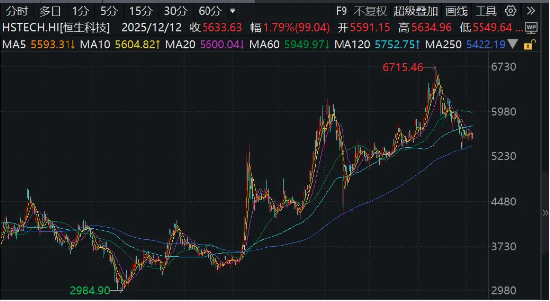
文/二马小姐 快要跨年了,港股经过一轮比较像样的调整,有点蠢蠢欲动。此刻,不妨再度探讨下港股的抄底思路。 最近也写过多次港股,一直看好这个市场。上个月去一趟香港,距离上一次去大概也就几个月。发现中 环的酒店比早前涨价不少。和朋友提前约午饭,没想到餐厅居然早早位子订满了,换了几家才订上位 子。我们开玩笑说,可能今年港股热闹,各种IPO都在奔赴香港。 虽然港股最近调整,幅度不小,但这其实是港股一贯的风格。如果观察港股足够久,就知道,这个离岸 市场的大波段是相当明显的。涨的时候一波非常快,随后需要调整一阵子。对港股玩家来说,通常要提 前埋伏,而不是大幅上涨后才去追高,这是港股的第一铁律! 比如今年,港股有两个大波段。以恒生科技指数为例,第一次从1月开始涨到3月。调整之后,从四月开 始第二波上涨,一直到10月初。实际上,去年港股比A股回暖也更早一些。 图:恒生科技指数走势 另一个视角,从流动性,以及海外市场的冲击看,随着美联储降息的靴子落地,情况基本上也比较明朗 了。美股关于AI泡沫的担忧,此前也释放了一定的风险。本周还有关于日本是否加息的决定,也将靴 子落地。 总而言之,这个时候,应该可以来探讨下港股的抄底思路了。 ...

2024年中国潜在独角兽企业总数突破800家
Ke Ji Ri Bao· 2025-12-15 00:24
Core Insights - The report indicates that in 2024, there are 816 potential unicorn companies in China, with 255 new entrants, over 90% of which are in cutting-edge technology sectors [1][2] - The report is the sixth edition published by the Great Wall Enterprise Strategic Research Institute, which has been releasing unicorn-related reports for nine consecutive years [1] Group 1: Potential Unicorn Companies - The number of potential unicorn companies has increased from 296 in 2019 to 816 in 2024, representing an approximate growth of 1.8 times [2] - Among the potential unicorns, 547 companies (67%) were established within the last five years and valued at $100 million, while 269 companies (33%) were founded 5-9 years ago and valued at $500 million [1] - In 2024, 747 potential unicorn companies belong to the cutting-edge technology sector, with 363 deriving their technology from universities and research institutions [2] Group 2: Industry Distribution - Potential unicorn companies are distributed across 42 sectors, with over 100 companies in the chip and innovative drug sectors, followed by 78 in new semiconductors and 52 in clean energy [2] - New entrants are found in 31 sectors, with more than 20 new companies in chip, new semiconductor, innovative drug, and power battery sectors, and over 50% of new companies in smart flight, smart hardware, power batteries, new materials, and synthetic biology sectors [2] - The proportion of potential unicorn companies in cutting-edge technology has increased from 56.4% in 2019 to 91.5% in 2024 [2]
十大券商一周策略:跨年行情蓄势待发,风格切换可能会越来越强,关注低位价值板块
Sou Hu Cai Jing· 2025-12-15 00:08
Group 1 - The central economic work conference has set the tone for 2026 economic work, with expectations for a "cross-year market" and "spring excitement" rising among broker reports [1] - The policy focus on "expanding domestic demand and countering involution" is expected to lead the market out of deflation, with technology sectors like AI computing power and commercial aerospace being key offensive directions [1][4] - There is a growing preference for low-volatility, high-dividend assets, indicating a potential market style switch [1][3] Group 2 - Citic Securities suggests seeking intersection in configurations, focusing on products with overseas exposure and positive changes in domestic demand as catalysts [2] - The report emphasizes that while external demand products have been validated, the potential for exceeding expectations is limited, and investors' low expectations could lead to valuation elasticity if domestic demand surprises positively [2] - The focus remains on industries where China has a global share advantage, such as non-ferrous metals, chemicals, and new energy, with an emphasis on companies that can enhance global pricing power [3] Group 3 - The market is expected to enter a new phase of recovery, with significant support from previous price levels and a shift in investor sentiment following recent adjustments [5] - Structural risks are emerging, which could hinder the sustained strength of advantageous themes, as indicated by high transaction concentration [5][6] - The focus on low-volatility and stable return assets is increasing, with potential interest in service consumption sectors like aviation, duty-free, and hotels [3][12] Group 4 - The central economic work conference has highlighted the importance of expanding domestic demand and addressing involution, clarifying the path out of deflation [7][19] - The emphasis on enhancing the income of middle and low-income groups and stimulating private investment indicates a shift towards endogenous growth drivers [7] - The conference also pointed out the need for a unified national market and the deepening of anti-involution measures, which are crucial for the recovery of corporate profits and subsequent improvements in resident income [8] Group 5 - The new policy deployment is expected to support the A-share market's cross-year performance, with a focus on TMT and advanced manufacturing sectors [9] - The historical performance of the A-share market during the start of the "13th Five-Year" and "14th Five-Year" plans suggests a positive outlook for 2026 [9] - The report indicates that the market may experience fluctuations due to various domestic and international events, but the overall economic policy is expected to remain supportive [9] Group 6 - The AI industry is characterized by a competition in full-stack capabilities and deep penetration into various application scenarios [10][11] - Domestic firms are focusing on building a full-stack system in the computing hardware sector, with significant advancements in AI solutions and infrastructure [11] - The demand for AI infrastructure is expected to drive growth in related sectors, including telecommunications and high-spec data centers [11][16] Group 7 - The commercial aerospace sector is entering a period of heightened activity, supported by new policies and government initiatives [17] - The establishment of a national commercial aerospace development fund aims to attract private investment and enhance the capabilities of commercial companies [17] - Recent advancements in satellite internet and frequent launches are expected to benefit the entire aerospace industry chain [17]
A股利好,一夜之间多家公司密集宣布
2 1 Shi Ji Jing Ji Bao Dao· 2025-12-14 23:36
Group 1 - Multiple pharmaceutical stocks announced positive news, including Jiuan Medical's FDA pre-market notification for home test kits for influenza and COVID-19, allowing normal sales in the U.S. market [1] - Junshi Bioscience received FDA approval for clinical trials of its EGFR/HER3 bispecific antibody drug for treating advanced solid tumors [1] - Innovent Biologics' BTK inhibitor, Orelabrutinib, reached primary endpoints in a Phase II trial for systemic lupus erythematosus and has been approved for Phase III trials [2] Group 2 - The Chinese innovative drug industry is at a critical turning point, with over $100 billion in licensing deals in the first three quarters of 2025, indicating significant potential for domestic innovative drugs [3] - Major collaborations between Chinese companies and multinational corporations include a $12 billion deal between Hengrui and GSK, and a $114 billion potential deal between Innovent and Takeda [3] - The Chinese innovative drug sector is expected to show a compound annual growth rate of 20.2% from 2024 to 2028, with the market size projected to reach 26.9 billion yuan by 2028 [1][4] Group 3 - The pharmaceutical industry is anticipated to thrive by 2025, with the Hang Seng Index expected to double in value [4] - The innovative drug sector's listed companies achieved a total revenue of 48.83 billion yuan in the first three quarters of 2025, a 22% year-on-year increase, marking the first quarterly profit since inception [4] - The investment landscape is shifting from a focus on academic backgrounds and preclinical data to a stronger emphasis on companies' tangible strengths and product quality [4]




A股利好,一夜之间多家公司密集宣布
21世纪经济报道· 2025-12-14 23:29
Core Insights - Multiple pharmaceutical companies have recently announced positive developments, indicating a potential growth phase in the industry [1][2][4]. Group 1: Company Announcements - Jiuan Medical's U.S. subsidiary received pre-market notification from the FDA for its home testing kits for multiple viruses, including COVID-19, allowing for normal sales in the U.S. market [1]. - Junshi Bioscience's dual-specific antibody drug for treating advanced solid tumors has received FDA approval for clinical trials [1]. - Innovent Biologics announced that its BTK inhibitor, Orelabrutinib, has met primary endpoints in a Phase II study for systemic lupus erythematosus and has been approved for Phase III trials [1]. - Yipinhong's Qinxiang Qingjie oral solution has been approved as a national secondary protected traditional Chinese medicine, and the company is set to receive up to $15 billion (approximately 67.13 billion RMB) from Sobi for a new URAT1 inhibitor [2]. Group 2: Market Trends - The Chinese innovative drug sector is experiencing a significant turnaround after a challenging period from 2021 to 2024, with total external licensing amounts surpassing $100 billion in the first three quarters of 2025 [4]. - Major collaborations between Chinese innovative drug companies and multinational corporations (MNCs) are on the rise, exemplified by significant deals such as the $12 billion partnership between Hengrui Medicine and GSK [4]. - The speed and cost-effectiveness of Chinese drug development are becoming competitive advantages, with drug discovery processes being 2-3 times faster than international counterparts [4]. Group 3: Financial Performance - The innovative drug sector in China reported a total revenue of 48.83 billion RMB in the first three quarters of 2025, reflecting a year-on-year growth of 22% [5]. - The sector achieved its first quarterly profit since its inception, with a net profit of 1.1 billion RMB in the third quarter [5]. Group 4: Investment Landscape - The capital market for Chinese innovative drugs is undergoing a transformation, shifting from a focus on academic backgrounds and preclinical data to a stronger emphasis on tangible product capabilities [6].

