玩具

Search documents
扬州绒艺漫想玩具有限公司成立 注册资本5万人民币
Sou Hu Cai Jing· 2025-08-15 00:49
天眼查App显示,近日,扬州绒艺漫想玩具有限公司成立,法定代表人为柳庆兰,注册资本5万人民 币,经营范围为一般项目:玩具销售;玩具、动漫及游艺用品销售;木制玩具销售;工艺美术品及礼仪 用品销售(象牙及其制品除外);服装服饰批发;服装服饰零售;纺织、服装及家庭用品批发;箱包销 售;鞋帽批发;鞋帽零售;互联网销售(除销售需要许可的商品);家居用品销售;文具用品批发;文 具用品零售;办公用品销售;纸制品销售;电子产品销售;专业设计服务;工业设计服务;品牌管理; 版权代理;知识产权服务(专利代理服务除外);组织文化艺术交流活动;咨询策划服务;市场营销策 划;项目策划与公关服务;国内贸易代理;货物进出口;技术进出口;进出口代理(除依法须经批准的 项目外,凭营业执照依法自主开展经营活动)。 ...
品牌力还在,你就有可能笑到最后
创业家· 2025-08-14 10:12
Core Insights - The article emphasizes the importance of brand strength, which is composed of product strength, channel strength, and communication strength. A strong product must provide value to both the company and society, while channel strength involves having significant influence in mainstream platforms or regions. Communication strength includes not only advertising but also the ability for the company to share its story organically [1]. Group 1: Japanese Brand Insights - Japanese brands have demonstrated resilience and adaptability in the face of economic challenges, providing valuable lessons for Chinese consumer brands. The Japanese market serves as a "future laboratory" for understanding consumer evolution over the next decade [6]. - Key strategies from successful Japanese brands include supply chain-driven private brand (PB) products, continuous iteration of major products, and defining lifestyle while resonating emotionally with consumers [7][8]. Group 2: Supply Chain and Product Development - Kobe Bussan utilizes a supply chain model that integrates production and sales, achieving a scale of 20 billion RMB with over 1,000 stores and 350 global factories [13]. - 7-11 employs a TEAM MD mechanism to guide supply chain development based on consumer data, creating PB products that meet latent consumer needs [7]. - Nitori, a leading furniture brand, applies automotive supply chain standards to achieve continuous revenue growth for 36 years [7]. Group 3: Emotional Resonance and Lifestyle Definition - Bandai focuses on developing products that tap into fundamental human desires, creating items that are both entertaining and addictive [9]. - Muji redefines user experience with its no-logo, affordable products, reflecting insights gained from economic downturns [9]. - The article highlights the importance of understanding consumer emotions and lifestyle changes to effectively engage with different market segments [9][10].


美形象下滑,中国品牌凭“惊喜创新+ 全新审美”征服新加坡
Guan Cha Zhe Wang· 2025-08-14 07:52
Core Insights - Chinese brands have transformed from being perceived as "cheap" and "functional" to becoming highly sought after by the middle class in Singapore, showcasing innovation and quality improvements [1][2]. Group 1: Market Performance - BYD became the best-selling car brand in Singapore in the first half of 2025, selling nearly 4,670 vehicles, which accounted for 20% of total sales, surpassing Toyota's 3,460 vehicles [2]. - A total of 32 Chinese companies have opened 184 stores in Singapore as of June 2024, indicating a significant presence of Chinese brands in the region [2]. Group 2: Consumer Perception - The stigma associated with "Made in China" has significantly diminished among Singapore's younger generation, who now view Chinese brands as trendy and modern [5][6]. - Chinese food brands have gained popularity on social media, with consumers appreciating the creativity and rapid innovation of these brands compared to Japanese and Korean counterparts [4][5]. Group 3: Cultural Impact - The rise of Chinese brands in Singapore reflects a broader cultural shift, with many residents now considering these brands an integral part of their lives [9]. - The success of Chinese brands is not only attributed to product quality but also to their ability to resonate emotionally with local consumers, offering unique experiences rather than just products [5][6]. Group 4: Economic Context - Since 2013, China has been Singapore's largest trading partner, with bilateral trade reaching $170.2 billion last year [6]. - As Western companies reduce their presence in Singapore, Chinese enterprises have effectively filled the gaps, supporting the local real estate market and establishing a strong foothold [6][8].


热卖的毛茸茸“浪浪山天团”,钱塘造
Hang Zhou Ri Bao· 2025-08-14 02:54
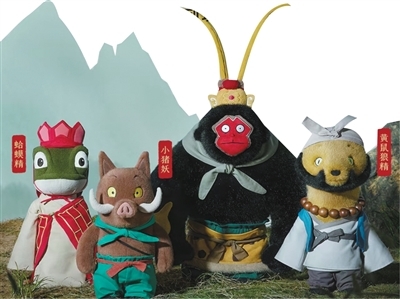
Group 1 - The movie "Wang Wang Mountain Little Monster" has achieved significant success, with box office revenue surpassing 700 million yuan, making it the highest-grossing Chinese domestic 2D animated film [2] - The film's characters, such as the cute pig monster and the chatty toad spirit, have gained a dedicated fan base, leading to a surge in related merchandise sales, particularly plush toys [2] - The collaboration between Hangzhou Wentongzi Cultural Creative Co., Ltd. and the film's production company has resulted in over 30,000 plush toys sold, with pre-orders extending 30 days into the future [2] Group 2 - The popularity of the "Wang Wang Mountain Team" is attributed to both the film's success and the emotional value provided by plush toys, which resonate with consumers in a fast-paced environment [3] - Data from Tmall indicates that plush fabric toys have the highest sales and growth rates in the toy category, reflecting strong consumer interest [3] - The cultural industry in Qiantang District has seen growth, with 156 cultural enterprises generating 19.086 billion yuan in revenue, a year-on-year increase of 11.3% [3]
佰悦集团(08545)股东将股票存入恒生银行 存仓市值262.20万港元
Zhi Tong Cai Jing· 2025-08-14 00:41
Core Viewpoint - The company, Baiyue Group, is expected to report a significant loss for the current fiscal year, primarily due to a substantial decline in revenue across its toy business segments, attributed to economic pressures and reduced consumer spending on non-essential items [1] Financial Performance - As of June 30, the company anticipates a loss attributable to shareholders of no less than 2 million HKD for the current fiscal year, compared to a profit of approximately 490,000 HKD for the previous fiscal year ending March 31, 2024 [1] - Revenue is projected to decrease by about 34.7%, significantly impacting the company's financial performance [1] Business Segments - Sales of ODM toys to licensed holders and the company's own licensed toys and related products have decreased by 46.5% and 40.4%, respectively [1] - The decline in sales is primarily due to economic pressures, including inflation and a reduction in consumer spending on non-essential goods [1] Impairment Loss - The company has recognized an impairment loss of 4.5 million HKD related to its equity interest in an associate company, which is facing operational challenges due to economic downturn, increased competition, and operational difficulties [1]

佰悦集团股东将股票存入恒生银行 存仓市值262.20万港元
Zhi Tong Cai Jing· 2025-08-14 00:37
Core Viewpoint - The company, Baiyue Group, is expected to report a significant loss for the current fiscal year, primarily due to a substantial decline in revenue from its toy business, which has been impacted by economic pressures and reduced consumer spending [1] Financial Performance - As of June 30, Baiyue Group announced an anticipated loss of no less than 2 million HKD for the current fiscal year, compared to a profit of approximately 490,000 HKD for the previous fiscal year ending March 31, 2023 [1] - Revenue is projected to decrease by about 34.7%, primarily due to significant declines across all segments of the toy business [1] Sales Decline - Sales of ODM toys to franchise holders and the company's own licensed toys and related products have decreased by 46.5% and 40.4%, respectively [1] - The sharp decline in sales is attributed to economic pressures, including inflation and a reduction in consumer spending on non-essential items [1] Impairment Loss - The company has also reported an impairment loss of 4.5 million HKD related to its equity interest in an associate company, which is facing operational challenges due to economic downturn, increased competition, and operational difficulties [1]
经济大省新亮点丨创新引力更是营商磁力——上海持续成为外商投资热土
Xin Hua Wang· 2025-08-13 11:16
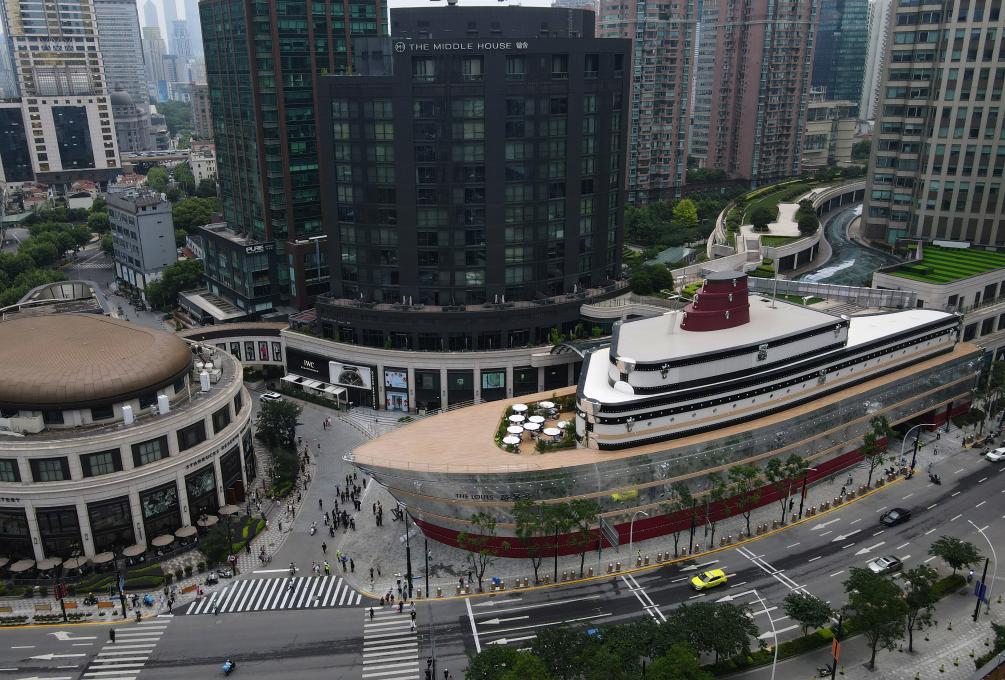
Group 1 - Shanghai has established itself as a preferred destination for foreign investment, with over 3,000 new foreign-funded enterprises and actual foreign investment exceeding $8.5 billion from January to June this year [1] - The city is home to 1,042 regional headquarters and 605 foreign-funded R&D centers, showcasing its strong appeal in the context of global economic uncertainty [1] - Recent foreign investment projects signed in Shanghai total approximately $3.68 billion, covering key sectors such as biomedicine, fashion consumer goods, finance, automotive, and business services [4] Group 2 - Notable projects include Toyota's establishment of a pure electric vehicle and battery R&D production company, and the opening of the first LEGO theme park in China, which has quickly become a new cultural landmark [2][4] - The "Shanghai speed" in project execution is highlighted by the rapid development of the Louis Vuitton flagship store, which took only six months from project initiation to opening [9] - The local government has implemented innovative measures to enhance the business environment, including specialized services and expedited processes for foreign investors [9][11] Group 3 - Foreign companies are increasingly leveraging Shanghai as a global innovation hub, with local R&D centers playing a crucial role in driving innovation and market insights [7][8] - Companies like Cabot are expanding their production capabilities in Shanghai to meet the demands of the rapidly growing electric vehicle and lithium-ion battery sectors [7] - The emphasis on intellectual property protection in Shanghai has bolstered investor confidence, as noted by LEGO's CEO [11]
中小企业,如何成为高大上公司?
创业家· 2025-08-13 10:02
Core Viewpoint - The article emphasizes how small and medium-sized enterprises (SMEs) can evolve into high-end companies by setting ambitious goals, articulating significant aspirations, and increasing operational speed [1]. Group 1: High Goals - SMEs should aim for high market capitalization, transitioning from financial metrics to business performance, and then to market presence, ultimately leading to organizational growth [1]. Group 2: Significant Aspirations - High market value and financial goals must be translated into objectives that provide value to customers and actionable targets for employees [1]. Group 3: Increasing Speed - Under the premise of high goals and significant aspirations, companies need to enhance their operational speed to achieve these objectives [1]. Group 4: Insights from Japan - The Japanese market serves as a "future laboratory" for Chinese consumer brands, providing insights into navigating low growth, aging populations, and consumer behavior changes [6]. - Japanese brands have developed strategies that can be emulated by Chinese companies to capture consumer interest and adapt to market shifts [6]. Group 5: Key Strategies of Japanese Brands - **Supply Chain-Driven PB Products**: Companies like Kobe Bussan utilize integrated supply chains to create high-quality private label products, achieving significant scale and efficiency [7][13]. - **Continuous Iteration of Major Products**: Brands such as Kikkoman focus on evolving their flagship products to meet consumer demands, enhancing their market presence [7][16]. - **Defining Lifestyles and Emotional Resonance**: Companies like Muji and Bandai create products that resonate emotionally with consumers, adapting to changing lifestyles and preferences [8][9].

朱啸虎:靠流量起来的公司,基本都是昙花一现
创业家· 2025-08-13 10:02
Core Viewpoint - Companies relying solely on traffic-driven models tend to be short-lived, emphasizing the necessity of good products and competitive pricing for long-term success [2][3][4][5]. Group 1: Market Opportunities - In the next 5-10 years, there are three significant market opportunities in China: the aging population, pet ownership, and the chain retail model [7][8][9][10]. - The annual increase of 20 million retirees presents a lucrative market for the silver economy, as this demographic has disposable income and time to spend [8]. - The pet ownership trend indicates that households are increasingly treating pets as family members, leading to substantial monthly expenditures [9]. - The chain retail model in China has considerable room for growth, as its current penetration is significantly lower than in the US, Japan, and Hong Kong [11][12]. Group 2: Learning from Japan - A study trip to Japan is planned to explore how the silver economy has influenced product models and to analyze successful companies like Muji, 7-Eleven, and Shiseido [13][14]. - The Japanese market serves as a "future laboratory" for Chinese consumer brands, providing insights into consumer evolution over the next decade [18]. Group 3: Key Insights from Japanese Brands - Japanese brands thrive on three core principles: supply chain-driven private label (PB) products, continuous iteration of key products, and defining lifestyles that resonate emotionally with consumers [19]. - Companies like Kobe Bussan leverage a robust supply chain to create PB products, achieving significant scale and efficiency [20]. - The focus on single, high-demand products allows brands like Kikkoman to evolve from merely producing soy sauce to creating a cultural identity around it [20]. - Brands like Shiseido utilize a tiered approach to product offerings, catering to both high-end and cost-sensitive consumers [20]. Group 4: Event Details - The event will feature prominent figures in the consumer sector, including Zhu Xiaohu, who has led early investments in various successful startups [21]. - Participants will engage in discussions and visits to key Japanese companies to understand their strategies and operational models [22][23][24][25][26].

东兴证券晨报-20250813
Dongxing Securities· 2025-08-13 09:55
Core Insights - The report highlights a significant shift in China's consumption structure from goods to services, with per capita service consumption expected to reach 46.1% of total consumption by 2024, contributing 63% to the growth of consumer spending [2] - The establishment of the Xinjiang-Tibet Railway Company marks the beginning of a major infrastructure project that is expected to enhance regional economic collaboration and reduce logistics costs, with an estimated investment of around 500 billion yuan [7][8] - The report emphasizes the positive impact of major infrastructure projects on China's economic stability and growth, particularly in the context of external uncertainties [9][10] Economic News - The Ministry of Commerce indicates a rapid transition in China's consumption structure, with service consumption growing at an annual rate of 9.6% from 2020 to 2024 [2] - The Ministry of Finance has introduced a one-year "dual interest subsidy" policy aimed at boosting consumer loans for various sectors, including automotive and healthcare [2] - The People's Bank of China is encouraging increased credit support for the service consumption sector to ensure effective policy implementation [4] Company Insights - Alibaba Health has signed a strategic cooperation agreement with Innovent Biologics to enhance supply chain solutions for cold-chain delivery of specific medications [5] - Didi has recently invested in a driverless commercial vehicle company, indicating a strategic move towards autonomous transportation [5] - Jiangfeng Electronics is planning to integrate its flat panel display target material business with Japan's Aifuka Corporation, showcasing international collaboration [5] Infrastructure Projects - The Xinjiang-Tibet Railway is expected to significantly lower logistics costs and enhance economic cooperation between regions, with a construction period projected to exceed 20 years [8][9] - The report outlines that the construction of the Xinjiang-Tibet Railway will provide a safety net for China's economy against external uncertainties, contributing approximately 0.18% to GDP growth annually [8][9] - Other major infrastructure projects are also set to commence, which will serve as important engines for domestic demand and economic stability [10] Investment Recommendations - The report suggests that leading companies in the construction and materials sector will benefit significantly from the Xinjiang-Tibet Railway project, including major state-owned enterprises [9] - It emphasizes that the implementation of major projects will not only yield long-term benefits but also stabilize the economy amid external challenges [11]