
金融

Search documents
厦门国贸股价跌4.71%,长城基金旗下1只基金重仓,持有44.17万股浮亏损失16.34万元
Xin Lang Cai Jing· 2025-12-30 01:54
从基金十大重仓股角度 数据显示,长城基金旗下1只基金重仓厦门国贸。长城中证红利低波100ETF(159228)三季度持有股数 44.17万股,占基金净值比例为1.88%,位居第三大重仓股。根据测算,今日浮亏损失约16.34万元。 长城中证红利低波100ETF(159228)成立日期2025年6月5日,最新规模1.45亿。成立以来收益4.03%。 12月30日,厦门国贸跌4.71%,截至发稿,报7.48元/股,成交1.16亿元,换手率0.73%,总市值159.89亿 元。 长城中证红利低波100ETF(159228)基金经理为陶曙斌。 资料显示,厦门国贸集团股份有限公司位于福建省厦门市湖里区仙岳路4688号国贸中心,成立日期1996 年12月24日,上市日期1996年10月3日,公司主营业务涉及供应链管理、房地产经营、金融服务。主营 业务收入构成为:供应链管理业务99.63%,健康科技业务0.36%,其他板块业务0.02%。 截至发稿,陶曙斌累计任职时间8年285天,现任基金资产总规模1.99亿元,任职期间最佳基金回报 130.74%, 任职期间最差基金回报-38.15%。 风险提示:市场有风险,投资需谨慎。本 ...

“十五五”规划开局关键蓄势期,关注中证A500ETF(159338)
Sou Hu Cai Jing· 2025-12-30 01:28
Group 1 - The core viewpoint of the articles indicates that the Chinese stock market, particularly the Shanghai Composite Index, is experiencing a strong upward momentum, with the offshore RMB strengthening against the USD, reaching a 15-month high at the 7.0 level, which is expected to enhance the attractiveness of Chinese assets to global capital [1] - It is anticipated that China's monetary and fiscal policies will remain accommodative through 2026, leading to a recovery in overall demand, while global fiscal expansion in the US, Europe, and Japan is expected to improve demand [1] - The CSI A500 index is highlighted for its balanced industry exposure and higher growth potential, making it a favorable option during the structural upgrade cycle, with an annualized return of 9.11% and a volatility of 21.41% since its base period, outperforming the CSI 300 in terms of total returns [2] Group 2 - The CSI A500 index's characteristics of industry balance and coverage of leading companies across various sectors provide investors with a defensive yet growth-oriented investment choice, particularly in volatile markets [2] - Investors are encouraged to pay attention to the CSI A500 ETF (159338), which offers a combination of safety and growth potential [2]
在奋力谱写中原大地推进中国式 现代化新篇章中挑大梁、走在前
Zheng Zhou Ri Bao· 2025-12-30 01:01
Group 1: Economic Performance - The city's economy has shown stable and orderly operation, maintaining a good development trend with an industrial added value growth of 8.8% from January to November, with 70% of 38 major industry categories experiencing growth [1] - Fixed asset investment has increased by 4%, ranking third among national central cities [1] - The total number of market entities in the city has reached 2.226 million [1] Group 2: Innovation and Technology - The establishment of the Central Plains Science and Technology City Innovation Alliance and the Harbin Institute of Technology Zhengzhou Higher Research Institute has been announced, with over 15,000 technology-based enterprises and 274,000 young talents retained [1] - The intensity of R&D investment in society is expected to reach 3% [1] Group 3: Manufacturing and Industry - By the end of November, the city's total vehicle production reached 956,300 units, a year-on-year increase of 16.52%, with 508,000 units being new energy vehicles [1] - The digital economy scale is expected to exceed 800 billion yuan for the year [1] Group 4: Logistics and Trade - Zhengzhou Airport's cargo and mail throughput exceeded 1 million tons, making it a member of the global "million-ton club" for air cargo [1] - The China-Europe Railway Express has operated over 3,000 trains, a year-on-year increase of 50%, and cross-border e-commerce transactions reached 160 billion yuan, ranking among the top in the country [1] Group 5: Governance and Social Welfare - The governance system led by party building has been continuously improved, enhancing social welfare and maintaining social stability [1]
智能客服该如何成为好帮手
Jing Ji Ri Bao· 2025-12-30 00:32
栾沐锌 "连续发5次'转人工'还在转来转去,办业务要闯语音菜单'4层迷宫',投诉维权只得到人工智能(AI) 模板化'共情'却无实质方案……"近期,AI客服成为人们热议的话题。实测表明,主流电商、金融、物 流等10余家平台的AI客服普遍存在理解能力不足、答非所问等现象,给消费者带来困扰。这不仅背离 了技术便民初衷,甚至成为部分企业忽视用户诉求的"挡箭牌"。 改变这一现象,企业首先要牢固树立"服务即竞争力"的经营理念,将优化AI客服视为兼顾短中长期 利益的战略投入:短期打牢人工兜底与AI服务分流基础,优化知识库,快速精准解决用户问题,守住 现有收益;中期抓实体验升级,把口碑做扎实,通过客服响应时效考核打造差异化服务;长期深耕需求 挖掘与反向赋能,搭建客服数据反馈闭环,为产品和服务迭代升级提供支撑。 同时,行业可推动技术资源共享,降低中小企业改造成本。比如,技术研发方可以提升AI复杂场 景应对能力,推出更适配企业需求的产品。监管部门畅通投诉、监督渠道,明确AI客服规则,引导企 业从"拼价格"转向"比服务",让合规优化者得市场、享红利。 消费升级背景下,消费者越来越看重服务的质量和温度。AI客服该做"帮手"而非"替代 ...
充裕的流动性、更有力的政策支持和具有吸引力的估值——外资机构热议中国资产“机遇期”
Xin Lang Cai Jing· 2025-12-30 00:29
转自:上海证券报 新华财经上海12月30日电 岁末年初,多家外资机构相继发布新一年市场展望,表达了对中国市场的积 极预期。 在外资机构的观察中,2026年,充裕的流动性、更有力的政策支持和具有吸引力的估值等因素,正共同 构筑中国资产的"上行机遇期"。积极把握中国机遇,已成为国际投资者的广泛共识。 2026年全球经济呈回升趋势 "多元资产投资组合有望迎来稳健回报之年。"摩根大通认为,美国降息周期有望支撑全球经济增长复 苏,并推动各类资产市场表现强劲。不过,市场对涨势的担忧和观望情绪依然浓厚,许多投资者持有的 现金规模仍高于疫情前水平。 高盛认为,2026年股票市场有望继续实现稳健的正回报,进行多元化配置的理由充分。从区域来看,在 基准情景下,新兴市场有望继续表现良好。 渣打银行财富管理团队预期,新兴市场估值吸引力更为突出,尤其是在货币政策已趋于宽松的地区。宏 观环境改善及货币走势稳定,进一步提升了部分新兴市场的投资前景。 2025年即将收官。回顾这一年,"韧性"成为多家外资机构描绘全球经济时的关键词。 渣打银行财富管理团队认为,过去一年,全球经济展现出显著韧性,在面对数十年来最紧缩货币政策的 背景下,依然保持稳 ...
触发“创伤记忆”,韩国走向“第三次外汇危机”?
Huan Qiu Wang· 2025-12-30 00:25
Core Viewpoint - There is a growing sense of "crisis" in South Korea as the Korean won continues to weaken against the US dollar, approaching the critical psychological level of 1500 won per dollar, a level not seen since the 1997 Asian financial crisis and the 2008 global financial crisis. This situation has led to concerns about a potential "third foreign exchange crisis" [1]. Group 1: Currency Fluctuations and Government Response - The Korean won started 2025 at just over 1400 won per dollar, fluctuating between 1350 and 1485 won throughout the year, indicating a high volatility range [2]. - In response to the ongoing pressure on the won, the South Korean government has intensified its regulatory measures, including verbal warnings against excessive weakness of the won and tax support plans to boost domestic investment [2][3]. - Despite these interventions, the won remains in a high volatility range, with recent fluctuations around 1435 won per dollar [2]. Group 2: Historical Context and Structural Issues - Historical experiences from the 1997 and 2008 crises have made South Korea acutely aware of foreign exchange issues, leading to a focus on maintaining foreign exchange reserves as a safety net during extreme situations [7]. - The current weakening of the won is attributed to multiple structural factors, including significant capital outflows and a growing trend of domestic investors purchasing overseas assets, which exacerbates the supply-demand imbalance for the won [8][9]. - South Korea's net foreign assets have exceeded 380 billion dollars, and while this provides a financial cushion, the ability to liquidate these assets quickly in a crisis is limited [9]. Group 3: Economic Confidence and Structural Reforms - Analysts suggest that the underlying cause of the won's depreciation is a loss of investor confidence in the South Korean economy, driven by structural issues such as low growth rates and a deteriorating business environment [10][11]. - The government is urged to focus on structural reforms rather than temporary measures to restore market confidence and stabilize the currency [10]. - Strengthening economic ties with China through increased cooperation could provide opportunities for South Korean companies, potentially alleviating some of the pressures on the won [11].

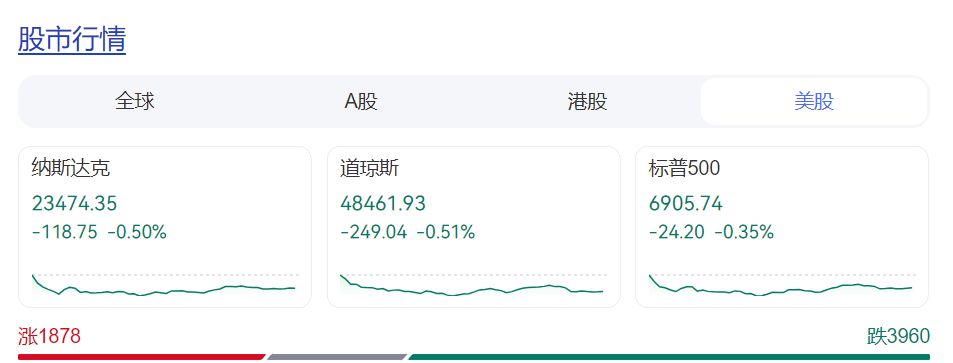
美股小幅收跌 芯片巨头涨超3%创新高!贵金属全线跳水 金价跌4.45% 白银跌近9% 钯金跌超15% 铂金跌超14%
Mei Ri Jing Ji Xin Wen· 2025-12-30 00:17
大型科技股多数下跌,特斯拉跌超3%,消息面上,"木头姐"Cathie Wood出售价值3000万美元的特斯拉股票。 英伟达跌超1%,微软、奈飞、亚马逊、Meta小幅下跌;英特尔涨超1%,苹果、谷歌小幅上涨。全球存储芯片巨头美光科技涨超3%, 股价创历史新高。 贵金属板块跌幅居前,哈莫尼黄金跌超8%,泛美白银、金罗斯黄金超跌5%。 美东时间周一,美股三大指数均小幅收跌,截至收盘,道指跌0.51%,纳指跌0.5%,标普500指数跌0.35%。 纳斯达克中国金龙指数收跌0.67%。蔚来涨近5%,爱奇艺、百度涨超1%;阿里巴巴跌超2%,名创优品跌近2%,哔哩哔哩跌超1%。 富时A50期指连续夜盘收跌0.16%,报15341点。 周一(12月29日)纽约尾盘(周二北京时间05:59),离岸人民币(CNH)兑美元报6.9971元,较上周五纽约尾盘涨74点,日内整体交 投于7.0152~6.9936元区间。 周一(12月29日)纽约尾盘,CME比特币期货BTC主力合约较上周五纽约尾盘跌0.30%,报87695美元,北京时间12:38曾涨至90990美 元。 CME以太币期货DCR主力合约涨0.36%,报2947.50美元, ...
中国内地亿万富豪增至470位,98%白手起家
36氪· 2025-12-30 00:13
Core Insights - The report by UBS reveals that by 2025, China will have 70 new billionaires, bringing the total to 470, making it the second-largest number of billionaires globally, following the United States. The total wealth of these billionaires in China is projected to reach $1.8 trillion, a year-on-year increase of 22.2% [4][5]. Group 1: Billionaire Growth - The Greater China region is identified as the largest growth engine for billionaires globally, with 98% of new billionaires being self-made entrepreneurs, consistent with the characteristics of China's first-generation entrepreneurs [5][11]. - Globally, the number of billionaires is expected to increase by 287 to 2,919, marking the second-highest growth since 2015, with total wealth rising by 13% to $15.8 trillion [5][9]. Group 2: Industry Insights - The technology sector is projected to see a significant increase in billionaire wealth, with a growth of 23.8% to $3 trillion, driven by advancements in artificial intelligence [9][10]. - The consumer and retail sector's billionaire wealth growth is slower at 5.3%, totaling $3.1 trillion, while the industrial manufacturing sector sees a 27.1% increase to $1.7 trillion [10]. Group 3: Self-Made Billionaires - Among the new billionaires globally, 68.3% are self-made, with a total wealth increase of $386.5 billion, primarily from sectors like marketing software and infrastructure [12]. - In China, 98% of billionaires are self-made, a higher percentage compared to other major countries, reflecting a vibrant entrepreneurial spirit [12][11]. Group 4: Inheritance Trends - In 2025, 91 new billionaires will inherit wealth totaling $2.978 billion, a 36% increase from 2024, marking the largest inheritance record since the report's inception [14][15]. - The report indicates that over the next 15 years, billionaires' children are expected to inherit at least $5.9 trillion, with significant amounts in the U.S. and Europe [15]. Group 5: Gender Wealth Dynamics - There are currently 374 female billionaires, with their wealth growth rate being double that of male billionaires, at 8.4% compared to 3.2% [18]. - The consumer and retail sectors are the primary sources of wealth for female billionaires, with a significant portion inherited [18]. Group 6: Investment Outlook - A growing number of billionaires are looking towards China for investment opportunities, with 34% believing it offers the best prospects in the next 12 months, a significant increase from 11% in 2024 [20]. - In terms of investment strategies, 42% plan to increase exposure to emerging market stocks, while 49% intend to boost allocations to private equity [21].

2026年宏观经济展望:着力扩大内需,宏观政策延续稳增长取向
Dong Fang Jin Cheng· 2025-12-29 23:30
Economic Outlook - The actual GDP growth rate for China in 2026 is projected to be around 4.8%, maintaining a medium-high growth level[2] - Global GDP growth is expected to slow to 3.1% in 2026, down from 3.2% in 2025[4] - China's fixed asset investment growth is forecasted to turn positive at 2.5% in 2026, recovering from a negative growth of -3.0% in 2025[4] Trade and Export Impact - China's export growth is anticipated to decline significantly from approximately 5.0% in 2025 to around 1.0% in 2026 due to increased U.S. tariffs[15] - The average U.S. import tariff rate is projected to rise to 19.5% in 2026, impacting global trade dynamics[8] Policy Measures - The target fiscal deficit rate for 2026 is set to remain at 4.0%, with an increase in new special bond issuance expected to reach 5.0 trillion yuan[41] - A reduction in interest rates by 0.3 percentage points is anticipated in 2026, with a focus on maintaining liquidity in the market[52] Consumer and Investment Trends - Consumer retail sales growth is expected to accelerate to 5.0%-6.0% in 2026, up from 3.9% in 2025, driven by enhanced consumption policies[65] - Infrastructure investment growth is projected to increase to 5.0% in 2026, significantly higher than the previous year's performance[71] Inflation and Price Levels - The Consumer Price Index (CPI) is expected to rise to 0.4% in 2026, indicating a slight improvement in the low inflation environment[76] - The Producer Price Index (PPI) is forecasted to decline by -1.8% in 2026, reflecting ongoing price pressures in the economy[76]
二〇二五年中国经济关键词
Xin Lang Cai Jing· 2025-12-29 22:22
Group 1: New Quality Productive Forces - In 2025, China focuses on technological innovation and industrial upgrading to cultivate new quality productive forces, enhancing the foundation for high-quality development [2] - Traditional industries are crucial for accelerating the development of new quality productive forces, with the Ministry of Industry and Information Technology releasing action plans for ten key industries [2] - Strategic emerging industries and future industries are the main battlegrounds for cultivating new quality productive forces, with significant growth in sectors like new energy vehicles, photovoltaics, and quantum technology [2][3] Group 2: Expanding Domestic Demand - Expanding domestic demand is a strategic choice for China to respond to economic changes and promote high-quality development, with policies implemented to stimulate consumption and investment [4] - Consumer markets are recovering, with significant growth in retail sales of home appliances and communication equipment, with year-on-year increases of 14.8%, 18.2%, and 20.9% respectively [6] - Investment in emerging sectors is also strong, with notable increases in manufacturing and renewable energy investments, such as a 15.3% growth in automotive manufacturing [6] Group 3: High-Level Opening Up - Expanding high-level opening up is essential for China's high-quality development, providing stability to the uncertain global economy [7] - China's foreign trade resilience is improving, with policies promoting service exports and green trade, reflecting a commitment to innovative leadership [7][8] - Trade with major partners like ASEAN has seen growth, with a year-on-year increase of 8.5% in trade volume [8] Group 4: Risk Mitigation - In 2025, China continues to address key risk areas to ensure high-quality development, with measures in place to manage local government debt and mitigate financial risks [9] - The real estate sector has seen successful completion of housing delivery tasks, with policies aimed at stabilizing the market and supporting housing supply [9] Group 5: Appropriate Monetary Easing - Since 2025, a moderately loose monetary policy has been in effect, with social financing scale increasing significantly, reaching 33.39 trillion yuan in the first eleven months [10] - The structure of credit has improved, supporting key sectors and strategic economic transformations, with notable growth in technology and green loans [11] Group 6: Green Transition - China has introduced numerous policies for green low-carbon transition and ecological civilization construction, achieving significant progress in various fields [14] - The energy structure is shifting towards non-fossil sources, with ambitious targets for renewable energy installations [14][15] - The green economy is thriving, with over 218.7 million existing green economy-related enterprises, indicating sustained vitality in the sector [14]