
家电

Search documents
兼评2月经济数据:经济开门红好于预期
KAIYUAN SECURITIES· 2026-03-17 01:12
Group 1: Economic Performance - Industrial added value for January-February increased by 6.3% year-on-year, surpassing expectations by 1.1 percentage points[3] - Fixed asset investment (FAI) showed a cumulative year-on-year increase of 1.8%, against an expected decline of 2.7%[14] - Service sector production rose to 5.2% year-on-year, up 0.2 percentage points from the previous value[3] Group 2: Investment Trends - Infrastructure investment rebounded significantly, with broad infrastructure up 25.8% year-on-year and narrow infrastructure up 23.6%[4] - Manufacturing investment growth improved by 2.5 percentage points to 3.1%, with notable increases in electrical machinery and textiles[4] - Real estate investment saw a reduction in decline, improving by 6.1 percentage points to -11.1%[5] Group 3: Consumer Behavior - Retail sales (social retail) increased by 1.9 percentage points to 2.8% year-on-year, although cumulative growth declined by 0.9 percentage points[6] - Service retail continued to outperform goods retail, with a widening growth gap of 3.1 percentage points[6] - Key contributors to retail growth included home appliances and food, while automotive sales lagged[6] Group 4: Market Outlook - Economic performance in early 2026 exceeded expectations, suggesting a potential moderate recovery in equity markets[7] - The need for additional policies to support domestic recovery remains, particularly in light of geopolitical uncertainties and consumer demand fluctuations[7] - Risks include potential policy changes and unexpected economic downturns in the U.S.[8]
海尔智家:公司已预约于2026年3月27日披露2025年年度报告
Zheng Quan Ri Bao· 2026-03-16 14:12
Core Viewpoint - Haier Smart Home stated that it has not triggered the disclosure standards for performance forecasts according to the relevant regulations of the Shanghai Stock Exchange and its current operating conditions [1] Group 1 - The company has scheduled to disclose its 2025 annual report on March 27, 2026, and encourages investors to pay attention to the detailed operating data for the entire year [1]

资金跟踪系列之三十六:杠杆资金小幅回流,北上加速净流出
SINOLINK SECURITIES· 2026-03-16 11:46
Group 1: Macroeconomic Liquidity - The US dollar index continued to rise, and the degree of inversion in the China-US interest rate spread deepened, with inflation expectations also increasing [2][16] - Offshore US dollar liquidity has marginally tightened, while the domestic interbank funding situation remains balanced [2][23] Group 2: Market Trading Activity and Volatility - Market trading activity has decreased, with major indices experiencing increased volatility; sectors such as oil and petrochemicals, electric new energy, public utilities, and construction are above the 90th percentile in trading activity [3][28] - The volatility of major indices, including the CSI 300 and ChiNext, has continued to rise, with steel and military sectors also showing volatility above the 90th historical percentile [3][35] Group 3: Institutional Research - The banking, electronics, electric new energy, computing, and automotive sectors are leading in research activity, with banking and automotive sectors showing a month-on-month increase in research heat [4][46] Group 4: Analyst Forecasts - Analysts have simultaneously raised net profit forecasts for the entire A-share market for 2026/2027, with increases noted in sectors such as electric new energy, non-ferrous metals, construction, machinery, and pharmaceuticals [5][19] - The proportion of stocks with upward revisions in net profit forecasts for 2026/2027 has increased across the A-share market [5][17] Group 5: Northbound Trading Activity - Northbound trading activity has decreased, continuing to net sell A-shares, with a notable increase in the buy/sell ratio for electric new energy, electronics, and automotive sectors [6][32] - Northbound trading primarily net bought coal and oil and petrochemical sectors, while net selling occurred in electronics, computing, and chemicals [6][33] Group 6: Margin Financing Activity - Margin financing activity has slightly increased but remains at a low level, with net buying primarily in electric new energy, chemicals, and computing sectors [7][35] - The proportion of financing purchases has increased across most sectors, with net buying focused on mid-cap growth and mid/small-cap value stocks [7][38] Group 7: Active Equity Funds and ETFs - Active equity funds have increased their positions, particularly in military, machinery, and automotive sectors, while reducing positions in non-ferrous metals, oil and petrochemicals, and steel [9][45] - ETFs have continued to experience net redemptions, particularly in broad-based indices like CSI 500, CSI 300, and ChiNext, while sectors such as electric power and public utilities saw net inflows [9][52]
家电行业周报(26年第11周):1-2月家电出口额增长9%,内外销环比积极改善-20260316
Guoxin Securities· 2026-03-16 11:24
Investment Rating - The report maintains an "Outperform the Market" rating for the home appliance industry [5][6][70]. Core Views - The home appliance retail demand in China has shown signs of recovery in January and February, with a notable improvement in both domestic and export sales [2][18]. - The export value of home appliances in China increased by 9% year-on-year in the first two months, indicating a significant recovery in the export market [3][38]. - The U.S. home appliance retail sales continued to grow slightly in January, reflecting a steady recovery in consumer demand [4][44]. Summary by Sections 1. Investment Recommendations - Recommended companies include Midea Group, Haier Smart Home, TCL Smart Home, Gree Electric, and Hisense Home Appliances in the white goods sector; Hisense Visual and TCL Electronics in the black goods sector; and Roborock and Bear Electric in the small appliances sector [5][14][16]. 2. Market Performance and Trends - The home appliance sector achieved a relative return of +0.34% this week, outperforming the broader market [4][47]. - The retail sales of major home appliances showed a narrowing decline, with specific categories like air conditioners and refrigerators experiencing improved performance [2][19]. 3. Export Performance - In the first two months, the export volume of home appliances grew by 16%, with the export value reaching 119.2 billion yuan, reflecting a robust recovery [3][38]. - The average export price decreased by 4.4% to 21.1 USD per unit, indicating competitive pricing in the international market [3][38]. 4. U.S. Market Insights - U.S. retail sales for electronics and home appliances increased by 1.6% year-on-year in January, continuing a steady growth trend since the second half of 2025 [4][44]. - Inventory levels in U.S. home appliance stores have been recovering, which supports the demand for Chinese exports [4][44]. 5. Key Data Tracking - The report tracks raw material prices, noting increases in copper and aluminum prices, which may impact production costs [4][51][56]. - The shipping index for major routes has shown slight fluctuations, indicating ongoing adjustments in logistics costs [4][60].




立足架构元年潮头,谁将掌握空调行业下半场话语权?
21世纪经济报道· 2026-03-16 11:20
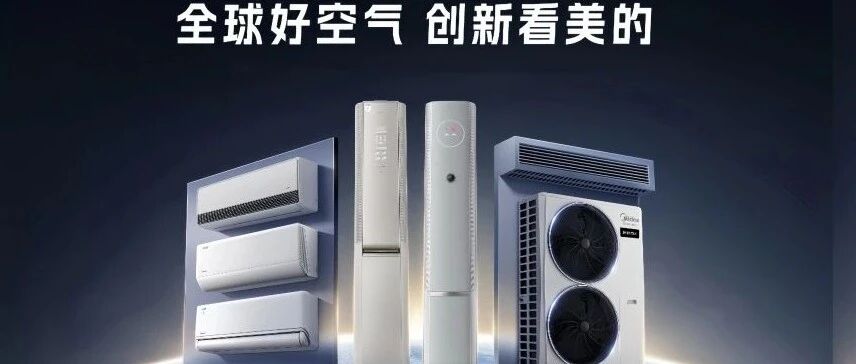
Core Viewpoint - The article discusses the transformation of the air conditioning industry in China, emphasizing the shift from a focus on individual component performance to a holistic system architecture approach, as exemplified by Midea's "Wandering Air Architecture" [3][6][14]. Industry Overview - The Chinese manufacturing sector is transitioning from "scale dividends" to "technology dividends," with the air conditioning market entering a phase of stock competition where traditional methods of innovation are insufficient to meet the evolving demands of consumers [3][8]. - Midea has achieved the top global sales position in air conditioning for two consecutive years, with a market share of 27.5% in 2024, indicating that one in four air conditioners sold globally is from Midea [3][4]. Technological Innovation - Midea's "Wandering Air Architecture" represents a paradigm shift in defining core technology, moving away from isolated component excellence to a system that integrates various functionalities into a cohesive unit, allowing for continuous evolution and interconnectivity [6][14][20]. - The architecture aims to redefine the air conditioning experience by combining temperature control, air quality management, and smart interaction into a single device, thus addressing the limitations of traditional air conditioning systems [19][20]. Market Positioning - Midea's approach contrasts with competitors who remain focused on parameter competition and feature stacking, positioning Midea as a leader in the new "architecture era" of the air conditioning industry [9][14]. - The introduction of the T6 series air conditioner, built on the "Wandering Air Architecture," exemplifies how Midea is transforming air conditioning into a comprehensive air management system, enhancing user experience and operational efficiency [16][19]. Ecosystem Development - Midea aims to transition from a traditional air conditioning manufacturer to a rule-setting entity within the smart home ecosystem, emphasizing the importance of open architecture and interoperability with various smart home devices [22][27]. - The "Wandering Air Architecture" is designed with open ecological principles, allowing for seamless integration with other brands and systems, thus breaking down traditional barriers in the smart home market [25][27]. Future Outlook - The shift to an architecture-based approach signifies a departure from low-level homogeneous competition, ushering in a high-quality development cycle focused on foundational innovation [27]. - Companies that can master core architectural capabilities and maintain an open ecosystem will likely dominate the smart home landscape in the future [27].

外国人无法理解中国家电厂商对AI的狂热
创业邦· 2026-03-16 10:37
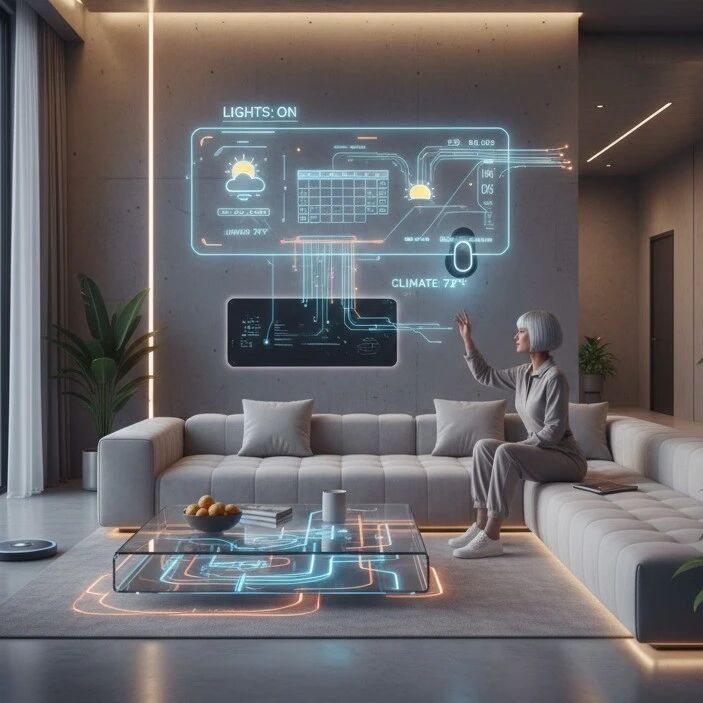
Core Viewpoint - The home appliance industry is on the brink of transformation, shifting from traditional hardware-focused manufacturing to AI-driven solutions, indicating that "traditional is dead, AI must rise" [7][9]. Industry Analysis - The home appliance sector has historically emphasized hardware improvements, such as more efficient compressors and motors, but this path is nearing its physical limits, leading to a saturation of performance differences among brands [7][8]. - As hardware performance converges, price competition intensifies, particularly among Chinese manufacturers, resulting in a detrimental price war that erodes profits and stifles R&D capabilities [8][9]. - Companies that leverage software capabilities and AI narratives are seeing a shift in valuation from traditional manufacturing metrics to those akin to technology firms, with PE ratios differing significantly [8][9]. AI Integration in Home Appliances - AI is becoming the sole growth direction for the home appliance industry, fundamentally altering user interactions with devices, transforming them from tools into proactive agents that understand and anticipate user needs [9][32]. - Examples of AI integration include smart kitchen appliances that assist in cooking and laundry machines that automatically adjust settings based on fabric types, showcasing a shift towards user-friendly, intelligent systems [11][17][19]. Competitive Landscape - The competition is increasingly defined by the ability to create ecosystems around AI appliances, where data collected from user interactions enhances brand loyalty and user experience [34][35]. - The transition to AI-driven appliances is reshaping the marketing landscape, with companies needing to secure user loyalty at the point of home purchase rather than just at retail [34][41]. Business Model Evolution - The shift towards subscription and service-based models is becoming essential as companies seek to maintain ongoing relationships with users, transforming after-sales service from a cost center into a revenue-generating opportunity [35][36]. - The accumulation of user data through AI appliances creates a self-reinforcing cycle that enhances product offerings and user retention, establishing a significant competitive advantage [38][39]. Future Outlook - The home appliance industry's narrative is expected to evolve from mechanical performance to a focus on enhancing living experiences through technology, aligning with changing consumer priorities in housing and lifestyle [41][42].

海尔智家联合十余家头部企业成立政企战略生态联盟
Jin Tou Wang· 2026-03-16 09:52
Core Viewpoint - The 2026 China Household Appliances and Consumer Electronics Expo (AWE2026) showcases advanced technologies, including AI Eye 2.0 and home robots, aimed at enhancing user convenience by automating household chores [1] Group 1: Technological Advancements - The expo features new product lines equipped with AI Eye 2.0 technology, which enhances visual recognition and proactive service capabilities [1] - Home robots are presented as part of the effort to further automate household tasks, promoting a future of unattended home management [1] Group 2: Strategic Alliances - Haier Smart Home has established the "One Haier" government-enterprise strategic ecological alliance with over ten leading partners across various industries, including real estate, automotive, manufacturing, finance, food, and telecommunications [1] - This alliance aims to promote ecological integration and create a diverse cooperation matrix, facilitating resource sharing and complementary advantages among member companies [1] Group 3: Future Development - The alliance represents a scaled-up upgrade of the ecological collaboration model, leveraging previous successful partnerships to empower more members and deepen cross-industry integration [1] - Haier Smart Home plans to maintain an open approach to expand diverse smart scenarios, aiming to create new growth poles in the industry through a user-centered platform service technology ecosystem [1]
海尔智家联合长安共建人-车-家场景生态亮相AWE
Jin Tou Wang· 2026-03-16 09:52
Core Insights - The integration of AI technology is expanding the boundaries of smart living beyond traditional home settings, with user expectations evolving in both breadth and depth [1] - Haier Smart Home showcased its new AI Eye 2.0 suite and accompanying home robots at the 2026 China Household Appliances and Consumer Electronics Expo, aimed at relieving users from household chores [1] - Changan Automobile shared its collaboration progress with Haier Smart Home at the 2026 Haier Government-Enterprise Ecological Integration Innovation Summit, highlighting the creation of a human-vehicle-home ecosystem [1] Group 1 - The home appliance and automotive industries are entering a phase of stock competition, where cross-industry collaboration is essential for capturing market opportunities [2] - Users are seeking more than basic remote control; they desire seamless two-way interaction and convenient all-scenario services [2] - The human-vehicle-home ecosystem co-created by Haier and Changan focuses on multi-scenario needs, enhancing both service and experience [2] Group 2 - Successful cross-industry collaboration relies on resource integration and technological complementarity from leading enterprises [3] - Haier Smart Home has a strong advantage in comprehensive smart home solutions and ecosystem operation capabilities, while Changan Automobile brings extensive vehicle development and intelligent driving technology [3] - The human-vehicle-home ecosystem has already been implemented across multiple vehicle models, with features like voice control for home appliances and real-time alerts [3]
主题形态学输出0313:光伏逆变器等主题走出右侧趋势
Huafu Securities· 2026-03-16 09:23
Core Insights - The report highlights the emergence of new investment themes, particularly in the photovoltaic inverter sector, which is showing a right-side breakthrough trend [4][11]. - The report categorizes themes into four main patterns: right-side breakthrough, right-side trend, bottom stabilization, and bottom reversal, providing a structured approach for identifying investment opportunities [8][4]. Group 1: Right-Side Breakthrough - New themes identified include glyphosate, salt, and photovoltaic inverters, indicating strong upward momentum in these sectors [4][11]. - The photovoltaic inverter index has shown a 24% increase over the past 20 days, with a year-to-date (YTD) increase of 33% [11]. Group 2: Right-Side Trend - The photovoltaic inverter and hydropower indices are noted for their right-side trend, suggesting ongoing positive performance in these sectors [4][13]. - The photovoltaic inverter index has a 5-day increase of 9% and a YTD increase of 33% [13]. Group 3: Bottom Stabilization - New themes include liquor, trust, peptide drugs, medical beauty, small base stations, new energy vehicles, and brokerages, indicating potential recovery in these sectors [4][18]. - The liquor index has shown a 5-day increase of 0% and a YTD decrease of 13%, suggesting stabilization despite recent challenges [18]. Group 4: Bottom Reversal - Ongoing themes include animal vaccines, pig industry, innovative drugs, lithium hexafluorophosphate, lithium battery electrolytes, and mobile batteries, indicating potential for recovery [4][20]. - The mobile battery index has shown a 20-day increase of 13%, indicating a strong reversal trend [20].
2026年1-2月经济数据点评:投资为何意外转正?
Guolian Minsheng Securities· 2026-03-16 08:33
Economic Overview - In January-February 2026, the industrial added value increased by 6.3% year-on-year, slightly above the historical average of 6.0% since 2015[6] - The total retail sales of consumer goods reached 86,079 billion yuan, with a year-on-year growth of 2.8%[6] - Fixed asset investment (excluding rural households) was 52,721 billion yuan, showing a year-on-year increase of 1.8%[6] Investment Insights - Investment unexpectedly turned positive, rebounding from negative growth in the previous year, marking a significant highlight in the early economic data[6] - High-tech manufacturing showed remarkable performance, significantly outpacing overall industrial growth, indicating early success in cultivating new productive forces[3] Infrastructure and Fiscal Policy - Infrastructure investment saw a recovery, with public utilities, transportation, and water conservancy sectors all turning from negative to positive growth[3] - Fiscal spending accelerated, with a reduction of 350 billion yuan in February's fiscal deposits, indicating faster disbursement of funds[3] Manufacturing Sector - Manufacturing investment recorded a year-on-year growth of 3.1% in January-February, marking a strong rebound from the negative growth experienced since April 2025[4] - The leading sectors in manufacturing investment were primarily in mid-to-lower stream industries, such as transportation equipment and electrical machinery[4] Consumer Trends - The Spring Festival effect boosted retail sales, with restaurant and service retail sales growing by 4.8% and 5.6% year-on-year, respectively[4] - Consumption related to "trade-in" policies improved, although there was significant internal structural differentiation, particularly in the automotive sector, which continued to experience negative growth[5][7]