
石油

Search documents
原油,飙升!英伟达,大涨!
Zhong Guo Ji Jin Bao· 2026-03-03 00:00
Market Overview - US stock market showed mixed results with the Dow Jones down by 73.14 points (0.15%) at 48,904.78, while the Nasdaq rose by 80.65 points (0.36%) to 22,748.86, and the S&P 500 increased by 2.74 points (0.04%) to 6,881.62 [3] Oil and Gold Prices - Oil prices surged over 6% due to concerns about potential supply disruptions from escalating US-Iran tensions. Brent crude futures rose by $4.87 (6.68%) to $77.74 per barrel, while WTI futures increased by $4.21 (6.28%) to $71.23 per barrel [5] - Gold prices also saw an increase, with spot gold rising by 0.97% to $5,330.12 per ounce and COMEX gold futures up by 1.81% to $5,342.80 per ounce [6] Energy Sector Performance - Energy stocks generally performed well, with ExxonMobil up over 1%, Chevron rising more than 1%, and ConocoPhillips increasing by over 4%. However, Schlumberger saw a slight decline of 0.15% [5][6] Shipping and Airline Industry - Maersk announced the suspension of certain bookings in the Middle East to ensure safety and stability in trade services, affecting shipments to several countries including the UAE and Saudi Arabia [7] - Airline stocks mostly declined, with American Airlines dropping over 4% and Delta Airlines falling by more than 2% [7] Technology Sector Developments - Nvidia announced a $4 billion investment in two photonics technology companies to strengthen its R&D pipeline and support large-scale AI infrastructure [8][10] - Major tech stocks showed mixed performance, with Nvidia rising nearly 3% and Microsoft increasing over 1%, while Google and Amazon experienced declines of over 1% and 0.77%, respectively [8][9]



中原证券晨会聚焦-20260303
Zhongyuan Securities· 2026-03-02 23:31
Core Insights - The report highlights the ongoing recovery in the A-share market, with various sectors showing resilience and potential for growth, particularly in aerospace, oil and gas, and electronic components [10][11][12] - The average price-to-earnings (P/E) ratios for the Shanghai Composite Index and the ChiNext Index are above their three-year median levels, indicating a favorable environment for medium to long-term investments [10][11] - The report emphasizes the importance of monitoring macroeconomic data, overseas liquidity changes, and policy developments as key factors influencing market performance [10][11] Domestic Market Performance - The Shanghai Composite Index closed at 4,182.59 with a slight increase of 0.47%, while the Shenzhen Component Index decreased by 0.20% [4] - The A-share market experienced fluctuations, with significant trading volumes indicating investor interest, particularly in sectors like oil and gas, precious metals, and aerospace [10][11] International Market Performance - Major international indices, including the Dow Jones and S&P 500, experienced declines, reflecting broader market volatility [5] - The report notes that the global economic environment remains uncertain, impacting investor sentiment and market dynamics [5] Industry Developments - The report discusses the establishment of a national standard system for humanoid robots and embodied intelligence in China, which is expected to drive industry growth and standardization [6][9] - The AI hardware market is gaining traction, with the launch of products like the "Qianwen AI glasses," indicating a growing interest in AI applications across various sectors [6][9] Investment Recommendations - The report suggests focusing on sectors with strong fundamentals, such as communication equipment, electronic components, and aerospace, as potential investment opportunities [10][11] - It also highlights the importance of companies that can leverage AI technology for operational efficiency and innovation in product offerings [22][34]
格林大华期货早盘提示-20260303
Ge Lin Qi Huo· 2026-03-02 23:30
Report Summary 1. Report Industry Investment Rating - Not provided in the given content 2. Core Viewpoints - The geopolitical conflict between the US, Israel and Iran has severely disrupted the energy market, pushing the Brent oil price to contain a risk premium of $9 - $10, and the energy market is approaching the critical point of physical supply disruption. The conflict may also force the Fed to maintain high - interest rates in a declining growth environment, putting pressure on the US stock market [1]. - The global economic situation is facing high uncertainty due to US policies, geopolitical conflicts, and the Fed's expected policy changes. The global economy has started to decline since the end of 2025, and investors need to be vigilant about market fluctuations [2]. 3. Summary by Related Catalogs 【Important Information】 - Trump said a military operation against Iran might take about four weeks or less, and leaders of the UK, France, and Germany may take "necessary defensive actions" against Iran [1]. - The Iranian Revolutionary Guard hit 3 "violating" US - UK oil tankers in the Persian Gulf and the Strait of Hormuz, and an oil tanker "MKD VYOM" was hit [1]. - Morgan Stanley estimates that if the Strait is fully blocked, the storage capacity of the seven major Middle - Eastern oil - producing countries can only support 25 days, and then they will be forced to stop production. The daily oil export volume has dropped to a quarter of the normal level [1]. - War - risk insurers have canceled policies for ships in the Persian Gulf and the Strait of Hormuz, and some insurance premiums may rise by up to 50% in the next few days [1]. - Goldman Sachs warns that if the conflict turns into a "protracted war" like in 2022, high fiscal spending and energy inflation will force the Fed to maintain high - interest rates, flattening the US Treasury yield curve and pressuring the US stock market [1]. - The actual duration of the US - Iran conflict is limited by the "inventory of air - defense interceptor missiles", and the inventory of the US, Israel and other countries may be depleted in a few days [1]. - Bank of America strategist Hartnett warns that the private - credit market is sending a risk alert, and credit risks are starting to spread to the financial system [1]. - Japanese experts say that if the Strait of Hormuz is blocked for a long time, Japan's GDP is expected to decrease by 3% [1]. - The AI competition in Silicon Valley has created an extreme over - work culture, and AI is reducing entry - level jobs and increasing lay - off anxiety [2]. 【Global Economic Logic】 - The US and Israel's attacks on Iran, Iran's counter - attacks, and the interruption of transportation in the Strait of Hormuz have led to hedge funds selling US stocks at the fastest pace since March last year [2]. - JPMorgan Chase CEO warns that the current high asset prices and blind profit - seeking are similar to the situation before the 2008 financial crisis, and a credit - cycle reversal may cause an unexpected default wave [2]. - Bridgewater Associates founder Dalio warns that the world is on the verge of a "capital war" due to geopolitical tensions and capital - market volatility [2]. - The expected balance - sheet reduction policy of the Fed's incoming chairman Wash has a strong negative impact on global equity and commodity assets [2]. - The US's actions such as arresting the Venezuelan president and trying to control Venezuelan oil and Greenland have brought great uncertainty to the global economy [2]. - Nomura says that the Fed's uncertainty is expected to peak from July to November 2026, and there may be a trend of "fleeing from US assets" [2]. - Goldman Sachs analysts warn that the decline in Las Vegas gambling revenue is similar to the early warning signal before the 2008 financial crisis [2]. - The US is adjusting its economic relations with China and trying to revive its economic autonomy [2]. - The Fed's Beige Book shows that consumer K - type differentiation is intensifying, and funds are flowing from technology stocks to defensive sectors [2]. - The US's return to the Monroe Doctrine will have a profound impact on major asset classes [2]. - Wash's combination of interest - rate cuts and balance - sheet reduction indicates a major shift in the Fed's monetary policy, which will lead to a strong expectation of liquidity contraction for equity assets [2]. - The Nasdaq has broken through the six - month moving average again, and AI's disruptive substitution may trigger a new round of large - scale selling, and the decline in US stocks may have a negative impact on US consumption [2]. - Due to the US's wrong policies, the global economy has passed its peak at the end of 2025 and started to decline [2].

3月3日外盘头条:原油价格飙升 美国联邦上诉法院驳回关税退款延期请求 英伟达将向两家光子公司投...
Xin Lang Cai Jing· 2026-03-02 21:37
Group 1 - The UK Prime Minister Starmer has drawn a clear line, stating that the UK will not engage in offensive actions against Iran alongside the US, emphasizing the need for legal justification and a well-thought-out plan for any military action [4][6] - US crude oil prices surged over 6% amid concerns that the conflict between the US and Iran could escalate and lead to significant supply disruptions, with Brent crude futures rising by $4.87 to $77.74 per barrel and WTI futures increasing by $4.21 to $71.23 per barrel [8] - Nvidia announced a $4 billion investment in two photonics technology companies to strengthen its research pipeline and supply chain, supporting large-scale AI infrastructure development [18] Group 2 - The US Federal Circuit Court has rejected the government's request to delay the tariff refund litigation process, allowing small businesses to expedite their claims for tariff refunds [9][11] - Anthropic's AI chatbot Claude experienced service interruptions due to unprecedented demand, with nearly 2,000 users reporting issues, although enterprise clients using the Claude model remained unaffected [13] - President Trump stated that the military campaign against Iran could last as long as necessary, initially estimating a duration of four to five weeks but indicating readiness to extend beyond that if required [15][16]

Crude Oil Rally "Kneejerk" Reaction? Carley Garner's $50 Bear Case
Youtube· 2026-03-02 21:00
Core Viewpoint - The recent increase in oil prices, with crude up more than 7% and Brent over 7.5%, is seen as a justified short-term reaction to geopolitical tensions, particularly regarding Iran, but long-term sustainability of these prices is questioned [1][3][5]. Oil Market Analysis - The current market is well-supplied, and without the geopolitical issues in Iran, oil prices would likely be around $40 [3][5]. - Historical patterns suggest that the current rally may not be sustainable, as similar past rallies have failed [11][14]. - A risk premium of $15 to $20 is believed to be built into current oil prices due to the situation in Iran, but the market had anticipated this event [8][9]. - OPEC's recent actions to increase supply may act as a buffer against further price increases [7][9]. - U.S. shale oil production is at a high, contributing to the overall supply stability [10]. Technical Levels and Market Sentiment - Key technical levels to watch include $76 as a resistance point; holding below this level indicates a bearish market trend [17]. - A drop below $65 could confirm a continued bearish market, as this level is close to the production cost for many producers [18][19]. - Speculators are showing less bullish sentiment with each rally, indicating a potential shift in market dynamics [13][14]. Natural Gas Market Insights - The recent disruptions in liquefied natural gas (LNG) production have led to a temporary increase in overseas prices, but U.S. prices remain stable due to logistical issues [20]. - A supply glut in natural gas is expected to persist, with potential price declines towards $2.40 [21]. - The strengthening U.S. dollar may negatively impact commodity prices, including crude oil and natural gas, if it continues to rise [22][23].
Oil Price Forecast: Hormuz Transit Risk and Iran Succession Put Brent in Focus
FX Empire· 2026-03-02 17:32
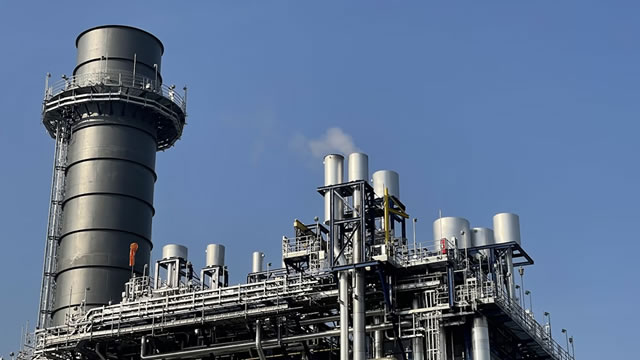
Group 1 - The current military escalation in the region has led to increased targeting of US bases, with Iranian sources claiming 27 bases were hit, potentially driving Brent crude prices to $150 in the near term if the situation escalates further [3] - The US lacks hypersonic missile capabilities, relying instead on older nuclear missiles that do not have mid-air steering capabilities, while Iran possesses advanced hypersonic missiles that could threaten US naval assets [5][6] - Sustained military operations against Iran could deplete US missile stockpiles quickly, as precision munitions like Tomahawks are costly and produced in limited quantities, raising concerns about the feasibility of a prolonged conflict [7] Group 2 - The base case scenario anticipates a short-term disruption with Brent crude prices spiking above $100 before stabilizing in the $80-90 range, contingent on the reopening of maritime passages [8] - Price action predictions suggest Brent could reach $85 to $90, reflecting a 20% increase, with WTI expected to hit $80, indicating that the market has already priced in some of the risks associated with the ongoing conflict [10] - The focus for market participants will be on identifying optimal re-entry points for long positions as the situation develops throughout the week [11]
Oil Stocks Heat Up Amid Iran War As S&P 500 Slips; How High Will Oil Prices Go?
Investors· 2026-03-02 16:58
Core Insights - Iran's attempts to damage oil infrastructure have resulted in only modest damage so far [1] Group 1 - The impact of Iran's actions on oil infrastructure has been limited, indicating a potential resilience in the sector [1]

Oil prices jump, stocks stumble after US strikes Iran
Yahoo Finance· 2026-03-02 16:06
U.S. stocks stumbled as oil prices jumped on the first trading day since the United States and Israel attacked Iran. On Feb. 28, the U.S. and Israel began striking Iran in a campaign that killed the nation's supreme leader, Ayatollah Ali Khamenei, and dozens of top officials and hit more than 1,000 targets inside the country, President Donald Trump said. Iran has retaliated with strikes against U.S. military bases, Israel and other nations in the Middle East. News of the strikes almost immediately pushe ...
深夜,集体飙升!暴涨50%!黄金、白银,却突然跳水!发生了什么?
券商中国· 2026-03-02 15:09
Group 1: Energy Market Dynamics - European natural gas futures surged by over 50% due to drone attacks on Qatari LNG facilities, which are crucial as Qatar accounts for approximately 20% of global LNG exports [1][4] - The price of European diesel futures spiked by 23%, reaching a two-year high, significantly outpacing the 8% increase in Brent crude oil prices [1][4] - The conflict in the Middle East has disrupted oil tanker traffic through the Strait of Hormuz, impacting the supply of over 4 million barrels of oil products daily [5] Group 2: Precious Metals Reaction - Spot silver experienced a sharp decline, with intraday losses nearing 6%, while gold's gains were reduced to under 1% [2] - Analysts suggest that the drop in precious metals may be attributed to profit-taking by investors [2] Group 3: Stock Market Response - The U.S. stock market showed a V-shaped recovery after an initial decline, with major indices like the Dow Jones and S&P 500 reducing their losses to below 1% [3]

投资策略专题:美以伊冲突最大的预期差:时长和霍尔木兹海峡
KAIYUAN SECURITIES· 2026-03-02 14:12
Core Insights - The report highlights a significant expectation gap regarding the duration of the current US-Israel-Iran conflict and the implications of the Strait of Hormuz on global energy supply [2][3] - The market's linear extrapolation of a quick resolution through "AI precision strikes" overlooks the decentralized defense mechanisms that may prolong the conflict and the irreversible impact of a blockade on energy supply [2][3] Current Three Major Expectation Gaps - The first gap is the misalignment between the expectation of a swift resolution following the elimination of Iranian leadership and the reality of Iran's hierarchical power structure, which allows for rapid command chain restoration despite potential losses [3] - The second gap concerns the physical rigidity of a potential blockade of the Strait of Hormuz, where the market underestimates the implications of Iranian naval operations and the paradox of increased production without transport capacity, threatening global energy security [3] - The third gap involves the US strategy of "watch and engage," where the government is likely to avoid large-scale ground conflicts due to political and financial constraints, leading to a prolonged period of geopolitical uncertainty in the Middle East [4] Recommended Investment Strategies - The report suggests focusing on "certain varieties" such as shipping (oil and dry bulk), gold, upstream energy (oil, coal, coal chemicals), and chemicals (methanol, urea) [5] - It also recommends "trend varieties" based on future developments, including defense and military technology (military AI, drones, missile defense), cybersecurity, and export manufacturing alternatives [5] - A macro perspective on "non-consensus" allocations is advised, emphasizing agriculture, forestry, animal husbandry, and volatility strategies to hedge against inflation risks [5] Investment Summary - Investors are encouraged to maintain confidence in a bull market while reducing slope expectations and seizing opportunities in physical asset allocations created by geopolitical shocks, particularly in energy and shipping [6] - Long-term strategies should prioritize technology, focusing on the redistribution of wealth driven by AI advancements [6] - Recent industry rotations in the A-share market validate the report's annual strategy outlook, indicating a shift in importance from beta to alpha, with a focus on stock selection logic under the "prosperity investment methodology" [6]