钢铁

Search documents
铁矿资源储量世界第一、煤炭第二,俄罗斯的钢铁工业到底有多牛?
Sou Hu Cai Jing· 2026-02-23 08:23
Group 1 - The Russian steel industry has a historical significance, having produced 431 million tons of steel in 1913 and becoming a major military supplier during World War II, producing 110,000 tanks and 29,000 bombers [1] - After the dissolution of the Soviet Union, Russia remains the largest steel producer in Europe and the world's top exporter of pig iron and ferroalloys, with steel exports accounting for 40% to 50% of total production, stabilizing between 25 million to 31 million tons annually [3] - Russia's steel industry benefits from the world's largest iron ore reserves and the second-largest coal reserves, with major steel companies having a self-sufficiency rate of 100% for iron ore and coal, contrasting with China's major steel firms that have only about 10% self-sufficiency [3] Group 2 - The strategic focus of Russian steel companies has shifted towards international markets due to limited domestic demand, producing low-value steel products domestically while high-value products are manufactured for mature markets in Europe and the U.S. [3] - Technological innovation in the Russian steel industry is notable, with advanced techniques enhancing steel quality, supported by rich mineral resources [3] - The high-quality steel products from Russia have become significant suppliers for Europe and the U.S., reflecting the global influence of the Russian steel industry beyond being a mere industrial symbol [5]

'A deal is a deal' - European officials refuse to accept tariff chaos
Youtube· 2026-02-23 08:07
Trade Relations and Tariffs - The US trade representative confirmed that existing trade agreements with the EU will remain in place despite the Supreme Court ruling, emphasizing that tariffs will continue regardless of the litigation outcome [1][2] - The European Commission has urged the US for clarity on future tariff policies, stating that the EU expects the US to honor its commitments and will not accept any increases in tariffs beyond previously agreed levels [3] - European Parliament lawmakers are considering pausing legislative work until clear commitments from the US are secured, highlighting the need for clarity in trade relationships [4] Industry Reactions - The German industry has expressed a mixed reaction, acknowledging the political checks and balances in the US while also noting that uncertainty could hinder investment and supply chain decisions [6][7] - The automotive and chemical industries in Germany are facing unchanged sectoral tariffs of 15%, which are not affected by the recent court ruling [8] - The French trade minister has suggested that the EU should adopt a united approach against the US's new tariffs, indicating a potential for retaliatory measures [10] Market Impact - Following the Supreme Court ruling, the French stock market index, CAC 40, reached a record high, driven by gains in luxury stocks, which are significantly exposed to exports [11][12] - Key export sectors for France, such as aerospace, currently remain unaffected by tariff changes, maintaining a 0% tariff exemption [12] - The French government is focused on adapting to the ruling's consequences while emphasizing the importance of maintaining fair trade rules and reciprocity [13][14]

美国九大法官罕见联手!特朗普关税墙轰然倒塌,代价却已在路上
Sou Hu Cai Jing· 2026-02-23 06:07
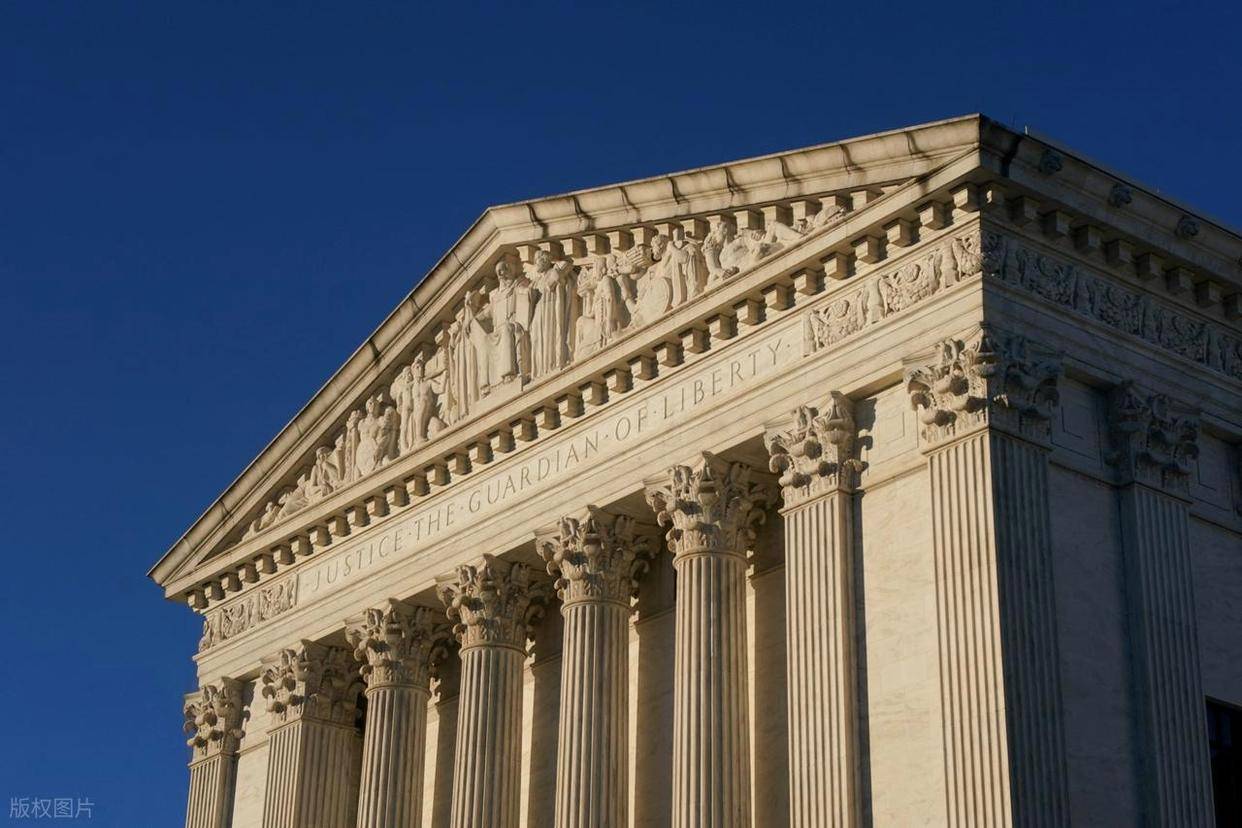
Group 1 - The U.S. Supreme Court made a landmark ruling overturning most tariffs imposed by Donald Trump on trade partners, emphasizing that such powers must be authorized by Congress, not exercised unilaterally by the President [1][5] - Despite the ruling, Trump announced retaliatory measures, including a 10% universal tariff, indicating that new trade barriers may be even more aggressive than previous ones [3][5] - The ruling serves as a legal foundation to restore trust in the U.S. system, which is crucial for business cooperation, attracting investment, and creating jobs [3][5] Group 2 - The ruling signals that even Trump must operate within legal boundaries, as he previously acted as if he had unchecked power, leading to significant consequences [5][10] - The Supreme Court's decision requires the government to refund billions to wrongly taxed importers, but the burden of increased living costs has fallen on ordinary Americans, who may not see any financial relief [7][8] - The anticipated tariff revenue, originally intended to support tax cuts for the wealthy, has evaporated, plunging the U.S. into a fiscal crisis, with the middle class likely bearing the brunt of the consequences [10][12]
东京秒跪!24小时内三记闷棍,美国把日本按回“殖民地”原形
Sou Hu Cai Jing· 2026-02-23 05:38
Group 1 - The U.S. has imposed significant tariffs on Japan, including 25% on automobiles, 30% on steel, and 20% on semiconductors, leading to a combined market value loss of $68 billion for major Japanese companies like Toyota, Nippon Steel, and Tokyo Electron [1][3] - The tariffs target critical sectors where Japan has substantial exports to the U.S., with automobiles making up 32% of Japan's exports to the U.S., steel 38% of U.S. steel imports, and semiconductors being vital for the U.S.-Japan alliance [3][5] - Japan's response to the tariffs is heavily influenced by security concerns, as the U.S. nuclear umbrella is crucial for Japan's defense against regional threats, and any retaliatory measures could jeopardize this protection [5][7] Group 2 - Japanese companies are under pressure to comply with U.S. demands due to their significant revenue dependence on the U.S. market, with Toyota deriving 30% of its profits from North America and Nippon Steel having 40% of its high-end steel sales directed to U.S. automakers [5][7] - Japan lacks effective countermeasures against the U.S. tariffs, with limited resources to leverage, such as a three-month supply of rare earths and a substantial holding of U.S. Treasury bonds that could backfire if sold [7] - The U.S. strategy appears to be to use Japanese investments to fill its own gaps in the semiconductor industry while simultaneously benefiting from Japanese market access to support its automotive workforce [7]


外媒炒作:美国一众盟友惨了,中国和巴西受益最大
Guan Cha Zhe Wang· 2026-02-23 05:19
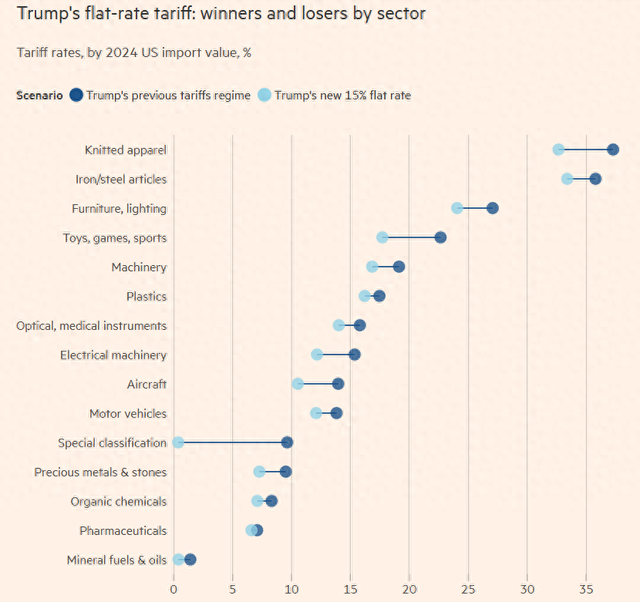
Core Viewpoint - The new 15% global uniform tariff introduced by Trump is expected to benefit countries like China and Brazil while adversely affecting traditional allies such as the UK, EU, and Japan [1][4]. Group 1: Tariff Impact on Countries - Brazil will see the largest average tariff reduction of 13.6 percentage points, followed by China with a 7.1 percentage point reduction [1]. - The new tariff structure significantly benefits countries previously criticized by the U.S., including Mexico and Canada, as well as Asian manufacturing economies like Vietnam, Thailand, and Malaysia [1]. - The UK is projected to be the most affected, with an average tariff increase of 2.1 percentage points, disappointing around 40,000 exporting companies [4]. Group 2: Reactions from Allies - The EU's average tariff is expected to rise by 0.8 percentage points, with Italy and France facing the most significant impacts [4]. - The EU has demanded clarification from the U.S. regarding the tariff increases, emphasizing that they will not accept any rise in tariffs, asserting that "a deal is a deal" [4]. - European Central Bank President Christine Lagarde echoed the EU's call for clear policy rules from the U.S. [5]. Group 3: U.S. Government's Position - U.S. Treasury Secretary and Trade Representative defended the new tariffs, claiming that all trade partners wish to maintain existing agreements despite the changes [6][8]. - The U.S. plans to continue trade investigations and may impose additional tariffs based on findings related to overcapacity in various countries [8]. - Trump's upcoming visit to China is aimed at maintaining bilateral stability and encouraging China to fulfill agreements, including purchasing U.S. agricultural products [9][10].
投资策略专题:节后市场展望
KAIYUAN SECURITIES· 2026-02-23 00:55
Market Trends - After the Spring Festival, the market shows a pattern where small-cap stocks outperform large-cap stocks, with a higher probability of market gains over 5, 10, and 20 trading days[2] - The CSI 2000 index has a significant increase of 10.4% with a 91% probability of rising in the 20 trading days post-holiday[14] Sector Performance - Technology and cyclical sectors are expected to lead, with notable gains in computer, communication, environmental protection, non-ferrous metals, steel, and textile sectors[2] - Consumer staples like food and beverage, banking, and household appliances are expected to lag behind[2] Spring Rally Dynamics - Historical data from 2016 to present indicates that 6 out of 10 spring rallies have led to a second wave of gains after an initial pullback[3] - The second wave of gains is often more profitable and closely tied to the prevailing market themes, which currently favor technology[3] Investment Strategy - Investors are advised to maintain confidence in the bull market, as the core drivers remain intact, with a suggested securities ratio of over 1.1 as a bullish signal[6] - Recommended sectors include military, media (gaming), AI applications, and core AI hardware, alongside materials benefiting from PPI improvements[33] Risk Factors - Potential risks include unexpected macroeconomic policy changes, geopolitical tensions, and shifts in industrial policy[7][34][35]
陆家嘴财经早餐2026年2月23日星期一
Sou Hu Cai Jing· 2026-02-23 00:50
Group 1 - The global market is focused on the new 15% tariffs announced by President Trump, which may face legal challenges, while bilateral trade agreements remain valid [4][10] - The A-share market is set to open for trading after the Spring Festival, with public funds prepared for investment, anticipating a balanced market structure with a focus on "technology growth" and "Chinese advantages" [5] - The Spring Festival box office has exceeded 5 billion yuan, marking the eighth consecutive year of over 100 million viewers [6] Group 2 - The Chinese government is pushing for modernization in agriculture, emphasizing the integration of various sectors and the development of technology-driven agriculture [2] - The steel industry in China has achieved significant reductions in energy consumption and emissions, with over 80% of crude steel capacity meeting ultra-low emission standards [6] - The AI industry is experiencing strong demand, with companies like SK Hynix and Huagong Technology reporting full order books and operational capacity [8] Group 3 - The global investment landscape is seeing a surge in capital inflow into Latin American markets, with the MSCI Emerging Markets Latin America Index reaching an eleven-year high [11] - The Chinese yuan has been appreciating against the US dollar, driven by favorable external conditions and increased corporate demand for currency exchange [11]

败诉后美国对华关税彻底归零?只下调了5%,未来大概率加回来
Sou Hu Cai Jing· 2026-02-23 00:01
Group 1 - The U.S. Supreme Court ruled that the Trump administration's imposition of tariffs under the International Emergency Economic Powers Act was illegal, leading to the potential repeal of several previously announced tariffs [1] - Following the ruling, the White House announced the termination of related executive orders, marking a new chapter in the legal battle over tariff legitimacy [1] - The Trump administration quickly shifted strategies, invoking Section 122 of the Trade Act to impose a 15% additional tariff on most imported goods, effective for 150 days, complicating the already intricate U.S. tariff policy landscape [1] Group 2 - The U.S. tariff system against China is layered, starting with the Most Favored Nation rate, which was around 2% before 2018, but the introduction of the "301 tariffs" significantly changed this, becoming a core tool in the U.S.-China trade war [3] - The Biden administration further escalated tariffs, imposing up to 100% on electric vehicles and raising semiconductor tariffs to 50% [3] - The "232 tariffs" target specific goods like steel and automobiles under the guise of national security [3] Group 3 - The tariffs known as "reciprocal tariffs" and "fentanyl tariffs," implemented under the International Emergency Economic Powers Act, were invalidated by the Supreme Court ruling, which could theoretically reduce the average tariff on Chinese imports by 20% [6] - However, the introduction of the new "122 tariffs" at 15% counteracts this reduction, resulting in a net decrease of only 5%, keeping the average tariff at approximately 30.5% [6] - This dynamic adjustment highlights the U.S. government's strategic use of various legal provisions to achieve policy goals while maintaining legal legitimacy [6][11] Group 4 - Historically, U.S. tariff policy has shown a pattern of tool iteration, with the International Emergency Economic Powers Act being favored for its expediency during the Trump administration [7] - The Supreme Court's ruling has set clear legal boundaries for tariff imposition, pushing the government to rely on legally recognized provisions like "232 tariffs" and "301 tariffs" [7] - Although these provisions require longer preparation periods, they offer stability and targeted high tariffs on specific goods, indicating a shift from rapid response to procedural compliance in U.S. tariff strategy [9] Group 5 - The U.S. judicial system does not oppose tariffs per se but corrects procedural violations, suggesting future tariffs will increasingly depend on legally vetted provisions, leading to longer implementation cycles but more predictable outcomes [11] - In the short term, a 10% tariff reduction may alleviate some export pressures for China, but the average tariff remains significantly higher than pre-2018 levels, indicating ongoing cost pressures [13] - The retention of "301 tariffs" and "232 tariffs" allows for targeted high tariffs on strategic industries, necessitating a comprehensive approach from China in formulating response strategies [13]
中国3200兆帕超级钢问世,西方却对中国的科技升级,感到忧心忡忡
Sou Hu Cai Jing· 2026-02-22 18:57
Core Viewpoint - The emergence of China's 3200 MPa super steel marks a significant technological breakthrough, challenging Western dominance in high-end steel production and reshaping the global steel industry landscape [1][3][16]. Group 1: Technological Breakthrough - China's new super steel has a strength of 3200 MPa, which is four times stronger than the US military's HSLA-115 steel, previously considered a benchmark [3][5]. - The development of this steel represents a shift from traditional methods to innovative techniques, allowing for a significant increase in strength without the need for costly processes [11][12]. Group 2: Market Dynamics - The introduction of 3200 MPa steel has disrupted the market, allowing Chinese companies to replace imports and gain competitive advantages over Western suppliers [18][21]. - China's steel industry has seen a surge in new product sales, reaching 290,000 tons in 2023, indicating a shift in the global supply chain dynamics [18][20]. Group 3: Strategic Implications - The advancements in steel technology enable China to enhance its military and industrial capabilities, potentially altering the balance of power in global defense and manufacturing sectors [16][21]. - Western companies, such as ArcelorMittal, are facing challenges as their traditional patent protections become less effective against China's innovative approaches [23].
美国对英国加征15%关税!安德鲁和曼德尔森或涉叛国指控!查尔斯早就收到举报信...
Sou Hu Cai Jing· 2026-02-22 13:44
Group 1 - The United States will impose a 15% tariff on British goods, escalating tensions in UK-US trade relations [2][3] - The new tariff will increase the tax rate on British exports to the US from 10% to 15%, significantly raising prices for British goods in the US market [5][7] - Approximately 40,000 UK exporting companies will be affected by this new tax policy [7] Group 2 - The new tariff policy is set to last for 150 days, after which it requires approval from the US Congress to continue [5] - The UK government plans to communicate with the US to understand the specific impacts of the new tariff and aims to maintain trade relations [9] - The US may initiate new trade investigations against the UK, focusing on areas such as industrial overcapacity, forced labor, drug pricing, and digital service taxes [9]