
通信

Search documents
通信行业研究:台积电业绩超预期,千问App全面接入阿里生态
SINOLINK SECURITIES· 2026-01-18 05:54
1)台积电资本支出及业绩超预期:A)台积电公布 2025 年 Q4 财务报告,公司当季营收为 337.3 亿美元,同比+25.5%, 环比+1.9%。全面上修业绩增速与毛利率指引,将 2024 至 2029 年 AI 营收 CAGR 从原先的"40%中段"提升至"50%中 高段"。B)2026 年资本支出规模进一步扩大至 520 亿至 560 亿美元。公司管理层强调,约七成至八成资本将投向先 进制程技术,其余用于特殊制程、先进封装等领域,以应对持续旺盛的 AI 芯片需求。全球 AI 算力需求持续旺盛。2) 国产芯片、国产大模型、国产应用携手共进,加速国产链向上:A)首个完全依托国产芯片全程训练的 SOTA 多模态模 型 GLM-Image,开源 24 小时内登顶全球知名 AI 开源社区 Hugging Face Trending,标志国产 AI 模型的端到端自主研 发能力在国际竞争中取得突破。B)DeepSeek 发布新论文,提出 Engram 机制,在等参数、等算力条件下显著提升模型 在知识调用、推理、代码、数学等任务上的表现。同时,DeepSeek 开源相关记忆模块 Engram。我们认为此机制意味 着在 ...

博时基金2026年展望:总量修复方向确定,聚焦成长周期双主线
2 1 Shi Ji Jing Ji Bao Dao· 2026-01-17 14:33
Group 1: Investment Strategy and Market Outlook - The core viewpoint of the conference is the emphasis on multi-asset allocation for 2026, with a focus on the macroeconomic trends and investment opportunities in the technology sector [1][2] - The Chief Investment Officer of Bosera Fund highlighted that the technology investment framework involves two key valuation phases: initial valuation elasticity during the early growth stage and quality of growth during the profit realization phase [1] - Artificial intelligence is identified as a significant investment direction for 2026, with opportunities in overseas computing power, domestic computing power, AI large models, commercial aerospace, humanoid robots, quantum computing, and controlled nuclear fusion [1] Group 2: Fixed Income and Equity Market Analysis - The Senior Investment Director of Bosera Fund expects a marginal improvement in bond market returns in 2026, with fiscal policy maintaining a reasonable expansion and monetary policy keeping interest rates low [2] - The equity market is projected to show signs of stabilization in 2025, with A-share profits expected to maintain a growth rate above 0%, and a recovery in profitability indicated by a 11.3% growth rate in the latest quarterly reports [2][3] - The report suggests that while there may be short-term fluctuations in A-share earnings in Q4 2025, leading indicators point towards a clearer direction for profit recovery in 2026, supported by a weak recovery in PPI [3] Group 3: Sector Rotation and Investment Opportunities - The report indicates that cyclical sectors are likely to become important rotation themes, with communication, electronics, and non-ferrous metals sectors expected to maintain balanced valuations amid high prosperity [3][4] - The investment landscape for 2026 suggests a more balanced style between large and small-cap stocks, influenced by the recovery of PPI and liquidity trends [4]


首台、首次、首飞!见证创新中国步履铿锵
Xin Lang Cai Jing· 2026-01-17 08:25
Group 1 - The core viewpoint emphasizes the importance of technological innovation as a foundation for national strength and corporate success, highlighting recent breakthroughs in various technological fields in China [1] - The article outlines significant achievements in China's technological advancements during the "14th Five-Year Plan" period, including the operation of the "Tianhe" space station and the success of the "Chang'e 6" lunar mission [1] - It stresses the need for continuous reform in the technology system and the importance of integrating innovation with industry to enhance productivity and address existing challenges [2] Group 2 - The article discusses China's global technological cooperation, mentioning partnerships with over 160 countries and initiatives aimed at promoting international scientific collaboration [3] - It highlights the role of Chinese technology in improving infrastructure and operational efficiency in various regions, such as Brazil, South Africa, and Singapore [3] - The future outlook suggests that with the implementation of innovation policies and an optimized environment, China's path in technological innovation will lead to significant contributions to high-quality development [4]
韩笑鹏:毛泽东的这场谈话,点破了拉美靠什么才能真正“逆天改命”
Xin Lang Cai Jing· 2026-01-17 01:16
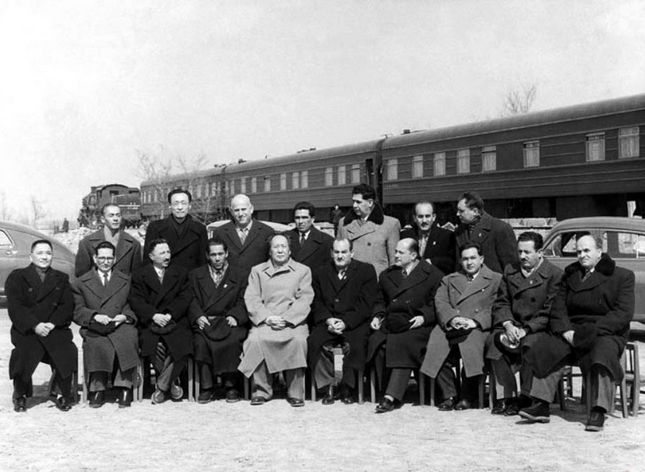
Core Viewpoint - The article discusses the historical dialogue between Mao Zedong and Latin American communist leaders in 1959, highlighting the contrasting economic trajectories of China and Latin America over the past six decades, emphasizing China's successful industrialization and the challenges faced by Latin American countries. Group 1: Historical Context - In March 1959, Mao Zedong met with leaders from 12 Latin American countries, acknowledging China's economic struggles compared to their relatively prosperous nations [3][4]. - At that time, countries like Argentina and Venezuela were economically advanced, while China was just beginning its industrialization journey [4][5]. Group 2: Economic Development - Over the past 60 years, China has developed a comprehensive industrial system, dominating global high-speed rail and advancing in AI and quantum computing, while many Latin American countries remain stagnant or trapped in the "middle-income trap" [4][8]. - Mao's concept of "breaking the superstition" about Western superiority is identified as a key factor in China's economic transformation [4][8]. Group 3: Psychological Barriers - Mao pointed out the psychological barriers of "fear of the West" and "worship of the West" that hindered development in many countries, emphasizing the need to overcome these beliefs for independent growth [5][6]. - The article argues that the lack of a critical perspective on Western dominance has led to a failure in Latin America's industrialization efforts [6][8]. Group 4: Social Revolution - The article highlights the importance of social revolution in China's industrialization, which involved a complete restructuring of society, unlike Latin America, where feudal structures persisted [12][13]. - China's land reform and social revolution allowed for direct mobilization of resources for industrialization, contrasting with Latin America's reliance on landowners [14][16]. Group 5: Political and Economic Sovereignty - The article discusses the significance of political sovereignty and the ability to resist external pressures, particularly from the U.S., in achieving industrialization [26][29]. - It emphasizes that without a strong state capable of asserting independence, countries like those in Latin America struggle to develop high-end industries [22][29]. Group 6: Lessons for Development - The article concludes with lessons for developing countries, stressing the need to break free from outdated social structures and to challenge the notion of Western superiority to achieve true industrialization [32][33]. - It advocates for a proactive approach to industrialization, where countries must not only adopt foreign technologies but also develop their own capabilities to compete globally [24][33].
【环球财经】市场担忧货币和关税政策走向 纽约股市三大股指16日下跌
Xin Hua Cai Jing· 2026-01-17 00:33
Group 1 - The U.S. stock market experienced a decline on January 16, with the Dow Jones Industrial Average falling by 83.11 points to close at 49,359.33, a decrease of 0.17% [1] - The S&P 500 index dropped by 4.46 points, closing at 6,940.01, down 0.06%, while the Nasdaq Composite Index fell by 14.634 points to 23,515.388, also down 0.06% [1] - Among the S&P 500 sectors, six out of eleven sectors rose, with the Real Estate and Industrial sectors leading gains at 1.20% and 0.65%, respectively, while the Health Care and Communication Services sectors led losses at 0.84% and 0.72% [1] Group 2 - The Federal Reserve reported a 0.4% month-over-month increase in the industrial production index for December 2025, surpassing market expectations of 0.1%, with the previous month's increase revised from 0.2% to 0.4% [1] - The industrial capacity utilization rate for December 2025 was reported at 76.3%, exceeding market expectations of 76% and the revised previous month's figure of 76.1% [1] - Micron Technology announced the construction of a chip factory in upstate New York with a total investment of $100 billion, expected to begin production around 2030, resulting in a significant stock price increase of 7.76% on the same day [2]
中国关键时刻力挺伊朗!美对相关国家加征25%关税,外交部强硬回应
Sou Hu Cai Jing· 2026-01-16 19:26
Core Viewpoint - The article discusses the impact of the U.S. imposing a 25% tariff on all countries trading with Iran, highlighting the psychological warfare in global trade and the need for countries to reassess their trade strategies in response to U.S. unilateral actions [1][3]. Group 1: U.S. Trade Policies - The U.S. has engaged in "long-arm intervention," undermining WTO rules and causing unprecedented trade friction due to unilateral tariffs over the past five years [3][5]. - Historical precedents show that U.S. tariffs, such as those on steel and aluminum in 2018, have led to retaliatory measures from allies like the EU, resulting in a global trade "offensive and defensive" battle [5][7]. Group 2: Global Responses - China has firmly opposed U.S. trade bullying, calling for a collective effort to uphold multilateral trade order, signaling a strong stance against U.S. tariffs [5][11]. - Other countries, including India, have also expressed their intent to prioritize national interests over U.S. pressures, indicating a shift towards unity among emerging economies [9][11]. Group 3: Economic Implications - The International Monetary Fund reported that global trade growth fell to its lowest in nearly a decade in 2023, attributing this decline to unilateral tariffs and sanctions [11][13]. - The article suggests that the current trend of unilateralism could lead to a fragmented global economy, where countries must tighten their economic belts [11][13]. Group 4: Emerging Trends - Countries in Southeast Asia and Latin America are enhancing their self-sufficiency in technology, energy, and trade, recognizing the importance of cooperation over reliance on a single dominant power [13][15]. - Leaders from various nations, including Brazil and South Africa, are advocating for regional trade cooperation and diversifying partnerships to strengthen their economic resilience [15][16]. Group 5: Future Outlook - The article posits that the essence of global trade is mutual benefit, and the increasing resistance to U.S. unilateralism may lead to a more balanced international trade environment [17][18]. - The trend towards multilateral cooperation is seen as essential for maintaining economic stability and fairness in global trade [18].
A股市场交投活跃 周成交额超17万亿元
Zheng Quan Shi Bao· 2026-01-16 17:44
Market Overview - The A-share market experienced a high and then a pullback, with the Shanghai Composite Index barely holding above 4100 points, while major indices like the Shenzhen Component and Northbound 50 closed with small gains but long upper shadows [1] - The market saw active trading, with daily trading volumes frequently hitting historical highs, and weekly trading volume reaching a record 17 trillion yuan [1] Fund Flows - Significant inflows of leveraged funds continued despite market adjustments, with net financing purchases exceeding 91.3 billion yuan for the week, marking a five-month high, and the financing balance reaching 2.7 trillion yuan, setting a new record for nine consecutive days [2] - The computer industry attracted over 12.3 billion yuan in net financing purchases, while electronics and telecommunications received 10.3 billion yuan and over 9 billion yuan, respectively [2] - Major sectors like defense and non-bank financials saw net outflows of over 24.3 billion yuan and 10.8 billion yuan, respectively [2] Chip Sector - The chip sector saw multiple instances of end-of-day buying, with the sector index hitting historical highs in 7 out of the last 10 trading days [3] - Companies like *ST Chengchang and Liou Co. experienced significant price increases, with *ST Chengchang hitting 128.98 yuan per share, the highest price for any ST stock [3] - Reports indicate that major chip manufacturers AMD and Intel have sold out their server CPU production for the year, leading to planned price increases of 10%-15% [3] Power Industry Outlook - The power equipment sector has shown strong performance, with indices for ultra-high voltage, grid equipment, smart grids, and energy storage reaching historical highs [4] - The State Grid announced a fixed asset investment of 4 trillion yuan for the 14th Five-Year Plan, a 40% increase from the previous plan, focusing on technological innovation and new power system construction [4] - Goldman Sachs predicts that investments in global digital infrastructure and energy systems driven by AI could reach 5 trillion dollars over the next decade, with power grid equipment being a primary beneficiary [4]

加纳2025年10月经济增长3.8%,服务业占主导地位
Shang Wu Bu Wang Zhan· 2026-01-16 16:10
Core Viewpoint - Ghana's economy is projected to grow by 3.8% in October 2025, an increase from 3.0% in the same period last year, driven primarily by the service and industrial sectors [1] Group 1: Economic Growth - The economic growth rate for October 2025 is 3.8%, up from 3.0% in the previous year [1] - The service sector remains the main growth driver, with a growth rate of 5.5% in October 2025, slightly down from 5.6% in the previous year [1] - The industrial sector shows significant improvement, with a growth rate of 3.0%, a substantial increase from 0.4% in October 2024 [1] Group 2: Sector Contributions - The service sector accounts for 74.7% of the total economic growth, supported by strong performances in telecommunications, wholesale, and retail trade [1] - The agricultural sector's growth has slowed to 0.9%, down from 2.1% in the previous year, contributing only 1.3% to overall economic growth [1]
2025年市场全复盘:“水牛”中行业生态的重要变迁?
Guohai Securities· 2026-01-16 15:13
Group 1 - The A-share market in 2025 experienced a significant upward trend, with an overall increase of 27.65%, driven primarily by valuation recovery and two major uptrends in the market [7][12][19] - The market can be divided into four distinct phases: Phase 1 (Jan-Mar) led by DeepSeek and robotics concepts; Phase 2 (Apr-Jun) characterized by external shocks and internal support; Phase 3 (Jun-Nov) marked by liquidity and economic resonance; and Phase 4 (Nov-Dec) involving a consolidation phase after the main index rise [7][24][49] Group 2 - In 2025, 19 out of 30 Shenwan first-level industries (excluding comprehensive) achieved valuation recovery, with 14 industries seeing performance rebounds, indicating a broad-based improvement across sectors [19][24] - The electronic industry reached a market capitalization peak for the first time, surpassing traditional leaders, while Agricultural Bank's market cap exceeded that of Kweichow Moutai, marking a significant shift in industry leadership [7][19][32] - The number of stocks doubling in value in 2025 was second only to 2015, reflecting a strong market performance and investor interest [7][19][32] Group 3 - The A-share market's liquidity reached new heights, with financing balances hitting historical highs and total market capitalization surpassing 100 trillion yuan [12][32][33] - The growth and cyclical styles outperformed, with non-financial sectors like materials, electronics, and biomedicine leading the gains, while high-dividend assets lagged behind [18][19][24] - The market structure underwent notable changes, with increased industry rotation and a high degree of dispersion in industry performance, second only to 2020 [7][19][24]
三维通信(002115)披露2025年度业绩预告,1月16日股价下跌9.98%
Sou Hu Cai Jing· 2026-01-16 14:45
Core Viewpoint - The company, Sanwei Communication, is forecasting a significant net loss for the fiscal year 2025, indicating ongoing financial challenges despite a projected increase in revenue [1] Financial Performance - The estimated net profit attributable to shareholders for 2025 is projected to be between -15 million and -10 million yuan, compared to a loss of -271.42 million yuan in the previous year [1] - The net profit after deducting non-recurring gains and losses is expected to range from -34.5 million to -23 million yuan, down from -295.68 million yuan year-on-year [1] - Projected operating revenue for 2025 is estimated to be between 10 billion and 15 billion yuan [1] Business Operations - There is a decline in domestic communication business revenue, while foreign sales are impacted by exchange rate fluctuations leading to foreign exchange losses [1] - The company will not be adding new goodwill impairment provisions this period, and credit impairment losses are expected to decrease compared to the previous year [1] Stock Performance - As of January 16, 2026, the stock price closed at 17.59 yuan, down 9.98% from the previous trading day, with a total market capitalization of 14.265 billion yuan [1] - The stock opened at 17.59 yuan, with a trading volume of 2.92 billion yuan and a turnover rate of 2.21% [1]
