
零售业

Search documents
下一个中国还是中国,下一个美元还是美元...吗?
Ge Long Hui· 2025-06-30 11:07
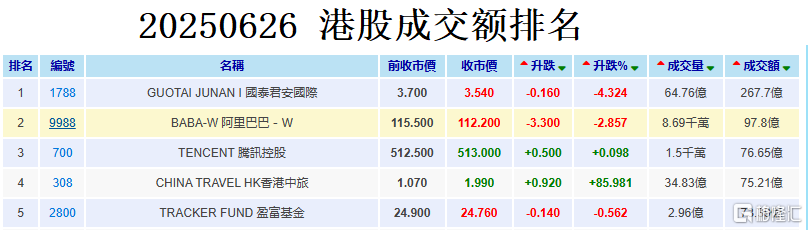
Group 1 - The core viewpoint of the capital market in the first half of the year is that China remains the most attractive investment destination despite the recovery of Hong Kong and A-shares [1] - The S&P 500 and Nasdaq reached new highs, but the Hang Seng Index and Hang Seng Tech Index showed stronger performance year-on-year [1] Group 2 - The outlook for the second half of the capital market suggests that the US dollar will continue to dominate, especially with the introduction of stablecoins [2] - The "Genius Act" allows the US Treasury to issue stablecoins backed by government bonds, which could significantly impact the financial landscape [2] - Major companies across various sectors, including traditional finance and technology, are exploring the issuance of stablecoins to enhance profitability [2] Group 3 - In Hong Kong, the approval of a virtual asset trading license for Guotai Junan International led to a significant stock price increase of 198% and a trading volume that surpassed major companies like Tencent and Alibaba [3] - The market is experiencing volatility, with unexpected surges in stock prices, such as China Travel HK, which saw a near 100% increase amid privatization rumors [3][4] - The recent market behavior suggests a trend towards speculative trading, raising concerns about the sustainability of such movements [3][4] Group 4 - The author has recently shorted Gu Ming, indicating a strategy based on technical analysis rather than fundamentals, highlighting the importance of market sentiment in trading decisions [6] - The current market environment in Hong Kong is characterized by a wealth effect, suggesting a positive outlook for investors despite the risks associated with speculative trading [6]


重点是企业盈利:6月经济综述
HONGTA SECURITIES· 2025-06-30 07:01
Economic Overview - Despite rising global trade friction costs, China's economic data in May showed strong resilience, with social retail sales increasing by 6.3% year-on-year and industrial added value growing by 5.8% year-on-year, suggesting a GDP growth rate of around 5.2% in the second quarter, making it feasible to achieve the annual growth target of 5% [1][7] - However, from January to May, industrial enterprise profits declined by 1.1% year-on-year, a drop of 2.5 percentage points from the previous month, indicating multiple challenges in the transition from economic stabilization to profit recovery [1][7] Analysis of Profit Decline - The key reason for the weakening of enterprise profits is low prices, with the Producer Price Index (PPI) showing a cumulative year-on-year decline of 2.6% from January to May and a single-month decline of 3.3% in May, leading to a year-on-year drop in industrial profit margins by 4.24% [2][9] - On the supply side, manufacturing investment has consistently outpaced overall fixed asset investment, leading to capacity expansion primarily in high-tech sectors, making it difficult to execute capacity reduction in emerging manufacturing fields [2][12] - On the demand side, external demand is constrained by factors such as U.S. inventory replenishment, uncertainty in total demand, and increased tariff rates, while domestic consumption growth relies heavily on policies like trade-in programs and preemptive sales events [2][15] Policy Response and Market Impact - In the context of weak demand, enterprises face inventory reduction pressures, making price recovery crucial. Policies need to enhance counter-cyclical adjustments to promote price recovery and correct discrepancies in macro and micro expectations [2][19] - Before clear policy signals emerge, bonds hold investment value, while the stock market may benefit from improved liquidity and sentiment recovery, although a steady upward trend relies on continuous improvement in corporate profits [2][19]
热点思考 | 如果美国失业率升至4.6%?——关税“压力测试”系列之十三(申万宏观·赵伟团队)
赵伟宏观探索· 2025-06-29 13:43
Group 1 - The core viewpoint of the article highlights the rising risks of unemployment in the U.S. labor market, driven by weakening labor supply and demand, and the potential impact of tariffs on employment [2][3][4] - The U.S. labor market is crucial for the economy, with consumer spending significantly contributing to GDP growth, primarily driven by labor income [2][6] - The unemployment rate is expected to rise, with estimates suggesting it could reach 4.5-4.6% by the end of the year, influenced by the new tariffs [3][89] Group 2 - The article discusses the employment impact of tariffs, indicating that a 1% decline in GDP could lead to a 0.3-0.7% increase in unemployment, based on Okun's Law [3][89] - The current tariff situation is expected to have a more significant impact on the manufacturing sector compared to previous tariff implementations, with a broader economic slowdown anticipated [65][77] - The article notes that the current economic environment is characterized by declining wage growth and increased precautionary savings among consumers, which could further exacerbate employment challenges [77][81] Group 3 - The "Sahm Rule" is mentioned as a potential indicator of recession, suggesting that if the unemployment rate rises to 4.6%, it could trigger recession signals [4][99] - Historical data shows that the Sahm Rule has a high success rate in predicting recessions, with the article indicating that the current labor market conditions could lead to its activation in the coming months [99][100] - The article emphasizes that the labor market is currently in a "loosened" state, with demand-side weaknesses likely driving the unemployment rate upward [100]
美国第一季度经济萎缩0.5%,关税进口激增拖累经济
Sou Hu Cai Jing· 2025-06-27 05:06
Economic Performance - In the first quarter of 2025, the US economy contracted by 0.5% on a year-over-year basis, which was below expectations and undermined confidence in sustained economic growth [1][3] - The contraction is attributed to complex structural issues within the economy, with tariff policies significantly impacting both imports and exports [1][5] Trade Dynamics - The US saw an import growth adjustment to 37.9% and export growth adjusted to 0.4%, with net imports dragging down GDP by nearly 4.7 percentage points [3] - The reliance on imports has increased, exacerbating the trade deficit and highlighting the imbalance in the economic structure [3][6] Consumer Spending - Personal consumption expenditure, which accounts for about 70% of GDP, contributed only approximately 0.3 percentage points to GDP growth in the first quarter, indicating a decline in consumer purchasing power [3][5] - Consumer confidence has weakened, particularly in an uncertain economic environment, which has become a significant factor in hindering economic growth [3][8] Tariff Policy Impact - The "America First" trade policy implemented by the Trump administration aimed to protect domestic manufacturing but resulted in increased prices for imported goods, raising production costs for US businesses [5][6] - This policy has inadvertently shifted the burden onto consumers, leading to a slowdown in overall economic growth [5][8] Global Economic Uncertainty - The interconnectedness of the US economy with global markets means that uncertainties in other major economies, such as China and the EU, directly affect US export growth [6][8] - The slowdown in global economic growth has led many US companies to reduce investment and production plans, further contributing to domestic economic contraction [6][8] Structural Issues - The current economic challenges reflect long-term structural problems, with the US economy's dependence on external markets making it vulnerable to global uncertainties [8] - Addressing these structural issues, including reducing reliance on imports and adjusting trade strategies, is crucial for sustainable economic growth in the future [8]
“三个全国率先”助力海南国际旅游消费中心建设
Zhong Guo Xin Wen Wang· 2025-06-27 03:27
Core Viewpoint - Hainan Province is pioneering the "reassured consumption" model with an "online commitment + dynamic star rating" service to enhance consumer protection and optimize the consumption environment, supporting the construction of an international tourism consumption center [1][2]. Group 1: Policy Implementation - Hainan is the first in the country to implement the "reassured consumption" online commitment system, allowing eligible businesses to make an online commitment to "integrity management and assured consumption," which, after a 45-day public commitment period without anomalies, automatically qualifies them as "reassured consumption units" [1][2]. - The dynamic star rating system categorizes "reassured consumption units" into three levels: three-star, four-star, and five-star, with differentiated dynamic supervision based on their ratings [1][2]. Group 2: Regulatory Framework - Businesses with good credit and service quality can be promoted in star ratings and experience reduced random inspection frequency, adhering to the principle of "no disturbance without issues" [2]. - Businesses that fail to fulfill commitment terms or engage in illegal activities will receive warnings and may face downgrading or removal of their star rating [2]. Group 3: Technological Integration - Hainan has established a "reassured consumption" smart regulatory system that enables data interoperability with platforms like "Haiyi Ban," "Haizheng Tong," and the 12345 service, allowing online completion of applications, verifications, and regulatory processes [2]. - The smart regulatory system includes online evaluation and complaint functions, facilitating communication between businesses, consumers, and regulatory authorities [2]. Group 4: Market Impact - The "reassured consumption in Hainan" initiative has expanded to over 20 industries, creating more than 40 assured consumption business circles, with a total of 128,000 "reassured consumption units" across the province [2]. - The market regulatory authority aims to enhance the quality and reach of the "reassured consumption in Hainan" initiative, increasing public awareness and participation to build a regional public brand for "Hainan consumption" [3].
晚间公告丨6月26日这些公告有看头
第一财经· 2025-06-26 15:20
Major Events - Ningbo Huaxiang's subsidiary signed a contract with Shanghai Zhiyuan to produce full-size biped robots over the next three years, which will positively impact the company's future business expansion [3] - Changcheng Military Industry's stock price has deviated significantly, with a current price-to-book ratio of 8.19, higher than the industry average of 4.69 [5] - Yintai Holdings reported that some offline stores are selling products related to Pop Mart, although this business contributes less than 0.02% to overall revenue [6] - Longjin Tui's stock will be delisted on June 27, 2025, following a notice from the Shenzhen Stock Exchange [7] - Nord Shares' stock price has increased by 100% over nine trading days, indicating potential trading overheating risks [8] Performance Outlook - Dalian Heavy Industry expects a net profit of 304.6 million to 326 million yuan for the first half of 2025, representing a year-on-year growth of 11.12% to 18.92% [15] Shareholding Changes - Fuguang Shares' major shareholder plans to reduce its stake by up to 3% due to funding needs [16] - Sanyou Lianzhong's major shareholders plan to collectively reduce their stake by up to 3% [17] - Huate Dain's major shareholder has increased its stake by 1% and plans to further increase it by up to 3.7% [18] Buyback and Financing - Shengmei Shanghai plans to adjust its share buyback price cap to 120 yuan per share, with a total buyback amount between 50 million and 100 million yuan [19] - Xining Special Steel intends to raise up to 1 billion yuan through a private placement to supplement working capital [20] - Beite Technology plans to raise up to 300 million yuan for the construction of a production base in Thailand [21] - Hongte Technology is set to raise up to 650 million yuan through a rights issue for various projects [22][23] Major Contracts - Jingce Electronics' subsidiary signed sales contracts for semiconductor measurement equipment totaling 113 million yuan [24]

格林大华期货中国宏观经济半年报:全球经贸关系演化带来不确定
Ge Lin Qi Huo· 2025-06-26 13:00
Report Industry Investment Rating - Not provided in the content Core Viewpoints - In May, China's fixed - asset investment growth was lower than market expectations, and the growth rates of infrastructure investment, manufacturing investment, and real estate investment were all lower than those in April. Consumption growth in May was significantly better than market expectations, but it may not be sustainable. Industrial production maintained stable and rapid growth in May. China's exports showed resilience in May. The Chinese economy is expected to operate steadily in the second quarter. There is uncertainty in global economic and trade relations, which may pose challenges to China's economic growth in the third quarter [83]. Summary by Related Content 1. Fixed - Asset Investment - From January to May, national fixed - asset investment increased by 3.7% year - on - year, lower than the market expectation of 4.0% and the 4.0% growth from January to April. General infrastructure investment (including electricity) increased by 10.42% year - on - year from January to May, down from 10.85% in January - April. Narrow infrastructure investment (excluding electricity) increased by 5.6% year - on - year from January to May, down from 5.8% in January - April. Manufacturing investment increased by 8.5% year - on - year from January to May, in line with market expectations but lower than the 8.8% growth in January - April. National real estate development investment decreased by 10.7% year - on - year from January to May, more than the 10.3% decline in January - April [4]. - From January to May, equipment and tool purchase investment increased by 17.3% year - on - year, with a contribution rate of 63.6% to the growth of total investment and driving total investment growth by 2.3 percentage points [6]. 2. Real Estate - From January to May, the sales area of newly - built commercial housing decreased by 2.9% year - on - year, and the sales volume decreased by 3.8% year - on - year [9]. - In May, the sales price of second - hand residential properties in first - tier cities decreased by 0.7% month - on - month, with the decline rate expanding by 0.5 percentage points compared with the previous month. In second - and third - tier cities, the sales price of second - hand residential properties decreased by 0.5% month - on - month, with the decline rate expanding by 0.1 percentage points [12]. - From June 1 - 25, the average daily transaction area of commercial housing in 30 large - and medium - sized cities was 260,000 square meters, a 6% year - on - year decrease [14]. - The national second - hand housing price is in a bottom - grinding state, and the decline rate this year is slower than last year [16]. 3. Consumption - In May, the total retail sales of consumer goods reached 4.1326 trillion yuan, a 6.4% year - on - year increase, higher than the market expectation of 4.9%. From January to May, the total retail sales of consumer goods increased by 5.0% year - on - year [19]. - In May, the retail sales of household appliances and audio - visual equipment, communication equipment, and other categories had relatively large year - on - year increases. The retail sales of basic necessities and some upgraded consumer goods also showed good growth momentum [21]. - In May, the total retail sales of consumer goods increased by 0.94% month - on - month. The consumer goods replacement policy and the "618" e - commerce promotion activities accelerated the release of consumption demand. A total of 162 billion yuan of central funds have been allocated in the first and second quarters this year, and 138 billion yuan will be allocated in the third and fourth quarters [24]. - From January to May, the total service retail sales increased by 5.2% year - on - year. The retail sales of tourism consulting and leasing services, cultural and recreational services showed good growth, and catering revenue increased by 5.0% year - on - year [26]. 4. Exports and Imports - In May, China's exports increased by 4.8% year - on - year in US dollars, and imports decreased by 3.4% year - on - year. The trade surplus was 103.22 billion US dollars [32]. - In May, China's exports to ASEAN increased by 14.84% year - on - year, exports to the EU increased by 12.02% year - on - year, and exports to the US decreased by 34.52% year - on - year [35]. - In May, China's exports to regions other than the top five export destinations continued to grow at a high rate, with a year - on - year increase of 11.69% [38]. 5. Industrial Production - In May, the added value of industrial enterprises above the designated size increased by 5.8% year - on - year, slightly higher than the market expectation of 5.7% [41]. - In May, the added value of the equipment manufacturing industry above the designated size increased by 9.0% year - on - year, and the added value of the high - tech manufacturing industry increased by 8.6% year - on - year [43]. - In May, the product sales rate of industrial enterprises above the designated size was 95.9%, a 0.7 - percentage - point year - on - year decrease [46]. 6. Employment - In May, the national urban surveyed unemployment rate was 5.0%, a 0.1 - percentage - point decrease from the previous month [49]. - In May, the unemployment rate of 16 - 24 - year - old labor force (excluding students) in urban areas was 14.9%, 0.7 percentage points higher than the same period last year [52]. 7. Prices - In May, the CPI decreased by 0.1% year - on - year and 0.2% month - on - month. The year - on - month decline in CPI was mainly affected by the decrease in energy prices [54][57]. - In May, the PPI decreased by 3.3% year - on - year and 0.4% month - on - month, with the decline continuing for three consecutive months [67][68]. 8. Social Financing and Credit - In May, the scale of social financing increased by 2.29 trillion yuan, higher than the market expectation of 2.05 trillion yuan [72]. - In May, the RMB loans in the credit scope increased by 620 billion yuan, lower than the market expectation of 800 billion yuan [74]. - At the end of May, the balance of broad money (M2) was 325.78 trillion yuan, a 7.9% year - on - year increase, and the balance of narrow money (M1) was 108.91 trillion yuan, a 2.3% year - on - year increase [76]. - At the end of May, the stock of social financing scale increased by 8.7% year - on - year, and the balance of RMB loans increased by 7.1% year - on - year [79].
全球经济和大类资产半年报:全球经济进入冲顶期
Ge Lin Qi Huo· 2025-06-26 07:48
Report Information - Report Title: Global Economic and Major Asset Semi-Annual Report [1] - Date: June 26, 2025 [2] - Analyst: Yujunli [3] - Contact Email: yujunli@greendh.com [3] Key Points Global Economic Landscape - Global manufacturing PMI contracted in April and May due to reciprocal tariff impacts [7] - On May 12, China and the US reached an agreement in Switzerland to significantly reduce reciprocal tariffs, with tariffs lowered to 10%, and an additional 24% of reciprocal tariffs to be discussed after 90 days. The 20% tariff imposed by the US on China over fentanyl will be negotiated separately. The first meeting of the China-US economic and trade consultation mechanism in London (June 9 - 10) reached a principled framework agreement [11] Capital Flows - According to a Citi report on May 28, large global funds are collectively "de-Americanizing", reducing allocations in US stocks, bonds, and the US dollar, and increasing allocations in European and Asian stocks, gold, and non-US currencies. Institutions' overall allocation of US stocks has dropped to a neutral level, making it the least favored market globally. There is a consensus among large global funds to "buy Asia and Europe". European and Japanese stocks have been upgraded, and emerging market stocks remain overweight [12] - Institutions generally reduced holdings of US and Japanese bonds and shifted to increasing positions in UK, German, Italian government bonds, and emerging market local bonds [13] - In the foreign exchange market, selling of the US is more evident. The US dollar continues to be under-allocated, while the euro and yen continue to be added to portfolios [14] - According to a report from Bank of America on June 16, global central banks have sold $48 billion worth of US Treasury bonds since the end of March, and foreign investors' holdings in the Fed's reverse repurchase facility have also decreased by approximately $15 billion [15] US Economic Indicators - In May, US manufacturing prices continued to rise rapidly, and service prices accelerated their increase [23] - US retail and food sales reached $715.4 billion, remaining at a high level, with a year-on-year increase of 3.3% in the current month, indicating strong consumer demand [26] - In April, the monthly value of US goods imports recovered to normal at $277.9 billion, mainly affected by reciprocal tariffs [29] - In April, the monthly value of US consumer goods imports recovered to normal at $69.8 billion, with a year-on-year growth rate of 5.2%. US retailers stocked up on a large scale before the implementation of reciprocal tariffs, and imports decreased significantly after the tariffs were imposed in April [32] - In April, the monthly value of US intermediate goods imports was $51.9 billion, showing a significant month-on-month decline due to tariff impacts. Manufacturers stocked up on a large scale before the tariffs [35] - In April, the monthly value of US capital goods imports was $90.5 billion, second only to March, with a year-on-year growth rate of 18.2%, indicating an acceleration in the reshoring of US manufacturing and the "re-industrialization" of the US [38] - In April, the monthly value of the US goods trade deficit decreased significantly to $87.4 billion due to reciprocal tariff impacts [41] - In April, the monthly value of US service exports reached a new high for the year at $98.8 billion, indicating the continued strength of the US service industry [44] - In May, the year-on-year growth rate of the US core CPI was 2.8%, the same as the previous value, with a month-on-month increase of 0.2%. The market expects the Fed to start cutting interest rates in September [47] - In May, the US PPI was 2.6% year-on-year and 0.1% month-on-month [50] - In April, the number of job openings in the US increased to 7.39 million, and the number of hires reached a one-year high, indicating a tightening labor market [53] - In May, the hourly wage of US non-farm enterprises was $36.24, with a year-on-year growth rate of 3.9% [56] - In April, the year-on-year growth rate of US wholesalers' inventories was 2.3%, and that of manufacturers' inventories was 0.9%, indicating an active inventory replenishment phase [59] Other Regions' Economic Indicators - In May, the monthly value of China's manufacturing fixed investment was 2.93 trillion yuan, with a year-on-year growth rate of 7.8%. China continues to make large-scale investments in emerging and future industries [62][65][68] - The ceasefire between Israel and Iran boosted global risk appetite [71] - The China-US reached a phased framework agreement, stabilizing global economic expectations. The final value of the US Markit Manufacturing PMI in June was 52.0, continuing to expand. The manufacturing material procurement price index rose significantly by 5.4 points to 70, the largest increase in four years [72] - The Swiss National Bank cut interest rates by 25 basis points to 0% [73] - China carried out comprehensive rectification of involutionary competition. The European Central Bank has cut interest rates eight times. Germany significantly expanded its military by 30%, driving the recovery of European manufacturing [74] - Elon Musk's Robotaxi was put into operation [75] Major Asset Strategies - The rebound of US stocks after April was mainly driven by retail investors, while institutions withdrew one after another, and short positions of hedge funds reached a new high [78] - The US "Great Beauty" tax cut plan passed in the House of Representatives, and the yield of 30-year US Treasury bonds once exceeded 5% [80] - Inflation in Japan rose, and the yields of 40-year and 30-year Japanese government bonds increased significantly [83] - As a representative of China's offshore assets, the Hang Seng Tech ETF is expected to benefit from the reallocation of global financial assets [86] - Driven by the continuous inflow of various funds, the A-share market is expected to shift from a volatile recovery to a trending upward market. There is a bullish view on Chinese equity assets [89] - The savings of the household sector continue to shift to high-dividend sectors, and the Bank ETF has continuously reached new highs [91] - In May, the issuance of China's 50-year Treasury bonds was oversubscribed, and long-term Treasury bonds are under pressure. The flattening of the domestic yield curve is unsustainable [93] - The ceasefire between Israel and Iran is only a temporary respite, and peace is short-lived. Iran is likely to face a situation similar to Gaza. The pulse increase in crude oil prices in June is likely to be just the first wave [96] - Gold is still in a technical adjustment phase, mainly fluctuating within a range [99] - The RMB is expected to achieve a double surplus in trade and capital accounts, and there is continued optimism about the RMB [102]