
电子

Search documents
李强总理主持召开今年首场座谈会 美欧争端压低美股期指
Xin Lang Cai Jing· 2026-01-19 23:21
Group 1: Economic and Market Overview - The International Monetary Fund (IMF) President Kristalina Georgieva stated that it is too early to assess the economic impact of tensions surrounding Greenland, but these tensions could become a hindrance to economic growth [2] - U.S. stock futures showed a significant decline due to President Trump's threats regarding tariffs and the situation in Greenland, with Dow Jones futures down 0.83%, S&P 500 futures down 0.88%, and Nasdaq 100 futures down 1.09% [3] Group 2: Company News and Financial Projections - China Pacific Insurance (00966) expects a net profit increase of approximately 215% to 225% in 2025, compared to 8.432 billion HKD in the previous year [6] - TCL Electronics (01070) anticipates an adjusted net profit of approximately 2.33 billion to 2.57 billion HKD in 2025, representing a growth of about 45% to 60% [6] - Jihong Co., Ltd. (02603) projects a net profit of approximately 273 million to 291 million CNY in 2025, reflecting a year-on-year growth of 50% to 60% due to the recovery of the packaging business and significant growth in cross-border social e-commerce [6] - Guolian Minsheng (01456) expects a net profit attributable to shareholders of approximately 2.008 billion CNY in 2025, representing a year-on-year increase of around 406% [6] - China Railway (00390) reported a new contract amount of 1,165.98 billion CNY in Q4 2025, with a cumulative new contract amount of 2,750.9 billion CNY for the year, reflecting a year-on-year growth of 1.3% [7] - SF Holding (06936) reported a total revenue of 27.339 billion CNY from its express logistics, supply chain, and international business in December, marking a year-on-year growth of 3.41% [8]






【策略】节前坚守稳健布局,静待节后新动能释放——策略周专题(2026年1月第2期)(张宇生/郭磊)
光大证券研究· 2026-01-19 23:06
本订阅号中所涉及的证券研究信息由光大证券研究所编写,仅面向光大证券专业投资者客户,用作新媒体形势下研究 信息和研究观点的沟通交流。非光大证券专业投资者客户,请勿订阅、接收或使用本订阅号中的任何信息。本订阅号 难以设置访问权限,若给您造成不便,敬请谅解。光大证券研究所不会因关注、收到或阅读本订阅号推送内容而视相 关人员为光大证券的客户。 报告摘要 本周上证指数窄幅震荡 本周上证指数窄幅震荡。从主要宽基指数来看,本周A股主要宽基指数涨多跌少,科创50、中证500涨幅居 前,上证指数小幅收跌,上证50、沪深300跌幅居前。从估值来看,当前科创50、万得全A等指数估值分位 数相对偏高,截至2026年1月16日,其2010年以来PE(TTM)分位数均高于90%。 本周重要事件回顾 政策方面,央行宣布推出八项政策措施,聚焦结构性工具"优化加量降价";沪深北交易所提高融资保证金 比例,将投资者融资买入证券时的融资保证金最低比例从80%提高到100%;居民换房退个税政策期限进一 步延续至2027年底;此外,三部门联合召开新能源汽车行业企业座谈会,部署规范新能源汽车产业竞争秩 序相关工作。 经济金融数据方面,央行发布2025年 ...

决胜“十四五” 擘画“十五五”·地方资本市场高质量发展之厦门篇: 金融活水润泽鹭岛产业 两岸协作深化资本融合
Zheng Quan Shi Bao· 2026-01-19 18:50
Core Viewpoint - Xiamen's capital market has experienced significant growth over the past five years, becoming a driving force for local economic transformation and upgrading, with notable increases in the number of listed companies, total market value, and private equity fund scale [1] Group 1: Market Expansion - During the "14th Five-Year Plan" period, Xiamen's capital market has accelerated development, with 14 new A-share listed companies, bringing the total to 70 by the end of 2025, accounting for nearly 40% of the province [2] - The total market value surpassed 903 billion yuan, a 43% increase from the end of 2020 [2] - The number of securities and futures institutions has optimized, with 2 securities companies, 2 futures companies, and 2 fund companies, along with 184 branches, placing Xiamen among the top in the nation for financial intermediaries [2] - By 2025, the number of securities accounts reached 2.9383 million, and futures accounts reached 141,800, with trading volumes of 15.05 trillion yuan for securities and 16.17 trillion yuan for futures, representing increases of 113.29% and 145.68% respectively since 2020 [2] Group 2: Economic Contribution - The capital market has raised a total of 403.2 billion yuan during the "14th Five-Year Plan," contributing to economic transformation and the construction of a modern international city [5] - Private equity and venture capital funds have invested in over 1,570 local projects, with total investments exceeding 76 billion yuan [3] - In the first three quarters of 2025, listed companies in Xiamen reported total revenue of 1.33 trillion yuan and net profit of 22.096 billion yuan, with year-on-year growth rates of 8.43% and 19.2% respectively [3] Group 3: Innovation and Industry Development - Xiamen's capital market has supported the development of strategic emerging industries, particularly in semiconductors and integrated circuits, with several companies successfully listing on the stock market [7] - The quality of listed companies has improved, with 26 companies recognized as national "specialized and innovative" small giants and 16 as manufacturing champions [7] - R&D expenditures among listed companies reached 11.25 billion yuan in 2024, with 52 companies achieving an average R&D intensity of 5.02% [6] Group 4: Cross-Strait Financial Integration - Xiamen has established the first cross-strait capital market service base, with 7 Taiwanese-funded listed companies, accounting for 10.61% of the total Taiwanese companies listed in mainland China [8] - The Xiamen Cross-Strait Equity Trading Center has showcased 1,124 enterprises, supporting the development of Taiwanese investment funds in the region [8] - The establishment of a financial talent ecosystem has attracted Taiwanese financial professionals to Xiamen, enhancing cross-strait financial collaboration [8]
2026年红利投资如何守正出奇
Shang Hai Zheng Quan Bao· 2026-01-19 18:45
Group 1 - The market risk appetite has increased since 2025, putting pressure on dividend strategies, prompting funds to reassess their positioning and value in the market style [1] - The investment value of dividend assets has weakened compared to high-prosperity assets like non-ferrous metals and industry trend assets like artificial intelligence [2] - The core driver for dividend assets from 2023 to 2024 is the valuation re-evaluation due to the decline in risk-free interest rates [2] Group 2 - The consensus around dividend assets has strengthened, influenced by both market behavior and regulatory changes, such as new accounting standards [3] - The lower bound of the dividend yield range is gradually opening up, allowing for the inclusion of more value and growth-oriented assets in the dividend category [3] Group 3 - An effective evaluation framework for dividend investments should focus on industry research, corporate governance, and asset pricing [4] - "Pseudo high dividend" stocks typically exhibit characteristics such as passive high dividends driven by falling stock prices and unsustainable dividend payments exceeding net profits [4] Group 4 - The understanding of industry supply dynamics is crucial for assessing high dividend assets, relying on regular tracking through research platforms [5] - In 2026, the A-share market is expected to experience a significant macro turning point, necessitating a refined selection of dividend stocks that can achieve performance elasticity through price increases or sales growth [6] Group 5 - The "barbell strategy" is recommended to enhance portfolio resilience by balancing high-quality dividend assets with growth assets [8] - In 2026, both A-shares and Hong Kong stocks present good allocation value for dividend strategies, with traditional financial sectors showing stable dividend prospects [9] Group 6 - The focus for dividend asset selection should prioritize the sustainability of dividend yields while balancing growth potential [10] - Key sectors of interest include banks, electrolytic aluminum, and thermal power, along with stocks that have a second growth curve [10]
决胜“十四五” 擘画“十五五”·地方资本市场高质量发展之厦门篇:金融活水润泽鹭岛产业 两岸协作深化资本融合
Zheng Quan Shi Bao· 2026-01-19 18:16
Core Viewpoint - Xiamen's capital market has experienced significant growth over the past five years, becoming a driving force for local economic transformation and upgrading, with notable increases in the number of listed companies, total market value, and private equity fund scale [1][2]. Group 1: Market Expansion - During the "14th Five-Year Plan" period, Xiamen's capital market has accelerated development, with 14 new A-share listed companies, bringing the total to 70 by the end of 2025, accounting for nearly 40% of the province [2]. - The total market value has surpassed 903 billion yuan, a 43% increase from the end of 2020 [2]. - The number of securities and futures institutions has optimized, with 184 branches, placing Xiamen among the top in the nation for financial intermediary density [2]. Group 2: Economic Contribution - The capital market has raised a total of 403.2 billion yuan during the "14th Five-Year Plan," contributing to economic transformation and urban modernization [4]. - In the first three quarters of 2025, listed companies in Xiamen reported total revenue of 1.33 trillion yuan and a net profit of 220.96 billion yuan, reflecting a year-on-year growth of 8.43% [3]. - The average dividend payout ratio of listed companies in Xiamen ranks fourth among planned separate cities in the country, with 650.01 billion yuan in cash dividends [3]. Group 3: Innovation and Industry Development - Xiamen has established a multi-layered capital service system, with 317 registered private equity fund managers and a scale of 214.4 billion yuan, 2.37 times that of the end of 2020 [2]. - The city has focused on nurturing technology innovation enterprises, expanding the reserve of potential listed companies to 597 [4]. - Xiamen's capital market has catalyzed the development of strategic emerging industries, particularly in semiconductors and integrated circuits, with several companies successfully listing on the stock market [5]. Group 4: Cross-Strait Financial Integration - Xiamen has made significant strides in cross-strait financial openness, with 7 Taiwan-funded listed companies, representing 10.61% of the total Taiwan-funded enterprises listed in mainland China [7]. - The establishment of the first cross-strait capital market service base has facilitated the growth of Taiwan-funded private equity funds, with a total scale of 6.778 billion yuan [7]. Group 5: Risk Management - Xiamen has strengthened its risk prevention mechanisms, conducting 499 inspections and imposing administrative penalties totaling 293 million yuan during the "14th Five-Year Plan" [8]. - The city has maintained a stable market environment, achieving zero defaults in corporate bonds and significantly reducing risks in private equity funds [8]. Group 6: Future Outlook - The Xiamen Securities Regulatory Bureau aims to continue stabilizing and activating the capital market, focusing on implementing policies to boost market growth and supporting listed companies in enhancing their market value management [9].
融资盘激增股市却跌了?监管“点刹”背后是一场怎样的博弈?
Sou Hu Cai Jing· 2026-01-19 17:40
午后开盘,大盘画风突变,上证指数从涨超1%直线跳水翻绿,三大交易所宣布上调融资保证金比例的通知,像一把精准的手术刀切入了过热的A股市场。 2026年开年不到半个月,A股融资余额已经逼近2.68万亿元的历史新高 短短一个月内,超过2000亿元的杠杆资金涌入市场 杠杆资金持续涌入与市场应声下跌的"矛盾"背后,是一场精密的逆周期调节。当天13:00至14:30仅一个半小时内,融资偿还额骤增420亿元,占全天偿还总量 的64% "融资保证金比例上调,是监管层基于当前市场运行态势的精准施策,核心逻辑在于'降温过热杠杆、维护市场稳定'",中国银河证券非银行金融行业分析师 张琦这样解读监管意图 市场对此政策的反应迅速而激烈。当日午后,三大指数全线跳水,沪指从早盘上涨1.2%一度跌至-0.8% 2026年开年,A股市场以火爆的姿态迎接投资者。市场热度在多个层面显现,融资余额增长尤为突出。 自2025年12月15日至2026年1月14日这一个月内,A股市场融资余额从2.489万亿元攀升至约2.681万亿元,增长接近2000亿元 融资资金入市的热情达到历史高位。1月12日的单日融资净买入额更是高达460.5亿元,创下阶段性纪录 ...

中国经济年报丨2025年A股总市值超100万亿元!盘点3大亮点→
Sou Hu Cai Jing· 2026-01-19 15:40
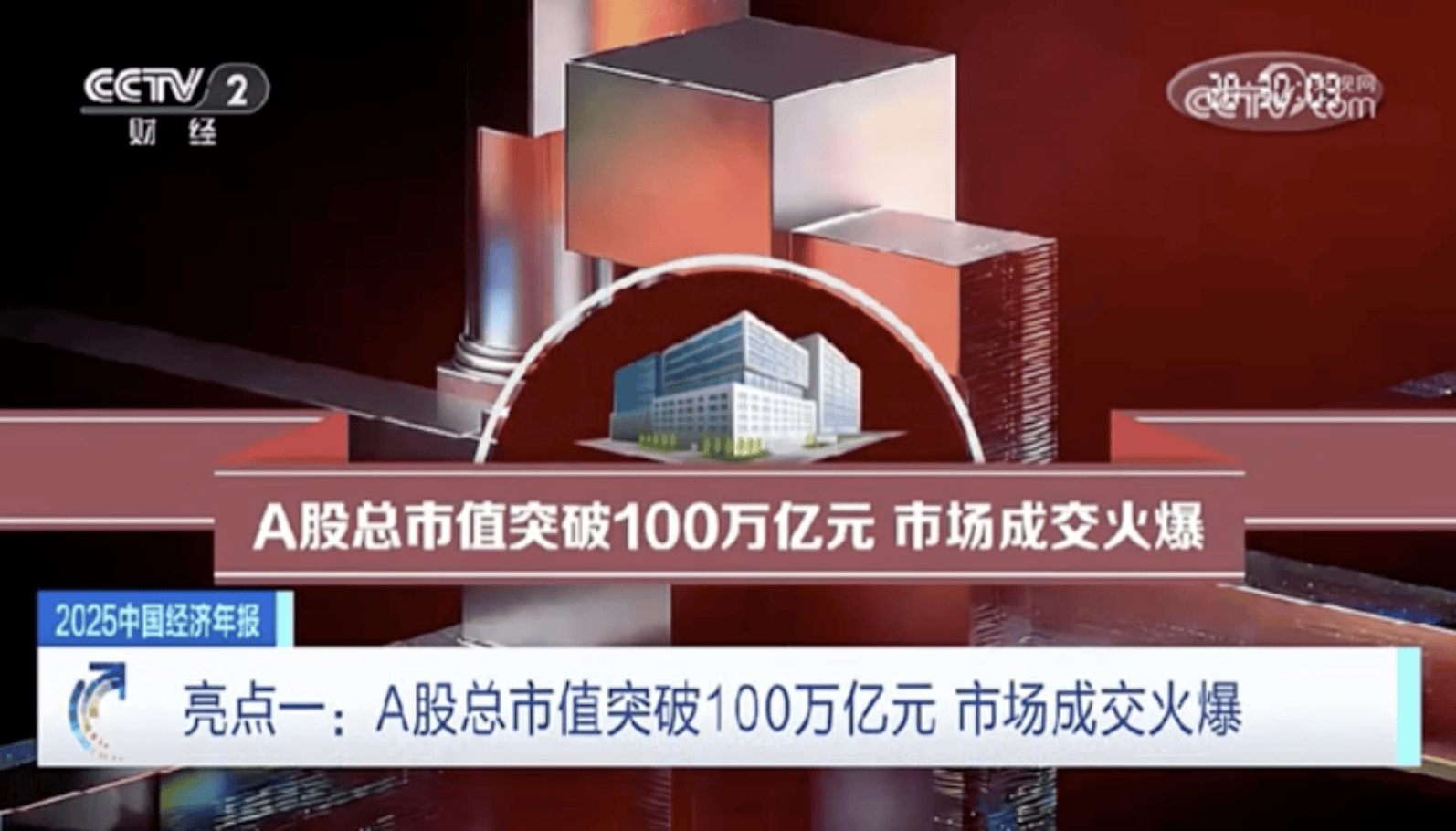
(央视财经《经济信息联播》)2025年,中国资本市场全年亮点纷呈,以一组组硬核数据、一个个标志性突破,为中国经济的年度答卷写下了生动注脚。A 股市场在总量上实现历史性跨越,在结构上完成蜕变,用资本逻辑印证着中国综合国力的稳步提升。让我们从资本市场出发,透视2025中国经济的活力。 2025年8月,A股市场迎来历史性一刻,总市值首次突破100万亿元大关,迈入量质齐升新阶段。截至2025年底,A股上市公司总市值达到123万亿元,平均市 净率从年初3.3增长至4.4。2025年A股全年成交额突破400万亿元,达到418.14万亿元,日均成交额达1.73万亿元,均创历史新高。 亮点一:A股总市值突破100万亿元 市场成交火爆 亮点二:科技创新驱动结构重塑 电子行业市值历史性登顶 规模跨越之外,更受关注的是结构重塑。2025年,A股科技板块市值占比持续提升,A股科技板块市值占比超过1/4,已明显高于银行、非银金融、房地产行 业市值合计占比。其中,电子行业以13.93万亿元的总市值、首次超越银行,登顶A股行业市值榜首。这一转变顺应全球科技与产业变革趋势,表明中国经济 正加速转向创新驱动,新质生产力已在资本市场扎根。 亮点 ...
华映科技:持股5%以上股东权益变动触及1%整数倍
Xin Lang Cai Jing· 2026-01-19 15:13
华映科技公告称,因金融借款合同纠纷案件,2026年1月14日至16日,国投证券贵州分公司通过集中竞 价方式变卖华映百慕大持有的华映科技244.68万股,占总股本0.09%。本次权益变动后,华映百慕大持 股由25,138.9715万股降至24,894.2915万股,占比由9.09%降至9.00%,触及1%整数倍。本次减持不会导 致公司控制权变更,与预披露减持计划一致,且计划尚未实施完毕。 ...

量化观市:宽货币严监管带动下,市场风格会切换吗?
SINOLINK SECURITIES· 2026-01-19 14:36
- The report discusses a rotation model that monitors micro-cap stocks and the "Mao Index" (茅指数). The rotation model uses the relative net value of micro-cap stocks to the Mao Index and their respective 20-day closing price slopes. When the slopes diverge and one is positive, the model suggests investing in the index with the positive slope to anticipate potential style shifts[17][23][24] - Timing indicators for micro-cap stocks are based on the 10-year government bond yield (threshold: 0.3) and the volatility crowding degree (threshold: 0.55). If either indicator reaches its threshold, a closing signal is triggered[23] - The macro timing model evaluates economic growth and monetary liquidity signals. For January, the model recommends a 60% equity allocation, with economic growth and liquidity signals both at 60%. The model's year-to-date return is 14.59%, compared to 26.87% for the Wind All-A Index[44][45][46] - Eight major stock selection factors are tracked, including quality, growth, and consensus expectations, which performed well in the past week. Quality and growth factors showed IC averages of 14.07% and 8.69%, respectively, while reversal and value factors underperformed[47][48][49] - Convertible bond selection factors are constructed based on the relationship between the underlying stock and the convertible bond. Factors include parity, floor premium rate, and financial quality of the underlying stock. Among these, the financial quality of the underlying stock achieved a high IC average last week[56][57][58]
资金跟踪系列之二十九:两融与北上继续回流,机构ETF明显净流出
SINOLINK SECURITIES· 2026-01-19 14:36
Macro Liquidity - The US dollar index continued to rise, and the degree of "inversion" in the China-US interest rate differential deepened. The nominal and real interest rates of 10Y US Treasuries both increased, indicating a rise in inflation expectations [1][16]. - Offshore dollar liquidity showed marginal easing, while the domestic interbank funding situation remained balanced, initially tightening and then loosening. The yield spread between 10Y and 1Y bonds widened [1][23]. Market Trading Activity, Volatility, and Liquidity - Market trading activity continued to rise, with the volatility of the CSI 1000, STAR 50, and ChiNext Index all increasing. Sectors such as military, media, computing, retail, and consumer services had trading activity above the 80th percentile [2][28]. - The volatility of the CSI 1000, STAR 50, and ChiNext Index increased, while the volatility of various sectors remained below the 80th historical percentile [2][35]. - Market liquidity indicators improved, but all sectors remained below the 50th historical percentile [2][40]. Institutional Research - The electronic, pharmaceutical, computing, non-ferrous metals, and machinery sectors had the highest research activity, while banking, real estate, transportation, petroleum and petrochemicals, and retail sectors saw a month-on-month increase in research activity [3][47]. Analyst Forecasts - The net profit forecasts for the entire A-share market for 2026/2027 were adjusted, with increases in sectors such as pharmaceuticals, chemicals, light industry, electronics, and real estate [4][21]. - The net profit forecasts for the ChiNext Index and CSI 500 for 2026/2027 were raised, while the forecasts for the Shanghai 50 and CSI 300 were adjusted up and down, respectively [4][23]. - Mid-cap and small-cap growth sectors saw upward adjustments in their net profit forecasts for 2026/2027, while mid-cap and small-cap value sectors were adjusted down [4][27]. Northbound Trading Activity - Northbound trading activity rebounded, continuing to net buy A-shares. The trading volume ratio in sectors such as computing, home appliances, and non-bank financials increased, while it decreased in communication, electronics, and electric new energy sectors [5][32]. - For stocks with northbound holdings of less than 30 million shares, the main net purchases were in TMT, machinery, and military sectors, while net sales occurred in electric new energy, construction, and agriculture sectors [5][33]. Margin Financing Activity - Margin financing activity slightly declined but remained at a relatively high level since November 2025. The net purchases were mainly in TMT, non-bank financials, and electric new energy sectors, while net sales occurred in building materials and petroleum and petrochemicals [6][35]. - The proportion of financing purchases in the pharmaceutical, construction, and coal sectors increased month-on-month [6][38]. Hot Stocks on the Dragon and Tiger List - The trading activity on the Dragon and Tiger list continued to rise, with the total trading volume and its proportion of total A-share trading both increasing. The military, media, and automotive sectors had relatively high and rising trading volumes on this list [7][41]. Active Equity Fund Positions and ETF Trends - Active equity funds significantly reduced their positions, while ETFs experienced substantial net redemptions. Active equity funds mainly increased positions in petroleum and petrochemicals, real estate, and coal sectors, while reducing positions in TMT, military, and machinery sectors [8][46]. - The correlation of active equity funds with small-cap growth and large/small-cap value increased, while the correlation with large/mid-cap growth and mid-cap value decreased [8][48]. - New equity fund establishment scales increased, with both active and passive funds seeing a rise in establishment [8][50]. - ETFs tracking indices such as the Shanghai 300, STAR 50, and Shanghai 50 saw major net redemptions, while those tracking computing, non-ferrous metals, and media sectors saw major net purchases [8][52].