
服务业

Search documents
2025年4月宏观数据解读:4月经济:生产增势偏强,经济逆风飞扬
ZHESHANG SECURITIES· 2025-05-20 09:16
Economic Overview - In April, the industrial added value for large-scale enterprises increased by 6.1% year-on-year, exceeding market expectations[2] - The service industry production index also showed positive growth, rising by 6.0% year-on-year in April[2] Consumer Spending - The total retail sales of consumer goods grew by 5.1% year-on-year in April, down from 5.9% in the previous month, indicating a slight slowdown in consumer spending[3] - Major categories like home appliances and cultural office supplies saw double-digit growth, contributing significantly to retail sales performance[3][20] Investment Trends - Fixed asset investment (excluding rural households) grew by 4.0% year-on-year from January to April, slightly below market expectations[4] - Infrastructure investment increased by 5.8%, while manufacturing investment rose by 8.8%, but real estate development investment fell by 10.3%[4] Employment Situation - The urban surveyed unemployment rate in April was 5.1%, a decrease of 0.2 percentage points from the previous month, reflecting stable employment conditions[5] Policy Implications - The monetary policy is expected to remain accommodative, with potential for a 50 basis points reserve requirement ratio cut and a 20 basis points interest rate reduction[1] - The government is focusing on implementing more proactive fiscal policies to support economic recovery, particularly in infrastructure and manufacturing sectors[47]
坚持合作精神和战略远见才能塑造未来(国际论坛)
Ren Min Ri Bao· 2025-05-19 21:50
Group 1 - The core viewpoint emphasizes that countries with a spirit of cooperation and strategic foresight will be key players in shaping the future economic landscape [1][3] - China's strong capabilities in manufacturing, infrastructure, and long-term financing, along with its commitment to free trade, position it as a stabilizing force in the global economy [1] - The Belt and Road Initiative proposed by China fosters cooperation through infrastructure projects, capacity collaboration, and sustainable funding, connecting production centers with export routes [1] Group 2 - The trade tensions initiated by the United States are expected to severely impact vulnerable economies, including many African nations, by increasing costs and disrupting infrastructure projects [2] - The integration of African economies into global value chains heightens their vulnerability to external shocks, necessitating a coordinated risk management framework to mitigate the effects of trade wars [2] - The World Trade Organization has historically served as an arbitrator for trade disputes, but its effectiveness is currently hindered by U.S. obstruction, which undermines trust and long-term investment [2] Group 3 - Economic resilience is derived from cooperation and structural reforms rather than protectionism, with the African Continental Free Trade Area being a step in the right direction [3] - African nations are deepening cooperation with countries like China, Brazil, India, and Russia in areas such as technology, education, and infrastructure, which provides greater policy space to counter economic threats from the U.S. [3] - Future economic recovery in Africa is anticipated to be achieved through enhanced collective resilience, shared innovation, and sustainable growth rather than economic fragmentation [3]
金十图示:2025年05月19日(周一)新闻联播今日要点
news flash· 2025-05-19 12:55
金十图示:2025年05月19日(周一)新闻联播今日要点 ● 我国卫星导航产业产值创新高 洛伐克国民议会议长莱希。赵乐际表示,中方愿 与斯方积极落实两国领导人重要共识,深化政治 互信,扩大互利合作,密切人文交流,不断丰富 中斯战略伙伴关系内涵。希望斯方继续在欧盟内 发挥积极作用,推动中欧关系健康稳定发展。中 国全国人大愿同斯国民议会一道,充分发挥立法 机构职能作用,深化立法、监督等经验交流,为 两国务实合作营造良好法治环境。 · 赵乐际同墨西哥众议长举行会谈 * 全国人大常委会委员长赵乐际19日在人民大会堂 同墨西哥众议长古铁雷斯举行会谈。赵乐际表 示,中方高度赞赏墨西哥众议院长期坚定奉行一 个中国原则。欢迎墨方以灵活方式参与共建"一 带一路",共同深化基础设施建设等传统领域合 作,拓展电动汽车、新能源等新兴领域合作;加 强人文交流,增进教育、智库等领域合作。赵乐 际强调,中墨立法机构长期友好,双方建立的对 话论坛迄今已举行五次会议。中国全国人大愿同 墨西哥联邦议会两院加强交流,深化立法机构多 层级、多领域合作,分享民主法治建设等经验, 为两国互利合作提供法律保障。 ● 4月份我国经济延续向新向好发展态势 * ...


热点思考|增量政策,如何“审时度势”?
赵伟宏观探索· 2025-05-15 15:40
Core Viewpoint - The article discusses the new signals released during the policy window period in late April, emphasizing the need for flexible and timely incremental policies in response to external uncertainties, particularly regarding tariff negotiations and economic stability [2][11][70]. Group 1: New Signals from the Policy Window - The April Central Political Bureau meeting highlighted the importance of stabilizing employment, economy, market, and expectations, while maintaining vigilance against external risks, marking the first use of the term "international economic and trade struggle" [3][11][70]. - The meeting emphasized the need for a flexible and unconventional policy toolbox, advocating for timely incremental reserve policies based on changing circumstances [3][11][70]. - Subsequent press conferences focused on stabilizing employment and the market, detailing policies aimed at boosting domestic demand and supporting the private economy [4][12][13]. Group 2: Incremental Policy Adjustments - The current 90-day tariff "grace period" serves as a crucial window for implementing existing policies and strengthening incremental policy reserves, with strong export performance driven by "export grabbing" [5][16][70]. - Financial policies have been introduced, including comprehensive reserve requirement ratio cuts and structural monetary policy tool interest rate reductions, aimed at lowering borrowing costs for banks [18][19][70]. - The government is closely monitoring the issuance and utilization of debt limits for existing policies while focusing on the potential for incremental policy "continuity" [21][28][70]. Group 3: Potential Focus Areas for Incremental Funding - If tariff negotiations progress smoothly, future policy focus may shift towards long-term institutional reforms and structural policy support [46][79][70]. - Consumer spending needs to be supported through mechanisms that reduce burdens and increase income, with a particular emphasis on improving income distribution and social security systems [46][79][70]. - Investment in new infrastructure, particularly in emerging industries like AI, is expected to become a new growth point, alongside traditional infrastructure projects [57][80][70].
热点思考|增量政策,如何“审时度势”?
申万宏源宏观· 2025-05-15 08:07
Core Viewpoint - The article discusses the new signals released during the policy window period in late April, emphasizing the need for flexible and timely incremental policies in response to external uncertainties and internal economic conditions [2][11][70]. Group 1: New Signals from the Policy Window - The April Politburo meeting highlighted the importance of stabilizing employment, economy, market, and expectations, while maintaining vigilance against external risks, marking the first use of the term "international economic and trade struggle" [3][11][70]. - The meeting emphasized the need for a flexible and unconventional policy toolbox, advocating for timely incremental reserve policies based on changing circumstances [3][11][70]. Group 2: Employment and Market Stability Policies - The April 28 press conference focused on stabilizing employment, detailing three key areas: promoting consumption through subsidies, expanding employment opportunities for specific groups, and enhancing support for the private economy [4][12][76]. - The May 7 press conference centered on market stability, outlining measures to stabilize the stock market, real estate market, and enhance financial support for technological innovation [4][13][76]. Group 3: Incremental Policy Adjustments - The current 90-day tariff "grace period" serves as a crucial window for implementing existing policies and strengthening incremental policy reserves, with strong export performance driven by "rush exports" [5][16][77]. - A series of flexible financial policies have been introduced, including comprehensive reserve requirement ratio cuts and structural monetary policy tool interest rate reductions to lower borrowing costs [5][18][77]. Group 4: Fiscal Policy and Funding Focus - Fiscal policy is under scrutiny regarding the issuance and utilization of existing debt quotas, with a notable decline in fiscal revenue in the first quarter, necessitating close attention to government bond issuance and incremental policy sustainability [6][21][78]. - The second quarter is expected to see the continued rollout of policies aimed at expanding domestic demand and stabilizing employment, with a focus on the pace of incremental funding [6][28][78]. Group 5: Potential Investment Directions - If tariff negotiations progress smoothly, future policy focus may shift towards long-term institutional reforms and structural policy support, with an emphasis on improving income distribution and social security mechanisms [9][46][79]. - Investment in new infrastructure to support emerging industries is anticipated to become a new growth point, alongside the acceleration of traditional infrastructure projects [9][57][80].
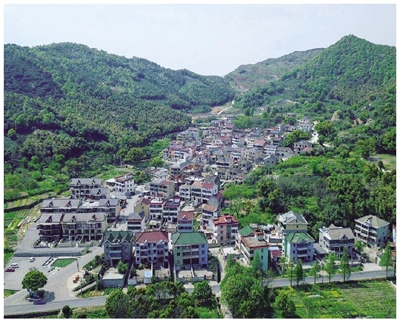
解码新时代乡村治理的“进化密码”
Hang Zhou Ri Bao· 2025-05-15 03:06
Group 1: Governance and Community Engagement - Chengshan Village implements strict governance with a "no tardiness" rule enforced by a fingerprint clock-in system, showcasing a commitment to discipline and accountability [4] - The village has a self-repair team where village officials handle maintenance tasks, saving over 100,000 yuan in labor costs over five years [4] - The village successfully navigated significant infrastructure projects without any public grievances, achieving "zero complaints" during land acquisition processes [4] Group 2: Economic Development and Innovation - Chengshan Village has transformed from single rice cultivation to diversified agriculture, increasing villagers' income nearly tenfold over 22 years [5] - The village has established a 300-acre demonstration base for vegetable cultivation, which served as a supply base for the G20 summit, and introduced a "land equity" model to boost income [5] - The village has launched various agricultural projects, including fig and strawberry farms, contributing to the growth of collective economic strength [5] Group 3: Shared Economy and Community Services - Shushangwang Village has leveraged a "shared" economy model, generating over 2 million yuan in collective income through community initiatives like a farmers' market [6] - The village has developed multiple community services, including a shared laundry facility and an elderly dining hall, enhancing the quality of life for residents [6][7] - Villagers actively participate in community projects, contributing financially and physically to local developments, fostering a sense of ownership and pride [7] Group 4: Elderly Engagement and Social Responsibility - Huafeng Village has established a "silver-haired think tank" composed of retired individuals who contribute to community management and social services [9] - The village has created an elderly dining hall and implemented a points system for community engagement, promoting a culture of respect and care for the elderly [9] - The collective efforts of the elderly group have led to the establishment of a strong village company, generating over 12 million yuan in annual revenue through various services [9]
通胀支持美联储继续“等等再看”
Huachuang Securities· 2025-05-14 15:33
Group 1: CPI Overview - The US CPI for April decreased slightly to 2.3% year-on-year, down from 2.4%, below Bloomberg's expectation of 2.4%[1] - Core CPI remained stable at 2.8%, matching Bloomberg's forecast[1] - CPI month-on-month increased by 0.2%, lower than the expected 0.3%[1] Group 2: Structural Analysis of CPI - Food prices fell from 0.4% to -0.1% month-on-month, reducing its contribution to CPI from 0.06 percentage points to -0.01[2] - Energy prices rose from -2.4% to 0.7%, contributing 0.04 percentage points to CPI, up from -0.15[2] - Core goods prices increased from -0.1% to 0.1%, contributing 0.01 percentage points to CPI, up from -0.02[3] Group 3: Federal Reserve's Stance - The inflation performance supports the Federal Reserve's wait-and-see approach, as the economy shows no signs of stagflation[4] - The Fed is unlikely to cut rates until there is clear evidence of deteriorating employment or consumer spending data[5] - Current market expectations suggest the first rate cut may occur in September, with a total of two cuts anticipated for the year[5]
【海外观潮】 日本央行仍有加息可能
Zheng Quan Shi Bao· 2025-05-12 17:49
Group 1 - The core viewpoint of the articles indicates that Japan's inflation is persistently above the Bank of Japan's target, with the CPI rising 3.6% year-on-year in March, marking 36 consecutive months above the 2% target [1] - The core CPI in March also increased by 3.2%, remaining elevated for 43 months, suggesting a sustained inflationary environment that supports the possibility of further interest rate hikes by the central bank [1] - The latest data shows that the core CPI in Tokyo rose by 3.4% in April, indicating ongoing inflationary pressures, particularly driven by rising wages [2] Group 2 - Japan's GDP has shown resilience, growing by 2.9% annually, with exports increasing for six consecutive months, reflecting strong economic activity supported by both domestic and external demand [3] - The services sector PMI has remained robust, providing a counterbalance to the manufacturing sector, which is still below the growth threshold [3] - The Bank of Japan has adjusted its economic outlook, lowering GDP growth forecasts for fiscal years 2025 and 2026, while also revising down its core CPI expectations, indicating a cautious approach to monetary policy [5] Group 3 - The yen has become the best-performing currency among G10 currencies this year, attracting international investment, despite the ongoing depreciation against the dollar due to significant interest rate differentials [4] - The potential for further interest rate hikes by the Bank of Japan remains, although the pace may be influenced by external factors such as U.S. tariff policies, which introduce uncertainty into Japan's economic outlook [4][5] - The Bank of Japan has not indicated a halt to interest rate increases, with the governor emphasizing that further hikes could occur if economic growth and inflation align with expectations [5]
林荣雄策略- 黄金坑成功兑现:后续是高低结构再平衡
2025-05-12 15:16
Summary of Conference Call Records Industry or Company Involved - The discussion primarily revolves around the A-share market in China and the implications of the US-China trade negotiations on the market dynamics. Core Points and Arguments - The A-share index has returned to pre-Qingming Festival levels, validating the "golden pit" investment opportunity, but the market is expected to enter a volatile phase with potential short-term pullbacks, although a second bottom is unlikely [1][2] - Substantial progress has been made in the first round of US-China tariff negotiations, but historical complexities suggest caution against excessive optimism [3][4] - A shift from high to low stocks was observed in late February, indicating a need for structural rebalancing in the market, with expectations for a second wave in the technology sector in May driven by the end of earnings season and AI industry catalysts [1][6][7] - April export data showed a decline in exports to the US by approximately 21%, highlighting the impact of trade tensions and the need to monitor high-frequency data for future trends [5][8] - Inflation data has been poor, primarily due to falling oil prices, indicating a demand contraction, while structural issues in the economy remain a concern [9] Other Important but Possibly Overlooked Content - The recent negotiations in Switzerland have calmed market sentiments and may lead to a potential interest rate cut by the Federal Reserve, although the sustainability of any rebound in small-cap and tech stocks may be limited [4][11] - The increase in transshipment trade due to tariff pressures has led to rising costs, which could ultimately affect consumer demand [8] - The Federal Reserve has maintained its interest rate range, emphasizing the need for more data to support any future rate cuts, with the first expected cut now pushed to July [13] - The US PMI data indicates a divergence between manufacturing and services, with manufacturing showing signs of contraction, which could contribute to market volatility [14] - Gold prices are influenced by geopolitical factors and central bank purchases, but short-term pricing logic may weaken due to US policy negotiations [15][16]