石化

Search documents
企业期待共筑风险管理新生态
Qi Huo Ri Bao Wang· 2025-07-23 16:24
Core Viewpoint - The launch of propylene futures and options is seen as a significant advancement for risk management in the propylene industry, providing essential tools for price volatility management and profit stabilization [1][2][4]. Industry Impact - The introduction of propylene futures fills a critical gap in risk management tools within the industry, enabling companies to better handle price fluctuations and enhance operational profitability [1][2]. - The establishment of a unified pricing benchmark for propylene is expected to transform the pricing model from decentralized negotiations to a more structured approach based on futures pricing plus regional adjustments, improving resource allocation efficiency [2][4]. Company Strategies - Companies like Jineng Chemical plan to utilize futures for inventory risk management and sales channel expansion, while also exploring basis trading and rights trading with downstream clients to enhance supply chain efficiency [3]. - Binhua New Materials aims to apply its experience from caustic soda futures to manage PDH production profits effectively, ensuring stable development through legal and compliant use of futures tools [3]. - Jingbo Petrochemical intends to develop a multi-raw material profit analysis model, leveraging futures to complete the olefin chain and provide diverse risk management solutions for upstream and downstream partners [3]. Market Outlook - The establishment of a propylene futures market is viewed as a pivotal shift towards reclaiming pricing power based on actual supply and demand, which will also facilitate fair valuation in international trade negotiations [4]. - The industry anticipates that the futures market will support the high-quality development of China's olefin industry by promoting pricing autonomy, refined risk control, and stable profits [4][5].
天津出台13条硬举措支持企业并购重组
Zhong Guo Chan Ye Jing Ji Xin Xi Wang· 2025-07-23 14:35
Core Viewpoint - Tianjin's local government has introduced significant policy support for mergers and acquisitions (M&A) to enhance market resource allocation and promote high-quality industrial development through a series of measures [1] Group 1: Policy Measures - The policy includes 13 specific measures across five areas aimed at optimizing the funding chain, target pool, and transaction services for M&A [1] - Encouragement for strategic M&A in key industries such as green petrochemicals, automotive equipment, and emerging sectors like biomedicine and new energy [2] - Support for state-owned enterprises to lead cross-regional M&A and facilitate the implementation of quality projects in Tianjin [2] Group 2: Financial Support - Establishment of M&A mother funds through government capital to strengthen industry chain integration and attract private equity funds [3] - Expansion of exit channels for regional equity markets and simplification of exit processes for private equity funds [3] - Encouragement for financial institutions to provide diverse financing tools, including loans and bonds, with a focus on supporting technology-oriented SMEs [3] Group 3: Service Enhancement - Development of a capital market service platform to enhance information sharing and business collaboration [4] - Creation of a resource pool for quality M&A targets based on key industry chains and potential companies [4] - Formation of a capital market service alliance involving banks, securities firms, and law firms to provide specialized M&A services [4] Group 4: Regulatory Framework - Implementation of effective regulatory measures to ensure compliance and performance evaluation of state-owned and government-guided funds [5] - Strengthening of oversight to prevent financial fraud and insider trading during M&A processes [6] Group 5: Organizational Support - Establishment of a dedicated task force led by the local financial management bureau to address challenges in corporate restructuring and ensure policy benefits reach businesses [8]
连续上攻后,市场预期有哪些新变化
2025-07-23 14:35
Summary of Key Points from Conference Call Records Industry or Company Involved - The discussion primarily revolves around the **A-share market** and **infrastructure investment**, particularly focusing on the **Yaxi Water Conservancy Project** and its implications for various sectors including **construction**, **resources**, and **new energy**. Core Points and Arguments 1. **Market Catalysts and Fund Flows**: The A-share market has seen a surge due to significant catalysts such as the announcement of a **1.2 trillion yuan** investment in the Yaxi Water Conservancy Project and the Ministry of Industry and Information Technology's new growth stabilization plan for key industries. This has led to increased investor interest in undervalued sectors like infrastructure and cyclical goods [2][4][5]. 2. **Impact of Yaxi Water Conservancy Project**: Although the Yaxi project is estimated to contribute only **0.15%** to GDP, it has generated strong market sentiment as it is perceived as part of a broader anti-involution policy. This has led to a notable rally in related sectors despite the limited actual economic impact [5][6]. 3. **Investment Strategy Conflicts**: There is a noted conflict between short-term and long-term investment strategies. Short-term strategies may focus on following the price movements of upstream resource futures, while long-term strategies should align with anti-involution policies and sectors like photovoltaics, lithium batteries, and automotive [9][10]. 4. **Market Risk Appetite**: The easing of US-China relations and a decrease in the VIX index to its lowest level since February have contributed to a heightened risk appetite among investors. This has resulted in a significant inflow of new capital into the market, with margin financing exceeding **10%** [10][11]. 5. **Performance Disparity in Earnings**: There is a significant disparity in earnings forecasts, with **42%** of companies expected to report negative net profits. Traditional sectors are under pressure, while high-end manufacturing and new sectors like renewable energy and AI show potential for growth [3][14][15]. 6. **Sector Performance**: High-end manufacturing sectors, including small metals and marine equipment, are performing well, while traditional sectors like coal and real estate are struggling. The proportion of companies with profit growth exceeding **50%** has increased from **8%** to **18%** year-over-year [15][16]. 7. **New Investment Opportunities**: Emerging sectors such as renewable energy, humanoid robotics, artificial intelligence, and innovative pharmaceuticals are expected to attract continued investment. This trend mirrors past market behaviors where low-valuation sectors were replaced by stronger growth sectors [17][19]. 8. **Dividend Strategy Focus**: The dividend strategy should emphasize individual stock rotation rather than a single sector focus. Stocks with stable dividend yields, such as those in food and beverage, are currently more favorable [18]. 9. **Future Market Trends**: The market is expected to maintain a strong upward trend, with a potential shift from growth to value stocks. Short-term fluctuations may present buying opportunities, particularly in sectors like innovative pharmaceuticals and semiconductors [13][19]. Other Important but Possibly Overlooked Content - The market's current sentiment is influenced by a combination of fundamental factors and liquidity conditions, with a notable lack of overheating or rapid corrections in the market [10][12]. - The potential for retail investor participation is anticipated to increase as previous losses are recouped, leading to a more favorable environment for market entry [12].
大宗商品价格飙升,业内期待全产业链协同优化
Di Yi Cai Jing· 2025-07-23 13:55
Group 1 - The main driving force behind the recent market rally is supply-side expectations of "anti-involution," which have led to price increases, while rising coal prices are expected to increase downstream electricity costs, potentially leading to supply contraction and further price hikes [1][2][6] - The market anticipates that fiscal policies will strengthen in the second half of the year, alongside urban renewal and major infrastructure projects, contributing to improved demand expectations [1][2][5] - Recent futures market trends show significant price increases across various commodities, with notable gains in coking coal, silicon, and glass, driven by supply-side reforms and demand recovery expectations [3][4][6] Group 2 - The "anti-involution" policy is seen as a catalyst for the current market dynamics, with expectations of reduced low-price competition and the orderly exit of outdated production capacities [4][5][11] - Analysts express differing views on the sustainability of the current rally, with some optimistic about policy impacts while others caution about the need for alignment between policy execution and downstream demand [2][8][11] - The recent surge in commodity prices is attributed to a combination of supply-side adjustments and improved market sentiment, with significant price recoveries observed in various sectors, including black metals and energy materials [3][6][10] Group 3 - The coal price increase is expected to lead to reduced production in downstream sectors, further contributing to price increases in related commodities [6][7] - The market is currently experiencing a strong rebound in various commodity prices, with significant gains reported in coking coal and silicon, driven by both supply-side reforms and rising production costs [3][7][10] - The outlook for the commodity market remains mixed, with some analysts predicting continued volatility and others highlighting the potential for sustained price increases if supply-side policies are effectively implemented [8][11]
“见微知著”系列专题之九:7月出口会再超预期吗?
Shenwan Hongyuan Securities· 2025-07-23 12:15
Group 1: Export Indicators - In July, foreign trade port cargo volume increased by 8.9% year-on-year, indicating potential short-term improvement in actual export volume[1] - Container throughput from China to Vietnam surged to over 60%, while shipments to the U.S. declined, with a drop to -7% by July 20[1][15] - The U.S. container booking volume from China has remained low, showing a year-on-year decrease of -16.9% since late June[1][15] Group 2: Price and Freight Rate Trends - The CCFI composite index fell for three consecutive weeks in July, down 4.8% compared to the end of June, with significant declines in rates for the U.S. West Coast routes[2][18] - The relative freight rates for Southeast Asia and East-West Africa routes have increased, indicating better export performance to emerging markets compared to the U.S.[2][24] Group 3: Production and Export Correlation - In July, production indicators for exports rose by 0.5 percentage points, with significant contributions from the consumption and metallurgy chains[3][4] - The production growth rate for key industrial products aligns closely with export delivery value growth, suggesting a resilient export outlook[3][4] Group 4: Macroeconomic Indicators - Processing trade imports rose by 3.3% in June, suggesting a potential export increase of around 8% in July[5] - The Yiwu small commodity export price index remains high, supporting the expectation of increased cross-border commodity export growth in July[5] Group 5: Risks and Future Outlook - There are concerns about a potential decline in export figures after September due to signs of weakening in strong-performing export sectors[6] - New export orders in the metallurgy and consumption chains have shown a downward trend, which may indicate a decrease in export readings by the end of Q3[6]
上半年大连市经济同比增长6.0% 量质齐升超预期
Zhong Guo Fa Zhan Wang· 2025-07-23 07:27
工业生产稳中有进,高端制造加快布局。上半年,全市规上工业增加值同比增长12.5%。从经济类型看 国有控股企业增加值同比增长19.0%,股份制企业增长17.3%,私营企业增长6.5%。 服务业保持增长,部分现代服务业增势较好。上半年,全市服务业增加值同比增长4.0%。其中,批发 和零售业、住宿和餐饮业增加值分别增长9.0%、5.3%。 中国发展网讯 记者施文郁报道 上半年,大连市经济保持平稳运行,高质量发展取得新的成效。 根据辽宁省地区生产总值统一核算结果,上半年,大连市地区生产总值4647.0亿元,按可比价格计算, 同比增长6.0%,高于全国0.7个百分点。分产业看,第一产业增加值216.9亿元,同比增长4.5%;第二产 业增加值1641.3亿元,增长9.4%;第三产业增加值2788.8亿元,增长4.0%。 科技引擎动能增强。创新策源能力持续提升,获批全国重点实验室5家,辽宁黄海实验室在连孵化3家学 科性公司,建成6个校企联合研发中心,大连凌水湾实验室、星海湾实验室建设取得阶段性成果,4家中 试基地入选国家首批重点培育中试平台初步名单。25个研究领域、398个细分领域实验室确定入驻英歌 石科学城。 经济循环畅 ...
海关总署副署长答21:海南封关后,加工增值免关税受益面将扩大
21世纪经济报道· 2025-07-23 04:42
Core Viewpoint - The article discusses the progress and future plans for the Hainan Free Trade Port, highlighting key policies and reforms aimed at enhancing trade and investment opportunities in the region [1][2]. Group 1: Overview of Hainan Free Trade Port - The Hainan Free Trade Port was officially launched in June 2020, with a focus on exploring a unique model of free trade in China [1]. - The official closure of Hainan Island for customs is set for December 18, 2025, which will introduce more favorable "zero tariff" policies for imported goods [1]. Group 2: Key Policies and Reforms - The "zero tariff" policy will increase the proportion of zero-tariff goods from 21% to 74% for imports into Hainan, allowing for tax-free circulation of goods within the island [1]. - The processing and value-added tax exemption policy has been in place for four years, with 122 companies registered and a total value of approximately 100.3 billion yuan in processed goods, resulting in tax exemptions of about 8.4 billion yuan [2]. Group 3: Optimizations in Processing and Value-Added Policies - The new policy removes the requirement that 60% of a company's revenue must come from encouraged industries, thus lowering the threshold for companies to benefit [3]. - The scope of imported materials has been expanded to include "zero tariff" goods, enhancing the policy's applicability [3]. - The calculation formula for value-added processing has been optimized, allowing for easier achievement of the 30% value-added requirement by including the value of locally produced goods [3]. - The cumulative value-added calculation has been broadened to encourage collaboration among different companies in the processing chain [3].

海关总署副署长答21:海南封关后,加工增值免关税受益面将扩大
2 1 Shi Ji Jing Ji Bao Dao· 2025-07-23 04:33
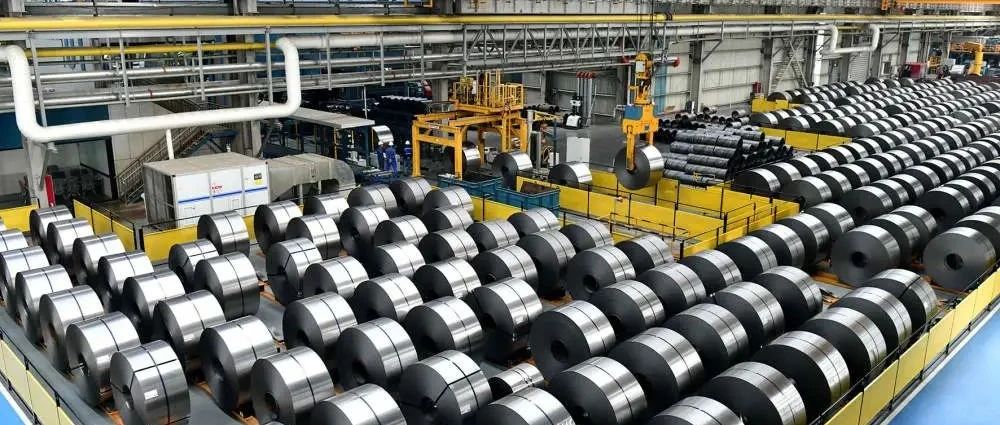
Core Viewpoint - The Hainan Free Trade Port is set to officially start its customs closure on December 18, 2025, implementing more favorable "zero tariff" policies for imported goods, significantly expanding the range of goods eligible for these benefits [2]. Group 1: Policy Developments - The central government has approved the establishment of a policy system for the Hainan Free Trade Port, which has been progressively developed over the past five years [2]. - The "zero tariff" policy will increase the proportion of eligible imported goods from 21% to 74% after the customs closure [2]. Group 2: Processing and Value-Added Policies - The processing and value-added tax exemption policy has been a significant initiative, with 122 enterprises registered for this policy, resulting in approximately 100.3 billion yuan in internal sales and 8.4 billion yuan in tax exemptions over four years [3]. - The policy allows goods processed in Hainan with over 30% value added to be exempt from import duties when sold to the mainland [3][4]. Group 3: Policy Optimizations - The new policy will lower the threshold for enterprises to benefit, removing the requirement that 60% of total revenue must come from encouraged industries [4]. - The range of eligible imported materials will be expanded to include "zero tariff" goods, enhancing the policy's applicability [4]. - The calculation formula for value-added will be optimized to include the value of locally produced goods, making it easier for enterprises to meet the 30% value-added requirement [4]. - The cumulative value-added calculation will be expanded to allow for value addition across different enterprises, promoting industry chain development [4][5]. Group 4: Overall Impact - The overall adjustments to the processing and value-added policies are expected to lower the barriers for enterprises, broaden the scope of beneficiaries, and better meet the production needs of local businesses, fostering the development of industrial chains and clusters [5].
21社论丨有序出清落后产能是长期的系统性任务
21世纪经济报道· 2025-07-23 00:31
Group 1 - The core viewpoint of the article emphasizes the importance of the "anti-involution" policy in various industries, aiming to reduce excess capacity and stimulate domestic demand, which is expected to improve corporate profits and commodity prices [1][2] - The current economic recovery in China is supported by policy measures such as "anti-involution," expansion of domestic demand, and urban renewal, which are being actively implemented across key industries [1][2] - The article highlights that the Producer Price Index (PPI) has been declining for 33 consecutive months, indicating a need for structural adjustments in the industrial sector to reverse this trend [1] Group 2 - The previous round of supply-side capacity reduction occurred around 2016, primarily affecting upstream industrial sectors, while the current "anti-involution" initiative has a broader scope, impacting traditional consumer goods, machinery, and emerging industries [2] - The challenge lies in balancing long-term goals with short-term tasks in the "anti-involution" process, as rapid capacity reduction could harm short-term economic growth while failing to address the underlying issues could lead to more "zombie" companies [2][3] - To mitigate the impact of capacity reduction on employment, the article suggests promoting urban renewal and expanding the service sector to create more job opportunities [3] Group 3 - The article discusses the need for strict control over new capacity while phasing out outdated capacity, as previous local government practices of indiscriminately attracting investment led to overcapacity [4] - Establishing a unified national market is crucial to reduce local government intervention in manufacturing investments, which can help avoid redundant investments and local protectionism [4] - The article stresses the importance of creating a conducive environment for market mergers and acquisitions, as well as improving bankruptcy systems to facilitate the exit of underperforming enterprises [4]
今天A股大涨,什么信号?
大胡子说房· 2025-07-22 12:22
Core Viewpoint - The construction of the Yarlung Tsangpo River hydropower station, a significant infrastructure project worth 1.2 trillion, has led to a surge in the capital market, with the Shanghai Composite Index reaching a new high of 3581 points. This rally is characterized as a "short squeeze" where short-sellers are forced to exit their positions, resulting in many investors missing the opportunity to enter the market [1][4]. Market Dynamics - The recent rally in the market has been driven by specific sectors related to the hydropower station, such as civil explosives, cement, engineering machinery, and coal mining, with some stocks experiencing consecutive daily limit-ups [1][3]. - Despite the index reaching new highs, there has been a continuous net outflow of funds from the market, indicating that the rise in the index does not reflect an influx of new capital [5][7]. Sector Analysis - The current market is characterized by a competition for existing funds rather than an influx of new capital, leading to a situation where new concepts absorb funds from older themes, causing underperformance in previously hot sectors like banking, pharmaceuticals, technology, and robotics [7][8]. - The emergence of new policies may ignite new themes and concepts, potentially diverting funds away from the Yarlung Tsangpo concept, leaving retail investors trapped [8]. Commodity Outlook - Commodities related to infrastructure, such as steel, coal, non-ferrous metals, petrochemicals, and building materials, are highlighted as having potential for continued growth due to their connection to the ongoing infrastructure projects and the government's focus on stabilizing growth in key industries [8][9]. - The recent announcement from the Ministry of Industry and Information Technology regarding growth stabilization plans for key industries is expected to benefit over-supplied sectors like steel and coal, improving their profit margins [8][11]. Investment Strategy - The article suggests that while the Yarlung Tsangpo project is currently a hot topic, it may not be wise to chase this concept at this stage. Instead, focusing on commodities with longer-term growth potential is recommended, as they are likely to provide more stable investment opportunities [11][12]. - Historical comparisons are made to previous market cycles, indicating that the current environment may resemble past trends where commodities experienced significant price increases over extended periods, suggesting a potential for substantial gains in the coming months [11][12][13].