
汽车

Search documents
印度车企的“后花园”,被中企攻陷了
创业邦· 2026-03-29 01:09
Core Insights - Nepal's electric vehicle (EV) sales are projected to exceed 73% by 2025, ranking second globally after Norway [5] - Chinese automotive brands dominate the Nepali EV market, accounting for 79.9% of the total EV imports in the 2024-25 fiscal year [7] - The rapid shift in market dynamics has surprised many, as just five years ago, Indian brands held a significant market share in Nepal [12][13] Market Dynamics - In the past, Indian car manufacturers like Tata, Maruti, and Mahindra controlled 70%-80% of the Nepali market [15] - Chinese brands had minimal presence, with less than 5% market share, primarily focusing on low-end fuel vehicles [16] - A policy-driven push for electrification has opened the market for Chinese manufacturers [18] Policy Impact - The Nepali government has reduced EV import tariffs to 40%, significantly lower than the 180% for fuel vehicles, and has provided tax incentives for charging infrastructure [20] - This policy shift has disrupted the competitive landscape, allowing Chinese EVs to capitalize on their technological and cost advantages [21][22] Competitive Advantages - Chinese EVs, such as BYD's Atto1, offer better pricing and performance compared to Indian counterparts, with a 20% lower price and 30% longer range [24] - The higher level of smart technology in Chinese EVs appeals more to Nepali consumers [26] Strategic Significance - Although Nepal's automotive market is small, the success of Chinese brands here signifies their potential to disrupt global market dynamics [29] - The case of Nepal illustrates that Chinese manufacturers can leverage policy changes and market needs to outperform traditional automotive leaders [31] Future Opportunities - The model of collaboration between Chinese automotive and energy companies in Nepal can be replicated in other emerging markets [32][39] - The synergy between EV adoption and energy supply is crucial for Nepal's energy transition strategy [34][38] - The success in Nepal reflects the broader rise of China's new energy industry and its potential for global expansion [41][42]



在地缘预期波动中寻找中期确定性
Soochow Securities· 2026-03-29 00:55
Market Overview - Geopolitical conflicts have replaced AI industry logic as the core pricing factor in the market since the outbreak of the US-Iran war on February 28, leading to an upward trend in oil prices and increased volatility in global risk assets[1] - The A-share market has seen a high overall position at the beginning of March, with insufficient feedback on the risk of elevated oil price levels, leading to a delayed pricing response[2] Investment Strategy - The current market has entered a "bullish" zone, where the risk-reward ratio favors "adding positions" rather than "reducing positions," especially given the extreme pessimism reflected in the market[2] - Two main directions for "adding positions" are identified: focusing on "energy security" and "oil price transmission," with a preference for sectors like renewable energy and energy infrastructure[3] Economic Outlook - The long-term bull market for A-shares remains intact, with the index currently adjusted to the 3800-3950 range, suggesting that this level is more favorable for adding positions[3] - In the event of a geopolitical conflict escalating, oil prices could rise to a central level of $150-200 per barrel, which would structurally impact high-valuation and high-leverage assets[2] Sector Focus - Key sectors to watch include renewable energy, energy storage, and agricultural technology, as energy price increases can transmit through various channels to agricultural costs[3] - The chemical sector may benefit from alternative technology routes due to disruptions in oil and gas supply, leading to price increases in olefins and derivatives[4] Risk Considerations - Risks include slower-than-expected economic recovery, policy implementation delays, geopolitical uncertainties, and overseas policy unpredictability[4]
海外政策周聚焦:特殊时期的访美,日本在中东问题上的困局
Western Securities· 2026-03-28 15:06
Investment and Economic Relations - Japanese Prime Minister Fumio Kishida's visit to the U.S. from March 18 to 22 resulted in the announcement of a second batch of investment projects totaling $73 billion, representing 20% of the $550 billion investment framework[1] - Japan's total investment in the U.S. has reached $109 billion, focusing on energy, electricity, and mineral projects, aligning with former President Trump's support for traditional energy[1] - Key projects include the construction of small modular reactors by GE and Hitachi in Tennessee and Alabama, and natural gas power facilities in Texas and Pennsylvania[1] Trade Relations and Economic Dependencies - Japan is progressing rapidly in trade agreements with the U.S., with American exports to Japan accounting for 18% of Japan's total exports in 2025, heavily reliant on automotive and semiconductor industries[2] - Japan's economic interests are intertwined with U.S. security alliances, making it difficult for Japan to adopt a confrontational stance against the U.S. in trade matters[2] Geopolitical Risks and Market Implications - Japan's energy security is precarious, with over 94% of its oil imports coming from the Middle East, leading to a complicated diplomatic relationship with Iran[3] - Optimistic scenarios suggest that if the Strait of Hormuz reopens, Japanese stocks could rise, particularly in the automotive and export manufacturing sectors, with potential yen appreciation[3] - Conversely, if Middle Eastern tensions persist, Japan could face heightened inflation risks, a widening trade deficit, and significant yen depreciation, leading to a bearish outlook for the stock market[3] Risk Factors - The report highlights the potential for geopolitical risks to exceed expectations, which could further complicate Japan's economic landscape[4]
海外策略周报:中东问题发酵,本周全球市场波动较大-20260328
HUAXI Securities· 2026-03-28 15:03
Global Market Overview - The global markets experienced significant volatility this week due to the ongoing geopolitical issues in the Middle East, with most markets continuing to show high fluctuations [1] - The US stock market indices, including the S&P 500, Nasdaq, and Dow Jones, all saw declines, with the S&P 500 and Nasdaq dropping by 2.12% and 3.23% respectively [12][18] - The TAMAMA Technology Index accelerated its decline with a weekly drop of 4.43%, leading to a decrease in its price-to-earnings (P/E) ratio to 30.1 [1][18] - The Philadelphia Semiconductor Index fell by 2.78%, with its P/E ratio further declining but remaining at 37.89 [1][18] - The S&P 500 Shiller P/E ratio is still at 36.65, indicating a high valuation level [1][18] US Market Performance - The S&P 500 sectors showed mixed results, with the energy sector gaining 6.22%, while the communication services sector faced the largest decline of 7.17% [12][18] - The report suggests a potential for a rebound in the US stock market after the recent declines, although high valuations in technology stocks may lead to continued volatility and differentiation among stocks [1][18] European Market Insights - European markets displayed mixed performance, with several indices experiencing significant declines, indicating a potential for a rebound in the near term [1] - However, the underlying economic fundamentals in Europe remain weak, suggesting that major indices like the DAX and CAC40 may still face volatility after any rebound [1] Asian Market Trends - The Nikkei 225 index showed notable fluctuations, with a current price-to-book (P/B) ratio of 2.39, indicating a high valuation [1] - The report anticipates a short-term rebound in the Japanese market, but ongoing tight monetary policy and economic pressures may lead to further declines in the medium term [1] Emerging Markets Analysis - Emerging markets such as Brazil's IBOVESPA and Mexico's MXX showed some resilience, with MXX increasing by 3.98% this week [11] - However, the report warns that these markets may still face pressures in the medium term due to geopolitical uncertainties and economic fundamentals [1] Hong Kong Market Overview - The Hong Kong market continued its downward trend, with the Hang Seng Index and related indices experiencing declines of 1.29% and 1.4% respectively [25][30] - The report highlights potential structural opportunities in certain assets within the Hong Kong market, particularly those with resilient fundamentals [1][38]
【财闻联播】多家品牌金饰克价逼近1400元!Model 3标准版在华上市?特斯拉回应
券商中国· 2026-03-28 11:29
Macro Dynamics - The International Civil Aviation Organization has implemented a new regulation limiting passengers to carry a maximum of two portable power banks on flights, effective March 27 [2] - Russia plans to impose a temporary ban on gasoline exports starting April 1 to stabilize prices amid turmoil in the energy market due to conflicts in the Middle East [3] Industry Developments - China has achieved the first large-scale production of medical-grade alpha isotopes at the curie level, which will accelerate the clinical application of domestic alpha nuclear drugs, particularly in cancer treatment [4][5] Financial Institutions - Harbin Bank reported a total asset of 1.01934 trillion yuan as of the end of 2025, marking an 11.3% increase year-on-year, with a net profit of 1.265 billion yuan, up 16.83% from the previous year [6] Market Data - The NASDAQ composite index fell by 2.15% on March 27, marking a cumulative decline of 3.23% for the week, while the S&P 500 index dropped by 1.67%, resulting in a five-week losing streak, the longest since 2022 [7] Company Dynamics - Domestic gold jewelry prices have increased, with brands like Lao Feng Xiang and Lao Miao reporting prices of 1396 yuan and 1397 yuan per gram, respectively, reflecting daily increases of 28 yuan and 32 yuan [8] - Tesla has confirmed that there are currently no plans to introduce the Model 3 standard version to the Chinese market [9] - Sony has announced a price increase for the PlayStation 5 series in mainland China, effective April 2, with the PS5 digital version rising from 3499 yuan to 3999 yuan [11] - BYD plans to use up to 60 billion yuan of its idle funds for wealth management products or bonds, aiming to enhance capital efficiency and investment returns [12] - Novo Nordisk's weekly insulin product Awiqli has been approved by the FDA, marking a significant advancement in diabetes treatment options [13]

联想集团:"AI工厂"解决方案助力制造业智能化转型
Zhong Guo Jing Ji Wang· 2026-03-28 11:05AI Processing
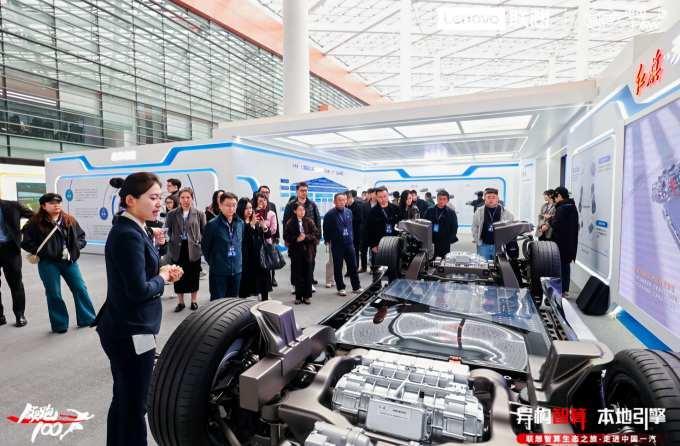
联想控股 联想集团-R 联想集团 分时图 日K线 周K线 月K线 8.15 0.01 0.12% 1.23% 0.86% 0.37% 0.00% 0.37% 0.86% 1.23% 8.04 8.07 8.11 8.14 8.17 8.21 8.24 09:30 10:30 12:00/13:00 14:00 16:10 0 5万 11万 16万 3月26日,"异构智算本地引擎——领跑100|联想智算生态之旅走进中国一汽"活动在吉林长春举行。 "坚实的AI算力基础设施是汽车智造稳定高效流转的基石。"联想中国基础设施业务群战略管理总监黄山 表示,依托混合式AI战略,联想构建出一套可管理、可复制且支持持续运营的"AI工厂"解决方案。从场 景定义到数据采集,再到智能体开发平台与AI训练引擎的深度处理,联想"AI工厂"解决方案为AI应用的 开发与部署流程提供了底层基础设施保障,将原本复杂且孤立的AI开发任务转变为一条标准、高效的 现代化"AI生产线"。 中国一汽企业生态战略营销部企业板块负责人李春喜介绍,中国一汽集团作为中国汽车工业成长的见证 者与推动者,始终坚定自主创新之路,突破核心技术壁垒,实现了红旗、解放全自主 ...

全线下跌!伊朗再次发动袭击
天天基金网· 2026-03-28 01:53
Market Performance - The U.S. stock market indices have experienced a continuous decline for five weeks, marking the longest losing streak since 2022 [3][4]. - As of March 27, the Dow Jones Industrial Average fell by 1.73% to 45,166.64 points, the S&P 500 dropped by 1.67% to 6,368.85 points, and the Nasdaq Composite decreased by 2.15% to 20,948.36 points [4][5]. - The technology sector, represented by the "Seven Giants" index, saw a decline of 2.54%, with major companies like Tesla, Nvidia, Microsoft, and Google all dropping over 2% [5][6]. Oil Market - WTI crude oil prices surged above $100 per barrel, closing at $101.18, driven by renewed tensions in the Middle East [8][11]. - Brent crude oil futures also saw significant gains, with prices reaching $106.29 per barrel, reflecting a rise of up to 5% [9]. Currency and Precious Metals - The U.S. dollar index rose to 100.19, an increase of 0.26%, with the dollar strengthening against the yen, reaching 160.27 [13][14]. - Gold prices rebounded, with spot gold reaching $4,500 per ounce, while COMEX gold futures rose by 2.59% to $4,489.7 per ounce [16][18]. - Silver prices also increased, with COMEX silver futures up by 2.7% to $69.77 per ounce [16][18]. Geopolitical Events - Ongoing conflicts in the Middle East, particularly involving Iran, have contributed to fluctuations in oil prices and market volatility [9][22]. - Recent missile attacks from Iran have resulted in casualties, further escalating tensions in the region [21][22].

突破8000亿!一图看懂比亚迪的2025年
DT新材料· 2026-03-27 16:03
Core Viewpoint - BYD's financial performance for the year ending 2025 shows a revenue increase of 3.46% year-on-year, but a significant decline in net profit, indicating potential challenges in profitability despite revenue growth [2][3]. Financial Performance Summary - Revenue for 2025 reached 803.97 billion, up from 777.10 billion in 2024, marking a 3.46% increase [3]. - Net profit attributable to shareholders decreased by 19% to 32.62 billion from 40.25 billion in the previous year [3]. - The net profit after excluding non-recurring gains and losses fell by 20.38% to 29.45 billion from 36.98 billion [3]. - The total assets at the end of 2025 were 883.73 billion, reflecting a 12.83% increase from 783.36 billion in 2024 [3]. - Basic earnings per share dropped by 22.34% to 3.58 from 4.61 in 2024 [3]. Sales and Export Data - In 2025, BYD sold 4.6 million vehicles, with overseas exports reaching 1.05 million units, contributing to an overseas revenue of 310.7 billion [4]. Quarterly Breakdown - The quarterly revenue for 2025 was as follows: Q1: 170.36 billion, Q2: 200.92 billion, Q3: 194.98 billion, Q4: 237.70 billion [5]. - Quarterly net profit attributable to shareholders varied, with Q4 showing a profit of 9.29 billion [5].

比亚迪2025年“成绩单”出炉:营收突破8000亿元
Shang Hai Zheng Quan Bao· 2026-03-27 15:59
Core Insights - The chairman of BYD, Wang Chuanfu, stated that the competition in the electric vehicle industry has intensified, entering a brutal "elimination race" phase, with technological innovation playing a crucial role in the ongoing transformation of the industry [1] Group 1: Financial Performance - BYD reported a revenue of 804 billion yuan and a net profit of 32.6 billion yuan for 2025, with domestic tax contributions reaching 53.3 billion yuan and R&D investment at 63.4 billion yuan [5] - The company has a cash reserve of 167.8 billion yuan, indicating strong financial health [5] Group 2: Technological Advancements - BYD's R&D investment is projected to reach 63.4 billion yuan by 2025, a 17% increase year-on-year, with cumulative R&D spending exceeding 240 billion yuan [4] - The company is set to launch advanced technologies such as the "Tian Shen Zhi Yan" driver assistance system and the second-generation blade battery, which can charge from 10% to 70% in just 5 minutes under normal conditions [4][6] Group 3: Sales and Market Position - In 2025, BYD's total vehicle sales exceeded 4.6 million units, placing it among the top five global automotive groups and securing the title of global leader in electric vehicle sales [6] - The company's international sales surpassed 1 million units, marking a 140% year-on-year increase, with operations in 119 countries and regions [6] Group 4: Brand Development and Sustainability - BYD's premium brands, including Fangchengbao, Tengshi, and Yangwang, collectively sold 397,000 units, reflecting a 109% increase and nearly doubling their share of total sales compared to 2024 [8] - The company aims for carbon neutrality across its entire value chain by 2045, with a projected carbon reduction of 46.6 million tons from its electric vehicles by 2025 [8]
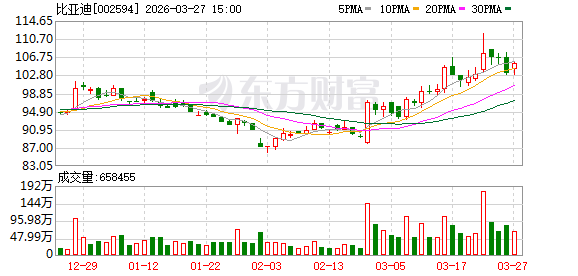
跻身全球汽车集团销量第五,比亚迪(002594.SZ)2025年营业收入达8039.65亿元
智通财经网· 2026-03-27 15:59
Core Insights - BYD reported a revenue of 803.965 billion yuan for 2025, marking a year-on-year increase of 3.46% [1] - The net profit attributable to shareholders was 32.619 billion yuan, with a net profit of 29.446 billion yuan after excluding non-recurring gains and losses [1] - The company proposed a cash dividend of 3.58 yuan per share to all shareholders [1] Group 1: Sales and Market Position - BYD maintained its position as the global leader in electric vehicle sales for four consecutive years and ranked fifth among global automotive groups, improving one position from the previous year [2] - The company's total vehicle exports exceeded one million units for the first time, representing a year-on-year growth of 140% [2] - The sales of high-end brands such as Yangwang, Tengshi, and Fangchengbao reached nearly 400,000 units, significantly increasing their share of the total passenger vehicle sales compared to 2024 [2] Group 2: Technological Advancements and Global Expansion - BYD launched the world's first mass-produced passenger vehicle with a full-domain kilovolt high-voltage architecture, enhancing travel efficiency [3] - The company expanded its global footprint, with operations in 119 countries and regions, leading the Chinese automotive industry in overseas market coverage [3] - The company achieved significant sales growth in key overseas markets, including Latin America, Europe, and Southeast Asia, with local production bases entering new phases of operation [3]