
茶饮

Search documents
茶咖日报|连续“挖角”麦当劳?消息称前麦当劳中国高管汤海涛加盟霸王茶姬
Guan Cha Zhe Wang· 2025-07-24 12:14
Group 1 - Former McDonald's China executive Tang Haitao has joined Bawang Chaji as CTO, bringing extensive digital experience to enhance competitiveness in the tea beverage market [1] - Bawang Chaji has also appointed Eugene Lee as Vice President and Chief Marketing Officer for the Asia-Pacific region, who previously served as McDonald's International CMO [1] - Bawang Chaji's CFO, Huang Hongfei, also transitioned from McDonald's China, indicating a trend of talent acquisition from the fast-food giant [1] Group 2 - Ye Ye Bu Pao Cha is projected to achieve a net profit of approximately 70 million yuan in 2024, with expectations to reach 200 million yuan in 2025 while seeking financing [2] - The brand has over 2,500 stores nationwide and aims to expand to 5,000 stores by 2025, showcasing aggressive growth plans [2] - Co-founder Yu Lina's previous experience in leading roles at other tea brands has been pivotal in the company's success [2] Group 3 - The tea brand Xianji has opened its first flagship store in Hangzhou, focusing on creating a differentiated experience with a spacious design and a variety of drink options [3] - The flagship store features 42 drink options with prices ranging from 15 to 32 yuan, and offers promotions to attract customers [3] - The founder emphasizes the importance of a complete offline experience to build brand recognition and consumer connection [3] Group 4 - Heytea has participated in the 2025 Food Safety Publicity Week, sharing its food safety management innovations and being recognized as a "2024 Annual Food Safety Good Case" [4] - The event aims to promote public participation and social governance in food safety, highlighting the industry's commitment to safety standards [4] Group 5 - M Stand is set to open its first overseas store in Kyoto, Japan, strategically located near the famous Blue Bottle Coffee [5] - The new store is designed as a standalone building, allowing for a complete presentation of the M Stand brand and service experience [5] - M Stand currently operates around 570 stores across 38 cities in China, with an average customer spend of 43 yuan [5]


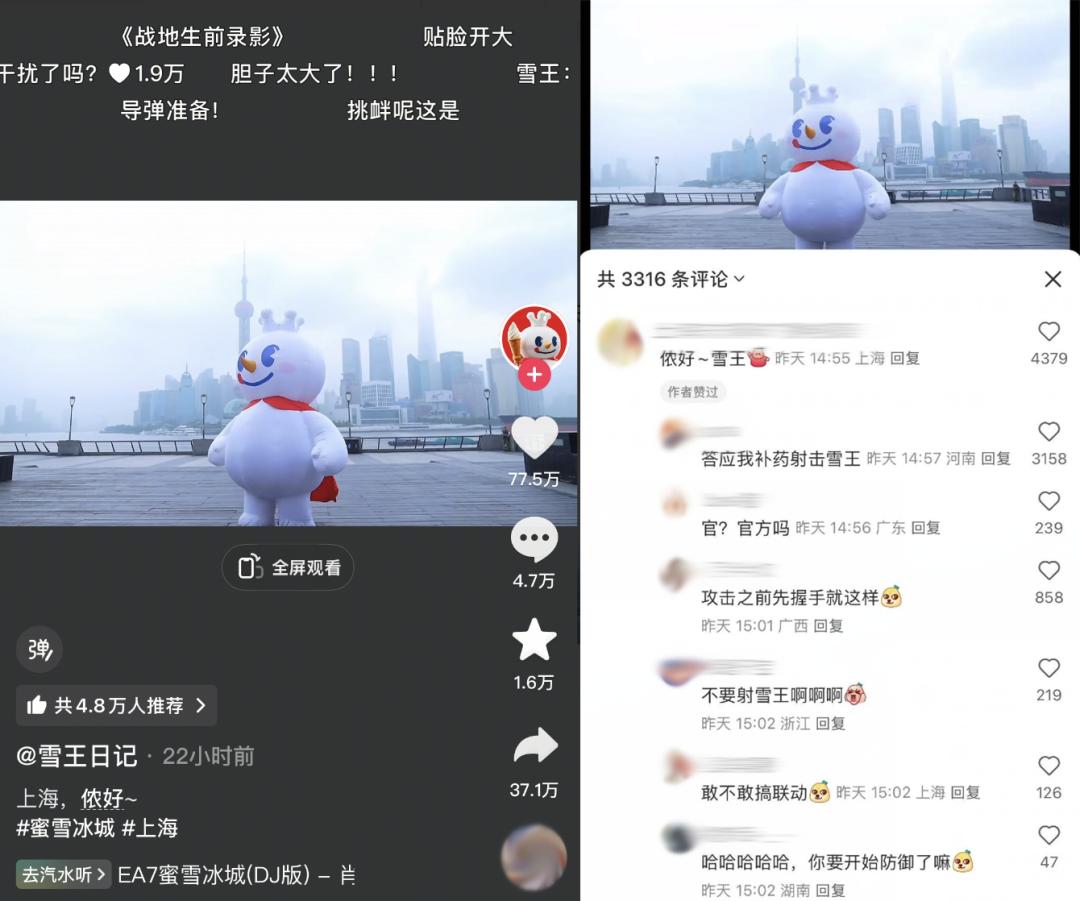
“在上海喝蜜雪冰城会被东方明珠攻击?” 玩地域梗的乐子人快把南京路柠檬水买爆了
3 6 Ke· 2025-07-24 07:36
Core Viewpoint - The article discusses the cultural phenomenon surrounding the brand Mixue Ice City in Shanghai, highlighting its rise as a popular milk tea brand amidst humorous regional stereotypes and social media engagement, particularly in relation to the Oriental Pearl Tower [1][3][4]. Group 1: Brand Engagement and Cultural Impact - Mixue Ice City has become a trending topic in Shanghai, with its mascot "Xue Wang" gaining significant attention on social media, including a video that approached one million likes [1][3]. - The humorous narrative of "Oriental Pearl attacking Mixue Ice City" reflects a deeper cultural commentary on regional stereotypes and the juxtaposition of low-cost brands against Shanghai's high-end consumer culture [4][8]. - The brand's popularity has led to a surge in social media posts featuring customers enjoying Mixue Ice City products at iconic Shanghai locations, indicating its status as a must-visit spot [23][25]. Group 2: Market Strategy and Expansion - Mixue Ice City has strategically expanded into Shanghai, initially focusing on non-core urban areas before moving into prime locations, which has been a significant aspect of its growth strategy [48][50]. - The brand's pricing strategy has been adjusted in response to the competitive landscape in Shanghai, with recent price increases reflecting the challenges of operating in a high-cost environment [54][56]. - The article notes that the brand's expansion is driven more by population density than economic indicators, suggesting a unique market positioning that prioritizes accessibility over traditional economic metrics [57][61].


昔日奶茶排队王,年轻人不想陪它演戏了
36氪· 2025-07-24 00:00
Core Viewpoint - The article discusses the decline of the tea brand Cha Yan Yue Se, which was once a top player in the tea beverage market, highlighting its struggles to maintain popularity and adapt to changing consumer preferences [1][3][36]. Group 1: Market Position and Competition - Cha Yan Yue Se was once a standout brand in the tea beverage market, known for its unique offerings and poetic branding, but has recently lost its competitive edge as new brands emerge [5][8][36]. - The brand's expansion efforts have been slow, with only a few new stores opened outside its home base, allowing competitors like Ba Wang Cha Ji to gain ground in key markets [21][25]. - Despite still being a part of local culture, the brand's popularity has waned, with many consumers no longer willing to wait in long lines for its products [14][40]. Group 2: Consumer Experience and Brand Perception - Consumers have expressed frustration with the lengthy ordering process and the brand's insistence on in-store experiences, which contrasts with the growing trend of online ordering and quick service [31][42]. - The brand's previous charm and novelty have diminished, leading to negative perceptions and complaints about its service and product offerings [19][28][36]. - Cha Yan Yue Se's attempts to innovate and expand its product line have not resonated well with loyal customers, who feel that the quality of beloved items has declined [19][36]. Group 3: Financial Performance and Growth Strategy - In 2023, Cha Yan Yue Se reported a net profit of approximately 5 billion yuan, which is competitive compared to other brands in the industry, despite its declining market presence [13]. - The company plans to open 268 new stores in 2024, marking a significant increase in its expansion efforts, particularly in new first-tier cities [25][27]. - The brand's recent foray into online sales of snacks and merchandise indicates a shift in strategy, but it has not generated the same buzz as its earlier initiatives [27][36].
“平台补贴”掺水分 商家不愿发声 这场角力尚无终点
Mei Ri Shang Bao· 2025-07-23 10:57
Core Viewpoint - The recent external competition among food delivery platforms has led to a temporary halt in aggressive promotional activities, impacting consumer behavior and sales in the tea beverage sector [1][2][3] Group 1: Impact of Platform Subsidies - Many tea beverage stores have experienced an increase in order volume due to platform subsidies, but this increase is heavily reliant on the availability of these subsidies [2][3] - The demand for iced beverages like coffee and tea has surged during the summer, making them the most popular category among consumers [2][3] - The reduction or removal of subsidies has resulted in a noticeable decline in order volume, indicating that consumer interest is largely driven by promotional offers [2][3] Group 2: Nature of Subsidies - The so-called "platform subsidies" are not solely funded by the platforms; merchants also contribute to these discounts, complicating the overall financial picture for consumers [3][4] - Merchants are compelled to participate in subsidy programs to maintain order volume, as consumers tend to choose cheaper alternatives when discounts are not available [3][4] - The overall profitability for stores has decreased due to the reliance on subsidies, which has also affected customer retention rates [4] Group 3: Delivery Personnel Perspective - Delivery personnel report that while order volumes may increase during promotional periods, their income remains relatively stable and is primarily dependent on their delivery speed [4] - The income per delivery has not significantly changed, with average earnings around 6-7 yuan per order, regardless of the promotional activities [4]
【尝鲜】《公司的秘密》+智解财经 | 解码12家大公司的跌落与重生
第一财经· 2025-07-23 10:20
Core Viewpoint - The article discusses the decline and rebirth of major companies, drawing parallels to Nietzsche's "Twilight of the Idols," and emphasizes the importance of understanding the lifecycle of businesses [1]. Group 1: Company Analysis - The report analyzes 12 notable companies, focusing on their peaks and challenges, including Pinduoduo and Lululemon, which are rethinking their user base despite differing pricing strategies [2]. - Starbucks and Yonghui are examined for their slow business pace amidst fast-changing market conditions [2]. - Haidilao and Meituan are assessed on how they are adapting in a time when dining costs are rising [2]. - Mixue Ice City is highlighted for its performance in lower-tier markets during challenging times [2]. - Intel's competitive position against TSMC and NVIDIA is questioned regarding its future viability [2]. - Toyota's late entry into the electric vehicle market raises concerns about its competitiveness [2]. - Alphabet's advancements in AI are scrutinized for their impact on the company's intelligence and market position [2]. - The report questions whether Hongkong Land can regain its former glory and if Disney can continue to leverage its intellectual property [2]. Group 2: Report Features - The report is noted for its depth, providing insights from financial data to market trends, and strategic directions to corporate mindsets, making it a valuable resource for industry professionals [4]. - It is designed to save time, allowing readers to grasp essential data points efficiently, compared to traditional methods like reading annual reports [5]. - The report serves practical purposes, helping users understand future industry trends and evaluate the reliability of a company's strategy [6].





亚庇游记
Hu Xiu· 2025-07-23 05:24
Core Insights - The article highlights the rising popularity of Kota Kinabalu, Malaysia, as a travel destination, particularly known for its stunning sunsets and diverse natural attractions [1][5][19] - It emphasizes the affordability and value of traveling to Kota Kinabalu compared to other destinations like the Maldives, making it an attractive option for family vacations [19][41] Travel Experience - The destination offers a mix of natural beauty, cultural experiences, and local cuisine, appealing to travelers seeking both relaxation and adventure [5][20][40] - The city is characterized by a slower pace of life, with basic infrastructure that may seem underdeveloped compared to more urbanized areas [20][24] - Local hospitality is noted to be friendly, with a significant Chinese-speaking population reducing language barriers for visitors [25][20] Cost and Accessibility - The average cost for a family of three for an 8-day trip is around 6000 RMB, which is significantly lower than other popular destinations [19][41] - Direct flights from various Chinese cities to Kota Kinabalu are available, with round-trip tickets priced between 1500 to 2000 RMB if booked in advance [27][28] Culinary Scene - The local cuisine is diverse, with a focus on Southeast Asian flavors, and seafood is particularly highlighted as being both delicious and affordable [29][34] - The presence of international brands in local markets indicates a growing culinary landscape that caters to both locals and tourists [37][29] Activities and Attractions - Various activities are available, including island hopping, cultural village visits, and nature exploration, all of which can be arranged at reasonable prices [40][41] - The article suggests that the experience of travel is subjective, encouraging travelers to embrace the uniqueness of each destination rather than relying solely on online reviews [40][41]

茶百道登陆新加坡:开业首日排长队,平均等待时长超2小时
Guan Cha Zhe Wang· 2025-07-22 09:16
Group 1 - The core point of the article is that the new tea beverage brand, Cha Bai Dao, has officially entered the Singapore market by opening two stores simultaneously in prominent shopping malls, SCAPE and Northpoint [1][2] - On the opening day, the SCAPE store attracted a large number of consumers, with an average waiting time exceeding 2 hours, indicating strong consumer interest [1] - The launch coincides with the 35th anniversary of diplomatic relations between China and Singapore, which has heightened local consumer enthusiasm for Chinese tea beverage brands [1] Group 2 - As of now, Cha Bai Dao has over 20 stores overseas, with more than 10 operating in South Korea, and additional locations in Australia and Spain [2] - Recent reports from institutions like Galaxy Securities and Huaxin Securities have positively evaluated Cha Bai Dao's internationalization progress, highlighting the success of its "one location, one strategy" approach in overseas markets [2] - The company aims to accelerate its overseas store coverage, which is expected to support a dual-driven growth model of "domestic + overseas" [2]

2025中国茶饮行业出海全景报告:中国味,世界潮
飞书深诺· 2025-07-21 11:40
Investment Rating - The report indicates a positive outlook for the tea beverage industry, particularly in overseas markets, driven by cultural confidence and localization strategies [5][25][32]. Core Insights - The domestic tea beverage market is experiencing intensified competition, prompting brands to explore new markets abroad [3][8]. - Cultural confidence is empowering tea brands to seize opportunities in overseas markets, with a focus on localization and digitalization to drive growth [5][7][25]. - The Southeast Asian market presents a fragmented landscape with fierce competition in the mid-to-low-end segments, while opportunities exist in the high-end market [32][35]. Summary by Sections Market Overview - The tea beverage market is projected to grow significantly, with a compound annual growth rate (CAGR) of 12% from 2020 to 2023, despite a decline in the domestic market [13][19]. - The report highlights the importance of adapting to local tastes and preferences in international markets, particularly in Southeast Asia [36][39]. Growth Drivers - Localization and digitalization are key drivers for the growth of tea brands in overseas markets, allowing them to better connect with consumers [7][25]. - The report emphasizes the need for brands to innovate and offer health-conscious options, such as low-sugar and low-calorie beverages, to meet changing consumer preferences [37][44]. Competitive Landscape - The Southeast Asian tea beverage market is characterized by a high degree of fragmentation, with numerous brands competing primarily in the mid-to-low-end segments [35][36]. - High-end market segments remain underdeveloped, presenting opportunities for brands like Heytea and Nayuki to expand their presence [35][36]. Regional Opportunities - In Southeast Asia, the report identifies key opportunities in health-oriented products and local flavor integration, which are crucial for market penetration [36][37]. - The report also notes that the UK market is ripe for innovation, particularly with the introduction of Asian flavors and health-focused beverages [56][57]. Strategic Recommendations - Brands are encouraged to leverage digital marketing and social media to enhance brand visibility and consumer engagement in international markets [121][125]. - The report suggests that a comprehensive understanding of local cultures and consumer behaviors is essential for successful market entry and growth [36][37].
茶百道宣布进军新加坡,东南亚市场布局再提速
news flash· 2025-07-21 11:00
Group 1 - The core point of the article is that the Chinese new tea brand Cha Bai Dao has officially entered the Singapore market, accelerating its store coverage in the Southeast Asia region [1] - The brand opened two stores simultaneously in well-known shopping malls, indicating a strategic expansion approach [1] - One of the stores experienced long queues, with an average waiting time exceeding 2 hours, reflecting strong consumer interest and demand [1]
业绩预告陆续披露,企业持续积极布局
GOLDEN SUN SECURITIES· 2025-07-21 10:54
Investment Rating - The industry investment rating is maintained as "Add" [5] Core Viewpoints - The retail sector shows a stable overall performance in 2025, with some companies demonstrating positive trends. The second quarter earnings forecasts are being disclosed, and companies are actively positioning themselves for growth [8] - The new consumption landscape remains vibrant, with key players such as Gu Ming, Cha Bai Dao, and others expected to perform well [8] - Retail transformation continues, with traditional retailers like Yonghui Supermarket and others making significant adjustments to their operations [8] Summary by Sections Retail Sector - In June 2025, the total retail sales of consumer goods reached 42,287 billion yuan, with a year-on-year growth of 4.8%, which is in line with expectations. Excluding petroleum and automotive factors, the retail sales of consumer goods amounted to 35,702 billion yuan, with a year-on-year growth of 4.1% [1] - Various categories showed different growth rates, with essential goods like food and beverages increasing by 8.7%, while optional categories like furniture and automobiles experienced a slowdown [1] Tourism and Hospitality - The tourism sector is expected to see a decline in visitor numbers and revenue growth in Q2 due to various factors, but companies are improving their capabilities through IP, products, and marketing [2] - The hotel sector is showing signs of improvement, with Jin Jiang Hotels forecasting a net profit of 3.2-3.6 billion yuan for Q2, despite a year-on-year decline of 50.7%-44.7% [2] Food and Beverage - Some restaurant brands have shown positive performance in June, with Guoquan expecting a core operating profit of 1.8-2.1 billion yuan for H1 2025, reflecting a year-on-year increase of 44%-68% [3] - The tea beverage sector is anticipated to benefit in Q3, maintaining relatively high growth rates [3] Retail Transformation - Traditional retail companies are undergoing significant transformations, with Yonghui Supermarket adjusting 124 stores and closing 227 in the first half of 2025 [4] - Specialized chains like mother and baby stores and Miniso are expected to see improved growth rates in Q2 [4] Cross-Border Trade - The small commodity city in Yiwu has seen strong demand in the潮玩 and skincare sectors, with bidding results exceeding expectations [7] - The overall growth rate of the cross-border sector may experience a slight decline due to varying tariff impacts [7] Investment Recommendations - Key companies to watch include Yonghui Supermarket, Chongqing Department Store, and others in the retail transformation space [8] - In the tourism sector, companies like Xiangyuan Cultural Tourism and Songcheng Performance are expected to perform well [8]