
现制茶饮

Search documents
大消费行业周报(8月第2周):免费学前教育政策惠及母婴相关板块-20250811
Century Securities· 2025-08-11 00:52
Investment Rating - The report does not explicitly state an investment rating for the industry, but it suggests a positive outlook for sectors such as education, dairy products, and maternal and infant products due to recent policy changes [4]. Core Insights - The consumer sector showed mixed performance in the week of August 4-8, with textile and apparel, home appliances, and beauty care sectors experiencing gains, while social services and retail sectors faced declines [4]. - Recent government policies aimed at promoting free preschool education and subsidies for childcare are expected to positively impact consumer spending and help mitigate the declining population trend [4]. - DJI's entry into the cleaning appliance market with its ROMO series is expected to intensify competition, although traditional players maintain advantages in technology, cost control, and distribution channels [4]. - The "first cup of milk tea in autumn" campaign has sparked significant consumer demand, with major tea brands reporting substantial sales increases during this promotional period [4]. Summary by Sections Market Weekly Review - The consumer sector's performance varied, with notable gains in textile and apparel (+4.23%), home appliances (+2.37%), and beauty care (+1.70%), while social services (-0.11%) and retail (-0.38%) saw declines [4][5]. Industry News and Key Company Announcements - The State Council issued a policy to gradually implement free preschool education starting in the fall of 2025, which is expected to boost consumer spending in related sectors [4][15]. - Hema plans to open nearly 100 new stores within the fiscal year, expanding its reach in the Chinese consumer market [4][15]. - The launch of DJI's ROMO series cleaning robots is anticipated to enhance market competition, although established players retain their market positions due to their technological and operational advantages [4][16]. - The tea beverage market has seen a surge in demand, with brands reporting significant sales growth during promotional events [4][16].
新消费行业周报:美护及潮玩驱动新消费行业景气度上行-20250810
Hua Yuan Zheng Quan· 2025-08-10 07:48
Investment Rating - The investment rating for the new consumption industry is "Positive" (maintained) [4][30] Core Viewpoints - The beauty industry saw a GMV growth of 31.7% year-on-year in July on Douyin, with the total GMV for beauty products ranging from 150 billion to 200 billion yuan [4] - The trend in the beauty market reflects a dual pattern of price segment downtrend and high-end consumption coexistence, with 68.1% of GMV coming from products priced below 200 yuan [4] - The潮玩 (trendy toy) industry is experiencing growth driven by successful events like the PTS Beijing International Trendy Toy Exhibition, highlighting the importance of IP operation for long-term growth [4] - International outdoor sports brands are increasingly entering the Chinese market, indicating a rising demand from Chinese consumers [4] Summary by Sections Industry Performance - The new consumption industry tracked from August 4 to August 8 shows a weekly increase of 4.23% in the textile and apparel index and 1.70% in the beauty care index, while the retail index decreased by 0.38% [7] Key Industry Data - In June, retail sales for textile and apparel increased by 1.9% year-on-year, while cosmetics saw a decline of 2.3% [12] - Gold and silver jewelry retail sales increased by 6.1% year-on-year in June [13] Investment Analysis Opinions - The growth of emerging consumer goods reflects new consumption concepts among the younger generation, emphasizing the importance of understanding these narratives for investment opportunities [19] - Recommendations include focusing on high-quality domestic brands in beauty, such as 毛戈平, 巨子生物, and 上美股份; in gold jewelry, brands like 老铺黄金 and 潮宏基; in trendy toys, companies like 泡泡玛特; and in ready-to-drink tea, brands like 蜜雪集团 and 古茗 [19]
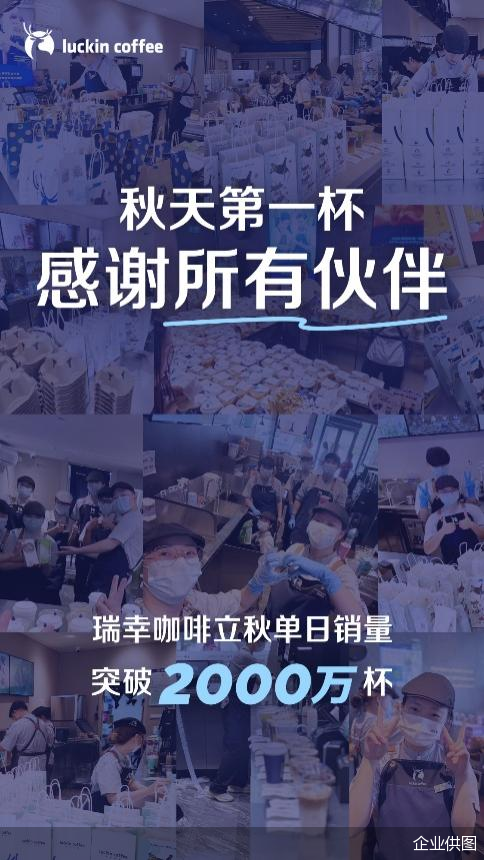
单日单店最高2691杯!瑞幸坐实"秋天第一杯”销冠
Bei Jing Shang Bao· 2025-08-08 14:15
Group 1 - Luckin Coffee achieved a record sales volume of over 20 million cups on August 7, making it the top-performing brand in the ready-to-drink tea market [2] - The highest-selling store on that day was located in Shanghai, with a single-day sales volume of 2,691 cups [2] - Major cities contributing to the sales included Shanghai, Shenzhen, Beijing, Guangzhou, and Hangzhou [2] Group 2 - The surge in orders during promotional events puts significant pressure on the supply chain, with some brands unable to fulfill orders promptly [3] - Luckin Coffee's supply chain and digital management systems are designed for rapid scalability, allowing it to handle the increased demand effectively [3] - The company's dynamic collaborative system covers the entire process from demand forecasting to user service, converting order pressure into manageable operational efficiency [3] Group 3 - Luckin Coffee has established a jasmine flower base in Guangxi for high-quality jasmine tea used in its products, enhancing its product quality [4] - The company plans to procure approximately 1 million tons of coconut raw materials over the next five years from Indonesia to ensure supply for its popular products [4] - The newly built Xiamen super factory will have an annual roasting capacity of 55,000 tons, contributing to a total capacity of 155,000 tons across its facilities, strengthening its supply chain control [4] Group 4 - In Q2 2025, Luckin Coffee reported total net revenue of 12.359 billion yuan (1.723 billion USD), a year-on-year increase of 47.1% [4] - Operating profit surged by 61.8% to 1.7 billion yuan, with an operating profit margin of 13.8% [4] - The number of new transaction customers exceeded 28.7 million in Q2, with a monthly average customer count growing by 32% to nearly 91.7 million, setting a new historical high [4]


罢免非独立董事,市值已蒸发九成,奈雪如何扭亏为盈?
凤凰网财经· 2025-08-08 13:09
Core Viewpoint - Naixue's tea is facing significant challenges in achieving stable profitability, with a decline in revenue and increasing competition in the beverage market [2][3][4]. Financial Performance - Naixue's revenue from 2021 to 2024 was 42.97 billion, 42.92 billion, 51.64 billion, and 49.21 billion respectively, with net profits of -4.526 billion, -476 million, 11.166 million, and -926 million [2]. - The adjusted net profits for the same years were -145 million, -461 million, 20.912 million, and -919 million [2]. Business Model and Expansion - Naixue has a low proportion of franchise stores, with 90.8% of revenue coming from direct stores, which saw a decline in income [3][4]. - In 2023, Naixue launched a "partner plan" to open franchise stores, requiring an investment of approximately 1 million and management experience [3]. - By the end of 2024, the number of franchise stores increased to 345, while direct store revenue decreased by 6.3% [4]. Market Strategy and Product Development - Naixue is exploring new store formats to adapt to different consumer scenarios, including the introduction of "Naixue green stores" focusing on healthy food options [6][7]. - The company has simplified its brand name and launched a "no sugar natural nutrition+" initiative to promote healthier products [8]. Investor Sentiment and Market Position - Naixue's market capitalization has significantly decreased from approximately 290 billion HKD at its IPO to about 24.93 billion HKD [8][9]. - Major investors have been reducing their stakes, indicating a loss of confidence in the company's future prospects [9][10].
外卖大战 瑞幸翻盘
3 6 Ke· 2025-08-08 00:36
Core Viewpoint - The intensifying competition in the food delivery market has unexpectedly benefited the ready-to-drink tea and coffee sector, particularly Luckin Coffee, which reported strong financial performance in Q2 2025, exceeding expectations in revenue and operating profit growth [1][4]. Financial Performance - In Q2 2025, Luckin Coffee achieved a revenue of 12.359 billion yuan, a year-on-year increase of 47.08%, and an operating profit of 1.7 billion yuan, up over 60% [4]. - Same-store revenue growth returned to a positive trajectory, with Q1 2025 showing an 8.1% increase and Q2 2025 accelerating to 13.4% [4]. - The number of monthly active customers reached 91.7 million, a 32% year-on-year increase, with over 28.7 million new customers added in Q2 [8]. Market Dynamics - The entry of competitors like Kudi has intensified price competition in the domestic coffee market, prompting Luckin to accelerate store expansion and implement a low-price strategy [3]. - The impact of the price war began to reflect in Luckin's financials starting in 2024, with a decline in same-store revenue in Q1, but recovery was noted in Q2 due to strategic adjustments [3][4]. Cost and Profitability - The operating profit margin improved to 13.8% in Q2 2025, up from 12.5% in Q2 2024, driven by an increase in gross margin and a decrease in the proportion of rental and operational expenses [5]. - Transportation costs surged to 1.67 billion yuan in Q2, a significant increase of 175% year-on-year, impacting profit margins due to the higher costs associated with delivery orders [10]. Future Outlook - The ongoing food delivery competition is expected to provide a favorable environment for Luckin's growth, with potential for increased market penetration in the ready-to-drink coffee sector [11]. - However, the rising delivery costs associated with the increased share of delivery orders remain a concern for future profitability [11][14]. - Long-term growth prospects for Luckin are strong, supported by the expanding domestic coffee market, which is projected to grow from 151.5 billion yuan in 2023 to 331.4 billion yuan by 2027 [15].
国泰海通证券每日报告精选-20250806
GUOTAI HAITONG SECURITIES· 2025-08-06 11:19
Group 1: Market Trends - The Hong Kong stock market is expected to continue its bull run in the second half of 2025, outperforming the A-share market, driven by sectors like innovative drugs, new consumption, and AI applications[4] - The overall increase in the Hong Kong stock market is attributed to the scarcity of certain assets, aligning with current industry development trends and better fundamentals, which may attract continued capital inflow from mainland investors[5] Group 2: Sector Analysis - The AI sector is leading the technological cycle upward, with significant growth potential for Hong Kong's tech assets, particularly in the AI industry chain, which includes model development and commercial applications[5] - The film industry has shown significant improvement, with a 49% increase in box office revenue week-on-week, and a year-on-year growth of 64.8% due to new releases during the summer season[11] Group 3: Economic Indicators - Real estate sales in 30 major cities have decreased by 20.8% year-on-year, with first-tier cities seeing a decline of 17.8%[10] - The average daily retail sales of passenger cars increased by 5.0% year-on-year, indicating a slight recovery in consumer demand despite rising inventory pressures among dealers[10] Group 4: Policy and Regulatory Environment - The U.S. and China have agreed to extend the tariff exemption period by 90 days, stabilizing trade relations temporarily[14] - Recent meetings have emphasized the need for macroeconomic policies to support economic recovery and stabilize the capital market, with a focus on promoting consumption and managing risks[16]
中金:看好服务消费强内功综合性龙头和高成长性细分龙头
Zheng Quan Shi Bao Wang· 2025-08-04 00:05
Group 1 - The core viewpoint of the article highlights that the intensive listing of ready-to-drink tea and catering companies in the first half of 2025 will enhance the sector's effect, despite the consumption environment still awaiting a turning point [1] - Companies with inherent growth momentum are expected to outperform in stock price performance and thus achieve relatively high valuation levels [1] - In contrast, leading companies that are highly correlated with the macroeconomic cycle still have valuations below historical averages [1] Group 2 - Looking ahead to the second half of 2025, there is optimism regarding growth opportunities for comprehensive leading companies with strong internal capabilities and high-growth niche leaders, supported by service consumption and potential policy promotion [1]

喜茶爆单,抹茶“杀疯”,中国抹茶会是下一个Labubu吗?
创业邦· 2025-08-02 10:07
Core Viewpoint - The article discusses the recent surge in popularity of matcha products, particularly highlighting the impact of BLACKPINK member's social media post on HEYTEA's "Triple Thick Matcha," which led to a significant increase in global orders and sales [4][6][10]. Group 1: Market Trends - There has been a notable increase in matcha product launches across various brands, with HEYTEA introducing multiple matcha beverages and other brands like Nayuki and Cha Bai Dao also releasing popular matcha items [7][21]. - The Asia-Pacific region accounted for 57.76% of the global matcha market in 2023, with China and Japan recognized as historical centers for matcha production [9][33]. - Matcha's association with Japan persists, despite its origins in China, as consumers increasingly discover the historical roots of matcha in regions like Jing Mountain, Hangzhou [30][32]. Group 2: HEYTEA's Response - Following the social media post, HEYTEA's sales of the "Triple Thick Matcha" increased by over 500% in cities like Shanghai and Hangzhou within a day [12]. - HEYTEA's global stores quickly adapted by launching promotional activities, including a buy-one-get-one-free offer for matcha drinks, although this led to shortages in matcha supplies [16][20]. - The brand's marketing strategy included creating artist-customized versions of the matcha drink to attract fans and enhance engagement [16][14]. Group 3: Regional Production Insights - China has become the largest producer and consumer of matcha globally, with production concentrated in regions like Jing Mountain, Guizhou, and Hubei [33][40]. - Jing Mountain's matcha production is expected to exceed 5,000 tons by 2025, with significant investments in local tea development [34][36]. - Guizhou's matcha production surpassed 1,200 tons last year, and the region is recognized for its modern matcha processing facilities [40]. Group 4: Branding and Market Positioning - The article emphasizes the need for "Chinese matcha" to establish a stronger brand identity to compete with Japanese matcha products [48]. - Successful examples from other regions, such as the rapid growth of Liuzhou's snail noodles, illustrate the potential for local specialties to gain national recognition through effective branding and marketing strategies [51]. - The article suggests that enhancing product visibility, leveraging local heritage, and creating engaging marketing campaigns can help elevate the status of Chinese matcha in the global market [55].
古茗(01364.HK):经营好于年初预期 长期竞争优势稳固
Ge Long Hui· 2025-07-31 05:41
Core Viewpoint - The company is expected to achieve a non-GAAP net profit of approximately 1 billion yuan in the first half of 2025, with a revenue growth of around 30%, aligning with market expectations [1]. Group 1: Revenue and Store Performance - The company anticipates strong same-store performance in the first half of 2025, driven by a low base and the competitive landscape in the takeaway market, with an expected same-store growth exceeding 20% in Q2 2025 [1][2]. - The total number of stores is projected to reach approximately 11,000 by the end of the first half of 2025, with around 1,100 new stores added [1]. - The company signed nearly 2,000 new stores from January to May, although some openings are delayed due to renovation capacity constraints [1]. Group 2: Profitability and Margin Outlook - The company is expected to see a recovery in profit margins, with a projected net profit margin increase of about 1 percentage point, leading to a non-GAAP net profit of around 1 billion yuan [2]. - The gross margin is anticipated to expand due to increased cup output, although the lower margin from coffee machines may offset some of this growth [2]. - Marketing efforts, including hiring brand ambassadors and social media promotions, are expected to enhance coffee sales, with coffee cup output potentially exceeding 10% by June [2]. Group 3: Competitive Landscape and Long-term Outlook - The company has established a foundation for survival without relying on a single platform through digitalization and supply chain development, positioning itself well for competition post-subsidy [3]. - The long-term trend suggests an increase in market share, focusing on brand value and stable customer experience rather than short-term promotions [3]. - The company has adjusted its profit forecasts for 2025 and 2026, increasing the adjusted net profit estimates by 9% and 7% to 2.2 billion and 2.5 billion yuan, respectively [3].
贴心服务为企业发展添底气
Sou Hu Cai Jing· 2025-07-30 23:19
Core Viewpoint - Mixue Ice Cream has become a leading global fresh tea beverage company with over 46,000 stores worldwide since its establishment in 1997, supported by local government initiatives [1] Group 1: Government Support - The government has provided comprehensive support to Mixue Ice Cream, facilitating its transition from a local brand to a global chain [1] - Through initiatives like the "Learning, Inspection, Improvement, and Enterprise Observation" campaign, the government has actively listened to the company's needs and offered guidance on food safety, compliance, and operational support [1] - The government has also enhanced policies to assist companies in expanding into overseas markets, providing a platform for international cooperation [1] Group 2: Business Development Strategy - The company aims to optimize its product and service offerings while building a self-controlled, safe, and efficient digital supply chain [1] - Mixue Ice Cream is focused on innovating diverse consumption scenarios to inject new momentum into the retail industry's transformation and upgrading [1] - The continuous release of national policy dividends presents unprecedented development opportunities for the company [1]