
电商

Search documents
多家巨头从美国私有化退市,中概股加速回归!
证券时报· 2025-12-28 12:59
Core Viewpoint - The Chinese concept stock market is undergoing significant changes in 2025, characterized by a wave of privatizations and delistings from U.S. exchanges, while a number of small and medium-sized enterprises continue to seek global financing opportunities, particularly through listings in the U.S. and Hong Kong [3][4]. Group 1: Privatization and Delisting - Geely Automobile completed the privatization of Zeekr, which became a wholly-owned subsidiary and delisted from the NYSE. The privatization was marked by a rapid process, with 70.8% of Zeekr shareholders opting for shares and 29.2% for cash, totaling $701 million [6]. - Dada Group, part of the JD ecosystem, was privatized by JD Group at a valuation of $520 million, allowing for more strategic flexibility and deeper collaboration with JD in the instant retail market [7]. - Financial One Account pioneered dual delisting by completing its exit from both the NYSE and Hong Kong Stock Exchange, with a privatization deal valued at approximately HKD 1.69 billion, driven by long-term low stock prices and liquidity issues [7]. Group 2: Trends in U.S. Listings - In 2025, 63 Chinese companies went public in the U.S., raising approximately $1.12 billion, indicating a trend of increasing numbers but decreasing fundraising amounts, with an average fundraising of less than $20 million [9]. - The largest IPOs included Bawang Tea and Ascentage Pharma, raising $411 million and $126 million respectively, highlighting a shift towards smaller enterprises in the U.S. market [9][10]. - The outlook for 2026 is cautious, as new listing requirements from Nasdaq may lead to a decline in the number of Chinese companies able to meet these standards [10]. Group 3: Return to Hong Kong - The trend of Chinese companies returning to Hong Kong is gaining momentum, with companies like Pony.ai and Hesai achieving dual primary listings, which is becoming the mainstream return model [12]. - Hesai's IPO in Hong Kong was the largest in the global lidar industry to date, raising over HKD 4.16 billion (approximately $533 million) [12]. - Other companies, such as Tianjing Biopharma, are also planning to pursue dual listings in Hong Kong, indicating a broader trend of returning to Asian markets [12]. Group 4: Strategic Implications - Some analysts suggest that privatization followed by IPOs in Hong Kong or A-shares may allow companies to escape U.S. regulatory pressures and achieve better valuations in local markets [13].


传媒互联网产业行业周报:豆包DAU破亿,北京进一步放开限购-20251228
SINOLINK SECURITIES· 2025-12-28 11:12
Investment Rating - The report does not explicitly state an investment rating for the industry Core Insights - The AI industry continues to show strong trends, with companies like MiniMax and Zhiyu AI passing hearings, indicating ongoing interest and investment in AI technologies [2] - The coffee and tea beverage sector remains vibrant, with brands actively opening new stores despite seasonal fluctuations [4] - E-commerce is facing pressure due to a challenging domestic consumption environment, leading to a lackluster performance [4] - Music streaming platforms are highlighted as valuable internet assets driven by domestic demand, suggesting a focus on subscription models [4] - The virtual asset market is experiencing limited catalysts, with ongoing market anxiety and weak capital inflows [4] - The automotive service sector is expanding, with significant milestones such as Tuhu's workshop count surpassing 8000 [4] - The report emphasizes the importance of cash flow in technology leaders, particularly in the AI sector, while cautioning against potential overinvestment [4] Summary by Sections 1.1 Consumer & Internet - Coffee and tea beverage sector shows a +0.18% increase in the Hang Seng non-essential consumption index, outperforming the Hang Seng index by -0.32 percentage points [9] - Notable stock performances include Mixue Group (+6.78%) and Luckin Coffee (+0.47%), while others like Bawang Tea and Xiaomian faced declines [9] 1.2 Platform & Technology 1.2.1 Streaming Platforms - The Hang Seng media index decreased by 0.59%, underperforming both the Hang Seng index and technology index [18] - Key stock performances include iQIYI (+3.24%) and Spotify (+0.38%), while Tencent Music saw a decline of -1.98% [18] 1.2.2 Virtual Assets & Internet Brokers - As of December 26, the global cryptocurrency market cap reached $30,205 billion, up 1.76% [22] - Bitcoin and Ethereum prices were $87,306 and $2,926.70, reflecting slight declines of -0.9% and -1.7% respectively [22] 1.2.3 Automotive Services - The Hang Seng composite index fell by -1.21%, with notable stock performances such as Zhongsheng Holdings (+2.25%) and Advance Auto Parts (-12.87%) [30] 1.2.4 O2O - The Hang Seng internet technology index dropped by -2.86%, with significant declines in stocks like Beike (-6.62%) and Didi Global (+4.57%) [34] 1.2.5 AI & Cloud - The Nasdaq internet index increased by +0.92%, with Nvidia (+5.27%) and TSMC (+4.81%) showing strong performances [39] 1.3 Media - The Shenwan first-level media index remained nearly flat with a -0.1803% change, with advertising marketing showing the largest gains [41] - Key stock performances include Xindong Company (+5.22%) and Perfect World (+3.09%) [41]
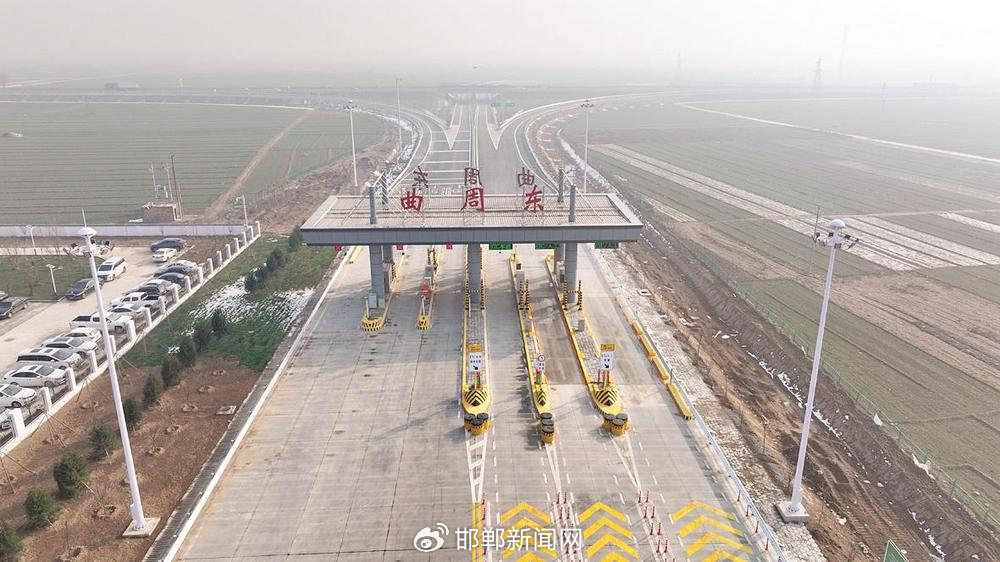
高速通衢启新程——大广高速曲周东互通助东部县域经济高质量发展
Xin Lang Cai Jing· 2025-12-28 09:12
Core Viewpoint - The opening of the Daguang Expressway Quzhou East Interchange marks a significant development in the transportation infrastructure of Quzhou County, transforming it from a "traffic dead end" to an "open frontier" and enhancing connectivity with major cities in the Beijing-Tianjin-Hebei region and beyond [4][5]. Group 1: Transportation Infrastructure - The Daguang Expressway Quzhou East Interchange features a dual six-lane design, allowing for future traffic growth and improving travel efficiency and service quality [4]. - The interchange facilitates seamless connections between the Daguang Expressway and local transportation, significantly reducing travel times and enhancing logistics efficiency [4][5]. - The project is part of a broader plan to establish a comprehensive transportation hub in eastern Handan, integrating highways, trunk roads, rural roads, and logistics systems [8]. Group 2: Economic Impact - The improved transportation network is expected to boost local industries, particularly in sectors such as children's vehicles, seedling cultivation, biomedicine, and egg production [5]. - Quzhou County is a major egg production base, with a stock of 15 million hens producing approximately 9 million eggs daily. The new interchange allows for faster transportation, ensuring better freshness and market reach for local products [5][6]. - The "One Product, One Broadcast" e-commerce initiative in Quzhou has gained momentum, leveraging improved logistics to enhance the distribution of local specialty products through online platforms [6]. Group 3: Logistics and Supply Chain - The opening of the interchange has reduced logistics costs by nearly 30%, optimizing the supply chain for e-commerce and enhancing the efficiency of product delivery [6]. - The integration of the expressway with local logistics nodes has improved the overall logistics chain, facilitating better connections with external markets and increasing cooperation with e-commerce partners [6][8]. - The transportation advantages are translating into competitive benefits for local industries, particularly in the egg production sector, which is now able to deliver products more efficiently to major urban markets [8].
商业行业2026年度策略报告:把握多元需求,服务消费释放潜力-20251228
CMS· 2025-12-28 09:04
Group 1: Macro Retail and Service Consumption - Retail data shows that essential goods maintain resilience while optional goods exhibit differentiated performance, with social retail growth slightly slowing down due to high base effects from government subsidies [10][16] - Service retail continues to show strong growth, with a year-on-year increase of 5.4% from January to November 2025, outpacing overall social retail growth [10][18] - Travel demand is steadily releasing, with domestic tourism numbers reaching 4.85 trillion yuan, a year-on-year increase of 11.5% [18][20] Group 2: E-commerce Sector - E-commerce maintains a steady growth rate, with online retail sales of physical goods increasing by 5.7% year-on-year, surpassing the overall social retail growth [13][25] - The penetration rate of e-commerce continues to rise, reaching 25.9% of total social retail sales by November 2025, an increase of 3.6 percentage points since the beginning of the year [13][25] - The competitive landscape in e-commerce is easing, with platforms like Taobao and JD.com focusing on maintaining stable growth rather than aggressive price competition [28][36] Group 3: Retail Focus on Downstream Markets - The focus is on the resilience of consumption in lower-tier markets, with recommendations for bulk snack retailers and the "锅圈" brand, which excels in the home dining sector [5][31] - The bulk snack market is characterized by low prices and high turnover, effectively meeting consumer demand for snacks [5][31] - "锅圈" is positioned as a leader in the home dining market, leveraging its multi-channel advantages and strong supply chain [5][31] Group 4: Service Sector Recovery - The hotel industry is stabilizing with a recovery in demand, and recommendations include Huazhu Group and Atour Hotel [5][31] - The OTA sector is experiencing stronger leisure demand compared to business travel, with international business continuing to grow rapidly [5][31] - Policies aimed at boosting service consumption are expected to further stimulate demand in the travel and hospitality sectors [23][24] Group 5: Investment Recommendations - Recommended companies include Alibaba, Meituan, Pinduoduo, JD.com, and Didi Chuxing for their strong fundamentals and low valuations [2][3] - The report highlights the potential for growth in the e-commerce and service sectors, driven by favorable policies and market dynamics [5][23]

市场变了!多家巨头从美国私有化退市,中概股加速回归!
Zheng Quan Shi Bao Wang· 2025-12-28 06:49
Core Viewpoint - The Chinese concept stock market is undergoing significant changes in 2025, characterized by a wave of privatizations and delistings from U.S. exchanges, while a number of small and medium enterprises continue to seek global financing opportunities, reflecting a complex interplay of withdrawal and entry in the global capital market landscape [1]. Group 1: Privatization and Delisting - Geely Automobile has completed the privatization of Zeekr, which is now a wholly-owned subsidiary, and has delisted from the NYSE, with 70.8% of Zeekr shareholders opting for shares and 29.2% for cash, totaling $701 million [2]. - Dada Group, part of the JD ecosystem, was privatized at a valuation of $520 million, with the acquisition price set at $2.0 per ADS, allowing for strategic adjustments and deeper collaboration with JD in the instant retail market [3]. - Fintech company OneConnect has pioneered dual delisting, having been listed on both the NYSE and HKEX, and has now completed its delisting from both exchanges, privatized for approximately HKD 1.69 billion due to long-term low stock prices and liquidity issues [3]. Group 2: Trends in U.S. Listings - In 2025, 63 Chinese companies went public in the U.S., raising approximately $1.12 billion, marking a 41% decrease in total financing compared to 2024, despite a 7% increase in the number of new listings [4]. - The largest IPOs this year were from consumer company Bawang Chaji, raising $411 million, and pharmaceutical company Ascentage Pharma, raising $126 million, indicating a shift towards smaller enterprises in the U.S. market [4][5]. - Ascentage Pharma, which focuses on developing new small molecule drugs, became the first Chinese biotech company to list in 2025, with its stock price rising by 61.62% post-IPO [5]. Group 3: Return to Hong Kong - The trend of Chinese companies returning to Hong Kong is evident, with companies like Pony.ai and Hesai achieving dual primary listings, reflecting a shift towards this model as a means to better integrate into the Hong Kong market [6]. - Hesai's IPO in September 2025 was the largest in the global lidar industry to date, raising over HKD 4.16 billion (approximately $533 million) [6]. - Other companies, such as Tianjing Biopharma, are also planning to pursue dual listings in Hong Kong, indicating a broader trend of returning to Asian markets [6]. Group 4: Future Outlook - Some analysts suggest that certain Chinese companies may pursue privatization and then re-list in Hong Kong or A-shares to escape U.S. regulatory pressures, potentially leading to better valuations and diversified financing channels [7].


中国公司全球化周报|京东物流首个海外智狼仓在英国投用/飞书在海外上线AI办公App“AnyGen”
3 6 Ke· 2025-12-28 04:24
Key Points - 36Kr will document the global stories of Chinese brands at CES 2026, following its coverage of IFA and GITEX GLOBAL in 2025 [2] - JD Logistics has launched its first overseas smart warehouse in the UK, enabling same-day delivery for its European online retail business, Joybuy [3] - ByteDance's Feishu has launched an AI office app, AnyGen, which allows users to convert voice notes and ideas into documents and presentations [3] - Alibaba Tongyi has released two foundational models to enhance industrial-grade video and voice capabilities, including a video generation model and an upgraded voice generation model [4] - Tuya Smart has introduced an AI life assistant, Hey Tuya, which integrates with various smart devices and has over 12,000 AI agents developed on its platform [4] - Wuji Power and ZF LIFETEC have formed a strategic partnership to collaborate on robotics training and deployment systems [5] - SF International has signed a memorandum of cooperation with MSC Air Cargo to enhance global supply chain services [5] - Tencent Midas has partnered with Mastercard to improve digital commerce in the global entertainment industry [6] - XPeng Motors has made significant progress in the Middle East and Africa, launching its brand in Qatar and establishing a flagship experience center in Abu Dhabi [6] - Lynk & Co has officially entered the UAE market, showcasing its flagship SUV and emphasizing community interaction [6] - Jinbei Automotive and E-Works have signed a memorandum to establish R&D centers in China and Germany for electric commercial vehicles [7] - Baidu's autonomous driving service platform, Luobo Kuaipao, will begin testing in the UK in 2026 [7] - LONGi Green Energy and Solarpro will collaborate to build the largest BC photovoltaic power station in Europe, with a total capacity of 450MW [7] - Xiangpiaopiao plans to invest approximately 268 million yuan to establish a beverage production base in Thailand [8] - Sazhi Intelligent has completed several rounds of financing, with over 20% of its revenue coming from overseas markets [9] - Yundong has secured pre-IPO financing and is preparing for an A-share listing, focusing on robotics applications in various industries [9] - Qianjue Technology has raised nearly 100 million yuan to expand its global commercialization efforts in the embodied intelligence sector [10] - Mianbi Intelligent has completed financing to enhance its edge AI model development and expand into emerging markets [10] - Thailand will eliminate the tax exemption for cross-border packages starting January 1, 2026, impacting e-commerce costs [11] - The Saudi Arabian e-commerce market is projected to grow significantly, reaching $708.7 billion by 2033 [11]


科技周报|快手直播遭遇黑灰产网络攻击;京东回应法国仓储遭遇盗抢
Di Yi Cai Jing· 2025-12-28 03:29
Group 1 - Kuaishou's live streaming function was attacked by cybercriminals, leading to a significant security incident that requires systemic upgrades across the industry for better prevention measures [1] - The Lijiang Cultural and Tourism Bureau publicly criticized Xiaohongshu for inadequate monitoring and management, resulting in consumer misinformation and damage to local businesses [2] - Wentech plans to assert its rights regarding the control of its subsidiary, Anshi Semiconductor, through a hearing in January 2026, with potential claims reaching up to $8 billion [3] - The Shanghai Stock Exchange issued guidelines for commercial rocket companies, requiring successful orbital launches as a precondition for listing [4] - JD.com faced theft at its warehouse in France, but the reported losses were exaggerated compared to actual figures [5][6] - UBTECH announced a significant acquisition of 43% of Fenglong shares, marking a strategic move in the humanoid robotics sector [7] - NetEase's veteran executive Ding Yingfeng will retire after 23 years, having played a crucial role in the development of several flagship games [8] - Harman International agreed to acquire ZF's ADAS business for €1.5 billion, indicating a strategic entry into the growing ADAS market [9] - The successful first flight of China's first 6-ton tilt-rotor aircraft, Lanying R6000, marks a breakthrough in tilt-rotor technology and opens new opportunities in low-altitude economy [10][11] - TCL Technology plans to acquire 80% of Zhao Yuan Optoelectronics for ¥490 million, entering the LED chip sector [12] - Visionary Technology's IPO was approved, aiming to raise ¥2.015 billion for expanding its Micro OLED production capacity [13] - The global AI hardware market is projected to grow significantly, attracting innovation in various sectors, with a focus on overcoming scene capability challenges [14]


如何深入整治“内卷式”竞争
Xin Lang Cai Jing· 2025-12-28 02:56
深化制度保障,纵深推进全国统一大市场建设。加快推进"五统一、一开放",破除阻碍全国统一大市场 建设的堵点卡点,促进有效市场和有为政府更好结合,为优化资源配置、扩大内需、缓解同质化竞争提 供制度保障。持续深入推进政府职能转变,优化完善政府政绩考核体系,健全政府不当干预市场竞争行 为治理规则,规范地方政府经济促进行为,破除地方保护和市场分割,清理行业壁垒,打通区域"小循 环",畅通释放内需潜力的"大循环",为企业创造更加稳定、透明和可预期的发展环境。 巩固动态平衡,供需两侧协同施策稳根基。将扩大内需战略同深化供给侧结构性改革有机结合起来,推 动供给和需求达到更高水平均衡。在需求侧大力提振居民消费,要进一步优化收入分配格局,加大投资 于人力度,提升公共服务水平,加强社会保障体系建设,切实增强居民实际消费能力和消费意愿;同 时,优化消费环境,加快清理限制性措施。在供给侧持续深化结构性改革,要坚持智能化、绿色化、融 合化方向,发展智能制造、绿色制造、服务型制造,分类开展行业治理,大力推动重点行业产能治理, 以高质量的供给适配不断升级的需求,形成需求牵引供给、供给创造需求的更高水平动态平衡。此外, 要统筹国内国际两个大局 ...
【厚道甘肃 地道甘味】“甘味”电商直播基地在杭州揭牌
Xin Lang Cai Jing· 2025-12-28 01:57
Core Insights - The "Ganwei" e-commerce live streaming base was officially launched in Hangzhou, marking a significant step in establishing a digital marketing front for the "Ganwei" brand in the Yangtze River Delta region [1] - The base aims to integrate Gansu's agricultural resource advantages with Zhejiang's digital strengths, facilitating a direct channel for "Ganwei" agricultural products from production to market [1] - The initiative is expected to enhance the brand influence and market share of Gansu's specialty products, such as highland summer vegetables, traditional medicinal materials, and grassland beef and lamb in the East China market [1] Industry and Company Developments - The "Ganwei" brand has established 100 authorized stores nationwide and 4 overseas, with over 170 types of agricultural products sold in more than 100 countries and regions [2] - The live streaming base is anticipated to further expand the market footprint of the "Ganwei" brand [2] - The base serves as a platform for industry collaboration and talent exchange between Gansu and Zhejiang, promoting cooperation in agriculture, cultural tourism, and digital economy sectors [1]
峰岹科技7.1亿元买楼建总部
Shen Zhen Shang Bao· 2025-12-27 20:50
Core Insights - Leading technology companies are intensifying their presence in Shenzhen, with firms like Douyin, Xiaomi, and Vivo establishing new office buildings to enhance their research and development capabilities [1][3]. Group 1: Company Developments - Fengcai Technology plans to purchase a property in Qianhai for approximately 710 million RMB, covering an area of 25,204.97 square meters, to support its expansion and R&D needs [1][2]. - In the first three quarters of the year, Fengcai Technology reported revenues of 558 million RMB, a year-on-year increase of 28.88%, while its net profit attributable to shareholders decreased by 9.01% to 167 million RMB [1]. Group 2: Industry Trends - The demand for quality office spaces in Shenzhen is being driven by the growth of the technology sector, which has maintained the top position in demand for seven consecutive quarters, accounting for 25% of the market [3]. - Major tech companies are focusing on Shenzhen due to its robust electronic information industry cluster, which offers significant advantages in supply chain efficiency and access to talent [4].
