
家电

Search documents
2026年1月以后,不出意外的话,或将迎来4大降价潮,老百姓提前做好准备
Sou Hu Cai Jing· 2026-01-12 17:09
Core Viewpoint - The market is expected to experience a significant price drop in various sectors by 2026 due to increased competition, rising supply, and changing consumer behavior [1][5][7]. Group 1: Sectors Facing Price Drops - The home appliance industry is experiencing intense competition, leading to price reductions as traditional brands respond to online competitors and new brands attract consumers with lower prices [2][4]. - The food and fast-moving consumer goods sector is also seeing increased supply, prompting companies to lower prices to meet changing consumer preferences for cost-effective products [4][5]. - The rental market is shifting, with increased housing supply in many cities leading landlords to reduce rents to attract tenants, particularly in second and third-tier cities [4][8]. - The clothing and accessories industry is under pressure from high inventory levels, prompting brands to offer significant discounts to clear stock before the new year [4][10]. Group 2: Consumer Behavior and Market Dynamics - Consumers are becoming more rational and cautious, often comparing prices online and waiting for promotions, which pressures companies to lower prices to retain customers [5][7]. - The anticipated price drops are seen as beneficial for consumers, particularly for essential goods like food and household items, which could alleviate living costs for families [8][10]. - Companies are adjusting their strategies in response to the price drop trend, with some opting to lower prices to gain market share while others focus on improving quality to maintain price levels [10][11]. Group 3: Economic Implications - Price reductions can indicate both healthy market competition and potential economic challenges, reflecting a market adjustment rather than a definitive economic downturn [7][10]. - The government may view the price drop trend positively, as it can stimulate consumer spending and contribute to overall economic growth [10][11]. - While the current price drop trend presents opportunities for consumers, it is essential to approach purchases with discernment, ensuring that the items are genuinely needed and the price reductions are justified [5][10].


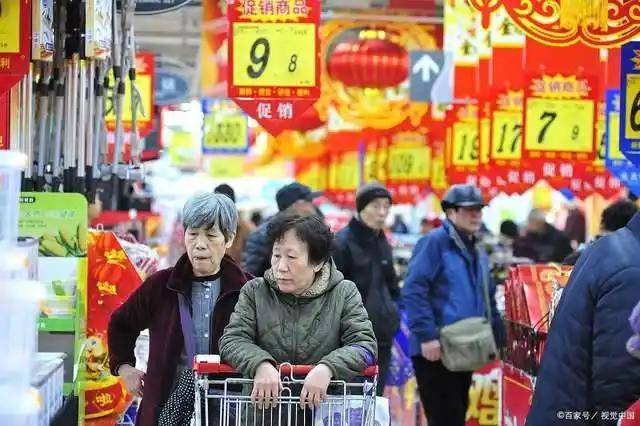
从追赶者到探路者,中国企业已升级为系统化出海
Sou Hu Cai Jing· 2026-01-12 15:24
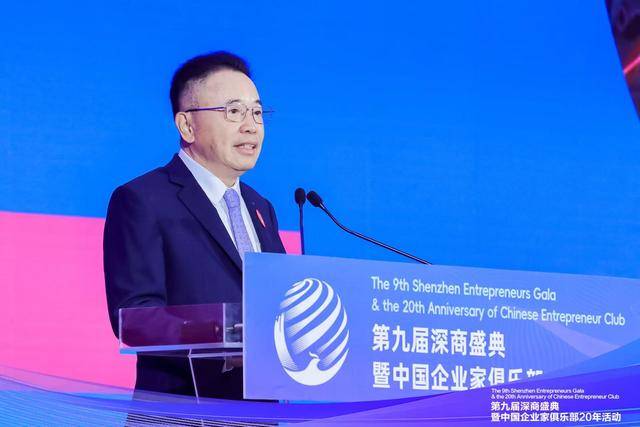
Group 1 - The global macroeconomic environment is complex and variable, with China facing both strategic opportunities and risks during this critical phase [1] - The "14th Five-Year Plan" emphasizes the need to build a modern industrial system, where Chinese enterprises are expected to play a more significant role [1] - Over the past two decades, Chinese companies have evolved from being followers in the global supply chain to pioneers in new strategic industries, contributing to China's economic globalization [3] Group 2 - TCL's globalization journey began in 1999 with its entry into Vietnam, marking 27 years of global expansion [3] - The establishment of TCL's North American regional operating center serves as a model for high-end market development, with significant investments in local R&D and manufacturing [3] - TCL ranks second in TV shipment volume in the North American market, supported by integrated local R&D, production, and marketing strategies [3]


外媒关注2026开年中国消费市场新趋势——中国消费迎来“开门红”(国际论道)
Xin Lang Cai Jing· 2026-01-12 14:51
Core Insights - The Chinese consumer market is experiencing a significant transformation, shifting from quantity to quality, driven by increased consumer confidence and innovative policies [6][9][10]. Consumer Activity - During the New Year holiday, 142 million domestic trips were made in China, with total spending reaching 84.789 billion yuan, indicating a robust recovery in consumer activity [6][14]. - Hainan's duty-free sales on January 1 reached 251 million yuan, a year-on-year increase of 93.8%, showcasing the growing appeal of domestic tourism and shopping [7][14]. Market Trends - The rise of "China Shopping" alongside "China Travel" reflects a shift in consumer preferences, with tourists increasingly purchasing high-tech products and cultural items rather than traditional souvenirs [7][8]. - The Z-generation in China is gravitating towards new domestic products and services that blend tradition with modern technology, enhancing the appeal of local brands [7][8]. Policy Support - The Chinese government is implementing a series of policies aimed at stimulating consumption, including financial incentives and support for green technology products [9][10]. - The Central Economic Work Conference emphasized the continuation of proactive fiscal policies in 2026 to maintain high growth rates, focusing on boosting consumer spending and investment [9][10]. Economic Resilience - China's consumer market is not only recovering but also reflecting structural optimization and enhanced internal dynamics, contributing to economic resilience [11][19]. - The retail sales of consumer goods increased by 4% year-on-year in the first eleven months of 2025, indicating a steady release of consumer demand [11][19]. Global Perspective - International media highlight the opportunities for global businesses to adapt to the evolving Chinese market, particularly in sectors like retail and services, where consumer preferences are shifting towards local and value-driven products [12][19]. - The focus on service experiences among younger consumers presents significant opportunities for foreign companies in sectors such as tourism, cultural events, and entertainment [12][19].


经济大省挑大梁│江苏南京:“国补”激发活力,消费市场持续焕新
Nan Jing Ri Bao· 2026-01-12 13:01
Core Viewpoint - The implementation of the "National Subsidy" policy at the beginning of the year is driving consumer enthusiasm in sectors such as automotive, home appliances, and digital products, promoting a shift towards greener and smarter consumption [1][5]. Group 1: Consumer Behavior and Sales Data - The "National Subsidy" policy has led to a significant increase in consumer activity, with Su Ning Yi Gou reporting a 110% increase in foot traffic in stores from January 1 to 3 [2]. - Sales of energy-efficient appliances have surged, with 92% of sold products being of the first energy/water efficiency level, and sales of refrigerators, washing machines, air conditioners, televisions, and water heaters have doubled [2]. - Mobile phone and smart watch sales saw remarkable growth, with increases of 170% and 115% respectively [2]. Group 2: Automotive Sector Impact - The new automotive subsidy policy has enhanced consumer interest, with the proportion of customers opting for vehicle scrappage and replacement rising from 10% to 30% [3][4]. - The updated subsidy structure allows for higher benefits, with scrappage subsidies reaching up to 20,000 yuan and replacement subsidies up to 15,000 yuan [3]. - The automotive market has experienced a 50% increase in foot traffic during the New Year period, indicating a strong consumer response to the subsidy [4]. Group 3: Policy Implications and Market Trends - The "National Subsidy" policy is aligned with the central government's focus on boosting domestic demand and upgrading industries, with over 2.6 trillion yuan in sales from related products in 2025 benefiting over 360 million people [5]. - The policy is designed to enhance product quality and promote the adoption of new technologies, contributing to a green and low-carbon transition [5][6]. - Retailers are adapting by offering integrated services such as free old appliance collection and on-site activation for new devices, enhancing the consumer experience [2][6].

尹艳林:当前的经济形势与深层次改革
Xin Lang Cai Jing· 2026-01-12 12:33
Core Viewpoint - The current macroeconomic situation in China is characterized by both achievements and challenges, necessitating deep reforms alongside supportive policies to ensure stable growth and address existing issues [4][5][6]. Economic Performance - In 2025, China's GDP growth reached 5.2% in the first three quarters, an increase of 0.4 percentage points compared to the previous year, with an expected annual growth rate of around 5% and a total economic output projected to reach 140 trillion yuan [4][14]. - The consumer goods market saw significant activity, with sales from the "old-for-new" policy exceeding 2.5 trillion yuan, including over 11.2 million vehicle upgrades and more than 120 million home appliance upgrades [4][14]. - Industrial profits for large-scale enterprises increased by 1.9% from January to October, indicating improved corporate performance [5][14]. Challenges in the Economy - There are notable issues such as insufficient effective demand, with recent months witnessing negative growth in investment and overall weak consumption [6][15]. - Price levels remain low, with the Consumer Price Index (CPI) fluctuating around zero for two consecutive years and the Producer Price Index (PPI) experiencing three years of negative growth [6][15]. - Employment and income growth pressures are significant, as highlighted in the "15th Five-Year Plan," indicating a need for focused strategies to enhance job creation and income distribution [6][15]. Policy Recommendations - The Central Economic Work Conference emphasized the need for more proactive macroeconomic policies, including maintaining necessary fiscal deficits and increasing central budget investments to support key projects [7][17]. - A flexible monetary policy is recommended to promote stable economic growth and reasonable price recovery, utilizing tools like reserve requirement ratio cuts and interest rate reductions [8][17]. - The government is urged to implement reforms in income distribution, enhance support for low-income groups, and improve the overall income structure to stimulate domestic demand [9][18]. Reform Initiatives - The focus on deep reforms includes addressing barriers in talent mobility between public institutions and enterprises, enhancing the role of innovation in driving economic growth, and improving the financial system to better support technological advancements [10][19]. - The government aims to enhance the synergy between policy support and reform innovation to foster a favorable economic environment and improve market expectations [10][19].
丰富新业态打造新场景 激发消费新活力
Yang Shi Wang· 2026-01-12 12:23
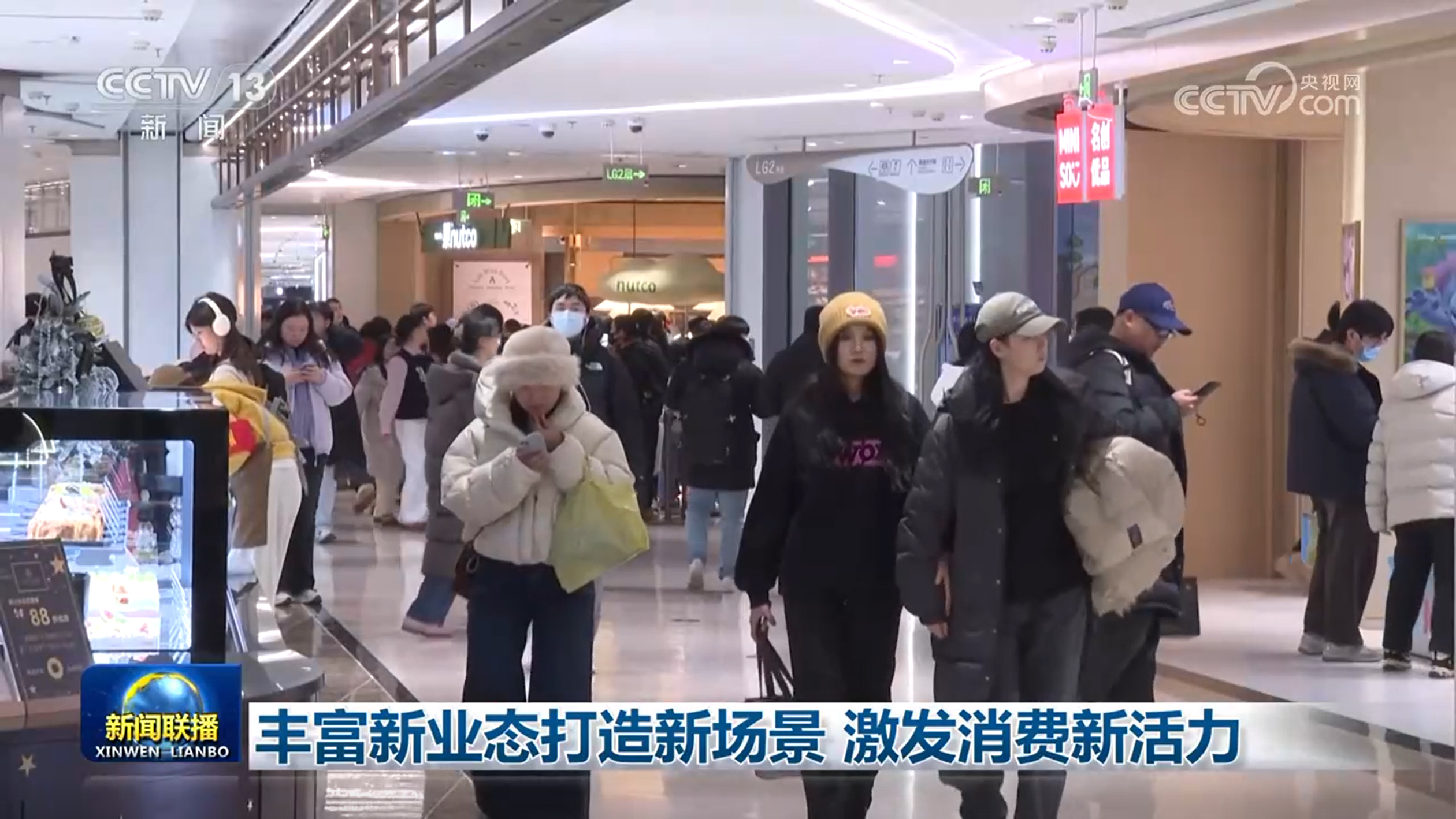
Group 1 - The core idea of the articles highlights the ongoing efforts across various regions to create innovative and experiential consumer environments, thereby stimulating consumption vitality [1][3][4][5] Group 2 - In Beijing, large commercial facilities are transforming into immersive experience spaces, featuring over 70 retail and dining first stores, along with rooftop gardens and sunken courtyards to enhance consumer experiences [3] - Shenzhen is promoting high-tech enterprises by encouraging the opening of first stores and exhibitions, exemplified by a humanoid robot-themed store where robot staff perform and interact with customers [3] - Chengdu is combining market exhibitions, intangible cultural heritage experiences, and cultural tourism to provide a one-stop shopping and leisure experience for residents and tourists [4] - Xi'an is enhancing nighttime consumption experiences with upgraded attractions, such as the new year flower boat parade, transitioning from viewing lights on land to immersive experiences on boats [4] - The "New National Subsidy" initiative is revitalizing the consumer market, with companies in Hebei collaborating on trade-in subsidies and discounts to boost consumer enthusiasm [5] - In Jiangsu, home appliance retailers are optimizing services by offering convenient "old for new" programs, with government subsidies exceeding 196 million yuan, driving sales of 1.52 billion yuan since the launch of the new trade-in policy [5]
莱克电气(603355):首次覆盖报告:电机构建生态底座,多元业务齐头并进
Orient Securities· 2026-01-12 11:12
Investment Rating - The report assigns a "Buy" rating for the company for the first time, with a target price of 42.63 CNY based on a valuation of 21 times earnings for 2026 [3][5]. Core Insights - The company is transitioning from a traditional home appliance manufacturer to a more diversified entity, leveraging its core competencies in refined management and strategic acquisitions [8][9]. - The company has completed the transfer of its overseas production capacity, which is expected to lead to improved profitability in the near future [8]. - The acquisition of Shanghai Pajie has enhanced the company's profitability in the automotive parts sector, with a strong order backlog [8][67]. - The PCBA business, acquired through the purchase of Lihua Technology, has broad downstream applications and is expected to contribute positively to revenue growth [8]. Financial Forecast and Investment Recommendations - The company is projected to achieve earnings per share of 1.47 CNY, 2.03 CNY, and 2.37 CNY for the years 2025 to 2027, respectively [3]. - Revenue is expected to grow from 100.2 billion CNY in 2025 to 121.3 billion CNY in 2027, with a compound annual growth rate (CAGR) of 8.5% [11]. - The net profit attributable to the parent company is forecasted to be 8.4 billion CNY in 2025, increasing to 13.6 billion CNY by 2027 [11]. Business Overview - The company has diversified its operations into four main business segments: home appliances, automotive parts, electric motors, and PCBA manufacturing [10]. - The home appliance segment has seen a gradual decline in its revenue contribution, from 80% in 2019 to 58% in 2023, as the automotive and PCBA segments grow [29]. - The company maintains a strong focus on overseas markets, with approximately 70% of its revenue coming from exports [29]. Operational Performance - The company has demonstrated stable revenue growth, with a CAGR of 11.36% from 2019 to 2024, and net profit growth at a CAGR of 19.62% during the same period [36]. - The gross margin has remained stable, fluctuating between 20% and 30%, with recent strategic adjustments leading to an upward trend in profitability [39]. - The return on equity (ROE) is consistently high, projected to be between 25% and 30% from 2022 to 2024, indicating strong financial health compared to industry peers [42].

海信视像入选“2025中国企业ESG百强”榜单
Xin Lang Cai Jing· 2026-01-12 10:05
Group 1 - The core viewpoint of the article emphasizes the growing importance of ESG (Environmental, Social, and Governance) as a key metric for high-quality corporate development and a vital link between corporate value and social value [1][2] - The "2025 China ESG Top 100" list was released by Sina Finance, evaluating over 5,000 A-share listed companies and mainland companies listed in Hong Kong using 18 industry ESG evaluation models and over 150 ESG indicators [1][2] - The list serves as a benchmark for industry development and provides valuable decision-making references for investors [1][2] Group 2 - Hisense Visual Technology was recognized for its outstanding ESG performance, ranking 25th on the "2025 China ESG Top 100" list [2][6] - The release of the list is seen as an authoritative recognition of the sustainable development practices of the listed companies and promotes the core values of ESG across the industry [2][6] - Companies are encouraged to integrate ESG principles into their strategic planning, operations, and supply chain collaboration to achieve a symbiotic relationship between commercial and social value [2][6] Group 3 - The Sina Finance ESG Rating Center is the first Chinese professional information and rating aggregation platform focused on ESG, aiming to promote sustainable development and responsible investment [11] - The center is dedicated to establishing ESG evaluation standards suitable for China's characteristics and advancing the development of ESG investment in the Chinese asset management industry [11]


海尔智家入选“2025中国企业ESG百强”榜单
Xin Lang Cai Jing· 2026-01-12 10:03
Group 1 - The core viewpoint of the article emphasizes the growing importance of ESG (Environmental, Social, and Governance) as a key metric for high-quality corporate development and a vital link between corporate value and social value [1][2] - The "2025 China ESG Top 100" list was released by Sina Finance, evaluating over 5,000 A-share listed companies and mainland companies listed in Hong Kong using 18 industry ESG evaluation models and over 150 ESG indicators [1][2] - The list serves as a benchmark for industry development and provides valuable decision-making references for investors [1][2] Group 2 - Haier Smart Home was recognized for its outstanding ESG performance, ranking 12th on the "2025 China ESG Top 100" list [2] - The publication of the list is a significant acknowledgment of the sustainable development practices of the listed companies and promotes the core values of ESG across the industry [2] - Companies are encouraged to integrate ESG principles into their strategic planning, operations, and supply chain collaboration to achieve a symbiotic relationship between commercial and social value [2] Group 3 - The "2025 China ESG Top 100" list includes notable companies such as China Construction Bank, China Mobile, Agricultural Bank of China, Tencent, and others, all receiving a five-star rating for their ESG performance [4][5] - The list highlights the importance of ESG in various sectors, including finance, telecommunications, information technology, and consumer goods [4][5][6] Group 4 - The Sina Finance ESG Rating Center is the first Chinese professional platform for ESG information and ratings, aiming to promote sustainable development and responsible investment [11] - The center is focused on establishing ESG evaluation standards suitable for China's characteristics and advancing the development of ESG investment in the asset management industry [11]

汽车家电数码全涵盖!2026郑州以旧换新补贴来了
Xin Lang Cai Jing· 2026-01-12 07:42
Core Viewpoint - Zhengzhou Municipal Bureau of Commerce announced the launch of a subsidy program for the replacement of consumer goods, including automobiles, home appliances, and digital smart products, as part of the 2026 old-for-new policy [1]. Group 1: Automotive Sector - The subsidy for scrapping and updating automobiles will follow the guidelines set by the Ministry of Commerce and other departments, with applications submitted through the national automotive circulation information management system or the "Old-for-New Car" mini-program [1]. - Consumers can retain relevant proof materials for vehicle replacement subsidies until the application system for Henan Province is launched [1]. Group 2: Home Appliances and Digital Smart Products Home Appliances - Consumers purchasing specific home appliances such as refrigerators, washing machines, televisions, air conditioners, computers, and water heaters will receive a subsidy of 15% of the final sales price for energy-efficient products, with a maximum subsidy of 1,500 yuan per item [2]. - Each consumer is eligible for one subsidy per product category [2]. Digital Smart Products - For digital smart products like smartphones, tablets, smartwatches, and smart glasses, consumers will receive a subsidy of 15% of the final sales price, capped at 500 yuan per item, provided the single item price does not exceed 6,000 yuan [3]. - Each consumer can claim one subsidy per product category [3]. Group 3: Participation Method - Consumers can access the subsidy program through the Cloud Flash Payment APP by searching for the "Henan Province Consumer Goods Old-for-New Service Platform" mini-program and completing personal information and real-name authentication [4]. - Subsidy vouchers are valid for the day of issuance and can be reissued if not used [4]. - Necessary information such as delivery address, product serial numbers, and activation evidence must be provided to the merchants [4].