投资银行

Search documents
美国GDP表面繁荣背后的隐忧:2025经济数据的真相与悬念
Sou Hu Cai Jing· 2025-08-04 01:06
Economic Overview - The U.S. GDP growth rate for Q2 2025 was reported at 3.0%, significantly exceeding the mainstream forecast of 2.5%, but this figure is misleading due to a sharp 30.3% drop in imports, which artificially inflated the GDP data [1] - The core indicator of domestic private final purchases has seen a decline in annual growth rate from 2.7% last year to 1.2%, indicating underlying economic weakness despite the seemingly strong GDP figure [1] Consumer Behavior - Actual personal consumption growth increased from 0.5% in Q1 to 1.4% in Q2, but this is still below last year's robust performance, with service consumption remaining weak, only slightly recovering by 1.1% [3] - Despite acceptable income and savings levels, consumer and investor sentiment is cautious due to various uncertainties, leading to a reluctance to increase spending [5] Investment Trends - Non-residential fixed investment growth has significantly slowed, with construction investment plummeting by 10.3% in Q2 following a 2.4% decline in Q1, while residential investment also fell by 4.6% [5] - Inventory changes further illustrate economic volatility, with inventory contributing 2.6 percentage points to GDP growth in Q1 but detracting 3.2 percentage points in Q2 [6] Inflation and Economic Dynamics - The core PCE price index rose to 2.54% in Q2, exceeding market expectations, which has led to more conservative spending and investment behaviors among households and businesses [8] - The economic landscape in the first half of 2025 has been characterized by significant fluctuations, with contrasting trends in imports and inventory affecting market sentiment and analyst predictions [8] Emerging Sectors - Surprisingly, sectors such as AI and data centers have not emerged as engines of economic growth, with reduced investments in power plants and a slowdown in data center and IT investments [9] Employment and Income Relevance - For the general public, GDP figures are less relevant than personal employment and income, as the true impact of economic conditions is reflected in daily life [11]

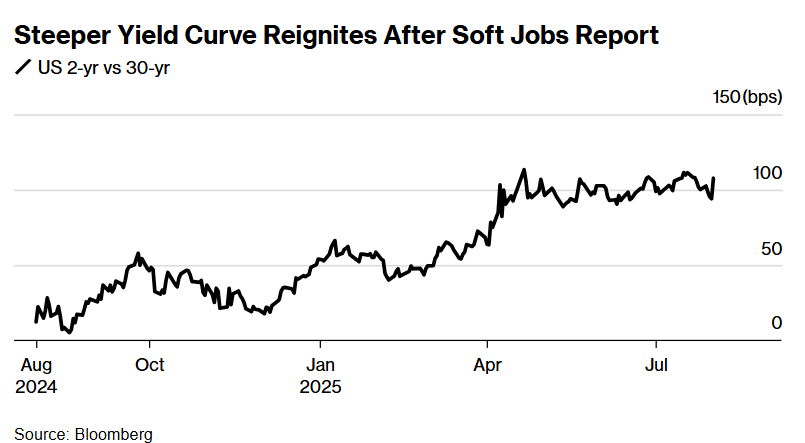
一夜之间股债天翻地覆! 非农引爆降息预期卷土重来 美债“牛市陡峭化”席卷华尔街
智通财经网· 2025-08-04 00:26
Core Viewpoint - The unexpected weakness in the U.S. non-farm payroll report has reignited expectations for interest rate cuts by the Federal Reserve, leading to a significant rally in U.S. Treasury prices after a month of declines [1][2][3]. Group 1: Employment Data Impact - The July non-farm payroll report showed only 73,000 jobs added, with prior months' data revised down by a total of 258,000 jobs, marking a historic downward revision of 90% [1][2]. - This weak employment data has led traders to heavily bet on a Federal Reserve rate cut, with futures markets pricing in an 84% chance of a cut next month, up from less than 40% before the report [1][2][3]. Group 2: Market Reactions - The bond market reacted strongly, with the 2-year U.S. Treasury yield dropping over 25 basis points, the largest decline since December 2023, indicating a significant price rebound [6][7]. - The yield curve steepening strategy, which involves betting on the widening spread between short-term and long-term yields, has become attractive again for investors following the employment report [6][7][8]. Group 3: Future Rate Expectations - Market participants are now anticipating multiple rate cuts by the Federal Reserve before the end of the year, with expectations for cuts in September, October, and December [8][12]. - The pricing in the interest rate swap market suggests a cumulative cut of 61 basis points by December, with aggressive traders betting on a repeat of last year's rate cut scenario [12][13]. Group 4: Broader Market Sentiment - The weak employment data has shifted market sentiment, moving away from the "bad news is good news" narrative that previously supported equity valuations, as the focus returns to the negative implications of economic weakness [16][17]. - Institutional investors have been major buyers of U.S. Treasuries following the employment report, indicating a potential shift in market dynamics and positioning [17][18].
从孟晚舟看茅晨月:华尔街在华操作手法为何集体失灵?
Sou Hu Cai Jing· 2025-08-03 23:14
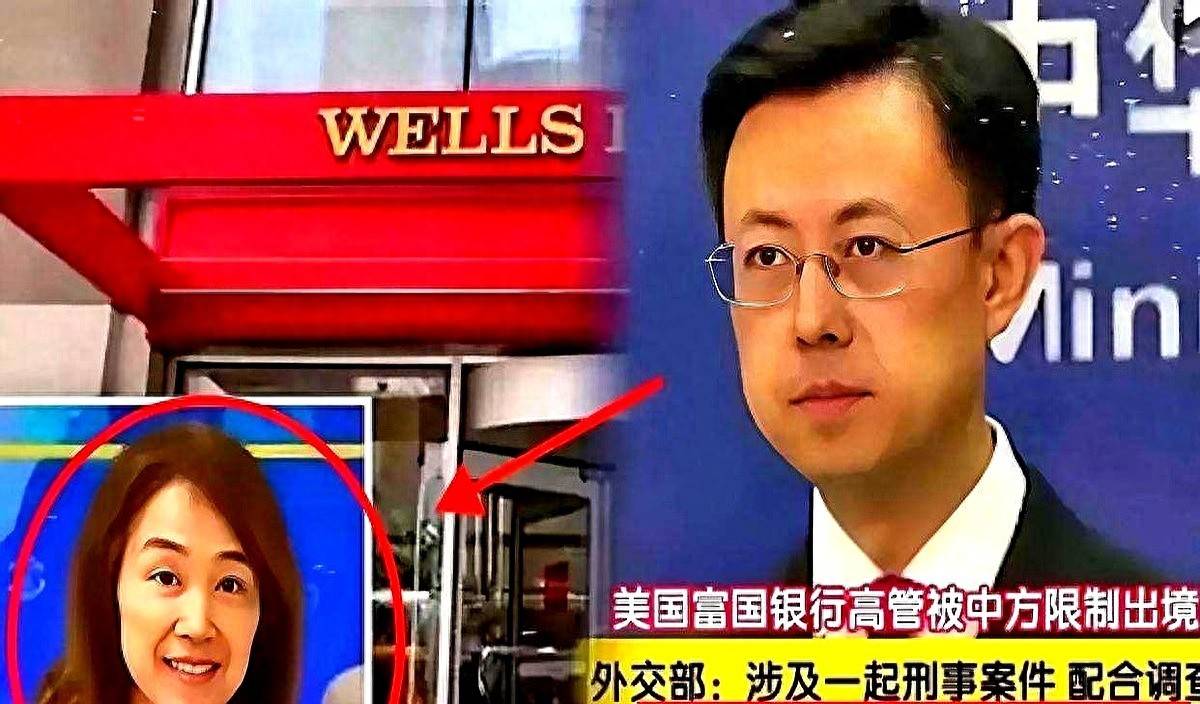
Group 1 - The incident involving the detainment of a Wells Fargo executive at Pudong Airport highlights the intensifying financial battle between China and the U.S. over technology sovereignty [1] - In 2022, Wells Fargo's Shanghai branch facilitated $4 billion in cross-border business, with $240 million in factoring financing linked to a sanctioned chip company, revealing the use of "financial camouflage" tactics by international investment banks [1] - New regulations effective from June have included factoring business in the cross-border capital flow monitoring system, with 62% of the $27.8 billion in anti-money laundering fines in the first seven months related to false trade financing [1][3] Group 2 - BlackRock's recent ban on employees bringing electronic devices into the country reflects a collective anxiety regarding data security, reminiscent of past incidents where financial maneuvers led to indirect control over technology [2] - The timing of the detainment of the Wells Fargo executive and the arrest of a Chinese semiconductor expert by Italy illustrates a pattern of "mirror enforcement" in international relations, emphasizing the strategic financial implications of these actions [2] - The ongoing technology blockade has revealed the U.S. strategy of using financial innovation as a tool for technology theft, prompting Chinese regulators to establish strict boundaries to protect hard technology and financial data security [3] Group 3 - The silent financial war is reshaping international capital flow rules, with data being likened to oil in the modern era and financial tools evolving into weapons of technological warfare [4] - China's actions signal a commitment to safeguarding national sovereignty, indicating that any capital arbitrage activities will be scrutinized and exposed [4]
摩根大通董事总经理朱海斌已离职,将履新香港金管局助理总裁
Sou Hu Cai Jing· 2025-08-02 09:03
Core Viewpoint - The appointment of Zhu Haibin as the Assistant President (Economic Research) of the Hong Kong Monetary Authority (HKMA) is a significant development, indicating a focus on macroeconomic and financial stability research in Hong Kong [3][5]. Group 1: Appointment Details - Zhu Haibin will officially take up the role on October 1, 2025, following the recommendation of the HKMA's governing committee [3]. - His appointment comes after the resignation of Zhang Liling, who left the position for personal reasons [6]. Group 2: Background of Zhu Haibin - Zhu Haibin holds a Bachelor's degree in Information Management from Peking University, a Master's degree in Economics from the People's Bank of China, and a PhD in Economics from Duke University [5]. - He has extensive experience in economic research, particularly in macroeconomic and financial stability policy research for Mainland China and Hong Kong [5]. - Prior to joining HKMA, Zhu served as Managing Director and Chief Economist for China at JPMorgan Chase, and he has also worked as a senior economist at the Bank for International Settlements [5]. Group 3: HKMA Overview - The HKMA was established on April 1, 1993, through the merger of the Exchange Fund and the Office of the Commissioner of Banking [6]. - Its main functions include maintaining monetary stability under the linked exchange rate system, promoting the stability and soundness of the banking system, and supporting Hong Kong's status as an international financial center [6].

如何应对弱美元:是抛售美元资产,还是对冲美元汇率?
Hua Er Jie Jian Wen· 2025-08-02 06:39
Core Insights - The article discusses the ongoing depreciation of the US dollar, which has fallen 8% since early 2025, and predicts that this trend will continue, suggesting that hedging against dollar exchange rate risks is more effective than simply selling dollar-denominated assets [1][4]. Group 1: Dollar Depreciation Trends - Since early 2025, the dollar has depreciated by 10% against developed market currencies and 8% on a trade-weighted basis [1]. - Historical data shows that during periods of dollar weakness, asset performance can vary significantly, with US equities often rising but underperforming compared to overseas markets [2]. Group 2: Macro Drivers of Dollar Movement - Goldman Sachs identifies three main factors influencing dollar trends: "US growth," "US monetary policy," and "non-US/risk premium" [3]. - Concerns about US growth typically lead to simultaneous declines in the dollar and US equities, while dovish Fed policy expectations weaken the dollar and lower US yields [3]. Group 3: Investment Strategies - The report suggests that reducing exposure to US assets may be reasonable if the dollar continues to weaken, with emerging market assets likely to benefit [4]. - The analysis indicates that hedging against currency risks in US equities may be more compelling than reducing allocations to US stocks, as returns after hedging during dollar weakness periods have been comparable to global markets [4].


高盛集团信用策略师:下行风险来源足够多,值得在投资组合中保留一些对冲策略。经济增长可能进一步出乎意料地下滑”,反通胀压力可能消退,或者对美联储独立性的担忧再度升温,这都可能引发长期债券收益率的大幅下跌。
news flash· 2025-08-01 14:24
Core Insights - The credit strategist at Goldman Sachs indicates that there are sufficient sources of downside risk, suggesting that it is prudent to maintain some hedging strategies within investment portfolios [1] Economic Outlook - Economic growth may unexpectedly decline further, which could lead to a significant drop in long-term bond yields [1] - There is a possibility that disinflationary pressures may fade, contributing to the overall economic uncertainty [1] - Concerns regarding the independence of the Federal Reserve may resurface, adding to the potential risks in the market [1]
贸易战阴霾下谨慎情绪升温,对冲基金连续四周抛售美股
Hua Er Jie Jian Wen· 2025-08-01 13:49
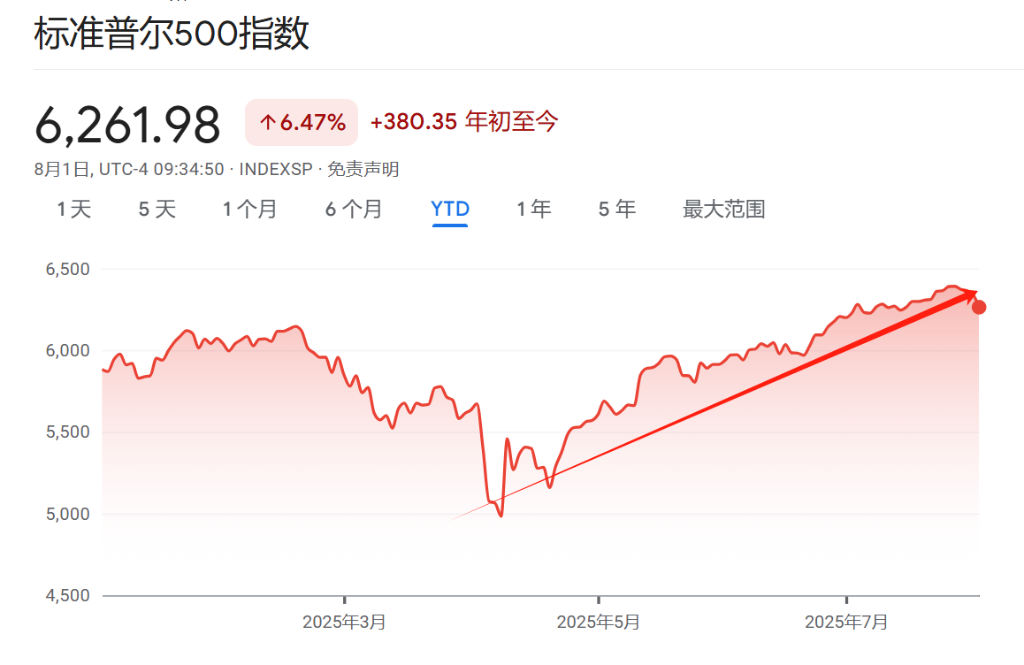
Group 1 - Hedge funds are maintaining a cautious stance, continuing to sell U.S. stocks for four consecutive weeks, particularly in the technology, media, and telecommunications sectors, at the fastest pace in a year [1] - Retail investors have been net buyers of stocks for 23 consecutive trading days, contrasting with the cautious approach of hedge funds [1] - The Federal Reserve has kept interest rates unchanged, with Chairman Powell emphasizing the need for more time to assess the impact of tariffs on inflation before easing policies [1] Group 2 - Hedge funds reduced stock exposure and increased short positions in late March ahead of expected tariff announcements, a strategy that proved wise as global markets outperformed U.S. markets [2] - Despite missing the recent market rally, hedge funds have avoided significant losses by lowering leverage in advance, allowing them to sidestep forced participation in rebounds [2] - As of June, hedge funds' performance was flat, with a return rate of 7.8%, ranking in the 72nd percentile for the past six months since January 2000 [4] Group 3 - Seasonal patterns indicate that August and September are typically the worst-performing months of the year, which, combined with high valuations and tariff pressures, could pose challenges for the S&P 500 index [5] - Historical data shows that these two months perform particularly poorly during the first year of a presidential term, suggesting potential difficulties ahead before a strong year-end rally [5]
美国7月非农“大爆冷”,市场完全定价10月降息!
Jin Shi Shu Ju· 2025-08-01 12:50
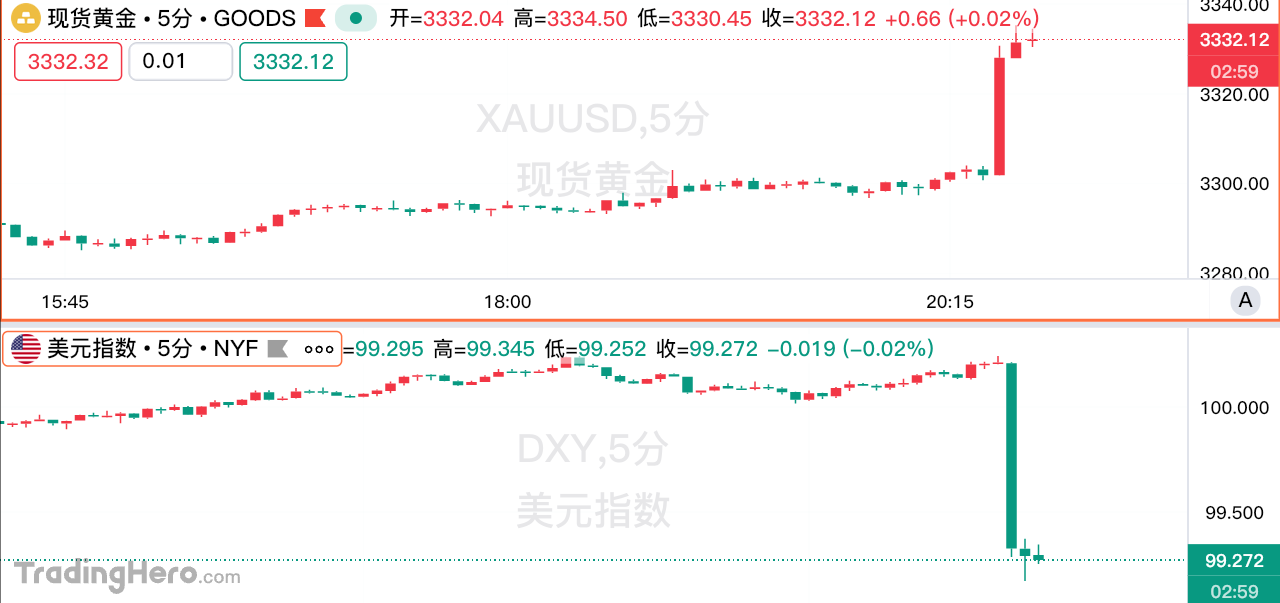
周五,美国劳工统计局公布的数据显示,美国7月季调后非农就业人口录得7.3万人,低于市场预期的11万人,为去年10月以来最小增幅。 美国劳工统计局表示,5月和6月非农就业人数合计下修25.8万人。5月份非农新增就业人数从14.4万人修正至1.9万人;6月份非农新增就业人数从14.7万人修 正至1.4万人。 美国7月失业率录得4.2%,较上月回升,符合市场预期。美国7月平均时薪年率录得3.9%,为3月以来新高,市场预期为3.8%。 美国非农数据公布后,现货黄金触及3330美元/盎司,美元指数短线下挫约40点。非美货币集体走高,英镑兑美元短线拉升70余点,欧元兑美元短线拉升约 90点,美元兑日元短线下挫约110点。 持续更新中…… 机构分析指出,平均时薪并没有传达太多信息。一年多来,收入增长了3.9%,快于通货膨胀,这意味着工人的购买力在上升。考虑到过去两个月的大幅向 下修正,过去三个月的就业人数平均只增加了3.5万人。这无疑是自2020年疫情爆发以来最弱的招聘速度。 需要注意的是,劳动参与率正在下降。劳动力数量连续第二个月出现萎缩,这不是一个好兆头。尽管有很多人退出了就业市场,但7月份的失业率却上升 了,这一事实 ...
瑞银:料今年香港IPO发行能超过2000亿港元 新修订最低40%配售额
智通财经网· 2025-08-01 11:59
Core Viewpoint - UBS anticipates that the IPO issuance volume in Hong Kong will exceed HKD 200 billion this year, driven by recent regulatory enhancements [1] Group 1: IPO Market Enhancements - The Hong Kong Stock Exchange has published a consultation summary regarding the optimization of IPO pricing and public market regulations [1] - The revised pricing mechanism and public market requirements are expected to enhance Hong Kong's attractiveness and competitiveness as a primary listing location for issuers [1] - The new minimum allocation of 40% ensures a stable pricing mechanism and broad participation from institutional investors, contributing to long-term market stability [1] Group 2: Implementation Timeline - The new regulations from the Hong Kong Stock Exchange will take effect on August 4 [1]

铜期货暴跌22%,押注“TACO”的人又赢了
华尔街见闻· 2025-08-01 11:42
Core Viewpoint - Trump's unexpected exemption on refined copper products has disrupted market expectations, leading to significant losses for traders who bet on rising copper prices in the U.S. and substantial gains for those who anticipated Trump's policy changes [1][6][10]. Market Reaction - Following the announcement, copper futures prices on the New York Commodity Exchange plummeted by 22%, marking the largest single-day drop since at least 1988 [2][4]. - The market upheaval indicates that many long positions based on U.S. protectionist policies faced massive losses, while traders betting on Trump's unpredictability reaped significant rewards [4][12]. Options Market Impact - Data from the options market revealed that over 31,000 contracts shifted from out-of-the-money to in-the-money status overnight, with a nominal value soaring to $3.54 billion [5][14]. - Prior to the exemption announcement, only 675 put options were in-the-money, valued at $94.4 million, highlighting the dramatic shift in market sentiment [13]. Price Disparity - The strategy that capitalized on the price difference between Comex copper and London Metal Exchange (LME) copper collapsed as the exemption news eliminated the previously significant premium of over 20% for Comex copper [9][11]. - Comex copper prices fell sharply, transitioning to a discount compared to LME prices, which only saw a minor decline of 0.9% [9]. Lobbying and Future Implications - Various stakeholders, including U.S. copper producers and foreign governments, engaged in extensive lobbying that influenced the policy direction regarding refined copper import tariffs [16]. - Although the immediate exemption has been granted, the prospect of import tariffs on refined copper has not been entirely dismissed, with suggestions for a phased implementation starting in 2027 [16].