
公用事业

Search documents
高盛策略转向均衡配置:软件服务与媒体娱乐成增长核心,材料板块逆势受宠
Zhi Tong Cai Jing· 2025-07-11 01:52
Core Insights - Goldman Sachs' investment strategy team has made significant adjustments to the U.S. sector allocation model, recommending a more balanced sector allocation strategy for investors [1] - The updated sector model indicates that an equal-weight sector allocation portfolio has a significantly higher probability of achieving over 5% excess returns compared to an equal-weight S&P 500 index over the next six months [1] Sector Recommendations - The software and services, as well as media and entertainment sectors, continue to hold their previous overweight ratings, while the new materials sector has been included in the core recommendations for the first time [1] - The consumer staples sector has been removed from the priority allocation list [1] - The report emphasizes that the current U.S. stock market exhibits an overly optimistic outlook on the economic prospects, with both downside risks and upside potential present in the actual economic performance [1] Investment Strategy - The strategy report suggests avoiding significant bias towards cyclical or defensive sectors, advocating for a balanced investment portfolio that can withstand market fluctuations [1] - In terms of specific sector selection, software and services (long-term growth expectation of 14%) and media and entertainment (long-term growth expectation of 14%) stand out due to their robust growth prospects, particularly in a moderately growing economy [1] - Defensive sectors such as utilities and real estate are favored due to the expectation of a slight decline in bond yields [1] - Among cyclical sectors, the materials sector is viewed as having a better allocation advantage compared to the energy sector, primarily based on expectations of falling oil prices [1] Adjustments and Market Outlook - The industrial sector has been downgraded due to its overall valuation being at historical highs, with the model indicating the lowest likelihood of achieving significant excess returns over the next six months [2] - Although the consumer staples and healthcare sectors are not explicitly bearish, their allocation priority has been slightly lowered compared to the model's baseline recommendations [2] - The adjustments reflect Goldman Sachs' neutral judgment on the market environment, acknowledging the reasonableness of current market optimism while diversifying allocations to hedge against potential risks [2] - The strategy team highlights that in the context of economic growth uncertainty, sectors that combine growth potential with reasonable valuations will exhibit greater investment resilience, while excessive bets on a single direction may face dual volatility risks [2]
南京公用连3年扣非不足0.5亿 买宇谷科技股权改用现金
Zhong Guo Jing Ji Wang· 2025-07-10 06:29
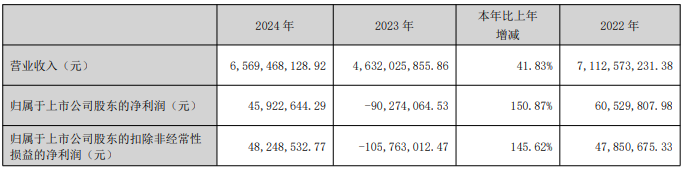
Core Viewpoint - Nanjing Public Utility has announced a shift from issuing shares and cash to a cash-only purchase of 68% equity in Hangzhou Yugu Technology, aiming to enhance transaction efficiency and reduce costs [1][2]. Group 1: Transaction Details - The company initially planned to acquire 68% of Yugu Technology's equity through a combination of share issuance and cash payment to 22 counterparties [1]. - The decision to adjust the transaction to a cash-only purchase was made after thorough discussions with the counterparties, considering factors such as strategic planning and market conditions [2]. - The transaction is still in the preliminary stage and does not require shareholder approval due to regulatory rules [2]. Group 2: Financial Performance - Nanjing Public Utility reported revenues of 71.13 billion, 46.32 billion, 65.69 billion, and 20.43 billion for the years 2022, 2023, 2024, and Q1 2025 respectively [3]. - The net profit attributable to shareholders was 0.60 billion, -0.90 billion, 0.46 billion, and 0.33 billion for the same periods [3]. - The company experienced a significant increase in net profit in 2024, with a 150.87% rise compared to 2023, reaching approximately 45.92 million [4].


从实际库存角度观察PPI——6月通胀数据点评
一瑜中的· 2025-07-10 05:04
Core Viewpoint - The article discusses the inflation data for June, highlighting the changes in CPI and PPI, and their implications for the economy, particularly in terms of GDP growth and price pressures across various sectors [3][14][25]. Group 1: June Price Data Summary - In June, the CPI increased by 0.1% year-on-year, while the core CPI rose by 0.7%, indicating a slight improvement in inflation after four months of negative values [3][18]. - The PPI decreased by 3.6% year-on-year, which is a larger decline than the previous month's 3.3%, reflecting ongoing pressures in the manufacturing sector [3][25]. - The nominal GDP growth rate for the second quarter is estimated to be around 4.4%, slightly down from 4.6% in the first quarter [3][16]. Group 2: CPI Analysis - The CPI's year-on-year increase was driven by a narrowing decline in food and energy prices, with food prices improving from -0.4% to -0.3% and energy prices from -6.1% to -5.1% [18][19]. - The rental market saw a seasonal increase in demand, with rents rising by 0.1%, which is lower than the average increase of 0.25% during the same period from 2015 to 2019 [4][19]. - Medical service prices have risen for three consecutive months, indicating potential ongoing inflationary pressures in healthcare [4][27]. Group 3: PPI Analysis - The PPI's month-on-month decline of 0.4% was influenced by seasonal price decreases in domestic raw materials and increased green energy supply, which reduced energy prices [5][26]. - Specific sectors such as coal and electricity production experienced significant price drops, contributing to the overall PPI decline [5][26]. - The article notes that industries with high export ratios are facing price pressures due to a slowdown in global trade, impacting PPI negatively [5][27]. Group 4: Inventory Perspective on PPI - The actual inventory levels in various industries are crucial for understanding PPI trends, with high inventory levels typically exerting downward pressure on prices [6][9]. - As of May, the actual inventory growth rate in the mining and manufacturing sectors has decreased, which historically correlates with a potential upturn in PPI [6][9]. - The current inventory pressure is slightly higher than last year but significantly lower than in the first half of 2015, indicating a more favorable pricing environment for some sectors [7][12].

今日49只A股封板 房地产行业涨幅最大
Zheng Quan Shi Bao Wang· 2025-07-10 04:45
Market Overview - The Shanghai Composite Index increased by 0.36% as of the morning close, with a trading volume of 783.11 million shares and a transaction amount of 934.47 billion yuan, a decrease of 3.50% compared to the previous trading day [1] Industry Performance - Real estate, banking, and oil & petrochemicals sectors showed the highest gains, with increases of 1.53%, 1.42%, and 1.23% respectively [1] - The automotive, defense, and electronics sectors experienced the largest declines, with decreases of 0.93%, 0.92%, and 0.76% respectively [2] Leading Stocks - In the real estate sector, Yuhua Development led with a gain of 9.94% [1] - In the banking sector, Minsheng Bank rose by 5.12% [1] - In the oil & petrochemicals sector, *ST Xinchao increased by 5.08% [1] - In the steel sector, Jinling Mining surged by 10.02% [1] - In the non-bank financial sector, Nanhua Futures also rose by 10.02% [1] - In the pharmaceutical sector, Qianyuan Pharmaceutical saw a significant increase of 19.98% [1] Sector Summary - The real estate sector had a transaction amount of 117.03 billion yuan, up 26.74% from the previous day [1] - The banking sector recorded a transaction amount of 266.82 billion yuan, up 36.61% [1] - The oil & petrochemicals sector had a transaction amount of 80.95 billion yuan, up 36.47% [1] - The automotive sector had a transaction amount of 389.36 billion yuan, down 16.50% [2] - The defense sector recorded a transaction amount of 316.85 billion yuan, down 23.79% [2] - The electronics sector had a transaction amount of 1,036.63 billion yuan, down 10.88% [2]




华富基金:华富中证A500指数基金开售,拟任基金经理张娅、李孝华
Sou Hu Cai Jing· 2025-07-10 02:06
Group 1 - The Huafu CSI A500 Index Fund was launched for public offering from July 9, 2025, to September 30, 2025, with a minimum total fundraising amount of 200 million shares [2] - The fund aims to track the CSI A500 Index, which includes 500 securities selected from various industries based on market capitalization and liquidity [2] - The fund's management fee is set at an annual rate of 0.5% based on the previous day's net asset value [4] Group 2 - The fund is managed by Zhang Ya and Li Xiaohua, both of whom have significant experience in fund management [5][6] - Zhang Ya currently manages 7 funds with a total scale exceeding 10 billion, while Li Xiaohua manages 12 funds with a total scale exceeding 5 billion [7] - The Huafu CSI Artificial Intelligence Industry ETF, also managed by Zhang Ya and Li Xiaohua, has seen a net value increase of 6.96% year-to-date, slightly outperforming its benchmark [7] Group 3 - As of July 8, the CSI A500 Index has recorded a year-to-date increase of 1.71% [3]
11股获杠杆资金净买入超亿元
Zheng Quan Shi Bao Wang· 2025-07-10 01:34
Group 1 - As of July 9, the total market financing balance reached 1.86 trillion yuan, an increase of 3.84 billion yuan from the previous trading day, marking three consecutive days of growth [1] - The financing balance for the Shanghai Stock Exchange was 932.96 billion yuan, up by 1.88 billion yuan, while the Shenzhen Stock Exchange's balance was 916.86 billion yuan, increasing by 1.96 billion yuan [1] - A total of 1,875 stocks experienced net financing inflows on July 9, with 434 stocks having net inflows exceeding 10 million yuan, and 11 stocks exceeding 100 million yuan [1] Group 2 - The top net financing inflow was seen in Zijin Mining, with a net inflow of 310 million yuan, followed by Luoyang Molybdenum and Dongshan Precision, with net inflows of 228 million yuan and 167 million yuan, respectively [2] - In terms of industry distribution, the sectors with significant net inflows included non-ferrous metals, electric equipment, and pharmaceutical biology, with three, two, and two stocks respectively [1][2] - The average ratio of financing balance to circulating market value for stocks with large net inflows was 3.28%, with Jin Kai New Energy having the highest ratio at 8.52% [2]




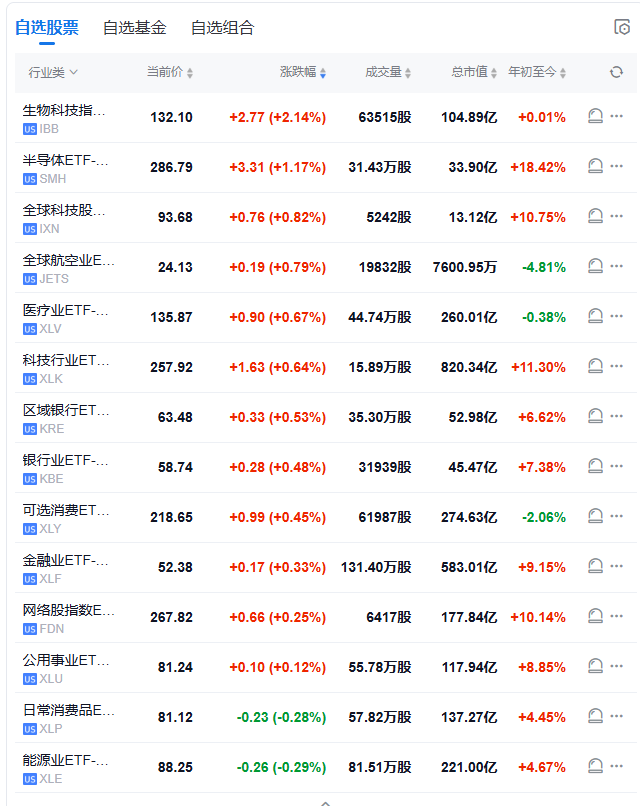
美股盘初:主要行业ETF普涨,生物科技指数ETF涨超2%,半导体ETF涨超1%,全球科技股指数ETF涨近1%。
news flash· 2025-07-09 13:42
Market Overview - Major industry ETFs in the US stock market experienced an overall increase, with the biotechnology index ETF rising over 2%, and the semiconductor ETF increasing by more than 1% [1] Biotechnology Sector - The biotechnology index ETF is priced at 132.10, reflecting an increase of 2.77 (+2.14%) with a trading volume of 63,515 shares and a total market value of 10.489 billion [2] Semiconductor Sector - The semiconductor ETF is currently priced at 286.79, showing an increase of 3.31 (+1.17%) with a trading volume of 314,300 shares and a total market value of 33.90 billion, which is up 18.42% year-to-date [2] Global Technology Sector - The global technology stock index ETF is priced at 93.68, with an increase of 0.76 (+0.82%) and a trading volume of 5,242 shares, reflecting a year-to-date increase of 10.75% with a total market value of 1.312 billion [2] Airline Industry - The global airline industry ETF is priced at 24.13, with an increase of 0.19 (+0.79%) and a trading volume of 19,832 shares, but it has a total market value of 76.095 million, down 4.81% year-to-date [2] Healthcare Sector - The healthcare ETF is priced at 135.87, showing an increase of 0.90 (+0.67%) with a trading volume of 447,400 shares and a total market value of 26.001 billion, down 0.38% year-to-date [2] Technology Industry - The technology sector ETF is priced at 257.92, with an increase of 1.63 (+0.64%) and a trading volume of 158,900 shares, reflecting a total market value of 82.034 billion, up 11.30% year-to-date [2] Regional Banks - The regional bank ETF is priced at 63.48, showing an increase of 0.33 (+0.53%) with a trading volume of 353,000 shares and a total market value of 5.298 billion, up 6.62% year-to-date [2] Banking Sector - The banking ETF is priced at 58.74, with an increase of 0.28 (+0.48%) and a trading volume of 31,939 shares, reflecting a total market value of 4.547 billion, up 7.38% year-to-date [2] Consumer Discretionary - The consumer discretionary ETF is priced at 218.65, showing an increase of 0.99 (+0.45%) with a trading volume of 61,987 shares and a total market value of 27.463 billion, down 2.06% year-to-date [2] Financial Sector - The financial sector ETF is priced at 52.38, with an increase of 0.17 (+0.33%) and a trading volume of 1.314 million shares, reflecting a total market value of 58.301 billion, up 9.15% year-to-date [2] Utility Sector - The utility ETF is priced at 81.24, showing an increase of 0.10 (+0.12%) with a trading volume of 557,800 shares and a total market value of 11.794 billion, up 8.85% year-to-date [2] Energy Sector - The energy ETF is priced at 88.25, with a decrease of 0.26 (-0.29%) and a trading volume of 815,100 shares, reflecting a total market value of 22.100 billion, up 4.67% year-to-date [2]
沪指3500点得而复失,买方这样看市场分歧和后续走势
Di Yi Cai Jing· 2025-07-09 12:55
Market Overview - The Shanghai Composite Index attempted to break through the 3500-point mark on July 9 but ultimately closed at 3493.05 points, reflecting a slight decline of 0.13% [2] - The market showed mixed performance with the Shenzhen Component Index down 0.06% and the ChiNext Index up 0.16% [2] - Year-to-date gains for the three major indices are 4.22%, 1.61%, and 2.01% respectively [2] Fund Flow Analysis - There was a significant divergence in fund flows, with a net outflow of 285.94 billion yuan on July 9, following a net inflow of 65.68 billion yuan on July 8 [3] - The retail, media, and coal sectors saw the highest net inflows, while the electronics sector experienced a substantial net outflow of 51.40 billion yuan [3] - A total of 41 stocks had net inflows exceeding 1 billion yuan, with notable inflows into stocks like Kuaishou Technology and Chinese Online [3] Sector Performance - The banking sector showed strong performance, with over 80% of bank stocks rising, and several banks reaching historical highs [2] - The market's overall performance was characterized by more stocks declining than advancing, with 1856 stocks rising and 3327 falling on July 9 [2] - The multi-financial sector continued its strong trend, while the overall market saw increased trading activity with a total turnover of 1.53 trillion yuan [2] Market Sentiment and Future Outlook - Analysts suggest that the market's current state reflects high sentiment but lacks strong catalysts for sustained upward movement, leading to increased sector and theme rotation [1][4] - The market is expected to face challenges in breaking through the 3500-point psychological barrier due to accumulated selling pressure above this level [5] - The need for a combination of policy, funding, and sentiment factors to drive the market higher is emphasized, with a significant increase in trading volume required for a breakthrough [5][9] Investment Themes - The current market environment is marked by structural opportunities, particularly in sectors like technology and manufacturing, which are expected to perform well in the coming months [6][9] - The focus on small-cap stocks has been notable, with a positive feedback loop potentially driving indices higher as macro variables change [6] - The potential for resource sectors to perform well in July and August is highlighted, alongside a continued emphasis on technology growth and high-quality companies in manufacturing [7][9]
沪深300基建主题指数报2163.03点,前十大权重包含国电电力等
Jin Rong Jie· 2025-07-09 10:13
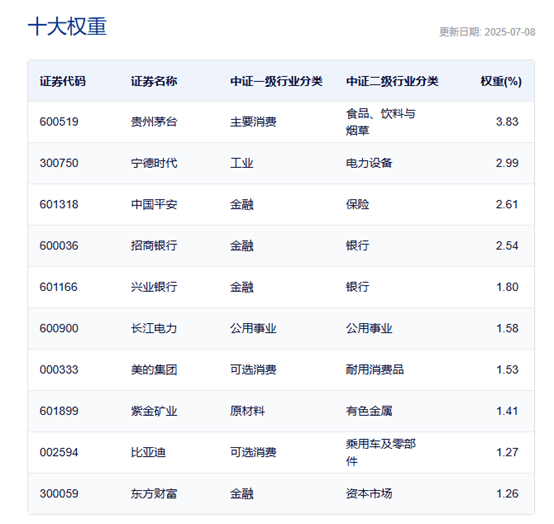
Core Points - The A-share market's three major indices closed mixed, with the CSI 300 Infrastructure Theme Index reporting at 2163.03 points [1] - The CSI 300 Infrastructure Theme Index has increased by 0.51% over the past month, 0.96% over the past three months, and has decreased by 2.43% year-to-date [2] Index Composition - The CSI 300 Infrastructure Theme Index is composed of infrastructure-related listed companies selected from the CSI 300 Index, providing investors with a diversified investment option [2] - The index was established on December 31, 2004, with a base point of 1000.0 [2] - The top ten weighted companies in the index are: - China Yangtze Power (14.9%) - China State Construction Engineering (8.74%) - China Telecom (8.45%) - China Mobile (7.25%) - China Unicom (6.01%) - China Nuclear Power (5.51%) - Three Gorges Energy (4.37%) - China Railway (4.19%) - Guodian Power (3.07%) - China Power Construction (3.03%) [2] Market Distribution - The CSI 300 Infrastructure Theme Index has a market distribution of 96.01% on the Shanghai Stock Exchange and 3.99% on the Shenzhen Stock Exchange [2] - The industry composition of the index includes: - Utilities: 42.59% - Industrials: 34.52% - Communication Services: 22.90% [2] Sample Adjustment - The index samples are adjusted semi-annually, with adjustments implemented on the next trading day following the second Friday of June and December each year [3] - Weight factors are adjusted in accordance with sample changes, typically remaining fixed until the next scheduled adjustment [3] - In the event of special circumstances affecting the CSI 300 Index samples, corresponding adjustments will be made to the index samples [3]





61只股涨停 最大封单资金5.48亿元
Zheng Quan Shi Bao Wang· 2025-07-09 07:29
截至收盘,上证指数报收3493.05点,下跌0.13%;深证成指收于10581.80点,下跌0.06%;创业板指上 涨0.16%;科创50指数下跌0.89%。 不含当日上市新股,今日可交易A股中,上涨个股有1856只,占比34.33%,下跌个股有3327只,平盘个 股223只。其中,收盘股价涨停的有61只,跌停股有6只。 证券时报·数据宝统计显示,涨停个股中,主板有51只,北交所1只,创业板6只,科创板3只。以所属行 业来看,上榜个股居前的行业有公用事业、机械设备、电力设备行业,上榜个股分别有6只、6只、5 只。 涨停股中,*ST亚太、*ST宇顺等7只股为ST股。连续涨停天数看,金安国纪、华光环能、华银电力、森 林包装等已连收5个涨停板,连续涨停板数量最多。从收盘涨停板封单量来看,康美药业最受资金追 捧,收盘涨停板封单有6109.72万股,其次是四方新材、跨境通等,涨停板封单分别有3491.70万股、 3321.55万股。以封单金额计算,四方新材、金安国纪、大智慧等涨停板封单资金较多,分别有5.48亿 元、2.96亿元、2.89亿元。(数据宝) 两市涨停股一览 | 代码 | 简称 | 收盘价(元) | 换手率 ...


