
零售

Search documents
1月制造业PMI点评:关注价的积极信号
Huachuang Securities· 2026-01-31 14:45
1. Report Industry Investment Rating No information about the industry investment rating is provided in the report. 2. Core Viewpoints - In January 2026, China's official manufacturing PMI was 49.3%, a month - on - month decrease of 0.8pct; the official non - manufacturing PMI was 49.4%, also a month - on - month decrease of 0.8pct; the composite PMI output index was 49.8%, a decrease of 0.9pct from the previous month. The PMI returned below the boom - bust line due to factors such as demand overdraft at the end of the previous year, early holiday closures around the Spring Festival, and the impact of cold snaps on construction demand [5][8]. - Positive signals include the simultaneous recovery of price indices and a continued decline in the proportion of enterprises reporting insufficient demand in January, indicating that the direction of demand stabilization remains unchanged [5][11]. - For the bond market, the decline in PMI is affected by short - term factors. The price increase expectations brought by the transformation of new and old driving forces and "anti - involution" are difficult to disprove for the time being. The PMI may continue to weaken in February during the Spring Festival, but the "Golden March" may see a strong recovery, and attention should be paid to the potential impact of fundamental data on bond market expectations [5][12]. 3. Summary by Directory 3.1 Manufacturing PMI: Short - term factors lead to a return to the contraction range 3.1.1 Supply and Demand: Orders decline more deeply while production remains in expansion - New orders dropped to 49.2% in January, returning to the contraction range, reflecting the demand overdraft effect from the previous month. The month - on - month decline in new orders was 1.6pct, lower than most previous periods but better than January 2025. Domestic demand orders slowed down more significantly than new export orders [15]. - Production slowed down but remained in the expansion range. In January, production decreased by 1.1pct month - on - month to 50.6%. The decline in production was due to pressure on the demand side, and the production index of the consumer goods manufacturing industry dropped below the boom - bust line, while the production of new - driving - force industries remained highly prosperous, increasing the differentiation [16]. 3.1.2 Foreign Trade: Strong imports and weakening export orders - New export orders decreased by 1.2pct month - on - month to 47.8%, with the contraction intensifying. Factors such as new US tariffs on some high - tech manufacturing products, trade tariff frictions between the US and Europe, and the approaching Spring Festival led to a slowdown in the growth of new export orders. However, imports increased by 0.3pct month - on - month to 47.3%, showing a stable improvement for three consecutive months [20]. 3.1.3 Price: Both purchase and ex - factory prices rise, but profits may still be squeezed - In January, the raw material purchase price and ex - factory price increased by 3.0pct and 1.7pct month - on - month to 56.1% and 50.6% respectively. The ex - factory price returned above the boom - bust line for the first time since May 2024. However, the increase in the ex - factory price was less than that of raw materials, indicating limited downstream demand to absorb price increases and potential pressure on corporate profits [24]. 3.1.4 Inventory: Slower destocking of finished products - Raw material inventory decreased by 0.4pct month - on - month to 47.4%, indicating that production remained prosperous and procurement slowed down, with a relatively faster digestion of raw materials. Finished product inventory increased by 0.4pct month - on - month to 48.6%, with the destocking pressure rising for three consecutive months [28]. 3.2 Non - manufacturing PMI: Seasonal factors affect construction, leading to a significant slowdown in construction activities - In January, the non - manufacturing PMI was 49.4%, a month - on - month decrease of 0.8pct. The service industry PMI decreased by 0.2pct month - on - month to 49.5%, and the construction industry PMI decreased by 4.0pct month - on - month to 48.8%, shifting from expansion to contraction [29]. - The slowdown in construction activities was due to cold weather and the approaching Spring Festival. Construction projects entered the off - season, and investment demand is expected to be further released after the Spring Festival in February [29]. - The service industry showed potential demand and industry differentiation. In January, the financial industry in the service sector was highly prosperous, while industries such as the Internet and railway transportation declined, and the retail and catering industries remained in the contraction range. The Spring Festival holiday may boost the consumer service industry in February [32].
黑龙江:今年将发放政府消费券8亿元以上
Jin Rong Jie· 2026-01-31 14:13
今日开幕的黑龙江省第十四届人民代表大会第四次会议上,扩内需、促消费再次成为政府工作报告里的 重点工作,2026年,黑龙江省将举办"购在龙江"等促消费活动超2000场,发放政府消费券8亿元以上。 2025年,黑龙江省开展提振消费专项行动,扩围实施消费品以旧换新,组织系列促消费活动,拉动消费 728.4亿元。激发 首发经济、直播电商等有潜能消费,新设国际国内知名 首店15家,网上零售额同比增 长14.7%。投资结构持续优化,高技术制造业投资同比增长11.5%,民间投资占比提高2.2个百分点。 ...
黑龙江:今年发放政府消费券8亿元以上
Sou Hu Cai Jing· 2026-01-31 13:57
Core Viewpoint - The focus of the Heilongjiang Provincial Government's work report emphasizes expanding domestic demand and promoting consumption as key initiatives for economic growth [1] Group 1: Consumption Promotion - In 2026, Heilongjiang Province plans to hold over 2,000 consumption promotion events, including the "Buy in Longjiang" initiative, with government consumption vouchers exceeding 800 million yuan [1] - A special action to boost consumption will be launched in 2025, aiming to stimulate consumption by 72.84 billion yuan through various activities, including a trade-in program for consumer goods [1] - The online retail sales are projected to grow by 14.7% year-on-year, indicating a strong shift towards e-commerce and digital sales channels [1] Group 2: Investment Trends - Investment structure in Heilongjiang is continuously optimizing, with high-tech manufacturing investment increasing by 11.5% year-on-year [1] - The proportion of private investment has risen by 2.2 percentage points, reflecting a growing confidence in the private sector [1] - The establishment of 15 new flagship stores from internationally and domestically renowned brands is expected to enhance the local retail landscape [1]
市区联动投入5000万元、企业让利10亿元,长沙打造春节消费嘉年华
Sou Hu Cai Jing· 2026-01-31 13:53
长沙晚报掌上长沙1月31日讯(全媒体记者 周游)春节消费旺季来临,星城已备好丰盛"消费大餐"。1 月31日,"烟火长沙·乐购新春"2026长沙市春节系列促消费活动正式启动。活动期间,全市商务系统将 围绕"马上有礼""马上焕新""马上团圆""马上潮玩"四大主题,市区两级财政投入5000万元,撬动企业让 利10亿元,在全市范围内举办超过100场重点促消费活动,通过政策与市场"双轮驱动",为市民和游客 奉献一场规模空前、内容丰富的消费嘉年华。 本次"烟火长沙·乐购新春"活动体系完整,四大主题将点燃星城新春消费热情。 "马上有礼"——千万补贴普惠于民。活动将通过线上线下多渠道,直接发放总计1000万元的政府消费 券。其中,市民熟悉的"福满星城"购物消费节将继续在云闪付、京东、美团、抖音等平台发放520万元 涵盖年货、国潮、亲子等多品类的消费券。春节9天假期,将重磅推出480万元"马上开奖"有奖发票活 动,单笔消费满200元即可扫码即时抽奖,让消费惊喜不断。更值得一提的是,"票根福利"跨界联动活 动,将打通住宿、餐饮、文旅、交通等多个环节,实现"住宿送景区门票""用餐赠观影优惠""看演出享 打车补贴"等福利叠加,让市民 ...


黑龙江省扩内需促消费,今年发放政府消费券8亿元以上
Xin Lang Cai Jing· 2026-01-31 12:16
格隆汇1月31日|据中新网,1月31日开幕的黑龙江省第十四届人民代表大会第四次会议上,扩内需、促 消费再次成为政府工作报告里的重点工作,2026年,黑龙江省将举办"购在龙江"等促消费活动超2000 场,发放政府消费券8亿元以上。 2025年,黑龙江省开展提振消费专项行动,扩围实施消费品以旧换 新,组织系列促消费活动,拉动消费728.4亿元。激发首发经济、直播电商等有潜能消费,新设国际国 内知名首店15家,网上零售额同比增长14.7%。投资结构持续优化,高技术制造业投资同比增长 11.5%,民间投资占比提高2.2个百分点。1000个省级重点产业项目完成投资1865.7亿元、同比增长4%, 243个重点项目建成投产。招商引资效果明显,新落地项目、实际利用内资分别同比增长18.7%、 31.3%。 ...
消费第二曲线系列之一:房价回暖之前,消费何处掘金?
Changjiang Securities· 2026-01-31 11:22
Group 1: Housing Market Impact on Consumption - Current housing price decline may still suppress consumption, particularly in the southeastern coastal regions[2] - The correlation between housing prices and consumption has weakened since 2020, with significant regional disparities observed[8] - In regions with better consumption performance, service consumption is recovering well, while in weaker regions, service consumption growth remains resilient[8] Group 2: Consumer Behavior and Economic Conditions - The domestic economy is currently in a "residential balance sheet reduction" phase, with significant regional differences; central, western, and northeastern regions are less affected by this reduction[2] - As of 2024, the early repayment rate of housing loans has begun to decline, and default rates are rising, indicating a shift from "active" to "passive" balance sheet reduction[5] - Residents' willingness to save is increasing, leading to a decrease in consumption and investment ratios[5] Group 3: Regional Economic Disparities - The report categorizes regions into three quadrants based on income changes and debt leverage: "Comfortable Areas," "Income-Pressured Areas," and "Double-Pressured Areas"[8] - "Double-Pressured Areas," primarily in the southeastern coastal regions, show a higher sensitivity to housing price declines, impacting consumption more significantly[8] - In "Comfortable Areas," residents are less affected by housing price fluctuations, allowing for a potential early recovery in consumption[8] Group 4: Policy Recommendations - To alleviate the negative impact of balance sheet reduction on consumption, policies such as expanding the use of housing provident funds to support housing-related consumption are suggested[9] - Despite a significant amount of unutilized housing provident fund (CNY 10.9 trillion), regional disparities in fund availability may hinder policy implementation[9]
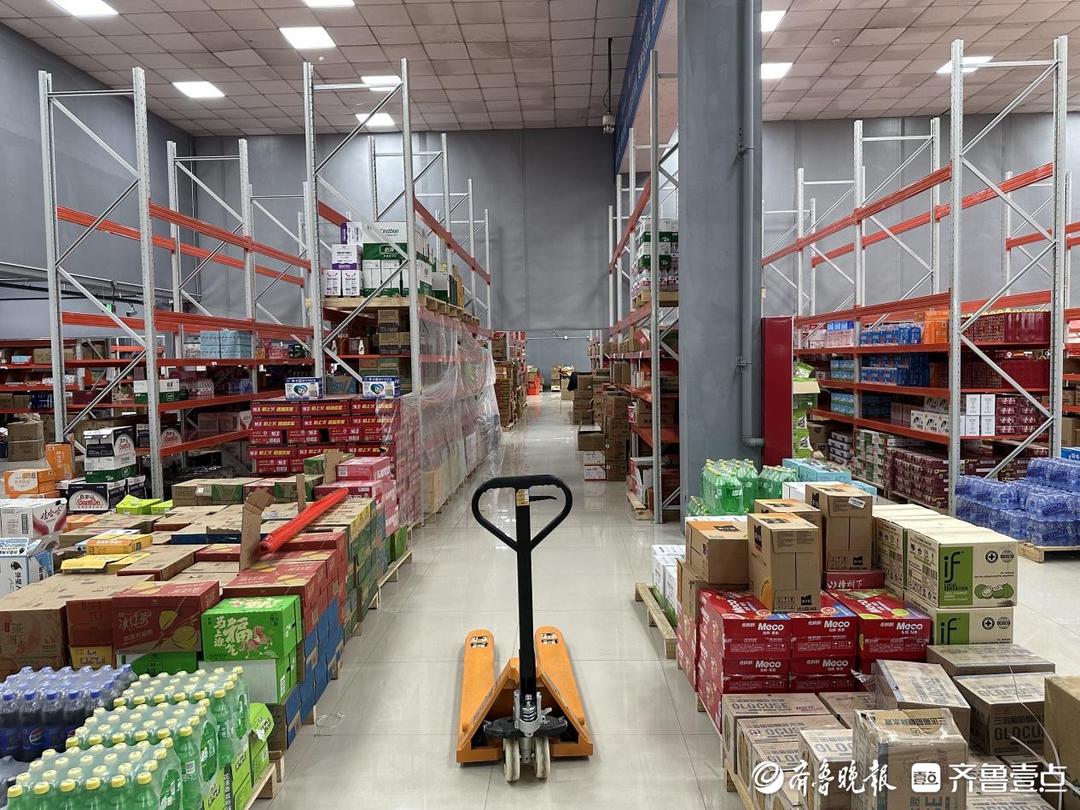
国企赋能民生消费,日照首家国企折扣仓即将试营业
Qi Lu Wan Bao· 2026-01-31 10:51
Core Viewpoint - The opening of the first state-owned discount warehouse in Rizhao, operated by a state-owned supply chain company, aims to provide citizens with a one-stop shopping experience while supporting local rural revitalization and demonstrating social responsibility [1]. Group 1: Project Overview - The discount warehouse, named "Hi-Go Discount Warehouse," is located at the intersection of Xinghai Road and Zhaoyang Road, covering an area of 1,500 square meters and offering nearly 2,000 types of products, including staple foods, trendy snacks, and daily necessities [3]. - The project integrates resources from well-known retail brands, focusing on "direct sourcing and extreme cost performance" to meet diverse consumer needs and save shopping time and costs for citizens [3][5]. Group 2: Operational Strategy - The discount warehouse leverages deep cooperation with the well-known retail brand Anhui Yidu, utilizing its mature operational system and strong supply chain resources while adhering to state-owned quality control standards [5]. - By adopting a "direct sourcing" model, the warehouse eliminates intermediaries, significantly reducing operational costs and allowing citizens to purchase reliable products at lower prices [5]. Group 3: Community Impact - The discount warehouse serves as a free sales platform for local specialty agricultural products, helping farmers expand their sales channels and increase their income, thus contributing to rural revitalization [5]. - During the trial operation period, the project will launch multiple promotional activities to provide tangible benefits to the public [5][6].
1月制造业PMI回落至49.3%,超3成企业反映利润下降
第一财经· 2026-01-31 10:46
Core Viewpoint - The manufacturing PMI in January fell below the growth line, indicating a decline in economic activity and a need for stronger foundational support for economic recovery [3][5]. Manufacturing Sector - The manufacturing PMI for January is reported at 49.3%, a decrease of 0.8 percentage points from the previous month, indicating fluctuations in manufacturing operations [5]. - The new orders index dropped to 49.2%, down 1.6 percentage points, reflecting a tightening of market demand [5]. - Seasonal factors and changes in the export environment are contributing to the slowdown in market demand, with the new export orders index at 47.8%, a decline of 1.2 percentage points [5][7]. - The production index remains in the expansion zone at 50.6%, despite a decrease of 1.1 percentage points, suggesting continued overall expansion in manufacturing [7]. - The prices of major raw materials and factory output have increased, with the purchasing price index at 56.1% and the factory price index at 50.6%, indicating an improvement in overall price levels in the manufacturing market [7]. Non-Manufacturing Sector - The non-manufacturing business activity index is at 49.4%, down 0.8 percentage points, primarily due to a decline in the construction sector [10]. - The service sector remains relatively stable, with the business activity index slightly decreasing by 0.2 percentage points, maintaining around 49.5% [10][11]. - The service industry anticipates a boost from the upcoming Spring Festival, with a business activity expectation index of 57.1%, indicating optimism for consumer-related services [10][11]. Economic Outlook - The overall economic climate is expected to be influenced by changes in export growth, the domestic real estate market, and the timing and intensity of growth-stimulating policies [8]. - There is potential for monetary policy easing in the second quarter, with fiscal policies aimed at boosting consumption and investment expected to gain momentum [8].

2026年,钱从哪挣?
创业家· 2026-01-31 10:42
Group 1 - The core question for many is where the money will come from in 2026 [2] - The article highlights five key concepts related to business strategies in the face of insufficient domestic demand [3] - Companies are facing a significant challenge of insufficient domestic demand, leading to limited market capacity [5][6] Group 2 - To survive in a competitive environment, companies must increase their competitive efforts, which can lead to a cycle of overwork and reduced profits [7][8] - One potential solution to this issue is to expand overseas, which has evolved significantly compared to traditional export methods [9][10] Group 3 - An example of successful overseas expansion is Miniso, which not only sells products abroad but also relocates its entire value chain, including branding and R&D, to international markets [11][12] - Engaging with private domain users to understand their preferences allows for rapid product development and brand establishment in foreign markets [12][13] Group 4 - Leading companies are beginning to explore overseas markets, but successful expansion requires integrating complex supply chain systems [14][15] - Tesla's operations in Shanghai exemplify the importance of a robust supply chain network, which supports rapid production and delivery [20][21] Group 5 - Companies can leverage their unique advantages to succeed in overseas markets, such as cost advantages or product innovations [23][24] - For instance, a factory owner in Yiwu has found success by selling products on cross-border platforms at prices double those in the domestic market [25][26] Group 6 - Building long-term trust in familiar social networks is crucial for business success, as demonstrated by the story of a local entrepreneur who prioritizes employee welfare and customer feedback [31][34] - This approach fosters a cycle of trust and loyalty among customers, leading to sustained business growth [36] Group 7 - The article discusses the shift in consumer behavior towards a desire for better experiences, highlighting opportunities for businesses to meet these evolving demands [38][39] - Innovative services, such as travel photography for retirees, can create new consumer needs and drive demand [40][41] Group 8 - As traditional large-scale business opportunities diminish, a more refined and heartfelt commercial ecosystem is emerging, focusing on fulfilling ordinary people's aspirations for a better life [43][46] - Companies that can create meaningful experiences and meet these needs may find significant opportunities for growth in the future [46]



新春渐近年味渐浓 节前消费市场“热气腾腾”
Xin Lang Cai Jing· 2026-01-31 10:15
Core Viewpoint - The consumption market in Hebei is experiencing a significant boost as the New Year approaches, driven by new national subsidy policies and enhanced supply to meet diverse consumer needs [1][2]. Group 1: Consumer Behavior - Consumers in Xiong'an New Area are benefiting from local access to traditional products, reducing the need to travel to Beijing or Tianjin for New Year shopping [1]. - The introduction of various new brands and discount offers, along with the use of consumer vouchers, has made shopping more attractive for consumers [2]. Group 2: Market Dynamics - The Xiong'an New Area is launching a series of promotional activities, including the "New Spring Carnival," to stimulate consumption and enhance the shopping experience [2]. - The implementation of a new round of subsidies for consumer goods, covering categories like automobiles and home appliances, is expected to drive sales and increase foot traffic in stores [3]. Group 3: Seasonal Trends - The demand for festive flowers has surged, with specific varieties like butterfly orchids and longevity flowers becoming popular among consumers [3]. - Local markets are bustling with activity, showcasing a variety of traditional products and festive foods, contributing to a vibrant shopping atmosphere [4].