通信

Search documents
定期报告:节后春季行情进行中聚焦成长
Huajin Securities· 2026-01-04 02:01
1. Report Industry Investment Rating No relevant content provided. 2. Core Viewpoints of the Report - This year after the New Year's Day, the A - share spring market is underway and may be volatile and bullish, affected by factors such as policy implementation, liquidity, and the performance of the Hong Kong stock market [1][4][7]. - After the holiday, technology growth and some cyclical industries may be relatively dominant, with continuous upward industrial trends and policy support [1][26]. - After the holiday, it is recommended to continue to allocate industries such as technology, some cyclical and consumer sectors on dips [1][38][46]. 3. Summary by Relevant Catalogs 3.1 Post - holiday Spring Market is Underway 3.1.1 Factors Affecting Post - holiday A - share Movement - Since 2010, in 11 out of 16 years, the Shanghai Composite Index showed the same upward or downward trend in the 10 trading days before and after the holiday. The post - holiday short - term market performance is affected by policies, external events, liquidity, and the performance of the Hong Kong stock market [1][4]. - Positive policies and external events may lead to a short - term rise in the post - holiday A - shares, while tight policies or negative external events may result in weak performance. Liquidity also plays a key role, and the performance of the Hong Kong stock market during the holiday has a certain impact on the post - holiday A - shares [4]. 3.1.2 This Year's A - share Spring Market is Underway and May be Volatile and Bullish - Positive policies may continue to be implemented after the holiday, and external risks may be limited. The "two new" policies are accelerating implementation, local two - sessions may be held intensively, and consumption - stimulating policies may be introduced. Externally, the Fed may cut interest rates in January, Sino - US relations may remain stable, and geopolitical conflicts may ease [7][8]. - Post - holiday short - term liquidity may be further relaxed. Overseas, the Fed is likely to cut interest rates, and the RMB exchange rate may be strong. Domestically, the central bank may cut interest rates and reserve requirements. Also, stock market funds may accelerate inflow [9]. - The Hong Kong stock market performed strongly during the New Year's Day holiday, which may boost the post - holiday A - shares. The correlation coefficient between the Hong Kong stock market's rise and fall during the New Year's Day holiday and the Shanghai Composite Index's rise and fall in the 10 trading days after the holiday is about 0.5 [18][19]. - The post - holiday economy and corporate profits are still in weak recovery. The economy is in a weak recovery state, and corporate profits may continue to recover, although the industrial enterprise profits in November continued to decline [21]. 3.2 Industry Allocation: Focus on Growth after the Holiday 3.2.1 Technology Growth and Some Cyclical Industries May be Relatively Dominant after New Year's Day - Historically, policy and industrial trends drive pre - holiday strong industries to maintain their strength after the holiday. Pre - holiday leading industries may switch due to high sentiment or market adjustments. Industries with continuous strength around the New Year's Day usually have a relatively low historical quantile of trading volume [26]. - This year, the industrial trends of technology growth and some cyclical industries may continue to rise after the holiday. The pre - holiday leading cyclical industries have neutral - low sentiment, while the technology growth industries have high sentiment [26]. 3.2.2 Currently, the PEG of Electric Power, Media, and Automobile is Low - Among the primary growth industries, the predicted PEG of electric power equipment, media, and automobile is relatively low, at 0.64, 0.86, and 1.13 respectively. The historical quantiles of trading volume of medicine, computer, media, and automobile are low [40]. - Among the secondary growth industries, the sentiment of traditional Chinese medicine, biological products, automobile services, and chemical pharmaceuticals is low. The predicted PEG of nautical equipment, games, commercial vehicles, and wind power equipment is relatively low [44]. 3.2.3 After the Holiday, it is Recommended to Continue to Allocate Industries such as Technology, Some Cyclical and Consumer Sectors on Dips - It is recommended to allocate industries with upward policy and industrial trends, such as machinery (robotics), military (commercial aerospace), electric power (nuclear fusion, energy storage), media (AI applications, games), computer (AI applications, satellite Internet), electronics (semiconductors, AI hardware), communication (AI hardware), and medicine (innovative drugs) on dips [46]. - In the short term, it is recommended to allocate sectors that may make up for lost ground and have potentially improved fundamentals, such as securities and consumer sectors (food, retail, social services) on dips [56].
上海星闪开放实验室落子青浦
Ge Long Hui· 2026-01-03 23:56
Core Viewpoint - The establishment of the Shanghai NearLink Open Laboratory marks a significant step in Shanghai's autonomous innovation ecosystem in the field of wireless short-range communication, highlighting advancements in technology and collaboration within the industry [1] Group 1: Technology Development - NearLink is a new generation wireless short-range communication technology brand independently developed in China, with standards set by the Ministry of Industry and Information Technology [1] - The technology shows significant improvements in transmission performance and device compatibility compared to traditional technologies like Bluetooth, applicable in smart vehicles, industrial intelligence, and smart home scenarios [1] Group 2: Collaboration and Ecosystem - The Shanghai NearLink Open Laboratory represents a deepening collaboration between Midea and the Shanghai HiSilicon industrial chain, serving as a core platform for building an international NearLink alliance and its industrial ecosystem [1] - The laboratory integrates common technology research and development, testing certification services, and ecosystem cultivation and empowerment [1] Group 3: Regional Innovation Growth - During the 14th Five-Year Plan period, the innovation and entrepreneurship density in Qingpu District has been continuously increasing, with social R&D expenditure averaging a growth of 19.2% over the past five years, projected to exceed 6.5 billion yuan in 2024 [1]
四川成都锦江区:构建未来产业体系 激活高质量发展动能
Xin Lang Cai Jing· 2026-01-03 23:23
Core Insights - Chengdu's Jinjiang District is actively developing a future industry system to stimulate high-quality economic growth through the "Future Industry High-Quality Development Action Plan (2025-2027)" [1] Group 1: Future Industry Development - The district is focusing on six cutting-edge tracks: intelligent 6G, brain-computer interfaces, quantum technology, embodied intelligence, low-altitude economy, and intelligent connected vehicles [3] - Jinjiang District has established a new development pattern featuring "1 leading area, 6 breakthrough tracks, and 'science and technology + application' dual-core drive" [1] Group 2: Technological Innovations - Chengdu XinNerve Technology Co., which specializes in brain-computer interface technology, has achieved a 91.67% accuracy rate in diagnosing autism, serving over 2,000 children since its establishment in the district [2] - The district has introduced key projects from institutions like Beijing University of Posts and Telecommunications to incubate significant technological achievements in intelligent 6G [3] Group 3: Ecosystem and Application - Jinjiang District is creating a dual-core geographical layout with "Chunxi Road + Science and Technology Bailu Bay" to facilitate the transformation of technological innovations into practical applications [4] - The Bailu Bay Technology Ecological Park is positioned as a new engine for future industries, leveraging leading enterprises and innovation platforms to streamline the conversion from technology to products [4] Group 4: Future Plans - The district aims to optimize future industry layout, build an ecosystem, and accelerate the transformation of achievements, striving to create a nationally influential future industry cluster and application demonstration area [5]
专访郑永年:科技创新从0到1,需培育更多技术经纪人
21世纪经济报道· 2026-01-03 03:12
Group 1 - The core viewpoint of the article emphasizes that the essence of current great power competition is technological competition, with technology innovation being the key driver for China's economic growth as it approaches the level of middle-developed countries by 2025 [1][2]. - By 2025, China is expected to showcase remarkable achievements in technology innovation, including the launch of the DeepSeek R1 reasoning model, entry into the top ten of the global innovation index, and the rise of the "Shenzhen-Hong Kong-Guangzhou" innovation cluster to the top of global rankings [1][4]. - The article highlights that the Chinese government has increasingly recognized the importance of technology and innovation, as evidenced by the frequent mentions of these terms in the 14th Five-Year Plan [1]. Group 2 - The article discusses the shift in China's economic growth model towards high-quality development, where technology innovation is crucial for upgrading industries and moving beyond reliance on traditional cost advantages [4][5]. - It notes that the global technological capacity is primarily concentrated in the US and China, with other economies struggling to compete due to high costs and resource requirements for advanced technologies like artificial intelligence [5][6]. - The article points out that China's comprehensive industrial capabilities and high infrastructure development levels provide a unique competitive advantage, enabling rapid technological innovation [6][7]. Group 3 - The increasing role of enterprises in technological innovation is highlighted, with a shift back to companies driving foundational research due to their practical and application-oriented focus [8][9]. - The article emphasizes the need for cultivating "technology brokers" who understand both technology and market dynamics to facilitate the conversion of foundational research into practical applications [10][11]. - It suggests that institutional reforms are necessary to adapt production relations to the development of new productive forces, particularly in the field of innovative pharmaceuticals [11].


政策赋能,消费以“质”提“速”
Shan Xi Ri Bao· 2026-01-03 00:19
Group 1 - The core viewpoint of the articles highlights the robust growth in consumer retail sales in Shaanxi Province, with a year-on-year increase of 8.1% from January to November 2025, driven by effective policy alignment and consumer demand [1] - The "old-for-new" policy has significantly boosted retail sales in categories such as home appliances, communication devices, and automobiles, with notable growth rates of 65.8% for first and second-level energy-efficient appliances, 60.0% for smartphones, and 34.8% for new energy vehicles, indicating a shift towards green and quality consumption [1] - Digital economy empowerment has opened new avenues for consumption growth, with retail sales through public networks increasing by 25.3%, breaking spatial and temporal limitations and allowing for the full release of consumer potential in the digital wave [1] Group 2 - The consumer market's stable operation is supported by a solid foundation, with retail sales of grain, oil, and food products increasing by 12.6%, demonstrating the resilience of essential consumer spending [2] - The central economic work conference has prioritized "maintaining domestic demand as the main driver and building a strong domestic market" as a key task for economic work in 2026, emphasizing the need for Shaanxi to leverage its large-scale market advantages [2] - Policies should focus on enhancing the adaptability of supply and demand in the consumer sector, addressing urgent public concerns, and fostering new economic growth points to inject vitality into economic stability and improvement [2]
每周股票复盘:二六三(002467)拟设香港子公司投3.2亿
Sou Hu Cai Jing· 2026-01-02 18:26
Core Viewpoint - The company, 二六三网络通信股份有限公司, is planning to utilize its idle funds for financial investments and is also establishing a wholly-owned subsidiary in Hong Kong to engage in submarine cable business. Group 1: Financial Investments - The company and its subsidiaries plan to use up to RMB 500 million of idle funds to purchase principal-protected financial products issued by commercial banks in 2026 [1][2][3] - The investment period for these financial products will be from January 1, 2026, to December 31, 2026, and the funds will be sourced from the company's own idle funds, not involving raised funds or bank credit [1][2] Group 2: Subsidiary Establishment - The company has approved a change in its external investment plan and intends to establish a wholly-owned subsidiary in Hong Kong to conduct submarine cable business, with an investment amount of RMB 320 million [1][2][3] - This adjustment replaces the original plan to increase capital in 上海二六三 and subsequently in 263环球通信, due to lengthy approval processes [1][2]

A股两大信号警示历史将重演,散户如何避免成为“接盘侠”?
Sou Hu Cai Jing· 2026-01-02 04:26
Core Insights - The A-share market has shown remarkable performance over the past year, with a total market capitalization increase from 70.79 trillion yuan to 103.92 trillion yuan, a growth of 33.13 trillion yuan [1][3] - The core driver of this bull market is the technology sector, with significant gains in electronic, communication, and comprehensive industries, while traditional sectors like oil and coal have seen minimal growth [3][5] - The market structure has shifted from a broad rally to a high-growth rotation model, with funds moving towards sectors with stronger earnings certainty, such as healthcare and biotechnology [7][11] Market Performance - On the anniversary of the "924 market," 4,458 stocks rose, with an average profit of 50,000 yuan per investor, although this figure masks the structural disparities in stock performance [1][8] - Major indices like the ChiNext Index and STAR Market have seen their values double, with nearly 3,000 stocks increasing by over 50% [1][3] - The number of stocks priced over 100 yuan has doubled from 71 to 139 since the beginning of the year, indicating a concentration of market gains in fewer stocks [8] Policy and Economic Environment - The policy environment has shifted from broad easing to targeted measures focusing on weak economic areas, contrasting with last year's comprehensive easing that coincided with unexpected rate cuts by the Federal Reserve [5][12] - The current market is characterized by a structural differentiation in capital flows, with significant net outflows from major funds and inflows into smaller retail investments [5][12] Investment Strategies - Institutional investors have a clear advantage due to in-depth research, with public funds achieving an average return of 12.3%, while retail investors face a 23.6% annualized loss rate [11][12] - The investment strategy divergence is notable, with institutions employing a high-risk-reward approach, while retail investors tend to react more emotionally to market fluctuations [11][12] Sector Focus - Key sectors benefiting from liquidity improvements include communication equipment and semiconductors, while high-end manufacturing and financial services are also seen as areas of structural opportunity [12][13] - The technology sector, particularly AI and semiconductor industries, has attracted significant investment, with domestic firms like DeepSeek driving advancements in related fields [7][12] Market Sentiment and Future Outlook - The market sentiment remains cautious, with a significant portion of new affluent investors unwilling to accept losses exceeding 10%, reflecting a risk-averse attitude [12] - Historical data suggests that the A-share market is unlikely to replicate last year's explosive growth, entering a "slow bull" phase characterized by lower volatility and distinct structural features [12][15]
2025年“百元股”大扩容!“双创”成为新增主力 这些板块占比较高
Zhong Jin Zai Xian· 2026-01-02 02:43
Group 1 - In 2025, the market experienced a structural trend with significant stock price increases, resulting in a total of 191 "hundred-yuan stocks," an increase of 119 stocks from the previous year, representing a growth of nearly 1.7 times [1] - Among the newly added "hundred-yuan stocks," 14 were newly listed, with notable stocks like Moer Thread, Muxi Co., and others exceeding 200 yuan. The majority of these stocks are concentrated in the electronics and power equipment sectors, with electronics accounting for over 60% [1] - Excluding newly listed stocks, there were 110 new "hundred-yuan stocks" in 2025, with electronics making up 34.5%, followed by machinery, computers, automobiles, communications, and power equipment [1] Group 2 - As of December 31, 2025, five previously "hundred-yuan stocks" fell below the 100 yuan mark, including stocks from light industry manufacturing, electronics, machinery, pharmaceuticals, and automobiles. BYD briefly recovered above 100 yuan but fell back below this threshold [2] - The 191 "hundred-yuan stocks" are primarily concentrated in the electronics, machinery, and computer sectors, which together account for 60% of the total, with electronics alone representing 37.7% [2] - The current distribution of "hundred-yuan stocks" includes sectors such as power equipment, communications, automobiles, pharmaceuticals, defense, food and beverage, basic chemicals, home appliances, beauty care, media, and environmental protection [2][3]

不用猜了!2026年A股确定性最高的三大机会与两大雷区,都在这里
Sou Hu Cai Jing· 2026-01-02 00:56
Market Overview - The total trading volume in 2025 exceeded 420 trillion yuan, averaging over 17 trillion yuan daily, indicating a highly active market [1] - The Shanghai Composite Index rose by 18.41% throughout the year, with six instances of surpassing the 4000-point mark, closing at 3968.84 points [1] - The ChiNext Index surged by 49.57%, reflecting a strong growth in the technology sector [1] Sector Performance - The non-ferrous metals sector experienced a remarkable increase of 94.73%, followed by the telecommunications sector with an 84.75% rise [1] - Other sectors such as electronics, power equipment, and machinery also saw gains exceeding 40% [1] - Conversely, the food and beverage sector declined by 9.69%, and the coal sector fell by 5.27% [1] Market Dynamics - The market is transitioning from a reliance on financial and real estate sectors to a focus on technology and high-end manufacturing, driven by a "technology revolution" and "resource revaluation" [1] - The driving forces behind the market include the AI industry chain explosion, improved corporate earnings, and stable investments from state-owned funds and insurance companies [1] 2026 Market Outlook - The market is expected to maintain a "slow bull" trend in 2026, with a shift in focus from "expectations" and "valuations" to "performance" and "profitability" [2] - A projected earnings growth rate for all A-share listed companies is anticipated to rebound to 5%-8% [2] - Key drivers for this growth include a potential global manufacturing cycle recovery and the maturation of emerging industries like AI and commercial aerospace [2] Valuation and Funding - The overall market valuation is around 22 times earnings, which is not considered cheap but is not viewed as a bubble in the context of historical and economic transformation [3] - Continuous inflow of funds is expected as residents shift investments from real estate and savings to the stock market, supported by significant insurance fund allocation and ETF purchases [3] Investment Strategy for 2026 - The market is expected to experience distinct phases throughout 2026, with a focus on technology growth sectors like AI and semiconductors in Q1, followed by performance verification in Q2 [4] - Q3 may see a balanced market style, with stable performance in consumer sectors, while Q4 will likely focus on high dividend stocks and stable earnings [4] Sector Opportunities - Structural opportunities exist in the consumer sector, particularly in essential consumption, which remains stable and offers high dividends [5] - The performance of discretionary consumption sectors will largely depend on supportive policies for real estate [5] Key Investment Themes - The primary investment themes for 2026 include: 1. Technology-driven opportunities, particularly in AI and commercial aerospace [6] 2. High-end manufacturing with a focus on robotics and global expansion [6] 3. Cyclical sectors benefiting from new demand, such as industrial metals and chemicals [6]
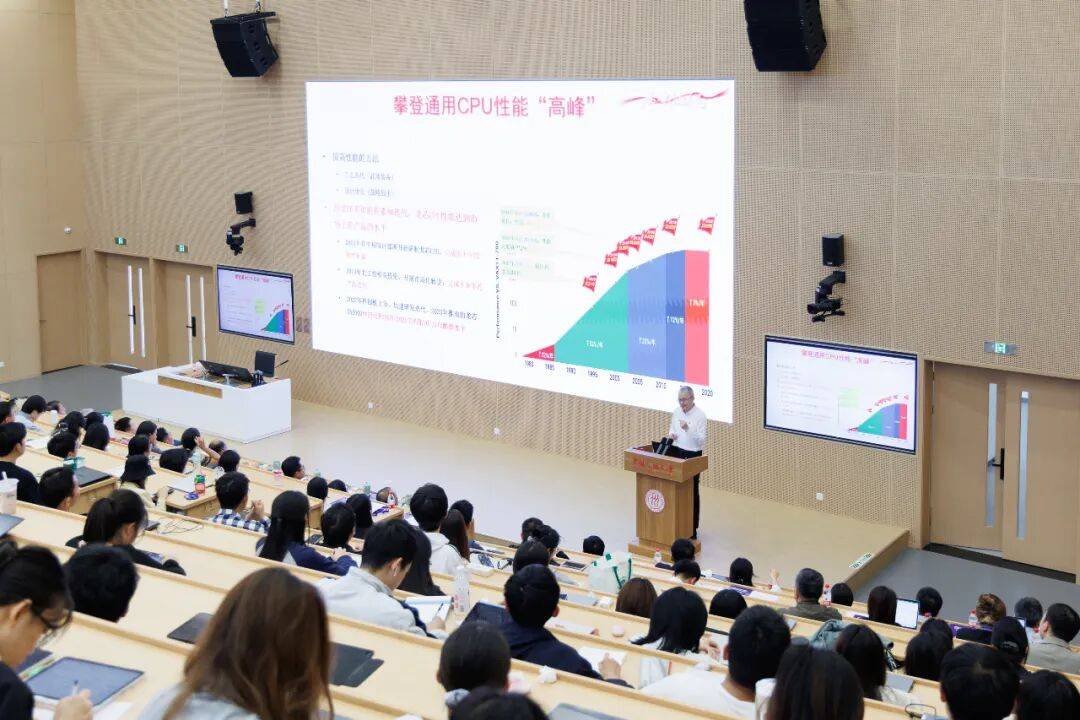
这堂课,太“硬核”了!
Sou Hu Cai Jing· 2026-01-01 21:49
Core Viewpoint - The article highlights the contributions of Chinese technology professionals in various fields such as integrated circuits, artificial intelligence, and biomedicine, emphasizing their role in advancing China's technological independence and innovation [1][4][6]. Group 1: Integrated Circuits - The chairman of Loongson Technology, Hu Weiwu, emphasizes the importance of developing core technologies through persistent effort, stating that there are no shortcuts and that one must steadily pursue progress [4][6]. - In 2020, Loongson launched its fully autonomous LoongArch architecture, marking a significant step in building China's independent information system [6]. Group 2: Space Exploration - Aerospace designer Jia Yang shares the story of the Zhurong Mars rover, which was designed to navigate challenging terrains and extreme temperatures, showcasing innovative engineering solutions [7][9]. - Jia emphasizes the joy of exploration and the integration of personal passion with professional work, reflecting on his two-decade journey in deep space exploration [9]. Group 3: Artificial Intelligence - Wang Shaolan, president of Zhiyuan Technology, discusses the development of large AI models, stressing the importance of mastering key technologies domestically, especially after facing external restrictions [11][13]. - The team has successfully released a trillion-parameter model and made it open-source, breaking through foreign architectural barriers [13]. Group 4: Pharmaceutical Innovation - Sun Yinghui, deputy general manager of Shouyao Holdings, focuses on the challenges of making innovative drugs accessible, particularly in the field of lung cancer treatment [15]. - She highlights the responsibility of researchers in developing drugs that can significantly impact patients' lives, emphasizing the need for precision in treatment [15]. Group 5: Automotive Industry - Xiaomi engineer Fang Kan reflects on the challenges faced by the Chinese automotive industry, particularly in developing small molecule targeted drugs and electric vehicles [16][19]. - He shares the story of Xiaomi's journey in car manufacturing, illustrating the importance of perseverance and innovation in overcoming obstacles [19][21]. Group 6: Telecommunications - Sun Lixin, CEO of Baicai Technology, recounts the evolution of China's telecommunications from reliance on foreign technology to leading in 5G and 6G standards [21][23]. - He attributes this progress to the dedication and efforts of generations of telecommunications professionals, showcasing the collective capability to achieve significant advancements [23].