证券业

Search documents
4月金融数据解读:非银回流银行,M2增速回升
Huachuang Securities· 2025-05-14 23:30
1. Report Industry Investment Rating No relevant content provided. 2. Core Viewpoints of the Report - In April 2025, new RMB loans were 28 billion yuan, a year - on - year decrease of 45 billion yuan, and the credit balance growth rate dropped from 7.4% to 7.2%. New social financing scale was 1.16 trillion yuan, a year - on - year increase of 1.22 trillion yuan, and the social financing stock growth rate rose from 8.4% to 8.7%. The year - on - year growth rate of M2 recovered from 7% to 8%, and the growth rate of M1 under the new caliber slightly decreased from 1.6% to 1.5%. There was an obvious overdraft effect due to the end - of - quarter credit rush, and the enterprise sector was a significant drag on credit growth. However, due to the central bank's "pre - rate cut", the market reaction was dull after the data release. With the support of the pre - issued government bonds, the social financing growth rate continued to rise. In terms of deposits, M1 was not weak, and the return of non - bank deposits supported the significant recovery of the M2 growth rate this month [1][10]. 3. Summary by Directory Non - bank Funds Flow Back to Banks, M2 Growth Rate Recovers - In the second quarter, when the financing pricing is relatively low, wealth management and other broad - based funds increase their allocation of deposits, driving the significant recovery of the M2 growth rate. In April, M2 decreased by 88.15 billion yuan, 2.7 trillion yuan less than the same period last year, driving the M2 growth rate up by nearly 1 percentage point. Non - bank time deposits were the main support, with a year - on - year increase of 1.9 trillion yuan [1][13]. - In April, it was a big month for the growth of wealth management scale. When the capital constraints were relaxed in the second quarter, non - bank institutions had abundant funds and the financing pricing was relatively low. Wealth management might choose to increase the allocation of certificates of deposit and time deposits [16]. - In the long run, official media continued to emphasize downplaying the focus on the growth rate of aggregate targets such as M2. The relationship between the money supply and economic growth is weakening, and the relationship between money and prices is also affected by multiple factors [2][21]. Credit: The Household Sector is Mediocre, and the Enterprise Sector is Obviously Overdrafted - In April, household short - term loans decreased by 40.19 billion yuan, 5.01 billion yuan more than the same period last year. The real estate transactions in April were weak, and the year - on - year growth rate of the commercial housing transaction area in 30 large and medium - sized cities weakened significantly compared with the previous month. New household medium - and long - term loans decreased by 12.31 billion yuan, close to the level of the same period last year and still in the negative range [3][22]. - After the end - of - quarter rush, the performance of enterprise medium - and long - term loans in April weakened significantly. New enterprise medium - and long - term loans in April were 25 billion yuan, 16 billion yuan less than the same period last year. The bill department still had a large - scale impulse, with new bill financing of 83.41 billion yuan in the month, which was seasonally high. Enterprise short - term loans were significantly weak, decreasing by 48 billion yuan in the month, 7 billion yuan less than the same period last year [3][26][27]. Social Financing: Government Bonds Remain the Main Support - The pre - issued government bonds were still the largest supporting item for social financing. In April, government bond issuance was fast, with new issuance of 97.62 billion yuan, a year - on - year increase of 1.07 trillion yuan, which was an important sub - item supporting the social financing growth rate. In May, the net financing of government bonds may be around 1.67 trillion yuan, still showing a significant year - on - year increase [4][35]. - The issuance of enterprise bonds rebounded, and off - balance - sheet bills were converted into on - balance - sheet ones. In April, the willingness to issue enterprise bonds rebounded, with new issuance of 23.4 billion yuan, at a seasonal level. Due to the tariff disturbance in April, the central level of bond yields declined, and the enterprise issuance willingness might have rebounded. Unaccepted bills decreased by 27.93 billion yuan in April, at a seasonal low level, and off - balance - sheet bills accelerated the conversion into on - balance - sheet ones at the beginning of the quarter [4][37]. Deposits: M1 is Seasonally Low, Non - bank Deposits Increase Significantly - The month - on - month change of M1 was close to that of the same period last year, at a seasonal low. April was a small month for deposits. Under the new caliber, M1 decreased by 4.3 trillion yuan in the month, 13.03 billion yuan more than the same period in 2024, generally at a seasonally low level. The year - on - year reading of M1 decreased slightly from 1.6% to 1.5% [5][41]. - Among the M2 sub - items, inter - bank deposits increased significantly, and household and enterprise deposits increased slightly year - on - year on a low base. In April, inter - bank deposits increased significantly by 1.5 trillion yuan, 1.9 trillion yuan more than the same period in 2024. After the central level of capital prices declined, the attractiveness of non - bank time deposits might have increased. Enterprise deposits decreased 54.28 billion yuan less year - on - year, and household deposits increased 46 billion yuan year - on - year [5][43].
每日债市速递 | 4月金融数据发布
Wind万得· 2025-05-14 22:43
Group 1: Monetary Policy and Market Operations - The central bank conducted a 7-day reverse repurchase operation on May 14, with a fixed rate of 1.40%, totaling 92 billion yuan, matching the bidding amount and resulting in a net withdrawal of 1,035 billion yuan for the day [1] - Overnight and 7-day pledged repo rates for deposit-taking institutions slightly increased, with the overnight rate rising by less than 1 basis point [3] - The latest overnight financing rate in the US stands at 4.28% [3] Group 2: Interbank Rates and Bonds - The latest transaction for one-year interbank certificates of deposit in the secondary market is around 1.67%, showing a slight increase from the previous day [5] - The yields on major interbank bonds show slight variations, with one-year government bonds at 1.42% and ten-year government bonds at 1.67% [8] - The 30-year main contract for government bonds closed down by 0.23%, while the 10-year and 5-year contracts fell by 0.12% and 0.13%, respectively [11] Group 3: Financial Data and Lending - In the first four months, RMB loans increased by 10.06 trillion yuan, with household loans rising by 518.4 billion yuan and corporate loans increasing by 9.27 trillion yuan [12] - The total social financing scale for the first four months reached 16.34 trillion yuan, an increase of 3.61 trillion yuan year-on-year [12] - The M2 money supply growth rate significantly increased to 8% year-on-year by the end of April, reflecting the central bank's counter-cyclical adjustments [13] Group 4: Global Economic Insights - The Bank of England's monetary policy committee member expressed concerns about rising household inflation expectations and noted the resilience of the UK labor market [15] Group 5: Bond Market Developments - The China Securities Regulatory Commission announced plans to enhance institutional innovation and accelerate the development of a multi-level REITs market [17] - Shaanxi Province successfully issued the first batch of technology innovation bonds in the country [17]


国务院发布2025年度立法工作计划
Shang Hai Zheng Quan Bao· 2025-05-14 18:52
Group 1 - The State Council's 2025 legislative work plan outlines the latest developments in national legislation, emphasizing the need for comprehensive legal reform and improvement in legislative quality [1][2] - A total of 16 legal proposals and 30 administrative regulations are set to be reviewed by the National People's Congress Standing Committee in 2025, focusing on high-quality development and a high-level socialist market economy [2] - Key legislative proposals include revisions to financial laws, such as the Financial Law, Banking Supervision Law, and Securities Company Supervision Regulations, aimed at enhancing the regulatory framework for the financial sector [2][3] Group 2 - The legislative plan also addresses the need for laws related to foreign trade, intellectual property, and commercial mediation, indicating a push towards strengthening the legal framework for international business [3] - The plan includes provisions for the review and revision of existing regulations that do not align with economic and social development needs, ensuring a more unified and conducive business environment [3]
降准今日正式落地 年内或还有降准空间
Zheng Quan Ri Bao· 2025-05-14 16:24
温彬进一步谈到,一方面,降准释放更充足的长期流动性,在后续政府债券供给高峰时可熨平资金面波 动,强化货币与财政政策的协同效应,稳定社融增长;另一方面,降准有助于优化银行负债结构、节约 负债成本,在一定程度上缓解净息差收窄压力,为降低实体经济融资成本创造空间。此外,为银行体系 提供长期低成本资金,稳定信用扩张,提升对消费、外贸、科技创新、小微民企等特定领域和薄弱环节 的支持力度,增强服务实体经济的动力和可持续性。 中信证券首席经济学家明明分析认为,尽管4月份流动性相对宽松,但5月份政府债供给压力增大,超长 期特别国债、商业银行注资特别国债均有落地,或贡献一定流动性缺口,央行选择在5月份降准,一方 面能进一步降低商业银行负债成本,另一方面也是为了配合财政端发力。 5月15日,降准正式落地。 中国人民银行(以下简称"央行")5月7日发布公告宣布,自2025年5月15日起,下调金融机构存款准备 金率0.5个百分点(不含已执行5%存款准备金率的金融机构),下调汽车金融公司和金融租赁公司存款 准备金率5个百分点。 此次下调存款准备金率0.5个百分点,向金融市场提供长期流动性约1万亿元。据央行行长潘功胜在5月7 日国新办新 ...
财经聚焦|钱流向哪了?——透视前4个月金融数据
Xin Hua She· 2025-05-14 13:06
Core Insights - The financial statistics for April indicate a stable credit environment, with a total loan balance of 265.7 trillion yuan, a year-on-year growth of 7.2% [1] - The People's Bank of China (PBOC) is expected to maintain a steady growth in financial volume, supported by a recent policy package that includes a 0.5 percentage point reserve requirement ratio cut [1][2] Group 1: Credit Allocation - Over 90% of new loans in the first four months were directed towards enterprises, with long-term loans accounting for over 60% of this amount, providing strong support for investment and production [3] - The balance of inclusive small and micro loans reached 34.31 trillion yuan, growing by 11.9% year-on-year, while medium to long-term loans in the manufacturing sector increased by 8.5% [3][4] - The proportion of loans to small and micro enterprises has risen from 31% to 38% since 2021, indicating a shift in credit allocation towards smaller businesses [4] Group 2: Interest Rates and Financing Costs - The average interest rate for newly issued corporate loans in April was approximately 3.2%, down about 50 basis points from the previous year, while the rate for personal housing loans was around 3.1%, down 55 basis points [4] - A recent policy rate cut of 0.1 percentage points is expected to further lower the loan market quotation rate (LPR) by a similar margin, reducing the financial burden on both enterprises and residents [7] Group 3: Broader Financing Landscape - As of April, the balance of corporate bonds increased by 3.2% year-on-year, reflecting a more balanced development between the bond and credit markets [8] - The introduction of technology innovation bonds in the bond market is anticipated to channel more funds into the technology sector, enhancing direct financing growth [8]

4月金融数据出炉:社融规模同比增长8.7% M2增速出现提升
Sou Hu Cai Jing· 2025-05-14 11:42
Group 1 - The central bank reported that by the end of April, the social financing scale increased by 8.7% year-on-year, and the broad money supply (M2) grew by 8%, indicating a significant acceleration compared to the previous month [1][4] - The increase in social financing scale was primarily driven by accelerated government bond issuance, with a net financing of over 5 trillion yuan in the first four months of the year, which is approximately 3.6 trillion yuan more than the same period last year [2][3] - The issuance of special government bonds and local government special refinancing bonds has been ongoing, with a net financing of about 970 billion yuan in April alone, contributing to a 0.3 percentage point increase in the social financing growth rate [2][3] Group 2 - The M2 growth rate was influenced by a low base effect from the previous year, with the M2 balance reaching 325.17 trillion yuan by the end of April, reflecting a 1 percentage point increase from the end of March [4][5] - The reduction in deposits by approximately 870 billion yuan in April, compared to a decrease of about 3 trillion yuan year-on-year, had a positive impact on M2 growth, contributing about 1 percentage point [6][7] - The overall credit growth remains robust, with a total of 10.06 trillion yuan in new loans issued in the first four months, although April's single-month new loan issuance was lower than the same month last year [8][9] Group 3 - The ongoing local debt replacement efforts are expected to support long-term economic development, as they allow local governments to alleviate debt burdens and redirect resources towards development and consumption [8][9] - Market analysts predict that the growth of financial aggregates is likely to remain stable in the near future, despite uncertainties in foreign trade and the traditional "small month" for credit in May [9]
2025年Q2
Hua Tai Qi Huo· 2025-05-14 11:06
1. Report Industry Investment Rating - Not provided in the content 2. Core Viewpoints of the Report - China's foreign exchange reform has gradually established a dynamic equilibrium exchange rate system that emphasizes both market - led pricing and macro - prudential management through a series of reforms from 2015 to 2022 [14] - The RMB exchange rate is affected by international payments, interest rate parity, and relative economic strength. When these three factors are in the same direction, it is more likely to form a trend of appreciation [194] - The offshore RMB market's liquidity is supported by cross - border trade settlement for long - term growth and central bank support and market financing for short - term stability [87] 3. Summary by Relevant Catalogs 3.1 Foreign Exchange Reform - China's foreign exchange reform includes the improvement of the mid - price mechanism in 2015, the introduction of the counter - cyclical factor in 2017, the dynamic adjustment of cross - border financing macro - prudential parameters in 2019, and the strengthening of the foreign exchange risk reserve system in 2022 [14] - The mid - price mechanism combines the previous day's closing price and the change of a basket of currencies, which makes the mid - price close to the market and takes into account external stability [21] - The counter - cyclical factor guides market rational expectations, weakens the self - reinforcement mechanism of pro - cyclical behavior, and enhances the resilience and stability of the exchange rate mechanism [24] - Since the launch of the LPR reform in August 2019, the loan quotation mechanism has become more market - oriented, breaking the "implicit lower limit" of loan interest rates [27] - The adjustment of cross - border financing macro - prudential parameters aims to increase cross - border financing quotas, relieve RMB depreciation pressure, and optimize the asset - liability structure of domestic entities [32] 3.2 Domestic RMB Foreign Exchange Market - The RMB foreign exchange market is divided into the bank - to - customer market and the inter - bank market. The inter - bank market has high liquidity and large trading volume [41] - The inter - bank foreign exchange derivatives market has developed since 2005, with swap transactions being the most important trading method [62] - In the spot market, the willingness of enterprises to settle foreign exchange has weakened, and the demand for purchasing foreign exchange has increased. In the forward market, enterprises tend to lock in the cost of purchasing foreign exchange in advance [66] - Short - term foreign exchange derivatives dominate the market, mainly meeting the short - term foreign exchange capital allocation and risk management needs of banks and enterprises [81] 3.3 Offshore RMB Market - The long - term liquidity of the offshore RMB market is mainly supplied by cross - border trade settlement, and the short - term liquidity is obtained through market financing and official support [87] - The offshore RMB market has various products, including CNH spot, RMB offshore non - deliverable forward, RMB offshore deliverable forward, RMB futures, and RMB futures options [94] - The participants in the offshore RMB market are diversified, and the proportion of non - financial institutional investors has increased, narrowing the gap between the offshore and onshore exchange rates [101] 3.4 QFII, RQFII, and QDII - QFII and RQFII systems have been gradually liberalized, allowing foreign institutional investors to invest in the Chinese domestic capital market. The two systems have been unified [106] - The QDII system allows domestic institutional investors to invest overseas, and its investment scope and scale have been gradually expanded [108] 3.5 RMB Internationalization - RMB internationalization has gone through three stages: using trade settlement as a breakthrough, accelerating investment and financial opening, and enhancing global influence [112] - To promote RMB internationalization, China has promoted RMB pricing in commodities, expanded the opening of the domestic financial market, and strengthened RMB settlement in neighboring and "Belt and Road" countries [122] 3.6 SWIFT and CIPS - SWIFT is the most important cross - border payment system globally, but the increasing use of financial sanctions by the US has made the international community aware of the risks of the US - dollar - dominated system. CIPS is playing an increasingly important role in RMB cross - border settlement [127] - In 2024, CIPS handled a large number of RMB cross - border payment transactions, and the RMB's share in global payments has increased, ranking fourth [132] 3.7 RMB Exchange Rate Analysis - Short - term RMB exchange rate trends are determined by capital supply and demand, market expectations, and policy and external environments [140] - The issuance of offshore central bank bills affects the supply and demand of offshore RMB, and the swap point reflects market expectations for the RMB [169] - The RMB exchange rate is affected by international payments, interest rate parity, and relative economic strength. When these factors are in the same direction, it is beneficial for the RMB exchange rate [194] - The international balance of payments affects the RMB exchange rate. Trade surpluses lead to RMB appreciation, and capital outflows lead to RMB depreciation [195] - Interest rate parity affects capital flow. When the RMB interest rate is higher than the US dollar interest rate, it supports the RMB; otherwise, the RMB is under pressure [195] - Relative economic strength affects market expectations. When China's economic prospects are better than the US, the RMB has the potential to appreciate [197]
新华财经晚报:七部门发文支持加快构建科技金融体制
Xin Hua Cai Jing· 2025-05-14 09:54
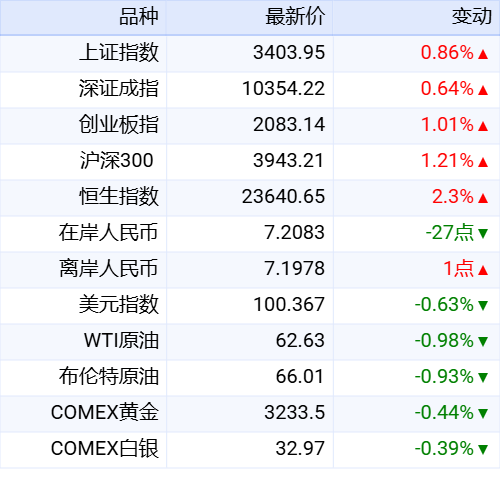
Domestic News - The Ministry of Science and Technology and six other departments jointly issued policies to accelerate the construction of a technology finance system, proposing 15 measures to support technology innovation through various financial services [1] - As of the end of April, the broad money supply (M2) reached 325.17 trillion yuan, with a year-on-year growth of 8% [1] - The total social financing stock was 424.0 trillion yuan, showing a year-on-year increase of 8.7% [1] - In April, the sales revenue of enterprises nationwide increased by 4.3% year-on-year, reflecting the positive effects of previous policies [3] International News - The U.S. and China reached a consensus to significantly reduce bilateral tariffs, with the U.S. agreeing to cancel 91% of tariffs and suspend 24% of reciprocal tariffs, while China will also cancel 91% of counter-tariffs [2] - The Egyptian Suez Canal Authority announced a 15% discount on transit fees for large container ships starting May 15, aiming to encourage shipping companies to return to the canal [5] Market Overview - The Shanghai Composite Index rose by 0.86% to 3403.95, while the Shenzhen Component Index increased by 0.64% to 10354.22 [6] - The onshore RMB was quoted at 7.2083, down by 27 points, while the offshore RMB was at 7.1978, up by 1 point [6] - WTI crude oil prices decreased by 0.98% to $62.63, and Brent crude oil prices fell by 0.93% to $66.01 [6]
中美谈判达成共识,核心资产重估叙事继续
Xin Lang Ji Jin· 2025-05-14 02:19
5月12日盘后,中美发布《中美日内瓦经贸会谈联合声明》,本次中美经贸高层会谈取得实质性进展, 大幅降低双边关税水平,美方取消了共计91%的加征关税,中方相应取消了91%的反制关税;美方在初 始的90天内暂停实施24%的"对等关税",中方也相应在初始的90天内暂停实施24%的反制关税。 核心资产优质抓手—A500ETF基金(512050)近期斩获多个同类第一 说到中国资产估值重塑,浓眉大眼、基本面良好的核心资产或直接受益。而当我们在谈论核心资产时, 大家也许会瞬间想到是茅台和宁王这样的蓝筹股,对,但不全对,核心资产是一个组合,是能反映经济 发展动能,能在经济向上周期跑赢通胀、经济增速,在经济向下周期抗跌的资产组合。 当下来看,或许编制独特的中证A500指数更能符合这个定义,指数采取行业均衡配置与龙头优选双策 略,实现细分行业全覆盖,并通过循环选样法保持动态平衡,融合价值与成长属性,既分散风险,又捕 捉成长机遇。指数前十大权重股中,既有像贵州茅台、、中国平安、招商银行、长江电力、美的集团、 紫金矿业、兴业银行等传统大市值白马,又有像宁德时代、亚迪、东方财富这样的新兴成长行业龙头。 如果大家对这一宽基指数感兴趣,可 ...
国泰海通|固收:双降之后,长债交易降温
国泰海通证券研究· 2025-05-13 13:11
Key Points - The overall funding market has warmed up, with a slight decrease in leverage ratios in the interbank bond market [1] - There is a divergence in the issuance heat of new bonds, with an increase in the issuance of national development bonds and a decrease in other policy financial bonds [1][2] - In the secondary market, funds and rural commercial banks have significantly increased their positions in short-term bonds, while trading activity in ultra-long bonds continues to weaken [2] - The scale of wealth management products has seen a low growth rate in May, with a total increase of 16 billion yuan, primarily in cash management and fixed-income products [3] - The scale of funds has increased by 61.8 billion yuan in May, with notable increases in equity and bond funds [3]