半导体

Search documents
英伟达计划推出新型芯片以加速人工智能处理,AI人工智能ETF(512930)最新规模达35.49亿
Xin Lang Cai Jing· 2026-03-02 02:24
Group 1 - Nvidia plans to launch a new chip to accelerate artificial intelligence processing, featuring a new "inference" computing system that allows AI models to respond to queries [1] - The new processor, designed by startup Groq, is set to be unveiled at the upcoming Nvidia GTC developer conference next month, with OpenAI as one of its largest clients [1] - New AI applications like Seedance 2.0 and OpenClaw are causing structural imbalances in computing power supply and demand, leading to server overloads and long wait times for tasks [1] Group 2 - As of March 2, 2026, the CSI Artificial Intelligence Theme Index shows mixed performance among constituent stocks, with Zhongke Xingtu leading at an increase of 8.65% [2] - The AI Artificial Intelligence ETF has a latest scale of 3.549 billion yuan, closely tracking the CSI Artificial Intelligence Theme Index, which includes 50 companies involved in AI resources, technology, and applications [2] - The top ten weighted stocks in the CSI Artificial Intelligence Theme Index account for 55.49% of the index, including companies like Zhongji Xuchuang and New Yisheng [2]

英大证券晨会纪要-20260302
British Securities· 2026-03-02 02:22
Core Views - The A-share market is currently characterized by "volatile differentiation and hot spot rotation," with rapid changes in market focus requiring investors to time their entries carefully to avoid blind chasing of trends [2][13][14] - The report suggests a strategy of "buying on dips" in sectors benefiting from price increases and geopolitical catalysts, such as oil and gas, as well as technology sectors with long-term growth potential like AI computing and semiconductors [2][14] Market Overview - Last Friday, the three major indices of the A-share market opened lower and experienced weak fluctuations, with the ChiNext index dropping over 1%. However, the Shanghai Composite and Shenzhen Composite indices staged a V-shaped recovery in the afternoon [4][5] - The market saw strong performance in small metal and energy metal sectors, while technology-related sectors like optical modules, PCBs, and semiconductors experienced corrections, highlighting the evident rotation effect [4][6] Weekly Market Review - The Shanghai Composite index rose by 1.98% over the week, while the Shenzhen Composite and ChiNext indices increased by 2.80% and 1.05%, respectively. The market's initial positive momentum was attributed to returning capital and rising policy expectations post-holiday [6][7] - The cyclical sectors, including oil, coal, and non-ferrous metals, have been leading the market, driven by external catalysts such as the escalating US-Iran situation and internal price increase logic [6][7] Sector Analysis - **Cyclical Sectors**: The report emphasizes the potential for cyclical sectors like oil, coal, and non-ferrous metals to benefit from improving economic conditions and price recovery, suggesting early positioning before data validation [7][8] - **Rare Earth and Small Metals**: The rare earth sector is highlighted for its investment value due to concentrated supply and increasing demand in key industries such as electric vehicles and aerospace. The report recommends focusing on leading companies with resource advantages [8] - **Precious Metals**: The report notes significant price increases in precious metals driven by factors such as the onset of a Fed rate cut cycle and geopolitical tensions, advising caution against chasing high prices [9] - **Power Sector**: The power sector is expected to benefit from new energy policies and the growing demand for AI computing infrastructure, indicating a positive outlook for related stocks [10] - **Real Estate Sector**: The report discusses the potential for recovery in the real estate sector due to supportive government policies, suggesting that investors focus on companies with strong land reserves [10] - **Communication Sector**: The communication sector is recommended for attention due to the ongoing demand for AI and infrastructure upgrades, although caution is advised regarding high valuations in some sub-sectors [11] - **Semiconductor Sector**: The semiconductor sector is viewed positively due to the ongoing digital transformation and domestic policy support, with a focus on companies with strong performance indicators [12] Future Market Outlook - The upcoming Two Sessions are expected to influence short-term market trends, with anticipated policy clarity likely to support a continued upward trajectory in the A-share market [3][14] - Investors are advised to remain vigilant regarding external geopolitical developments, particularly the US-Iran situation, which could impact market sentiment [3][14]
A股开门红,恒科枕戈待旦 | 周度量化观察
申万宏源证券上海北京西路营业部· 2026-03-02 01:56
A股开门红,恒科枕戈待旦 2026 2026年年22月月2323日日-2025 -2025年年22月月2727日日 基金投顾观点 本周A股震荡上行、结构分化,债市上涨后走入震荡,黄金窄幅波动,全球股市中韩国表现亮眼。具体来看,市场有以下几个重要方面: | 01 | | | --- | --- | | | 本周A股震荡上行、结构分化。沪指站稳 4100 点,深成指偏强、创业板偏弱;沪深两市日均成 | | | 交金额回升至2.42万亿附近,成交保持活跃,北向持续净流入。AI 算力、PCB、液冷等硬科技 | | | 领涨,小金属、稀土等周期资源走强;新能源、传媒、高位科技股调整。整体呈现指数稳、轮 | | | 动快的结构特征。申万一级行业上,钢铁、有色金属、基础化工行业涨幅居前,传媒、商贸零 | | | 售、食品饮料行业跌幅居前。风格方面,国证价值上涨2.26%,国证成长上涨2.37%。恒生指数 | | | 上涨0.82%,恒生科技指数下跌1.41%。 | | 02 | | | | 债市方面,本周市场震荡偏弱,利率债较为弱势,国债期货下跌。资金面来看,受到月末和税 | | | 期影响,资金面整体均衡偏紧。政策面来看 ...

铜冠金源期货商品日报-20260302
Tong Guan Jin Yuan Qi Huo· 2026-03-02 01:51
Report Industry Investment Rating - Not provided in the given content. Core Viewpoints - Overseas, the US initial jobless claims were lower than expected, the labor market showed "low hiring, low layoffs" characteristics, the Fed's dovish stance on interest rate cuts persisted, the US-Iran nuclear talks made progress, and the US PPI was to be watched. In China, the A-share market was in a weak shock, and the market pricing logic might shift as the Two Sessions approached. Different commodities had different trends based on their respective fundamentals and macro factors [2][3]. Summary by Commodity Categories Macro - US initial jobless claims were 212,000, lower than expected. The labor market showed "low hiring, low layoffs" characteristics. The Fed's Milan expected 100bp of rate cuts in 2026 and preferred early action. The US-Iran nuclear talks made progress and another meeting was scheduled next week. The US PPI was to be watched tonight. In China, the A-share market was in a weak shock on Thursday, with the turnover rising to 2.56 trillion and more than 2,800 stocks closing down. The market was in a data and policy vacuum, with short - term safety and a possible shift in pricing logic as the Two Sessions approached [2][3]. Precious Metals - International precious metals futures generally pulled back on Thursday. COMEX gold futures fell 0.47% to $5,201.50 per ounce, and COMEX silver futures fell 3.02% to $88.86 per ounce. The third round of US - Iran nuclear talks ended without intensifying the conflict. Short - term gold faced resistance near the previous high, and silver remained highly volatile [4][5]. Copper - On Thursday, SHFE copper's main contract was in a high - level shock, and LME copper oscillated around $13,200. The spot market trading was light, and downstream restocking willingness was low. The Fed had internal differences on interest rates, and the US - Iran talks had progress but also differences. The Kamoja - Kakula project's copper production in 2025 was 389,000 tons. It was expected that copper prices would remain in a high - level shock in the short term [6][7]. Aluminum - On Thursday, SHFE aluminum's main contract closed at 23,845 yuan/ton, up 0.61%. LME aluminum closed at $3,141.5 per ton, down 1.04%. The electrolytic aluminum ingot inventory increased by 51,000 tons. There were many macro uncertainties, and the inventory was in a normal seasonal accumulation. Overseas, an Icelandic aluminum plant planned to resume production in April, and a Mozambican plant was about to shut down. It was expected that aluminum prices would continue to oscillate within a range [8][9][10]. Alumina - On Thursday, the main alumina futures contract closed at 2,820 yuan/ton, down 1.27%. After the Spring Festival, the supply side changed little, but high - level inventories suppressed prices. It was expected that alumina would oscillate within a range [11]. Cast Aluminum - On Thursday, the main cast aluminum alloy futures contract closed at 22,710 yuan/ton, up 0.89%. The cost was strongly supported due to tight scrap aluminum supply and high aluminum prices. The supply and demand were both weak after the festival. It was expected to oscillate with a bullish bias [12]. Zinc - On Thursday, SHFE zinc's main contract first declined and then rose, and LME zinc's center of gravity slightly decreased. The 3 - month domestic zinc concentrate processing fee increased slightly. The inventory increase slowed, and the cost was still supported. It was expected that zinc prices would oscillate in the short term [13]. Lead - On Thursday, SHFE lead's main contract oscillated narrowly, and LME lead also had a narrow shock. The primary lead smelters had stable production, while the secondary lead smelters had poor profits and slow resumption. The downstream battery enterprises had limited purchasing power, and the inventory continued to rise. It was expected that lead prices would remain in a low - level shock [14][15]. Tin - On Thursday, SHFE tin's main contract slightly adjusted during the day and its center of gravity slightly moved up at night, and LME tin slightly rose. The tin market showed a pattern of weak reality and strong expectation. In the long - term, the supply was restricted, and the demand was boosted. In the short - term, the rise slowed, but the upward trend remained [16]. Steel (Screw and Coil) - On Thursday, steel futures oscillated. The total inventory of five major steel products increased by 1.3427 million tons week - on - week. The steel production decreased after the festival, and the apparent demand gradually recovered. It was expected that the inventory inflection point would appear around four weeks after the festival. The steel prices were expected to oscillate and stabilize in the short term [17]. Iron Ore - On Thursday, iron ore futures oscillated and rebounded. The fundamentals showed strong supply and weak demand, with overseas shipments increasing and port inventories remaining high. The demand recovery was limited due to steel mill restrictions. It was expected that iron ore prices would mainly oscillate [18][19]. Coking Coal and Coke - On Thursday, coking coal and coke futures oscillated and adjusted. The upstream coal mines gradually resumed production, increasing supply pressure. The downstream steel mills had weak procurement, and the demand was restricted due to steel mill restrictions. It was expected that coking coal and coke prices would oscillate, and the subsequent focus was on steel mill profit repair and policy support from the Two Sessions [20]. Soybean and Rapeseed Meal - On Thursday, the soybean meal 05 contract rose 0.35% to 2,834 yuan/ton, and the rapeseed meal 05 contract fell 0.69% to 2,296 yuan/ton. The US soybean export sales slowed, and external institutions lowered Brazil's soybean production forecast. The US bio - fuel policy boosted the market. It was expected that the domestic soybean meal would oscillate strongly in the short term [21][22]. Palm Oil - On Thursday, the palm oil 05 contract fell 1.51% to 8,714 yuan/ton. The Malaysian palm oil production in February 1 - 25 decreased. The US bio - fuel policy boosted the market. The high - frequency data showed weak supply and demand for Malaysian palm oil in February. It was expected that palm oil would oscillate in the short term [23][24].
这颗GPU,改变了行业
半导体行业观察· 2026-03-02 01:41
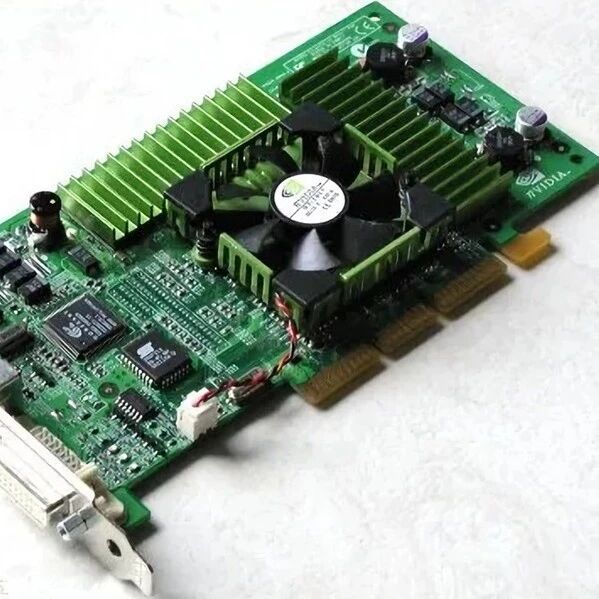
Core Insights - GeForce 3, released in February 2001, marked a pivotal moment in GPU history as the first truly programmable GPU supporting DirectX 8.0 pixel and vertex shaders, allowing graphics programmers to write programs that run on the GPU [4][11] - Prior to GeForce 3, most GPUs were fixed-function accelerators, requiring the CPU to handle all special graphics effects, which limited the capabilities of early graphics processing [3][4] - GeForce 3's architecture included a "light-speed memory architecture" that significantly improved effective memory bandwidth, providing advantages at higher resolutions despite similar rasterization performance to its predecessor, GeForce 2 Pro [6][8] Product Evolution - The introduction of GeForce 3 Ti500 in 2001 addressed some performance shortcomings and established the "Ti" suffix, which continues to be used in NVIDIA's graphics cards today [7] - The original Xbox, released in late 2001, solidified GeForce 3's role as a foundational technology for future gaming consoles, showcasing NVIDIA's contributions beyond just graphics to include audio hardware and memory controllers [8] - Although GeForce 3 was not an immediate commercial success, it laid the groundwork for the more popular GeForce 4 series, which enhanced Direct3D support and introduced new features like 3D textures and improved shader capabilities [9][10] Long-term Impact - The evolution from GeForce 3 to the GeForce 8 series, which introduced the Tesla microarchitecture and unified shader design, reflects a significant shift towards fully programmable GPUs, enabling broader applications beyond gaming [10][11] - The rise of general-purpose GPU (GPGPU) computing, initially used for scientific calculations and later for cryptography and AI, can be traced back to the programmability established by GeForce 3 [10][11] - GeForce 3's legacy is evident in the current dominance of NVIDIA in the AI data center market, demonstrating how early innovations in gaming graphics have had far-reaching implications across various industries [11]
美光千亿工厂,面临延期风险
半导体行业观察· 2026-03-02 01:41
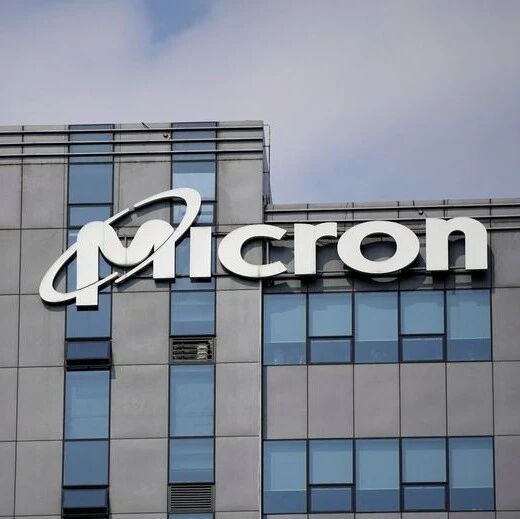
Core Viewpoint - Micron Technology is facing legal challenges from local and national groups regarding its semiconductor manufacturing facility in Clay, New York, primarily focused on environmental concerns and the adequacy of public input in the approval process [2][4][5]. Group 1: Project Overview - Micron is constructing a semiconductor manufacturing facility, which is expected to be the largest in New York's history, with potential public subsidies amounting to $25 billion, including $6.1 billion from the federal CHIPS Act and $5.5 billion from New York State [2]. - The project aims to create 9,000 jobs and is part of a broader initiative to revitalize domestic semiconductor manufacturing, which has been deemed critical for national security [2][3]. Group 2: Environmental Concerns - Local residents and advocacy groups are concerned about the environmental impact of the facility, citing the significant water and energy consumption, as well as the generation of hazardous waste associated with semiconductor manufacturing [3][6]. - The project is expected to draw 48 million gallons of water daily from Lake Ontario, sufficient to supply over 585,000 households, raising concerns about local infrastructure strain [6]. Group 3: Legal Actions and Community Response - Lawsuits have been filed against Micron and state agencies, arguing that the environmental review process was rushed and did not adequately consider public opinion [4][5]. - Advocates are pushing for a legally binding community benefits agreement to ensure that the project provides tangible benefits to the local community, including job creation and environmental protections [8]. Group 4: Company Commitments and Community Engagement - Micron has committed to investing hundreds of millions in education, workforce training, and affordable housing over the next 20 years, and claims that 80% of the construction workforce will be local [4][8]. - The company has also pledged to develop new wetlands to compensate for those that will be destroyed during construction [4]. Group 5: Historical Context and Future Implications - There is skepticism among community members regarding the actual benefits of the project, referencing past industrial projects that failed to deliver on environmental promises [7][8]. - The ongoing legal and community challenges highlight the tension between economic development and environmental stewardship in the semiconductor industry [5][6].

英伟达要开源6G,有厂商该焦虑了
半导体行业观察· 2026-03-02 01:41
Core Viewpoint - The current state of 5G technology is disappointing, with limited improvements over 4G, and the control of 5G networks remains largely with Ericsson and Nokia, despite efforts for more open standards [2][3] Group 1: 5G and Open RAN - The Open RAN movement aimed to replace proprietary interfaces with industry-standard ones but has not significantly impacted market dynamics [2] - The focus has shifted towards open-source initiatives, with the U.S. Department of Defense collaborating with the Linux Foundation on a project called OCUDU to integrate open-source code into 6G networks [2][3] - Nvidia is promoting the idea of "open" and "open-source" as part of its 6G project, which includes major industry players [3] Group 2: Challenges in Open Source - The term "open" in telecommunications is often misused, and open-source software is frequently confused with "free" software [5] - Ericsson and Nokia's profits largely come from technology licensing, which contradicts open-source principles, hindering smaller companies from innovating on these platforms [6] - The current systems supporting 5G services are primarily proprietary, limiting flexibility for smaller developers [6] Group 3: Nvidia's Aerial Platform - Nvidia has developed an open-source RAN reference platform called Aerial, allowing developers to integrate AI-native waveforms [7] - However, Aerial requires developers to work primarily within Nvidia's CUDA framework, which limits deployment on other CPU architectures [7] Group 4: Hardware Dependency and AI Integration - There are concerns about whether open-source software can fully address hardware dependency issues in RAN [8] - Nvidia's preference is for using GPUs for Layer 1 functions, while Ericsson is adapting its software to run on Nvidia's Grace CPU [10] - The integration of GPUs into RAN is seen as costly due to their high energy consumption, despite their performance advantages [11] Group 5: Industry Dynamics and Future of 6G - The participation of Ericsson and Nokia in OCUDU raises questions about their motivations, especially as they face challenges from potential new competitors in an open-source 6G environment [13] - The evolution of AI will significantly impact 6G, and premature standardization could limit future functionalities [14]
国信证券晨会纪要-20260302
Guoxin Securities· 2026-03-02 01:25
Macro and Strategy - The market is expected to perform well before and after the Two Sessions, with cyclical industries showing higher probabilities of gains [9][10][11] - The spring market rally has continued, with significant trading volume observed, particularly in the A-share market [9][10] - Historical data indicates that the market often rallies before the Two Sessions, with a tendency for cyclical sectors to outperform [10][11] Industry and Company - The public utility and environmental protection sector is responding positively to the national carbon emissions trading market developments [7] - The media industry anticipates growth driven by AI applications, with the 2026 Spring Festival box office reaching 5.166 billion [4] - The banking sector shows resilience despite localized pressures, as highlighted by the U.S. household debt report [4] - The real estate sector is experiencing improved sentiment due to policy measures aimed at boosting purchasing power [4] - Companies like New Oriental and Baidu are focusing on high-quality growth, with revenue guidance being adjusted upwards [7] Fixed Income Strategy - The bond market is expected to experience fluctuations, with a potential rebound following the Two Sessions as policies are implemented [22][23] - The convertible bond market is seeing increased divergence, with expectations of declining asset Sharpe ratios [27][28] - The issuance of public REITs is gaining traction, with the first port REITs application marking a significant milestone in asset securitization [30] Financial Engineering - Public funds are increasingly utilizing stock index futures for risk management, with a notable preference for long positions [24][25] - The participation of public funds in stock index futures has shown a strong inclination towards liquidity and risk management strategies [25][26]
晨会纪要2026年第30期-20260302
Guohai Securities· 2026-03-02 01:18
Group 1: Company Insights - Haiguang Information reported a revenue of 14.376 billion yuan for 2025, a year-on-year increase of 56.91%, and a net profit of 2.542 billion yuan, up 31.66% year-on-year [3][4] - For Q1 2026, the company expects revenue between 3.910 billion and 4.220 billion yuan, representing a year-on-year growth of 62.91% to 75.82%, with net profit projected between 620 million and 720 million yuan, a year-on-year increase of 22.56% to 42.32% [4][5] - The growth in revenue and profit is attributed to the rising demand for domestic high-end chips and strategic partnerships with manufacturers and technology companies [4][5] Group 2: Industry Trends - The high-end processor market is rapidly expanding, contributing significantly to the revenue and performance growth of Haiguang Information [4][5] - The company has launched a "dual-core strategy" focusing on AI software development, which is expected to enhance its competitive edge in the AI market [6][8] - The demand for phosphates is shifting from traditional agricultural uses to include new energy applications, indicating a significant transformation in the phosphate chemical industry [14][18] Group 3: Financial Projections - Haiguang Information's revenue is projected to reach 25.755 billion yuan in 2026 and 40.085 billion yuan in 2027, with net profits expected to be 5.485 billion yuan and 9.953 billion yuan respectively [9] - The company maintains a "buy" rating based on its leadership position in the domestic CPU and GPU markets, benefiting from the accelerated development of the AI computing industry [9] Group 4: Investment Opportunities - The report suggests focusing on companies with integrated phosphate resources and chemical production capabilities, maintaining a "recommended" rating for the phosphate chemical industry [18][19] - Key companies to watch include Yuntianhua, Xingfa Group, and Chuanheng Co., among others, which are positioned to benefit from the evolving phosphate market [19]


【申万宏源策略 | 一周回顾展望】也谈谈“HALO交易”
申万宏源研究· 2026-03-02 01:01
Core Viewpoint - The market is beginning to focus on the potential changes in industry organization forms due to the AI era, with implications for industries that may be replaced by AI, those facing reduced barriers and profit compression, and tech leaders that may struggle to maintain their competitive edge in the long term [2][3][4]. Group 1: AI Impact on Industries - Three categories of industries are being re-evaluated in the context of AI: 1. Industries that may be replaced by AI, where stock prices could face significant adjustments as AI models advance [3]. 2. Industries where barriers are weakened and excess profits may be compressed, leading to increased competition and a need for existing leaders to enhance product quality while facing price declines [3]. 3. Tech leaders with AI strategies must differentiate themselves to remain competitive, as their valuations may shift from monopoly profits to more competitive market returns [3][4]. Group 2: Market Observations - After the Spring Festival, the A-share market has shown a weak response to long-term tech narratives while reacting positively to visible "new and old economy inflation," reflecting the influence of "HALO trading" [5]. - The current A-share PE valuation is at historical highs, indicating a need for market correction as it awaits stronger industry trends and fundamental improvements [6]. Group 3: Mid-term Market Outlook - The mid-term outlook suggests a "two-phase upward market" with the first phase currently at a high point, and a potential second phase expected to begin around mid-2026, driven by improvements in fundamentals and technology trends [6]. - Strategic assets, particularly in technology and resources, are identified as key inflation assets in the current economic environment [6][7]. Group 4: Short-term Investment Opportunities - Short-term investment opportunities are focused on cyclical commodities like steel and coal, with a recommendation to concentrate on strategic asset inflation [6]. - The new economy's inflation is expected to reflect in traditional sectors, with specific attention to investment opportunities in internal combustion engines, fiberglass, optical fibers, and storage [6].