茶饮

Search documents
老铺黄金、泡泡玛特、毛戈平,“新新消费势力”在港股享受高估值溢价
第一财经· 2025-06-05 10:17
Core Viewpoint - The "new consumption forces" in the Hong Kong stock market have experienced a collective pullback after a period of exuberance, influenced by profit-taking ahead of the "618" shopping festival, a wave of stock unlocks, and valuation discrepancies with A-share counterparts [1][3][14]. Group 1: Market Performance - As of June 5, notable declines were observed in stocks such as Lao Pu Gold (down over 9%), Mixue Group (down over 7.7%), and Maogeping (down over 6.6%) [2]. - Despite the recent pullback, the valuation of these "new consumption stocks" remains significantly higher than their A-share peers, with Lao Pu Gold's price-to-earnings (PE) ratio at 107.9 times, compared to 15.96 times for its A-share competitor Lao Fengxiang [1][9]. - Year-to-date performance shows substantial gains for these stocks, with Lao Pu Gold up 315%, Mixue Group up 112.24%, and Pop Mart up 175.53% [2]. Group 2: Factors Influencing Valuation - The high valuations of Hong Kong's "new consumption forces" are attributed to several key factors, including concentrated shareholding structures that create a "scarcity effect" [15]. - For instance, Lao Pu Gold's major shareholders control approximately 92.99% of the company's shares, while Mixue Group's founders hold over 80% [15]. - The ability of these companies to reconstruct the young consumer ecosystem is also a significant factor, as they focus on emotional value and experiential marketing [15][16]. Group 3: Comparison with A-share Peers - The PE ratios of Hong Kong's leading consumption stocks are markedly higher than those of their A-share counterparts, with Maogeping's PE at 65.72 times compared to 21.6 times for its A-share competitor Perlay [10]. - Despite lower valuations, A-share companies like Perlay have higher revenue and net profit figures, indicating a divergence in performance metrics [11][12]. Group 4: Market Trends and Future Outlook - Analysts suggest that the strong performance of Hong Kong's "new consumption forces" could have a demonstrative effect on A-share markets, potentially leading to a shift in consumer focus from traditional to new consumption categories [17]. - The ongoing valuation recovery in the Hong Kong market, with the Hang Seng Technology Index PE at approximately 20.17 times, indicates a positive trend for these stocks [16]. - However, the sustainability of this trend remains uncertain, as the business models of these companies have yet to be fully validated in the market [18].



瑞幸切入果蔬茶赛道,依旧是9.9
3 6 Ke· 2025-06-05 04:13
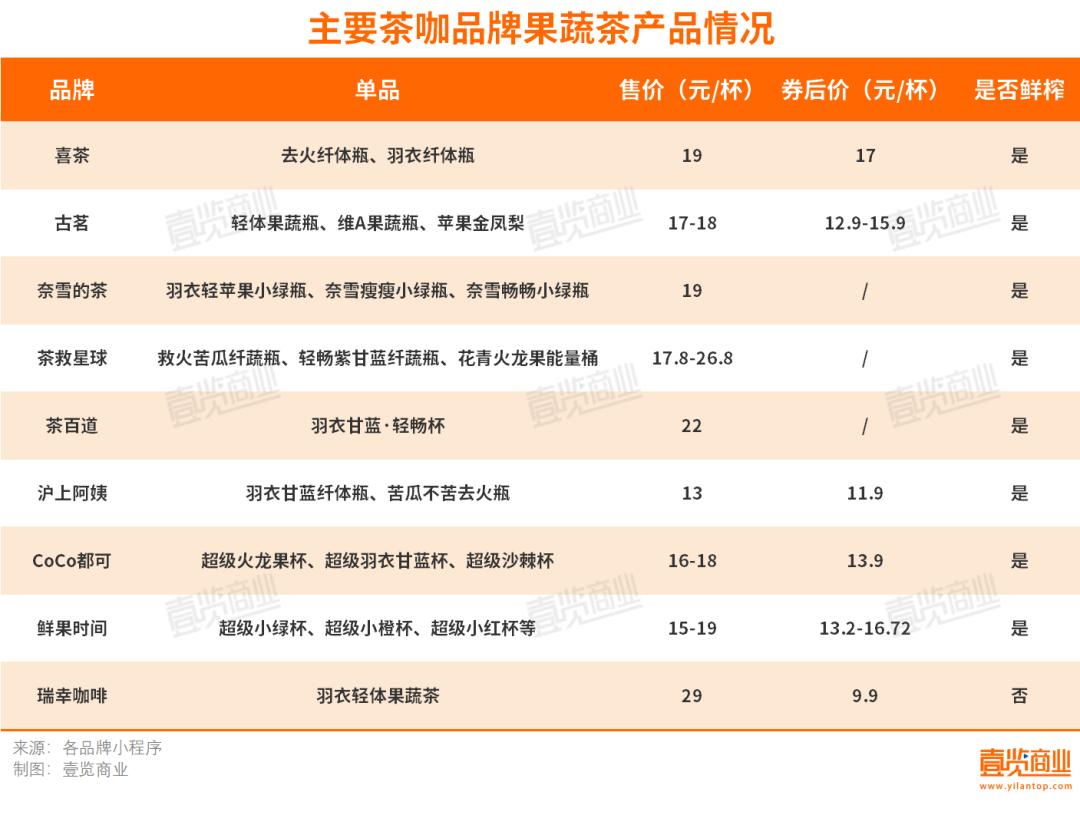
Core Viewpoint - Luckin Coffee is entering the vegetable and fruit tea market with its new product, "Yuhui Light Body Vegetable and Fruit Tea," aiming to expand its product offerings and enhance revenue during non-peak hours [2][3]. Product Launch - On May 31, Luckin Coffee announced the launch of its first vegetable and fruit juice product, priced at 29 yuan, with a promotional price of 9.9 yuan [2]. - The product is made from frozen kale, mixed fruit juice, jasmine tea, and syrup, indicating it is not freshly squeezed [2]. Market Positioning - The introduction of vegetable and fruit tea aligns with Luckin's strategy of combining coffee and tea, creating a "morning coffee, afternoon tea" positioning to broaden consumption scenarios [2]. - Luckin aims to leverage its supply chain advantages to standardize the production of vegetable and fruit tea, allowing for easier assembly at stores without the need for extensive preparation [2]. Competitive Landscape - Luckin's entry into the vegetable and fruit tea market comes later than competitors such as Heytea, Naixue, and others, which have already established their products in this category [3]. - Competitors have successfully linked their products to fitness and weight management, making it challenging for Luckin to stand out as a newcomer [3]. Pricing Strategy - Luckin Coffee's vegetable and fruit tea is the cheapest among major brands, potentially attracting price-sensitive consumers [6]. - However, the health narrative associated with fresh-squeezed products is a significant factor in consumer preferences, which may limit Luckin's appeal despite its lower price [6]. Market Challenges - The tea and coffee market is highly competitive, with a significant number of new store openings and closures reported recently [6]. - Luckin must invest more time and resources into product innovation and understanding consumer demand in the new tea beverage market to succeed [6].

资深茶饮专家交流
2025-06-04 15:25
Summary of Conference Call Records Company Overview - The company discussed its overseas expansion strategy, primarily focusing on Southeast Asia, with Indonesia, Malaysia, and Thailand being the top three markets for store openings [1][5]. Key Points and Arguments Market Potential and Challenges - Indonesia is identified as having significant market potential, while Vietnam presents a complex business environment with low consumer brand loyalty, making it one of the most challenging markets in Southeast Asia [1][5]. - The company has adjusted its product offerings based on consumer preferences in different Southeast Asian countries, such as high sugar preferences in Indonesia and health-conscious choices in Vietnam [1][9]. Financial Metrics - The gross margin for overseas single-store models is approximately 45%, with raw material costs accounting for 55% and labor costs being relatively low, around 16% of revenue [1][19]. - The actual net profit margin for stores in Southeast Asia ranges from 25% to 30%, with minimal VAT or consumption tax obligations [1][20]. Expansion Strategy - The company plans to open 1,000 to 1,500 new stores overseas in 2025, with a focus on Malaysia and Thailand, each expected to add around 400 stores [18]. - The long-term goal is to establish 20,000 overseas stores by 2028, with a significant push starting in 2026 [43]. Consumer Behavior Insights - Consumer loyalty varies significantly across Southeast Asian countries, with Vietnamese consumers showing lower brand loyalty and a tendency to follow trends [6][7]. - Different countries require tailored marketing strategies, such as higher sugar content in Indonesia and health-focused products in Vietnam [9][10]. Competitive Landscape - The company holds the leading position in the tea beverage industry in Indonesia, Vietnam, Malaysia, and Thailand, with local brands like Toco Toco in Vietnam and various coffee chains posing competition at different price points [31][23]. - Local brands benefit from established consumer bases and often provide superior in-store experiences, making competition challenging for Chinese tea brands [24][25]. Operational Challenges - The company has faced issues with rapid expansion, particularly in customer and store location audits, leading to a closure rate of about 1.6% due to poor site selection [12][14]. - Adjustments have been made to the franchisee selection process, focusing on operators who can actively manage stores rather than just financially capable individuals [13]. Supply Chain and Production - The company emphasizes the importance of a strong supply chain for successful international expansion, utilizing domestic super factories and establishing local warehouses in Southeast Asia to reduce costs and improve efficiency [25][26]. - Plans are in place to establish raw material factories in Vietnam and the Philippines by 2028, which will enhance supply chain capabilities across the region [27]. Future Outlook - The company aims to penetrate new markets in Central Asia, South Asia, South America, and North America, with a gradual expansion strategy expected to take 2 to 3 years for each new market [36]. - The domestic market remains a priority, with approximately 40,000 stores currently and plans to expand into rural areas and unique flagship locations [38][42]. Additional Important Insights - The average daily sales per store vary by market, with Vietnam averaging around 2,300 RMB per day, while Malaysia performs better with higher sales volumes [10]. - The company has successfully relocated underperforming stores, significantly increasing their sales post-move [35]. - The labor cost advantage in Vietnam is notable, with the company paying significantly lower wages compared to local textile or shoe factory workers [32]. This comprehensive overview captures the essential insights from the conference call, highlighting the company's strategic focus, market dynamics, financial performance, and operational challenges in its overseas expansion efforts.

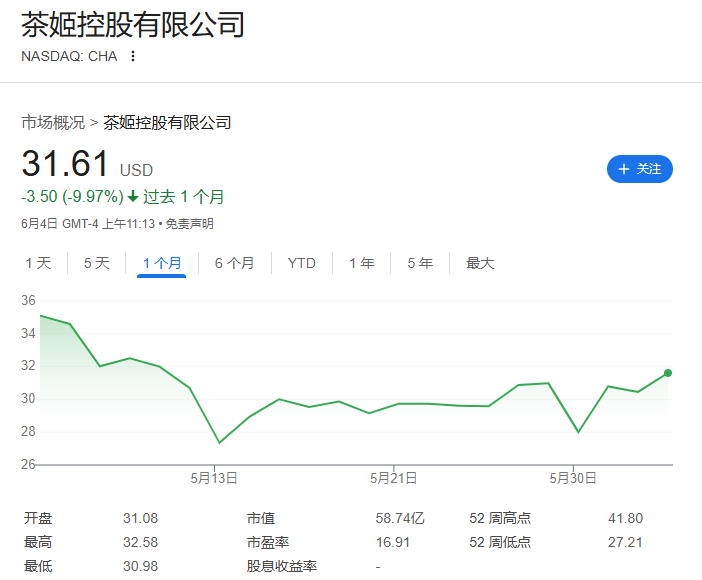
霸王茶姬ADR(CHA)一度涨约6.96%,花旗集团分析师Wei Xiaopo初次覆盖该公司股票,给予买入的初始评级,目标价43.70美元。
news flash· 2025-06-04 15:24
Group 1 - The core viewpoint of the article is that Bawang Tea Ji's American Depositary Receipts (ADR) experienced a significant increase of approximately 6.96% following the initiation of coverage by Citigroup analyst Wei Xiaopo, who assigned a buy rating with a target price of $43.70 [1] Group 2 - Citigroup's analyst Wei Xiaopo has initiated coverage on Bawang Tea Ji's stock, indicating a positive outlook for the company [1] - The target price set by the analyst for Bawang Tea Ji is $43.70, suggesting potential upside for investors [1]
消费者偏好兼具盈利持续性,“悦己经济”冲击新估值
Di Yi Cai Jing· 2025-06-04 14:30
泡泡玛特、老铺黄金等港股新消费公司的崛起,源于公司持续聚焦用户需求、适应经济环境变化、创新商业模式及全球化拓展,同时反映了消费 者偏好的变化。 截至4日港股收盘,泡泡玛特(09992.HK)市值已经突破3000亿元人民币,老铺黄金(06181.HK)股价距离千元关口仅一步之遥。不少投资者感 叹,明明身边很多人在"冲"LABUBU(泡泡玛特的一款产品),自己察觉得太晚了。 港股新消费板块为何会让那么多投资者"错过"?第一财经采访多位投资业界人士了解到,背后的核心原因,是经济环境和消费者行为的变化不是 一蹴而就的,而这些公司当前的成绩背后,是持续不断聚焦用户新兴需求、适应经济环境变化、创新商业模式,并进行全球化拓展的结果。 (图为英国顾客在泡泡玛特牛津街店内选购) 此外,情绪价值并非"Z世代"独有特征,只是不同阶段"情绪价值"的载体不同。消费端预算分配的持续变化,最终也反映在了上市公司的财报 中。 不过,部分基金经理也在提示短期投资风险。"短期部分消费子行业确实有过热迹象,但全年来看仍是不容忽视的方向,且结构性行情将更为极 致。"鹏华优选回报基金经理谢添元表示。 从"不理解"到持续加仓 事实上,公募基金此前对古法 ...

星巴克再现人事变动,亚太区门店开发负责人离职
Guan Cha Zhe Wang· 2025-06-04 13:27
Group 1: Starbucks - Scott Keller, Senior Vice President of Store Development and Design for Starbucks Asia Pacific, has announced his departure after nearly nine years, during which the number of stores in the region doubled, averaging one new store opening per day [1] - Keller was responsible for leading the development strategy and design of Starbucks stores across major cities including Seoul, Bangkok, and Singapore [1] Group 2: Luckin Coffee - Luckin Coffee has expanded its self-operated stores in Hong Kong to 12 since entering the market in December 2024, with plans to further expand into core commercial areas like Central [2] - The company is also enhancing brand collaborations, with a SpongeBob-themed concept store opening from May 31 to June 29, featuring new co-branded beverages and a photo area [2] Group 3: Coffee Industry Growth - In April, 1,220 new coffee stores were opened across 27 tracked chain brands, representing a month-on-month increase of 3.74% and a year-on-year increase of 6.64%, bringing the total number of stores in the industry to 60,795 [3] - Luckin Coffee experienced a net decrease of 206 stores in April, indicating a network optimization strategy despite holding a 39.3% market share [3] - Starbucks opened 20 new stores in April, marking an 81.82% year-on-year increase, indicating a recovery trend [3] Group 4: Bawang Chaji - Bawang Chaji reported a net profit of 677 million yuan for Q1 2025, with a total GMV of 8.23 billion yuan, reflecting a year-on-year growth of 38% [4] - The company disclosed its overseas market performance for the first time, with overseas GMV reaching 178 million yuan, a year-on-year increase of 85.3% [4] - The total number of Bawang Chaji stores globally reached 6,681 by the end of Q1 2025 [4]


7家消费公司拿到新钱;柠季已在海外签约15家门店;小红书与京东达成“红京计划”合作|创投大视野
3 6 Ke· 2025-06-04 12:19
Group 1: Investment Highlights - ListenHub, an AI podcast generation platform, has completed a multi-million dollar angel round financing exclusively from Sequoia China, aiming to enhance technology and market expansion [1] - The handmade milk tea brand Deng's Grandma has secured several tens of millions in Series B financing, with funds directed towards supply chain development, regional market expansion, and product innovation [2] - Li Yuan San Bao, a tea production supplier, has received Series A financing, with the amount undisclosed, to optimize production processes and enhance product quality [3] - The 24-hour self-service KTV chain, Main Singing Show, has completed 20 million yuan in Series A financing to further market expansion and deepen its presence in the smart entertainment sector [4] - Dishang Technology, a home cleaning brand, has completed several million yuan in angel round financing to optimize product lines and enhance R&D capabilities [5] - Rocket manufacturer Yushi Space has announced nearly 100 million yuan in angel+ round financing, with funds allocated for product development and team expansion [6] - DiGua Robot, a subsidiary of Horizon Robotics, has completed a $100 million Series A financing to accelerate the construction of its intelligent ecosystem [7] Group 2: International Expansion and Strategy - Lemon Season has embarked on an international strategy, signing 15 overseas stores, focusing on Southeast Asia after initial challenges in the U.S. market [9] - The brand aims to replicate its domestic expansion success in Southeast Asia, leveraging cultural similarities and supply chain proximity [9] Group 3: Market Trends and Consumer Insights - Sweet Lala has launched a new product, "Peach Cool Bucket," in response to the growing popularity of bucket tea among Gen Z consumers, having sold over 120 million buckets since its inception [11] - The competition in the bucket tea segment is intensifying as various tea brands, including Nayuki and Heytea, are also introducing similar products [12] - The total box office for new films during the Dragon Boat Festival has surpassed 100 million yuan, indicating a strong performance in the film industry [13]
霸王茶姬首季净赚6.8亿,大单品撑起20%净利
Guan Cha Zhe Wang· 2025-06-04 09:33
Core Insights - Bawang Chaji, known as the "first stock of new tea drinks in the US," reported a total net revenue of 3.393 billion yuan for Q1 2025, a year-on-year increase of 35.4%, and a net profit of 677 million yuan, up 13.8% [1] - The company has expanded its global store count to 6,681, with 6,512 in China and 169 overseas, and has over 190 million registered members on its mini-program [1] - The stock price has shown stability since its listing on April 17, with an initial increase of 15.86% and a current price of 30.46 USD per share, giving it a market cap of approximately 55 billion USD [1] Financial Performance - In Q1 2025, Bawang Chaji achieved a total net revenue of 3.393 billion yuan, reflecting a 35.4% increase year-on-year, and a net profit of 677 million yuan, which is a 13.8% increase [1] - The company’s gross merchandise volume (GMV) is projected to reach 29.5 billion yuan in 2024, with a year-on-year growth of 173% [2] - The net profit margin for Q1 2025 was 20%, maintaining a leading position in the industry [3] Market Position and Strategy - Bawang Chaji differentiates itself by integrating tea leaves into fresh milk, establishing a unique position in the new tea drink market [2] - The company has adopted a "super big product" strategy, which enhances brand recognition and simplifies supply chain management, resulting in logistics costs accounting for less than 1% of total GMV [3] - The brand aims to become the "Eastern Starbucks," with a long-term goal of surpassing Starbucks in sales in China by 2024 [6][7] Global Expansion - Bawang Chaji's overseas GMV reached 178 million yuan in Q1 2025, marking an 85.3% increase, with 169 overseas stores primarily in Malaysia and Singapore [5] - The company has opened its first flagship store in Indonesia and plans to open 300 new stores in Malaysia through a partnership with a major hotel group [6] - The focus on quality and key performance indicators in overseas expansion is emphasized over rapid growth [6] Competitive Landscape - Bawang Chaji faces competition from similar products in the market, which may affect its sales of flagship items [3] - The brand's current market position shows a significant gap compared to Starbucks, which reported revenues of 36.2 billion USD and a net profit of 3.761 billion USD for the fiscal year ending September 2024 [7]
恒生指数收盘上涨0.6% 烟草、稀土、消费电子等板块领涨
news flash· 2025-06-04 08:13
智通财经6月4日电,港股收盘,恒生指数收盘上涨0.6%,恒生科技指数收涨0.57%。烟草、稀土、消费 电子等板块领涨。君圣泰医药-B涨约42%,叮当健康涨约32%。茶饮股上涨,茶百道涨约13%,奈雪的 茶涨约6%,蜜雪集团涨约5%。 恒生指数收盘上涨0.6% 烟草、稀土、消费电子等板块领涨 ...
最高二十倍、十倍!“新消费”翻倍股频出!六大细分赛道机构持仓曝光!
私募排排网· 2025-06-04 06:58
Core Viewpoint - The article highlights the shift in consumer behavior towards "new consumption" trends, such as beauty products, IP toys, and pet economy, contrasting with traditional consumption sectors like liquor and dining, which are under pressure. The "new consumption" sector has seen significant growth, with multiple stocks experiencing substantial increases in value in 2024 [2][4]. Group 1: New Consumption Trends - The "new consumption" sector is characterized by a transition from "survival-type" to "self-pleasing" consumption, indicating that consumers are increasingly seeking emotional value and self-expression rather than just meeting basic needs [3][9]. - In 2024, the scale of self-pleasing consumption in China is expected to exceed 4.5 trillion, accounting for 32% of total household consumption, with an 18% year-on-year growth [9]. Group 2: Market Dynamics and Policy Support - The Chinese government has introduced policies to stimulate consumption, including a 1.5 trillion yuan special bond fund to support the replacement of old consumer goods, which has driven sales in sectors like automobiles and home appliances [4]. - The retail sector is facing challenges, with traditional supermarkets experiencing an 11.4% decline in 2024, while companies like Sam's Club and Fat Donglai are thriving, with significant growth in sales [4][5]. Group 3: Investment Opportunities in New Consumption - The article identifies five key segments within the "new consumption" landscape: emotional value, national trend consumption, industrial innovation, health consumption, and technology empowerment [10][12]. - Specific companies within these segments have shown remarkable stock performance, with some experiencing over 300% growth since the beginning of 2024 [13]. Group 4: Comparative Analysis with Japan - The article draws parallels between the evolution of consumption in China and Japan, noting that as Japan's GDP per capita rose, domestic consumption patterns shifted towards self-pleasing and emotional value, a trend that China is currently mirroring [7][9].