农业

Search documents
三季度业绩前瞻及投资策略
2025-10-19 15:58
Summary of Key Points from Conference Call Records Industry Overview 1. Baijiu Industry - The Baijiu industry experienced a seasonal sales decline of approximately 20% during the Mid-Autumn Festival, with high-end brands like Moutai, Wuliangye, and Fenjiu performing relatively well. Inventory levels have not significantly decreased, and a slight upward trend is expected in the future [1][3][4] - Strong brand power and good sales performance are crucial for companies in this sector, with companies like Moutai and Wuliangye maintaining advantages. Companies with flexible operations, such as Zhenjiu and Laojiao, are also worth monitoring [5] 2. Consumer Goods - The consumer goods sector saw a slowdown in growth during Q3 2025, with beverage and dairy products showing improvement from a low base, while condiments maintained steady growth. Leading companies like Dongpeng, Nongfu Spring, and Yanjing Beer performed well and are recommended for investment [1][6] 3. Beauty Industry - The beauty industry showed overall good performance with no significant slowdown in growth. Some companies even exceeded their Q2 growth rates. High-growth companies like Ruoyuchen and Shanghai Jahwa are recommended for investment [1][7] 4. Gold and Jewelry Sector - Leading companies in the gold and jewelry sector continued to grow rapidly, benefiting from rising gold prices and price increase strategies. Companies like Laofengxiang and Zhouliufu reported impressive growth, with Laofengxiang's single-store revenue reaching up to 200% growth in September [1][8] 5. Trendy Toys and Supermarket Reform - In the trendy toy sector, Pop Mart remains in a high growth phase, while Miniso's Q3 report showed promising data. In the supermarket reform sector, companies like Bubugao and Huijia Times are experiencing performance releases, and ATO's rapid growth in bedding products is noteworthy [1][9] 6. Pork Industry - Pork prices saw a slight decline this week, but demand for secondary fattening is increasing, stabilizing prices at the bottom. Companies with cost advantages, such as Wens Foodstuffs and Muyuan, are expected to seize more opportunities as breeding sow capacity continues to decrease [1][18][17] Home Appliance Sector - The home appliance sector faced challenges in Q3 due to the gradual withdrawal of subsidies, leading to a less optimistic outlook for domestic demand. However, white goods showed stable performance, with leading companies like Haier and Midea expected to achieve near double-digit revenue growth [2][13] Other Notable Trends - The light industry, particularly the paper industry, is expected to see a turning point in Q4, with potential price increases in packaging and cultural paper [14] - The agricultural sector is focusing on the pork industry, with ongoing capacity reduction impacting future supply and price trends [17] - The pet sector is showing strong growth, with companies like Zhongchong and Guibao Pet expected to perform well [20] This summary encapsulates the key insights and trends across various industries as discussed in the conference call records, highlighting potential investment opportunities and risks.






【太平洋研究院】10月第三周线上会议
远峰电子· 2025-10-19 13:21
Group 1 - The core viewpoint of the article discusses the seasonal rebound of CPI and the narrowing decline of PPI in September's inflation data [3][38]. - The article highlights the pressures on the pig farming industry due to "pig prices, pandemic, and regulation," leading to a reduction in production capacity [8][39]. - It mentions the upcoming discussions on various industry investment opportunities, including machinery sales data and chemical industry prospects [15][35]. Group 2 - The article outlines a series of webinars focusing on different sectors, including consumer valuation shifts and opportunities in the chemical industry for the fourth quarter [30][35]. - It emphasizes the importance of understanding market dynamics and seasonal trends in making informed investment decisions [3][39]. - The discussions will feature insights from industry analysts, providing a comprehensive overview of current market conditions and future outlooks [39][40].

如何认识最新的出口数据和出口形势|宏观经济
清华金融评论· 2025-10-19 08:50
Core Viewpoint - The article emphasizes that China's export growth is entering a new phase in 2024-2025, with an overall high growth rate expected, driven by various factors including fiscal expansion in developed economies and increased global demand for new industrial products [2][5][6]. Export Growth Analysis - In September, China's exports increased by 8.3% year-on-year, maintaining a high level, with a month-on-month growth of 2.1%, consistent with seasonal averages [3][5]. - The third quarter saw a year-on-year export growth of 6.6%, aligning with expectations, despite a seasonal low of 1.0% month-on-month [5]. - For the fourth quarter, a simple calculation suggests a year-on-year growth of 3.6% if the month-on-month growth aligns with the seasonal average [5]. Historical Context - From 2000 to 2011, China's export growth averaged 21.8%, significantly outpacing global export growth of 11.0% [6]. - The period from 2012 to 2019 saw a decline in China's export growth, averaging only 3.7%, while global export growth was around 0.7% [7]. - The years 2020 to 2023 experienced high volatility in exports, with China’s growth fluctuating in response to global supply chain disruptions [7]. Future Projections - In 2024, global exports are projected to grow by 2.3%, while China's exports are expected to grow by 5.8% [8]. - The article predicts that in 2024-2025, China's export growth will exceed global growth by more than double, driven by factors such as fiscal policies in developed countries and increased demand for high-tech products [6]. Regional Export Dynamics - Exports to ASEAN and Africa have shown significant growth, with cumulative year-on-year increases of 14.7% and 28.3% respectively in the first nine months of the year [10]. - Exports to Africa have been particularly strong, with a year-on-year growth of 56.4% in September [10]. Product Export Performance - High-end product exports are experiencing substantial growth, with exports of integrated circuits increasing by 32.7% and general machinery by 24.9% [11]. - In contrast, labor-intensive products like textiles and clothing have seen a decline in exports, with a combined year-on-year decrease of 5.8% [11]. Import Trends - In September, imports grew by 7.4% year-on-year, with significant increases in iron ore, copper, and integrated circuits [12]. - The acceleration in imports may be linked to policy-driven financial tools and project initiations, indicating potential improvements in investment for the fourth quarter [12].
和音:守护天下粮安的中国担当
Ren Min Ri Bao· 2025-10-19 05:09
Core Points - China emphasizes food security as a top priority in governance, aiming to ensure the food supply for over 1.4 billion people while contributing to global food security efforts [1][2][3] - The global hunger rate reached 8.2% last year, with 673 million people struggling with hunger, highlighting the urgent need for international cooperation to achieve the UN's 2030 goal of "zero hunger" [1][2] - China's grain production is projected to exceed 1.4 trillion jin in 2024, an increase of 74 billion jin since 2020, with per capita grain availability reaching 500 kg, surpassing the international safety line of 400 kg [2] Group 1 - China has implemented a national food security strategy since the 14th Five-Year Plan, focusing on enhancing agricultural technology and land use to strengthen food security [2] - As a founding member of the UN Food and Agriculture Organization (FAO), China has transitioned from a recipient of technical assistance to a core contributor, providing the most funding and expertise under the South-South Cooperation framework [2][3] - China collaborates with over 140 countries and regions, promoting more than 1,000 agricultural technologies and training over 14,000 hybrid rice specialists [2] Group 2 - China actively participates in global agricultural governance, advocating for international cooperation in food security and contributing to initiatives like the Global Alliance Against Hunger and Poverty [3] - The country aims to maintain stability in global food supply chains and engage in poverty alleviation efforts, fostering a collective international approach to food security [3] - China is committed to supporting the UN FAO and advancing the 2030 Sustainable Development Agenda, focusing on enhancing the welfare of people worldwide [3]
这场主题对话会,“出海”是焦点
Hai Nan Ri Bao· 2025-10-19 01:37
Group 1: Cross-Border E-commerce and Game Industry - The "Chengmai Economic and Trade Conference" highlighted the importance of cross-border e-commerce and game industry, focusing on the theme of "Going Global" [1] - Chengmai has established a public service platform for game exports, with 40 companies currently onboard and 114 games launched on the PlayOL platform, achieving over 3.6 million overseas registered users and 200,000 daily active users as of September [1] - The success of cross-border e-commerce relies on continuous service post-sale, with policies facilitating the attraction of high-level foreign talent to Hainan [2] Group 2: New Energy Vehicles and Collaborative Ecosystems - The new energy vehicle industry in Chengmai emphasizes the need for a collaborative ecosystem, advocating for a "cluster export" model to reduce costs and enhance competitiveness in global markets [2] - Hainan Qinglan Intelligent Technology Co., Ltd. has initiated a project to create an AI-native, co-creation industrial internet platform, shifting from single product exports to comprehensive service exports in the new energy vehicle sector [2] Group 3: Zero Carbon Development Opportunities - The conference discussed the historical opportunities for zero-carbon development in Hainan post-island closure, aiming to establish a "zero-carbon free trade port" as an international benchmark [3] - The role of artificial intelligence in data governance was emphasized, highlighting its dual function as a security measure and a catalyst for business value creation [3]
2025中国·澄迈国际经济贸易洽谈会农文旅推介会举行
Hai Nan Ri Bao· 2025-10-19 01:11
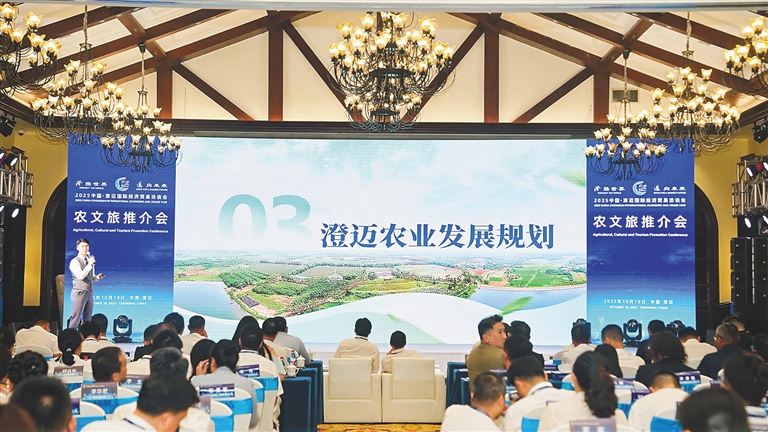
Core Insights - The 2025 China Chengmai International Economic and Trade Fair Agricultural, Cultural, and Tourism Promotion Conference was held to showcase the integration of agriculture, culture, and tourism in Chengmai, highlighting its economic potential and brand influence [2][3] Group 1: Event Overview - The conference focused on five key themes: agarwood, agricultural seed industry, fishery, under-forest economy, and the integration of agriculture, culture, and tourism [2] - The event aimed to build a high-end platform for external cooperation and to display the achievements and potential of Chengmai's agricultural and cultural tourism integration [2][3] Group 2: Industry Significance - Chengmai is recognized as an important industrial base in northern Hainan, with a solid agricultural foundation and notable brands such as Fuxian oranges and Qiaotou sweet potatoes [2] - The region's unique products and industries, including the under-forest economy and aquaculture, provide rich content and consumption scenarios for the integration of agriculture and tourism [2][4] Group 3: Engagement and Promotion - The conference included various activities such as entrepreneur sharing, policy promotion, keynote speeches, and project presentations, which generated significant interest among investors [3] - A showcase area featuring local products and tourism resources attracted considerable attention, allowing attendees to experience the region's rich resources and cultural heritage [3]
农高会国际化水平和国际影响力进一步提升
Shan Xi Ri Bao· 2025-10-19 00:43
Core Points - The current Agricultural High-tech Fair (农高会) aims to enhance international cooperation and openness, with participation from over 50 countries and international organizations confirmed, including Uzbekistan, Tajikistan, and Belarus [1] - The fair will host various forums, including the SCO Modern Agriculture Development Roundtable and the 2025 International Apple Industry Technology Innovation Conference, promoting academic exchanges [1] - The exhibition will feature international agricultural cooperation zones and specialized exhibitions, including the SCO Agricultural Expo and a dedicated overseas exhibition area in Uzbekistan showcasing domestic agricultural products and technologies [1] - Economic and trade cooperation activities will continue, including global promotion conferences and bilateral trade matching events, aimed at helping enterprises expand into international markets [1] Group 1 - The fair will enhance its international influence and level through multiple initiatives [1] - Over 50 countries and international organizations are expected to participate [1] - The fair will include significant forums and academic exchanges [1] Group 2 - The exhibition will adopt a domestic and international linkage approach [1] - Specialized exhibition areas will be set up to showcase agricultural products and technologies [1] - Economic cooperation activities will support international market expansion for enterprises [1]
加纳2025年外国投资增长382%
Shang Wu Bu Wang Zhan· 2025-10-18 15:55
Core Insights - Foreign direct investment (FDI) in Ghana has significantly rebounded, with inflows rising from $17.907 million in the first half of 2024 to $86.296 million by June 2025, marking a year-on-year increase of 382% [1] Investment Projects - In the first half of this year, a total of 76 new investment projects were registered across various sectors, including manufacturing, services, general trade, and agriculture [1] - The manufacturing sector accounted for the highest number of projects, with 32 registered, while general trade attracted the largest investment amount of $62.29 million, representing over 72% of total FDI during the same period [1] Source Countries - China remains the leading source of new projects in Ghana, contributing 22 projects, followed by India with 14 projects, Nigeria with 8, and the UAE and the UK with 4 each. The US registered 3 projects, with additional investors from Liberia, Mauritius, Singapore, and Turkey [1] Geographic Distribution - Most of the registered projects are concentrated in the Greater Accra Region and the Ashanti Region [1]
摩洛哥与世界银行和国际货币基金组织加强融资合作
Shang Wu Bu Wang Zhan· 2025-10-18 15:55
Core Insights - The annual meetings of the International Monetary Fund (IMF) and World Bank are taking place in Marrakech, Morocco, with the participation of Moroccan officials [1] - Morocco has deepened its collaboration with the IMF and World Bank since hosting the meetings in 2023, securing significant financing for development projects [1] Group 1: Financing and Projects - Morocco has received over $28 billion from the International Bank for Reconstruction and Development (IBRD) for 215 ongoing projects by the end of 2025, focusing on infrastructure, social security, and climate resilience [1] - The IBRD offers loans at lower costs compared to commercial loans, with interest rates ranging from 5% to 6% [1] - The International Finance Corporation (IFC) has invested nearly $200 million in Morocco's agriculture, financial services, green energy, and earthquake recovery projects, providing financing to private enterprises [1][2] Group 2: Risk Management and Conditions - The Multilateral Investment Guarantee Agency (MIGA) provides political and sovereign risk guarantees to investors, with Morocco paying millions annually for these assurances [2] - The IMF approved a $1.3 billion project under the Resilience and Sustainability Trust (RST) for Morocco in September 2023, which includes policy conditions for reforms in electricity, subsidies, and public-private partnerships [2][3] - The IMF will conduct three reviews of Morocco's reform progress, with the final loan disbursement scheduled for March 2025 [2][3]
围场携数字产业矩阵亮相2025中国国际数字经济博览会
Xin Hua Cai Jing· 2025-10-18 13:42
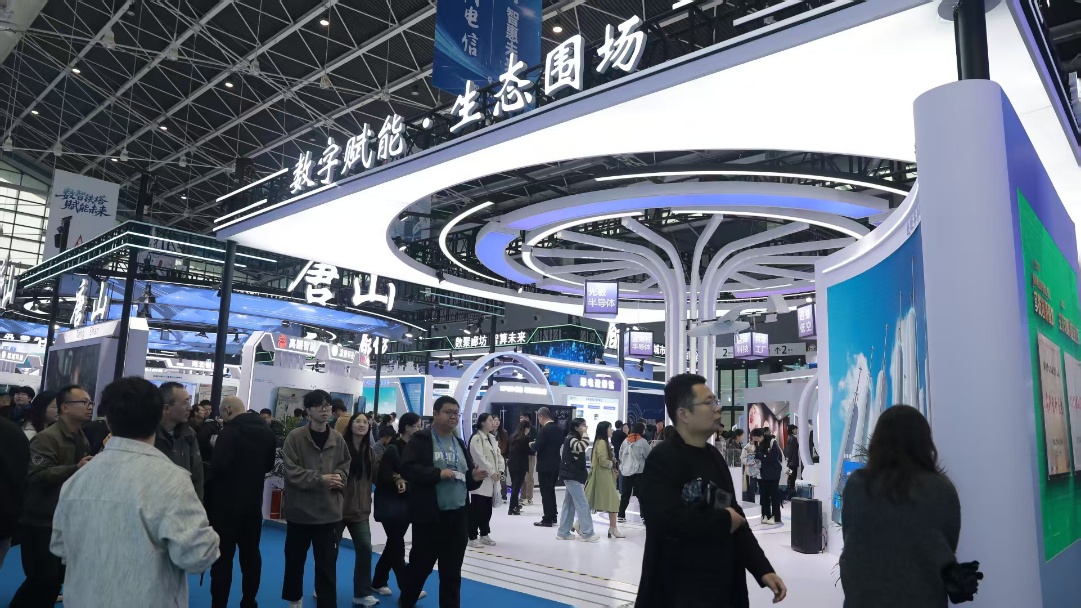
Core Viewpoint - The 2025 China International Digital Economy Expo highlights the integration of digital technology and ecological development in Weichang, showcasing its unique approach to transforming local industries through digital empowerment [1][6]. Group 1: Digital Empowerment in Key Industries - Weichang focuses on four core industries: semiconductor new materials, traditional Chinese medicine digitization, full-chain data services for potatoes, and low-altitude economy [1][3]. - Hebei Toshi Crystal Armor Technology Co., Ltd. demonstrates an innovative path with "diamond semiconductor and green electricity," utilizing local green energy resources to optimize production processes for high-precision materials [3]. - Chengde Daze Agricultural Technology Co., Ltd. has developed a "shared cloud platform for traditional Chinese medicine," breaking down data barriers among stakeholders to create an intelligent operation system based on demand data [3]. - The Weichang Potato Research Institute's "Smart Potato Industry" initiative digitizes over 300 germplasm resources and implements standardized management using climate and soil data, optimizing processing and sales through data tracking [3]. Group 2: Low-altitude Economy Development - Hebei Xunjie Low-altitude Economy Co., Ltd. leverages Weichang's geographical advantages to create a closed-loop low-altitude economy ecosystem, focusing on general aviation operations, drone manufacturing, and integrated data services [4]. Group 3: Exhibition Impact and Future Prospects - The expo serves as a platform for showcasing Weichang's digital economy achievements and facilitates connections with the Beijing-Tianjin-Hebei region, enhancing the brand's recognition and industrial influence [6]. - Weichang's development strategy emphasizes the dual drive of ecology and digital technology, aiming to integrate digital infrastructure with ecological protection and rural revitalization [8].