科技硬件

Search documents
中国A股月度报告_ 2025年6月:得益于市场情绪和流动性改善,股市上涨
2025-07-07 00:51
Summary of Key Points from the Conference Call Industry Overview - The report focuses on the Chinese A-share market and its performance as of June 2025, highlighting improvements in market sentiment and liquidity leading to a rise in stock prices [1][4]. Core Insights and Arguments - **Market Performance**: Major indices such as the CSI 300, CSI 500, and CSI 1000 increased by 2.5%, 4.3%, and 5.5% respectively in June, while the Hang Seng Index rose by 3.4% [4]. - **Sector Returns**: - Information Technology led with a 9.7% increase YTD, driven by strong performance in tech hardware and AI-related stocks [2][6]. - Financials and Materials sectors also performed well, with increases of 7.3% and 6.9% respectively [2][6]. - Conversely, the Real Estate sector saw a decline of 1.0% YTD, reflecting ongoing challenges in the market [2][7]. - **Earnings Expectations**: By the end of June, the market's earnings expectations for the CSI 300 index for 2025 and 2026 remained stable at a year-on-year growth of 15.5% and 12.5% respectively [4][24]. - **Investment Trends**: There was a net outflow of $475 million from A-shares in the four weeks ending June 20, with the financial, industrial, and consumer sectors experiencing the most significant sell-offs [10][4]. Additional Important Insights - **Macroeconomic Indicators**: - Retail sales in May grew by 6.4%, supported by government policies, while fixed asset investment growth slowed to 2.9% [31][34]. - The trade surplus for May was reported at $103.2 billion, with exports increasing by 4.8% year-on-year [32][34]. - **Market Sentiment**: The report indicates a cautious sentiment regarding potential reforms from the upcoming political bureau meeting, with expectations for further financial market openings and industry policy adjustments [4][30]. - **Sector-Specific Challenges**: The daily consumer sector faced a decline of 3.4% due to regulatory measures affecting government officials and state-owned enterprise employees [7][6]. Conclusion - The Chinese A-share market is experiencing a mixed performance across sectors, with technology and finance leading gains while real estate and consumer sectors face challenges. Macroeconomic indicators suggest a cautious recovery, with potential for future reforms to stimulate growth.





还有哪些行业兼具高景气和性价比?
HTSC· 2025-07-06 08:40
Group 1 - The report highlights sectors with high growth potential and cost-effectiveness, including financials, consumer staples, and technology hardware, with a focus on service consumption and software services in the medium term [1] - The report indicates that the EPS of Chinese listed companies is expected to rise for the third consecutive year in 2025, with a significant rebound in market performance anticipated following improvements in EPS expectations [2][3] - The report emphasizes that the correlation between EPS growth and nominal economic growth is strong, suggesting that structural changes in the stock market and improvements in corporate profitability are crucial for capturing market opportunities [3] Group 2 - The report identifies consumer services, durable goods, and technology hardware as sectors with high ROE levels that are likely to improve further, indicating strong investment potential [7][18] - It notes that sectors such as software services, consumer staples, and household products maintain high levels of cost-effectiveness, while technology hardware and durable goods are not significantly overvalued [7][20] - The report provides a comparative analysis of PEG ratios, indicating that sectors like diversified finance, materials, and durable goods have PEG levels below 1, suggesting attractive valuations [20][23] Group 3 - The report discusses the importance of earnings performance in the context of upcoming earnings disclosures, highlighting that sectors with improved economic conditions provide a solid foundation for market performance [4] - It mentions that the Hong Kong market's liquidity is primarily driven by capital inflows, which are influenced by the market's comparative advantages [3] - The report outlines that the valuation levels of Hong Kong stocks remain attractive compared to global markets, with a current forward PE of around 10x [53][47]
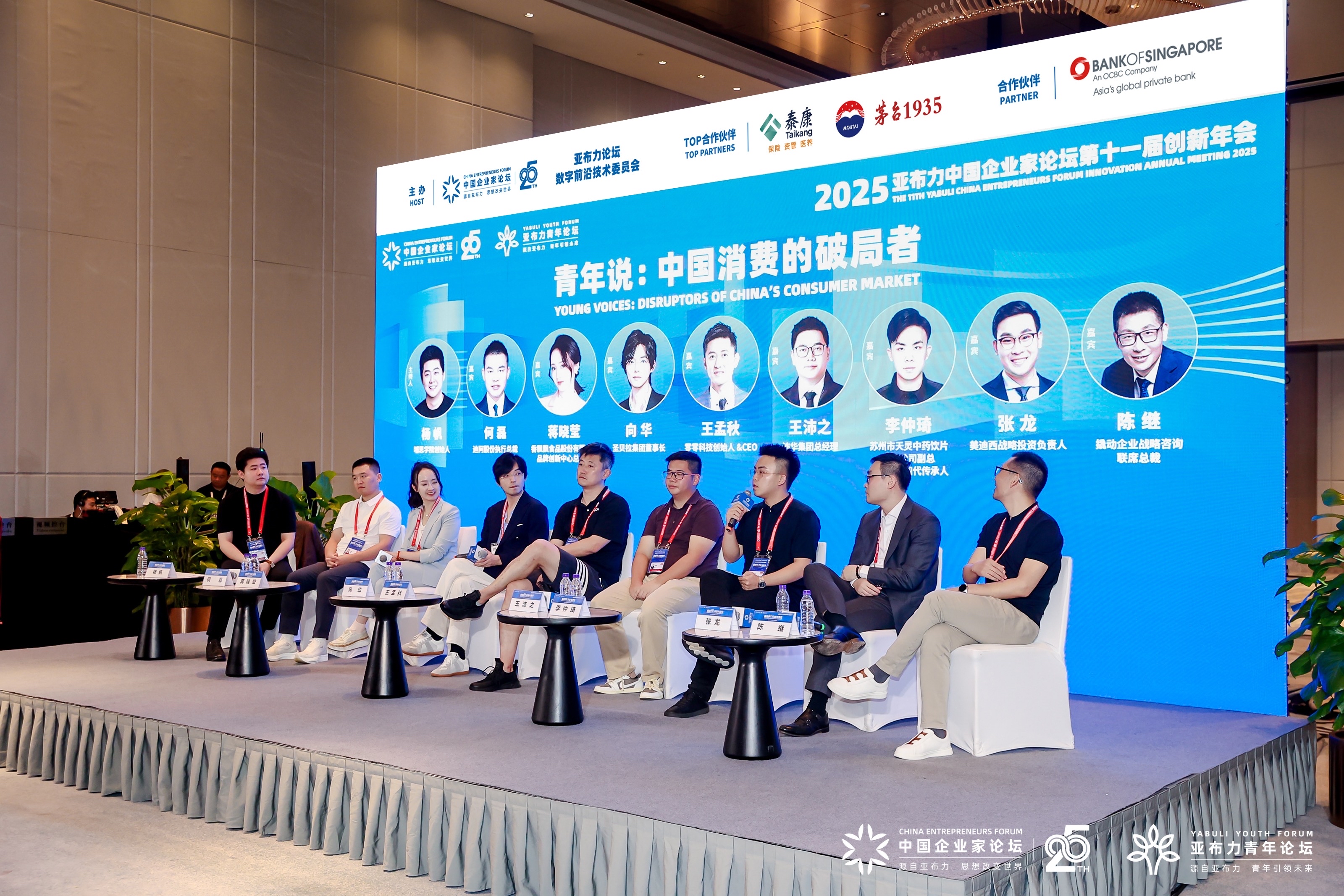
直击亚布力:从飞行相机到AI月嫂,AI能否成为消费新引擎
Di Yi Cai Jing· 2025-07-04 11:25
Group 1 - The core viewpoint emphasizes that successful companies in the AI consumer market are those that deeply understand user needs and possess product thinking, rather than just those with advanced models [1][5] - Zero Zero Technology's flying camera, a lightweight drone, is designed for consumer use, allowing hands-free photography during outdoor activities [1] - The CEO of Zero Zero Technology highlighted that achieving a closed loop for consumer products is challenging, requiring collaboration between computer vision, machine learning, and flight control systems [1] Group 2 - Saint Bella Group plans to launch "Doctor Bella," an AI Agent that utilizes extensive family care data to address issues faced by women during pregnancy and postpartum [2] - BabyTree has also introduced "Mika AI," a vertical AI Agent focused on parenting, shifting the market's focus from model development to practical applications [5] - The CEO of LeKe Sports stated that the use of AI in service industries should prioritize user experience rather than merely showcasing technology [5]

500亿元资金,密集入市
天天基金网· 2025-06-30 05:05
Core Viewpoint - The article highlights a significant increase in the number and total issuance of new funds in June, indicating a robust inflow of capital into the A-share market, particularly through the introduction of new floating management fee funds [1]. Fund Issuance and Performance - As of June 27, a total of 137 new funds were established in June, with a combined issuance of 112.3 billion units, marking a substantial increase from May's 96 funds and 65.8 billion units [1]. - Among the new funds, 51.06% were bond funds, contributing over 50 billion yuan to the A-share market [1]. - The first batch of floating management fee funds has gained attention, with 19 out of 26 funds already established, raising nearly 19 billion yuan in total [1]. Fund Manager Insights - Fund managers are accelerating their investment pace due to emerging structural opportunities, with a focus on building positions quickly within a three-month window [3]. - The manager of the Ping An Value Enjoyment Mixed Fund indicated a dynamic approach to building positions, adjusting the pace based on market conditions [3]. - Key sectors identified for investment include internet, innovative pharmaceuticals, technology hardware, and new consumption, which are expected to provide long-term growth potential [3]. Sector Focus and Trends - The article emphasizes the potential of AI applications, innovative pharmaceuticals, high-end manufacturing, and new consumption sectors as key investment areas [4]. - The AI sector is highlighted as a significant growth area, with China positioned as a core engine for global AI development [4]. - High-end manufacturing, particularly in new energy and military industries, is also noted for its growth opportunities [4]. - The article suggests that low interest rates may continue, making dividend assets an attractive investment option [4].

港股即将“结构转向”?聪明人正在做两件事:囤科技,加红利
Jin Rong Jie· 2025-06-30 02:58
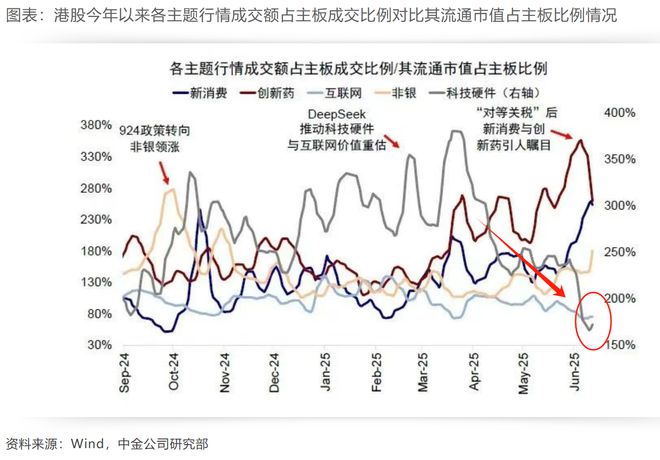
Group 1 - The core viewpoint is that the trading density of the new consumption and innovative pharmaceutical sectors in the Hong Kong stock market is currently very high, while the AI industry chain has significantly declined, indicating a shift from overheated sectors to value areas [1][4] - The Hong Kong stock market has outperformed the A-share market this year, driven by sectors like AI, new consumption, and innovative pharmaceuticals, which have seen significant price movements during various market events [2][4] - A recent analysis by CICC suggests that if investors had accurately timed each style rotation since last year's bull market began, they could have achieved over 110% excess returns compared to the Hang Seng Index, highlighting the strength of structural trends in the Hong Kong market [4] Group 2 - The Hong Kong Technology Index has performed significantly better than the Hang Seng Technology Index, with a year-to-date increase of 29.23% compared to 19.55% for the latter, indicating a robust performance in the technology sector [4] - The Hong Kong Technology Index includes 50 constituent stocks, covering various sectors such as AI technology, internet, and innovative pharmaceuticals, allowing it to benefit from structural market trends [7] - The Hong Kong Technology 50 ETF (159750) has seen a cumulative increase of 26.34% this year, making it a strong investment option with good liquidity and T+0 trading capabilities [7][9]
中金:如何寻找行业轮动的线索?
中金点睛· 2025-06-29 23:56
Core Viewpoint - The Hong Kong stock market has shown strong performance since Q4 2024, significantly outperforming the A-share market, but faces challenges such as pulse-like rebounds and concentration in a few sectors, making it difficult for investors to achieve excess returns. However, precise timing and understanding of market rhythms can lead to substantial gains [1][2]. Industry Rotation Context - The market has experienced several rounds of rebounds driven by macroeconomic factors, including fiscal policy shifts and the rise of AI technology. Key phases include: 1. The "924" policy shift led to a rally in non-bank and real estate sectors, focusing on total policy [1]. 2. The emergence of "DeepSeek" post-Spring Festival revalued AI-related tech and internet leaders, driven by industry trends [1]. 3. The tariff situation in April spurred growth in new consumption and innovative pharmaceuticals, influenced by industry catalysts and liquidity [1][2]. Macro Environment Analysis - The current market dynamics are characterized by a combination of abundant liquidity and structural challenges, leading to index fluctuations and active structural trends. The macroeconomic backdrop includes: - Continued credit contraction in the private sector and limited fiscal stimulus, which restricts overall credit cycle expansion while supporting market stability [8][9]. - The emergence of new growth points, particularly in AI and new consumption sectors, which contribute to the active structural market [9][10]. Investment Strategy Insights - The investment strategy emphasizes the importance of focusing on sectors with stable or improving return on equity (ROE). Key insights include: - Stable returns are found in sectors like banking and utilities, which maintain consistent ROE, while growth opportunities lie in technology, new consumption, and innovative pharmaceuticals, which have shown significant ROE recovery [18][19]. - The analysis of trading concentration, southbound capital flows, and valuation metrics is crucial for identifying sector rotation opportunities [22][23]. Trading and Positioning Dynamics - The analysis of trading dynamics reveals: - High trading concentration in new consumption and innovative pharmaceuticals, with recent declines in AI sector concentration [23][24]. - Southbound capital flows have favored new consumption and innovative pharmaceuticals, indicating strong investor interest in these sectors [32][34]. - The increase in short positions in certain sectors suggests a shift in investor sentiment, highlighting the need for caution in trading strategies [36][37]. Valuation Considerations - Valuation analysis indicates that while high-dividend sectors are under scrutiny, technology and new consumption sectors are experiencing valuation recovery. Key points include: - The AH premium threshold is set at 125%, which serves as a benchmark for high-dividend stocks, while technology and new consumption sectors are aligning with their ROE [44][45].

“红包雨”来袭,本周超300只A股实施分红,总额超两千亿
Di Yi Cai Jing· 2025-06-23 10:39
A股市场迎来一波"红包雨",就在本周,超三百家上市公司的年报分红到账。 Wind统计显示,6月23日至6月27日(统计期间,下同),牧原股份(002714.SZ)、贵州茅台 (600519.SH)等约350家A股公司,将实施年报分红派息,分红总额合计超2050亿元。其中,发出百 亿"现金红包"的有中国石油(601857.SH)、中远海控(601919.SH)等。 政策引导之下,前期,今年年报季里,千余家A股公司披露分红预案。年报季收官之后,这些分红承诺 陆续得到兑现。本月以来,年报分红派息步入实施高峰期,数据显示,月内已有超1200家A股公司完成 派息。 这波"分红雨"将持续到月底。据披露,6月30日当天还将有中国平安(601318.SH)、华安证券 (600909.SH)等超20家公司将进行派息。 年报分红派息步入实施高峰期。 除此之外,周内实施派息的公司中,海大集团(002311.SZ)、中国国贸(600007.SH)等每股派息金 额,也均超过1元。 哪些公司将大额分红?统计期间,中国石油将派发的"现金红包"最大,分红总额457.55亿元。紧随其 后,还有3家公司分红总额超过百亿,为贵州茅台(346.71 ...





好博会开启未来生活狂欢派对,惊喜亮点等你来探!你,准备好入场了吗?
新浪财经· 2025-06-20 01:01
Group 1 - The core theme of the 2025 Beautiful Life Expo is "New Scenarios for Beautiful Life, New Dynamics for Internal and External Circulation," showcasing a blend of technology, culture, and lifestyle [1][3] - The expo marks the first collaboration among major e-commerce platforms Alibaba, JD.com, Pinduoduo, and Douyin, aiming to create a seamless consumer experience and enhance the global brand presence of Chinese manufacturing [2][3] Group 2 - The expo features cutting-edge technologies such as brain-computer interfaces and AI health diagnostics, with companies like Qiangnao Technology and Eagle Eye Technology presenting innovative solutions for health monitoring and assistance for disabled individuals [4][5][6][8] - The event will also highlight local products and cultural heritage, with exhibitions from Inner Mongolia showcasing traditional crafts and food, as well as a focus on social responsibility through support for enterprises aiding the disabled [14][15][17] Group 3 - The "YGL Dimension Carnival" area will cater to fans of anime culture, featuring cosplay interactions and creative workshops, thus merging niche cultural elements with mainstream appeal [18][26] - Interactive experiences and giveaways will enhance visitor engagement, including opportunities to win travel vouchers and participate in various games and activities [27][30] Group 4 - The expo is set to take place from June 27 to 29, 2025, at the Beijing Exhibition Center, inviting attendees to explore the future of lifestyle through technology and cultural integration [1][30]



高盛重磅:中国民营企业回归三部曲,点名“民营企业十巨头”
Sou Hu Cai Jing· 2025-06-17 15:44
高盛重磅:中国民营企业回归三部曲 Goldman Sachs The comeback of Chinese POEs Part唱多"民营企业十巨头" 人工智能与科技突破 :人工智能和科技领域的持续突破正在重塑民企的发展预期。在高盛定义的 AI 科技板块中,民营企业占比高达 72%,技术浪潮为其带 来新的增长叙事与商业机遇。AI 的广泛应用有望在未来十年间每年为中国上市企业的每股收益(EPS)带来 2.5% 的额外增长,更乐观的增长前景与企业信 心的修复也有望提升中国股市的合理估值水平,并吸引外资组合流入。 全文:《中国民营企业的回归(上):潮流已变》 政策与监管转折 :自 2020 年底以来,中国民营企业在资本市场表现不佳,但其重要性获得了高层政策制定者的认可。2024 年 2 月,中国顶级企业家召开 座谈会,随后在 4 月底,中国首次出台《民营经济促进法》,这体现了对民企法治保障的制度性提升。同时,高盛更新后的专属监管指标显示,针对民营 经济的监管周期已经出现实质性缓和,有助于压缩上市民企所面临的政策与监管风险溢价,增强市场信心。 尽管市场整体情绪已有所改善,但要在庞大且多样化的民企板块中实现良好回报,仍 ...




高盛提出“中国民营十巨头”对标“美股七姐妹”,包含腾讯阿里美团小米等,不包含哪些?
Sou Hu Cai Jing· 2025-06-17 12:49
Group 1 - Goldman Sachs introduced the concept of "Chinese Prominent 10," identifying ten leading private enterprises in China, including Tencent, Alibaba, Xiaomi, BYD, Meituan, NetEase, Midea, Hansoh Pharmaceutical, Ctrip, and Anta [3][6] - The "Chinese Prominent 10" spans multiple sectors such as interactive media, retail, technology hardware, automotive, dining, entertainment, consumer goods, pharmaceuticals, hospitality, and textiles, contrasting with the tech-focused "Magnificent 7" in the US [6] - Goldman Sachs forecasts a compound annual growth rate (CAGR) of 13% for these companies' earnings over the next two years, with a median of 12%, and notes that their average price-to-earnings (P/E) ratio is 16 times, making them more attractive compared to the US counterparts' P/E of 28.5 times [6] Group 2 - Notable companies such as JD.com, Baidu, CATL, and SMIC were excluded from the "Chinese Prominent 10," despite JD.com ranking first in revenue among private enterprises in 2024 [3][6][8] - JD.com operates primarily on a direct sales model, differing from Alibaba's e-commerce approach, and has recently entered the food delivery market, showing strong growth [6][8] - NetEase's revenue for 2024 is projected at 105.3 billion yuan, with a year-on-year growth of 1.74%, while its music service revenue is significantly lower than Tencent's music revenue [8][9] Group 3 - The report emphasizes that investing in private enterprises does not exclude state-owned enterprises, as Goldman Sachs still favors "high-quality" state-owned enterprises and shareholder return combinations [10]