
建材

Search documents
A股,接下来还有三道坎
Ge Long Hui· 2025-08-02 11:30
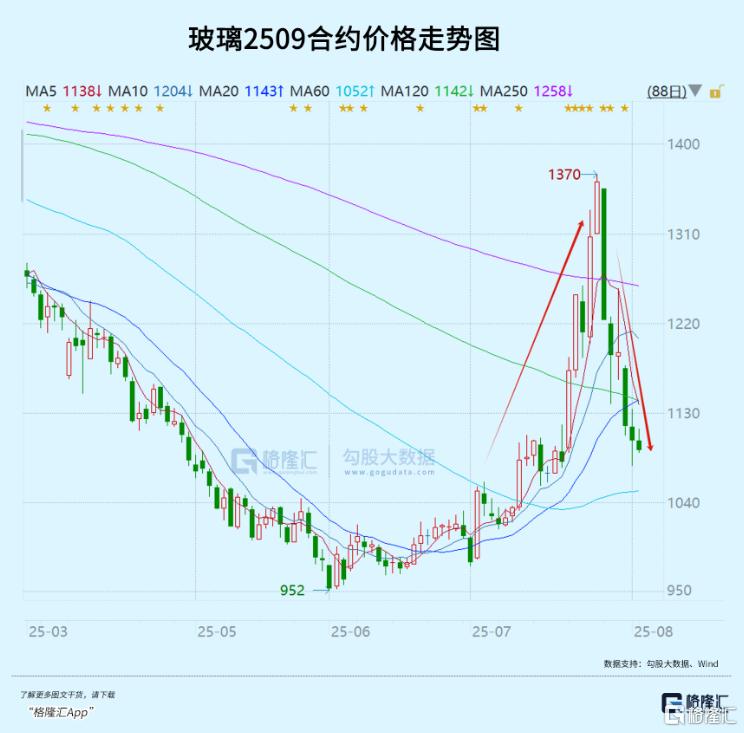
Group 1 - In July 2023, China's capital market experienced extreme volatility, particularly in the commodity market, with the Wenhua Commodity Index rising by 7.2% in the first 19 trading days, followed by a significant pullback [1][4] - Key commodities such as polysilicon surged by 64%, coking coal by 50%, and glass by 34%, but subsequently, many of these commodities saw declines of around 20% [1][6] - The market's initial rally was triggered by the sixth Central Financial Committee meeting, which emphasized the need for legal and regulatory governance of low-price competition and the orderly exit of backward production capacity [5][6] Group 2 - The market's focus on terms like "low price" and "backward capacity exit" led to comparisons with the supply-side reforms initiated in late 2015, particularly affecting polysilicon, which saw significant price increases [6][7] - Following the announcement of a new round of policies aimed at stabilizing growth in key industries, the commodity market entered a phase of aggressive price increases, with coking coal hitting five consecutive daily price limits [6][7] - However, subsequent policy shifts indicated a more targeted approach to capacity governance, leading to a sharp decline in commodity prices, particularly for previously high-flying products [7][8] Group 3 - The A-share market also experienced a strong upward trend in July, with steel stocks rising over 25% and basic chemicals and construction materials increasing by more than 18% [8][9] - The political bureau meeting's adjustments to the anti-involution narrative may pose downward pressure on cyclical sectors, as evidenced by market corrections in early August [9][10] - Potential risks for the A-share market include uncertainties surrounding U.S.-China tariff negotiations and a weakening expectation for macroeconomic policy support [10][11] Group 4 - The U.S. labor market data showed significant downward revisions, raising concerns about the overall economic outlook and potentially impacting global markets [12][13][14] - The credibility of U.S. economic data has come under scrutiny, which could affect global financial markets, including A-shares, especially given their current high valuations [14] - Despite these challenges, the "national team" has historically intervened to stabilize the market, suggesting that while large declines may be mitigated, volatility remains a concern [14][16]

A股市场运行周报第52期:短线调整中线无碍,先观望、再择机-20250802
ZHESHANG SECURITIES· 2025-08-02 11:17
Core Viewpoints - The market is currently in a short-term adjustment phase due to the significant rise of the US dollar and the pullback of leading sectors such as innovative pharmaceuticals in Hong Kong, but the overall upward trend remains intact [1][4][55] - The adjustment is expected to last approximately two weeks, with key technical supports at the 20-day moving average, lower gaps, and the upward trend line for the Shanghai Composite Index [1][4][55] - Even if the trend line is breached, the 60-day moving average will serve as a reliable medium-term support, indicating that the overall market outlook remains positive for a "slow bull" market [1][4][55] Market Overview - The market experienced an overall adjustment this week, with major indices such as the Shanghai Composite, Shanghai 50, and CSI 300 declining by 0.94%, 1.48%, and 1.75% respectively [11][53] - The technology growth sector showed relative strength, while cyclical sectors experienced significant pullbacks, with materials and coal down by 4.69% and 4.56% respectively [12][54] - The average daily trading volume in the Shanghai and Shenzhen markets decreased to 17.9 trillion yuan, reflecting a decline in market sentiment [19] Industry Configuration - The recommended industry allocation strategy is a balanced approach of "1+1+X," focusing on large financials (banks and brokerages) alongside technology growth sectors such as military, computing, media, electronics, and new energy [1][4][56] - There is an emphasis on identifying low-position stocks above the annual line within sectors to optimize "high-low cut" operations [1][4][56] Future Market Outlook - The market is expected to continue its upward trend as long as the key technical supports hold, with potential short-term buying opportunities if the index maintains the upward trend line and the US dollar against the offshore RMB begins to decline [1][4][55] - Historical patterns suggest that the Shanghai Composite Index may aim to surpass its previous high of 3674 points, with reliable short-term supports identified at recent gaps and moving averages [4][52][55]
A股,接下来还有三道坎
格隆汇APP· 2025-08-02 11:16
作者 | 独行侠 数据支持 | 勾股大数 据(www.gogudata.com) 今年 7月,是中国资本市场史诗级的一个月。尤其是大宗商品市场,极致的过山车行情,实属历 史罕见。 前 19个交易日,文华商品指数累计大涨7.2%。其中多晶硅大涨64%,焦煤大涨50%,玻璃大涨 34%。而后短短6个交易日,大盘回吐了一半涨幅,焦煤、玻璃又纷纷重挫20%左右。要知道, 商品往往有10倍或以上的杠杆,赚钱、亏钱都是成比例大幅扩大。 一念天堂,一念地狱。为什么商品市场会如此极端?商品对应的 A股周期股行情又会如何演绎? 01 从 7月1日开始,不管是大宗商品市场,还是A股市场,均迎来了一波酣畅淋漓的大涨行情。 导火索无它,即 第六次中央财经委员会召开。它的前身是中央财经领导小组, 2018年3月改名 而来,职责是 针对经济领域的顶层设计、总体布局、统筹协调、整体推进、督促落实。 因此,资本市场对此次重磅会议给予了高度关注,并积极定价。尤其是会议中有一句重磅定调: 依法依规治理企业低价无序竞争,引导企业提升产品品质,推动落后产能有序退出。 彼时,市场更在意 "低价"、"落后产能""退出"等关键词,开始与2015年底启动的 ...

反转策略:红利滞涨下的超额选择
Huafu Securities· 2025-08-02 11:05
Group 1 - The report suggests that a reversal strategy may be a new choice in the current market environment, where overall profit growth is slowing and high-growth industries are contracting. The decline in dividend asset returns indicates that reversal strategies could present excess opportunities during periods of dividend stagnation [3][10]. - The reversal strategy is based on a model that tracks changes in industry profit expectations. A reversal signal is triggered when the profit expectation rises significantly from its low point, specifically by 25% or 70% [25][23]. - Historical data shows that when industry profit expectations rise by 25%, there is a 72% success rate over four months, with an average outperformance of 5% against the All A index. When the rise is 70%, the success rate increases to 80%, with an average outperformance of 7.8% over the same period [25][24]. Group 2 - The report highlights that the overall profit growth for the All A index has been declining from 2021 to 2024, with high-growth industries shrinking. However, there is an expectation that profit growth may reverse in 2025-2026 [6][10]. - The report identifies key industries such as non-bank financials, construction materials, electronics, steel, and telecommunications that have shown significant profit expectation increases since the beginning of the year [3][6]. - The analysis indicates that during periods of dividend stagnation, reversal strategies tend to outperform, particularly in weak economic conditions where high dividend assets are underperforming [15][16].
A股行业中观景气跟踪月报(2025年7月):反内卷推动光伏锂电和部分顺周期品价格修复至2024年同期水位-20250802
Shenwan Hongyuan Securities· 2025-08-02 07:08
Investment Rating - The report indicates a positive investment outlook for the lithium battery and certain cyclical sectors, with prices recovering to levels seen in the same period of 2024 [1]. Core Insights - The manufacturing PMI for July 2025 shows a slight decline to 49.3%, indicating a contraction in manufacturing activity, while non-manufacturing sectors remain above the threshold but show marginal slowdown [2][9]. - The report highlights a recovery in prices for raw materials and finished goods, driven by anti-involution policies aimed at improving market conditions [5]. - Various industrial sectors are experiencing different levels of growth, with high-performing sectors including non-ferrous metals and machinery, while pharmaceuticals and textiles face challenges [4][5]. Summary by Sections Manufacturing Sector - The manufacturing sector's PMI has decreased, reflecting a contraction in production and new orders, with the production index at 50.5 and new orders at 49.4 [9]. - The consumer confidence index has shown a positive year-on-year recovery, although retail sales growth is expected to slow down in the coming months [4]. High-Frequency Indicators - Revenue, industrial added value, and PPI growth rates are analyzed across various sectors, with non-ferrous metals and machinery showing high growth, while pharmaceuticals and textiles are underperforming [4][7]. - The supply side indicates low growth in finished goods inventory and a decrease in fixed asset investment growth, suggesting reduced long-term supply pressure in certain sectors [4][8]. Advanced Manufacturing - The report notes that anti-involution measures have led to price recovery in the photovoltaic and lithium battery supply chains, although demand-side constraints remain [5]. - The machinery sector is experiencing stable growth in excavator and heavy truck sales, while new shipbuilding prices and orders have turned negative [5]. Financial Sector - Insurance premium income has increased by 5.3% year-on-year in the first half of 2025, with a positive outlook for the second half as interest rates are expected to decline [5]. Real Estate and Construction - Real estate investment and sales continue to slow, with a notable decline in cement prices, while building materials and home retail sales are accelerating [5]. - The report highlights a decrease in new construction starts and ongoing projects, impacting construction investment [5]. Energy and Commodities - The report discusses the impact of high temperatures on coal and steel prices, with a recovery in oil prices driven by improved economic resilience [5]. - The prices of industrial metals are influenced by U.S. economic conditions and tariff expectations, with copper prices experiencing volatility [5].
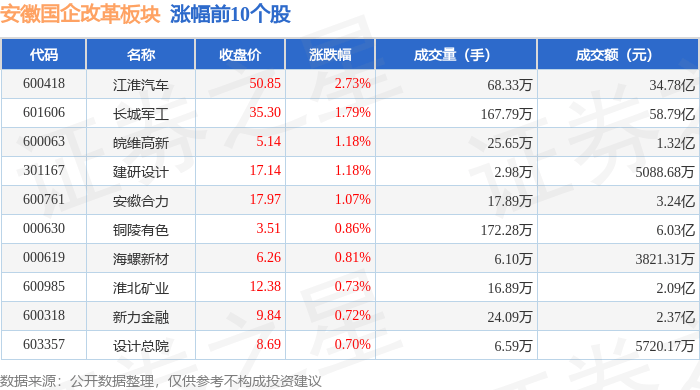
安徽国企改革板块8月1日涨0.3%,江淮汽车领涨,主力资金净流出4.82亿元
Sou Hu Cai Jing· 2025-08-01 22:42
| 代码 | 名称 | 收盘价 | 涨跌幅 | 成交量(手) | 成交额(元) | | --- | --- | --- | --- | --- | --- | | 301217 | 铜冠铜箔 | 25.11 | -3.50% | 62.89万 | 16.10亿 | | 000417 | 合自集团 | 5.58 | -2.62% | 23.25万 | + 1.31亿 | | 600551 | 时代出版 | 9.30 | -2.52% | 28.29万 | 2.65 亿 | | 688249 | 晶合集成 | 21.57 | -1.06% | 1 12.93万 | 2.79亿 | | 688352 | 顾中科技 | 11.23 | -0.97% | 9.20万 | 1.04亿 | | 688165 | 埃夫特 | 23.25 | -0.85% | 7.82万 | 1.82亿 | | 600585 | 海螺水泥 | 23.40 | -0.64% | 30.14万 | 7.08亿 | | 600502 | 安徽建工 | 4.84 | -0.62% | 18.32万 | 8894.88万 | | 000859 | 国风 ...

行业配置策略月度报告:8月行业配置重点推荐顺周期板块-20250801
Huafu Securities· 2025-08-01 13:11
Group 1 - The report recommends a focus on cyclical sectors for August 2025, including oil and petrochemicals, construction, banking, agriculture, building materials, automotive, media, textiles, and pharmaceuticals [2][26][54] - The multi-strategy approach has achieved an annualized relative return of 7.08% since July 2011, with a maximum drawdown of 13.03% [2][26][62] - The dynamic balance strategy has an annualized absolute return of 16.45% from 2015 to July 2025, with a relative maximum drawdown of 10.18% [3][20][50] Group 2 - The macro-driven strategy has an annualized excess return of 4.44% since early 2016, with a maximum drawdown of 9.51% [4][18][42] - The report highlights the performance of various sectors, with the top-performing sectors in July being steel, pharmaceuticals, communications, building materials, and construction [11][12][13] - The report indicates that the current economic diffusion is the most important macro-driven factor, with an importance score of 105.52% [34][39] Group 3 - The report identifies crowded trading conditions in sectors such as coal, non-bank financials, and pharmaceuticals, indicating potential risks in these areas [5][68] - The dynamic balance strategy's absolute return in July was 4.85%, underperforming the benchmark with an excess return of -0.14% [3][50] - The multi-strategy sector allocation for August includes a high weight on oil and petrochemicals, construction, and banking, with no adjustments from the previous period [54][58][62]
研报掘金丨东吴证券:维持东方雨虹“买入”评级,海外并购加快出海战略和国际化布局
Ge Long Hui A P P· 2025-08-01 08:11
Core Viewpoint - Dongfang Yuhong's mid-term performance is under pressure, but the company is accelerating its overseas acquisition strategy and international layout to create new growth opportunities [1] Group 1: Company Performance - The company is facing industry demand and internal competition pressures, prompting it to optimize its channel structure and operational quality through organizational adjustments [1] - The company's waterproof main business market share continues to increase, with growth potential in non-housing segments, non-waterproof businesses, and overseas market expansion [1] Group 2: Strategic Initiatives - Recently, the company announced the acquisition of a leading Chilean building materials retail supermarket, which aims to establish an international building materials retail channel through overseas mergers and acquisitions [1] - The overseas expansion strategy is expected to create a new growth curve for the company [1] Group 3: Financial Forecast - Due to market demand and price competition pressures, the company's net profit forecast for 2025-2027 has been adjusted to 1.495 billion, 2.006 billion, and 2.356 billion yuan, respectively, down from previous estimates of 1.625 billion, 2.482 billion, and 3.107 billion yuan [1] - The corresponding price-to-earnings ratios are projected to be 19.2X, 14.3X, and 12.2X for the respective years [1] - The company maintains a "buy" rating, considering that the effects of business structure adjustments are beginning to show [1]


临沂商城价格指数分析(7月24日—7月30日)
Zhong Guo Fa Zhan Wang· 2025-08-01 07:20
Core Insights - The overall price index for Linyi Mall increased to 102.74 points, reflecting a week-on-week rise of 0.13 points or 0.13% [1] Group 1: Steel Products - The weekly price index for steel products rose to 98.86 points, with a week-on-week increase of 1.32 points [1] - All subcategories, including medium materials, construction steel, board materials, and pipes, experienced price increases [1] - The rise in steel prices is attributed to upstream steel mills limiting production and increasing raw material prices, despite limited downstream demand [1] Group 2: Apparel and Accessories - The weekly price index for apparel and accessories decreased to 104.50 points, with a week-on-week decline of 0.19 points [2] - Both clothing and accessories saw price drops, particularly in men's wear, children's wear, and footwear, as retailers prepare for autumn collections and clear summer stock [2] Group 3: Board Materials - The weekly price index for board materials fell to 96.61 points, with a week-on-week decrease of 0.18 points [3] - The market for board materials is sluggish, with reduced terminal demand and falling prices for raw materials like rubber and logs, leading manufacturers to lower prices to alleviate inventory pressure [3] Group 4: Construction and Decoration Materials - The weekly price index for construction and decoration materials dropped to 105.36 points, with a week-on-week decline of 0.17 points [4] - Significant price drops were noted in decorative materials, influenced by falling prices of upstream raw materials and increased wholesale volumes of products like flooring and glass adhesives [4] Group 5: Home Appliances and Audio-Visual Equipment - The weekly price index for home appliances and audio-visual equipment decreased to 103.07 points, with a week-on-week decline of 0.05 points [5] - Prices for cooling appliances, purification devices, and personal electronics fell, driven by reduced seasonal purchasing enthusiasm and declining sales volumes [5] Group 6: Educational and Office Supplies - The weekly price index for educational and office supplies fell to 109.14 points, with a week-on-week decrease of 0.02 points [6] - Demand for educational and office management products weakened during the summer, leading to reduced purchasing by distributors and a decline in market transaction volumes [6]
政策发力稳增长,“反内卷”叠加推动行业结构优化
East Money Securities· 2025-08-01 07:07
Policy Overview - The new growth stabilization plan for key industries is set to be released, focusing on structural optimization and elimination of outdated capacity[1] - The previous plan (2023-2024) successfully achieved industrial added value growth targets across most key industries, with specific targets set for various sectors[3] Industry Performance - The power equipment sector aimed for an average annual growth rate of approximately 9%, while the non-ferrous metals sector had targets of 5.5% for both 2023 and 2024[3] - The automotive industry exceeded its 2023 target of 5% growth, achieving a 13% increase, while the non-ferrous metals sector grew by 7.5% in 2023 and 8.9% in 2024[3] Growth Targets and Achievements - Seven out of ten key industries met or exceeded their industrial added value growth targets, with the light industry achieving a growth rate of 3.4%, slightly below the target of 4%[3] - The construction materials sector fell short of its targets, with a decline of 0.5% in 2023 and 1.4% in 2024, against a target of 3.5% and 4% respectively[3] Future Expectations - The new growth stabilization plan is expected to be effective until 2026, likely maintaining industrial added value targets similar to the previous plan[4] - The upcoming policies may emphasize supply-side governance, balancing production efficiency with capacity optimization[7] Risks and Considerations - Potential risks include slower-than-expected economic recovery and uncertainties in external markets, which could impact the effectiveness of the growth stabilization policies[6] - The balance between production limits and sustainable profitability remains a critical concern, particularly in high-emission industries like steel[7]