
风电

Search documents
国庆假期不停工!重点工程建设“火力全开”
Zhong Guo Zheng Quan Bao· 2025-10-03 09:35
Group 1 - Central enterprises are actively promoting projects and investments during the National Day holiday to stabilize the economy, with significant engineering projects continuing without interruption [1] - The world's first "dual-tower one machine" solar thermal energy storage power station has entered full system trial operation, marking a breakthrough in tower solar power generation technology [2] - The successful installation of the last wind turbine in the 200,000-kilowatt wind-storage project in Hegang, Heilongjiang, signifies the completion of the main engineering work [3] Group 2 - The G228 Binhai section's Tauer River Bridge has been completed and opened to traffic, significantly reducing travel time between the two banks [4] - The construction of the Zhongsha Gule Ethylene project is progressing rapidly, with over 4,000 workers on-site, achieving 82.5% overall progress [5] - The world's highest high-proportion co-firing high-alkali coal 660 MW ultra-supercritical thermal power unit has been put into operation, expected to generate 8 billion kilowatt-hours annually [6] Group 3 - The first batch of dam sections for the highest hyperbolic arch dam under construction in the domestic plateau has been successfully poured to the top, marking a significant milestone [7] - The National Development and Reform Commission is accelerating fund disbursement for the fourth quarter, with a new policy financial tool scale of 500 billion yuan aimed at supplementing project capital [8]


全球首台,完成组装!关键零部件实现100%国产化
Ke Ji Ri Bao· 2025-10-02 01:24
Core Viewpoint - The "Three Gorges Pioneer," the world's first 16-megawatt floating offshore wind power system, has completed integrated assembly in Beihai, Guangxi, marking a significant advancement in China's offshore wind power equipment manufacturing industry [1] Group 1: Project Overview - The project is led by the Three Gorges Group and is based on the design and construction of the Yangjiang Qingzhou project [1] - The 16-megawatt wind turbine features a rotor diameter of 252 meters and a swept area of approximately 50,000 square meters, equivalent to seven standard football fields [1] - Once operational, the system is expected to generate an annual electricity output of about 44.65 million kilowatt-hours [1] Group 2: Technological Achievements - The research and development team has achieved key innovations, including mooring polyester fiber cables, wind turbine gear and electrical systems, and dynamic ballast control systems [1] - All critical components of the "Three Gorges Pioneer" have been fully domestically produced, enhancing its green, resilient, and intelligent characteristics to withstand harsh deep-sea environments [1] Group 3: Industry Significance - The "Three Gorges Pioneer" is the first floating wind power facility in China to be classified by the China Classification Society (CCS) [1]

科技自立自强迈上新台阶
Jing Ji Ri Bao· 2025-10-01 23:05
Group 1 - The core viewpoint emphasizes that the key to China's modernization lies in technological modernization, with a strong focus on self-reliance in technology [1] - The "14th Five-Year Plan" period is highlighted as a milestone for China's technological development, aiming to build a strong technological nation by 2035 [1] - Significant achievements in China's technological sector are noted, including a steady increase in R&D investment and a rise in the number of high-level international research papers and patents [1][2] Group 2 - The number of personnel in basic research has grown from 472,000 in 2021 to 575,000 in 2023, indicating a robust talent pool [2] - China's national innovation index ranking improved from 14th in 2020 to 10th in 2024, reflecting enhanced overall effectiveness of the national innovation system [2] Group 3 - The integration of innovation chains and industrial chains has accelerated, with high-tech manufacturing value-added increasing by 42% compared to the end of the "13th Five-Year Plan" [3] - The contribution of the "three new" economies to GDP reached 18%, with significant advancements in AI, biotechnology, and other frontier fields [3] - The number of high-value invention patents per 10,000 people reached 15.3, and China has 343 unicorn companies, ranking second globally [3] Group 4 - The reform of the technological system has deepened, with pilot programs for technology transfer leading to a cumulative contract amount of 12.09 billion yuan, a 126.5% increase compared to the previous three years [4] Group 5 - The scale of re-loans for technological innovation and technological transformation has increased to 800 billion yuan, with a reduced interest rate of 1.5% [5] - The market capitalization of the A-share technology sector exceeds 25%, with an increase in the number of technology companies among the top 50 by market value [5] Group 6 - The restructuring of the technology management system has highlighted the advantages of a new national system, with enhanced coordination between central and local governments [6] - China has made significant strides in major technological infrastructure and original achievements, such as the discovery of over a thousand pulsars by the "Chinese Sky Eye" [6] Group 7 - The rapid development of international and regional technology innovation centers has strengthened the overall progress of other regions, providing robust support for building a technological powerhouse [7] - The next five years are deemed critical for achieving the goal of becoming a technological powerhouse, with a focus on enhancing investment in scientific research and innovation [7]
中国2025经济最强省排名:广东,江苏,山东,浙江,经济最活跃,GDP10万亿左右,排头兵
Sou Hu Cai Jing· 2025-10-01 02:15
Group 1: Economic Landscape of the "Trillion-Level" Provinces - In 2025, the economic landscape of China's "first-tier" provinces is defined by Guangdong (68,725.4 billion), Jiangsu (66,967.8 billion), Shandong (50,046 billion), and Zhejiang (45,004 billion), collectively accounting for over 60% of the national GDP [1] - The internal differentiation within the "trillion-level" provinces is significant, with Zhejiang and Shandong leading in growth rates at 6%, followed by Jiangsu at 5.9%, and Guangdong at 4.1%, indicating a transition from scale expansion to quality improvement in Guangdong [1] Group 2: Economic Drivers of Each Province - Guangdong's economy is driven by a service-oriented model, with the tertiary sector accounting for 65.3% of its GDP in Q1 2025, and modern services like digital services and fintech growing over 8% [4] - Jiangsu showcases its manufacturing strength with an 8.2% growth in industrial output in Q1 2025, supported by a balanced regional development strategy [5] - Shandong's industrial growth is highlighted by an 8.2% increase in industrial output, with significant contributions from new energy sectors, reflecting a successful transition of old and new economic drivers [6] - Zhejiang's economy is characterized by a strong private sector, with an 8.9% growth in industrial output in Q1 2025, driven by innovation in industries like drones and robotics [8] Group 3: Development Models and Regional Coordination - Jiangsu's approach to regional balance through coastal development has led to GDP growth rates exceeding 7% in coastal cities, providing a model for coordinated regional development [9] - Zhejiang's governance model emphasizes the role of private enterprises in policy-making, resulting in a 10.5% increase in private investment, particularly in the digital economy [9] - Shandong's transformation strategy includes policies for green upgrades in traditional industries, with a 2.3 percentage point decrease in high-energy-consuming industries' output share [11] Group 4: Challenges and Future Directions - Guangdong faces challenges in addressing the disparity in GDP per capita between the Pearl River Delta and other regions, necessitating the diffusion of innovation resources [12] - Jiangsu's underperformance in marine economy, with only 7.3% of GDP from marine production, highlights the need for enhanced coastal industry integration [12] - Shandong's reliance on high-energy industries, contributing 30% to industrial output, requires innovation to enhance value-added production [12] - Zhejiang must overcome limitations in its private sector, particularly in high-tech fields, to foster a more competitive industrial ecosystem [12] Group 5: Overall Value of the "Trillion-Level" Provinces - The collective economic strategies of Guangdong, Jiangsu, Shandong, and Zhejiang illustrate diverse pathways to high-quality development, emphasizing the balance between scale and quality, government and market, and efficiency and equity [15] - The success of these provinces is attributed to their adaptive economic ecosystems and social structures, which align with their respective resource endowments and governance models [15]

一起迎着朝阳“打卡”晨光里的锦绣中国 大美山河铺展壮阔画卷
Yang Shi Wang· 2025-10-01 01:50
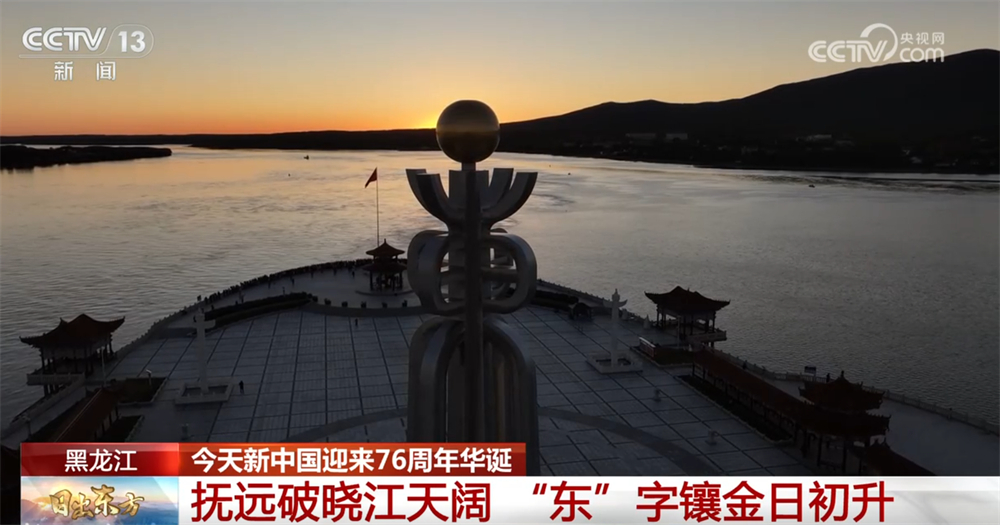
央视网消息:10月1日是新中国成立76周年国庆日。接下来,让我们迎着朝阳,去看看晨光里的锦绣中国。 黑龙江:抚远破晓江天阔 "东"字镶金日初升 首先我们来到黑龙江省抚远市。墨蓝色的天幕泛起鱼肚白,水波荡漾,勾勒出江天一色的生动模样。清晨时分,太阳跃出地平线,与朝霞 交相辉映。广场上三面立体的巨型篆体"东"字标,顶部镶嵌金色地球仪,象征托起太阳的东方。 天津:晨晖漫染海河碧 松弛津韵入画来 山东:云拂岱顶晨光暖 秋染泰山日出红 泰山是世界文化与自然双遗产,破晓前的泰山之巅沉浸在一片静谧的黛色里。当天际渐转橘红,顷刻间,红日跃出、金光洒落,云海仿佛 被瞬间唤醒,浪头翻涌着,托举黛色的群峰,光明和温暖覆盖大地。 江苏:日出东海映碧波 风电劲吹绿动能 晨光熹微时,东海碧波之上,一轮红日喷薄而出,万顷浪涛瞬间被染成流动的金色绸缎。离岸数十公里的海面上,江苏盐城大丰海上风电 场的白色风机列阵排布,将海风与晨光的力量转化为清洁电能,生动书写着蓝色国土上的绿色传奇。 浙江:巨轮泊岸承晨色 港立甬舟作业忙 一轮红日出东海,万吨巨轮作业忙。现在画面中我们看到的是宁波舟山港梅山港区,矗立在码头边的大型桥吊迎着朝阳,挥舞着巨大的手 ...
灵药还是豪赌?大金重工冲刺港股,欲借海外市场破解营收连降之困
Xin Jing Bao· 2025-09-30 12:00
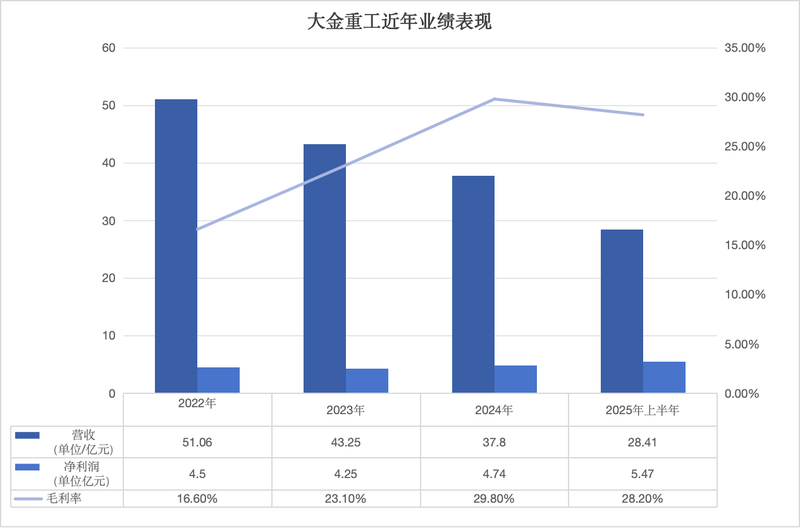
Core Viewpoint - The company, Dajin Heavy Industry, is set to become the first listed company in the wind power tower sector in Hong Kong, despite facing revenue declines in recent years. The company has achieved significant profit growth through expansion into overseas markets, particularly in Europe, which now accounts for nearly 79% of its revenue [1][7][9]. Group 1: Company Performance - Dajin Heavy Industry has experienced a continuous decline in revenue over the past three years, attributed to the customized and high-value nature of its products, which leads to fluctuations in income and gross margins [4]. - In the first half of 2025, the company reported a revenue of 2.841 billion yuan, a year-on-year increase of 109%, and a net profit of 547 million yuan, representing a growth of over 200% [5]. - The company's inventory reached a record high of 2.373 billion yuan by mid-2023, while its borrowings increased significantly to over 1.3 billion yuan [6]. Group 2: Market Strategy - Dajin Heavy Industry has adopted a "two seas" strategy, focusing on offshore wind power and overseas market expansion, with a strategic emphasis on high-margin offshore wind orders [7]. - The company's revenue from overseas markets surged from 838 million yuan in 2022 to 2.243 billion yuan in the first half of 2025, with the overseas revenue share rising from 16.4% to 79% [7][9]. - The European offshore wind market is characterized by high barriers and added value, with Dajin Heavy Industry becoming the leading supplier in this market, increasing its market share from 18.5% in 2024 to 29.1% in the first half of 2025 [9]. Group 3: Future Outlook - The offshore wind sector is expected to experience explosive growth, with projections indicating that its share of global wind power installations will rise to 18.6% by 2030, with a compound annual growth rate of 28.9% [9]. - Dajin Heavy Industry plans to invest a significant portion of its IPO proceeds into the construction of an overseas assembly base and the development of advanced deep-sea products to enhance its local supply capabilities in Europe [10].

9月30日每日研选丨下一轮行情引擎?机构“押注”新能源
Shang Hai Zheng Quan Bao· 2025-09-30 11:38
Group 1: Wind Power Industry - The wind power industry is entering a performance realization period, with expectations for comprehensive performance release in the second half of the year [1] - The industry is anticipated to enter a new upward cycle during the "14th Five-Year Plan" period, driven by offshore wind power, export markets, and onshore wind power [1] - Key factors expected to catalyze growth by 2025 include the initiation of deep-sea offshore wind power, accelerated exports, and recovery in wind turbine profitability [1] - Focus is recommended on leading companies in segments such as pipe piles, submarine cables, wind turbines, and components during this new cycle [1] Group 2: Energy Storage and Hydrogen Industry - Independent energy storage market growth is supported by domestic policies, with strong demand in Europe and emerging markets for household storage [1] - The hydrogen energy sector is experiencing reduced financing difficulties and increased government support for new technology development, accelerating the entire hydrogen industry chain [1] - The large-scale energy storage demand is expected to exceed expectations, with a projected growth rate of around 30% over the next two years [2] Group 3: Lithium Battery Industry - The lithium battery downstream demand is showing strong continuation, driven by both domestic and overseas energy storage needs and the booming electric vehicle market [1] - There is a significant increase in procurement willingness and order volume from terminal enterprises, with a strong sentiment for price increases in the market [1] - The solid-state battery technology is advancing, with several automakers planning to adopt solid-state batteries around 2027, indicating a faster industrialization process [3] Group 4: Renewable Energy Development - The renewable energy sector, primarily wind and solar power, is projected to have nearly 2 billion kilowatts of new capacity from 2025 to 2035 [4] - The construction of large wind and solar bases is accelerating, with steady progress in deep-sea wind power and distributed wind power [4] - The industry is expected to achieve long-term growth driven by the goals of "carbon peak and carbon neutrality" [4]
9月全球资产表现一览,谁是最大赢家?
Ge Long Hui· 2025-09-30 10:29
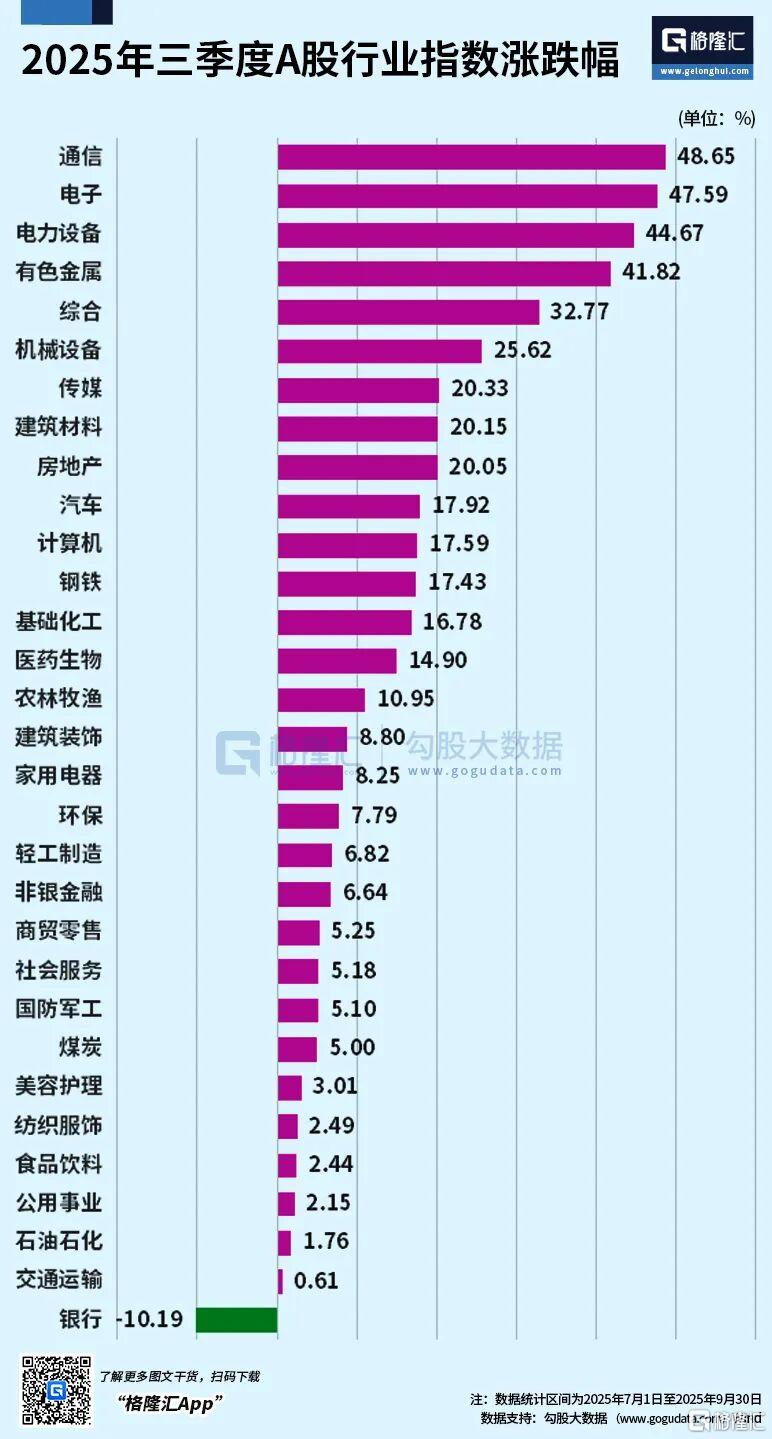
Group 1: Market Overview - In September, global asset prices experienced significant fluctuations, with notable volatility in A-shares, Hong Kong stocks, and U.S. markets, particularly in sectors like precious metals, semiconductors, and innovative pharmaceuticals [1][3] - The market showed a dual driving force of "technology growth" and "cyclical recovery," with structural growth highlights attracting capital despite a generally slowing macroeconomic environment [3][12] Group 2: Top Performing Sectors - Precious metals, particularly gold and silver, saw a substantial rise, with A-shares and Hong Kong stocks related to these commodities performing exceptionally well, driven by historical highs in international gold prices [3][4] - The battery supply chain, especially solid-state batteries and energy metals like lithium, cobalt, and nickel, gained attention due to increased demand and valuation recovery, reflecting optimism about long-term trends in energy storage [5][8] - The wind power sector experienced a turnaround, with significant growth in new installations and improved profitability expectations, marking a shift from revenue growth to profit recovery [9] - The semiconductor industry, particularly in AI-related technologies, saw a surge in demand, leading to substantial stock price increases for leading companies in this space [10][12] Group 3: Underperforming Sectors - The military industry, which had previously seen significant gains, faced a sharp decline in September, with many stocks experiencing over 40% pullbacks following the conclusion of major events [13][14] - Banking stocks, traditionally seen as stable investments, faced a collective downturn as funds shifted towards more popular sectors, with several banks experiencing declines of over 20% [15][17] - The food and beverage sector continued to struggle, with a notable drop in demand and performance, particularly in the liquor and snack segments, leading to significant underperformance compared to the broader market [19][25] Group 4: Technology Giants Performance - In the Hong Kong market, Alibaba and Tencent were standout performers, with Alibaba's stock rising by 53% and Tencent by 11.15%, reflecting strong market sentiment towards technology stocks [28][29] - In the U.S. market, September defied historical trends, with the S&P 500 and Nasdaq indices posting gains of 3.11% and 5.29%, respectively, driven by strong performances from tech giants like Nvidia, Apple, and Tesla [30][32] Group 5: Future Outlook - The overall market performance in September was influenced by global liquidity conditions and capital flows into emerging markets, suggesting a continuation of a "slow bull" market trend into October [33]





9月全球资产表现一览,谁是最大赢家?
格隆汇APP· 2025-09-30 10:19
Core Insights - The article discusses the significant fluctuations in global asset prices during September, highlighting the volatility in A-shares, Hong Kong stocks, and U.S. markets, with various sectors experiencing dramatic rises and falls [2][5]. Market Performance - Despite a general slowdown in macroeconomic data, the market is focusing on structural growth areas such as computing power, semiconductors, and innovative drug development, which continue to attract capital [7]. - The precious metals sector, particularly gold and silver, saw substantial gains, with A-shares like Western Gold rising over 50% and some Hong Kong gold stocks increasing by more than 300% year-to-date [8][9]. Sector Highlights - **Top Gainers**: - **Precious Metals**: Gold prices reached historical highs, driven by expectations of a Federal Reserve rate cut and geopolitical tensions, leading to increased demand for safe-haven assets [8][10]. - **Battery and Energy Metals**: The battery supply chain gained attention due to solid-state battery production and rising demand in the energy storage market, leading to a valuation recovery in lithium and other energy metals [10][12]. - **Wind Power**: The wind power sector experienced a turnaround with significant new installations and improved profit expectations, with domestic wind power installations increasing by 99% year-on-year [13]. - **Semiconductors**: The semiconductor sector thrived due to the AI boom, with companies like SMIC and Hua Hong Semiconductor seeing substantial stock price increases [14]. Declining Sectors - **Military Stocks**: Following a peak driven by policy expectations and military trade themes, military stocks experienced significant declines, with some stocks dropping over 40% in September [17][18]. - **Banking Stocks**: Traditionally seen as stable investments, banking stocks faced a collective decline as funds shifted towards more popular sectors, with several banks experiencing over 20% drop in stock prices [19][22]. - **Food and Beverage**: The food and beverage sector continued to struggle, with a significant drop in stock prices due to weak consumer demand and poor sales performance during peak seasons [23][25]. - **Traditional Consumer Goods**: Other traditional consumer sectors like tourism and home appliances also saw declines, attributed to insufficient recovery in macroeconomic demand [33][35]. Technology Giants - In the tech sector, major players like Alibaba and Tencent saw significant stock price increases, with Alibaba rising by 53% in September, while the U.S. tech giants also performed well, with Nvidia and Tesla showing notable gains [37][39]. Overall Market Outlook - The article concludes that the global stock market performance in September reflects a broader trend of liquidity easing and capital inflow into emerging markets, suggesting potential structural opportunities in the upcoming months [42].



中国2035年新NDC目标公布 企业应该做好什么准备?
2 1 Shi Ji Jing Ji Bao Dao· 2025-09-30 09:50
Core Points - China has announced a new round of Nationally Determined Contributions (NDC) aiming for a 7% to 10% reduction in greenhouse gas emissions by 2035 compared to peak levels, with specific targets for renewable energy and carbon markets [1][3] - The new NDC represents a historic shift from intensity control to total emissions reduction, covering all greenhouse gases and reflecting a commitment to global climate goals [3][4] Group 1: NDC Goals and Targets - By 2035, non-fossil energy consumption should account for over 30% of total energy consumption, with wind and solar power capacity reaching over six times the 2020 levels, targeting 360 million kilowatts [1][6] - Forest stock should exceed 24 billion cubic meters, and new energy vehicles should become the mainstream of new vehicle sales [1][9] - The national carbon trading market will cover major high-emission industries, contributing to the establishment of a climate-resilient society [1][9] Group 2: Industry Implications - Companies are seen as essential units in achieving the NDC goals, needing to assess their carbon emissions and identify reduction opportunities [2][10] - The energy sector, particularly electricity generation, is responsible for a significant portion of emissions, necessitating a transition to renewable energy sources [4][6] - The wind and solar sectors must increase installed capacity significantly, with a need for a 200% increase in renewable energy installations to meet the targets [7][8] Group 3: Corporate Strategies - Companies must shift from passive compliance to proactive transformation, integrating low-carbon principles into their entire supply chain [10][11] - For instance, Didi has developed a carbon management tool to track emissions from its ride-hailing services and aims to increase the share of electric vehicles in its fleet [11][12] - The wind power industry is encouraged to focus on high-quality development and innovation, moving towards integrated applications and enhancing resource utilization [12]