券商

Search documents
最高单日资金净流入超7亿元,顶流券商ETF(512000)午后上扬,成分股太平洋涨停!!
Xin Lang Cai Jing· 2025-09-04 05:45
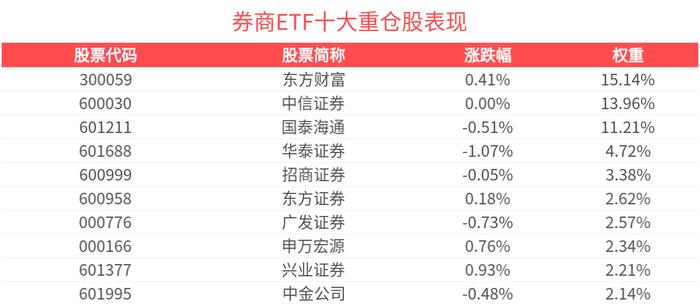
Core Viewpoint - The securities industry is experiencing growth, with significant performance in the brokerage sector, as indicated by the rise in the brokerage ETF and the strong revenue figures from leading firms [1][2]. Group 1: Market Performance - As of September 4, 2025, the CSI All Share Securities Company Index increased by 0.56%, with notable gains from Pacific Securities (up 10.11%) and Huayin Securities (up 5.72%) [1]. - The brokerage ETF (512000) rose by 0.67%, with a trading volume of 1.164 billion yuan and a turnover rate of 3.78% [1]. - Over the past two weeks, the brokerage ETF's scale grew by 2.288 billion yuan, ranking second among comparable funds [1]. Group 2: Fund Performance - The brokerage ETF's net value increased by 13.36% over the past six months, placing it among the top two in its category [2]. - Since its inception, the brokerage ETF has achieved a maximum monthly return of 38.02% and an average monthly return of 6.98% [2]. - The ETF has seen consistent net inflows, totaling 1.852 billion yuan over the last five days, with a peak single-day inflow of 768 million yuan [1][2]. Group 3: Industry Insights - In the first half of the year, ten leading brokerages reported revenues exceeding 10 billion yuan, with CITIC Securities leading at 33.039 billion yuan [2]. - The brokerage sector is expected to benefit from a new upward cycle in the capital market, with improved operating conditions and market capacity [2]. - The current average P/B ratio for large brokerages is 1.61x, indicating that valuations are at a historically low level [2]. Group 4: ETF Composition - The brokerage ETF tracks the CSI All Share Securities Company Index, encompassing 49 listed brokerage stocks, with nearly 60% of its holdings concentrated in the top ten brokerages [5]. - The ETF serves as an efficient investment tool, balancing exposure to leading brokerages while also capturing the high growth potential of smaller firms [5].


资讯日报-20250904
Guoxin Securities Hongkong· 2025-09-04 05:28
Market Overview - The Hang Seng Index closed at 25,343, down 0.60% for the day and up 26.34% year-to-date[3] - The Hang Seng Tech Index fell 0.78% to 5,684, with a year-to-date increase of 27.21%[3] - The S&P 500 index rose 0.51% to 6,448, with a year-to-date gain of 9.63%[3] Sector Performance - Major technology stocks in Hong Kong experienced declines, impacting the overall market sentiment[9] - The banking, insurance, and brokerage sectors showed weak performance, contributing to the market downturn[9] - Real estate stocks weakened, with Shimao Group dropping over 6% and several others falling more than 3%[9] Economic Indicators - U.S. job openings fell to a 10-month low, indicating a gradual decrease in labor demand amid policy uncertainties[9] - Market expectations for a 25 basis point rate cut by the Federal Reserve this month have risen to nearly 100%[9] Notable Stock Movements - Morgan Stanley raised its year-end gold price target to $3,800 per ounce, which positively influenced gold and precious metal stocks, with Zhaojin Mining and Lingbao Gold both rising over 6%[9] - Salesforce reported Q2 revenue of $10.24 billion, a 9.8% year-on-year increase, but its stock fell 4% post-earnings due to a less optimistic Q3 outlook[10] International Market Trends - The Nikkei 225 index in Japan fell 0.88% amid political uncertainties and reduced expectations for short-term interest rate hikes[13] - Foreign investment in the Japanese stock market has reached its highest level in a decade, indicating strong interest from international investors[13]
新手股民,被“技术性调整”跌懵了
Sou Hu Cai Jing· 2025-09-04 04:59
Core Viewpoint - The A-share market has experienced a slow bull run since April, but recent adjustments have raised concerns about potential profit-taking and market volatility [1][7]. Market Performance - On September 3, the Shanghai Composite Index fell by 1.16%, briefly losing the 3800-point mark, while the Shenzhen Component Index dropped by 0.65%, with trading volume decreasing to 510.9 billion yuan [3]. - Over 4,500 stocks declined, indicating a significant market pullback, which has affected new investors who recently entered the market [3][5]. - In August, new account openings on the Shanghai Stock Exchange reached 2.6503 million, a 30% increase from July and a 165% year-on-year rise [3]. Historical Context - Historical data shows that A-shares have often experienced sharp declines during bull markets, with notable instances in 2007 and 2015 where maximum drawdowns reached 21% and 15% respectively [5][6]. - The current maximum drawdown since April 2025 is only 2.5%, suggesting that the recent adjustments are more of a technical correction rather than a significant downturn [5][6]. Reasons for Recent Adjustments - Two main factors are identified for the recent market adjustments: a strong technical correction demand due to accumulated profit-taking and tightening external environments, including a downturn in U.S. tech stocks and rising gold prices [7][8]. Outlook on the Bull Market - Despite recent fluctuations, many institutions believe the current "slow bull" market is not over, as the underlying logic supporting the bull run remains intact [8][10]. - Key supportive factors include regulatory support, low deposit rates prompting capital migration, and a clear trend towards new productive forces in the Chinese industry [10][12]. Investment Opportunities - The latest mid-year reports from listed companies indicate a total revenue of 34.93 trillion yuan and a net profit of 2.92 trillion yuan, with the financial sector leading in profitability [14]. - The technology sector, particularly semiconductors, and brokerage firms are highlighted as maintaining high profitability and becoming market hotspots [14]. - The top-performing sectors from April 8 to August 27 include telecommunications, comprehensive services, electronics, non-ferrous metals, and defense industries, with respective gains of 78.06%, 51.18%, 47.31%, 43.49%, and around 40% [14]. Future Investment Strategies - Future investment strategies should focus on sectors driven by technology growth, cyclical commodities, and structural opportunities in industries like automotive and wind energy [16]. - Recommendations include maintaining a stable core portfolio with high dividend stocks and gold, while also considering sectors like non-bank financials, military, and chemicals for growth [16].
本轮牛市正迎来重大拐点!现在很关键,能不能翻身就看它们了!
Sou Hu Cai Jing· 2025-09-04 04:36
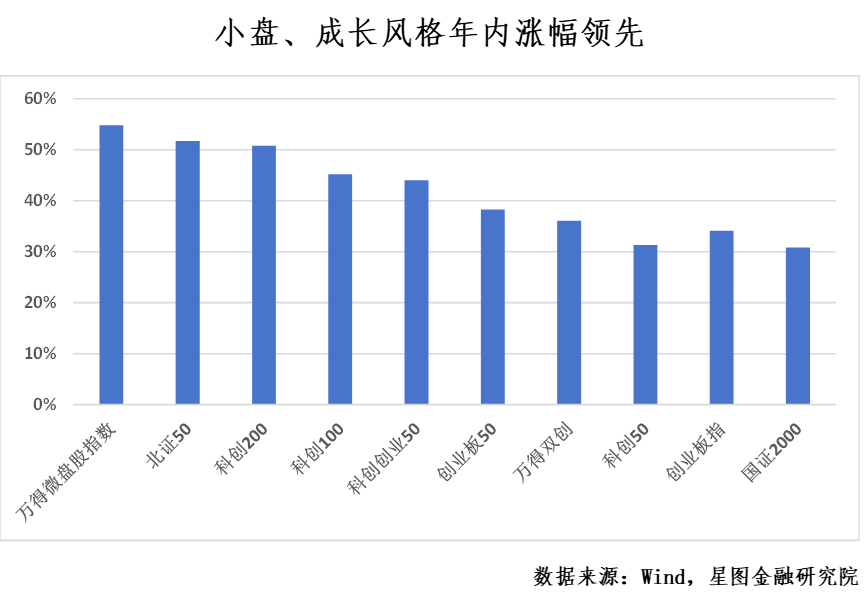
Market Overview - The A-share market is currently experiencing a strong bull market, with the Shanghai Composite Index rising for four consecutive months and successfully stabilizing above the 3,800-point mark, reaching a nearly ten-year high [1] - The average daily trading volume in the Shanghai and Shenzhen markets has consistently remained above 2.5 trillion yuan, indicating a healthy and steady upward trend in the market [1] Structural Characteristics - The current market rally is characterized by distinct structural features rather than a broad-based increase, with the top three performing indices being the Wind Tail-End Stock Index (+54.82%), the North China 50 Index (+51.75%), and the Sci-Tech Innovation 200 Index (+50.79%) [1] - Small-cap and growth styles have significantly outperformed in this rally, demonstrating strong excess return capabilities [1] Market Drivers - The market's performance is driven by both economic conditions and liquidity, with structural highlights emerging despite overall macroeconomic pressure [3] - Key sectors attracting capital include artificial intelligence, robotics, innovative pharmaceuticals, and solid-state batteries, which are in early development stages and exhibit clear growth narratives [3] Style Rotation - Recent trends indicate a clear rotation in market styles, with a notable increase in fund reallocation intentions [6] - Large-cap indices like the Shanghai 50 and CSI 300 have shown relative strength, while small-cap indices like the National 2000 and North China 50 have faced pressure, reflecting a "fear of heights" sentiment among some investors [7] Potential Shifts in Leadership - Historical patterns suggest that mid-bull market phases often accompany style switches, with small-cap growth stocks now facing valuation pressures and trading congestion [9] - Large-cap value sectors, particularly in consumer, financial, and manufacturing industries, are expected to emerge as new market leaders due to their low valuations and strong earnings certainty [9] Factors Favoring Large-Cap Value - Large-cap value sectors are likely to benefit from upward revisions in growth expectations, as they are closely tied to macroeconomic conditions [9] - These sectors have experienced significant price corrections, making them attractive investments, especially given their stable operations and high dividend yields [10] Incremental Capital Flows - There is potential for incremental capital to shift styles, with foreign capital gradually increasing its share in Chinese assets, indicating a return of foreign investment [13] - Domestic investors are also expected to favor low-risk equity products, which may lead to a gradual shift towards large-cap value sectors [13] Investment Strategy - The recommendation is to focus on absolute returns, with large-cap value sectors offering substantial upside potential and limited downside risk [16] - Investors are advised to maintain a balanced allocation across styles and sectors, particularly in industries with strong earnings resilience and stable dividends, such as food and beverage, agriculture, insurance, brokerage, and steel [16]
日线两连跌,航天航空陷入调整,券商大跳水,调仓换股还是落袋为安?
Ge Long Hui· 2025-09-04 03:32
Market Overview - The market experienced a downward trend, with the Shanghai Composite Index closing down by 1.16% and the Shenzhen Component Index down by 0.65%, while the ChiNext Index saw a slight increase of 0.95% [1] - A total of over 4,500 stocks declined across both markets, with a combined trading volume of 2.36 trillion [1] Sector Performance - The aerospace and aviation sector faced significant losses, closing down by 6.68%, with a cumulative decline of 9.47% for the week. Nearly 10 stocks, including AVIC and China Aerospace, hit the daily limit down [2] - The shipbuilding, aircraft carrier concept, and military-civilian integration sectors followed closely, each experiencing declines of over 4% [2] - Brokerage stocks collectively adjusted, with Guosen Securities and others dropping over 5%, while several stocks like First Capital and East Money fell by more than 4% [2] Precious Metals and Other Sectors - Precious metals opened high but closed lower, maintaining a weak consolidation above the midline, with an overall increase of 1.15%. Western Gold reached the daily limit up, while Zhaojin Mining fell by 6.93% [2] - Other sectors such as photovoltaic equipment, recombinant proteins, and gaming showed limited gains [2] Investor Sentiment - The market displayed clear weakness, particularly in the afternoon, as cautious sentiment spread, leading many investors to opt for profit-taking, which accelerated the index's decline [2] - Overall, there is a potential for short-term correction and adjustment, which may also present opportunities for portfolio reallocation [2]




两市股指大幅下探 科创50指数大跌超5%
Zheng Quan Shi Bao Wang· 2025-09-04 03:22
Market Overview - On the 4th, the stock indices experienced significant declines, with the Shanghai Composite Index dropping nearly 2%, the ChiNext Index falling over 3%, and the STAR Market Index plummeting over 5% [1] - Sectors such as semiconductors and military industries saw the largest declines, while tourism, retail, food and beverage, and textile and apparel sectors showed gains [1] Market Trends - According to Zhongtai Securities, the market is expected to exhibit characteristics of volatility and structural rotation rather than a broad-based rally, with the Shanghai Composite and CSI 300 Index likely to remain in a range-bound state [1] - The defensive value of dividend stocks is becoming more prominent, which, despite not being the main focus in the short term, is expected to provide important support to the market amid tightening liquidity and pressure from major shareholder sell-offs [1] - Short-term volatility in the STAR and ChiNext markets is anticipated to increase, with outflows from ETFs and institutional funds observed recently. However, the medium-term logic for the technology sector remains solid, especially with the upcoming Fourth Plenary Session in October expected to introduce a "14th Five-Year Plan" centered on "new quality productivity" [1]
港股早参丨美国就业数据公布后,美联储9月降息概率再度升温
Sou Hu Cai Jing· 2025-09-04 01:17
Market Overview - On September 3, Hong Kong's three major indices collectively declined, with the Hang Seng Index down 0.6% to 25,343.43 points, the Hang Seng Tech Index down 0.78% to 5,683.74 points, and the National Enterprises Index down 0.64% to 9,050.02 points [1] - The technology stocks showed mixed performance, while innovative pharmaceuticals and gold stocks strengthened, and brokerage and banking stocks weakened [1] - Notable individual stocks included BYD down over 2.5%, Xiaomi down over 2%, Meituan down over 0.5%, and NIO rising nearly 1% post-earnings [1] - The Hang Seng Tech Index ETF (513180) closed down 1.03% [1] Southbound Capital - On September 3, southbound capital recorded a net inflow of 5.508 billion HKD, with Alibaba receiving nearly 2.5 billion HKD in additional investment [2] - Year-to-date, the cumulative net inflow of southbound capital reached 100.573 billion HKD, marking the highest annual level since the launch of the mutual market access mechanism [2] - Southbound capital has maintained a monthly net inflow for 27 consecutive months since July 2023 [2] U.S. Market Performance - Overnight, U.S. stock indices closed mixed, with the Dow Jones down 0.05%, the S&P 500 up 0.51%, and the Nasdaq up 1.02% [3] - Chevron and American Express fell over 2%, leading the decline in the Dow [3] - The U.S. technology giants index rose 2.01%, with Google up over 9%, reaching a record high, and Apple up over 3% [3] - Chinese concept stocks showed mixed results, with Brain Regen up over 7% and Bitdeer down over 6% [3] - The Hang Seng Index ADR fell, closing at 25,337.35 points, down 6.08 points or 0.02% compared to the Hong Kong market close [3] Economic Indicators - The U.S. Labor Department reported a decrease in job openings for July, down to 7.181 million from a revised 7.36 million in June, marking a 10-month low and significantly below the expected 7.382 million [4] - The Federal Reserve's latest Beige Book indicated little change in economic activity across most regions, with price increases reported in 10 districts as "moderate or slight" inflation, while two districts experienced "strong input price growth" [4] - Federal Reserve Governor Waller suggested that the Fed should begin cutting interest rates this month, with multiple reductions expected in the coming months, depending on future economic data [4][5] Short Selling Data - On September 3, a total of 639 Hong Kong stocks were short-sold, with total short-selling amounting to 31.371 billion HKD [6] - The top three stocks by short-selling amount were Alibaba-W at 2.283 billion HKD, Tencent Holdings at 1.289 billion HKD, and Xiaomi Group-W at 1.113 billion HKD [6] Institutional Insights - Huatai Securities suggested focusing on valuation opportunities along capital flows, with interest-sensitive assets like gold, REITs, and overseas cyclical equities expected to perform relatively well during the Fed's rate-cutting cycle [7] - The report also highlighted the potential for long-term valuation reassessment in A-shares and Hong Kong stocks due to expectations of RMB appreciation and overseas capital inflow [7] - The firm identified AI and "anti-involution" as clear investment themes, particularly in high-adjustment U.S. tech stocks, A-share overseas computing chains, and Hong Kong internet stocks benefiting from AI [7] Hong Kong ETFs - The Hong Kong Consumption ETF (513230) focuses on e-commerce and new consumption sectors, which are relatively scarce compared to A-shares [8] - The Hang Seng Tech Index ETF (513180) includes core Chinese AI assets, representing a relatively scarce group of technology leaders compared to A-shares [9]



非银金融2025中报综述:“慢牛”新周期,板块重估时
Changjiang Securities· 2025-09-03 15:29
Investment Rating - The report maintains a "Buy" rating for the non-bank financial sector [2] Core Insights - The report highlights a "slow bull" new cycle, indicating a revaluation of the sector with significant growth in insurance premiums and profits for listed insurance companies in 2025 [7] - The insurance sector is experiencing rapid growth in bank insurance, improved cost structures, and increased allocation to equity assets, reflecting a trend of "deposit migration" and rising industry concentration [7] - Brokerage firms continue to show strong performance, with a notable recovery in investment banking activities and a significant increase in net profits [7] - Financial technology firms are seeing strong revenue elasticity in C-end businesses, while B-end businesses face challenges due to declining downstream demand [7] - The report recommends focusing on companies with strong long-term profitability potential and suggests long-term holdings in leading and high-dividend stocks within the industry [7] Summary by Sections Insurance: Gradual Validation of ROE Revaluation - The 2025 interim report for listed insurance companies shows significant growth in value and premiums, with a focus on bank insurance growth and improved cost structures [12] - The new business value (NBV) increased by 31% year-on-year, and the net investment yield decreased slightly [13] - The allocation to equity assets has increased, with a notable rise in stock and fund exposure [12][13] Brokerage: Stability of Leading Firms' Profitability - In the first half of 2025, brokerage firms achieved a total revenue of 2,518.94 billion and a net profit of 1,036.05 billion, representing year-on-year increases of 11.3% and 65.6%, respectively [41] - The brokerage business continues to show strong growth, particularly in proprietary trading and brokerage services [41] - The average return on equity (ROE) for the sector increased to 3.5%, with leading firms showing significantly higher ROE [47] Financial Technology: Strong Elasticity in C-end Business - C-end business revenues are driven by increased trading demand, leading to improved profit margins, while B-end businesses remain under pressure [7] - The competitive landscape among large platforms remains stable, with revenue primarily driven by trading-related services [7] Investment Recommendations - The report emphasizes the shift in industry valuation from short-term trading risks to long-term profitability potential, recommending companies with strong earnings stability and growth potential [7] - Specific stock recommendations include New China Life Insurance, China Life, and China Pacific Insurance for the insurance sector, and Jiufang Zhitu, Tonghuashun, and CITIC Securities for the brokerage and financial IT sectors [7]



缩量,今日市场情绪指数来了
第一财经· 2025-09-03 12:59
Market Overview - The three major A-share indices showed mixed performance, with the Shanghai Composite Index exhibiting a "high open and low close" characteristic, while the ChiNext Index was the only one to close higher among the three indices [4] - A total of 277 stocks rose, indicating a broad market decline despite some sectors performing well [4] Trading Volume - The trading volume in the two markets decreased significantly, down approximately 510.9 billion yuan compared to the previous trading day, reflecting a decline in market activity and a strong wait-and-see sentiment among investors [5] Capital Flow - There was a clear risk-averse characteristic in institutional capital, with major funds withdrawing from high-valuation technology sectors and moving into undervalued defensive sectors [7] - Northbound funds significantly reduced holdings in semiconductor and AI chip sectors, while showing slight inflows into gold and banking sectors [7] - Retail investors maintained high leverage levels, indicating a defensive stance, with enthusiasm for market participation remaining relatively unchanged [7] Investor Sentiment - Retail investor sentiment showed a mixed picture, with a notable percentage of investors either increasing or decreasing their positions, reflecting uncertainty in market direction [12][15]

知名机器人公司 大涨13%
Zhong Guo Ji Jin Bao· 2025-09-03 11:52
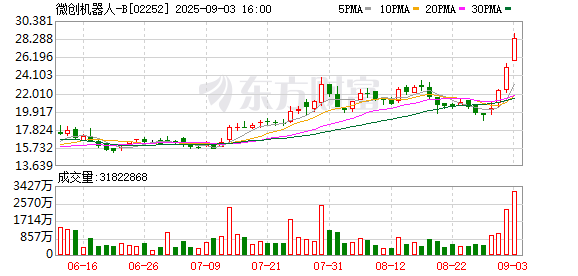
Market Overview - The Hong Kong stock market experienced a decline, with the Hang Seng Index down by 0.6% to 25,343.43 points, the Hang Seng Tech Index down by 0.78% to 5,683.74 points, and the Hang Seng China Enterprises Index down by 0.64% to 9,050.02 points [2] - Notably, the southbound capital recorded a net inflow of approximately 5.5 billion [2] Robotics Sector - The robotics concept stock, MicroPort Robotics, surged by 13.28%, while other related stocks like Naisite and Jinli Permanent Magnet rose by 4.76% and 4.11%, respectively [6][7] - Yushu Technology announced its IPO schedule, planning to submit listing application documents to the stock exchange between October and December 2025, with sales projections for quadruped robots, humanoid robots, and components expected to be approximately 65%, 30%, and 5% of total sales in 2024 [7][8] Innovative Drug Sector - Innovative drug stocks showed resilience, with companies like China Antibody, WuXi Biologics, and CStone Pharmaceuticals each rising over 10% [9][10] - Recent foreign investments have increased in Hong Kong's innovative drug companies, with GIC acquiring significant shares in companies like Ando Pharma and CStone Pharmaceuticals [11] Precious Metals Sector - The international gold price reached a new high, with COMEX gold closing at $3,599.5 per ounce, leading to gains in gold stocks such as WanGuo Gold and ZhaoJin Mining, which rose by 4.86% and 4.03%, respectively [12] Financial Sector - The brokerage sector faced declines, with Guolian Minsheng leading the drop at 5.02%, while other firms like Guotai Junan International and Zhongzhou Securities also reported losses [13][14] - Bank stocks, including Bank of China and China Construction Bank, also showed poor performance, with declines ranging from 0.50% to 1% [15]