
科技

Search documents
沪深港通新规实施后特大单抢筹个股分析
Xin Lang Cai Jing· 2025-09-03 01:30
自2024年8月19日起,沪深港交易所将实施新的交易信息披露机制,旨在提升市场透明度和投资者信 心。根据最新公告,沪股通交易日结束后,将对外披露当日的沪股通成交总额、成交笔数、ETF成交 额,以及前十大成交活跃证券及其成交额。同时,这些数据还将按月和年度汇总,进一步加强市场数据 的可获取性和可分析性。 2023年9月2日的交易数据显示,特大单买入的前20只个股引起了市场的广泛关注。这些个股的买入情况 反映了机构投资者的最新偏好与市场热点,成为投资者决策的重要参考依据。根据交易所提供的数据, 特大单买入的个股主要集中于科技、消费和医药等领域,显示出市场对相关行业持续看好的趋势。 在特大单卖出的个股方面,9月2日的数据同样展示了市场的动态变化。此次卖出榜单中,行业分布较为 均匀,但以消费和金融类股票为主,显示部分投资者在短期内可能选择锁定利润或调整持仓策略。此类 卖出行为也反映了市场的流动性,以及投资者对市场前景的不同判断。 来源:市场资讯 (来源:ETF炼金师) 此外,沪深股通和港股通的成交情况也值得关注。9月2日的数据显示,沪深股通十大成交股吸引了较大 的资金流入,表明外资对A股市场的持续关注和信心。相比之下 ...
全线避险,黄金历史新高!
Wind万得· 2025-09-02 23:09
Market Overview - The US stock market opened lower on the first trading day of September, with all three major indices declining, indicating increased caution among investors after the summer holiday [1][3] - Gold prices surged by 1.6% to $3,532 per ounce, reflecting strong market risk aversion amid multiple uncertainties, including trade policy changes and rising long-term Treasury yields [1] Index Performance - The Dow Jones Industrial Average fell by 249.07 points, a decrease of 0.55%, closing at 45,295.81 points [3][4] - The S&P 500 index dropped by 0.69%, closing at 6,415.54 points [3][4] - The Nasdaq Composite Index experienced the largest decline, down 0.82% to 21,279.63 points [3][4] Treasury Yields - US Treasury yields rose, with the 2-year yield increasing by 2 basis points and the 10-year yield rising by 4 basis points [5] - The 10-year US Treasury yield reached 4.27%, while the 30-year yield briefly surpassed 4.97%, creating significant headwinds for the stock market [7] Sector Analysis - The recent market pullback has primarily affected previously leading technology stocks, with Nvidia down approximately 2%, and Amazon and Apple each declining nearly 1% [7] - Investors are choosing to take profits amid weakening economic data and unclear Federal Reserve interest rate paths, as well as high valuations [7] Legal and Policy Uncertainty - A recent court ruling declared many tariffs imposed during the Trump administration as illegal, prompting concerns about potential refunds of billions in tariff revenue, which could worsen the already strained fiscal situation [7] - This legal uncertainty has led investors to reassess the US government's fiscal capacity and policy stability, contributing to a shift of funds into the bond market [7] Seasonal Trends - Historically, September has been a weak month for the S&P 500, with an average decline of 4.2% over the past five years and over 2% in the last decade [8] - Despite a strong performance in August, where the S&P 500 reached five historical highs, the optimism did not fully carry into September [8] Employment Data and Fed Policy - Investors are closely watching the upcoming non-farm payroll report for August, which will assess the resilience of the US labor market and may influence the Federal Reserve's policy decisions [9] - Current market expectations suggest a 90% probability of a 25 basis point rate cut by the Federal Reserve in September [11][12] Commodity Outlook - Most institutions remain bullish on gold, with forecasts suggesting prices could reach $3,600 per ounce by the end of next year [15] - In contrast, the outlook for oil prices appears limited, with expectations that OPEC+ will maintain current production levels amid concerns of oversupply [15]


基金高点买入必亏?这才是最大的投资误区!
Sou Hu Cai Jing· 2025-09-02 21:49
Core Insights - The article addresses the misconception that high points in fund performance equate to losses, emphasizing the complexity of market dynamics and the importance of a rational investment framework. Group 1: Industry Fundamentals - The long-term potential of a fund is determined by the underlying industry or company, with examples like the renewable energy sector showing significant growth despite short-term fluctuations [2][4] - Key factors influencing industry performance include policy incentives, technological advancements, and sustained market demand [4] Group 2: Fund Management - Skilled fund managers can mitigate high-point risks through strategic adjustments, with active management outperforming index funds by an average of 12 percentage points over the past five years [6] - Regular investment strategies, such as dollar-cost averaging, can transform high-point risks into long-term gains, evidenced by a case where a monthly investment yielded an 18% return compared to a mere 3% for a lump-sum investment [6] Group 3: Asset Allocation - A balanced approach combining equities and bonds can create a "resilient" portfolio, with a classic allocation of 60% equity funds and 40% bond funds [8][9] - Dynamic adjustments based on market valuations can help manage risk exposure effectively, as shown by the performance differences between pure equity funds and balanced portfolios during downturns [9] Group 4: Investment Traps - Investors often mistakenly equate historical high points with future peaks, necessitating a dynamic perspective on market valuations [12] - The impact of fund fees on long-term returns is significant, with lower management fees leading to substantially higher returns over time [13] - Short-term thinking can undermine the benefits of compounding, highlighting the importance of sustained investment over longer periods [14]

洗盘!不出意外的话,周三,A股会迎来大涨了
Sou Hu Cai Jing· 2025-09-02 13:21
Group 1 - The market experienced significant volatility during the day, but the Shanghai Composite Index only saw a slight decline of 0.45%, indicating limited issues with the index [1] - There is a clear shift in capital flow towards blue-chip stocks, with sectors like banking and liquor showing upward trends, suggesting a rotation rather than an exit from the market [1] - The overall market sentiment remains optimistic, with expectations for the index to reach new highs, although many individual stocks may have seen the end of their bull markets [1] Group 2 - The process of capital rotation is ongoing, with funds moving towards consumer sectors, despite a prevailing focus on technology stocks [3] - Liquor stocks, which were not favored by many, have shown resilience and have been accumulating quietly, indicating potential hidden demand [3] - The trading volume remains robust at 3 trillion, suggesting a healthy exchange of shares, and the market may be poised for a breakout above 3900 points, targeting 4000 points [3] Group 3 - The outlook for the A-share market is optimistic, with expectations for significant gains and new highs for the index, driven by financial and consumer sector rallies [5] - The market dynamics indicate that even if many stocks decline, it will not hinder the upward movement of the Shanghai Composite Index [5] - The current market environment is characterized by oscillation and gradual upward movement, with technology stocks needing a conducive environment for profit-taking [5] Group 4 - Short-term positions have been reduced, with a focus on waiting for market peaks, although the timing of any potential pullback remains uncertain [7] - The anticipated target for the index is around 4153 points, with expectations for a subsequent pullback that will provide opportunities for bottom-fishing in broad-based indices [7] - The commentary suggests that individual trading strategies should be tailored to personal risk tolerance and market conditions, emphasizing the importance of discretion in investment decisions [7]

国泰海通|海外策略:港股可选消费板块盈利预期下修
国泰海通证券研究· 2025-09-02 11:58
Core Viewpoint - Global markets experienced mixed performance last week, with increased trading activity and heightened market observation. There are indications from multiple Federal Reserve officials suggesting a potential interest rate cut in September, with market expectations of approximately two rate cuts within the year. Additionally, economic forecasts for both the US and China have been marginally revised upwards, while earnings expectations for US tech stocks in 2026 continue to be upgraded, and those for Hong Kong stocks have been slightly downgraded [1]. Market Performance - Global markets showed mixed results last week, with MSCI Global down by 0.4%, MSCI Developed down by 0.4%, and MSCI Emerging down by 0.6%. In the bond market, French 10Y government bond yields saw a significant increase. In commodities, silver prices led the gains. Currency-wise, the US dollar strengthened, the British pound depreciated, the Japanese yen remained stable, and the Chinese yuan appreciated. Sector-wise, the materials sector in Hong Kong led the gains, while the energy sector in the US showed relative strength [2]. Trading Sentiment - Overall trading sentiment in global stock markets improved last week, with increased trading volumes in indices such as the Hang Seng Index, S&P 500, European Stoxx 50, and Nikkei 225, while the Korean Kospi 200 saw a decline in trading volume. Investor sentiment in Hong Kong and the US decreased but remained at historically high levels. Volatility increased in Hong Kong, US, and European markets, while it decreased in Japan. Valuations for both developed and emerging markets saw a decline compared to the previous week [2]. Earnings Expectations - Earnings expectations for Hong Kong's consumer discretionary sector were downgraded last week. Comparatively, US earnings expectations for 2025 showed the best performance, followed by European and Hong Kong markets, with Japan lagging. Specifically, Hong Kong's Hang Seng Index 2025 EPS forecast was revised down from 2190 to 2140. The S&P 500's 2025 EPS forecast was adjusted from 268 to 269, while the Eurozone STOXX 50's 2025 EPS forecast was slightly increased from 335 to 336 [3]. Economic Expectations - Economic forecasts for both the US and China were revised upwards last week. The Citigroup US Economic Surprise Index increased, benefiting from expectations of Federal Reserve rate cuts and strong earnings reports from tech leaders like Nvidia. Conversely, the European Economic Surprise Index declined, likely due to a drop in the Eurozone Economic Sentiment Index in August. China's Economic Surprise Index rose, attributed to policy expectations, increased retail participation, and structural highlights in earnings reports [3]. Capital Flows - Global macro liquidity showed a slight easing last week. Recent comments from several Federal Reserve officials indicated a potential rate cut in September. As of August 29, futures market implied rates suggested expectations of approximately 2.2 rate cuts by the Federal Reserve this year, an increase from the previous week. Last week, US dollar liquidity tightened marginally. In terms of micro liquidity, July saw capital inflows primarily into India, Europe, Hong Kong, and South Korea, with flexible foreign capital and net inflows into Hong Kong stocks last week [4].

美企迎来高管离职潮,“换帅”速度达20年来最快
第一财经· 2025-09-02 10:10
Core Viewpoint - The article discusses an unprecedented wave of CEO departures in the United States, highlighting the factors contributing to this trend and its implications for various industries [3][4]. Group 1: CEO Departures Statistics - In July, 123 CEOs left their positions, bringing the total for the first half of the year to 1,358, a 9% increase compared to the same period last year, marking the highest level since 2002 [3]. - The turnover rate for CEOs in S&P 500 companies has reached a 20-year high, with at least 41 CEOs leaving by July, compared to 49 for the entire previous year [4]. Group 2: Factors Influencing CEO Turnover - Multiple factors are driving the high turnover rate, including high inflation, geopolitical tensions, and increased pressure from activist investors [7]. - The performance of large tech companies is influencing the market, with underperforming companies facing demands for significant changes from investors [7]. - A study indicated that 42% of S&P 500 companies that replaced their CEOs last year had shareholder returns in the bottom 25% [7]. Group 3: Industry Impact - The non-profit and non-governmental sectors experienced the highest CEO turnover, with 286 departures, followed by technology (149) and healthcare (133) [10]. - The consumer goods and retail sectors saw significant increases in CEO departures, with 41 and 38 respectively, both doubling compared to the previous year [10]. Group 4: Interim Leadership Trends - There is a growing trend of companies appointing interim successors, with 33% of new CEOs being temporarily appointed in the first half of the year, compared to only 9% in the same period in previous years [10]. - The turnover rate for CFOs has also reached a historical high, with a 56% turnover rate in the first half of the year, influenced by rising retirement rates and the previous year's high CEO turnover [11].

美企迎来高管离职潮,为何“换帅”速度达20年来最快?
Di Yi Cai Jing· 2025-09-02 09:02
Core Insights - The number of CEO departures in the U.S. reached 1,358 in the first half of this year, marking the highest level since 2002, with a 9% increase compared to the same period last year [1] - The turnover rate for CEOs in publicly traded companies has also hit a 20-year high, with at least 41 CEOs leaving S&P 500 companies by July, compared to 49 for the entire previous year [1][2] - Factors contributing to this unprecedented turnover include economic uncertainty, changing corporate values, tariffs, regulatory changes, evolving consumer behavior, and rapid implementation of new technologies [1][3] Industry Impact - The government and non-profit sector experienced the highest CEO turnover, with 286 departures, followed by technology (149) and healthcare (133) [5] - The consumer goods sector saw 41 CEO departures, while retail experienced 38, both reflecting a 100% increase from the previous year due to declining consumer confidence and tariff impacts [5] - The trend of appointing interim CEOs is rising, with 33% of new CEOs being temporary appointments in the first half of this year, compared to only 9% in the same period last year [5] CFO Turnover - The turnover rate for CFOs globally reached 56% in the first half of this year, the highest in seven years, driven by increased retirement rates and the historical high in CEO turnover [6]
公募基金量化遴选类策略指数跟踪周报(2025.08.31):市场高位小幅回调整固,不改上行趋势-20250902
HWABAO SECURITIES· 2025-09-02 07:59
1. Report Industry Investment Rating No relevant information found in the given content. 2. Core Views of the Report - The A-share equity market showed high-level volatility this week. The Shanghai Composite Index rose by 0.84%. The domestic equity fund strategy index also recorded varying degrees of gains. The low-volatility strategy maintained its low-volatility attribute but lost excess returns, while the stock fund enhancement strategy achieved better returns [2]. - The allocation view of quantitative strategies is: stock fund enhancement strategy > overseas equity strategy > Evergreen low-volatility strategy. The A-share market is expected to maintain an upward trend, and the stock fund enhancement portfolio has more room. The Evergreen low-volatility strategy can be used as a base allocation, and defensive sectors such as banks still have high long-term allocation value [3]. - Overseas, the US stock market is expected to pick up its upward trend. In the long term, the US economy has not shown a significant recession, and the US stock market is expected to start a new round of market under the combined effect of rapid technological growth and the digestion of short-term risk events [4][8]. 3. Summary by Related Catalogs 3.1 Quantitative Strategy Allocation View - The stock fund enhancement strategy has more room in the current A-share market, and the Evergreen low-volatility strategy can be used as a base allocation. Defensive sectors such as banks have high long-term allocation value after adjustment [3]. - Overseas, the US stock market is expected to pick up its upward trend, and global investment still has strong diversification allocation value [4][8]. 3.2 Performance of Toolized Fund Combinations - **Evergreen Low-Volatility Fund Combination**: It maintained low volatility and small drawdowns, with a weekly return of 1.249% and an excess return of -1.841%. Since the strategy started on July 31, 2023, it has achieved significant excess returns and has both defensive and offensive characteristics [5][13][15]. - **Stock Fund Enhancement Fund Combination**: The strategy has been running for a short time. It is expected to have stronger elasticity after the market environment improves. It had a weekly return of 1.389% and an excess return of -1.701% [5][13][18]. - **Cash Enhancement Fund Combination**: It continuously outperformed the benchmark, with a weekly return of 0.027% and a cumulative excess return of over 0.41% since the strategy started in late July 2023 [6][13][19]. - **Overseas Equity Allocation Fund Combination**: It has accumulated a high level of excess returns since July 31, 2023. Global allocation can increase the returns of the equity investment portfolio. It had a weekly return of 0.329% and an excess return of -1.513% [6][13][22]. 3.3 Construction Ideas of Toolized Fund Combinations - **Evergreen Low-Volatility Fund Combination**: Select funds with long-term stable returns from high-equity position actively managed funds, and construct an actively managed equity fund combination with low volatility characteristics from the two dimensions of net value performance and position characteristics [27]. - **Stock Fund Enhancement Fund Combination**: Allocate funds managed by fund managers with stronger Alpha mining capabilities in actively managed equity funds, and construct a stock fund enhancement fund combination strategy based on the significant continuity of Alpha returns [28]. - **Cash Enhancement Fund Combination**: Construct a money fund selection system by comprehensively considering various money fund factors to help investors obtain higher returns and reduce return volatility risks [29]. - **Overseas Equity Allocation Fund Combination**: Select QDII equity funds corresponding to the equity market indexes of different countries or regions according to long-term and short-term technical indicators, and construct an overseas market selection combination to meet the needs of global asset allocation [30].
人民币升值趋势渐显,港股科技板块有望受益,恒生科技ETF(513130)迎9月开门红单日净申购超10亿份
Mei Ri Jing Ji Xin Wen· 2025-09-02 06:24
Core Viewpoint - The recent strengthening of the RMB exchange rate has positively impacted the Hong Kong stock market, particularly the technology sector, with significant inflows into the Hang Seng Tech ETF [1] Group 1: RMB Exchange Rate and Market Impact - On August 28, the People's Bank of China reported that the RMB/USD central parity rate surpassed the 7.11 mark, reaching 7.1063, which has drawn considerable market attention [1] - Throughout August, the RMB central parity rate appreciated by 464 basis points, contributing to a favorable market environment [1] - Historical data suggests that during periods of RMB appreciation, the market tends to rise, with Hong Kong stocks showing greater elasticity [1] Group 2: Capital Inflows and ETF Performance - The Hang Seng Tech ETF (513130) saw a net subscription of over 1 billion shares on September 1, reaching a new high of 489.44 billion shares since its inception [1] - Southbound capital has injected significant momentum into the Hong Kong tech sector, with net purchases exceeding 10 billion HKD for two consecutive trading days [1] - The average daily trading volume of the Hang Seng Tech ETF increased to 5.248 billion HKD in August, up from 3.922 billion HKD in July [1] Group 3: Investment Opportunities in Technology Sector - The Hang Seng Tech ETF tracks 30 representative Hong Kong tech companies, benefiting from liquidity easing, ongoing AI advancements, and business empowerment through AI [1] - As of September 1, the latest scale of the Hang Seng Tech ETF reached 37.55 billion HKD, making it a favorable investment tool for capturing opportunities in the Hong Kong tech sector [1]
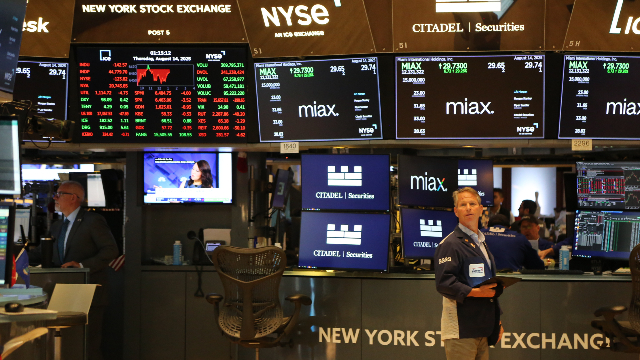
高盛流动性专家:美股系统性需求已枯竭,预计9月将“充满挑战”
Hua Er Jie Jian Wen· 2025-09-02 03:48
Core Viewpoint - Goldman Sachs warns that the U.S. stock market is facing significant challenges as it enters September, historically the worst-performing month, with systemic demand nearly exhausted, indicating potential for substantial sell-offs [1][2]. Group 1: Seasonal Trends and Market Dynamics - September is recognized as the worst month for the S&P 500, with an average return of -1.17% since 1928, and the latter half of the month is particularly weak, averaging -1.38% [2]. - The Commodity Trading Advisors (CTA) have reached a 100% full position, indicating a lack of buying power, with expected purchases in September dropping to only $2.96 billion from $12.56 billion in August [2][5]. - If the market enters a downturn, CTAs could be forced to liquidate positions, potentially leading to a sell-off of up to $73.69 billion in U.S. stocks [5]. Group 2: Institutional Investor Sentiment - Institutional investors have been net sellers of U.S. stocks for two consecutive months, reflecting a cautious stance as September approaches [3]. - Despite recent market rebounds, Goldman Sachs' sentiment indicators remain negative, suggesting that overall positioning is still relatively balanced with room for increased allocations [3][4]. - The current moderate positioning is expected to result in any market declines being relatively mild unless significant fundamental shocks occur [4]. Group 3: Market Structure and Stability - The internal market structure is providing stabilizing forces, with dealers in a record long gamma state, which helps absorb market volatility by buying during downturns and selling during upswings [9]. - Market correlation is at a near 30-year low, indicating a shift towards a stock-picking environment rather than a broad market movement, aligning with the trend of institutional active stock selection and retail investment in passive funds [9]. - The implied volatility of the S&P 500 is at a low level, making options pricing very attractive for hedging against potential market movements [9]. Group 4: Capital Flows and Investment Trends - Hedge funds have significantly rotated into emerging markets, particularly focusing on Chinese assets, with net inflows into these markets exceeding historical averages [7]. - Retail investors remain active in individual stock trading but continue to favor passive funds, leading to a growing divide between active and passive investment strategies [8]. - Since 2019, inflows into U.S. money market funds have reached $4.09 trillion, significantly outpacing the $247 billion into U.S. stock funds, highlighting a preference for liquidity despite rising stock indices [8].