小金属

Search documents
未知机构:国盛有色小金属周观点更新锂本周电碳跌132至138万-20260209
未知机构· 2026-02-09 02:20
Summary of Key Points from the Conference Call Industry Overview - **Industry Focus**: The report primarily discusses the lithium, nickel, cobalt, tungsten, and antimony sectors, providing insights into price movements, supply and demand dynamics, and market expectations. Lithium Sector - **Price Movements**: Lithium carbonate prices fell significantly, with electric carbon down 13.2% to 138,000 CNY/ton, electric hydrogen down 5.9% to 151,000 CNY/ton, and lithium carbonate futures down 14.1% to 132,000 CNY/ton [1][3][5] - **Production and Inventory**: Lithium carbonate production decreased by 1.6% to 23,700 tons, while inventory fell by 2.2% to 107,000 tons [1][5] - **Supply Dynamics**: Some lithium salt manufacturers are undergoing maintenance or holiday breaks due to the upcoming Spring Festival, impacting actual supply [5] - **Demand Trends**: Despite falling prices, downstream sectors are actively replenishing stocks, but pre-holiday preparations are nearing completion, leading to expected production declines [5][6] - **Future Outlook**: Short-term stabilization of lithium prices is anticipated, pending further demand validation [6] Nickel Sector - **Price Trends**: Nickel prices on the SHFE dropped 5.8% to 132,000 CNY/ton, with high nickel iron down 2.8% to 1,040 CNY/nickel [7][8] - **Market Activity**: The decline in nickel prices is attributed to macroeconomic sentiment and reduced liquidity. Domestic smelters are focusing on fulfilling prior orders as logistics slow down before the Spring Festival [8] - **Demand Fluctuations**: Some steel mills are tentatively inquiring about nickel iron, but demand is expected to shrink as stainless steel plants enter holiday mode [8] - **Market Outlook**: Nickel prices are likely to remain influenced by macroeconomic factors, with potential for volatility [9] Cobalt Sector - **Price Changes**: Domestic electrolytic cobalt prices fell 6.3% to 401,000 CNY/ton, while cobalt sulfate prices remained stable at 97,000 CNY/ton [9] - **Supply Challenges**: Delays in raw material arrivals from the Democratic Republic of Congo have led to urgent inventory shortages, with some smaller smelters halting production [9] - **Demand Conditions**: Demand for cobalt sulfate is tapering off as companies focus on consuming existing inventory rather than making new purchases [9] - **Price Stability**: Cobalt salt prices are expected to remain stable in the short term [10] Tungsten Sector - **Price Increases**: Black tungsten concentrate prices rose 12% to 670,000 CNY/ton, with APT and tungsten carbide also seeing significant increases [10] - **Supply Constraints**: Ongoing crackdowns on illegal mining and stricter regulations are expected to align actual supply closer to quotas, potentially tightening the market [10] - **Demand Insights**: Demand remains decent, with reduced inventory levels prompting increased procurement from production companies [11] - **Market Forecast**: Tungsten prices are expected to maintain strength leading up to the Spring Festival [13] Antimony Sector - **Price Movements**: Domestic antimony ingot prices increased by 1.2% to 163,000 CNY/ton, while Rotterdam prices fell by 3.2% to 207,000 CNY/ton [13] - **Supply Issues**: Major smelters are nearing maintenance shutdowns, and severe weather in northern regions is limiting production [14] - **Demand Activity**: Increased activity in the spot trading market has led to some replenishment by antimony oxide producers, although overall sentiment remains cautious [15] - **Short-term Outlook**: Market trading is expected to slow as the Spring Festival approaches, with limited price fluctuations anticipated [16]
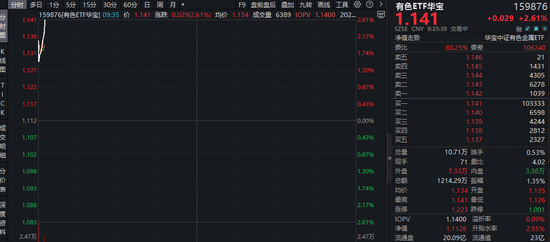
央行连续15个月增持黄金!现货黄金重返5000美元,有色ETF华宝(159876)强势拉升2.6%,盘中收复5日均线!
Xin Lang Cai Jing· 2026-02-09 01:43
Core Viewpoint - The continuous increase in gold reserves by the People's Bank of China (PBOC) for 15 consecutive months has positively impacted the performance of the non-ferrous metals sector, particularly the Huabao Non-Ferrous ETF, which saw a price increase of 2.61% on February 9 [1][10]. Group 1: Market Performance - The Huabao Non-Ferrous ETF (159876) experienced a strong rise, recovering above the 5-day moving average with a price increase of 2.61% [1][10]. - Key stocks in the non-ferrous metals sector showed significant gains, with Hunan Silver leading at over 4%, followed by Shenghe Resources, Northern Rare Earth, and Xingye Silver Zinc, all rising by more than 3% [1][12]. Group 2: Central Bank Actions - The PBOC has increased its gold reserves to 7,419 million ounces as of January 2026, up from 7,415 million ounces at the end of December 2025, marking the 15th consecutive month of gold accumulation [3][12]. - The demand for gold from the central bank remains strong, which is expected to provide a supportive floor for gold prices, even amid short-term fluctuations [4][13]. Group 3: Market Outlook - Analysts predict that gold prices may rebound to a ten-year high of $5,600 in the second quarter, with potential to reach $6,000 by the end of the year, driven by ongoing bullish sentiment in the market [4][13]. - The non-ferrous metals sector is expected to maintain a strong performance due to supply-demand mismatches, macroeconomic easing, and industrial upgrades, with high profitability anticipated to last for 3-5 years [4][13].

短期宏观情绪反复,不改有色金属长牛
GOLDEN SUN SECURITIES· 2026-02-08 11:16
Investment Rating - The report maintains a "Buy" rating for several companies in the non-ferrous metals sector, including companies like Zijin Mining, China Hongqiao, and Chalco [11]. Core Views - The report highlights that despite short-term fluctuations in macro sentiment, the long-term bullish trend for non-ferrous metals remains intact. The Chinese central bank's increased gold purchases in January have provided a strong boost to precious metals [2][41]. - The report emphasizes the strategic importance of copper reserves, suggesting that the Chinese government is looking to expand its copper strategic reserve system [3]. - The aluminum market is experiencing short-term price fluctuations due to geopolitical tensions and macroeconomic policies, with a stable production capacity but increasing social inventory [4]. - Nickel prices are under pressure due to a cooling macro sentiment, with significant price drops observed in recent weeks [5]. - The report notes that tin prices are expected to remain volatile, influenced by macroeconomic sentiment and supply-demand dynamics [8]. - Lithium prices have seen a decline, with ongoing inventory reduction, while cobalt prices are also under pressure as trading activity weakens ahead of the holiday season [9][10]. Summary by Sections Precious Metals - In January, the People's Bank of China increased its gold purchases from 0.93 tons to 1.24 tons, injecting confidence into the precious metals market. The largest silver ETF also saw a significant increase in holdings, indicating long-term investor confidence [2][41]. Industrial Metals - **Copper**: The report stresses the importance of copper strategic reserves, with a recent increase in global copper inventories. The Chinese government is exploring commercial reserve mechanisms [3]. - **Aluminum**: The aluminum market is facing short-term price volatility due to geopolitical issues and macroeconomic policies, with production capacity remaining stable but social inventories increasing [4]. - **Nickel**: Nickel prices have dropped significantly, with SHFE nickel falling 5.8% to 132,000 CNY/ton due to cooling macro sentiment [5]. - **Tin**: The tin market is experiencing a supply-demand imbalance, with prices expected to remain volatile [8]. Energy Metals - **Lithium**: The report indicates a decline in lithium prices, with carbonate prices dropping 13.2% to 138,000 CNY/ton. Inventory levels are also decreasing [9]. - **Cobalt**: Cobalt prices are under pressure, with a 6.3% drop in domestic electrolytic cobalt prices to 410,000 CNY/ton as trading activity slows [10].
——小金属双周报(2026/1/26-2026/2/6):供给紧缺格局加剧,钨&稀土价格持续新高-20260208
Hua Yuan Zheng Quan· 2026-02-08 02:50
Investment Rating - The industry investment rating is "Positive" (maintained) [4] Core Views - The supply tightness in the rare earth sector is increasing, with prices for praseodymium and neodymium oxide reaching new highs, up 12.64% to 757,500 CNY/ton [4] - Molybdenum prices have rebounded due to improved supply-demand dynamics, with molybdenum concentrate prices rising 2.48% to 4,135 CNY/ton [21] - Tungsten prices continue to hit historical highs, with black tungsten concentrate prices increasing 25.19% to 671,000 CNY/ton [27] - Tin prices have seen significant adjustments, with SHFE tin down 16.89% to 357,000 CNY/ton [30] - Antimony prices are experiencing a rebound, with antimony ingot prices up 2.49% to 164,500 CNY/ton [39] Summary by Category Rare Earth - Praseodymium and neodymium oxide prices increased by 12.64% to 757,500 CNY/ton, while dysprosium and terbium prices decreased by 1.41% to 140,000 CNY/ton and 2.37% to 617,500 CNY/ton respectively [9][4] Molybdenum - Molybdenum concentrate prices rose 2.48% to 4,135 CNY/ton, and molybdenum iron (Mo60) prices increased 3.48% to 267,500 CNY/ton [21][4] Tungsten - Black tungsten concentrate prices surged 25.19% to 671,000 CNY/ton, and ammonium paratungstate prices rose 24.68% to 985,000 CNY/ton [27][4] Tin - SHFE tin prices fell 16.89% to 357,000 CNY/ton, while LME tin prices decreased 15.42% to 45,845 USD/ton [30][4] Antimony - Antimony ingot prices increased by 2.49% to 164,500 CNY/ton, and antimony concentrate prices rose 1.40% to 144,500 CNY/ton [39][4]

20260207周报:宏观情绪冲击,金属价格波动剧烈-20260207
Huafu Securities· 2026-02-07 09:29
Investment Rating - The report maintains a rating of "Outperform" for the industry [7] Core Views - Precious metals are experiencing significant price volatility, with silver prices retreating from highs due to profit-taking and macroeconomic factors [3][14] - Industrial metals, particularly copper and aluminum, are undergoing price corrections influenced by macroeconomic conditions, with copper prices showing signs of recovery despite inventory accumulation [4][20] - In the new energy metals sector, lithium carbonate prices have sharply declined, but strong demand signals from downstream industries may support a rebound in prices post-holiday [22][27] - Other minor metals, such as rare earths, are showing mixed price movements, with some products experiencing upward pressure due to supply constraints [24][27] Summary by Sections Precious Metals - Silver prices have seen a significant drop, with fluctuations driven by market sentiment and macroeconomic news, including the nomination of Kevin Warsh as the next Federal Reserve Chair [3][14] - Key stocks to watch include Zijin Mining, Zhongjin Lingnan, and others in the gold sector [15] Industrial Metals - Copper prices have corrected, but market activity has increased, with strong buying sentiment noted despite the holiday season affecting production schedules [4][20] - Aluminum prices have experienced volatility, with a notable drop followed by a brief recovery, although the overall supply-demand structure remains weak [20][21] New Energy Metals - Lithium carbonate prices have decreased significantly, but robust demand from downstream sectors indicates potential for price recovery in the near future [22][27] - Key stocks in the lithium sector include Ganfeng Lithium and others [23] Other Minor Metals - The rare earth market has shown mixed price trends, with some products like praseodymium-neodymium oxide experiencing upward price movements due to supply constraints [24][27] - Stocks to monitor include Hunan Gold and others in the minor metals sector [27]
中国稀土涨1.35%,成交额14.50亿元,近3日主力净流入-2.66亿
Xin Lang Cai Jing· 2026-02-06 07:47
Core Viewpoint - China's rare earth sector shows a positive trend with a 1.35% increase in prices, reaching a transaction volume of 1.45 billion yuan and a total market capitalization of 54.87 billion yuan [1] Company Overview - The company primarily engages in the production and operation of rare earth oxides and provides technology research and consulting services [2][8] - The main products include high-purity rare earth oxides, with over 80% of products having a purity greater than 99.99%, and some reaching 99.9999% [2] - The company is controlled by the State-owned Assets Supervision and Administration Commission of the State Council, categorizing it as a state-owned enterprise [3][4] Financial Performance - For the period from January to September 2025, the company achieved a revenue of 2.494 billion yuan, representing a year-on-year growth of 27.73%, and a net profit attributable to shareholders of 192 million yuan, up 194.67% year-on-year [8] - Cumulative cash dividends since the company's A-share listing amount to 346 million yuan, with 124 million yuan distributed over the past three years [9] Shareholder Structure - As of September 30, 2025, the top ten circulating shareholders include Hong Kong Central Clearing Limited and Southern CSI 500 ETF, with notable changes in shareholding [10] - The number of shareholders decreased to 191,400, while the average circulating shares per person increased by 2.24% [8]

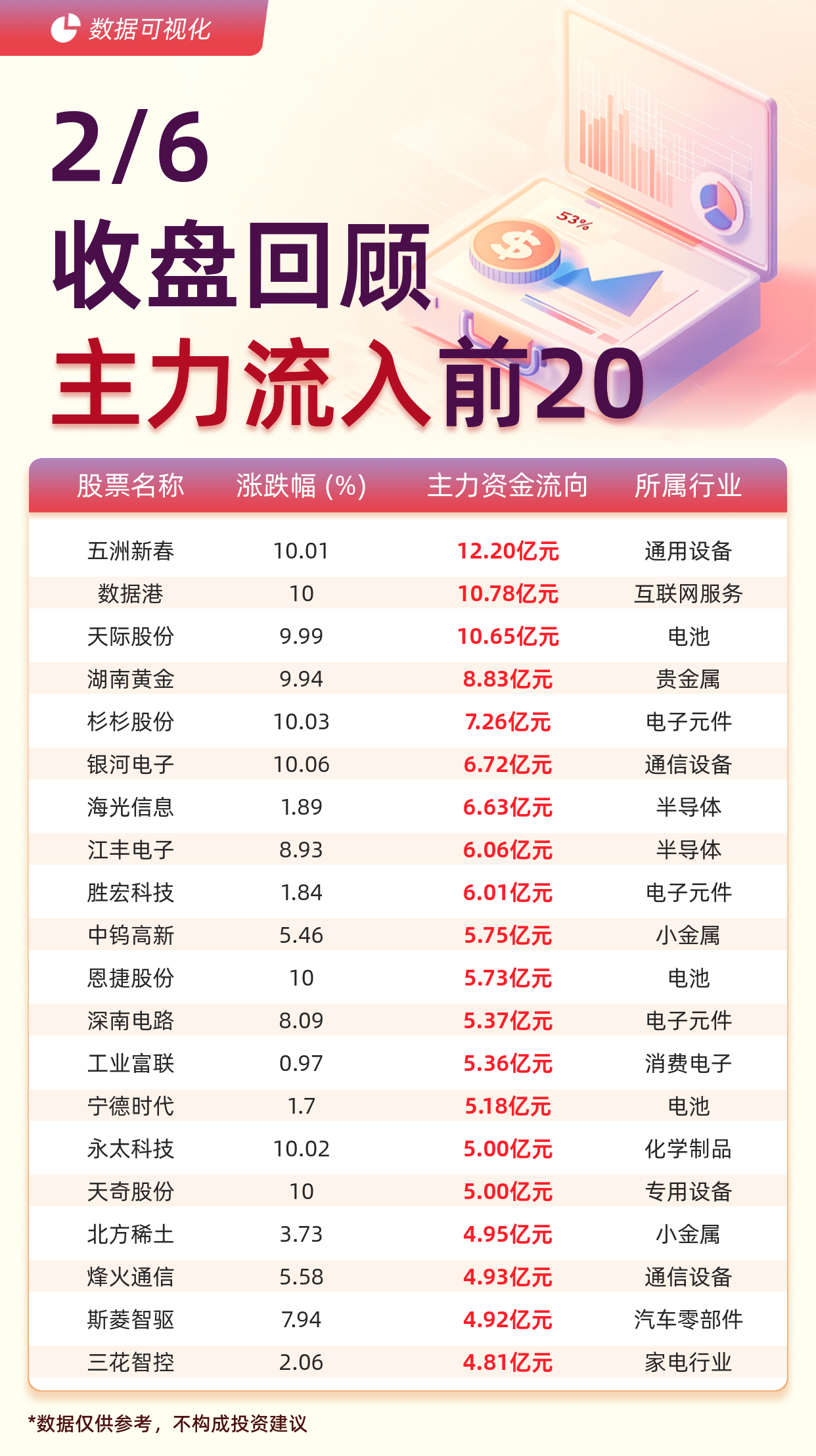
主力资金流入前20:五洲新春流入12.20亿元、数据港流入10.78亿元
Jin Rong Jie· 2026-02-06 07:29
Core Insights - The main focus of the news is on the top 20 stocks with significant capital inflow as of February 6, highlighting their respective amounts and performance in terms of percentage change. Group 1: Capital Inflow - The stock with the highest capital inflow is Wuzhou Xinchun, attracting 1.22 billion yuan [1] - Data Port follows closely with an inflow of 1.078 billion yuan [1] - Tianji Co. has an inflow of 1.065 billion yuan, marking a strong performance [1] Group 2: Stock Performance - Wuzhou Xinchun shows a price increase of 10.01% [2] - Data Port has a price increase of 10% [2] - Tianji Co. reports a price increase of 9.99% [2] Group 3: Industry Breakdown - Wuzhou Xinchun belongs to the General Equipment sector [2] - Data Port is categorized under Internet Services [2] - Tianji Co. is part of the Battery industry [2] Group 4: Additional Stocks - Hunan Gold has a capital inflow of 883 million yuan with a price increase of 9.94% [1][2] - Shanshan Co. sees an inflow of 726 million yuan and a price increase of 10.03% [1][2] - Galaxy Electronics has an inflow of 672 million yuan with a price increase of 10.06% [1][2] Group 5: Other Notable Stocks - The stock with the lowest inflow in the top 20 is Sanhua Intelligent Control, with an inflow of 481 million yuan and a price increase of 2.06% [3] - Other notable stocks include Northern Rare Earth with an inflow of 495 million yuan and a price increase of 3.73% [3] - Fenghuo Communication has an inflow of 493 million yuan with a price increase of 5.58% [3]




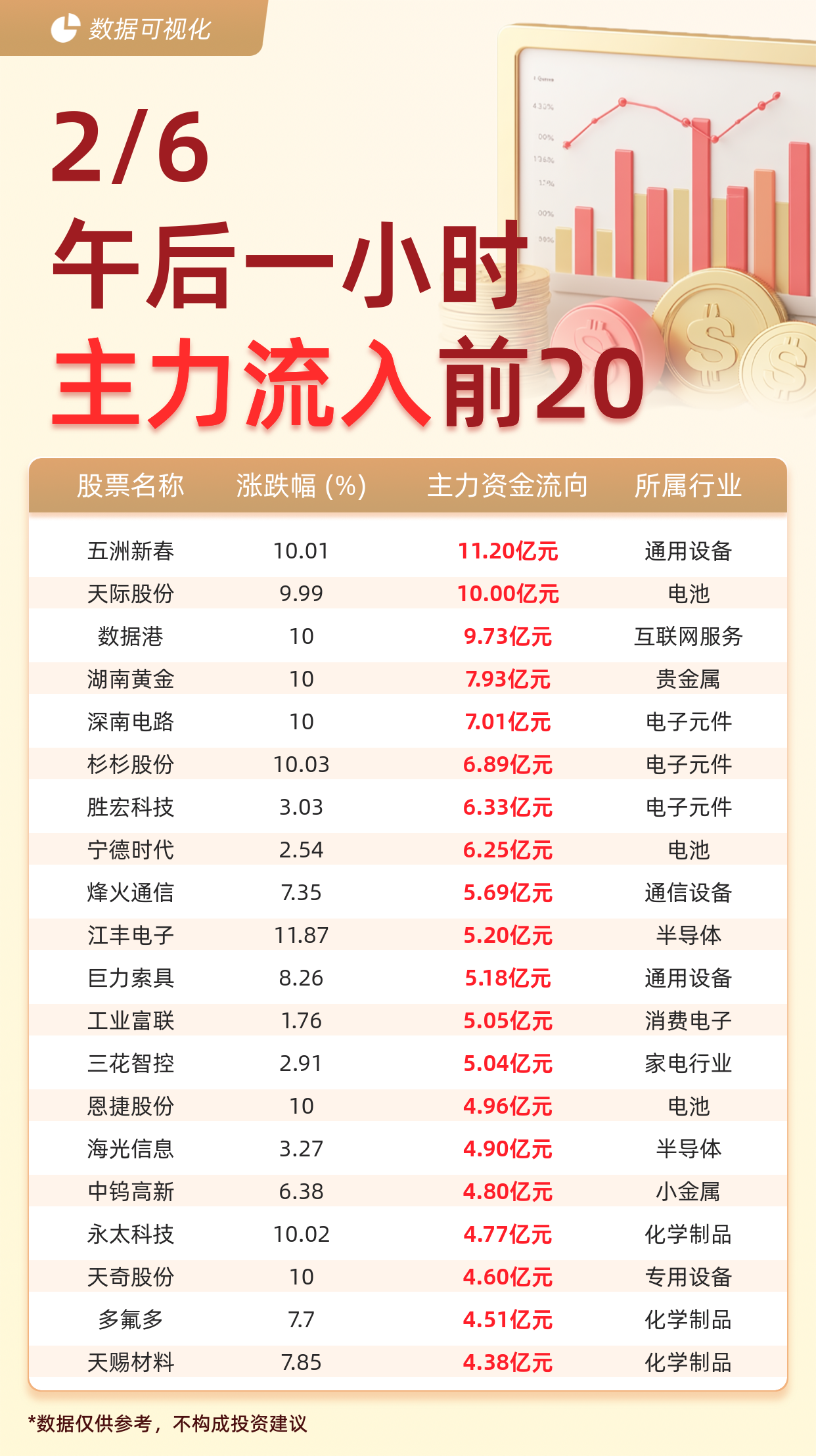
主力资金流入前20:五洲新春流入11.20亿元、天际股份流入10.00亿元
Jin Rong Jie· 2026-02-06 06:27
Group 1 - The top 20 stocks with significant capital inflow as of February 6 include Wuzhou Xinchun (1.12 billion), Tianji Co. (1 billion), and Data Port (973 million) [1] - Wuzhou Xinchun saw a price increase of 10.01%, while Tianji Co. and Data Port both increased by 9.99% and 10% respectively [2] - Other notable stocks include Hunan Gold (10% increase, 793 million), and Shennan Circuit (10% increase, 701 million) [2][3] Group 2 - The electronics sector is represented by companies like Shennan Circuit, Shanshan Co., and Shenghong Technology, with inflows of 701 million, 689 million, and 633 million respectively [2][3] - The battery industry includes significant players such as Ningde Times (2.54% increase, 625 million) and Enjie Co. (10% increase, 496 million) [2][3] - Chemical products sector features companies like Yongtai Technology (10.02% increase, 477 million) and Duofluor (7.7% increase, 451 million) [3]


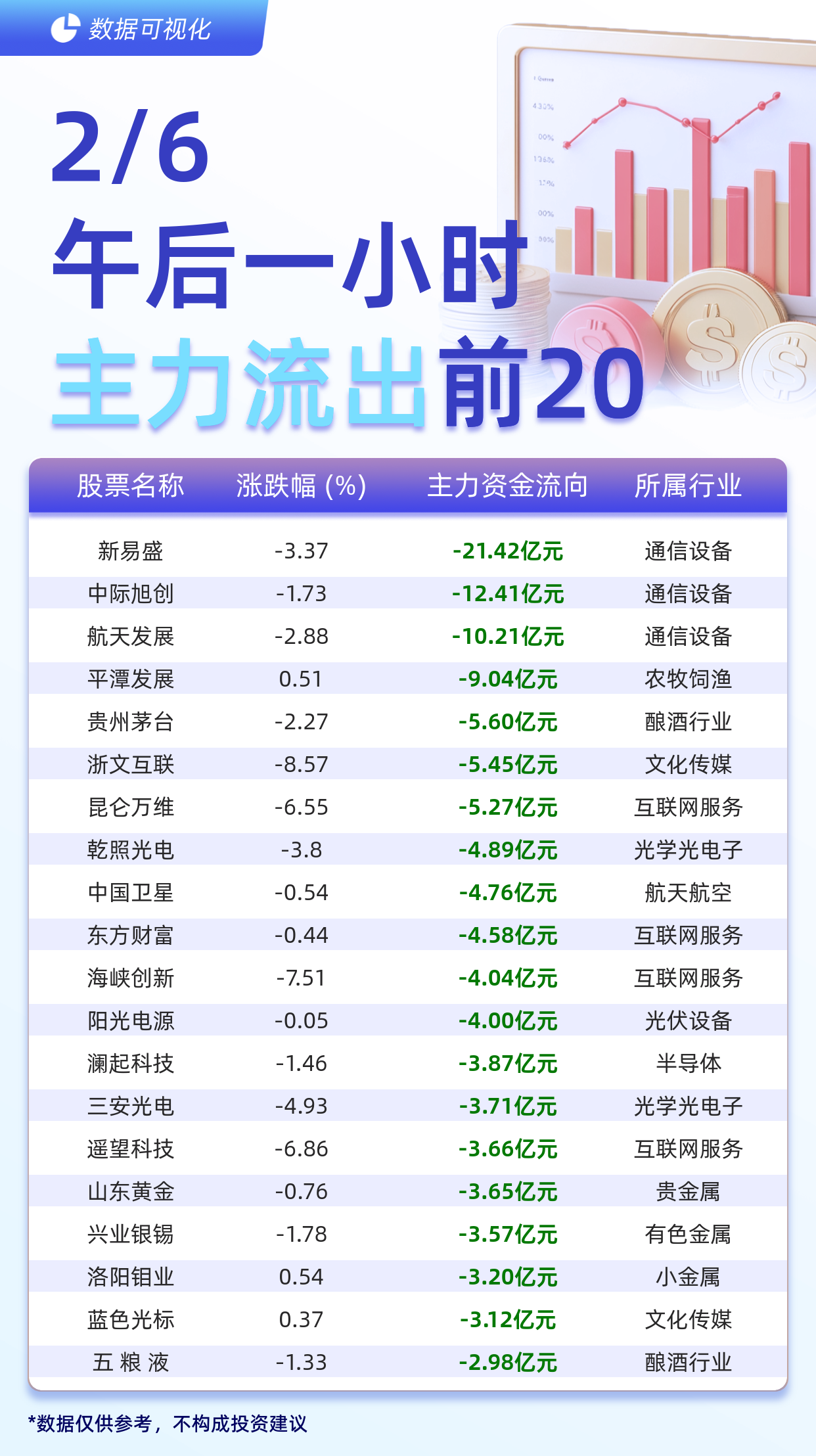
主力个股资金流出前20:新易盛流出21.42亿元、中际旭创流出12.41亿元
Jin Rong Jie· 2026-02-06 06:27
Main Points - The main focus of the news is on the significant outflow of capital from various stocks, highlighting the top 20 stocks with the largest capital outflows as of February 6, with New Yisheng leading at -21.42 billion yuan [1][2][3] Group 1: Stock Performance - New Yisheng experienced a capital outflow of -21.42 billion yuan, indicating a strong sell-off in the communication equipment sector [1][2] - Zhongji Xuchuang saw a capital outflow of -12.41 billion yuan, also within the communication equipment industry [1][2] - Aerospace Development had a capital outflow of -10.21 billion yuan, reflecting investor sentiment in the communication equipment sector [1][2] - Pingtan Development reported a capital outflow of -9.04 billion yuan, indicating challenges in the agriculture and animal husbandry sector [1][2] - Kweichow Moutai faced a capital outflow of -5.60 billion yuan, suggesting potential concerns in the liquor industry [1][2] Group 2: Sector Analysis - The communication equipment sector is notably affected, with three companies (New Yisheng, Zhongji Xuchuang, and Aerospace Development) among the top outflows [1][2] - The liquor industry, represented by Kweichow Moutai, shows a significant outflow, which may indicate market volatility or changing consumer preferences [1][2] - The internet services sector is also impacted, with companies like Kunlun Wanwei and Dongfang Caifu experiencing outflows of -5.27 billion yuan and -4.58 billion yuan respectively [1][2][3] Group 3: Additional Stocks - Other notable stocks with significant outflows include Sunshine Power (-4.00 billion yuan) in the photovoltaic equipment sector and Sanan Optoelectronics (-3.71 billion yuan) in the optical and optoelectronic sector [1][3] - The precious metals sector, represented by Shandong Gold, saw an outflow of -3.65 billion yuan, indicating potential investor caution [1][3] - The cultural media sector, with companies like Zhejiang Wenlian and Blue Focus, also faced outflows of -5.45 billion yuan and -3.12 billion yuan respectively, reflecting market dynamics in this industry [1][3]





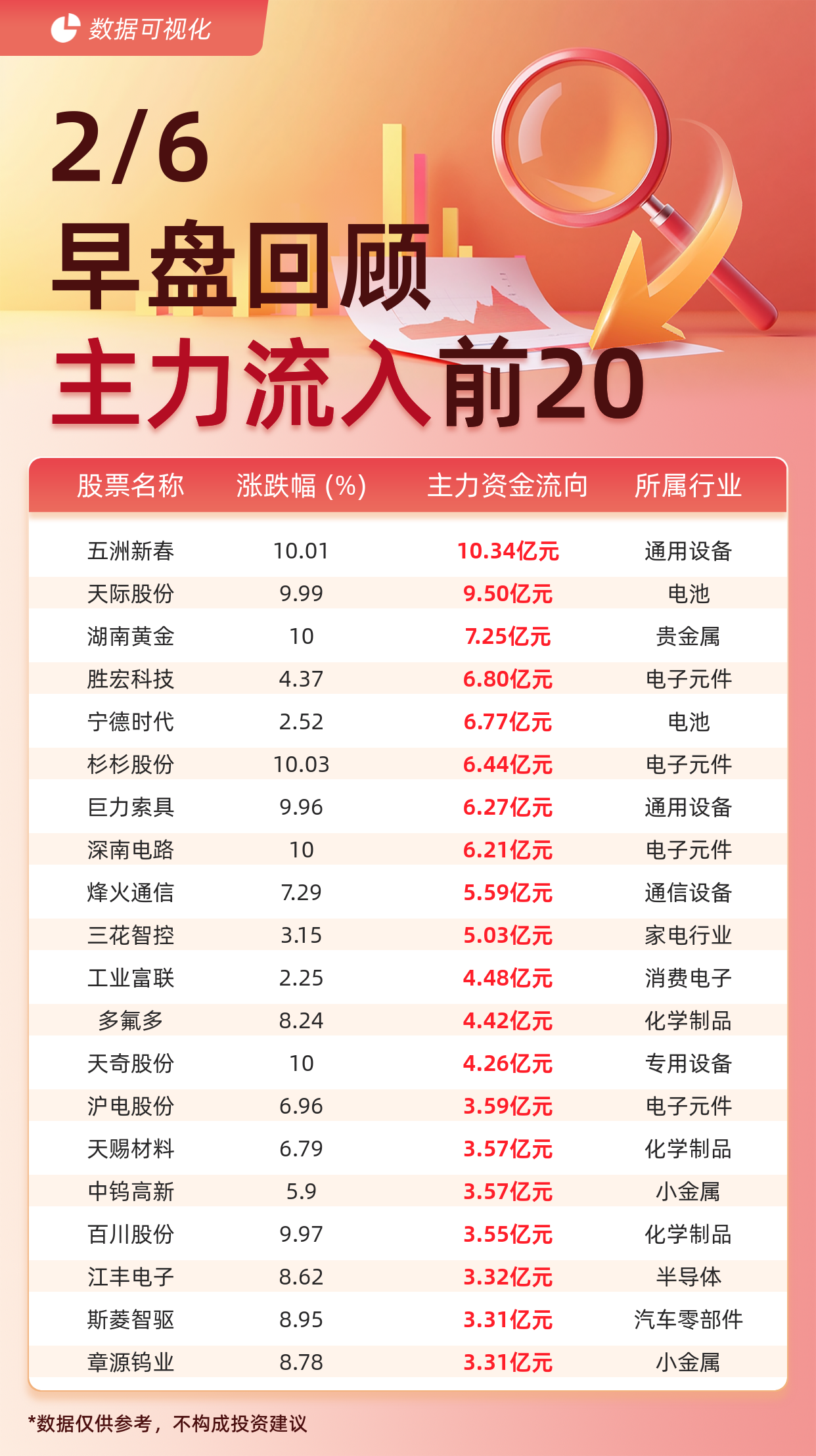
主力资金流入前20:五洲新春流入10.34亿元、天际股份流入9.50亿元
Jin Rong Jie· 2026-02-06 04:24
Group 1 - The top 20 stocks with significant capital inflow as of February 6 include Wuzhou Xinchun (1.034 billion), Tianji Co. (950 million), and Hunan Gold (725 million) [1] - Wuzhou Xinchun saw a price increase of 10.01%, while Tianji Co. increased by 9.99% [2] - Other notable stocks with high capital inflow include Shenghong Technology (680 million), Ningde Times (677 million), and Shanshan Co. (644 million) [1][2] Group 2 - The electronics sector is represented by Shenghong Technology, Deep South Circuit, and Industrial Fulian, with capital inflows of 680 million, 621 million, and 448 million respectively [2][3] - Chemical products are highlighted by Duofluo (442 million) and Tianqi Materials (357 million), both showing significant price increases [3] - The small metals sector includes Zhongtung High-tech and Zhangyuan Tungsten Industry, with capital inflows of 357 million each [3]