
建材

Search documents
金融工程日报:A股震荡走低,海洋经济爆发、科技股回调-20250702
Guoxin Securities· 2025-07-02 13:30
- The report does not contain any quantitative models or factors for analysis[1][2][3]
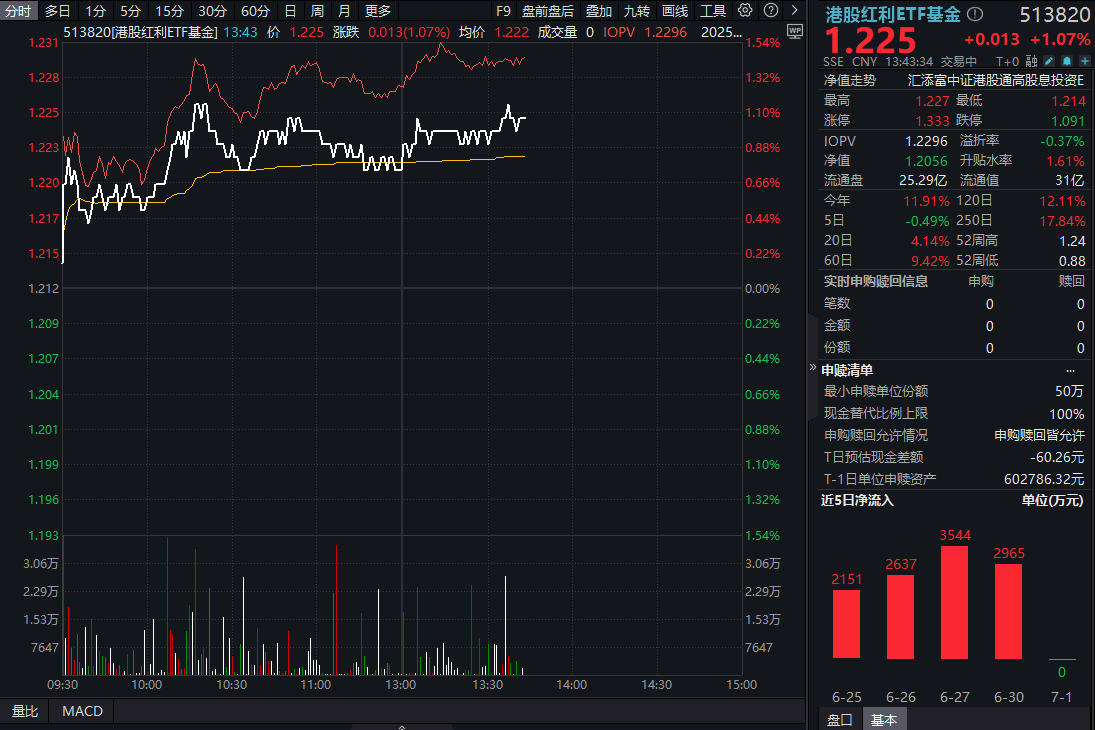
内银股强劲反弹,工农交建等大行涨超2%!港股红利ETF基金(513820)爆量涨超1%,AH溢价收敛至130下方,港股配置性价比怎么看?
Xin Lang Cai Jing· 2025-07-02 06:18
Group 1 - The article highlights the strong performance of the Hong Kong stock market compared to the A-share market, leading to a narrowing of the AH premium, which currently stands below 130 points [3][5] - The Hong Kong Dividend ETF (513820) has shown significant gains, with bank stocks rebounding strongly, particularly Minsheng Bank which rose over 5%, and coal stocks also performing well, with Yancoal Australia increasing by over 4% [4][5] - The article discusses the impact of US dollar liquidity on the AH premium, indicating that while the premium appears low since 2022, it is influenced by high overseas interest rates and a strong dollar index [5] Group 2 - The article notes that the Hong Kong Dividend sector currently has a high AH premium, making it an attractive investment option, with an average premium of 40.96% for 18 constituent stocks listed in both markets [5][10] - The Hong Kong Dividend ETF (513820) has consistently paid dividends for 12 months, with a total cash dividend exceeding 1 trillion HKD in 2024, averaging 33.866 billion HKD per distribution, leading the Hong Kong dividend index [10] - The article emphasizes the importance of dividend levels and frequency in selecting dividend assets, highlighting the ETF's strong performance in this regard [10]

基建板块盘中领涨,基建ETF(159619)上涨超1.5%,中西部基建景气与资金改善支撑需求
Sou Hu Cai Jing· 2025-07-02 02:40
Group 1 - The infrastructure sector is leading the market, with the infrastructure ETF (159619) rising over 1.5%, supported by improved demand from the mid-western region and funding conditions [1] - Infrastructure investment is expected to show structural characteristics by 2025, with broad and narrow infrastructure growth rates projected at 8.69% and 4.03% respectively [1] - The issuance of special bonds has accelerated significantly, with 58% of the annual quota completed by May, and an additional 176 billion yuan issued in June [1] Group 2 - The mid-western region shows outstanding infrastructure activity, with special bond growth exceeding 100% in Sichuan and Shaanxi from January to April [1] - Coal chemical projects are expected to drive regional infrastructure demand, with total planned investments reaching 1,032.9 billion yuan and an average annual investment growth of 220.6% from 2025 to 2029 [1] - The water and electricity sectors remain highly active, with significant infrastructure needs arising from upcoming projects like the Tibet hydropower project [1] Group 3 - The funding environment has improved, with rapid progress in replacing hidden debts, and a narrowing decline in net financing of urban investment bonds expected to provide additional funding support for infrastructure [1]
侨力侨智赋能 走出中非经贸合作新路径
Zhong Guo Xin Wen Wang· 2025-07-02 01:15
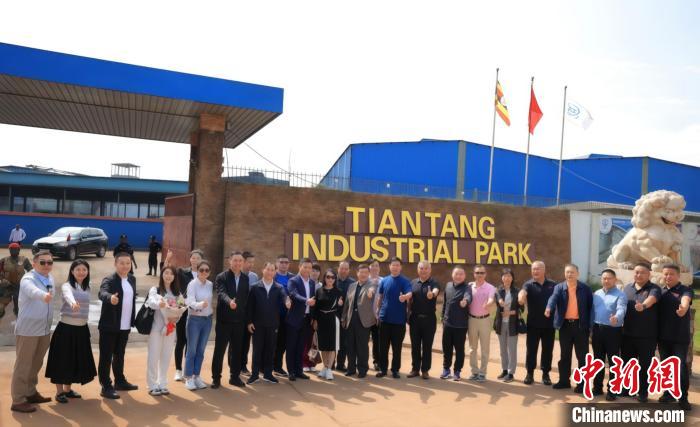
Group 1 - The core viewpoint of the articles highlights the role of Chinese enterprises, particularly Tian Tang Group, in enhancing economic development and industrialization in Uganda through the establishment of the China-Uganda Mbale Industrial Park, which has attracted over 50 companies and created more than 5,000 jobs [1][2] - The China-Uganda Mbale Industrial Park has also facilitated talent development, infrastructure construction, and cultural exchange, exemplified by the establishment of the Uganda Luban Workshop Training Institute, which provides vocational skills training to local employees [1][2] - Tian Tang Group's dual headquarters management model aims to leverage its 20 years of experience in Africa to assist more Chinese enterprises in expanding overseas and contributing to the industrialization of host countries [2] Group 2 - The Kenya Chinese Association, established in 2005, has over 300 members and aims to promote trade and investment between China and Kenya, highlighting the importance of Chinese enterprises in the local market [4][5] - The association plans to establish cooperative mechanisms with Shenzhen business associations to facilitate more Chinese enterprises' access to the Kenyan market through trade fairs and economic cooperation events [5] - There are initiatives to create a "Shenzhen Product Display Center" in Kenya to serve as a gateway for Shenzhen enterprises entering the East African market, along with promoting cultural and educational collaborations [5]
海南瑞泽新型建材股份有限公司 第六届监事会第九次会议决议公告
Zhong Guo Zheng Quan Bao - Zhong Zheng Wang· 2025-06-30 23:25
Group 1 - The company held the 9th meeting of the 6th Supervisory Board on June 30, 2025, where all members participated and approved the proposal for extending loans to related parties [2][3] - The proposal to extend the loan to the related party was deemed necessary for the company's daily operations and business development, with the loan amount and interest rate remaining unchanged at 15 million RMB and 3.1% respectively [8][12] - The independent directors reviewed and approved the proposal before it was submitted to the board, ensuring compliance with relevant regulations [14][23] Group 2 - The company also held the 13th meeting of the 6th Board of Directors on June 30, 2025, where all directors participated and unanimously approved the same loan extension proposal [6][9] - The loan was originally issued to the Vice General Manager, Zhao Lixin, on December 30, 2024, for a period of three months, which has now been extended to September 30, 2025 [11][12] - The loan extension is classified as a related party transaction, and the company has ensured that it does not harm the interests of shareholders, particularly minority shareholders [17][21] Group 3 - The company provided guarantees for loans taken by its subsidiaries, Sanya Ruize Shuanglin Building Materials Co., Ltd. and Qionghai Ruize Concrete Distribution Co., Ltd., amounting to 10 million RMB each [27][28] - The guarantees are backed by collateral, including land use rights and properties owned by the company, ensuring the security of the loans [29][30] - The total external guarantee amount provided by the company and its subsidiaries is 1,683.23 million RMB, with an actual cumulative guarantee balance of 1,266.62 million RMB, representing 169% of the company's latest audited net assets [36]

打造更多建材“六零”工厂
Jing Ji Ri Bao· 2025-06-30 22:10
打造科技创新平台,支撑建材行业绿色低碳发展。自去年起,建材行业通过在"揭榜挂帅"、科技资源支 持、打造高水平科技成果、产学研用交流、新材料推广应用等方面聚力,绿色低碳科技创新能力全面提 升。但不少企业反映,行业科技创新平台数量不足,功能相对较弱。科技创新平台可促进科研基础设 施、人才、资源储备及研发项目等方面创新资源的共享与优化,推动最先进、最前沿的创新成果规模化 应用,着力解决建材行业创新成果转化过程中存在的"难点""堵点"。未来建材企业要继续发力,力争实 现建材行业科技研发体系与产业和市场深度融合。 在山东济宁落地的全球首个水泥行业零外购电示范工厂,近日引起外界广泛关注。该工厂通过实施一系 列节能技改和多能互补,绿色新能源发电超1.6亿千瓦时,实现新能源的高效稳定利用,成为我国建材 行业"六零"工厂的标杆。 近年来,建材行业"六零"工厂概念逐渐被外界熟知。与国际上普遍聚焦"近零排放"或"净零产品"等单一 目标的发展路径不同,建材行业"六零"工厂概念提出"零外购电、零化石能源、零一次资源、零碳排 放、零废弃物排放、零员工"系列指标,目的是为了更好地引领建材企业绿色低碳转型发展。 在绿色发展理念引领下,当前参 ...
股指月报:美国关税豁免将到期,关注特朗普极限施压风险-20250630
Zheng Xin Qi Huo· 2025-06-30 05:19
Report Industry Investment Rating No relevant information provided. Core Views - The results of the second Sino-US meeting were not significant. The US initiated new home appliance tariff policies and restrictions on key chip equipment. With the 90-day exemption period for various countries ending soon, there is a risk of tariffs impacting the market again in the next two weeks. It's necessary to guard against Trump's potential extreme pressure, similar to the situation in 2018. The domestic economy is entering a seasonal recovery window, and potential macroeconomic positives from the Politburo meeting in late June - July should be watched [4]. - The real estate sales are seasonally recovering from a low level, but the peak season is not booming. The service industry shows structural differentiation and a slight decline from its high level. In May, production and investment in the real economy declined, while consumption took the lead with the boost of fiscal subsidies. The logic of manufacturing rush exports continues, the domestic supply - demand contradiction is marginally cooling, and prices are expected to oscillate upwards. Attention should be paid to whether fiscal policy will further support the economic center in the second half of the year [4]. - Domestic liquidity is generally loose, and overseas liquidity is also tending to be loose due to the Fed's dovish guidance and declining economic data. Financial conditions have significantly improved. Coupled with the expected rebound of the US dollar index, the domestic stock market will receive incremental funds, with inflows from passive ETFs and margin trading funds, while IPO and other equity financing and unlocking pressures remain [4]. - After a short - term rebound, the valuations of various indices are still at a relatively high level in the historical neutral range. The stock - bond risk premiums at home and abroad are low, and the attractiveness of allocation funds is average [4]. - The pressure on the macro and industrial fundamentals is facing a marginal reversal, financial conditions are generally loose, and the valuations of broad - based index markets are generally not cheap. Coupled with the expected return of US tariff policy pressure, the stock market's upward path in the third quarter may be characterized by frequent setbacks, with an overall oscillatory upward trend. Policy - level macro expectations, excessive domestic liquidity, and the support of stable funds will support the lower limit of the stock market adjustment. It is recommended to actively go long on stock index futures during sharp declines in July. In terms of style, first go long on IC and IM, then on IF and IH, or conduct an arbitrage strategy of going long on IM and short on IF [4]. Summary by Directory 1. Market Review - **Global Stock Market Performance**: In the past month, A - shares led the global stock market rally, while European stocks led the decline. The performance order is: ChiNext > Dow Jones > Nikkei 225 > FTSE Emerging Markets > Hang Seng Tech > CSI 300 > German stocks > FTSE Europe. Specific index increases include: Shanghai Composite Index 2.29%, Shenzhen Component Index 3.37%, ChiNext Index 6.58%, etc. [8][9] - **Industry Performance**: In the past month, the comprehensive finance sector led the rise, while the food and beverage sector led the decline [12]. - **Futures Performance**: The basis rates of the four major stock index futures (IH, IF, IC, and IM) changed by 0.48%, 0.53%, 0.91%, and 1.26% respectively, with significant narrowing of the discounts. The inter - period spread rates (current month and next month) of the four major stock index futures changed by - 0.16%, - 0.2%, 0.16%, and 0.16% respectively. The inter - period discount of IH increased slightly, while those of IF, IC, and IM narrowed slightly. The inter - period spread rates (next quarter and current month) of the four major stock index futures changed by - 0.08%, - 0.12%, 0.21%, and 0.35% respectively. The long - term discounts of IH and IF increased slightly, while those of IC and IM narrowed slightly [16][17] 2. Fund Flow - **Margin Trading and Market - Stabilizing Funds**: In June, margin trading funds flowed in 37.5 billion yuan, reaching 1.84 trillion yuan. The proportion of margin trading balance to the circulating market value of the Shanghai and Shenzhen stock markets decreased by 0.02% to 2.27%. The scale of passive stock ETF funds reached 3.0185 trillion yuan, exceeding 3 trillion yuan for the first time, an increase of 68.35 billion yuan from the previous month. The share was 199.594 billion shares, with a redemption of 7.92 billion shares from the previous month [22]. - **Industrial Capital**: In June, equity financing was 541.96 billion yuan, with 6 companies involved. Among them, IPO financing was 8.73 billion yuan, private placement was 533.23 billion yuan, and convertible bond financing was 4.35 billion yuan. The scale of equity financing rebounded significantly to a high level. The market value of restricted - share unlockings (including additional issuance, placement, rights issue, equity incentive, etc.) was 218.5 billion yuan, an increase of 109.98 billion yuan from the previous month, showing a continuous marginal increase and ranking second highest in the year [25] 3. Liquidity - **Money Supply**: In June, the central bank's OMO reverse repurchase matured at 5.298 trillion yuan, and reverse repurchase was issued at 6.3795 trillion yuan, with a net money injection of 1.0815 trillion yuan. The liquidity in the open - market business was marginally loose at the end of the quarter. The MLF was issued at 300 billion yuan and matured at 182 billion yuan in June, with net issuance for four consecutive months, and the overall liquidity supply was neutral and tending to be loose [27]. - **Money Demand**: In June, the issuance of national bonds was 1.5958 trillion yuan, and the maturity was 889.65 billion yuan, with a net money demand of 706.15 billion yuan; the issuance of local bonds was 1.34898 trillion yuan, and the maturity was 484.32 billion yuan, with a net money demand of 864.65 billion yuan; the issuance of other bonds was 7.22604 trillion yuan, and the maturity was 6.6366 trillion yuan, with a net money demand of 589.43 billion yuan. The total bond market issuance was 10.17082 trillion yuan, and the maturity was 8.01058 trillion yuan, with a net money demand of 2.16023 trillion yuan. The debt financing demand in the bond market remained high, driven by the joint efforts of national bonds, local government bonds, and corporate debt financing [30]. - **Fund Price**: Last month, DR007, R001, and SHIBOR overnight rates changed by 3.2bp, - 12.6bp, and - 10bp respectively, reaching 1.7%, 1.44%, and 1.37%. The issuance rate of inter - bank certificates of deposit rebounded by 0.7bp, and the CD rate issued by joint - stock banks dropped by 3bp to 1.67%. The fund rate was significantly lower than the 1 - year MLF rate of 2% and slightly lower than the policy rate DR007 of 1.7%. The fund supply was loose, the debt financing demand was strong, but the real - economy financing was weak, and the fund price generally oscillated at a low level [33]. - **Term Structure**: Last month, the yield of the 10 - year national bond changed by - 2.3bp, the yield of the 5 - year national bond changed by - 5.6bp, and the yield of the 2 - year national bond changed by - 10.3bp; the yield of the 10 - year policy - bank bond changed by - 2.1bp, the yield of the 5 - year policy - bank bond changed by - 5.2bp, and the yield of the 2 - year policy - bank bond changed by - 5.2bp. Overall, the yield term structure steepened significantly in June due to the central bank's liquidity injection in the open market, which led to a significant decline in the short - end. The credit spread between national bonds and policy - bank bonds widened at the short - end [37]. - **Sino - US Interest Rate Spread**: In June, the yield of the US 10 - year Treasury bond changed by - 14.0bp to 4.29%, the inflation expectation changed by - 3.0bp to 2.29%, and the real interest rate changed by - 11.0bp to 2.00%. Risk - asset prices rose due to the improvement of financial conditions. The 10 - 2Y spread of US Treasury bonds changed by 5.0bp to 56.0bp. The inversion of the Sino - US interest rate spread narrowed by 9.8bp to - 264.38bp, and the offshore RMB appreciated by 0.47%. The US dollar - RMB exchange rate oscillated around the central level of the past three - year range [40] 4. Macroeconomic Fundamentals - **Real Estate Demand**: As of June 26, the weekly trading area of commercial housing in 30 large - and medium - sized cities was 2.928 million square meters, a seasonal increase from 2.021 million square meters of the previous week, but at a relatively low level compared to the same period. Compared with the same period in 2019 before the pandemic, it decreased by 32.1%. Second - hand housing sales declined seasonally, with a slight month - on - month decrease, at a relatively low level in the past seven years. The high - frequency sales trends of new and second - hand housing in the real estate market diverged last month, with new housing recovering but second - hand housing falling back to a low level. Overall, the real estate market remained weak, and the pulse effect of the new real estate policies faded. The overall sales center of the real estate market returned to a low level, and more incremental policies were awaited for boosting [43] - **Service Industry Activity**: As of June 27, the weekly average daily passenger volume of the subway in 28 large - and medium - sized cities remained at a high level, reaching 81.26 million person - times, an increase of 1.8% compared to the same period last year and 32.5% compared to the same period in 2021. The economic activity in the service industry declined seasonally from a high level. The Baidu congestion delay index of 100 cities rebounded compared to the previous week, at a neutral level in the past three years. Overall, the economic activity in the service industry tended to a natural and stable growth level, with insignificant monthly changes [47] - **Manufacturing Tracking**: In June, the capacity utilization rates of the manufacturing industry showed mixed trends. The capacity utilization rate of steel mills changed by 0.14%, that of asphalt by 3.8%, that of cement clinker enterprises by 2.06%, and that of coke enterprises by - 2.31%. The average operating rate of the chemical industry chain related to external demand changed by - 0.24% compared to the previous month. Overall, the domestic demand trend in the manufacturing industry rebounded, while the external demand was weak [51] - **Cargo Flow**: Both cargo and passenger flows remained at relatively high levels. The postal express industry dominated by e - commerce and the civil aviation flight guarantee sector dominated by tourism consumption showed strong growth, with continuous weekly increases. The highway and railway transportation were relatively weak, with limited growth rates. Attention should be paid to the potential seasonal decline risk from July to August [56] - **Import and Export**: In terms of exports, the logic of rush exports after the Sino - US trade talks continued to play out. The port cargo throughput and container throughput rebounded after a short - term decline. From July to August, the risk of a second decline after the end of the 90 - day exemption period and the resurgence of tariff frictions should be guarded against [59] - **Overseas Situation**: In May, the US PCE inflation rebounded slightly, with the core PCE reaching 2.68%, an increase of 0.1% from the previous month. Structurally, it was mainly due to the significant rebound in the food and commodity sectors, which began to be affected by tariffs. The service and market - based sub - items rebounded slightly, and the decline of the energy sub - item narrowed, with the month - on - month growth rate returning to 0.2%. Assuming the tariff impact continues for the next three months with a 0.2% month - on - month growth rate, the annualized month - on - month rate is expected to rebound to 2.43%, still below the 2.5% level, providing data support for the Fed's interest - rate cut. Fed Chairman Powell sent a dovish signal during the Senate and House hearings. Coupled with the significant downward revision of the US GDP in the first quarter and the significant decline in residents' PCE income and consumption in May, the financial market began to optimistically revise its expectations for the Fed's interest - rate path. According to the CME's FedWatch tool, the market expects the number of interest - rate cuts in 2025 to increase to 3 times, with a cut range of about 50 - 75bp. The expected interest - rate cut times are in September, October, and December. The probability of an interest - rate cut in July rebounded to 18%, and the probability in September increased significantly. The terminal interest rate after the interest - rate cuts within the year is expected to be in the range of 3.5% - 3.75% [61][65] 5. Other Analyses - **Valuation**: The stock - bond risk premium in the past month was 3.41%, a decrease of 0.18% from the previous month, at the 71.3% quantile. The foreign - capital risk premium index was 4.45%, a decrease of 0.32% from the previous month, at the 29.3% quantile. The attractiveness of foreign capital was at a relatively low neutral level. The valuations of the Shanghai 50, CSI 300, CSI 500, and CSI 1000 indices were at the 77.4%, 68.4%, 75.8%, and 59.1% quantiles of the past five years respectively, with relatively high valuation levels. The valuation quantiles changed by 8.8%, 14.9%, - 0.7%, and - 4.6% respectively compared to the previous month, indicating a marginal slight increase in the attractiveness of small - cap stocks and a marginal significant decrease in the attractiveness of large - cap stocks [68][73] - **Quantitative Diagnosis**: According to the seasonal pattern analysis, the stock market is in a period of seasonal oscillatory rise and structural differentiation in July. Growth stocks are relatively dominant in style, and the cyclical style first rises and then falls. Generally, the stock market tends to rise in July. Attention should be paid to the opportunities of going long on IC and IM during corrections, short - term trading on IF and IH after sharp rises, and medium - term long - term trading on IF and IH after sharp declines [76]
行业比较周跟踪:A股估值及行业中观景气跟踪周报-20250629
Shenwan Hongyuan Securities· 2025-06-29 12:57
Valuation Summary - The overall PE of the A-share market is 19.2 times, positioned at the historical 74th percentile [2][5] - The PE of the Shanghai 50 Index is 11.2 times, at the historical 57th percentile [2][5] - The PE of the ChiNext Index is 31.9 times, at the historical 13th percentile, indicating a relatively low valuation compared to historical levels [2][5] - The PE of the Science and Technology Innovation 50 Index is 136.8 times, at the historical 98th percentile, suggesting a high valuation [2][5] Industry Valuation Comparison - Industries with PE valuations above the historical 85th percentile include Real Estate, Steel, Electric Equipment (Photovoltaic Equipment), National Defense, Aviation, Chemical Pharmaceuticals, and IT Services [2][6] - No industries have PB valuations above the historical 85th percentile [2][6] - Industries with both PE and PB valuations below the historical 15th percentile include Agriculture, Forestry, Animal Husbandry, Fishery, and Medical Services [2][6] Industry Midstream Prosperity Tracking New Energy - In the photovoltaic sector, the spot price of the photovoltaic industry chain continues to decline, while the futures price of polysilicon has increased by 5.8% [2] - The price of silicon wafers has decreased by 1.4%, and the price of battery cells has remained stable [2] - The cumulative year-on-year growth rate of newly installed wind power from January to May 2025 has increased by 134.2% [2] Financial Sector - Insurance companies' premium income from January to May 2025 has increased by 3.8% year-on-year, with a growth rate improvement of 1.5 percentage points compared to the first three months [3] Real Estate Chain - The price of rebar has remained stable, while the price of cement has decreased by 1.6% due to weak demand from real estate and traditional infrastructure projects [3] Consumer Sector - The average price of live pigs has increased by 3.5%, while the wholesale price of pork has decreased by 0.5% [3] - The wholesale price index of liquor has decreased by 0.11% [3] Midstream Manufacturing - The cumulative year-on-year growth rate of foreign contracted engineering business from January to May 2025 has increased by 5.4% [3] Cyclical Industries - The price of Brent crude oil has decreased by 12.9%, closing at $67.31 per barrel [3] - The price of thermal coal has increased by 1.8%, closing at 620 yuan per ton [3]
7月起,国内或将出现5大趋势,普通家庭必须提早准备!
Sou Hu Cai Jing· 2025-06-29 05:56
Group 1 - The core viewpoint is that making money is becoming increasingly difficult due to various economic factors [3][5] - The ongoing US-China trade war has led to a significant reduction in orders for domestic export companies, resulting in layoffs and salary cuts [3] - The real estate market remains sluggish, with a notable decline in housing demand affecting 56 related industries, including construction materials, decoration, furniture, and home appliances [3] Group 2 - Since 2022, housing prices across the country have entered a long-term adjustment phase, with an average decline of 30% [7] - Major cities like Shanghai and Shenzhen are now experiencing price drops, which were previously limited to lower-tier cities [7] - It is expected that housing prices will continue to show a trend of "steady decline" in the second half of the year, with a potential correction in high-price cities [7] Group 3 - Bank deposit interest rates have been continuously decreasing, with a drop from 3.15% to 1.8% for three-year deposits, representing a decline of over 40% [9] - The groups most affected by this trend are middle-aged and elderly individuals with significant bank deposits and families relying on interest income [9] - There is an expectation of further reductions in deposit rates, pushing those who previously relied on interest income to seek employment [9] Group 4 - The government plans to accelerate the construction of affordable housing, with a target of 6 million units over the next five years, averaging 1.2 million units annually [12] - The pricing of affordable housing will be significantly lower than that of surrounding market-rate homes, reducing the purchasing cost for low-income families [12] - The influx of affordable housing is expected to divert demand from the market housing sector, increasing downward pressure on housing prices [12] Group 5 - The era of artificial intelligence is already underway, with various industries adopting AI technologies to replace traditional labor [13] - High-end restaurants are using robots for food delivery, and service companies are implementing AI customer service solutions [13] - The trend indicates a gradual reduction in labor-intensive job opportunities as more manufacturing companies adopt industrial robots [13]

海螺新材(000619) - 2024年度业绩说明会投资者关系活动记录表
2025-06-27 10:12
Group 1: Company Performance and Challenges - In 2024, the company faced challenges due to a deep adjustment in the real estate industry and intensified market competition, leading to a decline in plastic profile sales and overall performance losses [2] - The company completed a specific issuance of A-shares in 2023, enhancing its financial strength and capital structure, which improved its risk resistance [2] Group 2: Strategic Focus for 2025 - For 2025, the company aims to focus on high-quality development, emphasizing market penetration, cost control, major project implementation, compliance management, and technological innovation [2] - The company plans to optimize its industrial structure and improve operational quality as part of its growth strategy [5] Group 3: Recent Acquisitions - The acquisition of Kangningte Company aims to expand the production capacity of SCR denitration catalysts and enhance market competitiveness in the central region [3] Group 4: Shareholder Information - As of March 31, 2025, the total number of shareholders is 32,548 [4]
