
农业等

Search documents
从29场发布会看广东“十四五”沉甸甸答卷
Nan Fang Ri Bao Wang Luo Ban· 2026-01-25 01:07
Core Viewpoint - The Guangdong Provincial Two Sessions of 2026 mark a significant moment as they summarize the achievements of the "14th Five-Year Plan" and set goals for the "15th Five-Year Plan," showcasing the province's development and future direction [1]. Group 1: Achievements of the "14th Five-Year Plan" - Guangdong's "14th Five-Year Plan" achievements are highlighted through 29 press conferences, showcasing the province's economic and social development [1][2]. - The province has made significant strides in high-quality development, with a focus on technology innovation, foreign trade, and regional coordination, leading to a continuous top ranking in national innovation capabilities for nine consecutive years [1][2]. - Guangdong's total import and export volume has exceeded 9 trillion yuan, maintaining its position as the national leader for 40 years [1][2]. Group 2: Economic Growth and Industrial Development - The "Shenzhen-Hong Kong-Guangzhou" innovation cluster has become the world's leading innovation hub, with significant advancements in high-end technology sectors such as AI and robotics [2]. - The province has established nine trillion-yuan industrial clusters, reinforcing its industrial backbone and leading the digital economy in China [2]. - Guangdong's GDP growth in 57 counties has outpaced the provincial average for two consecutive years, indicating robust regional economic development [2]. Group 3: Social Welfare and Quality of Life - The "Million Talents Gather in South Guangdong" initiative has successfully attracted 1.1 million talents, enhancing the province's human resources [3]. - Efforts in ecological construction have led to improved living conditions, with green spaces and cultural activities becoming more accessible to residents [3]. - The province aims to create a safe and just environment, striving to be one of the most stable and fair regions in China [3]. Group 4: Future Directions and Strategic Initiatives - The press conferences serve as a platform for showcasing Guangdong's development stories and achievements, emphasizing a commitment to continuous improvement and innovation [3][4]. - The province's economic scale has consistently surpassed 12 trillion, 13 trillion, and 14 trillion yuan, reflecting its leadership role in national development [3][4]. - Guangdong is positioned to tackle both opportunities and challenges in the "15th Five-Year Plan," emphasizing the need for innovation and resilience in the face of uncertainties [8][9].
苏州市人代会收到代表联名提出议案54件 苏州市政协会议共收到提案495件
Su Zhou Ri Bao· 2026-01-23 23:50
1月23日下午2时是市十七届人大五次会议代表提出议案的截止时间。大会秘书处议案法案组共收到 代表10人以上联名提出的议案54件,参加提议案代表人数达563人次。议案主题涉及规划体制、综合经 济、科技创新、人才队伍建设、商旅服务、城乡发展、城市建管、交通运输、生态环保、教文卫体、社 会保障、社会治理等方面。 495件提案紧扣苏州锚定在江苏推进中国式现代化走在前、做示范中勇挑大梁的中心大局,内容涉 及苏州经济社会高质量发展的方方面面。经审查,495件提案按类别划分,经济建设类占29.92%,城建 管理类占20.50%,科教文卫类占31.38%,综合类占18.20%。 本次人代会上,提振消费是代表关注的焦点。堵洁等代表提出了"聚焦优质供给大力提振消费,激 活苏州内生增长新引擎"的议案。杨丽娟等代表提出了"稳定提升传统消费,培育发展新型消费"的议 案。高莉雯等代表提出了"提升服务消费品质、释放内需活力,助推经济高质量发展"的议案。姚文蕾等 代表提出了"推进预付式消费管理地方立法,规范市场、激发消费活力"的议案。 文旅产业是一个综合性产业,其关联度强、带动作用大,已成为涉及餐饮、娱乐、住宿、购物、交 通、商贸等领域的综 ...
欧洲该醒醒了!理想主义与现实主义的永恒张力
付鹏的财经世界· 2026-01-23 23:05
Core Viewpoint - The article discusses the tension between idealism and realism in global politics, particularly focusing on the limitations of both extreme social Darwinism and utopian ideals in explaining human society and international relations [1][2][6]. Group 1: Theoretical Perspectives - Extreme social Darwinism leads to destructive competition, undermining social cohesion and human values, while the ideal of a utopian society overlooks the necessity of competition for innovation and progress [1][2]. - Both extremes fail to provide a comprehensive understanding of human society, highlighting the need for a balance that acknowledges competition while ensuring ethical boundaries [2][6]. Group 2: International Relations Dynamics - The notion of "equality among nations" is criticized as an unrealistic ideal, as powerful countries can dominate agendas through coercion and unilateral actions, undermining true equality [3][4]. - The disparity between wealthy and poorer nations reflects a similar inequality among individuals, complicating negotiations and often leading to superficial agreements that do not resolve fundamental conflicts [3][4]. Group 3: European Integration and Challenges - The European Union's integration efforts, while aimed at fostering cooperation and economic interdependence, face significant challenges due to internal disparities and decision-making inefficiencies [8][9]. - The EU's focus on consensus and regulatory coordination has led to reduced competitiveness compared to more centralized decision-making systems like those in the US and China [9][10]. Group 4: Realism vs. Idealism in Europe - The article highlights the decline of European competitiveness as it clings to idealistic values while failing to adapt to the realities of global power dynamics, leading to a potential loss of influence [14][17]. - The ongoing internal conflicts within the EU, exacerbated by differing economic structures and priorities, threaten the viability of its integration model [10][12]. Group 5: Future Outlook - The article suggests that without a shift from idealistic approaches to a more pragmatic understanding of power dynamics, Europe risks marginalization in the global arena [20][23]. - Historical patterns indicate that overly tight integration without addressing underlying differences may lead to fragmentation, echoing past political dissolutions [21][22].


ETF午评 | A股一度站上4100点,稀土板块+行业航天领涨,稀土ETF易方达、航空航天ETF天弘涨3%
Xin Lang Cai Jing· 2026-01-09 04:14
Core Viewpoint - The A-share market showed a collective rise in the morning session, with significant trading volume and various sectors experiencing notable performance, particularly in AI applications, military equipment, and commercial aerospace [1] Market Performance - The three major A-share indices rose, with the Shanghai Composite Index increasing by 0.3%, briefly surpassing 4100 points, while the Shenzhen Component Index rose by 0.57% and the ChiNext Index by 0.1% [1] - The total trading volume in the Shanghai and Shenzhen markets reached 20,819 billion yuan, an increase of 3,004 billion yuan compared to the previous day [1] - Over 2,300 stocks in the market experienced gains [1] Sector Performance - Leading sectors included AI applications, military equipment, commercial aerospace, smart healthcare, oil and gas extraction and services, computing power leasing, retail, minor metals, cross-border payments, and controllable nuclear fusion [1] - Underperforming sectors included banking, glyphosate, airport and shipping, brain-computer interfaces, cement, and agriculture [1] ETF Performance - The rare earth sector saw strong gains, with the E Fund Rare Earth ETF and the Jiashi Rare Earth ETF rising by 3.57% and 3.54%, respectively [1] - The commercial aerospace sector continued to thrive, with the Tianhong Aerospace ETF and the Penghua Satellite ETF increasing by 3.54% and 3.43%, respectively [1] - The AI application sector also performed well, with the GF Fund Media ETF rising by 3.39% [1] - The semiconductor sector experienced a pullback, with the Sci-Tech Semiconductor ETF, Semiconductor Materials ETF, and Sci-Tech Semiconductor ETF from Penghua declining by 1.83%, 1.79%, and 1.77%, respectively [1] - Overnight, U.S. tech stocks fell, with the Nasdaq Biotechnology ETF and S&P Biotechnology ETF both dropping by 1% [1]
中国为2025年1至11月哥伦比亚第七大出口目的地
Shang Wu Bu Wang Zhan· 2026-01-08 17:15
Core Insights - Colombia's export value reached $4.017 billion in November 2025, showing a year-on-year decline of 2.7% [1] - From January to November 2025, total exports amounted to $45.655 billion, reflecting a year-on-year growth of 1.3% [1] - The decline in exports was primarily driven by a 17.8% drop in fuel and mining products, while other major categories experienced growth [1] Product Structure - The top five exported products for the year were oil and its derivatives, coffee, coal and coke, chemical products, and non-monetary gold [1] - The fastest-growing exports included palm oil, coffee, coffee extracts, and bananas [1] Export Markets - The United States remained the largest export destination, accounting for 29.6% of total exports [1] - Other significant markets included Panama, India, the Netherlands, Brazil, Ecuador, and China [1]
中信期货晨报:国内商品期市收盘大面积飘红,碳酸锂涨幅居前-20260107
Zhong Xin Qi Huo· 2026-01-07 01:22
1. Report Industry Investment Rating - Not provided in the given content 2. Core View of the Report - Based on the gradually increasing policy expectations in China, it is recommended to emphasize the offensiveness of portfolio allocation under the "balanced allocation" strategy framework. Long - position overweight is recommended for stock indices and non - ferrous metals (copper, aluminum, tin). Precious metals should be standard - allocated in the short term and overweighted at low levels after volatility stabilizes. For different asset classes, the driving logics in the quarterly dimension vary: the domestic equity market is expected to strengthen driven by policy expectations and the expectation of front - loaded fiscal efforts; treasury bonds can be considered for bull - steepening opportunities under the expectation of easing, but the odds are limited, and a standard allocation is generally recommended; precious metals have high short - term volatility, and investors are advised to build positions at low levels after volatility stabilizes; non - ferrous metals perform relatively better supported by the macro and industry; black commodities return to a weak and oscillatory state after the rebound driven by winter storage; crude oil is generally oscillatory and it is recommended to stay on the sidelines [5]. 3. Summary According to Relevant Catalogs 3.1 Overseas and Domestic Macroeconomic Situation - **Overseas**: Trump may announce the nomination for the new Fed Chair in January. Hassett is the most popular candidate, and the interest - rate cut path may be faster in the next one to two years. The geopolitical event in Venezuela over the weekend has a relatively limited short - term positive effect on crude oil and precious metals. Venezuela has about 17% of the world's oil reserves but its actual daily output is only about 1 million barrels, accounting for 1% of the global supply [5]. - **Domestic**: Policy expectations are rising in the first quarter. The manufacturing PMI rebounded in December, with both supply and demand improving marginally. The 2026 national subsidy policy has been released, with some optimizations compared to 2025. The National Development and Reform Commission has organized and issued the list of "two important" construction projects and the central budget investment plan for 2026, totaling about 295 billion yuan, and approved or approved major infrastructure projects with a total investment of over 400 billion yuan. Coupled with the 500 billion yuan of new policy - based financial instrument funds issued at the end of October, the investment side is expected to gradually stabilize in the first quarter [5]. 3.2 Asset Views - **Stock Indices**: It is recommended to overweight. The domestic equity market is expected to strengthen driven by policy expectations and the expectation of front - loaded fiscal efforts [5]. - **Treasury Bonds**: It is recommended to maintain a standard allocation. There are opportunities for bull - steepening under the expectation of easing, but the odds are limited [5]. - **Precious Metals**: Standard - allocate in the short term due to high volatility, and overweight at low levels after volatility stabilizes. The short - term positive effect of the Venezuela event on precious metals is limited, and they may show a high - opening and falling - back trend if the conflict does not escalate [5]. - **Non - ferrous Metals**: Overweight. They perform relatively better supported by the macro and industry [5]. - **Black Commodities**: After the rebound driven by winter storage, they return to a weak and oscillatory state [5]. - **Crude Oil**: Stay on the sidelines as it is generally oscillatory [5]. 3.3 View Highlights 3.3.1 Financial Sector - **Stock Index Futures**: The market is boosted by dual factors, but continuous upward movement requires waiting. The short - term judgment is oscillatory and rising, and the key point to watch is the situation of incremental funds [6]. - **Stock Index Options**: Use option covered strategies to increase returns. The short - term judgment is oscillatory, and the key point to watch is the liquidity of the option market [6]. - **Treasury Bond Futures**: The sentiment at the long end is still weak. The short - term judgment is oscillatory, and the key point to watch is the implementation of monetary policy [6]. 3.3.2 Precious Metals Sector - **Gold/Silver**: The expectation of loose liquidity is clear, and the structural shortage of silver spot persists. The short - term judgment is oscillatory and rising, and the key points to watch are the US fundamental performance, Fed monetary policy, and the trend of geopolitical conflicts [6]. 3.3.3 Shipping Sector - **Container Shipping to Europe**: The near - term is supported by pre - Spring Festival shipments, and the far - term is concerned about the risk of resumed voyages. The short - term judgment is oscillatory, and the key points to watch are the 2026 shipping company's resumption arrangements, the freight rates of long - term contracts signed at the end of the year, and the support of pre - Spring Festival shippers' shipments to freight rates [6]. 3.3.4 Black Building Materials Sector - **Steel and Iron Ore**: The cost performance is differentiated, and the market is in a weak adjustment. The short - term judgment is oscillatory, and the key points to watch are the progress of special bond issuance, steel export volume, iron - making water production, overseas mine production and shipment, domestic iron - making water production, weather factors, port ore inventory changes, and policy - level dynamics [6]. - **Coke**: Four rounds of price cuts have been implemented, and the bearish sentiment still exists. The short - term judgment is oscillatory, and the key points to watch are steel mill production, coking costs, and macro sentiment [6]. - **Coking Coal**: Coal mines in the production area are gradually resuming production, but downstream procurement is still cautious. The short - term judgment is oscillatory, and the key points to watch are steel mill production, coal mine safety inspections, and macro sentiment [6]. - **Silicon Iron**: The electricity price has slightly loosened, and attention should be paid to production control trends. The short - term judgment is oscillatory, and the key points to watch are raw material costs and steel procurement [6]. - **Manganese Silicon**: The supply pressure is difficult to solve, and the upward movement of the market is blocked. The short - term judgment is oscillatory, and the key points to watch are cost prices and overseas quotes [6]. - **Glass**: The actual demand is weak, and inventory is continuously transferred. The short - term judgment is oscillatory, and the key point to watch is the spot sales and production [6]. - **Soda Ash**: After the end of maintenance, production has recovered, and the upstream inventory has increased significantly. The short - term judgment is oscillatory, and the key point to watch is the soda ash inventory [6]. 3.3.5 Non - ferrous and New Materials Sector - **Copper**: Inventory is continuously accumulating, and copper prices are oscillating at a high level. The short - term judgment is oscillatory and rising, and the key points to watch are supply disruptions, unexpected domestic policies, less - than - expected dovishness of the Fed, less - than - expected recovery of domestic demand, and economic recession [6]. - **Alumina**: The oversupply situation has not improved significantly, and alumina prices continue to be under pressure. The short - term judgment is oscillatory, and the key points to watch are less - than - expected resumption of ore production, more - than - expected resumption of electrolytic aluminum production, and extreme sector trends [6]. - **Aluminum**: The Mozal aluminum plant is facing shutdown, and aluminum prices are oscillating at a high level. The short - term judgment is oscillatory and rising, and the key points to watch are macro risks, supply disruptions, and less - than - expected demand [6]. - **Zinc**: The LME zinc inventory continues to increase, and the rebound space of zinc prices is limited. The short - term judgment is oscillatory, and the key points to watch are macro - turning risks and more - than - expected recovery of zinc ore supply [6]. - **Lead**: The willingness of downstream buyers to take delivery has improved, and lead prices may stop falling and stabilize. The short - term judgment is oscillatory, and the key points to watch are supply - side disruptions and slowdown in battery exports [6]. - **Nickel**: Indonesia plans to significantly reduce the RKAB of nickel mines, and nickel prices are rebounding. The short - term judgment is oscillatory, and the key points to watch are unexpected macro and geopolitical changes, Indonesian policy risks, and less - than - expected supply release [6]. - **Stainless Steel**: The rebound of nickel prices drives the stainless - steel market to rise. The short - term judgment is oscillatory, and the key points to watch are Indonesian policy risks and more - than - expected demand growth [6]. - **Tin**: Downstream rigid demand is resilient, and tin prices are oscillating strongly. The short - term judgment is oscillatory and rising, and the key points to watch are the expectations of resumption of production in Wa State and demand improvement [6]. - **Industrial Silicon**: Market sentiment fluctuates, and silicon prices are rising. The short - term judgment is oscillatory, and the key points to watch are more - than - expected resumption of supply and policy changes [6]. - **Polysilicon**: The expectation of state - reserve purchase is still fermenting, and polysilicon continues to have high volatility. The short - term judgment is oscillatory, and the key points to watch are more - than - expected resumption of supply and domestic photovoltaic policy changes [6]. - **Lithium Carbonate**: Inventory depletion slows down, and lithium prices are under oscillatory pressure. The short - term judgment is oscillatory, and the key points to watch are less - than - expected demand, supply disruptions, and new technological breakthroughs [6]. 3.3.6 Energy and Chemical Sector - **Crude Oil**: Geopolitical factors continue to disrupt, and oil prices continue to oscillate. The short - term judgment is oscillatory, and the key points to watch are OPEC+ production policies and geopolitical situations [8]. - **LPG**: The strong - reality situation is loosening, and attention should be paid to the implementation of downstream production cuts. The short - term judgment is oscillatory, and the key points to watch are the cost progress of crude oil and overseas propane [8]. - **Asphalt**: The political turmoil in Venezuela causes the asphalt futures price to rise. The short - term judgment is oscillatory, and the key point to watch is sanctions and supply disruptions [8]. - **High - Sulfur Fuel Oil**: Support for fuel oil futures prices is gradually accumulating. The short - term judgment is oscillatory, and the key points to watch are geopolitics and crude oil prices [8]. - **Low - Sulfur Fuel Oil**: The low - sulfur fuel oil futures price is oscillating downward. The short - term judgment is oscillatory, and the key point to watch is the crude oil price [8]. - **Methanol**: Overseas disruptions occur frequently, and methanol is oscillating strongly. The short - term judgment is oscillatory and rising, and the key points to watch are macro - energy and actual overseas shutdown dynamics [8]. - **Urea**: After - holiday trading is active, and urea is stable and strong. The short - term judgment is oscillatory, and the key points to watch are the coal market and the progress of commercial storage [8]. - **Ethylene Glycol**: The reduction in polyester production is gradually being realized, and the driving force of ethylene glycol is general. The short - term judgment is oscillatory, and the key points to watch are fluctuations in coal and oil prices and the rhythm of port inventory [8]. - **PX**: There is a repeated game between weak terminal demand and strong expectations, and it is consolidating at a high level. The short - term judgment is oscillatory, and the key points to watch are sharp fluctuations in crude oil, macro - level abnormalities, and disruptions in refining and chemical plants [8]. - **PTA**: The TA processing fee is at the upper end of the range, and the continuous upward space is limited. The short - term judgment is oscillatory, and the key points to watch are sharp fluctuations in crude oil, macro - level abnormalities, and insufficient support from downstream polyester loads [8]. - **Short - Fiber**: Weak terminal demand restricts price elasticity. The short - term judgment is oscillatory, and the key points to watch are the purchasing rhythm of downstream yarn mills and the demand change rhythm around the Spring Festival [8]. - **Bottle - Grade PET**: More device maintenance is scheduled in January, and the basis is firm. The short - term judgment is oscillatory, and the key points to watch are the implementation of bottle - grade PET enterprise production - cut targets and sea freight [8]. - **Propylene**: There is an expectation of reduced PDH operation, and PL is oscillating. The short - term judgment is oscillatory, and the key points to watch are oil prices and the domestic macro - situation [8]. - **PP**: Maintenance increases, and PP is oscillating. The short - term judgment is oscillatory, and the key points to watch are oil prices and domestic and overseas macro - situations [8]. - **Plastic**: The support from maintenance is limited, and plastic is considered oscillatory. The short - term judgment is oscillatory, and the key points to watch are oil prices and domestic and overseas macro - situations [8]. - **Styrene**: Driven by exports and a warm commodity atmosphere, styrene has been oscillating strongly recently. The short - term judgment is oscillatory, and the key points to watch are oil prices, macro - policies, and device dynamics [8]. - **PVC**: Overseas device shutdowns cause PVC to rebound strongly. The short - term judgment is oscillatory, and the key points to watch are expectations, costs, and supply [8]. - **Caustic Soda**: Supply and demand are under pressure, and costs are decreasing. Caustic soda is cautiously weak. The short - term judgment is oscillatory, and the key points to watch are market sentiment, operation, and demand [8]. 3.3.7 Agricultural Sector - **Oils and Fats**: The supply is expected to be loose, and oils and fats are adjusting downward. The short - term judgment is oscillatory, and the key points to watch are South American weather and Malaysian palm oil production and demand data [8]. - **Protein Meal**: The expectation of a bumper harvest in South America is strong, and the two types of meal are oscillating at a low level. The short - term judgment is oscillatory, and the key points to watch are customs policies, South American weather, the macro - situation, and Sino - US and Sino - Canadian trade wars [8]. - **Corn/Starch**: Trading is gradually resuming, and prices are oscillating within a range. The short - term judgment is oscillatory, and the key points to watch are demand, the macro - situation, and weather [8]. - **Hogs**: The sow inventory decreased in December, and the far - month futures market rebounded. The short - term judgment is oscillatory, and the key points to watch are breeding sentiment, epidemics, and policies [8]. - **Natural Rubber**: The bullish sentiment still exists, and rubber prices are oscillating at a high level. The short - term judgment is oscillatory and rising, and the key points to watch are产区 weather, raw material prices, and macro - changes [8]. - **Synthetic Rubber**: The market maintains an oscillatory trend. The short - term judgment is oscillatory and rising, and the key point to watch is sharp fluctuations in crude oil [8]. - **Cotton**: Cotton prices are rising with increasing positions. The short - term judgment is oscillatory and rising, and the key points to watch are production and demand [8]. - **Sugar**: Sugar prices are fluctuating within a narrow range and are still under pressure in the medium term. The short - term judgment is oscillatory and falling, and the key points to watch are imports and northern hemisphere production [8]. - **Pulp**: The market is driven by funds and the macro - situation, and pulp futures are oscillating repeatedly. The short - term judgment is oscillatory and rising, and the key points to watch are macro - economic changes and fluctuations in US - dollar - denominated quotes [8]. - **Offset Printing Paper**: The spot is stable, and the market is strong. The short - term judgment is oscillatory, and the key points to watch are sales and production, education policies, and paper mill operation dynamics [8]. - **Logs**: Supply and demand are both weak, and prices are oscillating within a narrow range. The short - term judgment is oscillatory, and the key points to watch are shipment volume and dispatch volume [8].
地缘风险因素升温美股周度回落:大类资产运行周报(20251229-20260102)-20260105
Guo Tou Qi Huo· 2026-01-05 11:26
1. Report Industry Investment Rating - Not mentioned in the provided content 2. Core View of the Report - From December 29, 2025, to January 2, 2026, global geopolitical risks increased due to the US military strike on Venezuela. Globally, the stock market was divided, the bond market and commodities declined, and in terms of dollar - denominated assets, bonds > stocks > commodities. In China, the stock market was divided, the bond market oscillated, commodities declined, and stocks > bonds > commodities. Short - term attention should be paid to changes in geopolitical risk factors [3] 3. Summary by Relevant Catalogs 3.1 Global Major Asset Overall Performance: Stock Market Divided, Bond Market and Commodities Declined - **Global Stock Market Overview**: Global major stock markets showed mixed performance. The US stock market performed poorly, and emerging markets outperformed developed markets. The VIX index stabilized at a low level weekly. For example, the MSCI Emerging Markets Index rose 2.30%, while the MSCI Developed Markets Index fell 0.63% [8][12] - **Global Bond Market Overview**: The 10 - year US Treasury yield increased by 5BP to 4.19%. The bond market declined weekly, and globally, high - yield bonds > government bonds > credit bonds [12] - **Global Foreign Exchange Market Overview**: The US dollar index rose 0.43% weekly. Major non - US currencies generally depreciated against the US dollar, while the RMB exchange rate was oscillating strongly [14] - **Global Commodity Market Overview**: Geopolitical factors did not significantly support international oil prices, which oscillated weekly. International gold and silver prices dropped significantly due to increased margin requirements. Most agricultural product prices fell, while non - ferrous metal prices rose [14] 3.2 Domestic Major Asset Performance: Stock Market Divided, Bond Market Oscillating, Commodities Declined - **Domestic Stock Market Overview**: A - share major broad - based indices mostly declined, but the trading volume increased. Large - cap blue - chip stocks were relatively resistant to decline. The petroleum and petrochemical, and military industries led the gains, while public utilities and food and beverage sectors performed poorly. The Shanghai Composite Index rose 0.13% [18][20] - **Domestic Bond Market Overview**: The central bank's net injection in the open - market operations was 117.1 billion yuan, and the money market was relatively stable. The bond market oscillated weakly weekly, with corporate bonds > credit bonds > government bonds [21] - **Domestic Commodity Market Overview**: The domestic commodity market declined overall, with precious metals performing poorly [21] 3.3 Major Asset Price Outlook - Geopolitical risk factors have increased in the short term, and attention should be paid to their impact on major asset prices [23]
挥洒实干笔墨 点靓国门新城
Bei Jing Ri Bao Ke Hu Duan· 2026-01-02 22:11
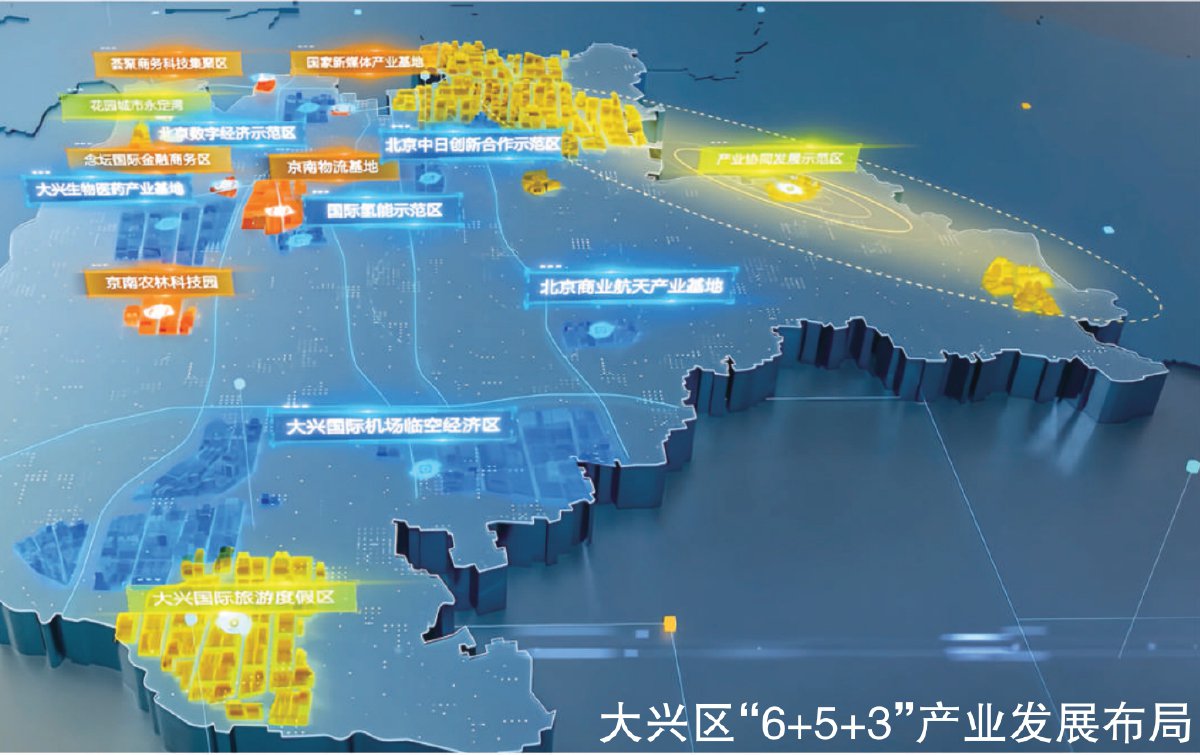
Core Viewpoint - Daxing District is committed to high-quality development, focusing on strategic planning, industrial growth, reform and innovation, urban-rural integration, and improving people's livelihoods to achieve substantial progress in various sectors in 2025 [1] Industrial Development - Daxing District has identified six major industrial tracks to strengthen its economic foundation, with 1,419 high-quality projects joining its industrial matrix, leading the city in the net increase of regulated enterprises and enterprises migrating from outside Beijing [12][13] - The district is developing a "6+5+3" industrial layout, which includes six major industrial functional zones, five characteristic industrial clusters, and three new development areas to drive high-quality regional growth [13] - The Daxing International Airport Economic Zone aims to become a world-class aviation hub, achieving the fastest growth in cargo import and export volume in the city [13] Urban-Rural Integration - Daxing District promotes urban-rural integration by enhancing the quality of urban areas and developing beautiful rural areas, with projects like the "Garden City Yongding Bay" and various rural tourism initiatives showing significant growth [15][16] - The district is focusing on creating a modern city that balances aesthetics and functionality, with ongoing construction of transportation infrastructure and urban amenities [15] Ecological Development - The district emphasizes ecological development through initiatives like the "Boundary-less Park" to integrate green spaces with urban life, enhancing public spaces and promoting a "park economy" [17] - Daxing is committed to improving its ecological environment, with projects aimed at creating a harmonious living space that combines nature with urban development [17][18] Social Welfare - Daxing District allocates 80% of its government resources to improve people's livelihoods, achieving high rankings in various social welfare indicators [19] - The district has made significant strides in education, healthcare, and social security, enhancing the overall quality of life for its residents [19][20] Future Outlook - Looking ahead to 2026, Daxing District plans to further integrate into the new development framework, focusing on high-quality development and the continued advancement of its industrial layout and urban-rural integration [20]
“十四五”江苏扬州市属国资国企实现“质”“量”双升
Xin Lang Cai Jing· 2025-12-24 04:23
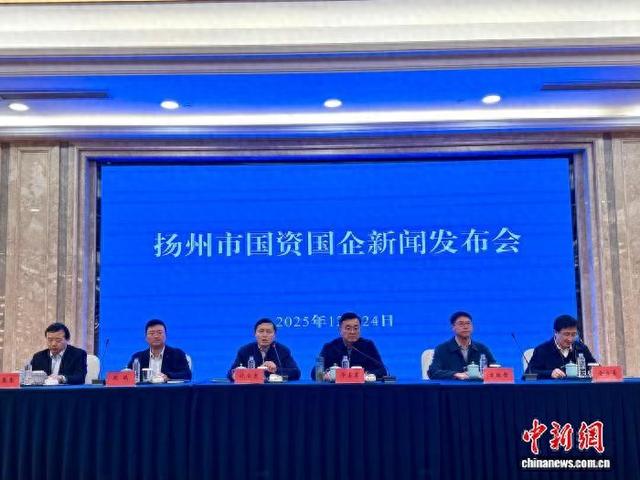
Core Insights - During the "14th Five-Year Plan" period, the state-owned enterprises (SOEs) in Yangzhou have made significant progress in reform and development, achieving qualitative improvements and reasonable quantitative growth in state-owned assets and enterprises [1][3]. Group 1: Economic Performance - The total assets and operating income of Yangzhou's state-owned enterprises are projected to grow from 194.135 billion yuan and 26.946 billion yuan at the end of the "13th Five-Year Plan" in 2020 to 302.739 billion yuan and 40.29 billion yuan by the end of 2025, representing increases of 74.34% and 49.52% respectively [3]. Group 2: Infrastructure and Public Projects - Over the "14th Five-Year Plan" period, more than 200 key projects and livelihood initiatives have been promoted, with investments exceeding 41 billion yuan, resulting in the completion of significant transportation projects and cultural tourism landmarks [3][4]. Group 3: Capital Optimization - The restructuring of state-owned capital has led to the establishment of new companies in various sectors, including big data, health care, and modern agriculture, forming six major industrial sectors: investment in production, urban investment, cultural tourism, transportation, construction and real estate, and local financial control [3][4]. Group 4: Innovation and Development - The Yangzhou State-owned Assets Supervision and Administration Commission has implemented a comprehensive set of policies to encourage innovation, resulting in the cultivation of 17 national high-tech enterprises and several specialized and innovative companies [4]. Group 5: Future Development Strategy - The "15th Five-Year Plan" will focus on aligning with national strategies and addressing development bottlenecks, emphasizing the importance of state-owned capital and enterprises in urban renewal, regional collaboration, and public service provision [5].
大宗商品涨多跌少,黑色、能化表现偏强
Zhong Xin Qi Huo· 2025-12-16 01:18
Industry Investment Rating No relevant information provided. Core Views - Overseas: The Fed's dovish stance, combined with a downward trend in the US economy and inflation, has led to increased enthusiasm for soft - landing trades. Assets such as precious metals, non - ferrous metals, and US equities have support. The nomination of the new Fed chair may cause a phase of smooth trading in liquidity - easing expectations and Fed independence risks [5]. - Domestic: The tone of the December Politburo meeting and the Central Economic Work Conference is moderately positive. In 2026, macro - policies are expected to maintain a similar intensity to 2025, balancing long - term structural adjustment and short - term goals. External trade risks may influence policy rhythm [5]. - Asset Outlook: The current macro - environment favors precious metals and non - ferrous metals with high financial attributes. Domestic equities are conservative during the year - end and policy - free period [5]. Summary by Directory Financial - Stock Index Futures: A large premium implies positive views, and the short - term trend is upward, but attention should be paid to liquidity deterioration [6]. - Stock Index Options: Adopt an offensive strategy when the price is low, and the short - term trend is upward, with the risk of continuous market liquidity shrinkage [6]. - Treasury Bond Futures: The adjustment pattern may continue in the short term, and the short - term trend is downward, affected by factors such as less - than - expected monetary easing [6]. Precious Metals - Gold/Silver: Supported by economic downturn risks and interest - rate cut expectations, maintain a long - position strategy, and the short - term trend is upward, with attention to policy - expectation changes [6]. Shipping - Container Shipping to Europe: With the price adjustment and news of short - term sailings suspension, the short - term trend is volatile, affected by geopolitical factors and spot freight rates [6]. Black Building Materials - Steel: Demand is picking up, but supply pressure is increasing, and the short - term trend is volatile and downward, with attention to special - bond issuance and steel exports [6]. - Iron Ore: Iron - water production is accelerating, and inventory - accumulation pressure is rising again. The short - term trend is volatile, affected by overseas mine production and domestic iron - water production [6]. - Coke: There is still an expectation of price increase, and the short - term trend is volatile, affected by steel - mill production and coking costs [6]. - Coking Coal: Supported by the continuous increase in iron - water production, the short - term trend is volatile, affected by steel - mill production and coal - mine safety inspections [6]. - Ferrosilicon: With active resumption of production in Ningxia and rising cost support, the short - term trend is volatile and upward, affected by raw - material costs and steel procurement [6]. - Manganese Silicon: Factory resumption is slow, and supply - demand has improved. The short - term trend is volatile and upward, affected by cost prices and external quotes [6]. - Glass: With the decline in macro - sentiment, the short - term trend is volatile, affected by spot sales [6]. - Soda Ash: Supply - demand pressure is high, and inventory is accumulating. The short - term trend is volatile, affected by soda - ash inventory [6]. Non - ferrous Metals and New Materials - Copper: Driven by policies, the short - term trend is volatile and upward, affected by supply disruptions and domestic demand recovery [6]. - Alumina: With more ore - supply disruptions, the short - term trend is volatile, affected by ore - production resumption and electrolytic - aluminum production [6]. - Aluminum: Driven by domestic macro - expectations, the short - term trend is volatile and upward, affected by macro - risks and supply disruptions [6]. - Zinc: With the decline in macro - optimism, the short - term trend is volatile and upward, affected by macro - risks and zinc - ore supply [6]. - Lead: Supported by the cost of recycled lead, the short - term trend is volatile, affected by exports and waste - battery prices [6]. - Nickel: Driven by domestic macro - factors, the short - term trend is volatile, affected by macro and geopolitical changes [6]. - Stainless Steel: Boosted by macro - sentiment, the short - term trend is volatile, affected by Indonesian policies and demand growth [6]. - Tin: With tight supply - demand and positive sentiment, the short - term trend is volatile and upward, affected by demand recovery and supply increase [6]. - Industrial Silicon: Under the pressure of warehouse - receipt cancellation, the short - term trend is volatile and downward, affected by supply - side production cuts and photovoltaic installations [6]. - Lithium Carbonate: With supply contraction at the end of the peak season, the short - term trend is volatile, affected by demand and supply disruptions [6]. Energy and Chemicals - Crude Oil: Affected by geopolitical premiums and supply pressure, the short - term trend is volatile, affected by OPEC+ policies and Middle - East geopolitics [8]. - LPG: There is a short - term differentiation between the domestic and overseas markets, and the short - term trend is volatile, affected by cost factors such as crude oil and overseas propane [8]. - Asphalt: The price is under pressure at 3000, and the short - term trend is volatile and downward, affected by sanctions and supply disruptions [8]. - High - Sulfur Fuel Oil: High Asian floating - storage offsets the decline in Russian fuel - oil exports, and the short - term trend is volatile and downward, affected by geopolitics and crude - oil prices [8]. - Low - Sulfur Fuel Oil: Follows the weak trend of crude oil, and the short - term trend is volatile and downward, affected by crude - oil prices [8]. - Methanol: With sufficient supply inland and along the coast, the short - term trend is volatile, affected by macro - energy factors and overseas production suspension [8]. - Urea: The progress of off - season storage has slowed down, and the short - term trend is volatile and downward, affected by coal prices and inventory de - stocking [8]. - Ethylene Glycol: Market pessimism leads to inventory accumulation, and the short - term trend is volatile and downward, affected by coal and oil prices and port inventory [8]. - PX: Supported by tight PTA spot supply, the short - term trend is volatile, affected by crude - oil fluctuations and macro - changes [8]. - PTA: Spot circulation is tight, and the short - term trend is volatile, affected by crude - oil fluctuations and downstream polyester load [8]. - Short - Fiber: Affected by ethylene - glycol costs, the short - term trend is volatile, affected by downstream yarn - mill purchasing and seasonality [8]. - Bottle Chip: Affected by the differentiation of upstream polyester raw - material costs, the short - term trend is volatile, affected by production - cut targets and new - device commissioning [8]. - Propylene: With a strong spot market and expected PDH production cuts, the short - term trend is volatile, affected by oil prices and domestic macro - factors [8]. - PP: Boosted by expected PDH production cuts, the short - term trend is volatile, affected by oil prices and domestic and overseas macro - factors [8]. - Plastic: With limited raw - material and maintenance support, the short - term trend is volatile, affected by oil prices and domestic and overseas macro - factors [8]. - Styrene: Affected by repeated maintenance news, the short - term trend is volatile, affected by oil prices, macro - policies, and device dynamics [8]. - PVC: With limited production cuts, the short - term trend is volatile and downward, affected by expectations, costs, and supply [8]. - Caustic Soda: Without upstream production cuts, the short - term trend is volatile and downward, affected by market sentiment and demand [8]. Agriculture - Natural Rubber: The price fluctuates widely without strong drivers, and the short - term trend is volatile, affected by production - area weather and raw - material prices [8]. - Synthetic Rubber: The market sentiment is positive, and the short - term trend is volatile, affected by crude - oil fluctuations [8]. - Cotton: The short - term trend is volatile, affected by production and demand [8]. - Sugar: There is pressure at the upper level and short - term support at the lower level, and the short - term trend is volatile and downward, affected by imports and Northern - Hemisphere production [8]. - Pulp: Driven by positive news, the short - term trend is volatile, affected by macro - economic changes and US - dollar quotes [8]. - Offset Paper: There are no obvious contradictions, and the short - term trend is volatile, affected by production - sales and paper - mill operations [8]. - Log: With a low valuation, the short - term trend is volatile and upward, affected by shipment and delivery volumes [8].