咨询

Search documents
贝恩全球并购报告:AI在并购中应用规模增超一倍,八成受访高管将维持或增加并购
IPO早知道· 2026-01-27 14:43
Core Insights - The global M&A market is expected to experience a new wave of growth opportunities in 2026, following a significant rebound in 2025, with a total transaction value reaching $4.9 trillion, a 40% increase from the previous year, marking the second-highest record in history [3][4]. Group 1: M&A Market Trends - The domestic strategic transaction value in China reached $395 billion in 2025, reflecting a 25% year-on-year growth, driven by policy support and consolidation in sectors like energy and advanced manufacturing [10]. - The report indicates that 80% of surveyed M&A executives plan to maintain or increase their M&A activities in 2026 [2]. Group 2: Key Drivers of M&A Activity - Three main drivers are shaping the new M&A landscape: disruptive technologies (including advancements in AI, robotics, and quantum technology), geopolitical factors and post-globalization trends, and portfolio strategy adjustments [5]. - Nearly half of the technology sector transactions in 2025 involved AI, while non-tech companies are increasingly focusing on acquiring firms that can develop technological solutions [5]. Group 3: AI's Role in M&A - AI is fundamentally transforming M&A practices, with 45% of M&A executives using AI tools in transactions by 2025, doubling from the previous year [6]. - Leading companies are leveraging AI across the entire transaction cycle to create higher value, including in areas such as dynamic deal pipelines and stakeholder insights [6]. Group 4: Capital Constraints and M&A Strategies - Despite active M&A activities, companies face challenges in capital allocation, with the proportion of funds allocated to M&A dropping to a 30-year low in 2025 [8]. - Bain's report outlines five key strategies for M&A in 2026, emphasizing the need for a strategic framework, ensuring significant investment returns, conducting thorough due diligence, building end-to-end M&A capabilities, and updating strategic capital allocation [9].

贝恩公司:2025年全球并购交易总额同比增长40% 达4.9万亿美元 创下历史次高纪录
智通财经网· 2026-01-27 11:39
Core Insights - The global M&A market is projected to reach $4.9 trillion in 2025, a 40% increase from 2024, marking the second-highest record in history, with continued growth expected in 2026 [1] - 80% of surveyed M&A executives plan to maintain or increase their M&A activities in 2026, driven by improved macroeconomic conditions and the need for companies to adapt to disruptive technologies and changing profit pools [1][2] Key Drivers of M&A in 2026 - Disruptive technologies, post-globalization, and changes in profit pools are becoming critical influences on corporate strategies, with M&A serving as a key tool for companies to reshape their strategic and asset portfolios [2] - Nearly half of tech industry transactions in 2025 involved AI, a trend expected to accelerate as companies seek AI talent and technology assets [2] - Geopolitical factors and post-globalization will continue to shape M&A strategies, with companies taking bolder steps to invest in certain global business areas while reducing exposure to unfavorable sectors [2] AI in M&A - In 2025, 45% of executives utilized AI tools in M&A transactions, doubling from 2024, with over half of respondents expecting AI to significantly impact M&A processes [3] - Leading companies leveraging AI in M&A have achieved higher value through dynamic deal pipelines, improved external intelligence accuracy, and enhanced stakeholder insights [3] Capital Constraints - The high demand for capital poses a significant challenge for M&A activities in 2026, with the proportion of funds allocated to M&A dropping to a 30-year low despite strong transaction activity in 2025 [3] 2026 M&A Agenda - Companies must evaluate whether M&A paths and specific transactions can enhance competitiveness in attractive markets and allow timely exits when they are no longer the best owners [5] - Firms that expanded rapidly through M&A in 2025 must focus on value creation through strategic integration and prioritization of actions [6] - Due diligence should confirm that M&A is the best use of capital, especially for infrequent acquirers [7] - Investing in end-to-end M&A capabilities will provide a competitive edge in asset competition and value creation [8] - Maintaining a long-term perspective on capital planning is crucial, with regular updates to ensure relevance and clear communication of M&A's strategic role in capital allocation [9] Industry Perspectives - In the banking sector, M&A activity surged to $212 billion in 2025, driven by a supportive regulatory environment and urgent modernization needs, shifting towards strategic growth transactions [10] - The oil and gas industry saw record consolidation to expand scale and reduce costs, with leading firms capturing 53% of transaction value over the past decade [11] - The software industry recorded significant acquisitions of AI assets, with nearly half of tech M&A transactions involving AI components, highlighting the importance of revenue synergies in M&A considerations [12]
马克龙疯了!公开拒签和平协议,特朗普宣布对法国加税200%
Sou Hu Cai Jing· 2026-01-25 06:14
Group 1 - The core issue revolves around the U.S. threatening to impose tariffs of up to 200% on French wine and spirits following France's refusal to join a U.S.-led peace committee for Gaza, signaling a warning to Europe about challenging U.S. authority [1][3] - The French wine and spirits industry is not only economically significant but also a cultural symbol for France, making it a primary target for U.S. tariffs, which could lead to immediate economic losses for France [3][15] - Macron's response to the U.S. actions highlights the lack of support from other European nations, with France standing isolated in its opposition to U.S. pressure, indicating a weak European response to U.S. threats [3][15] Group 2 - Macron's speech at the World Economic Forum, initially focused on economic issues, shifted to emotional undertones, reflecting his internal struggles amid external pressures from the U.S. [5] - Despite Macron's strong rhetoric against U.S. actions, he acknowledges Europe's lack of independent power to counter U.S. dominance, leading to discussions on a set of countermeasures within the EU [7][9] - The trade imbalance between China and Europe is a complex issue, with recent data showing a reduction in the EU's trade deficit with China by 27% in 2023, suggesting a more nuanced economic relationship than previously perceived [11][13] Group 3 - The ongoing tariff disputes between the U.S. and EU, particularly regarding alcoholic beverages, have historical roots, with France becoming a focal point in this trade conflict [13][15] - Macron's precarious position is characterized by his rejection of U.S. frameworks while facing economic pressure without substantial support from other European countries, leading to a search for new partnerships, particularly with China [15]

全球服务商大会在上海举办,打造全方位全周期出海服务生态
Sou Hu Cai Jing· 2026-01-24 11:31
Core Insights - The 2026 Global Service Providers Conference was held in Shanghai, focusing on high-quality development in the professional services industry and enhancing support for companies going global [1] - The conference launched the "Belt and Road" outbound service white paper, aiming to provide practical references for Chinese enterprises expanding into international markets [3] Group 1: Conference Highlights - The conference was co-hosted by the Shanghai Municipal Development and Reform Commission and the Jing'an District People's Government, emphasizing the establishment of a high-end communication platform [1] - Jing'an District has officially launched a plan for the construction of a high-end professional services cluster, aiming for an annual growth rate in the leasing and business services sector to exceed the district's economic average by 2028 [2] - The sixth batch of global service provider companies was awarded, bringing the total to 115, showcasing the growing concentration of professional services in Jing'an [2] Group 2: Service Ecosystem Development - The "Global Service Providers Plan" is being utilized to enhance the outbound service system for enterprises, positioning Jing'an as a "gas station" and "safe harbor" for international development [4] - The plan includes a comprehensive service package that covers all stages of outbound investment, from planning to operation, with 60 services across 12 fields [4] - The establishment of overseas service points in key regions such as Southeast Asia, the Middle East, Europe, and Africa aims to provide localized support for companies venturing abroad [4] Group 3: Industry Trends and Innovations - The white paper released by KPMG discusses key concerns and opportunities for Chinese enterprises in the "Belt and Road" initiative, highlighting the role of e-commerce in facilitating outbound expansion [3] - The conference introduced a "Belt and Road" professional service capability ranking list, showcasing outstanding service institutions in areas such as law and human resources [3] - Cloud Life Group, a local private enterprise, has developed a digital platform for global human resources services, supporting over 5,000 Chinese outbound enterprises [5]
麦肯锡 CEO:用不好 AI,比不会 AI 更危险
3 6 Ke· 2026-01-16 00:17
Core Insights - McKinsey is undergoing a profound business transformation by integrating 25,000 AI agents into its global collaboration network, aiming for a one-to-one pairing of employees with AI [1][2] - The transformation emphasizes the need for talent to possess ambition, judgment, and creativity, moving from basic execution to becoming collaborative experts who can harness AI effectively [1][2] - The article warns that true competitive advantage lies not in merely possessing technology but in fundamentally reshaping the organizational model of human-AI collaboration [1] Group 1: AI Integration and Workforce Changes - McKinsey currently employs 60,000 individuals, with 40,000 being human and 20,000 AI agents, a significant increase from 3,000 AI agents just 18 months ago [2] - The goal is to achieve a one-to-one ratio of employees to AI agents within 18 months, with 25,000 already integrated [2][20] - The company has saved 1.5 million hours in search and data organization over the past year, with AI generating 2.5 million classic PPT charts in six months [17] Group 2: Recruitment and Skill Requirements - The recruitment process at McKinsey has shifted to prioritize candidates' ability to use AI tools over traditional qualifications like educational background [10][11] - Candidates are now evaluated on their curiosity and initiative, with a focus on their ability to collaborate with AI to solve problems [11][12] - Three essential skills are identified for the AI era: ambition, judgment, and creativity, which are crucial for effectively utilizing AI [12][13][14] Group 3: Organizational Structure and Efficiency - Many companies struggle with AI integration due to a lack of organizational change, often getting stuck in "pilot purgatory" where AI projects fail to progress [7][24] - McKinsey emphasizes that AI should not only be used for efficiency but should directly contribute to delivering results, allowing consultants to focus on more complex client issues [15][16] - The company plans to increase client-facing consultants by 25% while reducing back-office staff by 25%, resulting in a 10% increase in output [19][20]
标志性变化!麦肯锡改革校招,要求应届生用AI配合完成案例测试
Hua Er Jie Jian Wen· 2026-01-15 06:33
Group 1 - McKinsey is piloting a recruitment process reform requiring MBA graduates to use its AI assistant Lilli during case analysis in interviews, indicating deep penetration of AI in recruitment processes even in highly competitive environments [1] - If the pilot is successful, McKinsey plans to roll out this testing to all junior hires in the coming months, with CEO Bob Sternfels stating that the company currently has 20,000 AI agents working alongside 40,000 employees, aiming for a one-to-one agent-to-employee ratio within 18 months [1][2] - The consulting industry is undergoing a significant transformation, with McKinsey encouraging underperforming consultants to leave and reducing its workforce by over 10% from mid-2023 to last year, with further layoffs anticipated due to efficiency gains from AI [1][2] Group 2 - The recruitment reform reflects a fundamental shift in the consulting industry's work model, moving from pure consulting to a results-oriented approach, as noted by Sternfels [2] - McKinsey has expanded its internal AI agent usage to 20,000, which is half of its workforce, and plans to double this number in 18 months, while also aiming to cut 10% of non-client service roles, potentially affecting over 1,000 positions [2] - Other top consulting firms, such as Boston Consulting Group and Bain, may also incorporate AI into their interview processes, as the industry shifts focus from traditional strategic advice to helping businesses adopt new technologies [2] Group 3 - McKinsey is adjusting its recruitment preferences to prioritize candidates who can learn from failure and is placing greater emphasis on liberal arts graduates, who are seen as having innovative thinking that can complement AI's capabilities [3] - This shift indicates that McKinsey is seeking a balance between human creativity and AI computational power, reinforcing its position as an innovator in talent selection [3] - The company has previously led the industry by transitioning from traditional testing methods to gamified problem-solving assessments in 2018, and the integration of AI tools into recruitment further solidifies its leadership in this area [3] Group 4 - The AI-driven transformation is impacting highly competitive professional fields, with McKinsey historically serving as a training ground for top executives [4] - The traditional pyramid structure of the consulting industry, where a few senior consultants oversee many junior analysts, may need to evolve, especially as McKinsey has significantly reduced its workforce after reaching a peak of 45,000 employees in 2023 [4][5] - As clients enhance their capabilities and AI tools become more prevalent, traditional junior consulting roles are diminishing, prompting the need for consulting firms to redefine their value propositions and talent requirements [5]
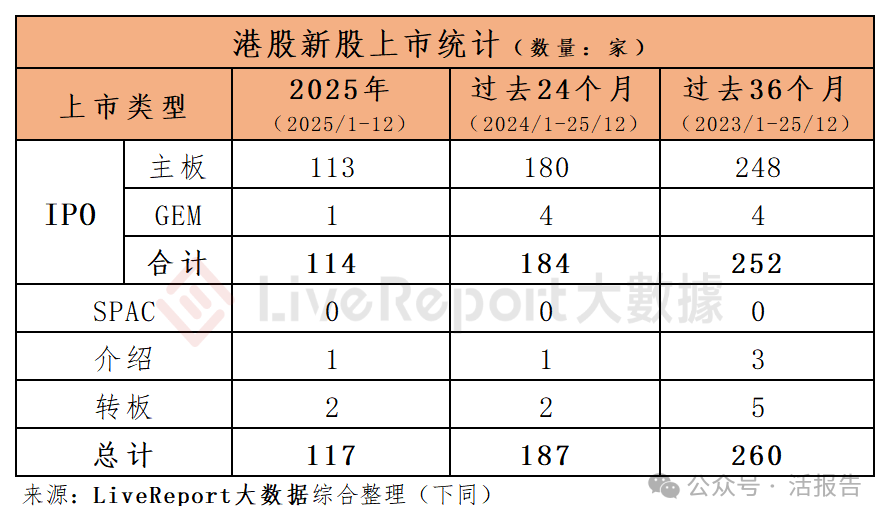
LiveReport:2025年港股市场IPO数量共117家 中金公司位列保荐人排行榜第一
智通财经网· 2026-01-12 08:45
Summary of Key Points Core Viewpoint The Hong Kong stock market is set to welcome 117 new listings in 2025, with a total of 114 IPOs and 1 introduction listing, indicating a robust IPO environment despite fluctuations in previous periods. Group 1: New Listings and IPO Statistics - In 2025, the Hong Kong stock market will see 117 new companies listed, including 114 IPOs and 1 introduction listing [1] - Over the past 24 months, there have been 187 new listings, with 184 being IPOs, while the past 36 months saw a total of 260 new listings, with 252 IPOs [1][2] - The leading IPO underwriter in 2025 is CICC, with 41 projects, followed by CITIC Securities with 32 projects [5][12] Group 2: Underwriter Performance - CICC has maintained its position as the top underwriter for IPOs, accounting for 36% of the total projects in 2025 [5] - In the past 24 months, CICC also led with 60 projects, representing 33% of the total [8] - Over the last 36 months, CICC again topped the list with 81 projects, making up 32% of the total [10] Group 3: Fundraising Scale - The total fundraising amount from the 114 IPOs in 2025 is approximately HKD 2,606.7 billion [12] - CICC leads in fundraising with HKD 1,320.0 billion, followed by CITIC Securities with HKD 745.7 billion [13] Group 4: Legal and Audit Services - Ernst & Young is the leading auditor for IPOs in 2025, involved in 41 projects, which is 36% of the total [16] - The top mainland law firm for IPOs in 2025 is Jingtian Gongcheng, providing services for 47 projects, accounting for 41% [21] - The leading overseas law firm is Kirkland & Ellis, involved in 23 projects, representing 20% of the total [30] Group 5: Industry Advisors - Frosst & Sullivan is the top industry advisor for IPOs in 2025, participating in 82 projects, which is 73% of the total [42] - Over the past 24 months, Frosst & Sullivan also led with 125 projects, making up 68% [42]

定义品类、筑牢底座、AI驱动,探寻2026出海「新增长极」
36氪· 2026-01-07 00:33
Core Insights - The article emphasizes a fundamental shift in Chinese brands going global, moving from geographical expansion and traffic monetization to defining categories and standards [1][2] - Companies are encouraged to leverage technology, cultural innovation, and AI to adapt to new market dynamics and consumer needs [2][19] Group 1: Great Direction - The focus has shifted from geographical expansion to becoming category standard definers, indicating a significant change in growth strategies for Chinese enterprises [5] - Understanding consumer needs and effectively responding through technology is crucial for success in the new phase of international expansion [7] Group 2: Underlying Risks - Efficiency alone is no longer sufficient; a comprehensive understanding of supply chains, including compliance, funding, and localization, is essential for navigating risks in international markets [11] - The article highlights the importance of building a robust supply chain to mitigate risks associated with regional conflicts and compliance issues [10][11] Group 3: Resilient Growth - Brand strength and AI are identified as critical pillars for long-term success, with brand power addressing pricing and cyclical challenges, while AI enhances efficiency and scalability [14][16] - The integration of brand strength and market insights is essential for navigating the complexities of global markets [9][19]

开放创新 前海交出“硬核”成绩单
Ren Min Ri Bao Hai Wai Ban· 2026-01-06 22:45
Core Insights - The Qianhai Modern Service Industry has achieved a value-added of 146.03 billion yuan with a growth rate of 7.9% in the first three quarters of 2025, showcasing significant progress in institutional innovation and high-level openness [1] - The Qianhai Plan has seen 115 out of 271 key tasks implemented, indicating a strong momentum in reform and development [1] Group 1: Deepening Hong Kong-Shenzhen Integration - The Qianhai Plan designates Qianhai as a leading area for deep integration between Shenzhen and Hong Kong, enhancing cooperation [2] - From January to October 2025, over 80% of newly added foreign enterprises in Qianhai were from Hong Kong, marking an 83.8% year-on-year increase [2] - The Qianhai Youth Dream Factory has incubated 1,591 entrepreneurial teams, with a total financing amount of 6.8 billion yuan [2] Group 2: Reform and Opening-up Initiatives - Qianhai is characterized as a "testing ground" for reform and innovation, with a focus on a high-level open economy [4] - The implementation of a shorter negative list for the free trade zone has facilitated market access in finance, logistics, and professional services [4] - By October 2025, actual foreign investment in Qianhai reached 16.1 billion yuan, a 27.1% increase year-on-year, with 2,528 new foreign enterprises established [5] Group 3: Modern Service Industry Development - Qianhai has achieved a dual 80% development level in modern services, with both the service sector's contribution to GDP and modern services' share of the service sector reaching 80% [6] - By the end of 2025, the Qianhai International Financial City had attracted 508 financial institutions, including 371 from Hong Kong and foreign sources [6] - The Qianhai International Talent Port has welcomed seven new "international talent partners," enhancing its service offerings [6] Group 4: Technological and Innovative Advancements - As of September 2025, Qianhai has gathered 191 innovation carriers, including engineering centers and laboratories, with 103 national-level specialized "little giant" enterprises and 11 unicorn companies [7]

麦肯锡合伙人李晓庐荣登“2025福布斯中国·青年海归菁英100人”榜单
麦肯锡· 2025-12-30 01:49
Core Insights - The article highlights the recognition of Denise Lee, a global partner at McKinsey, as one of the "2025 Forbes China 100 Returnee Elites" for her significant contributions in the high-tech and industrial sectors [3]. Group 1: Professional Achievements - Denise Lee holds a Ph.D. in Chemistry from Stanford University and joined McKinsey in 2014 as a consultant, currently leading the electronic and industrial consulting business in Asia [6]. - She emphasizes the importance of long-term strategic planning, focusing not just on immediate challenges but also on building systemic competitive advantages for the next technological era [6]. - Lee has successfully led major transformation projects, including a comprehensive growth transformation for a global tech leader, resulting in the strongest financial performance in 50 years for the company [6]. Group 2: Cross-Industry Integration - With her international background and deep understanding of local markets, Lee has effectively bridged global markets and Chinese practices, helping a European industrial company develop a localized strategy in China [7]. - As the chief lecturer for McKinsey's flagship executive program, she provides systematic methods for leaders to consolidate existing businesses while exploring new growth opportunities [7]. Group 3: Social Responsibility - Lee is also a key leader in McKinsey's social responsibility efforts in Taiwan, focusing on educational equity and collaborating with non-profit organizations to support over 100,000 children in rural and resource-poor areas [8]. - Her selection for the Forbes China list reflects her professional influence and the increasing importance of professionals with industry insights, cross-disciplinary integration, and a sense of social responsibility in a globalized and localized era [8].