投行

Search documents
友山基金:在不确定性的浪潮中锚定理性
Qi Huo Ri Bao Wang· 2025-12-23 01:47
Core Insights - The article highlights the journey of Jin Yan, the Chief Investment Officer of YouShan Fund, emphasizing his unique blend of mathematical rigor and human insight in navigating the complexities of financial markets [1][2]. Group 1: Career Path and Investment Philosophy - Jin Yan transitioned from academia to investment banking, driven by the allure of quantitative finance and the opportunities it presented, ultimately choosing to pursue a career in the financial industry over a stable academic position [2]. - He acknowledges the importance of both a solid theoretical framework and psychological resilience in achieving investment success, while also recognizing the role of luck in the investment process [2]. Group 2: Daily Operations and Market Engagement - As a fund manager, Jin Yan begins his day by monitoring global market trends, a habit developed over decades, and maintains a focus on key information during trading hours [3]. - His work involves a continuous engagement with market dynamics, including meetings, roadshows, and risk management reviews, reflecting a commitment to staying informed and responsive [3]. Group 3: Investment Strategy and Market Dynamics - Jin Yan's experience in both investment banking and hedge funds has shaped his investment style, highlighting differences in execution and risk management based on the nature of capital sources [4]. - He notes that certain strategies, like Commodity Trading Advisor (CTA) strategies, perform better in the Chinese market due to the unique participant structure and local pricing mechanisms [5]. - The significant impact of policy variables in the Chinese market necessitates a deep understanding of national economic policies, which must align with investment strategies [6]. Group 4: Risk Management and AI Integration - Jin Yan emphasizes the critical nature of risk management in investment, viewing it as a dual challenge that involves both measurable risks and human behavioral biases [7][8]. - He shares key risk management principles, including decisive actions during significant drawdowns and the importance of institutional arrangements to mitigate emotional decision-making [8]. Group 5: Future Outlook and Investment Opportunities - Looking ahead, Jin Yan anticipates a resilient U.S. economy and a continued low-interest-rate environment, which he believes will positively influence global markets [9]. - He identifies potential investment opportunities in fixed income, equities, and commodities, particularly highlighting the ongoing relevance of quantitative strategies in a fluctuating market [9].
当美国股市走向“邀请制”:私募交易催生越来越多巨无霸私企,普通散户被“拒之门外”
Hua Er Jie Jian Wen· 2025-12-13 13:30
Group 1 - The largest stock issuance this year occurred through a private placement by OpenAI, raising $40 billion, surpassing all IPOs and exceeding the largest IPO in history by over $10 billion [1] - The trend indicates a shift in the U.S. capital markets from broad public participation to a more exclusive "elite circle" of wealthy investors [1][4] - The number of publicly listed companies in the U.S. has halved since the late 1990s, with only about 4,000 companies currently listed compared to over 8,000 at the peak of the internet bubble [2] Group 2 - The median age of companies going public has increased from 6 years in 2000 to 14 years now, meaning companies often reach maturity before entering the public market [3] - Companies are delaying IPOs not due to a lack of funds, but because private markets are providing unprecedented financial support with lower disclosure requirements [3] - Notable companies like Figure AI and Databricks have seen their valuations soar in the private market before going public, with Figure AI's valuation increasing from $2.6 billion to approximately $39 billion [5] Group 3 - The private market is largely accessible only to "qualified investors," defined by the SEC as individuals with a net worth of at least $1 million or an annual income of $200,000 [4] - Major investment banks like Morgan Stanley, JPMorgan, and Goldman Sachs have established private market divisions, catering to large asset managers and institutional investors [6] - SpaceX exemplifies this trend, with its valuation rising to $800 billion through private financing, primarily involving long-term supporters and selected institutional funds [6] Group 4 - Regulatory concerns have emerged regarding the market's "layered operation," with the SEC chair noting that the most explosive growth phases are now confined to private markets [7] - The distribution mechanism of returns is undergoing structural changes, leading to a reconfiguration of the capital market despite its apparent openness [8] - The IPO process is increasingly viewed as a culmination of value release rather than a starting point for growth, with ordinary retail investors missing out on critical growth phases [9]
海外金融机构估值变迁的启示
Shang Hai Zheng Quan Bao· 2025-12-01 19:23
Core Insights - The valuation increase of overseas financial institutions is driven by both regulatory easing and business model innovation, providing a reference for Chinese financial institutions [1] Group 1: Valuation Evolution - The evolution of overseas financial institutions' valuations can be traced through three distinct transformation phases over the past 20 years: 2000-2008 was characterized by scale-driven growth, 2009-2019 saw a shift towards structural optimization due to regulatory pressures, and from 2020 onwards, technology and ESG factors have become key drivers [1] - The subprime mortgage crisis marked a pivotal point in the valuation logic, leading to a focus on wealth and asset management as core engines for valuation enhancement [1] Group 2: Regulatory Environment - A relatively loose regulatory environment has been a crucial foundation for valuation increases, exemplified by the U.S. investment banking sector during the Trump administration (2016-2018), where regulatory relaxation coincided with significant valuation gains [2] Group 3: Business Model Innovation - Overseas financial institutions have achieved sustained profitability through business model innovation and capital management, focusing on optimizing capital structure, enhancing capital efficiency, and transitioning to light capital models [3] - High-valuation banks, such as JPMorgan, have successfully developed high-return, low-risk businesses like wealth management, with non-interest income accounting for over 50% of their revenue [3] Group 4: Implications for Chinese Financial Institutions - The valuation transformation of overseas financial institutions offers valuable lessons for domestic institutions facing long-term "broken net" pressures, emphasizing the need for a balance between international alignment and local adaptation in building a Chinese valuation system [4] - The current reliance on indirect financing in China, with a high proportion of interest income, suggests that not all banks are suited for a transition towards retail banking and wealth management [4]
深夜,全线大跌!中概股下挫!
证券时报· 2025-11-04 15:19
Market Overview - US stock markets opened lower, continuing the downward trend from the Asia-Pacific region, with major indices experiencing significant declines [1] - As of the latest update, the Dow Jones index fell by 0.88%, the S&P 500 dropped by 1.20%, and the Nasdaq composite decreased by 1.63% [2] Performance of Major Stocks - Large technology stocks saw widespread declines, with Oracle, Tesla, and Intel each dropping over 3%, while Google and Nvidia fell more than 2% [3] - Popular Chinese concept stocks also faced losses, with the Nasdaq China Golden Dragon Index initially dropping over 2% and ultimately declining more than 1.6%. Notable declines included Bilibili down over 4%, NIO and Xpeng down over 3%, and Alibaba, JD.com, and Li Auto down over 2% [3] Cryptocurrency Market - Bitcoin fell to $102,979, representing a 4.45% decrease over the past 24 hours, while Ethereum dropped to $3,475.39, down 6.69% in the same timeframe [5] Market Sentiment and Predictions - Top executives from major Wall Street investment banks, including Morgan Stanley and Goldman Sachs, expressed concerns about current stock valuations, warning of potential significant sell-offs in the near future. Goldman Sachs predicts a 10% to 20% market correction within the next 12 to 24 months, while Morgan Stanley suggests a 10% to 15% correction could be healthy for the market [6] - Capital Group's CEO noted that while corporate earnings are strong, valuation levels are challenging, with most investors viewing market valuations as reasonable to full, and few considering stocks to be cheap [6]


选择放弃有时是对的,放弃选择肯定是错的
Ge Long Hui· 2025-10-20 01:24
Market Overview - The market has shown volatility, with significant declines in major indices and stocks over the past two weeks, including a drop of over 13% in the Ample Hang Seng Technology Index and over 14% in the Hang Seng Biotechnology Index [1] - Notable declines in individual stocks include Tencent, which fell nearly 80 yuan, and SMIC, which dropped over 26% [1] - Despite a rise in gold prices by over $150, gold stocks like Zijin Mining and Shandong Gold experienced weekly declines [1] Financial Data Insights - As of the end of September, M2 growth was at 8.4% and M1 growth at 7.2%, indicating enhanced liquidity and economic activity [2] - PMI has been below 50 for six consecutive months, suggesting weak production expansion intentions among enterprises [2] - A significant increase in household deposits by 760 billion yuan in September indicates a shift towards saving rather than investing in the stock market [2] Corporate Developments - In the U.S. market, AI-related developments dominated headlines, with OpenAI partnering with Broadcom for AI chips and Apple launching the M5 chip [5] - Oracle Cloud plans to deploy 50,000 AMD chips, and Nvidia announced a $40 billion acquisition of Aligned, marking significant corporate activity in the AI sector [5] - Major investment banks reported substantial increases in fee income, with Goldman Sachs seeing a 42% rise, driven by a surge in merger and acquisition activity [5] IPO and New Listings - Recent IPOs in Hong Kong showed strong initial performance, with companies like Zhida Technology and Xuanzhu Biotechnology seeing significant gains in their dark pool trading [6] - However, some listings faced challenges, such as delays and underperformance, indicating a mixed sentiment in the IPO market [6] Historical Context and Investment Strategy - Historical analysis of the Persian Wars highlights the importance of strategic decision-making in both warfare and investment, emphasizing the need for calculated risks and emotional balance [9][10] - The current market environment suggests that maintaining a balanced investment approach, with a reserve of cash for opportunities, is prudent [11][12]

恐慌再现!两家美国区域性银行“爆雷”
Jin Rong Shi Bao· 2025-10-17 12:50
Group 1 - The core issue driving the recent downturn in the US stock market is the renewed concerns over credit, particularly following the significant stock price drops of regional banks Zions Bancorp and Western Alliance Bancorp, which both fell by over double digits [2] - The S&P Regional Banking Select Industry Index experienced a sharp decline of 6.3%, marking the largest single-day drop since April, driven by the fallout from the regional banks [2] - The total market capitalization of 74 large US banks decreased by over $100 billion in a single day due to the widespread sell-off in bank stocks [2] Group 2 - The recent loan defaults by Zions Bancorp and Western Alliance Bancorp have reignited fears of a potential financial crisis reminiscent of the subprime mortgage crisis, with investors worried about the implications of relaxed financial regulations in recent years [3] - Jamie Dimon, CEO of JPMorgan, warned that the current credit defaults may only be the tip of the iceberg, suggesting that more issues could arise in the US credit market [3] - The recent turmoil in the banking sector follows a series of failures earlier in 2023, including Silicon Valley Bank and Signature Bank, which had already raised concerns about the stability of the US banking system [3]


“贝尔斯登”翻版?投行Jeffries是如何深陷First Brand“暴雷”
美股IPO· 2025-10-16 08:06
Core Viewpoint - Jefferies Financial Group faces a significant trust crisis following the bankruptcy of First Brands Group, where it acted as both an investment banking advisor and a financing entity, leading to severe market repercussions and questions about its due diligence capabilities [1][3][9]. Group 1: Jefferies' Dual Role and Implications - Jefferies served as both the investment banking advisor and the financing provider for First Brands, which filed for bankruptcy with actual debts exceeding $116 billion, significantly higher than the $59 billion previously disclosed [1][3][5]. - The firm’s asset management division, through Point Bonita Capital, provided factoring financing, which involved First Brands selling future receivables to obtain cash flow, creating a potential risk of financial manipulation [4][5]. Group 2: Financial Discrepancies and Market Reaction - Jefferies' marketing materials claimed that 71% of First Brands' $50 billion sales were financed through factoring, misleadingly suggesting that this did not affect the company's creditworthiness [5][6]. - Following the bankruptcy announcement, Jefferies' stock price plummeted by 18%, resulting in a market capitalization loss of approximately $2.5 billion, raising concerns about the firm's judgment and due diligence [9][10]. Group 3: Broader Market Context and Comparisons - The situation has drawn parallels to the collapse of Bear Stearns in 2008, as both firms were heavily involved in high-risk financial practices that led to significant trust issues in the market [10][11]. - Analysts previously viewed Jefferies as a rising contender among top investment banks, but the current crisis has cast doubt on its operational integrity and risk management practices [10].

“贝尔斯登”翻版?投行Jeffries是如何深陷First Brand“暴雷”
Hua Er Jie Jian Wen· 2025-10-16 03:58
Core Insights - The sudden collapse of First Brands Group has led to a significant trust crisis on Wall Street, drawing comparisons to the Bear Stearns incident [1] - Jefferies Financial Group, which acted as both an advisor and financier for First Brands, faces severe scrutiny due to discrepancies in debt reporting and potential losses in its asset management division [1][2] Company Overview - First Brands Group, based in Cleveland, is a century-old automotive parts giant, known for products like oil filters and wipers, with major clients including Walmart, Amazon, and AutoZone [1][2] - The company filed for bankruptcy at the end of September 2025, admitting that over $2 billion of investor funds were unaccounted for [2] Jefferies Financial Group's Role - Jefferies has been closely associated with First Brands since 2014, providing financing and M&A advisory services [2] - The firm’s asset management division, Leucadia, purchased receivables from First Brands, becoming a key financier [2] Financial Practices and Risks - First Brands utilized a factoring model, selling future receivables to financial institutions for cash flow, which posed risks if the company manipulated accounts or double-pledged assets [3][4] - Jefferies failed to disclose high-risk operations in its marketing materials, misrepresenting First Brands' debt as approximately $5.9 billion, while actual debt was later revealed to exceed $11.6 billion [3] Crisis Development - In the summer of 2025, Jefferies was preparing new refinancing for First Brands, but warning signs emerged as institutions began shorting the company [5] - First Brands halted payments to Point Bonita and ceased communication with Jefferies, leading to internal unrest [5] - The company filed for bankruptcy shortly after, revealing undisclosed liabilities and significant discrepancies in receivables [6] Market Reaction - Following the news, Jefferies' stock plummeted by 18%, resulting in a market cap loss of approximately $2.5 billion, raising questions about its due diligence [7] - Jefferies' leadership defended the firm’s fundamentals, claiming the market reaction was exaggerated, but concerns about its judgment and risk exposure remain [7][8]
08年撕裂全球市场的48小时!美国两大巨头“一死一活”,早有预兆
Sou Hu Cai Jing· 2025-10-06 09:49
Core Insights - The contrasting fates of Lehman Brothers and AIG during the 2008 financial crisis highlight the critical decisions made in times of crisis and the common pitfalls that lead companies into trouble [2] Group 1: AIG's Rescue - AIG's rescue was met with strong public and political opposition, as the sentiment against Wall Street was at its peak, with the government stating it had no obligation to save speculators [5] - The decision to rescue AIG was driven by its systemic importance, as it was deeply integrated into the financial system, affecting around 74 million people through its insurance products and pension management [5] - The rescue process faced significant challenges, with AIG's funding gap expanding to nearly $100 billion within days, far exceeding its collateral value, leading the Federal Reserve to inject capital through a combination of preferred stock purchases and loans [7] Group 2: AIG's Downfall - AIG's downfall stemmed from breaking its own "safety boundaries," as it shifted focus from its core insurance business to high-yield derivative products, undermining its long-term stability [9] - The company sold a large volume of credit default swaps (CDS) without adequate reserves, exposing itself to high leverage and significant risk [10] - AIG failed to thoroughly analyze the underlying assets of the collateralized debt obligations (CDOs) it guaranteed, leading to a cash flow crisis when mortgage defaults rose, resulting in a vicious cycle of credit downgrades and collateral demands [12] Group 3: Lessons on Risk Management - AIG's experience illustrates three common risk traps: treating credit ratings as risk-free leverage, as seen in both AIG and Evergrande, which ultimately led to credit collapses [15] - Cross-industry ventures should be extensions of existing capabilities rather than starting from scratch, as AIG's foray into the unfamiliar CDS market demonstrated significant operational risks [17] - Relying on historical data to predict future risks can be dangerous, as AIG's use of past stock market crash models for new subprime products showed a failure to account for uncertainty and "black swan" events [17] Conclusion - The rise and fall of AIG transcends a single event, serving as a classic case study on risk and decision-making, emphasizing the importance of adhering to core competencies, valuing credit, and allowing for future uncertainties [19]


美股牛市真要回来了?市场低估了美股盈利走高的可能性?
Sou Hu Cai Jing· 2025-09-24 09:49
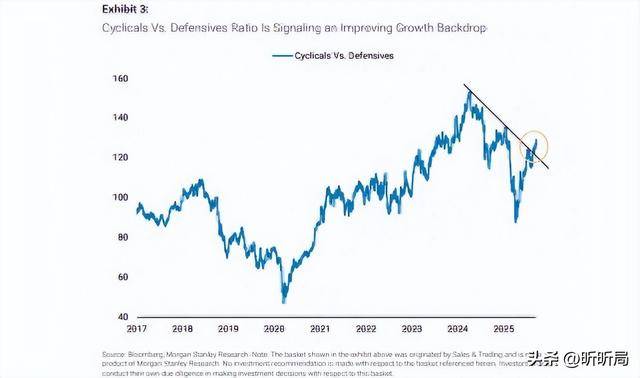
Core Viewpoint - Morgan Stanley believes that the market has underestimated the profit potential of U.S. stocks, suggesting that the recession has ended and an early recovery is underway, indicating the start of a new bull market [2][4]. Economic Recovery - Morgan Stanley asserts that the rolling recession has concluded, and the U.S. economy is beginning to recover, with a 35% increase in the breadth of earnings revisions, a phenomenon typically seen at the end of a recession and during early recovery [4]. - The median EPS of the Russell 3000 index has turned positive at +6%, indicating a significant recovery in earnings [4]. - The ratio of cyclical stocks (manufacturing, industrials, consumer) to defensive stocks (pharmaceuticals, consumer staples) has increased by 50% from its low, suggesting a shift in market dynamics [4]. Factors Driving Recovery - The early recovery is supported by three main factors: a slowdown in wage growth rather than mass layoffs, the release of pent-up demand across various sectors, and recent interest rate cuts by the Federal Reserve [7][8]. - The Federal Reserve's recent 25 basis point rate cut in September is seen as a precursor to a more accommodative monetary environment [8]. Inflation and Corporate Earnings - Morgan Stanley posits that by 2026, the Federal Reserve may adopt a more lenient stance on inflation, allowing for some price increases without hindering corporate profitability [11]. - Historical data indicates that the Producer Price Index (PPI) often leads S&P 500 sales growth by four months, suggesting that inflation could act as a stimulant for corporate earnings rather than a detriment [11]. Investment Indicators - Investors are advised to monitor several key indicators, including bond market volatility and the spread between SOFR and the federal funds rate, as these can signal potential market movements [13]. - The performance of small-cap stocks is highlighted, with the caveat that they tend to outperform only when the Federal Reserve is ahead of the market, indicating a need for patience as the current gap is still 65 basis points [13]. Conclusion - Morgan Stanley presents an optimistic outlook with the narrative of an ended recession, early recovery, and supportive factors such as wage moderation, demand rebound, and interest rate cuts, framing a potential continuation of the bull market [15].