
物流等

Search documents
高盛列出2026年推荐股名单 包含联想、华虹半导体等26只股
Ge Long Hui· 2026-01-02 14:19
Group 1 - Major investment banks like Goldman Sachs, Morgan Stanley, and UBS are optimistic about the global stock market outlook for 2026, expecting double-digit gains in both developed and emerging markets due to strong earnings growth, declining interest rates, and reduced policy headwinds [1] - The United States is projected to maintain its position as the global growth engine, driven by a resilient economy and an AI-driven supercycle that is leading to record capital expenditures and rapid earnings expansion [1] - The momentum of the AI industry is spreading globally across various sectors including technology, utilities, banking, healthcare, and logistics, creating both winners and losers amid an already imbalanced K-shaped economy [1] Group 2 - Goldman Sachs has released a list of recommended stocks for investment based on the Earnings Revision Leading Indicator (ERLI), which includes companies such as AIA Group (01299.HK), Xiaomi Group-W (01810.HK), Lenovo Group (00992.HK), and Hong Kong Exchanges and Clearing (00388.HK) [1] - Other notable stocks on the list include China Ping An (02318.HK), Zijin Mining (02899.HK), Techtronic Industries (00669.HK), and China Pacific Insurance (02601.HK) [1] - Additional companies mentioned are ZTO Express-W (02057.HK), Luoyang Molybdenum (03993.HK), Hua Hong Semiconductor (01347.HK), and China Aluminum (02600.HK) [1]



迟福林支招大湾区:“十五五”推进粤港澳服务贸易一体化
Sou Hu Cai Jing· 2025-12-29 11:16
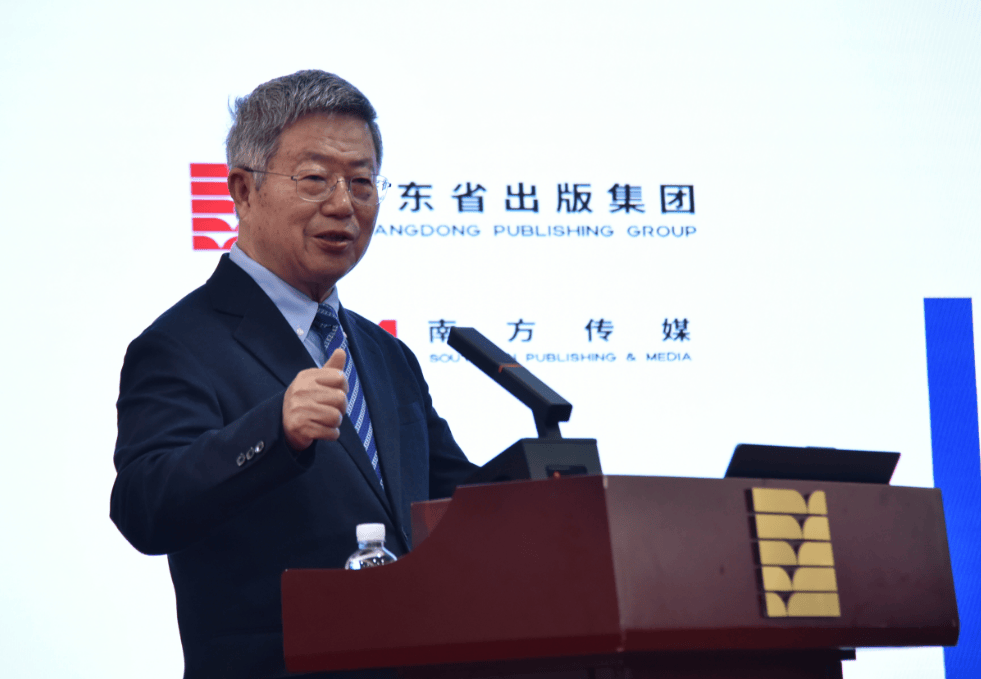
Core Insights - The core argument presented is that if China's consumption share in the global market approaches that of its manufacturing sector, it could create an additional consumption market of no less than $10 trillion [1][3]. Group 1: Economic Development Strategy - The focus on "domestic demand-led growth and consumption-driven development" is deemed crucial for enhancing economic resilience amid rising global uncertainties and adjustments in international trade [3][4]. - The current structural issue in China's economy is characterized by insufficient domestic demand, particularly weak consumption, leading to an imbalance of "strong supply and weak demand" [3][4]. - The "14th Five-Year Plan" period is identified as a critical time to stimulate consumption and unlock the potential of China's vast market [3][4]. Group 2: Consumption Trends - In 2023, China's manufacturing value added accounted for 28% of the global total, while final consumption expenditure represented only 13.2% of global consumption [3][4]. - There is a significant gap in the consumption rate between China and developed economies, with China's consumption rate projected at 39.9% in 2024, compared to around 54% in major developed economies, indicating a potential increase of at least 14 percentage points [4][5]. - A 1 percentage point increase in the consumption rate could release approximately 800 billion yuan in consumption growth, suggesting that a 14 percentage point increase by 2035 could generate over 11 trillion yuan in new consumption [5]. Group 3: Service Consumption - The shift from material consumption to service-oriented consumption is highlighted as a key trend, with sectors such as education, healthcare, culture, and tourism showing the fastest growth [6][7]. - From 2013 to 2024, the annual growth rate of service consumption in China is projected at 7.2%, with its share of total consumption rising from 39.7% to 46.1%, and further to 46.8% in the first three quarters of 2025 [6][7]. Group 4: Regional Development and Trade Integration - The integration of service trade in the Guangdong-Hong Kong-Macau Greater Bay Area is emphasized as a strategic move to enhance service-oriented consumption and high-level openness [9][10]. - The service trade's share in Guangdong's foreign trade is only 12.5% in 2024, which is significantly lower than the global average, indicating room for improvement [9][10]. Group 5: Investment in Human Capital - The strategy of "investing in people" is proposed as essential for driving domestic demand and consumption, with an estimated investment requirement of 80 trillion to 100 trillion yuan to improve public services and enhance consumer expectations [12][13]. - The suggestion includes reallocating 10% to 15% of state-owned assets for "investing in people," which could amount to 30 trillion to 50 trillion yuan based on the total assets of state-owned enterprises [13].

深圳“十五五”规划建议全文公布
中国基金报· 2025-12-29 03:40
Core Viewpoint - The article emphasizes the strategic importance of the "15th Five-Year Plan" period for Shenzhen, highlighting the need for proactive measures to achieve high-quality development and modernization, while addressing both opportunities and challenges in the evolving economic landscape [2][5][6]. Group 1: Achievements During the 14th Five-Year Plan - Shenzhen has made significant progress in high-quality development, solidifying its status as a major economic center, with GDP ranking third among Chinese cities and leading in foreign trade [3][4]. - The city has seen a continuous increase in industrial output, with the total industrial output value and added value ranking first among cities in China for three consecutive years since 2022 [3][4]. - The proportion of advanced manufacturing and high-tech manufacturing in the industrial added value reached 68.2% and 58.2% respectively, while the modern service industry accounted for 76.5% of the service sector's added value [3][4]. Group 2: Development Environment and Challenges - The "15th Five-Year Plan" period presents a complex development environment with both strategic opportunities and risks, necessitating a focus on overcoming bottlenecks and enhancing strengths [6][7]. - Shenzhen's advantages include a robust economic foundation, a complete industrial system, and a large, young population, which are critical for its role as a core engine of the Guangdong-Hong Kong-Macao Greater Bay Area [6][7]. Group 3: Basic Thoughts and Goals for the 15th Five-Year Plan - The guiding ideology for the "15th Five-Year Plan" emphasizes the integration of Marxism with Xi Jinping's thoughts, focusing on high-quality development and the establishment of a modern economic system [8][9]. - Key goals include significant breakthroughs in industrial technology innovation, enhancing the quality of life for residents, and achieving a higher level of social civilization [11][12]. Group 4: Modern Industrial System and Economic Forms - The plan aims to build a modern industrial system centered on advanced manufacturing, promoting the development of emerging industries and optimizing traditional industries [13][14]. - There is a strong emphasis on fostering a robust service industry, including the establishment of a global financial center, consumption center, and logistics center [15][16][17]. Group 5: Innovation and Talent Development - The article highlights the importance of fostering innovation and enhancing the role of enterprises in driving technological advancements, with a focus on building a strong ecosystem for innovation [22][23]. - Talent development is crucial, with initiatives aimed at attracting and nurturing high-level talent to support Shenzhen's growth as a global innovation hub [27][28]. Group 6: Expanding Domestic Demand - The strategy emphasizes the need to boost domestic consumption and investment, aligning with the broader goal of enhancing the domestic market's role in economic development [33][34]. - Efforts will be made to improve consumer spending through various initiatives, including enhancing public services and promoting diverse, high-quality consumption options [34].
吉林省“十五五”规划建议:把发展经济的着力点放在实体经济,再造老工业基地竞争新优势
Zheng Quan Shi Bao Wang· 2025-12-11 04:36
Core Insights - The "14th Five-Year" period has seen significant achievements in revitalizing Jilin's economy, with stable GDP growth and improved economic structure [1] - The focus is on building a modern industrial system, emphasizing the transformation of traditional industries and the growth of strategic emerging industries [2][3] - There is a strong push for innovation and the establishment of a robust technological platform, with a notable increase in high-tech enterprises [1][2] Economic Development - Jilin's GDP has shown stable growth, with a continuous optimization of the economic structure and enhanced resilience and vitality [1] - The province has implemented effective strategies to expand domestic demand, particularly in tourism and consumption sectors [1] Industrial Transformation - The strategy emphasizes the optimization and upgrading of traditional industries, including the transition of the automotive sector to new energy vehicles and the petrochemical industry towards higher quality and reduced oil dependency [2] - There is a focus on fostering strategic emerging industries such as new energy, new materials, and biomanufacturing, with specific targets for growth in these sectors [3][4] Future Industry Layout - Jilin aims to seize opportunities in future industries like artificial intelligence, hydrogen energy, and advanced manufacturing, with plans to develop a comprehensive ecosystem around these sectors [4] - The province is set to enhance its capabilities in high-performance computing and develop new battery technologies [4] Modern Service Industry - The development of the modern service industry is prioritized, with initiatives to enhance service quality and integrate with advanced manufacturing and agriculture [5] - There is a specific focus on promoting the ice and snow economy, including the development of related tourism and equipment industries [5] Infrastructure Development - Jilin plans to advance its infrastructure system, balancing new construction with the renovation of existing facilities, and enhancing digital infrastructure [6] - Key projects include the expansion of transportation networks and the optimization of water and energy resource management [6]
泥坑打架,哪有赢家
Jing Ji Ri Bao· 2025-12-08 22:17
Core Viewpoint - The article discusses the phenomenon of "involution" in various industries, characterized by chaotic competition that undermines cost and quality standards, prompting calls for reform and regulatory action to address low-price disorderly competition [1][2]. Industry Overview - Over 20 national and local industry associations have called for a "counter-involution" movement across sectors including steel, automotive, photovoltaic, catering, finance, logistics, and beauty services, indicating widespread concern about the impact of this competition on industry transformation and development [1]. - The current competitive landscape has shifted from external expansion to internal exploration, leading to intensified competition among domestic firms as external competitors diminish [2]. Competitive Dynamics - The average gross profit margin for five leading wind power companies has plummeted from 19.2% in 2021 to 5.5% in 2024, with many firms reportedly operating at a loss [3]. - Quality and safety standards are under threat as companies cut costs in materials and processes to remain competitive, resulting in a significant number of substandard products in the market [3]. - Research and development expenditures among 30 major photovoltaic companies fell by 18.12% year-on-year in the first half of 2025, jeopardizing the industry's innovation capabilities [4]. Types of Competition - The article identifies four distinct forms of competition within the current landscape: - **Rule-breaking competition**: Involves illegal practices such as false advertising and substandard products, which undermine market fairness [5]. - **Internal consumption competition**: Characterized by homogenous competition in a limited market, leading to price wars without significant technological advancements [5]. - **Strategic investment competition**: Involves companies accepting short-term losses for long-term market positioning [5]. - **Innovation-driven price reduction**: Results from technological advancements that lower costs, indicating a healthy competitive environment [6]. Regulatory and Governance Actions - The government aims to create a fair competitive environment while companies focus on innovation and efficiency [8][12]. - New policies are being implemented to address issues such as "below-cost sales" and to enhance the regulation of unfair pricing practices [9]. - Industry associations are playing a crucial role in promoting self-regulation and rational pricing among companies [10]. Future Outlook - Despite the current challenges, companies express optimism about future growth, particularly in the renewable energy sector, with projections for significant increases in installed capacity by 2035 [12]. - Companies are adapting by focusing on cost efficiency, technological advancements, and exploring new markets, indicating a shift towards a more sustainable competitive strategy [11][12].
重庆大渡口区政协 协商温度提升企业发展速度
Ren Min Ri Bao· 2025-11-12 22:23
Core Insights - The Daduqiao District Political Consultative Conference (PCC) is actively engaging with local businesses to address their concerns and streamline processes, focusing on simplifying policy application systems and optimizing approval processes for factory expansions [1][2] - The PCC has implemented a "Five Thousand Action" initiative, which aims to connect a hundred committee members with a thousand enterprises, promoting economic development through various collaborative efforts [1][3] - Recent discussions have highlighted common issues faced by businesses, such as the mismanagement of newly constructed roads, which has led to parking violations affecting production and company image [2] Group 1 - The Daduqiao District PCC has organized roundtable discussions to directly address business concerns, resulting in over 100 issues being resolved for more than 200 enterprises this year [1] - The PCC's innovative approach includes on-site visits, online Q&A sessions, and policy advocacy to enhance the business environment [1][3] - The PCC has identified and proposed solutions for high-frequency issues, such as the management of newly constructed roads that have not been officially transferred, leading to parking problems [2] Group 2 - The PCC has focused on key areas such as technological innovation and consumer upgrades, providing suggestions to the district government for implementation [3] - Collaborative efforts have been made to promote rural revitalization through the integration of agricultural, cultural, and tourism resources [3] - Specialized discussions on various industries, including biomedicine and modern logistics, have provided valuable insights for government decision-making [3]
阿根廷企业与沪商面对面交流活动举行 赋能双边经贸合作
Zhong Guo Xin Wen Wang· 2025-11-10 13:53
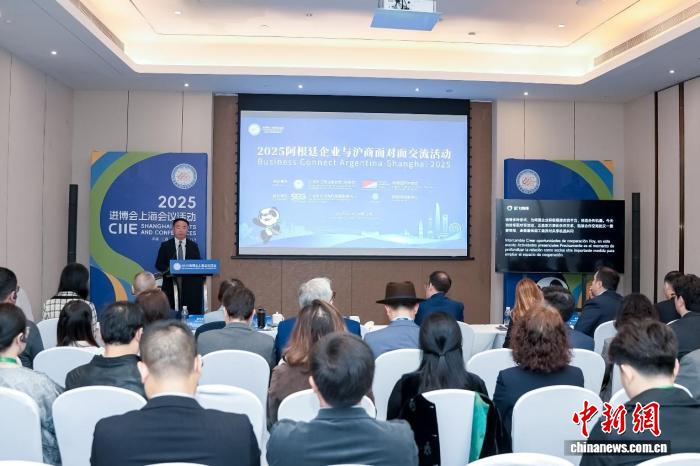
Core Viewpoint - The "2025 Argentina Enterprises and Shanghai Business Face-to-Face" event aims to enhance bilateral economic and trade cooperation between Argentina and Shanghai, leveraging the spillover effects of the China International Import Expo (CIIE) [1][3]. Group 1: Event Overview - The event was organized by the Shanghai Federation of Industry and Commerce and the Argentina-China Chamber of Commerce, focusing on creating an efficient platform for economic cooperation [1]. - The Shanghai Federation of Industry and Commerce has maintained a strong partnership with the Argentine business community since signing a cooperation memorandum in 2006, facilitating exchanges through visits, forums, and project connections [1][3]. Group 2: Economic Cooperation Potential - Argentina's Consul General in Shanghai emphasized the importance of Shanghai and the Yangtze River Delta region in terms of economic scale, consumer capacity, and market potential, highlighting Argentina's commitment to fostering multi-faceted cooperation [3]. - The Argentine pavilion at the CIIE showcased the food and beverage industry and promoted the "Argentine Brand," with over 80 Argentine companies participating, reflecting a strong interest in the Chinese market [3][4]. Group 3: Chamber of Commerce Initiatives - The Argentina-China Chamber of Commerce has been instrumental in promoting economic cooperation, with a focus on enhancing the business environment and addressing key issues such as double taxation and visa facilitation [4][5]. - Recent activities include hosting "China Day" and organizing participation in the CIIE, which have established significant platforms for bilateral trade [5]. Group 4: Agreements and Future Collaboration - During the event, key agreements were signed to deepen cooperation between the two chambers, including a memorandum of understanding and a strategic cooperation agreement between the Shanghai International Logistics Supply Chain Chamber and the Argentine Innovation Center [7][9]. - Companies from both regions engaged in discussions to explore collaboration opportunities, with a focus on practical economic cooperation [9].
广西持续擦亮“营商广西·桂在便利”服务品牌
Guang Xi Ri Bao· 2025-11-04 02:49
Core Insights - Guangxi has been enhancing its business environment, transitioning from self-promotion to widespread recognition of its improvements in service and efficiency [1][2] Group 1: Mechanism and Efficiency Improvement - Guangxi has established a mechanism to promote projects to private capital and facilitate their participation in project construction, resulting in over 350 billion yuan in credit approvals through various financial matching events [1] - The region has implemented a regular mechanism for introducing key measures to improve the business environment, focusing on practical and operational initiatives [1] Group 2: Legal Framework and Fairness - A special review of laws and regulations affecting businesses has been conducted, leading to the modification of 32 regulations and the abolition of 22, with a focus on correcting unfair administrative practices [1] - The courts have resolved over 87,000 business-related cases this year, with an execution amount of 13.3 billion yuan, and a satisfaction rate of 92.87% for litigation services [1] Group 3: Cost Reduction and Support - Financial institutions in Guangxi have provided 73.04 billion yuan in subsidized loans to 19,000 businesses, while the average industrial and commercial electricity price has decreased by approximately 0.0745 yuan per kilowatt-hour [2] - The region has reduced natural gas costs for major users by over 650 million yuan and maintained a logistics cost-to-GDP ratio of 13.8%, below the national average for four consecutive years [2] Group 4: Service Improvement and Problem Resolution - Guangxi has addressed 4,181 issues identified through service research, achieving a resolution rate of 97.9%, and has improved the problem-solving rate for business complaints to 88% [2] - The "Enterprise Call I Handle" platform has assisted businesses in recovering over 1 billion yuan in overdue payments [2] Group 5: Reform and Public Welfare - Guangxi has implemented 154 reform measures and 30 micro-reforms aimed at benefiting the public and businesses, streamlining regulatory processes and enhancing credit repair for businesses [3] - A standardized regulatory checklist has been established, and a national platform for credit repair has restored 134,700 business credit records this year [3]
多家上市公司在eVTOL领域布局,其中电池厂商居多
Sou Hu Cai Jing· 2025-10-17 16:51
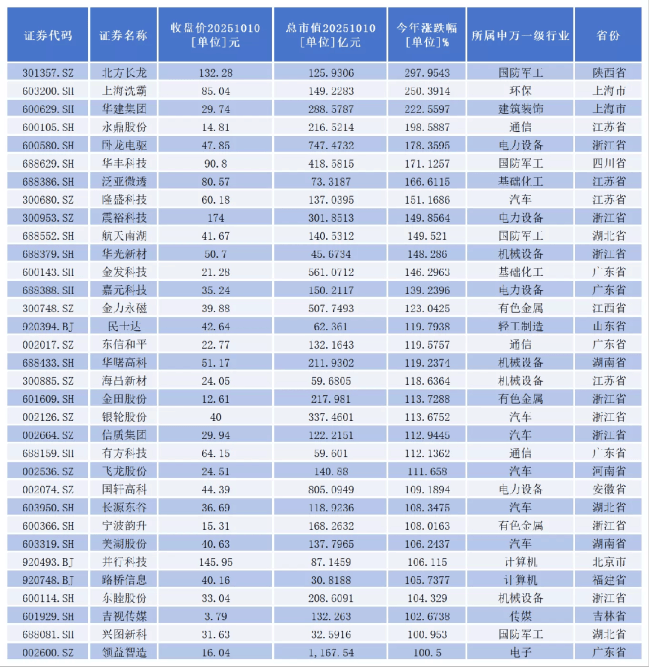
Group 1 - The core viewpoint of the articles highlights the resurgence of the low-altitude economy with Didi's entry, indicating that the industry is maturing as policies become more detailed, and companies involved in the related supply chain will benefit first, showcasing significant investment value [1] - The eVTOL (electric Vertical Take-Off and Landing) sector is gaining traction as a new carrier for the low-altitude economy, with numerous listed companies increasing their investments in this area. As of October 10, 2025, 33 listed companies have seen their stock prices double this year, with notable increases from companies like Beifang Changlong (301357.SZ) and Shanghai Xiba (603200.SH) [2][3] - The A-share low-altitude economy concept includes 434 listed companies, categorized into four core segments: complete machine manufacturing, core components, operational services, and air traffic management and support [3] Group 2 - In the complete machine manufacturing sector, leading companies like Wanfeng Aowei have over 260 aircraft orders, including a significant order of 100 units from Puyin Jinzu. The company plans to achieve mass production of flying cars by 2025 [4] - The core components of eVTOL are crucial for performance and safety, including power systems, avionics, and fuselage components. Companies like Zongshen Power are making strides with their CA500 aviation piston engine, which is set to be the first domestic aviation power product to gain airworthiness approval [5] - The battery sector is highly active, with companies like EVE Energy and CATL making significant advancements in battery technology for eVTOL applications. EVE Energy has showcased high-performance battery systems for electric airships and is developing solid-state batteries with a target energy density of 400Wh/kg by 2028 [7][12] Group 3 - The air traffic management system is dominated by companies like Lais Information, which holds a 90% market share and has secured over 2 billion in orders for air traffic information systems by 2025 [6] - The solid-state battery market is projected to grow significantly, with eVTOL expected to drive a demand increase of 30GWh for lithium batteries by 2030, creating a billion-dollar market for solid-state batteries [12][13] - The industry is supported by government policies aimed at promoting the production of high-performance aviation lithium batteries, with plans to achieve mass production of 400Wh/kg batteries by 2026 [12][13]





为欢度“双节”筑牢安全防线 市领导分多路开展节前安全生产检查
Zhen Jiang Ri Bao· 2025-09-30 23:29
Group 1 - City leaders are conducting safety inspections ahead of the National Day and Mid-Autumn Festival to ensure safety measures are in place [1][2][3] - Emphasis on the "three managements and three musts" in crowded religious venues to enhance safety education and emergency drills [1] - Focus on food and fire safety in hotels and nursing homes, ensuring proper management of fire, electricity, and gas [1] Group 2 - Inspections at entertainment venues like cinemas to optimize evacuation plans and enhance employee emergency training [2] - The need for cultural tourism to meet contemporary spiritual needs while ensuring safety during peak visitor times [2] - Strict enforcement of safety responsibilities in energy supply companies and water source protection to guarantee public safety [2][3] Group 3 - Continuous safety management in public spaces, healthcare institutions, and sports training facilities is highlighted as a priority [3] - Emphasis on risk assessment and safety management in chemical and paper manufacturing companies [3] - Logistics companies are urged to focus on core safety risks and ensure effective hazard identification and management [4]