
家具

Search documents
盛馥来:金融与企业“血肉相连”,共同应对欧盟绿色贸易规则挑战
Sou Hu Cai Jing· 2025-12-16 11:20
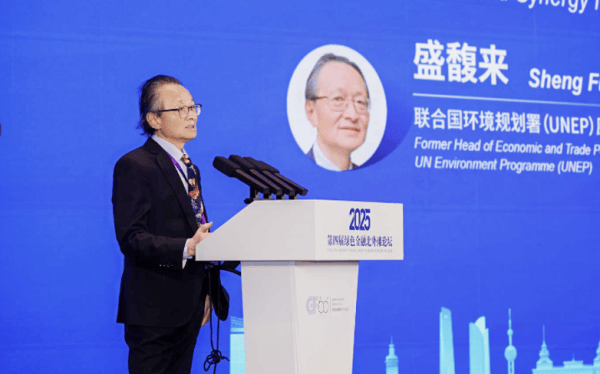
Group 1 - The forum focused on exploring new opportunities for green sustainable development and establishing an international green finance hub [1] - The former director of the UN Environment Programme's Economic and Trade Policy Division emphasized the interdependent relationship between finance and enterprises, stating that finance is the lifeblood of the economy and that both sectors are in a symbiotic relationship [3] - The EU will implement a carbon border adjustment mechanism (CBAM) in January 2026, affecting high carbon leakage risk products, which will require importers to declare the carbon emissions embedded in their products [4] Group 2 - The digital product passport (DPP) is expected to be implemented in 2027, requiring products entering the EU market to have a unique QR code that includes information on their entire lifecycle, including carbon footprint and water resource usage [4] - In 2024, China's exports to the EU are projected to reach $516.46 billion, a 3.0% increase year-on-year, making China the largest source of imports for the EU [4] - Export enterprises must proactively meet EU requirements and internalize green and low-carbon transformation as a core competitive advantage and long-term development strategy [4][5] Group 3 - Financial institutions are required to understand standards and pathways, meaning they must research and master EU green regulations and convert them into quantifiable assessment metrics [5] - Financial institutions should identify credible third-party evaluation agencies to provide reliable assessment reports for enterprises and design feasible pathways for compliance, risk control, and incentive mechanisms [5] - The forum included collaboration with various organizations focused on sustainable development and green finance [6]

11月经济数据点评:需求延续弱势,生产保持韧性
Shenwan Hongyuan Securities· 2025-12-16 10:50
Group 1 - The report highlights a continued weakness in consumer demand, particularly impacted by a decline in automobile sales and the reduction of government subsidies, indicating that sustained policy support is necessary to boost consumer spending [3] - Industrial value-added growth remains resilient at 6.0% year-on-year, although there is a clear divide between traditional industries, such as real estate, which are contracting, and high-tech industries that are supporting growth [3][4] - Inflation is showing signs of recovery, primarily driven by rising food prices, with the Consumer Price Index (CPI) increasing to 0.7% year-on-year, marking the first positive change in food prices this year [3][5] Group 2 - Fixed asset investment has seen a further decline, with a cumulative year-on-year decrease of 2.6% in November, driven by downturns in real estate, infrastructure, and manufacturing investments [3][7] - The report notes that the economic fundamentals are weakening, with investment growth and consumer spending both declining, while inflation recovery remains uncertain [3] - The real estate sector continues to face challenges, with cumulative sales area down 11.1% year-on-year, indicating a persistent contraction since the second quarter of this year [3][10]
2025年11月经济数据点评:需求待企稳
BOHAI SECURITIES· 2025-12-16 09:50
Economic Data Overview - In November 2025, the industrial added value for large-scale enterprises grew by 4.8% year-on-year, slightly below the expected 5.0% and previous value of 4.9%[2] - The total retail sales of consumer goods increased by 1.3% year-on-year, significantly lower than the expected 2.9%[2] - The cumulative year-on-year growth rate of fixed asset investment was -2.6%, worse than the expected -2.3% and previous -1.7%[2] Industrial Production Insights - The year-on-year growth rate of industrial added value showed a slight slowdown compared to the previous value, with the monthly growth rate aligning with historical averages[3] - High-tech manufacturing sectors outperformed overall industrial growth, indicating a shift in production dynamics[3] - The annual industrial production growth rate is projected to stabilize around 5.8%, with potential constraints from "anti-involution" and a slight weakening in exports affecting December's production[3] Consumer Spending Trends - The year-on-year growth rate of retail sales in November was impacted by early online shopping promotions and diminishing subsidy effects, leading to a broader decline across most categories[4] - Notably, furniture, building materials, and home appliances were significantly affected, with automotive consumption dragging down overall growth by nearly 2 percentage points[4] - The annual retail sales growth is expected to be around 3.7%, with a focus on stimulating service consumption in the short term[4] Investment Outlook - Fixed asset investment saw an expanded decline, particularly in manufacturing, where negative growth persisted for five consecutive months[5] - Infrastructure investment showed signs of stabilization, with improvements in transportation and energy sectors, while water conservancy and public facilities continued to lag[5] - Real estate investment experienced a significant drop of -30.3% year-on-year, with ongoing declines in new construction and completion areas[5] Risk Factors - Geopolitical uncertainties may elevate market risk preferences, potentially disrupting economic stability[6] - Unexpected changes in economic conditions or policies could arise due to increasing volatility in overseas markets and domestic economic transitions[6]
突发特讯!东南亚国家、发声:很依赖中国供应链,但又怕被美国加征转运附加费,引发国际舆论
Sou Hu Cai Jing· 2025-12-16 06:49
Group 1 - The article highlights the increasing pressure on Southeast Asian low-cost export countries due to US tariff policies amid US-China structural competition, prompting a reevaluation of global supply chain dynamics [1][3] - The US has imposed additional tariffs of up to 40% on goods transiting through Southeast Asia, directly impacting industries reliant on the "China supply chain" model, such as textiles in Vietnam and furniture in Indonesia [3] - Southeast Asian countries are adopting differentiated strategies in response to US pressures, with Vietnam utilizing "bilateral accumulation" rules and Malaysia tightening origin certificate issuance [3][4] Group 2 - Despite external pressures, the supply chain integration between China and ASEAN shows resilience and an upgrading trend, with investments from Chinese companies like SAIC-GM Wuling and BYD in Indonesia and Thailand [4][6] - The trade volume between China and ASEAN is projected to exceed $597 billion in 2024, accounting for 16.7% of China's total foreign trade, with emerging fields like digital and green economies driving future growth [6] - The "Resilient Supply Chain Initiative" by the US aims to redirect military suppliers to "trusted partners," with countries like Vietnam and Indonesia seen as key nodes due to their geographical and industrial advantages [9] Group 3 - The US's "de-China" supply chain strategy faces challenges, as local production in Southeast Asia remains cost-effective, evidenced by an 18% drop in import inquiries for Chinese intermediate products by Q2 2025 [7] - China is leveraging "industrial chain leapfrogging" to capture high-value segments in sectors like semiconductors and AI, showcasing its commitment to innovation and technological advancement [10] - Southeast Asian nations are actively seeking diversified cooperation paths, with Indonesia and Malaysia enhancing ties with China, Japan, and South Korea while pursuing local investments in sectors like semiconductors [11]
永艺股份(603600):外销迈入新征程,悦己消费催化内销品牌乘势而起
Shenwan Hongyuan Securities· 2025-12-15 13:10
Investment Rating - The report maintains a "Buy" rating for the company [8][10]. Core Views - The company is expected to benefit from improving external demand and a recovery in the ergonomic chair market driven by self-care consumption trends. The report highlights the potential for the company's export business to enter a new phase, supported by its global production layout and the introduction of new products [6][9][11]. Summary by Sections Industry Overview - The demand for furniture in the U.S. is expected to improve due to reduced tariff disruptions and a declining interest rate environment, which is anticipated to boost housing sales and, consequently, furniture demand. The U.S. is the largest consumer of office chairs globally, with China and Vietnam being the main producers [22][29][35]. Company Performance - The company is projected to face challenges in 2025 due to tariff impacts but is expected to see growth in 2026. Revenue for 2024 is estimated at 47.49 billion yuan, with a year-on-year growth of 34.2%. The net profit for 2024 is expected to be 296 million yuan, a slight decline of 0.6% year-on-year [7][58]. - For the first three quarters of 2025, the company reported revenue of 34.83 billion yuan, a year-on-year increase of 2.8%, while net profit was 191 million yuan, down 14.8% year-on-year [58][61]. Growth Drivers - The company is expanding its overseas production capabilities in Vietnam and Romania, which enhances its supply chain advantages. The report emphasizes the importance of these locations in the context of U.S. tariff policies [64][71]. - The company is actively broadening its customer base and product categories, successfully entering new markets and channels, including partnerships with major retailers like Costco and Sam's [75][78]. Market Potential - The ergonomic chair market in China is projected to reach 22 billion yuan in 2025, with a year-on-year growth of 22.1%. The report notes that the perception of ergonomic chairs is evolving from mere tools to symbols of quality living, indicating a significant market opportunity [9][11][22]. Financial Projections - The company’s net profit is forecasted to be 295 million yuan in 2025, with subsequent increases to 401 million yuan in 2026 and 495 million yuan in 2027. The report adjusts the profit estimates slightly upward for 2026 and 2027 based on expected improvements in both export and domestic sales [10][11][58].

11月消费投资低于预期
Ge Lin Qi Huo· 2025-12-15 08:25
1. Report Industry Investment Rating - Not provided in the content 2. Core Viewpoints of the Report - In November, the growth rates of fixed - asset investment and social consumer goods retail总额 were lower than market expectations, while the export growth rate exceeded expectations [4][23]. - The year - on - year decline of real estate sales volume and price continued in November, and the data in early December also showed the same trend [4][23]. - As of the end of October, 5000 billion yuan of new policy - based financial instruments had been fully invested, but the investment data in October and November did not show obvious improvement [4][23]. - The relatively stable international environment after the China - US summit at the end of October is beneficial to China's exports, and stable export confidence is conducive to the growth of private investment [4][23]. - The Central Economic Work Conference in December proposed to implement a more proactive fiscal policy and a moderately loose monetary policy next year to promote investment to stop falling and rebound and boost consumption [23]. 3. Summary by Relevant Catalogs 3.1 Fixed - Asset Investment - From January to November, the national fixed - asset investment decreased by 2.6% year - on - year, worse than the market expectation of a 2.2% decline [1][5]. - From January to November, the broad infrastructure investment (including electricity) increased by 0.1% year - on - year, lower than the market expectation of 1.5% [1][5]. - From January to November, the manufacturing investment increased by 1.9% year - on - year, higher than the market expectation of 0.6% [1][5]. - From January to November, the national real estate development investment decreased by 15.9% year - on - year, worse than the market expectation of a 15.4% decline [1][5]. - From January to November, private fixed - asset investment decreased by 5.3% year - on - year [5]. - In November, manufacturing investment decreased by 4.5% year - on - year, and narrow - sense infrastructure investment (excluding electricity) decreased by 9.7% year - on - year [5]. - In November, the national fixed - asset investment decreased by 1.03% month - on - month, showing a continuous decline for ten consecutive months [5]. 3.2 Real Estate - From January to November, the sales area of new commercial housing decreased by 7.8% year - on - year, and the sales volume decreased by 11.1% year - on - year [2][9]. - In the fourth quarter, the daily average transaction area of commercial housing in 30 large and medium - sized cities decreased significantly year - on - year, and the national real estate sales were still at the bottom [10]. - In November, the second - hand housing prices in first - tier cities decreased by 1.1% month - on - month, with the decline expanding [2][10]. - In November, the real estate development enterprise's available funds decreased by 32.6% year - on - year [11]. - In November, the new housing start - up area decreased by 28% year - on - year, and the housing completion area decreased by 25% year - on - year [11]. 3.3 Industrial Added Value - In November, the value - added of industrial enterprises above designated size increased by 4.8% year - on - year, lower than the market expectation of 5.0% [2][12]. - In November, the value - added of high - tech manufacturing increased by 8.4% year - on - year, maintaining rapid growth [2][12]. 3.4 Foreign Trade - In November, China's exports denominated in US dollars increased by 5.9% year - on - year, exceeding expectations, and imports increased by 1.9% year - on - year [2][14]. - From January to November, China's cumulative export amount increased by 5.4% year - on - year, and the cumulative import amount decreased by 0.6% year - on - year [14]. 3.5 Consumption - In November, the total retail sales of social consumer goods increased by 1.3% year - on - year, lower than the market expectation of 2.9% [3][18]. - In November, among the retail sales of consumer goods by units above the quota, categories with relatively fast year - on - year growth included communication equipment, cultural and office supplies, etc. Categories with relatively fast year - on - year decline included household appliances and audio - visual equipment, building and decoration materials, etc. [19]. 3.6 Service Industry and Employment - In November, the national service industry production index increased by 4.2% year - on - year, hitting a new low for the year [3][21]. - In November, the national urban surveyed unemployment rate was 5.1%, remaining the same as the previous month and 0.1 percentage point higher than the same month of the previous year [3][21].
“广东购物地图”2.0版焕新上线 2025年广东省“乐购小镇”名单正式发布
Nan Fang Ri Bao Wang Luo Ban· 2025-12-15 07:44
Group 1 - The "Guangdong Shopping Map" 2.0 version has been launched, featuring nearly 30,000 stores participating in subsidy activities, enhancing consumer experience through new functionalities such as "trade-in" and "Guangdong quality products" stores [2][3] - The map allows consumers to easily access the nearest participating stores and integrates with platforms like WeChat and Cloud Flash Payment for a seamless coupon redemption process [2] - The "Le Gou Town" initiative aims to promote local economic development by highlighting unique shopping experiences and integrating tourism with shopping, thereby fostering a positive cycle of consumption and tourism [2][3] Group 2 - A total of 34 towns have been selected for the "Le Gou Town" initiative, categorized into industrial (12), agricultural (6), and commercial (16) towns, showcasing a diverse range of specialty consumer products [3] - Notable towns include Shenzhen's Huaqiangbei, known as the largest electronic product distribution center globally, and Foshan's Lecong, which has the world's largest furniture procurement center [4][5] - The initiative aims to enhance the local economy by creating immersive shopping experiences and integrating various services, such as transportation and hospitality, to attract both local and international consumers [4][5]

“十四五”徐州3家钢铁企业全部实现超低排放
Zhong Guo Xin Wen Wang· 2025-12-15 01:05
Core Insights - The "14th Five-Year Plan" period is crucial for ecological civilization construction in China, focusing on carbon reduction and promoting green transformation in economic and social development [1] - Xuzhou has made significant progress in ecological protection and restoration, showcasing its achievements during a recent press conference [1] Environmental Protection and Pollution Control - Xuzhou aims to reduce PM2.5 concentrations, achieving ultra-low emissions from 18 thermal power plants and 3 steel enterprises, with over 1,700 companies completing VOCs management [2] - The city has initiated a "waste-free city" project and has undertaken actions to manage new pollutants, including the remediation of 4,927 river and lake discharge outlets [2] - A comprehensive ecological environment zoning control system has been established, providing approval services for 622 major projects and 322 high-tech and green low-carbon energy projects [2] Water Ecological Investigation and Management - A three-year investigation of key river basins in Xuzhou has been completed, identifying national-level "ecological fossils" [3] - The city has constructed 13 ecological safety buffer zones and has signed 15 cooperation agreements for cross-regional ecological management [3] - The implementation of a pollutant discharge permit system has resulted in 1,575 licensed polluting entities, with a significant increase in non-site enforcement actions [3] Ecological Restoration and Urban Green Development - Xuzhou has launched 84 ecological restoration projects since 2021, focusing on comprehensive management and restoration of mining subsidence areas [4] - The city has developed several wetland parks and has achieved an 83% remediation rate for mining subsidence areas, laying a solid foundation for urban green development [4] Forest and Green Space Development - Since 2021, Xuzhou has planted 301,100 acres of trees, ranking first in the province, and has established multiple national and provincial forest parks [5] - Projects like the ecological restoration of the Yellow River's ancient riverbed have been recognized as exemplary cases [5] River and Lake Quality Improvement - Xuzhou has implemented a "river chief system" to enhance water quality, resulting in significant improvements in river and lake conditions [6][7] - The city has constructed 1,017 "happy rivers and lakes," focusing on sustainable water use and ecological health [6][7] County-Level Ecological Development - Feng County has adopted a dual approach of development and protection, enhancing the ecological environment while promoting tourism and economic growth [8] - The district of Jiawang has focused on pollution prevention and ecological restoration, improving environmental quality and ecosystem stability [8][9] Future Outlook - Xuzhou plans to continue improving environmental quality and deepen ecological protection efforts, aiming for sustainable development and enhanced ecological safety [9]
国内高频指标跟踪(2025年第49期):内需仍待提振
GUOTAI HAITONG SECURITIES· 2025-12-14 07:33
Consumption - Overall commodity consumption is weak, with automotive sales declining and high-end liquor prices continuing to fall[1] - Seasonal recovery in textile and apparel demand is insufficient compared to the same period last year[1] - Service consumption shows stable population movement, with Shanghai's amusement consumption performing well in the off-season[1] Investment - Investment remains weak, with infrastructure construction slowing down and new home transactions marginally declining[1] - The area of new homes sold in 30 cities continues to decrease, with a slight narrowing of the year-on-year decline[14] - The proportion of second-hand home transactions has increased to 65.94%[14] Production - Production is expected to improve mainly due to year-end rush work, with coal inventory at ports continuing seasonal replenishment[1] - The operating rate of asphalt has slightly decreased to 27.8%, remaining at historical lows[14] - The operating rate of carbonates has increased, but remains at a relatively low level compared to the same period last year[23] Trade - The number of ships departing from ports has shown seasonal recovery, with domestic and international freight rates continuing to diverge due to demand differences[1] - Export value has increased, with a year-on-year growth rate of 17.3%[20] Prices - Industrial product prices have declined, with the PPI dropping by 0.97%[33] - CPI growth rate has decreased by 0.02 percentage points, with significant price increases in food and healthcare services[33] Liquidity - The US dollar index has fallen by 58 basis points to 98.4, influenced by the Federal Reserve's interest rate cuts[36] - The central bank's net currency injection was 4.7 billion yuan in the week of December 13[36]
霸州市松朗科技有限公司成立 注册资本500万人民币
Sou Hu Cai Jing· 2025-12-12 21:16
Core Viewpoint - A new company, Bazhou Songlang Technology Co., Ltd., has been established with a registered capital of 5 million RMB, focusing on various technology services and metal products manufacturing and sales [1] Group 1: Company Overview - Bazhou Songlang Technology Co., Ltd. was recently founded with a legal representative named He Tong [1] - The registered capital of the company is 5 million RMB [1] Group 2: Business Scope - The company’s business scope includes technology services, development, consulting, exchange, transfer, and promotion [1] - It also engages in the sale and manufacturing of metal products, including metal structures, chains, and tools [1] - Additional activities include the sale and manufacturing of non-metallic minerals, furniture components, and household goods [1] - The company provides various services such as packaging, office services, and professional design [1]