
贵金属

Search documents
金属行业周报:推荐涨价加速和底部金属,战争升级强化有色上涨-20260301
CMS· 2026-03-01 08:33
Investment Rating - The report maintains a "Buy" recommendation for the metals industry, particularly focusing on non-ferrous metals due to geopolitical tensions and supply-demand dynamics [1][2]. Core Insights - The report highlights that geopolitical conflicts, particularly in Iran, are expected to drive demand for precious metals as a safe haven, while also benefiting metals with high military demand such as tungsten, titanium, and rare earths [1]. - The report emphasizes a long-term bullish outlook on non-ferrous metals, driven by supply-demand narratives and nationalism, recommending a focus on metals like gold, silver, copper, aluminum, and lithium [1]. - Short-term recommendations include focusing on bottom metals and those experiencing accelerated price increases, alongside new materials related to technology growth [1]. Industry Overview - The industry comprises 235 listed companies with a total market capitalization of 8,845.5 billion and a circulating market value of 7,741.8 billion [2]. - The non-ferrous metals index showed a weekly increase of 6.09%, ranking third among various sectors, with energy metals leading at 9.32% [3]. Performance Metrics - The absolute performance of the industry over the past month, six months, and twelve months stands at 5.5%, 54.6%, and 102.0% respectively, indicating strong growth [3]. - The report notes that the largest gainers in the non-ferrous sector include Yunnan Germanium, which saw a weekly increase of 37.77%, while the largest decliner was Haomei New Materials, with a drop of 5.15% [3]. Metal-Specific Insights - Copper production from the top 20 global mining companies is projected at 3,526 thousand metric tons for Q4 2025, reflecting a 2.1% increase quarter-on-quarter but a 10.5% decrease year-on-year [1]. - Aluminum inventories in China reached 1,157,000 tons as of February 26, 2026, marking a 265,000-ton increase from the previous year, which is a significant high for the period [1]. - The report anticipates that geopolitical tensions may disrupt aluminum production in Iran, potentially leading to price increases [1][4]. Price Trends - The report indicates that silver prices have surged by 15.24% due to macroeconomic uncertainties and supply constraints, while silicon metal prices have decreased by 1.24% due to weak demand recovery [3]. - The report maintains a target price of $6,000 per ounce for gold in 2026, supported by geopolitical risks and increased demand for safe-haven assets [4].
基本金属行业周报:美伊局势扰动加剧,宏观带动金属价格上行
HUAXI Securities· 2026-03-01 07:20
Investment Rating - The industry rating is "Recommended" [5] Core Insights - The geopolitical tensions between the US and Iran have significantly increased risk aversion, leading to a rise in gold prices. The price of COMEX gold increased by 4.59% to $5,296.40 per ounce, while COMEX silver rose by 22.15% to $94.39 per ounce. SHFE gold and silver also saw increases of 3.41% and 16.36%, respectively [1][34] - The ongoing geopolitical conflicts and the trend of "de-dollarization" are expected to support gold prices in the long term. The US national debt has surpassed $38.5 trillion, and the projected budget deficit for the 2025 fiscal year is $1.8 trillion, which raises concerns about debt levels and supports the case for gold investment [7][51] - Silver prices are expected to rise due to its dual role as both a precious metal and an industrial metal. The inclusion of silver in the US "critical minerals" list has led to increased investment interest, and supply constraints are expected to support prices in the coming years [8][52] Summary by Sections Precious Metals - The recent military actions by Israel against Iran have escalated tensions in the Middle East, leading to a surge in gold prices and increased demand for safe-haven assets [4][51] - The gold-silver ratio has decreased by 14.37% to 56.11, indicating a shift in market dynamics favoring gold over silver [34] - SPDR gold ETF holdings increased by 781,154.27 ounces, while SLV silver ETF holdings decreased by 1,586,043.90 ounces, reflecting changing investor sentiment [34] Base Metals - In the LME market, copper prices rose by 2.82% to $13,296.00 per ton, while aluminum increased by 1.65% to $3,141.50 per ton. SHFE copper and aluminum also saw gains of 3.53% and 2.76%, respectively [10] - The macroeconomic environment is expected to support copper prices, with anticipated Fed rate cuts and ongoing geopolitical tensions contributing to a favorable outlook for copper as a key metal in energy transition [14][27] Minor Metals - Magnesium prices increased by 1.28% to 18,260 yuan per ton, supported by recovering demand as downstream processing enterprises resume operations [21] - Molybdenum prices rose by 5.77% to 282,500 yuan per ton, driven by strong demand for raw materials from smelting enterprises [22] - Vanadium prices increased by 1.27% to 79,500 yuan per ton, supported by tight supply and strong cost support [23]
基本金属行业周报:美伊局势扰动加剧,宏观带动金属价格上行-20260301
HUAXI Securities· 2026-03-01 06:52
Investment Rating - The industry rating is "Recommended" [5] Core Insights - The geopolitical tensions between the US and Iran have significantly increased risk aversion, leading to a rise in gold prices. The price of COMEX gold increased by 4.59% to $5,296.40 per ounce, while COMEX silver rose by 22.15% to $94.39 per ounce. SHFE gold and silver also saw increases of 3.41% and 16.36%, respectively [1][34] - The ongoing "de-dollarization" trend globally is driving central banks and investors to continue purchasing gold, which is expected to benefit gold prices in the long term. The US national debt has surpassed $38.5 trillion, and the projected budget deficit for the 2025 fiscal year is $1.8 trillion [7][24] - Silver prices are expected to rise due to its dual role as both a precious metal and an industrial metal, with strong demand from sectors like AI and clean energy. The supply-demand gap for silver is anticipated to widen in the coming years [8][54] Summary by Sections Precious Metals - The recent military actions in the Middle East have led to a surge in gold prices, with significant increases in both COMEX and SHFE markets. The gold-silver ratio has decreased by 14.37% to 56.11, indicating a shift in market dynamics [1][34] - The overall precious metals sector is currently in a low valuation phase, presenting a potential opportunity for investment in gold resource stocks, which are expected to see enhanced profit forecasts due to rising gold prices [24][55] Base Metals - Base metals have benefited from improved macroeconomic sentiment, with copper prices rising by 2.82% to $13,296.00 per ton on the LME and 3.53% to 103,920.00 yuan per ton on the SHFE. Aluminum prices also saw increases, while zinc and lead experienced slight declines [10][11] - The copper market is facing supply disruptions, with ongoing labor issues in major mining regions. However, demand from emerging industries is expected to provide long-term support for copper prices [11][27] Minor Metals - Magnesium prices have increased by 1.28% to 18,260 yuan per ton, supported by a gradual recovery in downstream demand. However, overall demand remains limited as companies focus on depleting existing inventories [21] - Molybdenum prices have risen due to strong demand for raw materials from smelting enterprises, with domestic prices supported by the closure of import windows [22] - Vanadium prices are expected to remain strong due to tight supply and robust cost support, despite a slower recovery in downstream steel production [23]






贵金属双周报(2026/02/16-2026/03/01):关税不确定性与美伊紧张局势共振,贵金属表现强势-20260301
Hua Yuan Zheng Quan· 2026-03-01 05:35
Investment Rating - The investment rating for the precious metals industry is "Positive" (maintained) [4][6] Core Viewpoints - The recent surge in gold and silver prices is attributed to geopolitical tensions, particularly between the US and Iran, and changes in US tariff policies. Gold prices increased by 4.55% to $5222.30 per ounce, while silver prices rose by 16.32% to $89.98 per ounce [5][10] - The report highlights that the "Trump 2.0" and "rate cut trade" will continue to provide strong momentum for gold prices in the medium term, with potential for further increases due to ongoing geopolitical risks and inflation concerns [5][6] - Central banks are expected to maintain significant gold purchases, with China's gold reserves reaching 74.19 million ounces by the end of January 2026, an increase of 40,000 ounces from the previous month [6] Summary by Sections Price Trends - In the last two weeks, London spot gold rose by 4.55% to $5222.30 per ounce, while the Shanghai gold price increased by 3.41% to 1147.90 yuan per gram. London spot silver surged by 16.32% to $89.98 per ounce, and the Shanghai silver price rose by 16.36% to 23019 yuan per kilogram [10][15] US Economic Data and Federal Reserve Tracking - The report notes that the US core PCE inflation rate returned to 3%, and GDP growth significantly slowed to an annualized rate of 1.4% for Q4 2025, below all economists' forecasts [5][6] Positioning and Trading Volume - The report indicates an increase in trading volumes for both gold and silver, with Shanghai gold holdings rising by 0.67% to 302,300 contracts and Shanghai silver holdings increasing by 3.91% to 524,700 contracts [10][15] Domestic and International Price Differences - The report states that the gold price difference between domestic and international markets is -30.94 yuan per gram, while the silver price difference is 2011.45 yuan per kilogram [61] Futures Basis Situation - As of the last week, the international gold basis (spot-futures) was -74.10 USD per ounce, a decrease of 5.25 USD from two weeks prior, while the domestic gold basis was -5.42 yuan per gram, down by 3.82 yuan [64]
20260301周报:地缘风险叠加供需偏紧,小金属价格大幅上涨:有色金属-20260301
Huafu Securities· 2026-03-01 05:26
Investment Rating - The industry is rated as "Outperform" relative to the market [6] Core Insights - Geopolitical risks are driving strong fluctuations in gold prices, with a focus on long-term investment value in gold due to ongoing uncertainties in global tariff policies and geopolitical situations [2][11] - Industrial metals, particularly aluminum and copper, are experiencing upward price movements driven by macroeconomic factors and post-holiday demand recovery in China [3][14] - Lithium carbonate prices are rising due to supply concerns following export suspensions from Zimbabwe, although downstream demand remains cautious [18][19] - The tungsten market is showing a strong recovery post-holiday, with tight supply conditions supporting prices [20][25] Summary by Sections 1. Investment Strategy - Precious Metals: Geopolitical risks are causing strong fluctuations in gold prices, with long-term investment value remaining intact [10] - Industrial Metals: Post-holiday recovery is pushing aluminum prices upward, while copper prices are also on the rise due to optimistic demand forecasts [13][17] - New Energy Metals: Lithium carbonate prices have increased significantly, but downstream purchasing remains cautious [18] - Other Minor Metals: The tungsten market is recovering strongly, with tight supply conditions supporting prices [20] 2. Weekly Review - The non-ferrous index increased by 9.8%, outperforming the Shanghai and Shenzhen 300 indices [26][28] - Notable stock performances include Filihua with a 40.02% increase and Yunnan Geology with a 37.77% increase [4][36] - The valuation of copper and aluminum sectors remains low, indicating potential for future growth [39] 3. Major Events - Macroeconomic indicators show stable performance in the U.S. economy, with a notable increase in non-farm employment [11] - The copper market is experiencing volatility due to macroeconomic factors and inventory assessments, with long-term supply-demand balance remaining intact [48] 4. Non-Ferrous Metal Prices and Inventory - Copper and aluminum prices have shown upward trends, with copper inventories increasing and aluminum inventories decreasing [56] - Global copper inventory stands at 1.2268 million tons, reflecting a month-on-month increase [56]
战火重燃!深度拆解伊朗战争对大宗商品的冲击路径
对冲研投· 2026-02-28 09:25
Core Viewpoint - The recent military conflict between Israel and Iran marks a significant escalation in Middle Eastern geopolitics, with potential far-reaching impacts on global financial markets and commodity prices [1][21]. Group 1: Historical Context - The enmity between the U.S. and Iran has historical roots dating back to the 1953 CIA-led coup that overthrew Iran's democratically elected Prime Minister, leading to decades of hostility [2]. - The 1979 Islamic Revolution and subsequent hostage crisis solidified the adversarial relationship, with the U.S. being labeled as the "Great Satan" by Iranian leaders [2]. Group 2: Israel's Military Action - Israel's military strike against Iran is driven by existential security concerns, particularly regarding Iran's nuclear program, which Israel perceives as a direct threat [3]. - The military operation was reportedly planned in advance, with Israeli officials stating that diplomatic avenues had been exhausted [3]. Group 3: Iran's Industrial Reality - Despite being an energy powerhouse, Iran's industrial capabilities are limited, with a manufacturing value added of only $82.6 billion in 2022, significantly lower than that of major economies [5][6]. - Iran's economy is heavily reliant on oil and gas, with over 90% of its exports being resource-based, indicating a lack of industrial diversification [5]. Group 4: Commodity Market Impacts - The conflict has triggered a "risk pricing" mechanism in the commodity markets, particularly affecting energy and chemical sectors due to Iran's significant role in global supply chains [8]. - Oil prices are expected to rise sharply due to fears of supply disruptions, with Iran producing approximately 3.3 million barrels per day, of which nearly 2 million are exported [9]. Group 5: Precious Metals and Safe-Haven Assets - Gold is anticipated to see a surge in demand as a safe-haven asset, driven by heightened geopolitical tensions and inflationary pressures [11]. - Silver, while benefiting from similar safe-haven dynamics, may experience less volatility compared to gold due to its industrial applications [12]. Group 6: Broader Financial Market Reactions - The U.S. dollar is likely to strengthen in the short term as investors seek safety, although long-term gains may be limited by fiscal deficits and inflation concerns [14]. - U.S. equities are expected to face downward pressure, particularly in sectors sensitive to fuel costs, while defense and energy stocks may benefit from the conflict [16][17]. - The A-share market in China may experience mixed effects, with potential inflows into defensive assets but also pressures from rising input costs and supply chain disruptions [18].


一触即发!双航母就位,美国呼吁所有在伊公民立即离境,特朗普:有时候不得不打!
Xin Lang Cai Jing· 2026-02-28 00:34
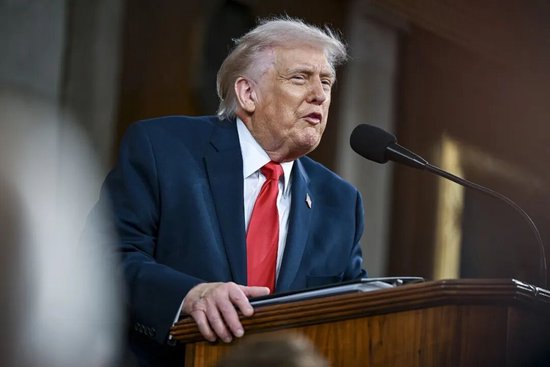
Group 1 - The core message indicates that President Trump is seeking an agreement with Iran while also emphasizing the potential for military action if necessary [1][3][15] - The U.S. military has deployed two aircraft carriers, the USS Ford and USS Lincoln, in the Middle East, signaling increased military pressure on Iran [3][16][18] - The U.S. State Department has called for all American citizens in Iran to leave immediately, citing safety concerns [18][20][22] Group 2 - The third round of indirect negotiations between the U.S. and Iran took place recently, with a new round of technical discussions scheduled for March 2 [9][23] - Despite some optimism from the negotiations, significant differences remain, particularly regarding Iran's nuclear facilities and uranium enrichment [9][25] - The international community, including multiple countries, has issued travel warnings and advisories due to the escalating tensions in the region [20][22] Group 3 - Gold and oil prices have surged, with gold rising by 1.85% to $5,279.95 per ounce and oil prices increasing by over 3% [12][26] - U.S. stock markets experienced volatility, with all three major indices declining and nearly 3,800 stocks falling [12][26]
涨价潮起 接力棒传向何方
Zhong Guo Zheng Quan Bao· 2026-02-27 20:43
Group 1: Precious Metals - International gold prices have exceeded previous optimistic forecasts, with predictions for 2026 ranging from $4,800 to $5,500 per ounce, but prices have already surpassed this range early in the year [1] - As of February 27, 2026, the spot price of gold in London has increased by over 90%, while silver has surged by more than 200% [1] - The demand for precious metals is driven by factors such as weakening dollar credit, rising geopolitical tensions, and increased investment in gold as a safe-haven asset [2][3] Group 2: Industrial Metals - Industrial metals are experiencing price increases supported by solid supply and demand fundamentals, with a projected annual growth rate of 1.5% for ten types of non-ferrous metals in China, which is below the expected consumption growth of 2.2% [3] - The price of copper has reached historical highs, leading to increased costs in the semiconductor manufacturing process, with futures prices for gold, silver, and copper expected to rise by over 50% by 2025 [3] - The chemical sector is also seeing price increases, particularly in dye products, where leading companies are able to raise prices due to supply constraints [3] Group 3: Energy Sector - International oil prices are rising due to geopolitical tensions and supply-demand rebalancing, with VLCC (Very Large Crude Carrier) daily rental rates reaching $15.7 million as of February 20, 2026, and further increasing to over $20 million shortly after [2][4] - The surge in oil tanker rental rates reflects a heightened perception of risk in the market, driven by geopolitical conflicts and the need for additional compensation for shipping [4] Group 4: Market Trends and Predictions - The chemical sector is expected to become the new leading area for price increases, with low inventory levels and tightening supply constraints, while the market awaits demand signals [4] - The precious metals market is anticipated to experience strong fluctuations but maintain an upward trend in the medium term, supported by geopolitical risks and trade policy uncertainties [5] - The price increase logic is spreading from metals and semiconductors to broader sectors such as oil, construction materials, chemicals, and food and beverage industries, with AI and semiconductor sectors continuing to benefit [5]
资源主题ETF开年领跑 机构热议配置价值
Xin Lang Cai Jing· 2026-02-27 15:22
Group 1: Market Overview - The global market has seen increased demand for safe-haven assets due to geopolitical tensions and rising international oil prices, leading to significant inflows into resource-themed ETFs such as oil, rare earths, and precious metals [1][2] - Institutions generally hold a bullish view on commodities like oil, non-ferrous metals, and precious metals, anticipating a "cycle revaluation and structural differentiation" in the market [1] Group 2: Performance of Resource ETFs - Several resource-themed ETFs have shown strong performance post-Spring Festival, with oil and gas ETFs like Huatai-PB and Yinhua rising over 9%, and rare metal ETFs increasing by more than 8.4% [2] - The total scale of oil and gas ETFs has increased significantly, with the Guotai Zhongzheng Oil and Gas Industry ETF growing by over 38.4 million yuan and the Penghua National Oil and Gas ETF increasing by over 14 million yuan [2] Group 3: Oil Market Insights - The oil market is now driven by geopolitical risks, with expectations of high volatility in oil prices over the next month [3] - Companies with oil and gas resources and those in offshore oil and gas service engineering are recommended for investment due to their potential benefits from high industry demand [3] Group 4: Precious Metals Market - Gold and silver prices have rebounded after experiencing volatility, with gold prices reaching 5200 USD/oz and silver prices surpassing 90 USD/oz [4] - Significant growth in gold ETFs has been observed, with the Huaan Fund's gold ETF increasing by over 4.3 billion yuan, leading the market [4] Group 5: Future Price Predictions - Analysts predict that gold prices could rise further, potentially reaching 6200 USD/oz in the coming months due to persistent geopolitical risks and continued support from monetary easing policies [6] - The demand for gold is expected to increase, driven by strong investment interest and central bank purchases [6]
贵研铂业定增项目获证监会批复 拟募资12.91亿元筑牢产业升级根基
Zheng Quan Ri Bao Wang· 2026-02-27 12:34
Core Viewpoint - The announcement by Yunnan Province Precious Metals New Materials Holding Group Co., Ltd. (referred to as "Guizhou Platinum Industry") regarding the approval of its stock issuance plan marks a significant advancement in its fundraising efforts, aimed at enhancing its technological innovation system and accelerating industrial upgrades [1] Group 1: Fundraising and Investment Plans - The company plans to raise 1.291 billion yuan through a private placement, focusing on building a technological innovation platform, upgrading industrial transformation projects, and supplementing working capital [1] - The fundraising will primarily target two areas: the construction of a technological innovation platform, including a "National Key Laboratory for Precious Metal Functional Materials" and a "Precious Metal New Materials AI Laboratory," with a total investment of 484 million yuan; and the construction of recycling bases for precious metal secondary resources in Yunnan and Shandong, with a total investment of 420 million yuan [2][4] Group 2: Technological Innovation and Market Position - The company aims to leverage its position as a leading enterprise in the precious metals materials sector to drive original innovation and breakthroughs in key core technologies [2] - The planned "Precious Metal New Materials AI Laboratory" is expected to attract investor attention, as AI technology is anticipated to significantly reshape the research and development model in materials science, reducing development cycles by 40%-60% and lowering trial and error costs by over 50% [3] Group 3: Market Demand and Resource Security - The demand for precious metal new materials is on the rise due to the rapid development of emerging industries such as new energy vehicles, hydrogen energy, chips, and biomedicine, providing a broad market space for companies like Guizhou Platinum Industry [3] - The company currently has a production capacity of 10 tons per year for platinum group metals from secondary resource recovery, with plans to increase this capacity to approximately 30 tons per year after the completion of the fundraising projects [4] Group 4: Financial Performance - Over the past decade, the company's revenue has steadily increased from 6.881 billion yuan in 2014 to 47.504 billion yuan in 2024, with a compound annual growth rate of 21.31%, while net profit has risen from less than 100 million yuan to 614 million yuan during the same period [5] - The continuous growth in revenue and net profit underscores the company's core competitiveness and development potential, providing solid operational support for the successful implementation of the fundraising project and the advancement of technological innovation and industrial upgrade initiatives [5]
