外汇

Search documents
美国假日周流动性清淡,本周是日本官方干预日元的“黄金窗口”?
Hua Er Jie Jian Wen· 2025-11-24 08:09
Group 1 - The Japanese government is closely monitored by forex traders as the Thanksgiving holiday approaches, with expectations of potential intervention in the yen due to low liquidity conditions [1][2] - Historical data indicates that Japanese authorities often intervene during low liquidity periods to maximize the impact of their actions with less capital [1][2] - The USD/JPY exchange rate is hovering around a 10-month high of 157.90, but the recent verbal warnings from Finance Minister Shunichi Suzuki have temporarily halted the yen's depreciation [1][3] Group 2 - The upcoming Thanksgiving holiday and Black Friday will significantly reduce market liquidity, creating an ideal environment for potential forex intervention by Japanese authorities [2] - The Ministry of Finance is responsible for deciding when to intervene, while the Bank of Japan executes the operations, indicating a structured approach to managing the yen's value [3] - Analysts suggest that the yen has found temporary support at current levels, but its ability to maintain this support largely depends on whether the Japanese authorities take action during this "golden window" [4]
王锡环女士受邀出席迪拜Wiki金融博览会 分享十五年实战智慧与投资策略
Sou Hu Cai Jing· 2025-11-24 04:14
Core Insights - The Wiki Finance EXPO Dubai 2025 successfully gathered over 3,000 industry participants, more than 70 exhibitors, and over 50 top industry experts to discuss cutting-edge topics in financial technology, forex, cryptocurrency, Web 3.0, artificial intelligence, and financial regulatory technology [1] Group 1: Event Overview - The event was co-hosted by WikiGlobal and WikiEXPO, highlighting its significance in the global financial landscape [1] - The expo served as a high-level international financial event, emphasizing the importance of knowledge sharing and collaboration in the finance sector [16] Group 2: Key Speaker Profile - Wang Xihuan, a prominent analyst and financial educator, was a featured guest at the expo, recognized for her deep industry insights and investment strategies [1][5] - With over 15 years of experience across major financial hubs including Shenzhen, Hong Kong, and Wall Street, she has developed a comprehensive understanding of global financial markets [3] Group 3: Investment Strategies - Wang Xihuan advocates for a dual-track trading strategy, combining short-term high-frequency trading with medium to long-term trend trading, allowing for flexibility in responding to market fluctuations [9] - Her investment philosophy centers on "asset preservation and appreciation," emphasizing the importance of professional risk management in volatile market conditions [11] Group 4: Education and Talent Development - Wang Xihuan is dedicated to cultivating financial talent and knowledge transfer, serving as a special financial trainer for various institutions and universities [12] - Her teaching approach focuses on practical skills and market intuition, aiming to prepare the next generation of financial investors [12] Group 5: Networking and Knowledge Exchange - Wang Xihuan is an active participant in international financial forums, including the "Berkshire Hathaway Shareholder Meeting," where she engages with top analysts to exchange investment ideas and stay updated on market trends [14] - The expo facilitated a platform for effective communication and collaboration among global financial technology and investment participants, reinforcing its role as a key hub connecting Eastern and Western finance [16]


FXGT外汇:国际化战略提升品牌影响力
Sou Hu Cai Jing· 2025-11-23 17:37
Core Viewpoint - FXGT Forex has successfully enhanced its brand influence and strengthened its competitive position in the global market through a comprehensive internationalization strategy focused on market expansion, customer service optimization, and technological innovation [1][10]. Group 1: Market Expansion - FXGT Forex's internationalization strategy is a core driver of brand growth, promoting market boundary expansion and significantly enhancing overall brand image and influence [1]. - The brand focuses on penetrating emerging markets, including the Asia-Pacific, Africa, and Latin America, by providing localized financial trading services [1]. - By establishing strong relationships with local partners, FXGT effectively addresses regional differences and meets diverse customer needs, resulting in increased global coverage and market share growth [1]. Group 2: Customer Experience and Service Quality - The internationalization strategy aims to enhance customer experience and service quality through technological innovation and digital platform optimization [4]. - FXGT has developed an integrated trading system that supports multiple languages and cross-time zone operations, ensuring efficient trading support for customers regardless of their location [4]. - The introduction of smart trading tools and real-time customer service systems helps investors respond quickly to market changes, reinforcing user trust and cultivating a loyal customer base [4]. Group 3: Brand Promotion and Reputation Management - Brand promotion and reputation management are key components of the internationalization strategy, with FXGT participating in global financial expos, industry forums, and charitable activities to showcase its professionalism and innovation [7]. - These activities not only enhance the brand's international exposure but also earn recognition from authoritative industry institutions, including multiple global financial awards [7]. - Through these efforts, FXGT has built a solid ethical image and social responsibility concept, fostering positive brand recognition worldwide [7]. Group 4: Overall Impact - The internationalization strategy effectively transforms into competitive advantages for FXGT through systematic integration of market, service, and reputation [9]. - This process not only enhances the brand's sustainable growth potential but also sets an innovative benchmark for the entire forex industry [9]. - FXGT's efforts in global market expansion, customer service optimization, and reputation strengthening have led to significant increases in brand awareness and user trust, establishing a solid foundation for long-term sustainable development [10].

日本股债汇为何连日齐跌?
2 1 Shi Ji Jing Ji Bao Dao· 2025-11-22 00:04
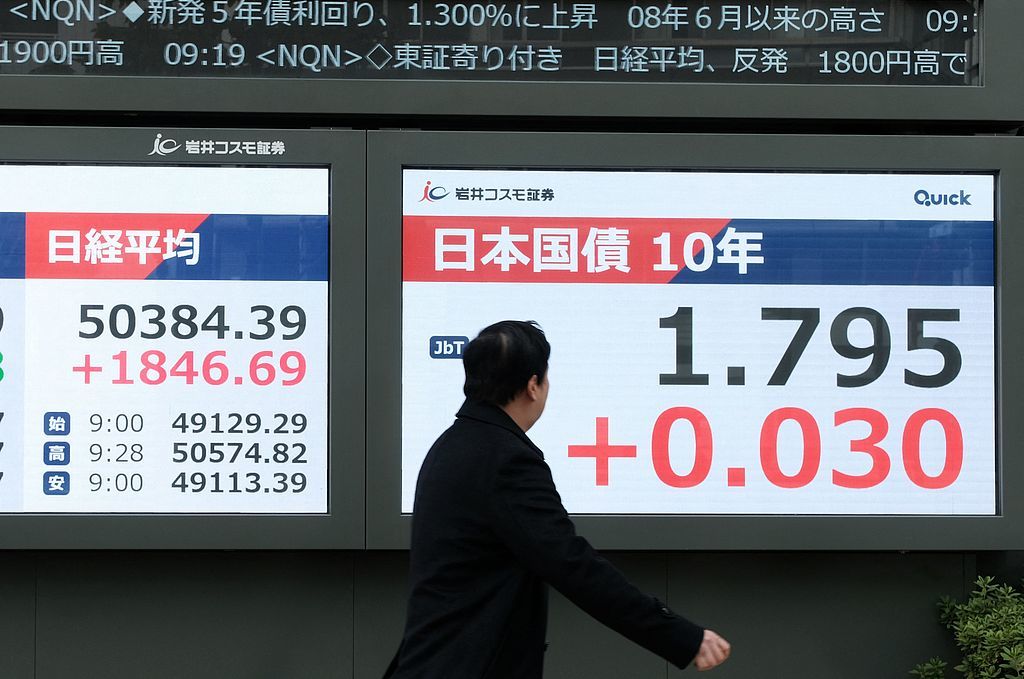
Core Viewpoint - Japan's stock prices, yen exchange rate, and government bonds have all seen significant declines, attributed to the economic policies of Prime Minister Kishi Sanae, leading to market disappointment and concerns over fiscal sustainability [1][2][5] Group 1: Market Performance - The Nikkei average fell below 50,000 points on November 18 and dropped to around 48,000 points by November 21 [1] - The yen depreciated over 6% following Kishi Sanae's appointment, reaching an exchange rate of 157 yen per dollar by November 21 [1] - Long-term government bond yields exceeded 1.83% on November 20, with trading prices hitting levels not seen in 17 years [1] Group 2: Economic Policy Analysis - Initial optimism around Kishi Sanae's economic policies, dubbed "Sanae Economics," has waned as the current economic conditions differ significantly from those in 2013 [2] - Japan's national debt exceeds twice its GDP, limiting the government's ability to implement aggressive fiscal and monetary policies [2] - The government's recent economic measures, including a supplementary budget of 21.3 trillion yen, have raised concerns about fiscal discipline and sustainability [3][4] Group 3: Fiscal Challenges - The supplementary budget's size reflects Kishi Sanae's commitment to active fiscal policies, but critics argue it fails to address rising prices effectively [4] - The focus on crisis management investments, which constitute one-third of the supplementary budget, may exacerbate fiscal issues rather than resolve them [4][5] - The lack of fiscal discipline could lead to increased government debt and further depreciation of the yen, compounding inflationary pressures [5] Group 4: Monetary Policy Outlook - Market pressures have prompted Kishi Sanae to indicate a willingness to allow the Bank of Japan to raise interest rates, with expectations for a decision as early as December [5] - Persistent domestic inflation is a key reason for potential interest rate hikes, which may help stabilize the yen [5] - However, the effectiveness of monetary policy is contingent on a shift away from the current aggressive fiscal strategies [5]
10-year Treasury yield falls under 4.1%
Youtube· 2025-11-21 20:20
Rick Santelli with the Bond Report. Rick, it appears that uh John Williams may have saved Christmas. >> Well, I'm not sure about that.It certainly seems to me like there's a lot of other moving parts here, but it definitely moved the probabilities on the ease and the probabilities have gone from basically 30% up into the close to 70 and it's backed off but right under 70%. But I think the real story is h how the interest rate complex is shadow boxing uh the equity side and mostly when it goes higher. Now if ...

韩元对美元汇率跌至七个月来新低
Sou Hu Cai Jing· 2025-11-21 13:38
Core Insights - The South Korean won has depreciated significantly against the US dollar, reaching a seven-month low, which has led to rising domestic oil prices and the highest import price increase in nine months [1][2] Group 1: Currency Depreciation - The exchange rate of the won against the dollar opened at 1472.4 won per dollar, marking a 3.43% decline over the past month [1] - Factors contributing to the depreciation include reduced likelihood of short-term interest rate cuts by the Federal Reserve and significant foreign capital outflows from the South Korean stock market, with nearly 10 trillion won sold by foreign investors in the past month [1] Group 2: Impact on Oil Prices - The average price of gasoline in Seoul has surpassed 1800 won per liter, reaching 1805.22 won, which is approximately 8.7 yuan, marking a significant increase [2] - The rise in oil prices is attributed to both the rebound in international oil product prices and the depreciation of the won, which has increased the import price of crude oil [2] Group 3: Consumer Price Index - The Bank of Korea reported a 1.9% increase in the import price index for October, the largest monthly increase since January, indicating rising inflationary pressures [2] - According to the Korea Development Institute, a 1% drop in the won's value against the dollar results in a 0.04 percentage point increase in consumer prices, suggesting that inflation may rise further in the coming months [2]
外汇储备:阿尔及利亚领先摩洛哥和突尼斯
Shang Wu Bu Wang Zhan· 2025-11-21 08:30
Core Viewpoint - Algeria's foreign exchange reserves are a crucial indicator of its economic health, projected to exceed $81 billion by 2025, ranking second in Africa after Libya [1] Group 1: Foreign Exchange Reserves - Algeria's foreign exchange reserves are expected to surpass $81 billion by 2025, placing it second in Africa, behind Libya's approximately $92 billion [1] - The reserves are significantly higher than Morocco's $36.3 billion and Tunisia's $9.24 billion, which rank fifth and eighth respectively [1] - The stability of Algeria's reserves is primarily supported by oil and gas export revenues and recent government policies aimed at regulating imports and controlling foreign exchange expenditures [1] Group 2: Economic Indicators - President Tebboune stated in September that the current level of foreign exchange reserves is "acceptable," sufficient to cover 1 year and 5 months to 1 year and a half of import needs [1] - South Africa ranks third in Africa with $62.4 billion in reserves, followed by Nigeria with $41.3 billion, and other countries like Egypt, Angola, Côte d'Ivoire, and Kenya [1] Group 3: Regional Economic Differences - The foreign exchange reserve levels in North African countries are significantly higher than those in many West and East African nations [1] - Variations in foreign reserves are closely linked to global energy prices, structural reform processes, and international market pressures [1] - These differences reflect the diverse economic structures across African regions and indicate the direct impact of import policies and commodity prices on national external assets [1]
11月21日汇市早评:100关口拉锯战升级!美联储官员密集发声
Jin Tou Wang· 2025-11-21 02:29
Core Points - The market focus is on Malaysia's palm oil production estimates, China's iron ore inventory, and the US manufacturing PMI data for November [1][8] Currency Analysis - **US Dollar Index**: The index is trading around 100.229, supported by the previous day's close of 100.21, with potential resistance at 100.25 and 100.50 [2] - **EUR/USD**: The exchange rate is at 1.1535, having broken the key support level of 1.1530, indicating a weak trend with support at 1.1515 and 1.1500 [2] - **GBP/USD**: The rate is reported at 1.3081, showing a slight increase, with key support at 1.3040 and resistance at 1.3080 [3] - **USD/JPY**: The exchange rate is at 157.28, down 0.24 from the previous day, indicating a potential adjustment phase with support at 157.00 and resistance at 157.50 [3] Economic Data Review - **US Employment Data**: Non-farm payrolls unexpectedly increased by 119,000, while the unemployment rate rose to 4.4%, complicating the Fed's rate decision [4] - **Initial Jobless Claims**: The number of initial claims fell to the lowest level since September, while continuing claims have been increasing [4] - **Fed Officials' Comments**: Concerns about inflation remaining at 3% and the potential risks of further rate cuts were expressed by various Fed officials [5][6] Upcoming Economic Events - Key economic data releases include Malaysia's palm oil production estimates, China's iron ore inventory, and the US manufacturing PMI for November [8]
大类资产早报-20251121
Yong An Qi Huo· 2025-11-21 01:33
| 指数表现 | A股 | 沪深300 | 上证50 | 创业板 | 中证500 | | --- | --- | --- | --- | --- | --- | | 收盘价 | 3931.05 | 4564.95 | 3008.29 | 3042.34 | 7061.95 | | 涨跌(%) | -0.40 | -0.51 | -0.40 | -1.12 | -0.85 | | 估值 | 沪深300 | 上证50 | 中证500 | 标普500 | 德国DAX | | PE(TTM) | 14.14 | 12.03 | 32.17 | 25.98 | 18.06 | | 环比变化 | -0.02 | 0.01 | -0.27 | -0.41 | 0.09 | | 风险溢价 | 沪深300 | 上证50 | 中证500 | 标普500 | 德国DAX | | 1/PE-10利率 | 3.70 | 5.77 | -0.38 | -0.24 | 2.82 | | 环比变化 | 0.00 | 0.00 | 0.00 | 0.11 | -0.04 | | 资金流向 | A股 | 主板 | 中小企业板 | 创业板 | 沪 ...
刺激计划震动市场,汇市股市同步承压,内外因素加剧“抛售日本”潮
Huan Qiu Shi Bao· 2025-11-20 22:49
Core Viewpoint - Japan's bond market is facing significant turmoil as the government prepares a large-scale economic stimulus plan, raising concerns about fiscal health and leading to a sell-off in government bonds [1][3][6] Group 1: Bond Market Dynamics - The yield on Japan's 10-year government bonds has risen to 1.8%, the highest level since 2008, indicating a significant sell-off in the bond market [1][3] - The 40-year bond yield reached a historical peak of 3.695%, while the 20-year bond yield hit 2.815%, the highest since 1999 [1] - The anticipated issuance of long-term bonds to finance the stimulus plan is seen as a primary driver for the rising yields [3][6] Group 2: Economic Stimulus Plan - The Japanese government is finalizing a stimulus plan exceeding 20 trillion yen (approximately 135 billion USD) to boost the economy [1] - Reports suggest that the supplementary budget could be at least 25 trillion yen (approximately 168 billion USD), raising concerns about the sustainability of Japan's fiscal position [3][6] Group 3: Market Reactions - The Japanese yen has depreciated against the US dollar, falling below 157 yen per dollar, reflecting market anxiety [3] - The Nikkei 225 index has experienced significant declines, erasing most gains since the new Prime Minister's election [3][4] Group 4: Broader Economic Concerns - Japan's GDP contracted by an annualized rate of 1.8% in the third quarter, indicating ongoing economic challenges [4] - Investor sentiment has been further dampened by the cancellation of the primary fiscal balance target and proposed changes to corporate governance rules [5] Group 5: Future Outlook - Analysts warn that the upcoming announcement of the fiscal stimulus plan could trigger further sell-offs in Japanese assets, highlighting the fragility of the current market [6] - Concerns are growing that Japan may face a scenario similar to the UK under Liz Truss, with simultaneous declines in the stock market, bond market, and currency [6]