
新消费

Search documents
钟睒睒登顶胡润百富榜,王宁成河南首富
3 6 Ke· 2025-10-28 08:45
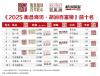
Group 1 - The core point of the article highlights the emergence of a new generation of entrepreneurs in China, significantly altering the wealth landscape, as evidenced by the 2025 Hurun Rich List, which features 1,434 individuals with wealth exceeding 5 billion yuan, a 31% increase from last year, and a total wealth nearing 30 trillion yuan, reflecting a 42% year-on-year growth [1][2]. Group 2 - There are 376 new faces on the list this year, representing about 26% of the total, with notable newcomers including Lei Jun of Xiaomi and Li Shufu of Geely [2]. - The surge in the number of wealthy individuals is largely attributed to a significant recovery in the stock market, with major indices like the Shanghai Composite Index and the Shenzhen Component Index rising by approximately 40-50% compared to the previous year [2]. - The industry structure has notably shifted, with a decline in real estate entrepreneurs, as only one remains in the top 100, while new entrants primarily come from industrial products, health, and consumer goods sectors [3]. - Zhong Shanshan retains the title of China's richest person for the fourth time with a wealth of 530 billion yuan, marking a 56% increase from last year, driven by the success of Nongfu Spring [3]. - Lei Jun's wealth surged by 151% to 326 billion yuan, making him the highest wealth gainer this year, with Xiaomi having ten representatives on the list [3][4]. - Li Shufu's wealth increased by 55% to 225 billion yuan, as Geely's stock price doubled over the past year [3]. - Wang Ning of Pop Mart saw a staggering 562% increase in wealth, amounting to 154.5 billion yuan, placing him in the top 20 [4]. Group 3 - The geographical distribution of the listed entrepreneurs shows that 1,210 are from mainland China, with Shanghai leading at 152 individuals, followed by Shenzhen and Beijing [5]. - The list also features three "post-80s" provincial billionaires, indicating a trend of younger entrepreneurs gaining wealth [6]. - Founders in the consumer electronics sector, such as DJI's Wang Tao, have also seen significant wealth increases, benefiting from the global demand for smart hardware [7]. - The new consumption sector is thriving, with several new entrants in various fields, including tea drinks and beauty products, showcasing the impact of young entrepreneurs [8].

广发基金樊力谨:以“翻石头”心态寻找港股优质增长机会
Shang Hai Zheng Quan Bao· 2025-10-26 15:37
Core Viewpoint - The Hong Kong stock market is expected to improve, with significant opportunities for quality growth companies, driven by unique selection logic and fundamental research [1][4]. Group 1: Investment Opportunities - The Hong Kong stock market has attracted over 1 trillion yuan in southbound capital inflows this year, with sectors like innovative drugs, new consumption, and hard technology gaining attention [1]. - The "quality growth" investment strategy focuses on three dimensions: domestic demand, international expansion, and unique institutional advantages of the Hong Kong market [2][5]. - Companies benefiting from domestic demand are showing solid fundamentals and wider competitive moats, with potential for valuation and profit "double boosts" as the economic cycle stabilizes [2]. - Companies actively expanding internationally are expected to elevate their growth ceilings, with the potential emergence of world-class brands and industry leaders [2]. - The unique institutional advantages of the Hong Kong market, such as flexible IPO and refinancing systems, provide a rich source of growth opportunities for innovative companies [2]. Group 2: Market Characteristics - The Hong Kong stock market is characterized by high volatility, often being the first to be sold off during market panic, which presents both risks and unique investment opportunities [3]. - Investors are encouraged to conduct in-depth fundamental research and maintain confidence in the long-term fundamentals of companies to achieve better performance [3]. - A stable investment framework and a calm mindset are crucial for successful investing, especially when there is a significant disconnect between a company's stock price and its intrinsic value [3]. Group 3: Future Market Trends - Investment strategies are shifting from external to internal focus, with the Chinese economic fundamentals and corporate profit cycles becoming the core drivers of the Hong Kong market [5]. - There is a growing emphasis on mid-level analysis, with in-depth research on industry cycles and leading companies being key to achieving excess returns [5]. - The market is expected to see opportunities in sectors that may currently be overlooked, with a focus on identifying mispriced assets through a "turning stones" approach [5].
新消费引领新供给,科技消费创造新需求
Yin He Zheng Quan· 2025-10-24 13:49
Investment Rating - The report suggests a positive outlook for the new consumption sector, emphasizing the importance of technology-driven consumer products and new consumption trends [2]. Core Insights - The report highlights the guidance from the 20th Central Committee's Fourth Plenary Session regarding the future development of the consumption industry, focusing on enhancing domestic demand and creating new supply through new demand [2]. - It emphasizes the rapid advancement of technology consumption in China, with certain products gaining competitive advantages in international markets, such as drones and smart home devices [2]. - The integration of AI with the consumer industry is identified as a key trend, leading to the emergence of innovative products and services [2]. - New consumption trends are driven by changing demographics and consumer preferences, with emotional consumption becoming a significant focus [2]. - Traditional consumption faces temporary pressures due to factors like housing prices and employment, but many sectors maintain strong international competitiveness [2]. Summary by Sections New Supply and Demand - The report discusses how new supply can create new demand, particularly through technological advancements in consumer products [2]. - It mentions the low penetration rates of certain tech products, indicating significant growth potential [2]. New Consumption Development - New consumption is rapidly evolving, driven by changes in population structure and consumer attitudes [2]. - Emotional consumption is highlighted as a key area, with trends in collectibles, outdoor activities, and pet-related products gaining traction [2]. Traditional Consumption Challenges - The report notes that traditional consumption is under pressure but retains strong international competitiveness [2]. - It anticipates a rebound in traditional consumption due to government subsidies in late 2024 and 2025, despite facing challenges from high export bases and tariff barriers [2]. Investment Recommendations - The report recommends specific companies across various sectors, including consumer services, food and beverage, agriculture, textiles, and technology consumption [2]. - Notable mentions include companies like Dongpeng Beverage, Anta Sports, and Roborock Technology, among others [2].
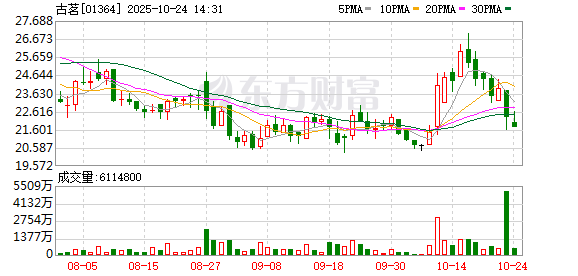
港股新消费概念午后走弱,古茗跌超2%
Mei Ri Jing Ji Xin Wen· 2025-10-24 06:30
Group 1 - The new consumption concept in the Hong Kong stock market weakened in the afternoon session on October 24 [2] - Gu Ming (01364.HK) experienced a decline of over 2% [2] - Other companies such as Blu-ray (00325.HK) and Cha Bai Dao (02555.HK) also followed the downward trend [2]
A股三大指数全线翻红,大金融、存储芯片异动,恒指、恒科指均涨1%,科网股拉升,“双焦”走强
Sou Hu Cai Jing· 2025-10-23 07:13
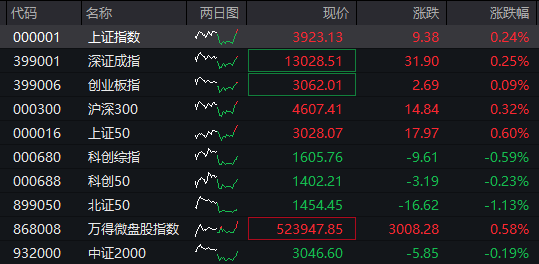
Market Overview - A-shares rebounded in the afternoon, with the Shanghai Composite Index returning to 3900 points, and the ChiNext Index turning positive [2][3] - The Hang Seng Index and Hang Seng Tech Index both rose, with significant gains in technology stocks like Meituan, which increased over 5% [2][5] Sector Performance - The financial sector showed strong performance, with major banks like Agricultural Bank of China continuing their upward trend, marking a 15-day increase [35] - Coal stocks experienced a surge, with multiple stocks hitting the daily limit up, including Dayou Energy, which achieved nine consecutive trading days of gains [30][39] - New energy stocks, particularly lithium and solar sectors, saw a rebound, with companies like Shengxin Lithium Energy and Tianhua New Energy rising significantly [24][28] Bond and Commodity Markets - Government bond futures declined across the board, with the 30-year contract down by 0.21% [5][6] - Domestic commodity futures saw a broad increase, particularly in coking coal and coking coke, with coking coal rising over 4% [7][8] Notable Stock Movements - New consumption concept stocks faced declines, with Pop Mart experiencing a drop of over 9% [17][32] - Major technology stocks showed mixed results, with some like Alibaba and Tencent slightly recovering, while others like NetEase and Kuaishou fell [12][13] Trading Volume and Market Sentiment - The overall market sentiment was cautious, with over 3800 stocks in the Shanghai and Shenzhen markets showing declines, and trading volume shrinking to 1.06 trillion yuan [18] - The market's performance was influenced by fluctuations in major sectors, with coal, shipping ports, and local Shenzhen stocks leading the gains, while engineering machinery and AI hardware sectors lagged [18][19]
年内提振消费政策措施持续落地,消费新业态、新场景不断拓展,消费潜力持续释放
Mei Ri Jing Ji Xin Wen· 2025-10-23 05:49
Group 1 - The core viewpoint of the news highlights that Pop Mart's latest performance report shows a year-on-year revenue growth rate of 245%-250% in the third quarter, with overseas markets being a key growth driver and strong performance in the domestic market [1] - According to the National Bureau of Statistics, the total retail sales of consumer goods in the first three quarters of 2025 increased by 4.5% year-on-year, accelerating by 1.2 percentage points compared to the same period last year and by 1 percentage point compared to the entire previous year [1] - Analysts suggest that there is a "high cut low" allocation demand in the market, with the consumer sector attracting new capital attention as it is seen as a valuation low point [1] Group 2 - The Hong Kong Stock Consumer ETF (513230) tracks the CSI Hong Kong Stock Connect Consumer Theme Index, packaging leading internet e-commerce companies and new consumption, covering various fields in Hong Kong's consumer sector [2] - The ETF includes new consumption leaders such as Pop Mart, Lao Pu Gold, and Miniso, as well as internet e-commerce giants like Tencent, Kuaishou, Alibaba, and Xiaomi, highlighting the prominent technology and consumption attributes [2]
刚刚,A股突变!
天天基金网· 2025-10-23 05:19
Market Overview - On October 23, the A-share market opened lower and continued to decline, with the Shanghai Composite Index down 0.66%, Shenzhen Component down 0.87%, and ChiNext down 1.1% [3] - The total market turnover for the half-day was 1.06 trillion yuan, showing a slight decrease compared to the previous day, with over 3,800 stocks declining [5] Sector Performance - The coal sector continued its recent upward trend, with a rise of 2.02%, while the oil and chemical sector increased by 1.77% and the port sector by 1.65% [6] - Conversely, the communication, electronics, real estate, and construction materials sectors experienced declines, with the communication and electronics sectors leading the downturn [8][9] Individual Stock Movements - In the Hong Kong market, Pop Mart saw a significant drop of over 9%, leading the decline among Hang Seng Index constituents [7] - The stock of Longi Green Energy fell over 8%, with other related stocks like Tianfu Communication and Changying Tong also experiencing declines [10][11] - Agricultural Bank of China initially rose over 2% but later fell to 7.98 yuan per share, marking a decline of 1.36% [14][15] New Consumption Sector - The new consumption sector in Hong Kong saw a collective decline, with Pop Mart's stock price dropping to a low of 228.6 HKD, a decrease of 10.84% [18] - Despite Pop Mart's third-quarter earnings exceeding market expectations with a revenue growth rate of 245% to 250% compared to the same period in 2024, investor concerns about future growth may have contributed to the stock's decline [18]

AH股齐跌,创业板跌超1%,农业银行15连阳再创新高,AI硬件股调整,恒科指跌超1%,国债跌,商品涨
Hua Er Jie Jian Wen· 2025-10-23 01:53
Market Overview - A-shares experienced a decline with all three major indices falling, the ChiNext index dropping over 1% [1] - The Hang Seng Index also fell, with the Hang Seng Tech Index down 1.28% [2][3] - Domestic commodity futures showed strength, with fuel oil rising nearly 3% [4][5] A-shares Performance - As of the report, the Shanghai Composite Index decreased by 0.46% to 3895.79, the Shenzhen Component Index fell by 1.00% to 12867.09, and the ChiNext Index dropped by 1.11% to 3025.44 [1][14] - The banking sector showed resilience, with Agricultural Bank of China hitting a historical high and several other banks like Postal Savings Bank and Qingdao Bank also rising [8][9] Hong Kong Market - The Hang Seng Index was down 0.41% to 25677.26, while the Hang Seng Tech Index fell by 1.28% [2][3] - New consumption concept stocks in Hong Kong continued to weaken, with Pop Mart dropping over 6% [10] Commodity Market - Domestic commodity futures mostly rose, with notable increases in fuel oil (up 2.86%) and asphalt (up 2.37%) [5][17] - Other commodities like coking coal, soybean meal, and lithium carbonate also saw gains exceeding 1% [4][5] Banking Sector - The banking sector maintained strong performance, with multiple banks reporting gains, including Postal Savings Bank (up 3.14%) and Qingdao Bank (up 1.74%) [9][8] - Agricultural Bank of China continued its upward trend, marking 15 consecutive days of gains [8] Coal Sector - The coal sector remained strong, with stocks like Daya Energy and Zhengzhou Coal Electricity hitting the daily limit up [11] - Notable gains included Shaanxi Black Cat (up 10.12%) and Yunmei Energy (up 10.06%) [11] Shenzhen Local Stocks - Shenzhen local stocks opened strong, with several companies like Jian Kexuan and Guangtian Group hitting the daily limit up [12][13] - The Shenzhen government announced a plan to enhance the quality of listed companies, aiming for a total market value exceeding 20 trillion yuan by 2027 [13]

港股新消费概念股延续弱势
Mei Ri Jing Ji Xin Wen· 2025-10-23 01:51
Group 1 - The Hong Kong stock market for new consumption concept stocks continues to show weakness, with significant declines observed [1] - Pop Mart and Gu Ming both fell over 5%, indicating a notable downturn in their stock performance [1] - Other companies such as Mixue Group and Blukoo experienced declines of over 3%, while Lao Pu Gold and Mao Ge Ping dropped over 1% [1]


中泰国际每日晨讯-20251023
ZHONGTAI INTERNATIONAL SECURITIES· 2025-10-23 01:33
Market Performance - The Hang Seng Index closed at 25,782 points, down 0.94%, while the Hang Seng China Enterprises Index fell 0.85% to 9,224 points[1] - Total turnover in Hong Kong stocks was HKD 227.5 billion, lower than HKD 264.7 billion on Tuesday, indicating market caution[1] - Energy sector rose by 0.3%, while non-essential consumer goods, healthcare, information technology, and conglomerates fell by 1.3%, 1.9%, 1.1%, and 1.2% respectively[1] Stock Highlights - China National Pharmaceutical (1099 HK) and Pop Mart (9992 HK) led the gainers, rising by 4.3% and 2.4% respectively[1] - Chow Tai Fook (1929 HK) and CSPC Pharmaceutical (1093 HK) were the biggest losers, dropping by 5.7% and 5.2% respectively[1] Commodity Trends - Gold prices fell below USD 4,100, with mining and retail stocks in Hong Kong following suit[1] - Zijin Mining (2899 HK), Zhaojin Mining (1818 HK), Chow Tai Fook (1929 HK), and Lao Poo Gold (6181 HK) saw declines between 1.7% and 8.2%[1] Economic Indicators - U.S. mortgage applications decreased by 0.3% for the week ending October 17, better than the previous week's decline of 1.8%[3] - U.S. crude oil inventories fell by 960,000 barrels, contrary to market expectations of a 1.2 million barrel increase[3] - UK inflation rate for September remained at 3.8%, below the market forecast of 4.0%[3] Corporate Developments - Lao Poo Gold (6181 HK) announced a placement of 3.71 million new shares, raising HKD 2.71 billion at a 4.5% discount to the previous closing price[4] - Pop Mart (9992 HK) reported strong overseas market performance in Q3, leading to a 2.4% increase in stock price[4] Pharmaceutical Sector - Innovent Biologics (1801 HK) entered a licensing agreement with Takeda Pharmaceutical for several therapies, receiving an upfront payment of USD 1.2 billion[5] - The strategic investment price of HKD 112.56 per share represents a 20% premium over the weighted average closing price prior to the agreement[5]