
保险业

Search documents
2026年度商品投资策略会
2026-01-23 15:35
Summary of Key Points from Conference Call Records Industry Overview - **Global Market Trends**: The global equity markets performed well in 2025, with a notable bull market in both U.S. stocks and bonds driven by the Federal Reserve's loose monetary policy and a trend towards de-dollarization. However, market fragmentation risks due to U.S.-China tensions need to be monitored [1][2] - **Japanese Yen Depreciation**: The Japanese yen has depreciated to its lowest level since 1985, with high inflation preventing effective interest rate hikes by the Bank of Japan. This divergence between nominal and real interest rates may persist until 2026, impacting emerging markets [1][4] - **High Leverage Risks**: The ratio of private sector credit to GDP has reached a new high, posing potential risks that could emerge in emerging markets and drag down developed economies. This high leverage is a significant precursor to cyclical risks [1][5] China Market Insights - **Chinese Stock and Bond Markets**: In 2025, China's stock market showed strength while the bond market was weak, indicating increased economic and social confidence. Large capital inflows suggest a favorable investment environment [1][7] - **Economic Performance**: China's GDP growth rate for 2025 was 5%. Despite moderate domestic demand, significant capital inflows were observed, similar to Japan's past experiences. The strategy of leveraging low-interest debt to invest in high-yield overseas assets is recommended [1][8] - **Government Bond Market**: The three-year government bond market in China has been adjusting, with M1 growth and positive PPI putting pressure on the bond market. The behavior of financial institutions, particularly brokerages, has shifted towards shorting in Q4 2025 [1][9][10] Monetary Policy Changes - **Central Bank Policy Shifts**: The central bank's monetary policy has shifted from emphasizing increased control to focusing on the integrated effects of incremental and stock policies. This indicates a more moderate approach to monetary easing in 2026, with lowered expectations for interest rate cuts [1][11] Commodity Market Outlook - **Precious Metals**: Gold and copper have shown strong performance, with gold favored as a risk hedge by central banks and sovereign institutions. The demand for copper is influenced by supply-demand structural issues, particularly in the U.S. and China [1][13][14] - **Investment Strategies**: Gold is viewed as a hedge rather than a high-return investment, with attention needed on futures pricing and market limitations. Copper prices are expected to remain strong unless significant negative news arises [1][16][20] Future Projections - **Economic Growth and Interest Rates**: There are differing views on the U.S. economic growth and interest rate outlook for 2026, with some expecting significant rate cuts due to a lack of recovery in traditional industries and others believing that limited cuts will suffice for recovery [1][27][28] - **Gold Market Dynamics**: The gold market is expected to remain bullish, driven by central bank purchases and ETF inflows. The potential for a 10%-15% price correction exists if economic recovery leads to rising real interest rates [1][29][55] Structural Opportunities - **Long-term Gold Demand**: Emerging market countries are increasingly diversifying their reserves into gold, which could significantly impact global demand. The interest from institutional investors in gold is also on the rise [1][23][51] Conclusion - The global economic landscape is characterized by significant fragmentation, high leverage risks, and evolving monetary policies. The Chinese market shows resilience with strong capital inflows, while commodities like gold and copper present both opportunities and challenges. The outlook for 2026 remains cautiously optimistic, with careful monitoring of macroeconomic indicators and geopolitical developments essential for investment strategies.
事关健康险!保险业协会等四家行业机构集体发声
Guo Ji Jin Rong Bao· 2026-01-23 14:58
Core Viewpoint - The importance of health insurance is increasing due to the growing health protection needs of the public and the advancement of the Healthy China strategy [1] Group 1: Industry Growth and Development - The commercial health insurance sector has experienced an average annual compound growth rate of over 20% in the past decade, with more than 11,000 medical insurance products currently available [3] - By 2025, the total compensation amount for innovative drugs and devices from commercial health insurance is estimated to reach approximately 14.7 billion, with a compound annual growth rate of 70% over four consecutive years [3] Group 2: Collaboration and Innovation - The China Insurance Industry Association is actively promoting cross-industry communication and collaboration with health, medical, and academic organizations to enhance the development of commercial insurance [4] - The actuarial association is working on compiling a net cost table for commercial medical insurance to improve the matching of insurance rates with underwriting risks [6] Group 3: Financial Support for Healthcare - Insurance funds are playing a crucial role in supporting the upgrade of the medical and health care industry, with over 150 billion allocated through various investment plans by 2025 [8] - Direct investments in the medical and elderly care sectors by insurance funds reached nearly 30 billion by the end of Q3 2025, covering various sub-sectors such as biotechnology and medical devices [8] Group 4: Infrastructure and Data Sharing - The Silver Insurance Trust Company is enhancing the infrastructure for health insurance by providing diverse services such as product verification, risk control, and claims support [11] - Future efforts will focus on optimizing health insurance product verification, integrating data between health insurance and medical insurance, and upgrading platform infrastructure to support high-quality development in health insurance [12]
加大年金投入、推动个人养老金增长……上海锚定未来五年养老金融发展目标
Di Yi Cai Jing· 2026-01-23 11:53
Core Insights - Shanghai is facing significant aging challenges and has launched a comprehensive action plan to develop a distinctive commercial pension finance system during the 14th Five-Year Plan period [1] Group 1: Action Plan Overview - The Shanghai Banking and Insurance Regulatory Bureau has released the "Action Plan for High-Quality Development of Pension Finance in Shanghai," outlining a clear roadmap for the next five years [1] - The plan aims to establish a robust pension finance mechanism, diversify pension financial products, and create a replicable and scalable pension finance system [1] - Key goals include ensuring that the growth rate of pension industry loans exceeds that of other loans, thereby addressing the challenges and opportunities posed by an aging population [1] Group 2: Pension Security System - The action plan addresses the three pillars of China's multi-tiered pension security system, focusing on enhancing the first pillar through participation from banks and insurance companies in basic pension fund management [2] - For the second pillar, it emphasizes increased resource allocation by banks and insurance institutions towards enterprise annuities and occupational annuities [2] - The third pillar aims to expand personal pension accounts and innovate products to steadily grow account numbers and fund sizes [2] Group 3: Financial Support for Pension Industry - The action plan calls for increased financial support for the pension industry, encouraging banks to innovate credit models and allocate long-term funds for health and pension facility construction [3] - Insurance institutions are guided to provide stable funding through equity investments and REITs, while trust institutions are encouraged to offer customized services [3] - The market is expected to see a rise in pension REITs and asset-backed securities (ABS) as common financial tools for the pension industry [3] Group 4: Product Supply and Governance - The action plan requires banks and insurance institutions to offer comprehensive pension financial solutions, transitioning from single product services to a comprehensive service ecosystem [4] - It encourages the establishment of specialized departments or mechanisms for pension finance within financial institutions [4] - The plan also explores the creation of a Shanghai Pension Finance Alliance and a dynamic monitoring and evaluation mechanism for pension finance development [4]
平安人寿与清华大学联合定制“高才经理人培养计划”
Jin Rong Jie· 2026-01-23 11:03
在深化人身保险行业个人营销体制改革的背景下,为助力代理人队伍的高质量转型,平安人寿与清华大 学联合定制的"2026年第1期高才经理人培养计划"近期在北京成功举办。来自全国28家机构的近百位高 才代表齐聚清华园,共启一段聚焦行业前沿、赋能组织发展的深度学习之旅。 平安人寿相关负责人表示,当前寿险行业正处于迈向高质量发展的关键转型期,客户需求已从单一的保 险保障,升级为对财富管理、健康医疗和品质养老的综合性、一站式解决方案。面对市场趋势的深刻变 化,公司坚定推动代理人队伍从"保险销售员"向"保险康养顾问"转型,着力培养具备"金融顾问、家庭 医生、养老管家"的价值传递者,真正成为客户人生的长期伙伴。为此,平安人寿与清华大学展开深度 合作,依托其深厚的学术积淀与跨学科资源,为高才经理人注入体系化、前瞻性的专业能力。 本次高才经理人培养计划的顺利举办,标志着平安人寿与清华大学在人才培养领域的合作迈出了坚实一 步。据悉,双方已就未来持续赋能平安人寿的高才队伍建设达成初步合作意向,将围绕职业认证、能力 提升、实战应用等方面展开更深层次的合作,共同打造行业领先的专业护城河。 据介绍,"高才计划"是平安人寿"保险康养顾问"人才 ...
凤凰服务台|前海人寿非法辞退员工,三审败诉仍拒赔付84万补偿款
Feng Huang Wang Cai Jing· 2026-01-23 10:28
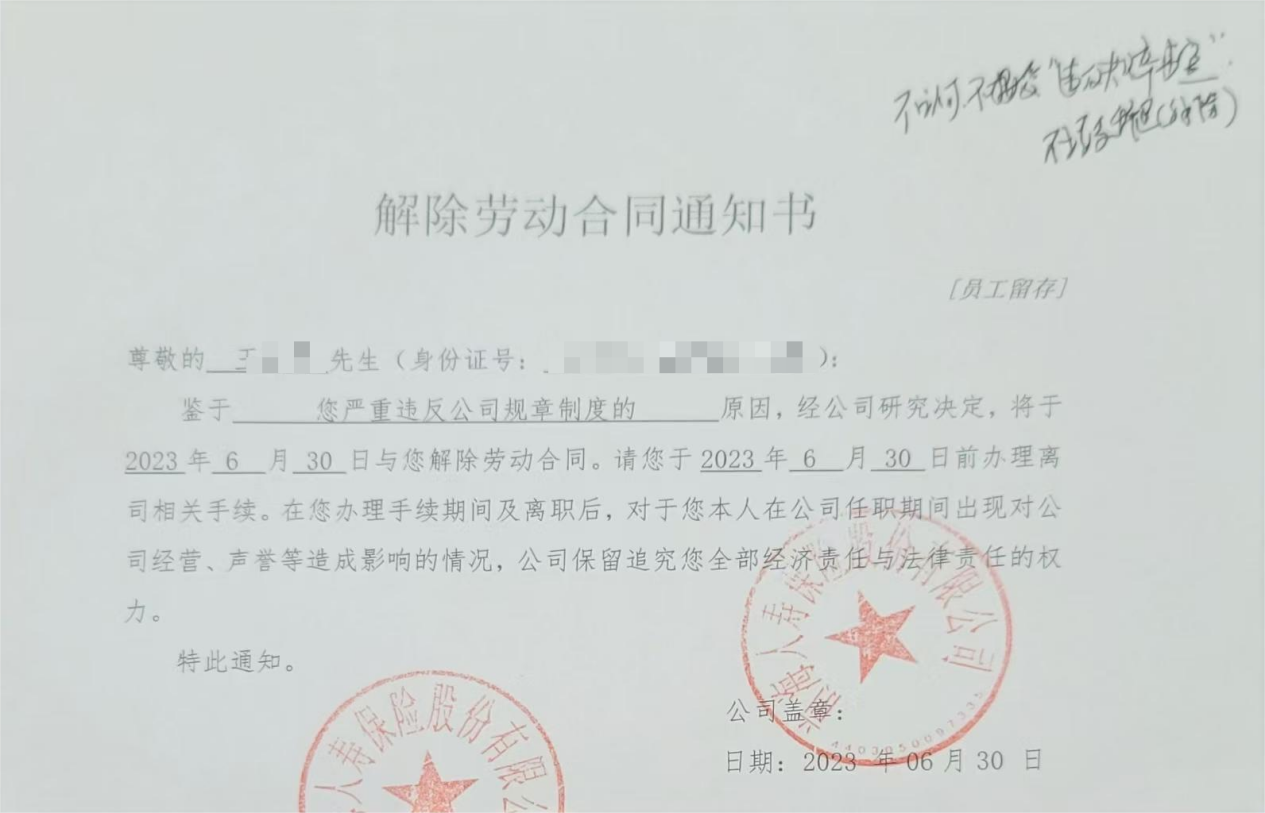
"我在职8年,各项工作都是按公司流程执行,怎么就严重违反规章制度了?"王先生在通知书上注明"不认可、不接受辞退",但公司仍执意解除劳动关系。 随后,王先生申请劳动仲裁,要求公司支付赔偿金、工资差额等共计89.8万元。前海人寿拒绝赔付,还提起反申请,称王先生存在违规报销和严重失职行 "前海人寿一直拖着拒不赔付!" 近日,王先生向"凤凰网服务台"反映(报料链接:https://finance.ifeng.com/questionnaire),三年前被前海人寿保险股份有限公司(以下简称"前海人寿")单 方面解雇后,他便踏上了漫漫维权路。 令人没想到的是,这场劳动纠纷跨越近三年仍未落幕——历经仲裁、法院一审和二审及高院再审,最终认定前海人寿违法解除劳动合同,判令其支付80余万 元补偿款。但判决生效后,前海人寿仍不履行赔付义务,这让王先生既气愤又无奈。 据王先生介绍,他在2014年入职深圳前海人寿保险股份有限公司,期间也算稳步晋升,曾历任财务管理室经理、财务总监助理等职。2022年8月,公司安排 他兼任北京项目公司总经理,还与公司签订了无固定期限劳动合同,双方约定月工资66000元,其中基本工资52800元、绩效工资1 ...

调查|险资“灰色”投资私募量化,中小险企借道MOM试水
券商中国· 2026-01-23 06:59
Core Viewpoint - Insurance funds are increasingly investing in private quantitative products, particularly since the positive changes in the capital market following the "9·24" event in 2024, with several small and medium-sized insurance companies participating in this trend [3][4][8]. Investment Trends - There is a noticeable trend of insurance capital investing in private quantitative products, with a focus on quantitative index enhancement strategies that have shown strong performance [2][4]. - Quantitative index enhancement products have outperformed traditional public funds, leading insurance companies to prefer these private offerings [5][10]. Investment Structure - Insurance funds typically invest in private quantitative products indirectly through a "Manager of Managers" (MOM) structure, where they invest in a single asset management plan managed by a brokerage, with the private fund acting as an advisor [3][11]. - This structure allows insurance companies to navigate regulatory uncertainties while still accessing the benefits of private quantitative strategies [11][12]. Performance and Market Conditions - In a low-interest-rate environment, insurance companies are compelled to seek alternative investment avenues, with private quantitative products providing a potential solution for enhancing returns [8][9]. - The performance of small-cap index enhancement products has been particularly strong, with some achieving returns exceeding 50% in a favorable market [4][8]. Regulatory Environment - The regulatory stance on insurance funds investing in private quantitative products remains ambiguous, with existing guidelines generally excluding private securities funds from eligible investment categories [11][12]. - There is speculation that regulatory bodies may eventually clarify the rules surrounding these investments, potentially imposing stricter requirements on the management of insurance funds [12]. Industry Sentiment - While there is enthusiasm for the potential of private quantitative investments, there are also concerns regarding compliance and the inherent risks associated with private fund management [9][10]. - Some industry insiders advocate for a cautious yet open approach to these investment strategies, recognizing them as a necessary exploration for small and medium-sized insurance companies seeking to improve their returns [10].

华创证券:25Q4预定利率研究值为1.89% 2026年预计不再调整预定利率上限
智通财经网· 2026-01-23 03:56
Group 1 - The core viewpoint of the report indicates that the trend of the preset interest rate research value is significantly converging, with no adjustments expected to the preset interest rate ceiling by 2026 [1] - In the short term, there will be no "stop selling" bonus period this year, and the growth rate of liabilities may face pressure in Q3, while the improvement in new business value rate in the second half of the year is expected to be significantly less than the same period last year [1] - In the long term, the preset interest rate research value may stabilize, signaling positive long-term development for the industry, with significant reduction in asset-side reallocation pressure [1] Group 2 - The latest preset interest rate research value is 1.89%, which is 14 basis points away from the downward adjustment threshold, with a significant reduction in the decline compared to the previous quarter [2] - Starting from September 1, 2025, the upper limit for the preset interest rate of ordinary life insurance in the industry will be lowered from 2.5% to 2%, with corresponding limits for participating insurance at 1.75% and universal insurance at 1% [2] - The current interest rate environment may still have the potential for further short-term increases, and the preset interest rate research value is likely to stabilize in the short term, with the next quarter's value expected to remain above 1.75% [2]
新华基金、宏利基金发布四季报更正公告,信披质量有待进一步提升
Sou Hu Cai Jing· 2026-01-23 03:48
Group 1 - The core issue highlighted is the recent correction announcements by Manulife Fund and Xinhua Fund regarding their Q4 2025 public fund reports, indicating lapses in data disclosure accuracy [2][3] - Manulife Fund's correction involved a mix-up between "active investment portfolio" and "index investment portfolio," leading to incorrect disclosures of stock investment details [4] - Xinhua Fund's error was a basic arithmetic mistake in the calculation of the total percentage of stock investments by industry, incorrectly reporting 93.91% instead of the correct 94.27% [7][11] Group 2 - The frequency of correction announcements in the public fund industry has been increasing, with 188 corrections in 2023 and 381 in 2024, indicating a systemic issue with data accuracy [13] - Errors in fund reports range from numerical mistakes to textual errors and omissions, raising concerns about the internal quality control processes of fund management companies [13] - The responsibility of custodians in verifying the accuracy of fund reports is questioned, especially when discrepancies arise despite their assurances of thorough review [18][19] Group 3 - The high custodial fees paid by Xinhua Fund and Manulife Fund, amounting to 41 million and 86 million respectively in 2024, are expected to correspond with a high level of diligence in report verification [19] - The recent corrections reflect a broader need for improvement in the quality of information disclosure within the rapidly growing public fund industry [19]

威海监管分局同意中国太平威海市环翠支公司变更营业场所
Jin Tou Wang· 2026-01-23 03:36
2026年1月16日,国家金融监督管理总局威海监管分局发布批复称,《关于太平人寿保险有限公司威海 市环翠支公司变更营业场所的请示》(太平寿鲁〔2025〕134号)收悉。经审核,现批复如下: 一、同意太平人寿保险有限公司威海市环翠支公司将营业场所变更为:"山东省威海市环翠区青岛北路 132号4楼整层"。 二、太平人寿保险有限公司应按照有关规定及时办理变更及许可证换领事宜。 ...

寻找中国保险的Alpha系列之四从保单到数据新能源车险的价值跃迁
Guoxin Securities· 2026-01-23 00:30
Investment Rating - The report maintains an "Outperform" rating for the insurance sector, particularly focusing on companies involved in new energy vehicle insurance [5][6]. Core Insights - The new energy vehicle insurance market in China is entering a "golden development period" characterized by simultaneous growth in volume and price, driven by national policies and increasing market penetration of new energy vehicles [1][4]. - The insurance industry faces high costs and claims pressures due to the inherent differences in risk structures between new energy vehicles and traditional fuel vehicles, necessitating a re-evaluation of underwriting models [2][3]. - The industry's profitability model needs restructuring, focusing on risk reduction, ecosystem integration, and international expansion to build competitive barriers [3][4]. Summary by Sections Industry Investment Rating - The report rates the insurance sector as "Outperform," highlighting the potential for growth in new energy vehicle insurance [5]. Market Dynamics - The penetration rate of new energy vehicles is projected to reach 40.9% of total new car sales by 2024, with retail penetration nearing 50%, indicating a robust growth trajectory for insurance premiums [1][22]. - The average annual growth rate of new energy vehicle sales from 2020 to 2024 is approximately 62.9%, significantly outpacing traditional fuel vehicles [22][25]. Risk Management and Innovation - The introduction of Advanced Driver Assistance Systems (ADAS) and Usage-Based Insurance (UBI) is reshaping risk management and pricing strategies in the insurance sector, providing tools to address high costs and claims [32][34]. - The penetration rate of L2 and above ADAS in new vehicles is expected to exceed 50% in 2024, enhancing the ability of insurers to manage risks proactively [33][35]. Strategic Recommendations - The report suggests focusing on insurance companies that are leading in data technology investments, have deep partnerships with major new energy vehicle manufacturers, and possess clear international expansion strategies [4][6]. - Companies like China Pacific Insurance, China Ping An, and China Property & Casualty Insurance are identified as having the potential to convert current scale advantages into long-term risk pricing and cost control capabilities [4][5].

