
防水

Search documents
券商晨会精华 | 建材行业将进一步深化产业改革 在四个方向进一步突破
智通财经网· 2025-09-17 00:54
Group 1: Market Overview - The market experienced fluctuations, with the ChiNext index initially dropping over 1% but recovering in the afternoon, leading to a positive close. The Shanghai Composite Index rose by 0.04%, the Shenzhen Component increased by 0.45%, and the ChiNext index gained 0.68% [1] - The total trading volume in the Shanghai and Shenzhen markets reached 2.34 trillion yuan, an increase of 64 billion yuan compared to the previous trading day [1] - Strong performances were noted in sectors such as robotics, internet e-commerce, and logistics, while sectors like pork, non-ferrous metals, and film and television saw declines [1] Group 2: Industry Insights - CITIC Securities indicated that the price of waterproof products in China is stabilizing under the "anti-involution" trend, with a positive outlook for the waterproof sector due to its correlation with construction activity and increased industry concentration [1] - China International Capital Corporation (CICC) projected that the ethylene industry may reach a turning point after 2027, driven by the exit of overseas capacities and potential domestic policy controls on new ethylene production [2] - Galaxy Securities highlighted that the building materials industry will deepen its reforms, focusing on structural optimization, green transformation, digital upgrades, and international expansion, with cement industry capacity reduction expected to accelerate [3] - The demand for high-end fiberglass products is anticipated to grow due to the rapid development of emerging industries, benefiting companies with R&D capabilities and production scale [3] - Leading consumer building materials companies are leveraging both domestic and international markets to enhance profitability and expand overseas production capacity, which is expected to contribute significantly to future performance growth [3]
飞鹿股份定增议案获股东会通过 控制权变更取得重大进展
Zheng Quan Shi Bao Wang· 2025-09-11 03:33
Core Viewpoint - Feilu Co., Ltd. is advancing its control change through a private placement of shares to Xiangguang Intelligent Technology Co., Ltd. at a price of 8.08 yuan per share, aiming to raise no more than 323.2 million yuan for working capital [1][2] Group 1: Share Issuance and Control Change - The company plans to issue shares to Xiangguang Intelligent, which will hold 11 million shares (5.02% of total shares) and have voting rights of 18.71% after the agreement takes effect [1] - Following the completion of the share transfer and private placement, Xiangguang Intelligent's stake in Feilu Co., Ltd. will increase to between 17.14% and 19.70% of the total share capital, solidifying control and stabilizing the company's equity structure [1] Group 2: Financial Performance and Business Development - In the first half of the year, Feilu Co., Ltd. reported a 60.63% year-on-year increase in revenue, particularly in its anti-corrosion business, which has secured several key projects in the rail transit sector [2] - The waterproof business has also seen significant growth, with a 115% increase in total bid amounts compared to the same period last year, reinforcing its market position in both rail transit and water conservancy sectors [2] - The company aims to leverage Xiangguang Intelligent's market and strategic resources to accelerate new product development and market expansion while enhancing internal management and operational efficiency [2]
北新建材(000786):石膏板压力延续,防水与涂料韧性足
EBSCN· 2025-08-20 06:22
Investment Rating - The report maintains a "Buy" rating for the company [6] Core Views - The company reported a slight decline in revenue and net profit for the first half of 2025, with revenue of 13.56 billion and net profit of 1.93 billion, reflecting a year-on-year decrease of 0.3% and 12.9% respectively [1] - The gypsum board segment continues to face pressure, while the waterproof and coating businesses show resilience, with the latter experiencing a significant revenue increase of 40.8% [2][4] - The company is expanding its international presence and product offerings, with ongoing projects in Tanzania, Uzbekistan, and Thailand, which are expected to contribute positively to future revenues [4] Summary by Sections Financial Performance - In Q2 2025, the company achieved revenue of 7.31 billion, a year-on-year decrease of 4.5%, with net profit declining by 21.9% to 1.09 billion [1][2] - The gross margin for H1 2025 was 30.4%, down 0.6 percentage points from the previous year, attributed to weak demand and declining prices [3] - Operating cash flow for H1 2025 was 9.6 billion, a significant drop of 52.9% year-on-year, primarily due to changes in receivables related to the acquisition of Gaboli [3] Product Performance - Revenue from gypsum boards and keel products in H1 2025 was 6.68 billion and 1.14 billion respectively, both showing declines of 8.6% and 10.7% year-on-year [2] - The waterproof business remained relatively stable, with revenue of 1.72 billion, while the coating business saw a substantial increase in revenue [2] Regional Performance - Revenue from different regions showed mixed results, with northern regions declining by 12.4%, southern regions increasing by 9.0%, and western regions decreasing by 5.2% [2] - International revenue reached 320 million, marking a significant year-on-year increase of 68.8% [2] Future Outlook - The company has adjusted its net profit forecasts for 2025-2027 downwards by 15%-18% due to the ongoing pressure in the gypsum board sector [4] - The report emphasizes the company's strong position as a leader in the gypsum board industry and the resilience of its waterproof and coating businesses [4]

三棵树(603737):零售新业态带来结构提升,Q2盈利改善显著
China Post Securities· 2025-08-19 07:02
Investment Rating - The investment rating for the company is "Buy," indicating an expected relative increase in stock price of over 20% compared to the benchmark index within six months [13]. Core Views - The company reported significant improvement in profitability in Q2 2025, with a notable increase in net profit by 102.97% year-on-year, driven by structural enhancements in its product offerings [5][6]. - The company's revenue for the first half of 2025 was 5.8 billion yuan, a slight increase of 0.97% year-on-year, while the net profit reached 436 million yuan, marking a substantial growth of 107.53% [5]. - The company is experiencing a shift in its product mix, with a focus on retail new formats, which has positively impacted its gross margin, reaching 32.35%, an increase of 3.7 percentage points year-on-year [6][7]. Financial Performance Summary - The company achieved a revenue of 58.16 billion yuan in H1 2025, with a net profit of 4.36 billion yuan, reflecting a year-on-year growth of 107.53% [5]. - The gross margin for the company's products showed improvement, with the gross margin for home decoration wall paint at 49.41%, an increase of 5.5 percentage points year-on-year [6]. - The company’s net profit margin improved to 7.48% in H1 2025, with Q2 showing a net profit margin of 8.94%, indicating effective cost control measures [7]. Earnings Forecast - The company is projected to achieve revenues of 131.9 billion yuan and 148.9 billion yuan in 2025 and 2026, respectively, representing growth rates of 9.0% and 12.9% [8]. - The forecasted net profit for 2025 and 2026 is expected to be 10.3 billion yuan and 11.8 billion yuan, reflecting significant growth of 210.9% and 14.0% year-on-year [8].

1-7月水、电固投高增,关注区域基建板块
HUAXI Securities· 2025-08-17 11:05
Investment Rating - The industry rating is "Recommended" [4] Core Views - The report highlights a significant increase in fixed asset investment in water and electricity sectors, with a focus on regional infrastructure [1][3] - The cement market remains stable, while glass prices are experiencing fluctuations due to competitive dynamics [2] - The real estate market shows a decline in transaction volumes for both new and second-hand homes [3][21] - The report emphasizes the ongoing demand for construction materials driven by major national projects and infrastructure investments [7][8] Summary by Sections Investment Recommendations - Recommended stocks include strong performers like "Three Trees" and high-dividend stocks such as "Weixing New Materials" and "Rabbit Baby" [1] - Cement leaders like "Huaxin Cement" and "Conch Cement" are recommended due to their cost and scale advantages [7] - The report suggests focusing on companies benefiting from major engineering projects, such as "China Power Construction" and "China Energy Construction" [8] Market Trends - The national cement price is reported at 340.33 CNY/ton, showing stability despite low demand [2] - The average price of float glass has decreased to 1235.66 CNY/ton, reflecting a 3.08% decline from the previous week [2][73] - The report notes a 1.6% year-on-year increase in fixed asset investment, with infrastructure investment growing by 3.2% [3][6] Real Estate Market - New home transaction volume in 30 major cities decreased by 12% year-on-year, with a significant 44.7% drop from the previous week [3][21] - Second-hand home transactions in 15 monitored cities showed a slight decline of 1.7% year-on-year [3][21] Sector Performance - The report indicates a robust performance in the industrial sector, with a 9.0% year-on-year increase in industrial investment [6] - The water and electricity sectors are highlighted for their strong investment growth, with electricity supply investment up by 21.5% [6]




东方雨虹上半年净利润跌超40%,大额分红22亿元,收购智利公司出海
Hua Xia Shi Bao· 2025-08-07 09:43
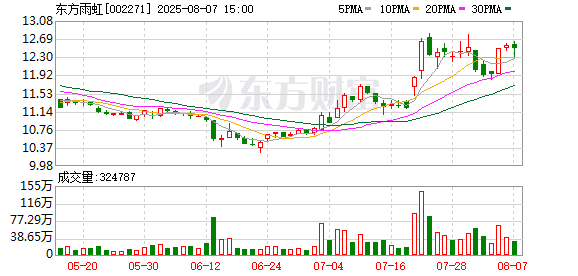
Core Viewpoint - Oriental Yuhong's performance has significantly declined, with a 10.84% decrease in revenue and a 40.16% drop in net profit for the first half of 2025, primarily due to lower-than-expected market demand [2][3]. Financial Performance - The company's revenue for the first half of 2025 was 13.569 billion yuan, down 10.84% year-on-year, while net profit attributable to shareholders was 564 million yuan, a decrease of 40.16% [3]. - As of June 30, 2025, accounts receivable stood at 9.409 billion yuan, accounting for 21.36% of total assets, an increase of 4.94% from the end of the previous year [3]. - The company made a provision for asset impairment of approximately 406 million yuan, with bad debt losses from accounts receivable reaching 377 million yuan, impacting the financial results significantly [3]. Strategic Adjustments - Oriental Yuhong is actively working to reduce its reliance on the real estate sector and decrease accounts receivable. The company has shifted to a sales model prioritizing retail and engineering channels, which now account for 84.06% of total revenue [4]. - The company has successfully transitioned from a direct sales model focused on large real estate clients to a channel-based model, improving operational quality and related metrics [4]. Dividend Policy - Despite the significant drop in net profit, Oriental Yuhong plans to distribute a cash dividend of 9.25 yuan per 10 shares, totaling approximately 2.21 billion yuan [5][6]. - The company adjusted its 2024 dividend plan in response to market conditions, reducing the payout from 18.50 yuan per 10 shares to 9.25 yuan, while ensuring overall stability in investor returns [6]. Market Conditions - The construction materials industry is experiencing a downturn, with the national building materials and home furnishings market facing significant challenges, including rising costs and increased competition [7]. - In response to these pressures, many companies, including Oriental Yuhong, have raised product prices to maintain healthy market competition [10]. International Expansion - Oriental Yuhong is pursuing international growth by acquiring a 100% stake in Chilean company Construmart S.A. for approximately 1.23 billion USD (about 880 million yuan), which operates around 31 building materials supermarkets in Chile [8][9]. - The acquisition aims to leverage supply chain advantages from China and enhance Construmart's market competitiveness, while also providing operational experience that can benefit domestic retail operations [9].


指数上涨遇阻!市场风向变了,还有哪些投资机会?
Sou Hu Cai Jing· 2025-07-31 06:22
Group 1 - The external situation has eased, reinforcing the internal certainty logic, with the Chinese stock market expected to have upward potential before the end of July due to a significant reduction in the risk-free interest rate and a shift in the RMB's depreciation expectations towards stability or slight appreciation [1] - The timely and reasonable macro policies focusing on investor returns and capital market reforms are crucial for changing investors' conservative attitudes towards risks [1] - Future investment should focus more on structural performance rather than short-term index movements [1] Group 2 - Pig prices continue to outperform expectations, and the cost improvements for pig farming companies may lead to better-than-expected profitability, with a focus on the pig farming sector [3] - The "anti-involution" policy is expected to benefit the pig price performance in the second half of 2025, with a seasonal price fluctuation anticipated in the latter half of the year [3] - The recent Central Financial Committee meeting has deepened the "anti-involution" work deployment, impacting various industries including construction materials, which may lead to better industry capacity planning and product pricing adjustments [3] Group 3 - Mini LED backlighting and direct display technologies are expected to see higher growth rates and profitability compared to traditional LED markets, with industry benefits likely concentrating among a few leading manufacturers [5] - The increase in non-hydropower renewable energy consumption responsibility weights is projected to support approximately 460 billion kWh of green electricity consumption this year [5] - High-energy-consuming industries such as steel and cement are now included in the green electricity consumption assessment, which may further support green electricity consumption and market development [5] Group 4 - The short-term market trend is strong, with significant new capital entering the market, although the overall profit-making effect remains weak [7] - The Shanghai Composite Index has fallen below the 5-day moving average but remains above the 10-day moving average, indicating a potential short-term adjustment phase [9] - The focus for the second half of the year should be on the establishment of the Class B directory and addressing structural contradictions in various industries [9]

行业跟踪点评:反内卷+稳增长,双重逻辑下的修复性机遇
Great Wall Securities· 2025-07-28 02:58
Investment Rating - The industry rating is "Outperform the Market" [4][21]. Core Viewpoints - The cement industry is experiencing a recovery opportunity driven by the dual logic of "anti-involution" and "stabilizing growth" [1][10]. - The supply side is expected to improve as the industry collectively addresses overcapacity issues through policy guidance and collaboration among enterprises [2][8]. - The demand side is bolstered by significant infrastructure projects, such as the Yarlung Tsangpo River hydropower project, which is projected to generate substantial cement demand in Tibet [10][11]. Summary by Sections 1. Cement Industry - The cement industry is witnessing a phase of supply-side improvement due to the government's focus on preventing "involution" and the coordinated efforts of leading companies to reduce overproduction [2]. - By the end of 2023, the designed capacity for new dry-process cement clinker in China is 1.84 billion tons, while actual capacity exceeds 2.1 billion tons, resulting in an overproduction rate of over 14% [2]. - The implementation of policies such as the capacity replacement measures is expected to lead to a significant reduction in actual production capacity, with a net decrease of 12.1 million tons achieved by April 2025 [2]. 2. Demand Side - The Yarlung Tsangpo River hydropower project, with a total investment of approximately 1.2 trillion yuan, is expected to create a demand for 30-35 million tons of cement, significantly boosting the local market in Tibet [10]. - Infrastructure investment in water management has shown strong growth, with a cumulative year-on-year increase of 15.4% as of June 2025, indicating robust support for economic stability [11]. 3. Price and Profitability - The cement industry's profitability is expected to improve, with a projected profit of 15-20 billion yuan in the first quarter of 2025, a significant turnaround from a loss of 1.1 billion yuan in the previous year [7]. - The average price of cement in the first quarter of 2025 is 397 yuan per ton, reflecting a year-on-year increase of 9.3% due to lower coal prices and rising cement prices [7]. 4. Related Industries - The photovoltaic glass industry is facing challenges due to overcapacity and price competition, leading to a collective 30% production cut by major manufacturers [8]. - The waterproofing industry is also experiencing a collective price increase among leading companies to combat low-price competition and rising costs [9].
科顺股份参设一支并购基金
FOFWEEKLY· 2025-07-25 09:58
Core Viewpoint - The company is actively exploring a second growth curve and accelerating its strategic transformation by establishing an industrial merger and acquisition fund in collaboration with professional investment institutions [1][2]. Group 1 - The company approved the establishment of an industrial merger and acquisition fund with a total subscription scale of 481 million yuan, aiming to invest in cutting-edge technology fields such as new generation information technology, new materials, new technologies, and advanced manufacturing [1][2]. - The subsidiary Zhuhai Hengqin Yidong Investment Partnership (Limited Partnership) will contribute 240 million yuan of its own funds to the fund, partnering with related parties including Guangdong Shunde High-tech Venture Capital Management Co., Ltd. and Guangdong Shunde Science and Technology Innovation Management Group Co., Ltd. [1][2]. - The fund's objective is to promote industrial innovation, intelligent transformation, and quality improvement and efficiency enhancement within the company [2].

防水市场开始涨价 水泥企业称不去产能将面临生存压力
Hua Xia Shi Bao· 2025-07-10 13:01
Core Viewpoint - The construction industry is joining the "anti-involution" movement, aiming to enhance industry self-discipline and eliminate excessive competition, following similar trends in the photovoltaic and new energy vehicle sectors [2][4]. Group 1: Industry Trends - In the first five months of the year, national real estate development investment reached 36,234 billion yuan, a year-on-year decrease of 10.7%, with declines in new construction, ongoing projects, and completions [2]. - A joint initiative by 33 construction companies aims to promote industry transformation through technological innovation and to avoid blind expansion and excessive debt [2][6]. - The construction industry is experiencing significant slowdowns due to urbanization and reduced market demand, leading to overcapacity and a noticeable decline in growth rates [2][6]. Group 2: Cement Industry - The China Cement Association has issued guidelines to align actual production capacity with registered capacity, emphasizing the importance of capacity replacement policies for industry optimization [3][6]. - The cement industry is familiar with capacity reduction, with a projected utilization rate of 53% for cement clinker in 2024, down 6 percentage points from 2023, and an expected profit of around 25 billion yuan, a 20% decrease year-on-year [6][7]. - The industry is facing significant profit declines due to ongoing adjustments in the real estate sector and delays in infrastructure projects [6][7]. Group 3: Waterproofing Sector - Waterproofing companies have initiated price increases to counteract rising raw material costs, with price adjustments ranging from 3% to 13% for various products [4][5]. - Major waterproofing firms reported a significant drop in net profits for 2024, with Beijing Oriental Yuhong's net profit down 95.24% year-on-year, while Keshun Waterproof managed to turn a profit despite challenges [5]. - The waterproofing industry is experiencing a decline in production due to fluctuating downstream demand, prompting companies to raise prices to stabilize their financial performance [5].