
军工

Search documents
关注军工ETF(512660)投资机会,产业趋势与成长格局受关注,回调或可布局
Mei Ri Jing Ji Xin Wen· 2026-01-29 07:55
Core Viewpoint - The military industry ETF (512660) has experienced a 2% pullback, prompting attention on industry trends and growth patterns, suggesting potential investment opportunities during this correction [1] Group 1: Industry Development - The Chinese military industry has transitioned from a model reliant on domestic demand to a new development framework driven by three engines: domestic demand, foreign trade expansion, and civilian applications benefiting the military [1] - The industry is shifting from "cyclical growth" to "comprehensive growth," indicating a more sustainable and diversified growth momentum [1] Group 2: Demand Drivers - The first growth curve focuses on domestic military demand, emphasizing "preparation for combat" and equipment modernization, supported by stable growth in defense budgets and equipment upgrades [1] - The second growth curve is driven by military trade overseas, where China's competitive pricing, systematic operational capabilities, and geopolitical cooperation are enhancing its share in the global military trade market [1] - The third growth curve involves the civilian application of military technology, leading to the emergence of trillion-yuan industries such as commercial aerospace, low-altitude economy, future energy, deep-sea technology, and large aircraft, creating a virtuous cycle of "military technology benefiting civilian sectors and vice versa" [1] Group 3: ETF Overview - The military industry ETF (512660) tracks the CSI Military Industry Index (399967), which selects listed companies in the defense sector from the Chinese A-share market, reflecting the overall performance of these companies [2] - The constituent stocks primarily belong to companies whose main business is related to military affairs, with a focus on industrial and information technology sectors, exhibiting a small to mid-cap style [2]
国防部:所谓“击沉”中国军舰动画纯属自嗨
Yang Shi Xin Wen· 2026-01-29 07:25
蒋斌:据我所知,瑞典军工企业已撤下相关视频,我们认为其他有关方也应做正确的事。实际上,对于 此类自嗨式的行为,我想对他们说"You wish"。 1月29日下午,国防部举行例行记者会,国防部新闻局副局长、国防部新闻发言人蒋斌大校答记者问。 记者:据报道,瑞典、英国、美国、日本等国有关军工企业和机构发布了所谓"击沉"中国海军舰艇的动 画视频。网友认为有关企业为推销武器,把中国武器装备当成了标榜自身能力的"许愿单"。请问对此有 何评论? (文章来源:央视新闻) ...
关注股指企稳时机
Hua Tai Qi Huo· 2026-01-29 05:51
FICC日报 | 2026-01-29 关注股指企稳时机 市场分析 美联储按兵不动。宏观方面,截至2025年底,央企资产总额突破95万亿元,完成固定资产投资5.1万亿元,其中战 略性新兴产业投资2.5万亿元;全年实现利润总额2.5万亿元。国务院国资委表示,将扎实做好新央企组建和战略性 重组,研究起草推动央企培育新兴支柱产业工作文件,探索组建"AI+"产业共同体。海外方面,美联储维持基准利 率在3.50%-3.75%不变,在连续三次降息25个基点后暂停行动,符合市场预期。鲍威尔在新闻发布会上表示,加息 并非任何人对下一步行动的基本假设,不相信美联储会丧失独立性,将建议下一届美联储主席远离政治。 指数分化。现货市场,A股三大指数震荡分化,上证指数涨0.27%收于4151.24点,创业板指跌0.57%。行业方面, 板块指数涨多跌少,有色金属、石油石化、煤炭行业涨幅超3%,传媒、国防军工、美容护理行业跌幅居前。当日 沪深两市成交额升至约3万亿元。海外方面,美国三大股指收盘涨跌不一,纳指涨0.17%报23857.45点。 期指保持升水。期货市场,基差方面,IF、IC、IM基差延续回升,当月合约保持升水。成交持仓方面,股 ...
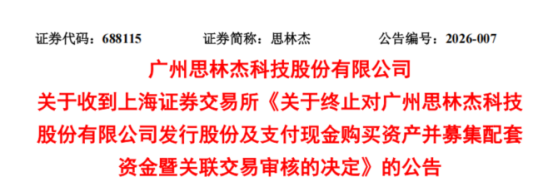
思林杰终止收购科凯电子股权:信永中和二度折戟 国联民生难扭败局 | A股融资快报
Quan Jing Wang· 2026-01-29 01:40
Core Viewpoint - The acquisition attempt by Guangzhou Silin Jie Technology Co., Ltd. for Qingdao Kekai Electronics Research Institute Co., Ltd. has failed, with the independent financial advisor unable to reverse the situation [1] Group 1: Company Overview - Guangzhou Silin Jie Technology focuses on the development, production, and sales of industrial automation testing products, including embedded intelligent instrument modules and machine vision products [2] - The company anticipates a loss of 8 million to 11.5 million yuan in 2025, marking a shift from profit to loss compared to 2024 [2] - The stock price of Silin Jie experienced a significant increase, with four consecutive 20% daily limits, following the announcement of the acquisition of Kekai Electronics [2] Group 2: Acquisition Details - The acquisition involved a significant asset restructuring plan, where Silin Jie intended to acquire 71% of Kekai Electronics through a combination of share issuance and cash payment [4] - The independent financial advisor for the acquisition was Guolian Minsheng Securities, which failed to turn the situation around [4] Group 3: Kekai Electronics Background - Kekai Electronics, established in 1997, specializes in the research, production, and sales of high-reliability micro-circuit modules, primarily serving military applications [3] - The company faced challenges during its IPO process, including issues such as inflated R&D expenditures and poor internal controls, leading to regulatory warnings for its underwriters and auditors [3][5] Group 4: Financial Performance - Kekai Electronics reported revenues of 308 million yuan, 164 million yuan, and 119 million yuan for the years 2023, 2024, and the first half of 2025, respectively [5] - The net profits for the same periods were 167 million yuan, approximately 99.92 million yuan, and approximately 48.84 million yuan, with a significant decline attributed to changes in the military industry and customer demand [5] - The company has a high customer concentration, with over 99% of revenue coming from the top five clients, including 73.4% from a subsidiary of China Ordnance Industry Group [5] Group 5: Termination of Acquisition - The termination of the acquisition was attributed to the large scale of the transaction and changes in the market environment since the initial planning [6] - The chairman of Silin Jie indicated that the prolonged duration of the restructuring process and increased uncertainty in the transaction's progression were key factors in the decision to withdraw [6]


军工ETF(512660)收跌超1%,行业中长期驱动逻辑强,回调或可布局
Mei Ri Jing Ji Xin Wen· 2026-01-28 14:42
Group 1 - The military industry ETF (512660) experienced a decline of over 1% on January 28, indicating a potential opportunity for investment during the pullback, as the long-term driving logic of the industry remains strong [1] - The China military industry has evolved from relying solely on domestic demand to a new development pattern characterized by "domestic demand foundation, foreign trade expansion, and civilian backfeeding," leading to more diversified and sustainable growth [1] - The first growth curve focuses on domestic demand, driven by stable growth in defense budgets and equipment modernization, emphasizing high-precision deterrence and systematic unmanned low-cost capabilities [1] Group 2 - The second growth curve is military trade expansion, where China's military trade share continues to rise due to its cost-effectiveness, systematic combat capabilities, and geopolitical strategic cooperation, establishing China as a significant global supplier [1] - The third growth curve involves the civilian application of military technology, where cutting-edge technologies spill over into civilian sectors, creating new trillion-level industries such as commercial aerospace, low-altitude economy, future energy, deep-sea technology, and large aircraft, fostering a virtuous cycle of "military technology for civilian use, backfeeding military industry" [1] - The military industry ETF tracks the CSI Military Industry Index (399967), which focuses on publicly listed companies primarily controlled by the top ten military groups and other representative companies related to the military industry, covering various fields such as aviation, aerospace, shipbuilding, weaponry, military electronics, and satellites [2]
通用动力Q4业绩超预期,得益于作战和海洋系统部门增长
Ge Long Hui A P P· 2026-01-28 13:21
格隆汇1月28日|通用动力公布2025年Q4业绩,收入为143.8亿美元,同比增长7.8%,超过分析师预期 的138亿美元,主要得益于其作战和海洋系统部门的增长;净利润为11.4亿美元,合每股盈利4.17美元, 亦好于分析师预期的4.15美元。截至2025年底,合同总预估价值达到1790亿美元,同比增长24%。 ...

A股收评 | 沪指涨0.27% 有色板块掀涨停潮
智通财经网· 2026-01-28 07:19
Market Overview - The A-share market experienced volatility with the Shanghai Composite Index showing strength while the technology growth style adjusted. The total market turnover reached 2.8 trillion yuan, with over 3,600 stocks declining [1] - The ETF market in A-shares saw a record trading volume of 752.5 billion yuan, with significant contributions from the CSI 300 ETFs and the SSE 500 ETFs [1] Sector Performance - Resource stocks surged, with precious metals leading the gains, and sectors like oil and gas, chemicals, and cyclical concepts also performing well. Notable stocks included China National Offshore Oil Corporation reaching historical highs [1] - Conversely, sectors such as photovoltaic, military, and pharmaceuticals faced significant declines [1] Fund Flows - Main funds focused on industrial metals, IT services, and securities, with notable net inflows into stocks like Wangsu Science & Technology and China Aluminum [3] Future Outlook - Huaxi Securities maintains that the market will continue its slow bull trend, emphasizing three main investment lines: technology expansion, price increase themes, and high growth in annual reports [8] - Xinda Securities predicts a favorable liquidity environment before the Spring Festival, suggesting the market may remain strong, with potential volatility in January and a clearer window in February [9] - Dongfang Securities highlights the market's inherent resilience, driven by earnings reports, particularly in sectors like AI hardware, batteries, and pharmaceuticals, which are expected to attract investor attention [10]
A股的情绪与位置(1月W3):降温不改暖意,慢牛行远未已
Changjiang Securities· 2026-01-28 07:01
报告要点 [Table_Summary] 上证指数在 2026 年开年连续上涨后进入阶段性的震荡整固期,技术上 RSI 指标从超买区回落, 正寻求 10EMA 与 21EMA 均线支撑,换手率高位回落但全 A 成交额倍数指标尚未触及历史高 点,结构上看,商业航天及 AI 应用等热点板块仍待企稳。从中长期股债性价比看,市场估值仍 有较大上行空间,资金面上,杠杆资金高度聚焦科技方向,电子、通信、军工等方向融资余额 占比已创 2015 年以来新高,风格极值接近滚动 3 个月均值,短期市场轮动或将加速,金融、 消费风格或有望迎来反弹,中长期看好"科技+资源"双主线不变。 丨证券研究报告丨 市场策略丨专题报告 [Table_Title] 降温不改暖意,慢牛行远未已——A 股的情绪与 位置(1 月 W3) 分析师及联系人 [Table_Author] 戴清 李巍东 SAC:S0490524010002 SFC:BTR264 请阅读最后评级说明和重要声明 %% %% %% %% research.95579.com 1 [Table_Title 降温不改暖意,慢牛行远未已—— 2] A 股的情绪与 位置(1 月 W3) [ ...
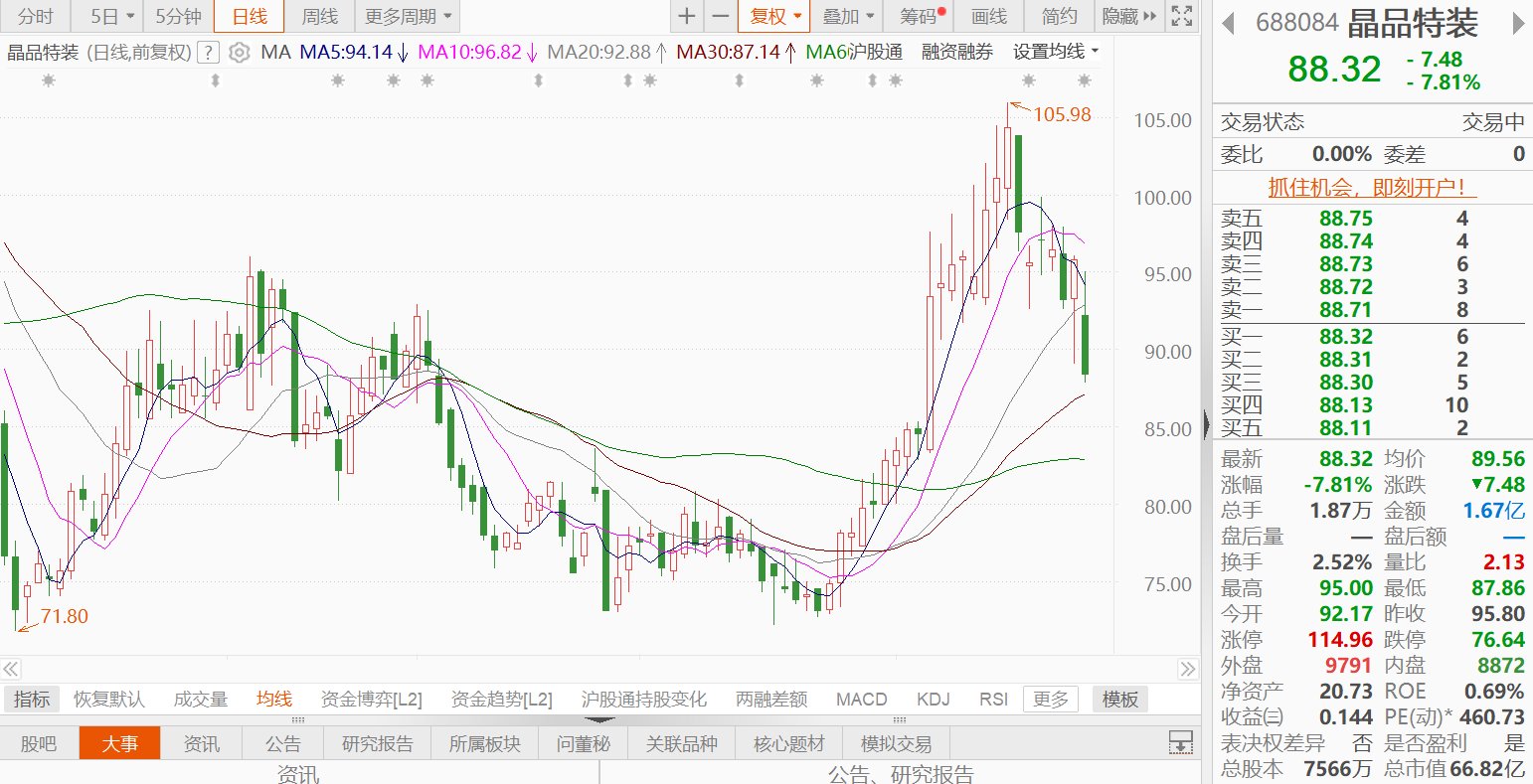
A股异动丨晶品特装跌近8%,被3年禁入武警部队采购
Ge Long Hui A P P· 2026-01-28 05:57
Core Viewpoint - Beijing Jingpin Special Equipment Co., Ltd. (688084.SH) experienced a 7.81% decline in stock price, closing at 88.32 yuan, with a total market capitalization of 6.682 billion yuan due to a procurement ban from the armed police forces for three years starting January 26, 2026 [1] Group 1 - The armed police procurement management department announced a ban on Jingpin Special Equipment from participating in procurement activities related to military material engineering services for three years [1] - The company acknowledged that this decision will have a certain impact, but the revenue from military material engineering services constitutes a small proportion of its overall operating income [1] - The company plans to optimize its business layout and actively explore other business areas to ensure stable and sustainable operations [1] Group 2 - Jingpin Special Equipment will strengthen its bidding management and agent management, ensuring compliance with relevant laws, regulations, and procurement standards [1]

【早盘三分钟】1月28日ETF早知道
Xin Lang Cai Jing· 2026-01-28 01:41
Core Insights - The article highlights the performance of various ETFs, particularly focusing on the significant rise of the AI-related ETFs and the military industry ETFs, indicating a bullish sentiment in these sectors [20][6]. Market Overview - The market temperature gauge shows a 75% reading, indicating a strong market sentiment based on the historical P/E ratios of major indices: Shanghai Composite at 99.79%, Shenzhen Component at 93.82%, and ChiNext at 49.4% [15]. - The short-term sector performance indicates that electronics, communications, and defense industries are leading with gains of +2.27%, +2.15%, and +1.65% respectively, while sectors like steel and agriculture are experiencing declines [2][15]. Fund Flows - The top three sectors for capital inflow are communications with 4.12 billion, banking with 1.71 billion, and electronics with 0.91 billion, while the sectors with the highest outflows include non-ferrous metals at -12.25 billion, electric equipment at -8.77 billion, and pharmaceuticals at -5.19 billion [2][15]. ETF Performance - The "创业板人工智能ETF华宝" (AI ETF) has seen a rise of 2.76%, nearing previous highs, while the "军工ETF华宝" (Military ETF) increased by 1.15%, recovering its 5-day and 10-day moving averages [20][7]. - The "科创人工智能ETF华宝" and "智能制造ETF" also reported gains of 1.86% and 1.69% respectively, indicating strong interest in technology and manufacturing sectors [5][17]. Sector Analysis - The communication sector is expected to benefit from AI infrastructure and new connectivity developments, suggesting potential for continued growth despite current high valuations [6][20]. - The military industry is projected to remain in an upward demand cycle over the next five years, with a focus on military trade, commercial aerospace, and large aircraft opportunities [20][7].
