智能家居

Search documents
海尔智慧家庭与奇瑞瑞享生活共筑“人-车-家”互联生态
Quan Jing Wang· 2025-11-25 09:29
Core Insights - The collaboration between Haier Smart Home and Chery's Rui Xiang Life aims to create a seamless "human-vehicle-home" interconnected ecosystem, enhancing smart living experiences across different environments [1][3] - The UhomeCar platform by Haier Smart Home extends smart services from home to travel, allowing for proactive management of home environments while on the road [2][3] Group 1: Strategic Collaboration - Haier Smart Home and Chery Rui Xiang Life have officially signed a strategic agreement to build a smart ecosystem alliance [1] - This partnership seeks to eliminate barriers between travel and home scenarios, enabling uninterrupted smart services across vehicles and home environments [1][3] Group 2: Technological Integration - Haier Smart Home leverages its UhomeCar platform to provide integrated smart services, such as pre-conditioning home environments while driving [2] - The platform's architecture includes standardized protocols, functional sets, and decision models, facilitating efficient data communication and proactive service delivery [2] Group 3: Industry Impact - The partnership signifies a maturation of the all-scenario smart ecosystem, enhancing the quality of smart living experiences for millions of users [3] - Haier Smart Home's role as the creator of the UhomeCar platform positions it as a leader in breaking down scenario boundaries through collaboration with major automotive companies [3]



纳指涨近600点,特斯拉、谷歌涨超6%;日方在西南诸岛部署进攻性武器,中方回应;斐乐致歉;王兴兴、彭志辉,有新身份丨每经早参
Mei Ri Jing Ji Xin Wen· 2025-11-24 21:54
Group 1 - Huawei will hold a new product launch event on November 25, featuring the Mate 80 series and Mate X7 [3] - Alibaba announced the 2025 Global Digital Commerce Conference will take place from November 25 to December 2 [3] - The International Copper Association will host a forum in China on November 25 [3] Group 2 - U.S. stock markets saw collective gains, with the Dow Jones up 0.44%, S&P 500 up 1.55%, and Nasdaq up 2.69% [4] - Major tech stocks rose significantly, with Tesla and Google both increasing over 6% [4] - The Philadelphia Semiconductor Index rose by 4.6%, with Broadcom up over 11% and Micron Technology up nearly 8% [4] Group 3 - Federal Reserve Governor Waller advocates for a rate cut in December, with subsequent policy adjustments to be gradual [5] - The U.S. GDP estimate for Q3 was postponed due to government shutdown [5] - International oil prices increased, with WTI crude oil futures rising by $0.78 to $58.84 per barrel, a 1.34% increase [5] Group 4 - Bitcoin surpassed $89,000, increasing by 2.55% in a single day [6] - European stock indices showed mixed results, with the Euro Stoxx 50 up 0.20% and the DAX 30 up 0.64% [6] Group 5 - The People's Bank of China announced a 10 billion yuan MLF operation to maintain liquidity in the banking system [8] - The central bank also conducted a 338.7 billion yuan reverse repurchase operation with a rate of 1.4% [8] Group 6 - Xiaomi's founder Lei Jun invested over 100 million HKD to increase his stake in the company to 23.26% [17] - Xiaomi has repurchased 21.5 million shares in two days, totaling over 800 million HKD [17] Group 7 - The second batch of technology innovation bonds supported by risk-sharing tools for private enterprises is set to be issued [9] - Four private equity investment institutions are conducting a roadshow for a total of 930 million yuan in technology innovation bonds [9] Group 8 - The first batch of community supermarkets under Hema's brand, 超盒算NB, is now open for franchise applications, with a total investment of 2.65 million yuan required [19] - Hema's move into the community supermarket sector aims to accelerate its market expansion [19] Group 9 - Deep Blue Automotive confirmed plans to take over Beijing Hyundai's Chongqing factory for production [20] - This move is expected to enhance production capacity for new energy vehicles [20] Group 10 - The "Mole Thread" company, known as the first domestic GPU stock, has launched its IPO with a price of 114.28 yuan per share, achieving a market valuation of 53.7 billion yuan [25] - The final subscription rate for the online issuance was 0.03635054% [25]




人车家:从“单品战”到“生态战”
Zhong Guo Qi Che Bao Wang· 2025-11-24 01:43
Core Insights - Shenzhen Denza New Energy Vehicle Co., Ltd. has announced a strategic partnership with Midea Group's high-end AI technology home appliance brand, COLMO, allowing Denza N8L users to control smart home appliances from their vehicles and monitor vehicle status remotely at home [2] - Avita Technology has also partnered with Haier Group's Katai Chi Holdings to innovate in product customization, vehicle-home scenario integration, and in-car function design, aiming to create a high-end experience and technology-integrated smart travel solutions [2][3] - The "vehicle-home" concept is gaining traction, leading to increased competition among companies as they provide new smart experiences and shift market competition from product-centric to ecosystem-centric [2][3] Industry Trends - The collaboration between automotive and home appliance companies is becoming a trend, with BYD and Midea launching a "vehicle-home" life solution, enhancing smart interconnectivity [3] - Changan Automobile has signed a cooperation agreement with Haier Group to develop vehicle-home ecosystem collaborations and create vehicle-mounted electrical products [3] - Midea Group has unveiled a new "whole-home smart" strategy, integrating AI capabilities and smart home appliances, and showcasing collaborative results with NIO [3] Technological Developments - The "vehicle-home" concept is not new, with Huawei and Xiaomi previously establishing their own ecosystems integrating smartphones, smart homes, and smart vehicles [4][5] - The integration of smart vehicles as mobile smart terminals is expected to expand the "vehicle-home" ecosystem, enabling features like dual control and automated scene triggering based on geofencing technology [6] - Ultra-wideband (UWB) technology is emerging as a key enabler for precise and seamless connections between devices, while operating system integration is crucial for ecosystem connectivity [7] Challenges and Opportunities - The development of the "vehicle-home" ecosystem faces challenges such as technological and standard barriers, which create information silos among devices [8] - Security risks are heightened as vehicles connect to home networks, necessitating robust measures to protect user data and system integrity [8] - The commercial model for the "vehicle-home" ecosystem remains unclear, with companies exploring sustainable profitability strategies [8] Competitive Landscape - The "vehicle-home" ecosystem is expected to see layered competition, with a few companies acting as "ecosystem leaders" and many others as "ecosystem participants" seeking differentiation [9] - User experience is anticipated to evolve towards proactive intelligence, with vehicles adapting to user needs rather than the other way around [9] - The market for smart sockets supporting vehicle-home energy exchange is projected to exceed 30 billion yuan by 2026, indicating a growing focus on energy collaboration between vehicles and home devices [10]




东南亚多国调研精要,小米多模型构建AI端侧生态,3D打印高增
SINOLINK SECURITIES· 2025-11-23 11:39
Investment Rating - The report does not explicitly provide an investment rating for the industry Core Insights - The research highlights the significant generational differences in consumer behavior and production capabilities across Thailand, Vietnam, and Cambodia, with Thailand resembling a "miniature" version of the Western consumer market, Vietnam in a rapid growth phase, and Cambodia reflecting characteristics of less developed nations [1] - The report emphasizes the potential for investment in Southeast Asia, particularly in consumer goods and technology-driven sectors, as companies leverage local production capabilities and growing consumer markets [1][2] Summary by Sections 1. Industry Insights - Thailand is compared to a "miniature" Western market, showcasing a mature consumer culture and a well-developed service industry, making it a reference point for companies looking to expand into Western markets [1] - Vietnam is characterized as a rapidly developing economy, with a GDP projected to reach approximately 62.69 trillion VND (around 4,700 USD) in 2024, indicating a significant consumer market potential [1] - Cambodia is noted for its low average income and high income disparity, with consumer spending primarily focused on essential goods, suggesting a slower penetration of discretionary spending [1] 2. Segment Tracking - Xiaomi Group is exploring the future of smart home technology with its Xiaomi Miloco initiative, aiming to enhance user interaction and privacy through advanced AI models [9][10] - The pet food sector saw significant growth during the Double Eleven shopping festival, with sales for the brand Guibao exceeding 1 billion RMB, reflecting a trend towards premium pet products [11][12] - The AI and 3D printing industry is experiencing high demand, with companies like Tuozhu achieving record sales during major shopping events, indicating strong market potential [21][22] 3. Macro Consumption Data - In October, the Consumer Price Index (CPI) showed a year-on-year increase of 0.2%, with service sector prices rising, indicating a recovery in consumer spending [35] - The Producer Price Index (PPI) decreased by 2.1% year-on-year, but showed signs of improvement in the month-on-month trend, suggesting a potential stabilization in production costs [45] - Online sales data from major platforms indicated a decline in the home appliance sector, with specific brands like Ecovacs and Roborock showing positive growth despite overall market challenges [50]
强鲸思客双11战绩斐然 成交量突破12亿创历史新高
Sou Hu Cai Jing· 2025-11-22 13:09
Core Insights - The company achieved a record-breaking sales volume of over 1.2 billion yuan during the 2025 Double 11 shopping festival, marking a significant year-on-year growth and demonstrating strong market appeal and brand resilience [1][10] Group 1: Sales Performance - The sales during the Double 11 event reached over 1.2 billion yuan, representing a substantial increase compared to previous years and showcasing the brand's historical best performance since its participation in the event [1] - The high-end product line featuring AI smart interaction accounted for over 40% of total sales, while smart home packages saw a year-on-year growth of over 60%, indicating a shift towards solution-based competition in the industry [3] Group 2: Operational Strategy - The company established a "technology empowerment + all-channel collaboration" operational loop by deeply adapting to four major e-commerce platforms, enhancing cross-platform data interoperability and achieving a 40% increase in order processing efficiency during the sales period [5] - Custom-developed features for each platform improved user engagement, with live streaming on Douyin reaching over 10 million views in a single session, and a 28% increase in repurchase conversion rates on Taobao and JD [5] Group 3: Channel Development - The company enhanced its ecosystem by integrating "shelf e-commerce + content live streaming + offline experience," resulting in over 100 million views on its self-broadcasting platforms and a 40% increase in order volume from offline experience stores [7] - Initiatives such as trade-in programs and eco-friendly packaging were successfully implemented across platforms, aligning with mainstream values of rational and sustainable consumption [7] Group 4: Future Outlook - The CEO emphasized that the record sales reflect the brand's product and service strength, attributing success to deep technical adaptation to e-commerce platforms and insights into consumer trends, with plans for continued investment in product innovation and user experience [9]

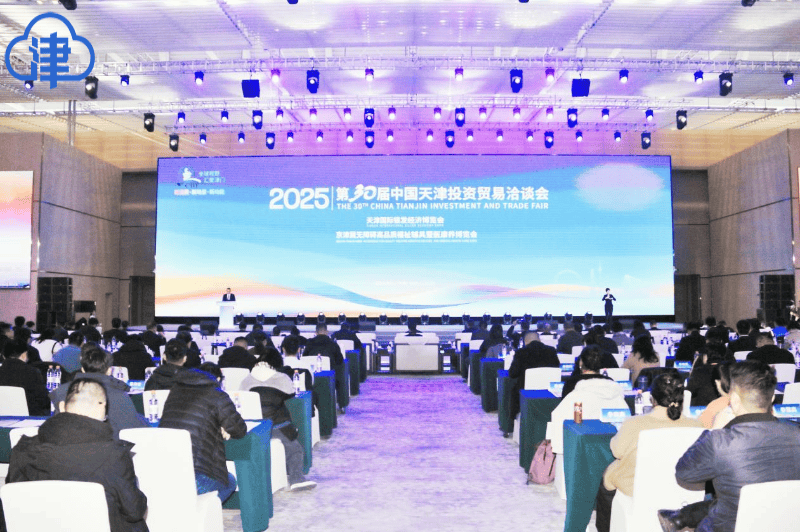
第30届津洽会开幕,三展联动绘就经贸民生新图景
Sou Hu Cai Jing· 2025-11-21 22:08
Core Viewpoint - The 30th China Tianjin Investment and Trade Fair has commenced, focusing on "New Consumption? New Scenarios? New Dynamics: Global Vision Gathering in Tianjin" and aims to integrate various sectors including the silver economy and welfare exhibition [1] Group 1: Exhibition Highlights - The fair features four major themed exhibition halls and multiple special exhibition areas, showcasing traditional brands and innovative products [4] - Notable brands such as Guifaxiang and Darentang are participating, highlighting intangible cultural heritage through interactive experiences [4] - The welfare life experience area displays advanced assistive technologies for the elderly and disabled, including smart care beds and AR hearing aids [4] Group 2: Event Framework and Activities - The event adopts an innovative "1+M+N" activity framework, including a cross-border e-commerce forum and enterprise promotion meetings [7] - Engaging activities for the public include live streaming tours and traditional cultural performances, along with a lottery event offering various consumer goods [7] Group 3: Transportation and Accessibility - A comprehensive transportation plan has been established for attendees, including direct subway access and multiple bus routes [11] - Free shuttle services are available to enhance accessibility for citizens, reflecting Tianjin's commitment to economic cooperation and cultural exchange [11]
非常突然,欧盟动手了!中国割草机器人攻占欧美家庭后花园
Mei Ri Jing Ji Xin Wen· 2025-11-21 13:06
Core Viewpoint - The European Union has initiated an anti-dumping investigation against Chinese-made robotic lawn mowers, primarily focusing on electric robot mowers that can operate without direct human control, which may impact the competitive landscape for domestic companies in the EU market [1][3]. Industry Summary - The investigation is expected to last approximately one year, during which the EU will determine whether to impose anti-dumping measures to protect local manufacturers [1]. - The robotic lawn mower segment has seen significant growth, with a 327.2% year-on-year increase in global shipments in the first half of 2025, indicating strong market demand, particularly in Europe and North America [6]. - The market share of boundary-less robotic mowers has surged from 35% in 2024 to 65% in the first half of 2025, driven by technological advancements and high consumer acceptance [7]. - The potential for growth in the robotic lawn mower market is substantial, with estimates suggesting a threefold increase in sales as these products replace traditional riding and push mowers [8]. Company Responses - Companies like Longxin General stated that the investigation has no substantial impact on their operations, as their robotic lawn mower sales are still in the prototype stage [9]. - Ninebot indicated that the investigation's impact on its overall business is limited, as the robotic lawn mower segment contributes less than 10% to total revenue [9]. - Daye Co., which derives 99.09% of its revenue from overseas markets, announced plans to adjust its production structure in response to the investigation, leveraging its international operations to mitigate potential impacts [10].


“非常突然”,欧盟动手了!中国割草机器人攻占欧美家庭后花园,业内人士:中企弯道超车,欧盟老牌企业受到冲击
Mei Ri Jing Ji Xin Wen· 2025-11-21 12:14
Core Viewpoint - The European Union has initiated an anti-dumping investigation against Chinese-made robotic lawn mowers, primarily focusing on electric robot mowers that can trim lawns without direct human control [1][3]. Industry Summary - The investigation is expected to last approximately one year, during which the EU will decide whether to impose anti-dumping measures to protect local manufacturers [2]. - The market for robotic lawn mowers has seen significant growth, with Chinese products gaining market share in Europe and North America due to technological advancements [2][5]. - The global shipment of robotic lawn mowers increased by 327.2% year-on-year in the first half of 2025, indicating strong demand in overseas markets [5]. Company Responses - Companies such as Longxin General and Ninebot have stated that the investigation will have limited impact on their operations, with Longxin noting no substantial effect on its business [2][8]. - Daya Co. announced plans to adjust its production structure in response to the investigation, emphasizing its international operational strategy [10]. - Ninebot highlighted that the anti-dumping measures could raise entry barriers for the robotic lawn mower industry, potentially benefiting leading manufacturers with robust supply chain management [8]. Investigation Details - The investigation was prompted by a complaint from Husqvarna Manufacturing CZ s.r.o., a well-established EU company facing competition from Chinese firms [3]. - The investigation period is set from October 1, 2024, to September 30, 2025, focusing on companies exporting the involved products to the EU during this timeframe [3][4]. Market Dynamics - The shift towards "borderless" robotic lawn mowers has significantly increased their market share, rising from 35% in 2024 to 65% in the first half of 2025 [5][6]. - The potential for growth in the robotic lawn mower market is substantial, with estimates suggesting a threefold increase in sales as traditional lawn mowers are gradually replaced [6].

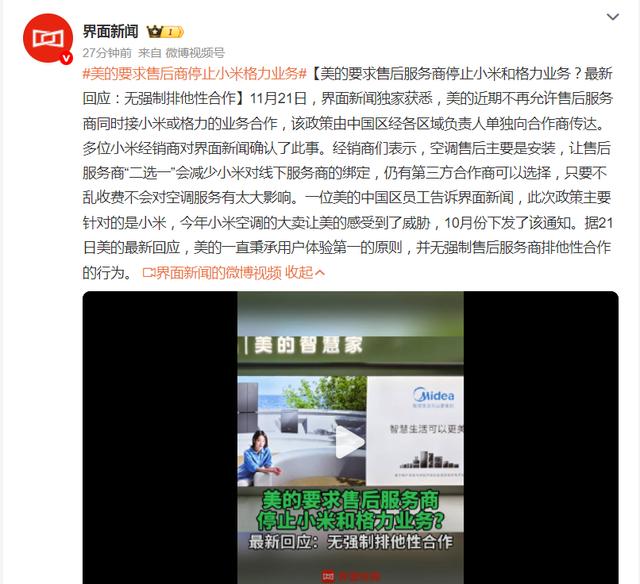
突发,美的“停服”小米、格力?
3 6 Ke· 2025-11-21 10:58
Core Viewpoint - Midea has implemented a policy prohibiting its after-sales service providers from simultaneously collaborating with Xiaomi or Gree, primarily targeting Xiaomi due to its significant sales growth in air conditioning this year, which has posed a competitive threat to Midea [1][5] Group 1: Industry Competition - The competition among major home appliance brands is intensifying, with Midea's policy change quickly becoming a trending topic on social media [1] - Midea has denied any forced collaboration restrictions, indicating a potential discrepancy in reports from various media outlets [1][4] - The relationship dynamics between Xiaomi and Gree are complex, with historical factors influencing public perception of their rivalry [5] Group 2: Market Position and Performance - In July, the top five air conditioning brands in China were Midea, Gree, Haier, Xiaomi, and Aux, with Midea experiencing a 1% decline and Xiaomi emerging as a notable competitor [6] - During the recent Double Eleven shopping festival, the sales rankings for air conditioning brands were Gree, Midea, Xiaomi, Hualing, and Haier, indicating Xiaomi's strong market presence [7] - Price competition is escalating, with average prices for air conditioning units dropping significantly, reflecting the aggressive strategies of leading brands [8] Group 3: Financial Insights - Xiaomi's air conditioning segment has a net profit margin of approximately 2%, while Midea's and Haier's margins are significantly higher, indicating a challenging financial landscape for Xiaomi [8] - Despite a 5.6% year-on-year revenue growth in Xiaomi's IoT and lifestyle products segment, there was a noticeable decline compared to the previous quarter, highlighting the competitive pressures in the home appliance sector [8] Group 4: International Expansion - Midea's overseas revenue reached 107.2 billion yuan in the first half of 2025, marking a 17.7% year-on-year increase, establishing it as a significant growth driver [9] - Haier's overseas revenue accounted for over 50% of its total revenue, showcasing its strong international presence [9] - Gree's overseas revenue reached 16.78% of its total, indicating room for growth in international markets [9] Group 5: Technological Advancements - The leading home appliance brands are heavily investing in technology and innovation, with Haier holding the highest number of smart home invention patents globally [10] - Xiaomi is pursuing a comprehensive ecosystem strategy, integrating its products with smart home technology, which may provide a competitive edge [10][11] - The smart home market in China is projected to reach 1.36 trillion yuan by 2030, indicating significant growth potential for all major players [11]

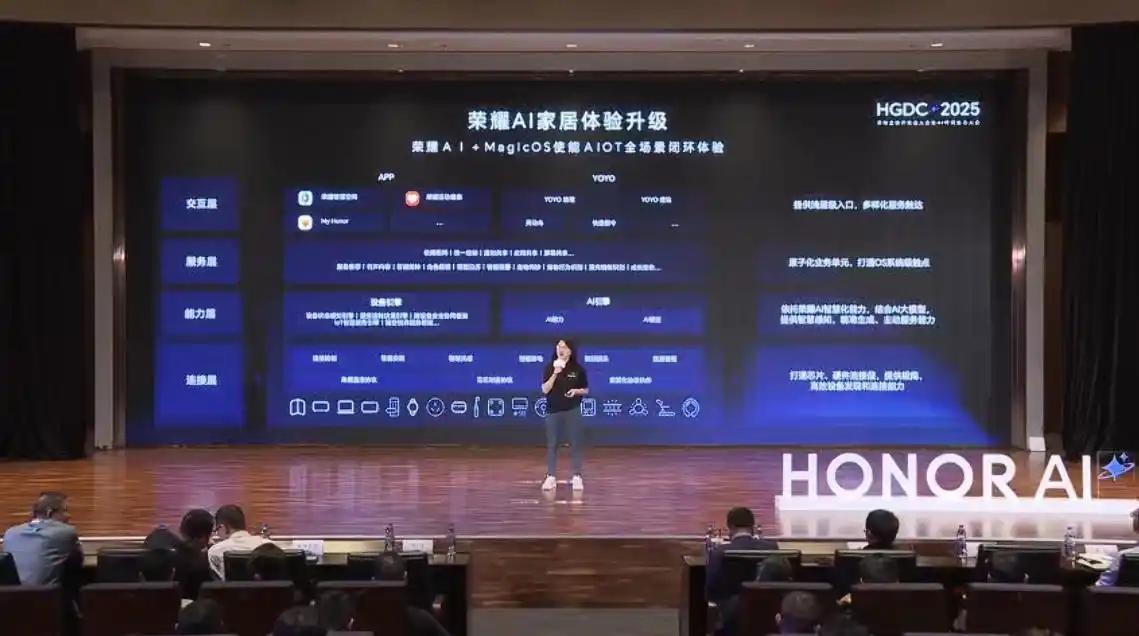
荣耀小米加码,全屋智能大乱战升级:家电巨头才是终极话事人?
3 6 Ke· 2025-11-21 07:52
Core Insights - The smart home sector is witnessing an influx of players, with companies like Honor officially entering the market by adapting to Home Assistant and supporting the Matter protocol, while Xiaomi's AIoT platform has connected over 1 billion IoT devices for the first time, marking a year-on-year growth of over 20% [1][3][8]. Group 1: Company Strategies - Xiaomi has evolved from a mobile phone manufacturer to a comprehensive consumer electronics brand with a complete ecosystem of home appliances and IoT products, including smart speakers, air conditioners, and more, all integrated under the Mi Home app [5][8]. - Huawei's strategy focuses on creating a unified operating system, HarmonyOS, which integrates various devices into a distributed system, aiming to transform homes into "super devices" [9][11]. - Apple maintains a strong user experience with its HomeKit but is limited by its ecosystem, relying on third-party manufacturers for device compatibility, which restricts its market reach compared to competitors [12][15]. - Honor aims to be a coordinator of smart devices rather than a manufacturer of home appliances, focusing on interoperability through industry-standard protocols like Home Assistant and Matter [16][18]. Group 2: Competitive Landscape - Traditional home appliance giants like Midea, Haier, and Gree are shifting their focus to whole-home smart solutions, leveraging their hardware expertise and understanding of user needs to maintain a competitive edge [19][21]. - The competition is evolving from single smart products to system collaboration, allowing mobile manufacturers to re-enter the market, but traditional appliance manufacturers still hold significant advantages in hardware performance and user experience [22][25]. - New entrants in the smart home market, such as Euribot and Green米, are focusing on foundational smart home components, while emerging players like Chasing are rapidly expanding their product offerings across various categories [23][24]. Group 3: Future Outlook - The future of the smart home market is expected to be characterized by coexistence among various players, with mobile manufacturers offering flexible product choices and traditional appliance manufacturers providing reliable performance and integrated solutions [25][27].