
啤酒

Search documents
百威亚太(01876)发布2025年度业绩,股权持有人应占溢利4.89亿美元,同比减少32.6%
智通财经网· 2026-02-11 23:39
Core Viewpoint - Budweiser APAC reported a revenue of $5.764 billion for the fiscal year ending December 31, 2025, representing a year-on-year decrease of 7.7% [1] Financial Performance - The profit attributable to equity holders was $489 million, down 32.6% year-on-year, with basic earnings per share at 3.70 cents [1] - Total sales volume decreased by 6.0% for the fiscal year 2025, influenced by the company's operations in China, although partially offset by performance in India [1] - Revenue decreased by 6.1% or 7.7% on a reported basis, with revenue per hectoliter down by 0.2%, primarily due to performance in China, but supported by revenue management measures in Eastern Asia and positive regional mix in India [1] Market Trends - In the fourth quarter of 2025, sales volume and market share trends in China remained stable, aligning with industry performance affected by delayed Lunar New Year shipments [1] - The company has begun increasing investments in channel and product portfolio expansion, enhancing brand influence while exerting additional profit pressure for the quarter [1] - In South Korea, the company outperformed market levels in both ready-to-drink and non-ready-to-drink channels, with net revenue per hectoliter continuing to grow [1] - In India, the company's premiumization strategy made progress, achieving strong double-digit revenue growth and expanding overall market share [1] Strategic Outlook - The CEO stated that the company's performance in China did not reach its potential in 2025, and clear measures have been taken to strengthen non-ready-to-drink channel marketing, enrich the product portfolio, and launch innovative flagship products to reignite growth [2] - The company aims to establish a clear strategy and enhance execution capabilities for sustainable long-term growth as it enters 2026 [2] - The board has proposed a dividend of 5.66 cents per share for the fiscal year 2025, consistent with the fiscal year 2024 [2]

百威亚太发布2025年度业绩,股权持有人应占溢利4.89亿美元,同比减少32.6%
Zhi Tong Cai Jing· 2026-02-11 23:36
Group 1 - Budweiser APAC reported revenue of $5.764 billion for the fiscal year ending December 31, 2025, a decrease of 7.7% year-on-year [1] - The profit attributable to equity holders was $489 million, down 32.6% year-on-year, with basic earnings per share at 3.70 cents [1] - Total sales volume decreased by 6.0% in fiscal year 2025, influenced by the company's operations in China, but partially offset by performance in India [1] Group 2 - Revenue for fiscal year 2025 decreased by 6.1%, or 7.7% on a reported basis, with revenue per hectoliter down by 0.2%, primarily due to performance in China, but partially offset by revenue management measures in Eastern Asia and positive regional mix in India [1] - In Q4 2025, sales volume and market share trends in China remained stable, aligning with industry performance affected by delayed Lunar New Year shipments [1] - The company is increasing investments in channel and product portfolio expansion, enhancing brand influence while facing additional profit pressure for the quarter [1] Group 3 - In South Korea, the company outperformed market levels in both ready-to-drink and non-ready-to-drink channels, with net revenue per hectoliter continuing to grow [1] - In India, the company's premiumization strategy made progress, achieving strong double-digit revenue growth and expanding total market share [1] - The CEO stated that the company has taken clear measures to enhance non-ready-to-drink channel marketing, enrich the product portfolio, and launch innovative flagship products to reignite growth [2] Group 4 - The board has proposed a dividend of 5.66 cents per share for the fiscal year 2025, consistent with the dividend for fiscal year 2024 [2] - The company aims to establish a clear strategy and strengthen execution capabilities to achieve sustainable long-term growth as it enters 2026 [2]
百威亚太2025财年收入57.64亿美元,同比减少6.1%
Sou Hu Cai Jing· 2026-02-11 23:30
2月12日早间,百威亚太在港交所公告,于2025财政年度,总销量减少6.0%;收入57.64亿美元,同比减 少6.1%,或按呈报基准计减少7.7%,每百升收入则减少0.2%;百威亚太股权持有人应占正常化溢利由 2024财政年度的7.78亿美元下降至2025财政年度的6.66亿美元。董事会建议本公司向股东派发截至2025 年12月31日止年度的末期股息每股5.66美分。 ...
百威亚太(01876.HK):2025财政年度收入57.64亿美元,建议派付股息每股5.66美分
Ge Long Hui· 2026-02-11 23:20
首席执行官及联席主席程衍俊表示:"2025年,我们在中国的业绩未尽潜能。我们已采取了明确措施, 加强非即饮渠道营销途径的管理、丰富产品组合,并推出旗舰品牌的创新产品,以此重塑并点燃增长的 动力。于韩国及印度,我们持续扩大市场份额并提高除息税折旧摊销前盈利。踏入2026年,我们确立清 晰的策略,同时加强执行力,旨在发挥我们的能力及实现可持续的长期增长。就此,本人欣然宣布,董 事会已建议就2025财政年度派付每股5.66美分的股息,与2024财政年度保持一致。" 格隆汇2月12日丨百威亚太(01876.HK)发布2025财政年度业绩报告,总销量于2025年全年(2025财政年 度)减少6.0%,达到79,658十万公升啤酒,受公司在中国的业务布局影响,但被印度的表现所部分抵 销。2025财政年度,正常化除息税折旧摊销前盈利减少9.8%,或按呈报基准计减少12.1%,达到15.88亿 美元,受公司的营收表现及补助减少以及投资增加所影响。正常化除息税折旧摊销前盈利率减少113个 基点至27.6%。 2025财政年度,收入减少6.1%,或按呈报基准计减少7.7%,达到57.64亿美元,每百升收入则减少 0.2%,主要由 ...
欧洲股市小幅走高 西门子能源创历史新高
Xin Lang Cai Jing· 2026-02-11 17:52
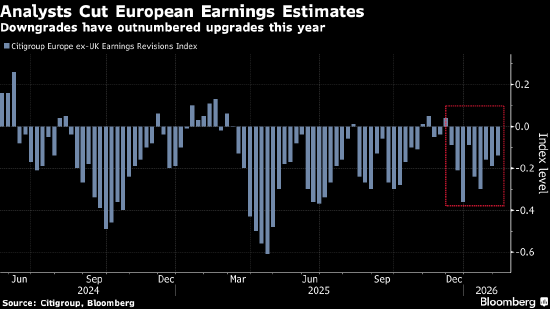
Group 1 - European stock markets experienced a slight increase, with Siemens Energy and Heineken reporting optimistic earnings, while Dassault Systèmes saw a significant drop of 20% due to disappointing outlook [2][6] - The Stoxx 600 index closed up by 0.1%, with Siemens Energy soaring by 8.4% to reach a historical high, driven by increased demand for gas turbines and grid products [2][6] - Heineken's stock rose by 4.4% after the company announced plans to cut 5,000 to 6,000 jobs in response to declining alcohol demand [2][6] Group 2 - Concerns over artificial intelligence disrupting the software industry led to declines in stocks like SAP SE, while wealth management stocks were also affected, with St. James's Place PLC dropping by 13% following significant declines in U.S. peers [2][6] - Stronger-than-expected U.S. employment data boosted the stock market, with an unexpected drop in the unemployment rate indicating stability in the labor market into early 2026 [3][6] - The European benchmark stock index is gradually recovering towards record highs, as investors assess the mixed performance of the current earnings season, with more analysts downgrading earnings forecasts than upgrading since late 2025 [3][6]

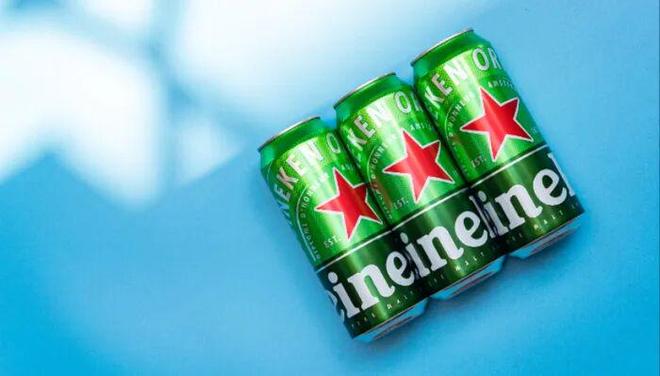
啤酒销量下滑,喜力借助AI降本增效,计划裁员6000人
Xin Lang Cai Jing· 2026-02-11 14:33
Group 1 - The core viewpoint of the article highlights Heineken's plan to enhance efficiency and reduce costs through AI, alongside a potential workforce reduction of up to 7% due to declining beer sales in the previous year [2] - Heineken reported a 2.4% decline in total beer sales for 2025, while adjusted operating profit increased by 4.4% [2] - The company aims to cut 5,000 to 6,000 jobs over the next two years, with a target for operating profit growth of 2% to 6% this year [2] Group 2 - CEO Dolf van den Brink attributed the sales decline to a "challenging market environment," but noted that overall performance remains balanced [2] - UBS analysts indicated that Heineken's 2026 performance expectations are below the usual range but align with buyer expectations and are consistent with competitor Carlsberg [2] - The layoffs are part of Heineken's commitment to achieve annual cost savings of €400 million to €500 million, with a focus on growth and premium brand development [2] Group 3 - The CEO acknowledged that the layoffs are partly driven by AI and digital transformation, which are key components of the company's "Evergreen Strategy" for 2030 [2] - Approximately 3,000 positions will be shifted to the commercial services department, emphasizing the role of technology and AI in ongoing efficiency improvements [2] - Heineken operates in over 70 countries and employs 87,000 people [2]
喜力拟裁员6000人,股价大涨4% 欧洲股市普遍走低
Xin Lang Cai Jing· 2026-02-11 12:54
Core Insights - The article focuses on the recent corporate earnings reports from various companies, highlighting significant financial updates and market reactions [1][11]. Group 1: Corporate Earnings Reports - Heineken announced plans to lay off 5,000 to 6,000 employees over the next two years due to a challenging market environment, while aiming for accelerated growth by 2030. The company reported a 1.2% decline in production for 2025 but a 4.4% increase in operating profit year-on-year, with a projected operating profit growth rate of 2% to 6% for 2026. Following this news, Heineken's stock rose by 4% in early trading [5][14]. - Dassault Systèmes experienced a significant stock drop of 19.6% after reporting flat annual revenue of €6.24 billion (approximately $7.43 billion), which fell short of market expectations. The software business revenue also showed weak growth at €5.64 billion [7][15]. - Siemens Energy reported a nearly threefold increase in net profit to €746 million (approximately $889 million) for the first quarter of fiscal year 2026, driven by strong demand from data center expansions, resulting in a 6% stock increase [8][16]. - Deutsche Bank announced record operating profit of €4.5 billion, with net profit reaching €2.6 billion, exceeding the target of €2.5 billion. However, the stock price fell by 4.2% despite the positive earnings report [9][17]. - Lufthansa's stock fell by 3.3% due to an impending 24-hour strike called by pilots over pension disputes [9][17]. Group 2: Market Reactions - European stock markets saw a slight decline, with the STOXX Europe 600 index down approximately 0.2%. However, the London FTSE 100 index rose by 0.3% as investors shifted towards mining and energy stocks amid risk-averse sentiment [4][13]. - Global investors are closely monitoring the upcoming U.S. non-farm payroll data, with U.S. stock futures rising as they await the report [10][18].
喜力拟裁员超5000人
新华网财经· 2026-02-11 11:09
Core Viewpoint - Heineken N.V. reported a resilient performance for 2025, but announced a global workforce reduction of 5,000 to 6,000 employees and lowered its 2026 operating profit growth forecast to 2% to 6% from the previous 4% to 8% [3][5]. Financial Performance - Heineken's net revenue reached €28.89 billion with an organic growth of 1.6%, while operating profit was €4.385 billion, showing an organic growth of 4.4% and an operating profit margin increase of 41 basis points to 15.2% [4]. - The diluted earnings per share (EPS) was €4.78, reflecting a year-on-year increase of 3.6% [4]. - The overall sales volume declined by 1.2%, with a consolidated sales drop of 2.1%, although licensed sales grew by 17.8% [3][4]. Strategic Initiatives - The workforce reduction is part of the "EverGreen 2030" strategy, aimed at addressing slowing global beer demand and improving operational efficiency through digital supply chain initiatives and closing underperforming breweries [5]. - Heineken aims to achieve annual cost savings of €400 to €500 million through these measures [5]. Market Position and Growth - Heineken's market share increased in the Americas, Africa, the Middle East, and Asia-Pacific, offsetting slight declines in Europe, with premium brands like Heineken® and Amstel showing strong growth [3][6]. - The company has completed the acquisition of FIFCO's beverage and retail business in Central America, which is expected to enhance EPS by 2% to 3% [6]. Shareholder Returns - Heineken announced a €1.5 billion share buyback program, having completed the first tranche of €750 million, and plans to distribute a dividend of €1.90 per share for 2025, maintaining a payout ratio of 39.3% [6].

喜力拟裁员超5000人
Xin Lang Cai Jing· 2026-02-11 10:00
Core Viewpoint - Heineken N.V. reported a stable profit but a slight decline in sales, announcing a global workforce reduction of 5,000 to 6,000 employees and lowering its 2026 operating profit growth forecast to 2% to 6% from the previous 4% to 8% [2][4] Financial Performance - Net revenue reached €28.89 billion with an organic growth of 1.6% - Operating profit was €4.385 billion, showing an organic growth of 4.4% and an operating profit margin increase of 41 basis points to 15.2% - Diluted earnings per share (EPS) was €4.78, reflecting a year-on-year growth of 3.6% [2][3] Sales and Market Share - Global total sales decreased by 1.2%, with combined sales down 2.1% but licensed sales increased by 17.8% - Market share grew in the Americas, Africa, the Middle East, and Asia-Pacific, offsetting a slight decline in Europe [3][4] Strategic Initiatives - The workforce reduction is part of the "EverGreen 2030" strategy, representing approximately 5.6%-6.7% of the global workforce of 89,000 employees, to be completed by 2026-2027 - The reasons for layoffs include addressing slowing global beer demand and optimizing operational efficiency through digital supply chain initiatives and closing inefficient breweries [4][5] Future Outlook - Heineken has adjusted its 2026 operating profit growth forecast, reflecting cautious market conditions, with variable costs expected to grow at a low single-digit rate per hectoliter - The company completed the acquisition of Central America's FIFCO beverage and retail business, which is expected to enhance EPS by 2% to 3% - Heineken announced a €1.5 billion share buyback plan, having completed the first tranche of €750 million, and plans to distribute a €1.90 dividend per share for 2025, maintaining a 39.3% payout ratio [5]
燕京啤酒:截至2026年2月10日公司股东总户数为43233户
Zheng Quan Ri Bao Wang· 2026-02-11 08:09
证券日报网讯2月11日,燕京啤酒(000729)在互动平台回答投资者提问时表示,截至2026年2月10日, 公司股东总户数为43233户。 ...
