
机械

Search documents
廖市无双-本轮上涨是否-一去不回头
2025-12-29 01:04
Summary of Conference Call Records Industry or Company Involved - The discussion primarily revolves around the **A500 ETF** and the broader **Chinese stock market** performance in 2025, including various sectors such as **financials**, **technology**, **commercial aerospace**, and **defense**. Core Points and Arguments 1. **Market Trends and Performance** - The market showed a stabilizing upward trend in 2025, with significant fluctuations due to events like the **Deepseek** surge and the **Trump tariff war**. The **A500 ETF** inflow significantly influenced market momentum, leading to a bullish sentiment with the Shanghai Composite Index surpassing **3,950 points** [1][2][7]. 2. **Impact of Small Probability Events** - Frequent small probability events in 2025 had a notable impact on market dynamics, such as the **April tariff war** causing sharp declines followed by strong rebounds. The shift of funds from the brokerage sector to the **ChiNext** and **STAR Market** indices led to notable increases in these indices [2][4]. 3. **Role of A500 ETF** - The substantial inflow into the **A500 ETF** starting December 17 transformed the market outlook from expected downward adjustments to an upward trend, indicating strong buying interest. This trend could lead to potential peaks around the **Lunar New Year** [5][11]. 4. **Brokerage Sector's Influence** - The brokerage sector is crucial in the current market context, with solid fundamentals but suppressed stock prices. The direction taken by this sector could significantly influence the overall market trajectory, with potential for either upward breakthroughs or further corrections [6][15]. 5. **Market Highlights and Drivers** - Recent market performance was driven by factors such as the **A500 ETF** inflow, a booming **commercial aerospace sector**, and strong performance in the **optical module sector**. Growth indices like **CSI 1000** and **National Index 2000** approached previous highs, with notable gains in **non-ferrous metals** and **defense** sectors [8][9]. 6. **Future Market Predictions** - Short-term trends appear positive, but sustainability of driving factors remains uncertain. The overall market trend is expected to remain upward, with potential high points around **4,034** and long-term targets reaching **4,130** [3][11]. 7. **Year-End Adjustment Risks** - Potential adjustments similar to the previous year's end are anticipated, driven by fund switching dynamics. However, the current market strength suggests a higher probability of upward movement compared to declines [12][14]. 8. **Investment Strategy Recommendations** - Investors are advised to avoid chasing high-performing sectors like **optical modules** and **non-ferrous metals** due to potential correction risks. Instead, focus on sectors with lower valuations and rebound potential, particularly in **non-bank financials**, **electrical new energy**, **electronics**, and **chemicals** [16][18]. Other Important but Possibly Overlooked Content 1. **Sector Rotation Performance** - The sector rotation strategy in 2025 yielded over **20%** excess returns, indicating a strong performance in cyclical sectors. Preparations for 2026 should focus on maintaining flexibility in investment strategies [3][18]. 2. **Macroeconomic Outlook** - Expectations for 2026 include potential surprises in **PPI** and **CPI** due to rising commodity prices across various sectors, necessitating close monitoring of these economic indicators [21]. 3. **Focus on Specific Sub-Sectors** - Key areas of interest include **plastics and products** in chemicals, **tourism and leisure** in consumer services, **electrical equipment** in new energy, and **aerospace** in defense, all showing high value in the current market environment [20].
关注AI设备及耗材、商业航天:机械行业周报(20251222-20251227)-20251228
Huachuang Securities· 2025-12-28 09:11
Investment Rating - The report maintains a "Recommended" rating for the mechanical industry, with a focus on AI equipment and consumables, as well as commercial aerospace [1]. Core Insights - The report highlights the rapid growth in demand for high-performance servers, GPUs, and advanced PCBs driven by the surge in AI technology and applications. The global PCB industry is projected to grow from $73.6 billion in 2024 to $96.4 billion by 2029, with a CAGR of 5.6% [7][22]. - The report emphasizes the importance of advancements in PCB equipment and consumables, particularly in drilling and exposure equipment, which are expected to see significant market growth due to the increasing complexity of AI applications [22][24]. - The commercial aerospace sector is entering a critical phase with the successful launch of reusable rockets, which could significantly reduce satellite launch costs and accelerate satellite networking processes [7][24]. Summary by Sections Industry and Company Investment Views - The report discusses the impact of AI on PCB demand, noting that the need for high-density and high-layer PCBs is increasing, which will drive the demand for advanced drilling and exposure equipment [22][24]. - Key companies to watch include Dingtai High-Tech and Zhongtung High-New in the consumables sector, and Dazhu CNC and Xinqi Micro-Assembly in the equipment sector [7][24]. - The report suggests that the equipment industry is entering a golden age due to the expansion of AI infrastructure, with significant growth expected in drilling and exposure equipment markets [22][24]. Key Data Tracking - The report provides macroeconomic data, including the manufacturing PMI index and fixed asset investment growth rates, which are crucial for understanding the overall health of the mechanical industry [26][30]. - The mechanical sector has shown a strong performance, with a 4.5% increase in the sector index, outperforming the broader market indices [11][16]. Company Earnings Forecasts and Valuations - The report includes earnings forecasts and valuations for key companies in the mechanical sector, with several companies rated as "Strong Buy," indicating strong expected growth in earnings per share (EPS) and favorable price-to-earnings (PE) ratios [2][8].



市场监管总局:2026年推动完成1800余项传统产业标准制修订
Zhong Guo Xin Wen Wang· 2025-12-26 07:43
市场监管总局:2026年推动完成1800余项传统产业标准制修订 中新网12月26日电(记者 谢艺观)"市场监管总局聚焦优化提升传统产业、促进服务业优质高效发展、大 力提振消费等重点发力,正在布局开展一批新的专项行动,不断健全国家标准体系,更好以标准升级促 进经济高质量发展。"市场监管总局标准技术司司长刘洪生26日在新闻发布会上表示。 来源:中国新闻网 编辑:熊思怡 广告等商务合作,请点击这里 国家市场监管总局新闻发布会现场。 谢艺观 摄 据刘洪生介绍,2026年主要从四个方面开展工作:一是持续推动传统产业标准更新。围绕石化、机械、 轻工、钢铁、有色、建材、纺织、船舶、汽车、电力等十大传统产业高质量发展需求,坚持智能化、绿 色化、融合化方向,推动完成1800余项标准制修订,助力产业转型发展。 二是加快推进消费品标准升级。聚焦消费者对安全、质量、绿色、智能、健康等方面的新需求,研究制 定加快推进消费品国家标准升级工作方案,着力构建与高质量发展相适应的新型消费品标准体系,为增 加消费品供需适配性、激发消费潜力提供坚实支撑。 三是加强服务标准建设。研究出台加强服务标准建设指导意见,围绕生产性服务业、生活性服务业和公 ...

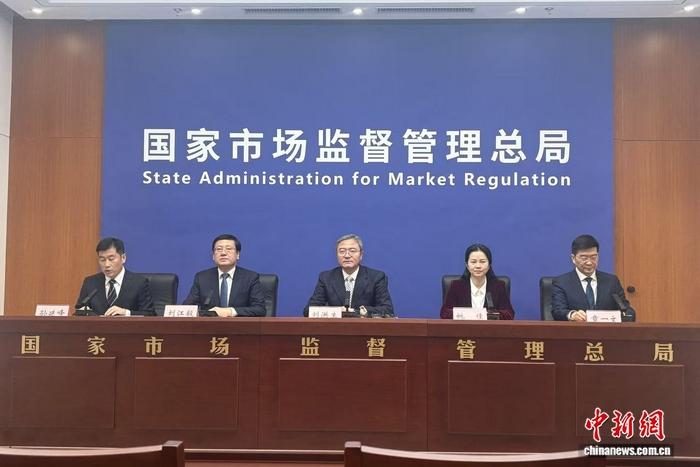
市场监管总局:2026年将推动完成1800余项标准制修订
Yang Shi Xin Wen· 2025-12-26 07:06
Group 1 - The State Administration for Market Regulation will focus on optimizing traditional industries, promoting high-quality development in the service sector, and boosting consumption in 2026 [1] - A total of over 1,800 standards will be revised and developed to support the high-quality development needs of ten traditional industries, including petrochemicals, machinery, light industry, steel, non-ferrous metals, building materials, textiles, shipbuilding, automotive, and electric power [1] - The implementation of a special action for updating and upgrading mandatory national standards will be promoted, particularly in areas related to life and property safety [1] Group 2 - The agency will collaborate with relevant departments to accelerate the development of standards in critical areas such as thermal insulation materials, hazardous chemicals, special equipment, and the recycling of power batteries [1] - Important recommended national standards in relevant fields will be timely converted into mandatory national standards to strengthen safety standards [1]
广发基金田文舟:基于自由现金流优选个股 看好上游资源品、出海制造业
Sou Hu Cai Jing· 2025-12-25 06:27
Core Viewpoint - The focus on free cash flow strategies in the A-share market has increased this year, as it is seen as a better indicator of a company's ability to create value for shareholders compared to net profit [1] Group 1: Free Cash Flow Strategy - Free cash flow is defined as the cash remaining after a company has paid all necessary operating expenses and future investments, making it a key metric for assessing financial health [1] - The strategy is based on the principle that a company's value equals the discounted future free cash flows, with a focus on selecting companies with strong free cash flow [2] - The fund managed by the company, Guangfa Longtou Optimal, has achieved a return of 43.20% year-to-date, outperforming the national free cash flow index by nearly 31 percentage points [1] Group 2: Investment Focus Areas - The company is optimistic about three main areas: 1. Resource products like copper and aluminum, which are expected to benefit from manufacturing recovery and financial support due to strong cash flow and healthy balance sheets [3] 2. Manufacturing going overseas, particularly in sectors like lithium batteries and oil and gas equipment, where leading companies show strong cash flow and competitive advantages [3] 3. Industries with declining capital expenditures and attractive free cash flow, such as chemicals, paper, and steel, are also of interest [3] Group 3: Market Outlook - Despite a slowdown in domestic economic growth, the overall resilience remains, with signs of stabilization and recovery in corporate earnings excluding financial and oil sectors [2] - The expectation is that the Federal Reserve will likely continue its rate-cutting cycle until inflation shows a substantial rebound [2]
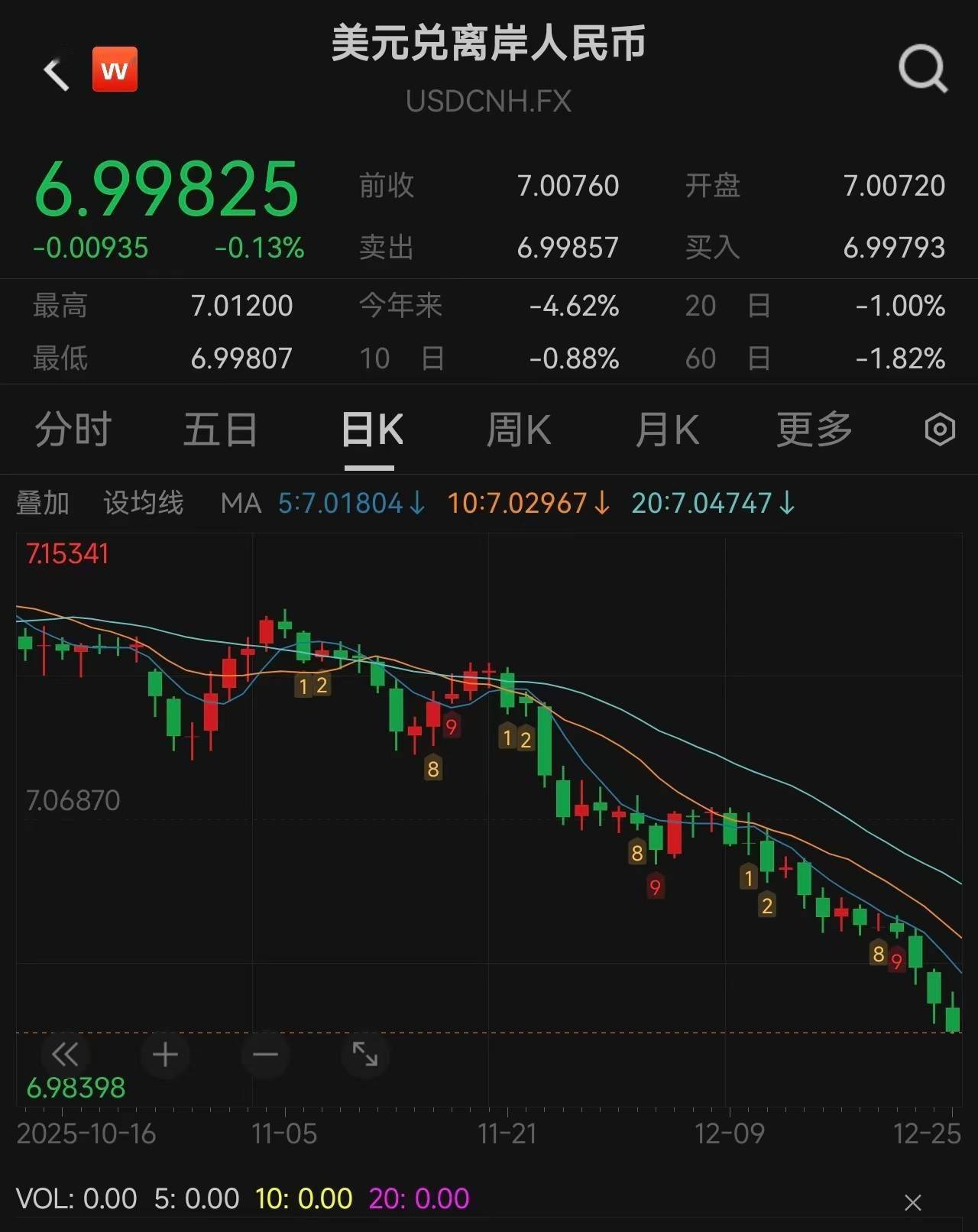
离岸人民币对美元升破7.0关口!为2024年9月以来首次,对A股市场影响几何?
Sou Hu Cai Jing· 2025-12-25 02:42
Group 1 - The offshore RMB has surpassed the 7.0 mark against the USD for the first time since September 2024, currently reported at 6.99825 [1] - The People's Bank of China (PBOC) aims to enhance the resilience of the foreign exchange market and stabilize market expectations, preventing excessive fluctuations in the exchange rate [3] - The appreciation of the RMB is expected to increase the attractiveness of RMB-denominated assets, particularly for foreign investors focused on exchange rate gains [3] Group 2 - Historical data indicates that during periods of RMB appreciation, foreign capital, represented by "northbound funds," tends to show accelerated net inflows, favoring liquid assets that align with international valuations [3] - A-share market valuations are currently at historically low levels, and a stronger RMB may catalyze long-term foreign capital to reassess and increase allocations to Chinese assets, potentially stabilizing or boosting market indices [3] - The impact of RMB appreciation on listed companies is not uniform; export-oriented industries such as home appliances, electronics, textiles, and machinery may face reduced price competitiveness in international markets, leading to potential downward pressure on profit expectations [4] Group 3 - Beneficiaries of RMB appreciation include industries with significant dollar-denominated liabilities, such as airlines, which may see improved financial statements due to increased exchange gains [4] - Cost-importing sectors, like paper and basic chemicals, will benefit from reduced procurement costs for raw materials, enhancing profit margins [4] - The psychological impact of RMB appreciation is significant, as it signals economic stability and effective policy, which can fundamentally boost market risk appetite [4] Group 4 - The significance of the RMB surpassing the 7.0 mark is more psychological and directional rather than indicative of long-term trends; sustainable appreciation is contingent on confirmed domestic economic recovery and substantial improvements in corporate earnings [5] - Investors should closely monitor upcoming key economic data releases and monetary policy trends from major economies to gauge the sustainability of RMB appreciation [5]
韩报告对比中韩日制造业出口竞争力:“除半导体外,中国全面领先日韩”
Huan Qiu Shi Bao· 2025-12-24 22:43
Core Insights - China's manufacturing export competitiveness is rapidly expanding in the East Asian market, significantly distancing itself from South Korea and Japan, reshaping the regional manufacturing landscape [1][2] Group 1: Comparative Competitiveness - The report compares the export competitiveness of China, South Korea, and Japan across five major manufacturing sectors: semiconductors, automobiles, machinery, steel, and chemicals, indicating that China has surpassed both countries in most categories except semiconductors [2][3] - Over the past five years, China has shown a significant lead in export scale and overall competitiveness in traditional manufacturing sectors, while South Korea and Japan's competitiveness is increasingly concentrated in a few core areas [2][3] Group 2: Sector-Specific Analysis - In the semiconductor sector, South Korea has seen its competitiveness rise to first place due to stable demand for its products, while its automotive sector has fallen to the bottom among the three countries due to lagging price competitiveness and environmental vehicle production capabilities [3] - China's advantages in machinery and chemicals have been reinforced, and it has now overtaken South Korea and Japan in the automotive and steel sectors, leading to a comprehensive competitiveness ranking at the top [2][3] Group 3: Structural Changes and Long-Term Trends - The strengthening of China's export competitiveness is attributed to structural changes across the manufacturing sector, driven by a decade-long push for high-end manufacturing and technological independence [4][5] - South Korea's reliance on a single industry, particularly semiconductors, raises concerns about its manufacturing future, as the country faces pressures in non-semiconductor sectors [4][5] Group 4: Japan's Manufacturing Challenges - Japan's manufacturing sector is struggling, with competitiveness declining in key areas such as automobiles, semiconductors, steel, and chemicals, highlighting structural limitations in traditional manufacturing [6][7] - Japan's export share in critical sectors like electric vehicles has been in decline, while China's export scale has been rapidly increasing [7] Group 5: Factors Behind China's Competitive Edge - China's manufacturing competitiveness is increasingly attributed to factors beyond low-cost exports, including enhanced domestic competition, economies of scale, and continuous investment in research and development [7] - The reduction in import dependency across various industrial sectors indicates a strengthening of China's internal supply chain capabilities, contributing to its sustained international competitiveness [7]
北交所重要公告汇总(2025年12月24日)
Sou Hu Cai Jing· 2025-12-24 16:34
Group 1 - Huayuan Co., Ltd. reported progress in the construction of its intelligent manufacturing base in Hubei and disclosed operational data for the first half of 2025 [1] - Lingge Technology announced new developments in its solid-state battery business, with a year-on-year increase in orders on hand [2] - Jiaxian Co., Ltd. shared updates on its photoresist business and a dual-wheel adjustment strategy during an investor meeting [3] Group 2 - Jinbo Bio announced plans to increase the registered capital of its wholly-owned subsidiary by RMB 165 million to support business development [4] - Qianjin Technology is utilizing RMB 15 million of its idle funds to purchase bank wealth management products to enhance fund efficiency [5] - Yiguangming is using RMB 30 million of its idle funds and RMB 18 million of raised funds for wealth management to improve fund efficiency [6] - Zecheng Electronics is investing RMB 26.9373 million of its idle funds in wealth management products [7] - Lijia Technology is allocating RMB 83 million of its idle funds for wealth management to enhance fund efficiency [8] Group 3 - Audiwei received a project designation notice from a leading intelligent driving system integrator, with an expected contract value of RMB 176 million [9] - Sanwei Equipment announced that several shareholders plan to reduce their holdings, with a maximum reduction of 1% of shares [10] - Guohang Ocean's wholly-owned subsidiary obtained a patent for a method and system for identifying abnormal behavior in ship entry and exit speeds, enhancing the company's competitive edge [11]
融资买得欢,为何你没赚到?
Sou Hu Cai Jing· 2025-12-24 09:08
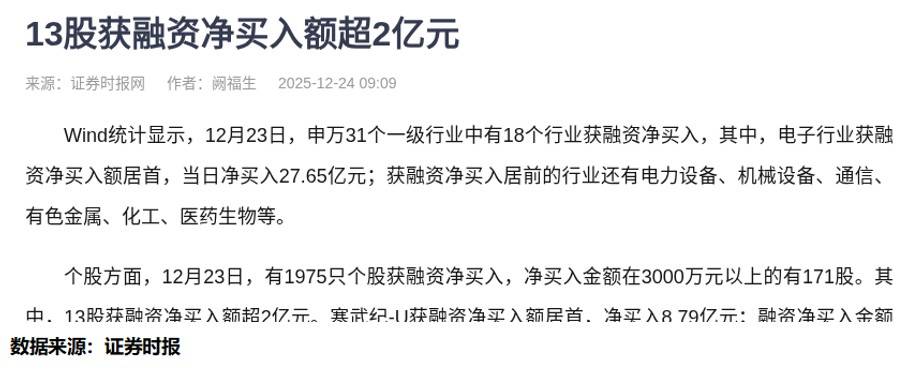
最近股市里不少人盯着融资数据看——毕竟真金白银往里砸的方向,总该有机会吧?可身边朋友却念叨:"明明电子、电力设备这些行业融资买得凶,我手 里的股怎么就是不涨?"其实这个问题,早藏在"指数涨了钱没赚"的老麻烦里了。12月23日(周二)Wind统计显示,申万31个一级行业里18个获融资净买 入,电子行业净买入27.65亿元排第一,寒武纪-U、英维克这些个股净买入超2亿。可看着这些数字,有人高兴有人懵:融资砸进去的钱,怎么没落到自己账 户里?别急,文章最后我会说清这个新闻背后的关键,。 很多人觉得牛市是"躺赢局",可股市本来就有博弈属性——你赚的钱是别人亏的,哪有只赚不赔的道理?反而牛市里交投更活跃,大资金更容易用"假突 破""假回调"骗你下车。就像我邻居买的医药生物股,跟着行业融资净买入进去,结果买在"假企稳"的高点,熬了两周才解套——不是他选的行业不对,是 他没看懂走势背后的"冷处理"。 二、走势里的假动作,比你想的多 一、指数涨了钱没赚,真不是分化的锅 自从10月28日上证指数越过4000点,"赚了指数不赚钱"的吐槽就没断过。有人把这归为市场分化,可我翻了组数据——4月7日上证指数止跌企稳到10月30日 破4 ...
2025年行业打分表结论回顾与策略反思:行业轮动如何做到既敏锐又不丢主线?
ZHESHANG SECURITIES· 2025-12-24 08:51
Core Insights - The 2025 industry scoring report identified the top five sectors as Electric New Energy, Military Industry, Nonferrous Metals, Machinery, and Chemicals, which showed a strong correlation with actual annual performance [1][3][18] - A simulated equal-weighted portfolio of the top five sectors yielded a cumulative return of 44.8% by December 23, 2025, outperforming the CSI 300 by 22.2%, with a monthly success rate exceeding 90% [1][3][12] - The report emphasizes that in a bullish market, focusing on industry fundamentals is more effective than trading strategies, advocating for a buy-and-hold approach based on economic cycles [1][5][21] 2025 Industry Review - The Shanghai Composite Index rose over 16% in 2025, marking the largest increase since 2020, with Nonferrous Metals and Communication sectors leading the gains at 89.9% and 89% respectively [2][13] - The report highlights that the performance of Nonferrous Metals and Communication significantly outpaced the CSI 300's 17.4% increase [12][13] 2025 Annual Industry Scoring Conclusions and Performance Review - The annual scoring report, published in November 2024, ranked Electric New Energy, Military Industry, Nonferrous Metals, Machinery, and Chemicals as the top five sectors, correlating well with actual performance [3][18] - The top five sectors' simulated portfolio achieved a cumulative return of 44.8%, with 11 out of 12 months showing positive excess returns [3][20] 2025 Monthly Industry Scoring Conclusions and Performance Review - The monthly scoring report indicated a sample return of 34.7% since 2025, outperforming the CSI 300 by 14.8%, although this was lower than the annual scoring report's performance [4][12] - Key insights from the monthly performance include successful allocations in Communication and Nonferrous Metals, while frequent trading led to missed opportunities [4][5] Summary and Reflections - The analysis suggests that in a bullish market, prioritizing industry fundamentals over trading strategies is crucial, with a focus on tracking industry prosperity differences [5][21] - For 2026, sectors that should receive higher fundamental scores include those aligned with cyclical and technological trends, particularly in areas like Electronics, Communication, Military, Consumer Services, Agriculture, Trade, Pharmaceuticals, Electric New Energy, Chemicals, and Automotive [5][21]