
债券

Search documents
证券研究报告、晨会聚焦:固收吕品:商品行情“缩圈”,关注债市长端品种走势分化-20260119
ZHONGTAI SECURITIES· 2026-01-19 14:27
Core Insights - The report highlights a "contraction" in commodity markets, with a focus on the differentiated performance of long-end bonds in the debt market [3][4] - Recent macro data has shown positive trends, with social financing and export figures exceeding expectations, indicating a recovery in economic sentiment [3][4] - The report notes a significant increase in foreign exchange settlements, reaching the highest monthly value since 2014, driven by strong export growth and expectations of RMB appreciation [3][4] Commodity Market Analysis - Commodity prices have cooled down recently, with a notable "contraction" in market activity, particularly in the precious and non-ferrous metals sectors [3][4] - The South China Commodity Index has risen by 3.7%, with precious metals and non-ferrous metals leading the gains, while energy, black metals, and agricultural products have shown weaker performance [3][4] - The report identifies a divergence in the performance of different metal categories, with precious metals outperforming non-ferrous and black metals [4] Debt Market Insights - The debt market is currently in a relatively balanced range, with 30-year government bond yields around 2.3% and 10-year yields returning to the central bank's target range of approximately 1.85% [4][5] - There is limited room for further declines in short-term bond yields, as market participants shift from a bearish to a more neutral stance [5] - The report suggests that the recent buying activity from major banks, particularly in the 7-10 year maturity range, is providing crucial support for current interest rates [5] Investment Strategies - The report recommends focusing on high-odds, trading-oriented small metals and silver if risk preferences shift, while suggesting a focus on high-probability copper and aluminum if conditions remain stable [4][5] - The performance of perpetual bonds and secondary capital bonds is highlighted as a key area to watch, with strong buying interest from specific investor segments [6]
信用半月谈系列报告之三:如何看待熊猫债的投资价值?
Shenwan Hongyuan Securities· 2026-01-19 14:14
Group 1 - Panda bonds are RMB-denominated bonds issued by foreign entities in the Chinese market, which have evolved significantly since their inception in 2005, becoming an important part of China's bond market opening [2][6][12] - The regulatory framework for Panda bonds has transitioned from strict limitations to a more open system, with key milestones including the relaxation of fundraising restrictions in 2016 and the establishment of a classification registration system in 2018 [2][8][12] - The current Panda bond market features a diverse range of issuers, with a total outstanding bond balance of approximately 425.8 billion RMB, where over 80% of bonds have a remaining maturity of less than 3 years and a high proportion of issuers rated AA+ or above [2][18][23] Group 2 - The investor structure in the Panda bond market is becoming more diversified, with foreign institutions maintaining stable holdings and domestic securities firms, policy banks, and commercial banks increasing their participation significantly [2][28][30] - The liquidity in the secondary market for Panda bonds is relatively low, with monthly turnover rates generally between 7% and 14%, which is lower than that of ordinary credit bonds in the interbank market [2][28][31] - The pricing level of Panda bonds is generally consistent with domestic bonds of the same credit rating, with yields for different maturities as of January 14, 2026, showing no significant premium [2][38][39] Group 3 - The investment value of Panda bonds is expected to remain attractive in 2026, with the bond market likely to exhibit characteristics of "low interest rates and high volatility," making short to medium-term credit bonds appealing for yield and leverage strategies [2][41][42] - Specific strategies for investment include focusing on short to medium-term bonds with a remaining maturity of less than 3 years that have a yield spread of over 20 basis points compared to similar domestic bonds, and identifying structural arbitrage opportunities in high-quality state-owned enterprises issuing bonds abroad [2][42][44] - The report highlights that there are currently 23 eligible Panda bonds with a total balance of 17.55 billion RMB that meet the criteria for significant yield spreads, indicating potential investment opportunities [2][44]
特朗普扰动地缘政治局势,建议超配黄金|战术性大类资产配置周度点评(20260118)
Xin Lang Cai Jing· 2026-01-19 13:10
Group 1 - The core viewpoint is that the Trump administration's hegemonic policies are worsening international geopolitical tensions, which is favorable for gold performance. Tactical recommendations include overweighting A/H shares, US stocks, and gold, while underweighting US Treasuries and oil [1][21]. Group 2 - Multiple factors support the performance of Chinese equities, suggesting an overweight in A/H shares. The upcoming economic work conference and the start of the 14th Five-Year Plan in 2026 are expected to lead to further expansion of the broad deficit and more proactive economic policies. The Federal Reserve's expected rate cut in December and the stable appreciation of the RMB provide favorable conditions for monetary easing in early 2026. Reforms are expected to boost market risk appetite in China [2][22][9]. - The uncertainty surrounding the new Federal Reserve chairperson is increasing, leading to heightened market speculation regarding US monetary policy, suggesting an underweight in US Treasuries. The cooling labor market, declining energy prices, and slow wage growth are conducive to a decrease in endogenous inflation stickiness, providing more room for the Fed to adjust monetary policy. The resilience of the US economy suggests a cautious direction for Fed policy guidance, with US Treasury yields expected to decline moderately [2][22][9]. - In the context of geopolitical upheaval, gold exhibits strong resilience and safe-haven attributes, suggesting an overweight in gold. The rising uncertainty in global geopolitical situations and continued gold purchases by central banks support a stable long-term gold price. Despite speculative trading inflows temporarily increasing gold volatility, the price remains resilient amid the Trump administration's hegemonic policies and the further erosion of US international credibility [2][22][9]. Group 3 - Short-term speculation in oil may intensify, suggesting an underweight in oil. Investor expectations regarding oil supply and demand are relatively consistent, and OPEC+'s production adjustments are moderate. Geopolitical events in South America may increase the US's influence on global oil prices, while the Trump administration's policy direction favors low oil prices, indicating that oil prices may remain under pressure and face intense short-term speculation [3][23][11].

美债冲上9.36万亿,中国减到17年新低,日本为何越买越狠
Sou Hu Cai Jing· 2026-01-19 12:32
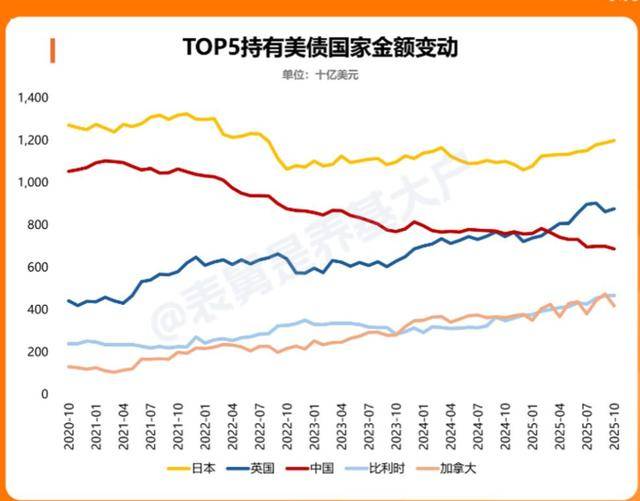
哈喽,大家好,老庐今天和大家聊个关键话题——2026年开年的全球金融市场,藏着一个极具反差的信 号。 美国财政部最新数据显示,外国投资者持有美债规模冲破9.36万亿美元,创下历史新高,看似美元资产 依旧是全球"香饽饽"。 但细究就会发现,作为美债主要持有国的中国和日本,操作却完全相反:一个持续减持至近17年新低, 一个不断加码创下近年高位。全球资本对美债的态度为何分裂?这种背离背后,又藏着怎样的大国金融 逻辑? 反差迷局:美债新高下的中日"加减法" 表面看,美债市场一片繁荣,外资纷纷涌入推高持仓规模,这背后是部分经济体对短期美元流动性溢价 的追逐,毕竟市场仍有美联储维持高利率的预期,美债短期收益颇具吸引力,但这份繁荣,却掩盖了核 心经济体的分歧。 中国的减持步伐从未停歇。2025年11月,中国再减61亿美元美债,总持仓降至6826亿美元,不仅较年初 缩水超10%,更回到了2008年雷曼兄弟倒闭时的水平。 从2013年近1.3万亿美元的峰值算,中国已累计削减超40%的美债持仓,与之对应,日本则连续11个月 增持,当月加仓26亿美元,总持仓达1.202万亿美元,创下2022年以来新高,稳坐美债最大海外持有国 宝座 ...
【ESG投资周报】本月新发ESG基金1只,绿色债券稳步发行-20260119
GUOTAI HAITONG SECURITIES· 2026-01-19 12:00
Group 1: ESG Fund Overview - One new ESG fund was launched this month with an issuance of 0.11 million shares, primarily focused on ESG strategies[8] - A total of 189 ESG public funds were issued in the past year, with a total issuance of 711.78 billion RMB[8] - The total net asset value of existing ESG funds reached 1,173.33 billion RMB, with ESG strategy funds accounting for the largest share at 45.01%[10] Group 2: Market Performance - During the week of January 12-16, 2026, the A-share market experienced a pullback, with the CSI 300 index down by 0.57%, the ESG 300 index down by 0.51%, and the CSI ESG 100 index down by 0.65%[5] - The weekly average trading volume across the A-share market was approximately 6.37 trillion RMB, indicating a loosening of liquidity[5] Group 3: Green Bond Issuance - A total of 58 ESG bonds were issued this month, with a total issuance amount of 34 billion RMB[15] - In the past year, 1,267 ESG bonds were issued, totaling 1,372 billion RMB[15] - The existing ESG bond market comprises 3,911 bonds, with green bonds making up the largest share at 62.28% of the total outstanding amount of 5.76 trillion RMB[15] Group 4: Bank Wealth Management Products - This month, 57 ESG wealth management products were launched, primarily focusing on pure ESG and social responsibility themes[20] - Over the past year, 1,293 ESG bank wealth management products were issued, with 1,221 currently active in the market[20] - Pure ESG products account for the largest share of existing products at 53.48%[20] Group 5: Risk Factors - Potential risks include insufficient policy support for ESG initiatives, lack of standardized data reporting, and lower-than-expected product issuance volumes[23]
游戏结束,中国减持外汇资产,纳瓦罗很生气:美国一粒大豆也不卖
Sou Hu Cai Jing· 2026-01-19 11:00
Group 1 - China reduced its holdings of US Treasury bonds by $6.1 billion in November, bringing the total to approximately $680 billion, while global holdings reached a record high of over $9.36 trillion [1][8] - The reduction in US Treasury holdings by China is a strategic adjustment focused on foreign exchange reserve security and long-term planning, rather than an emotional reaction or a complete economic decoupling from the US [1][4] - China's foreign exchange reserves are intended to support economic security, emphasizing stability and diversification rather than seeking short-term high returns [4][6] Group 2 - The US debt has surpassed $30 trillion, with interest payments consuming significant fiscal resources, leading to concerns about the sustainability of holding excessive US debt due to increased uncertainty [4][6] - The use of the dollar as a geopolitical tool by the US has prompted countries, including China, to reduce their reliance on dollar-denominated assets to mitigate financial risks [6][31] - China has been increasing its gold reserves, reaching 7.415 million ounces by the end of December 2025, as part of a strategy to enhance the resilience of its foreign exchange reserves [6][8] Group 3 - Japan increased its US Treasury holdings by $2.6 billion to $1.2 trillion, driven by currency management, yield supplementation, and strategic considerations related to US military presence [12] - The UK also increased its holdings by $10.6 billion to $888.5 billion, focusing on maintaining its financial center status and risk hedging [14][16] - Other countries like Canada and Norway have increased their US Treasury holdings for short-term liquidity management and strategic balance, reflecting diverse motivations behind these decisions [16][18] Group 4 - The ongoing reduction of US Treasury holdings by China has sparked political reactions in the US, particularly from figures like Navarro, who express concerns over the implications for US financial stability [22][24] - The US agricultural sector's dependence on China for soybean exports highlights the potential economic repercussions of trade threats, suggesting that such measures may harm US interests more than intended [26][28] - The global increase in US Treasury holdings, while appearing as an endorsement of the dollar, reflects a lack of alternatives in the current economic landscape, with countries exploring diversified asset allocations as a challenge to US financial dominance [31][33]
中国再抛61亿美债!特朗普口风变了,鲍威尔保住乌纱帽
Sou Hu Cai Jing· 2026-01-19 10:17
美国国债这么香,为何中国却一次次地"砍仓"? 大家都在买,中国却逆势而为,在2025年11月大笔抛售61亿美元美债,持仓掉到了6826亿美元,刷新2008年以来新低。这不是心血来潮,这是深思熟虑后的 战略重塑。 不是中国不爱赚利息,而是这游戏规则已经不一样了。 中国减持不是市场跟风,是战略方向。从2022年4月开始,中国就主动把美债的占比压低到1万亿美元以下,到今天这已经是持续三年的资产结构调整趋势。 可以明确一点,中国的这次动作,不是情绪化的甩锅,更不是对美国市场短期看空,这是一盘全局战略下的大棋。 同期美债整体市场并没有被"砸盘"。相反包括日本、英国、比利时、沙特和加拿大在内的多国在2025年11月都选择了加仓。 其中仅日本就新增26亿美元,总持仓再回1.2万亿美元高位。就连英国也在当月增持了106亿美元。 这就清楚了,中国不是跟风,而是清醒。我们看的早、动得准,眼光不是盯着短期收益,而是放在国家资产安全和对冲风险的长期策略上。 黄金是中国跑出美元体系的"撤退路线"。 可中国抛了美债之后,这些钱去哪了?答案藏在黄金。就在美债持仓创新低的同时,中国央行手里的黄金储备已经悄悄涨到了7415万盎司,而且是已经连 ...

杨华曌:金融市场震荡特朗普关税策略冲击全球 金价飙升与欧洲反制并存
Xin Lang Cai Jing· 2026-01-19 09:35
新浪声明:此消息系转载自新浪合作媒体,新浪网登载此文出于传递更多信息之目的,并不意味着赞同 其观点或证实其描述。文章内容仅供参考,不构成投资建议。投资者据此操作,风险自担。 责任编辑:陈平 1月19日,在全球地缘政治紧张局势持续发酵的背景下,美国总统特朗普上周六(1月17日)推出的关税 策略引发了国际市场的剧烈波动。这一策略旨在通过经济压力迫使欧洲国家就格陵兰岛控制权进行谈 判,导致现货黄金价格周一开盘急剧上涨近100美元,再度刷新历史高点,截止07:35.最高触及4690 美元/盎司。同时,欧洲多国迅速做出回应,形成联合阵线予以反制。这种跨大西洋关系的裂痕不仅加 剧了贸易摩擦,还可能引发更广泛的国际冲突,再度吸引避险资金涌入黄金市场,给金价提供强劲的上 涨动能。 全球金市方面,上周五金价虽出现回调,但整体周线仍保持上涨态势。在连续数周大涨后,大宗商品市 场出现获利了结,中东紧张局势缓解也削弱了黄金的避险溢价。然而,随着伊朗抗议平息、特朗普采取 观望态度以及俄罗斯总统普京的斡旋,地缘风险有所缓和。他预计金价今年可能触及5000美元,但途中 将伴随大幅回调。 美国债市则显示收益率上升趋势,10年期国债收益率上涨 ...
日本国债遭遇抛售潮:减税预期加剧财政隐忧,30年期收益率创新高
Zhi Tong Cai Jing· 2026-01-19 08:09
首相高市早苗预计将于本周一晚间的记者会上阐述其计划,外界预计选举最快可能在2月8日举行。投资 者亦在密切关注周二即将进行的20年期国债拍卖。 据了解,执政联盟正考虑一项包含暂停征收销售税(可能最早于明年1月实施)的税收计划。与此同时, 由日本最大在野党与前执政联盟成员合并成立的"中道改革联盟"也主张在维持财政纪律、不额外发行赤 字国债的前提下削减销售税。"执政党与在野党均主张削减消费税,这增加了无论选举结果如何、财政 扩张风险都将上升的可能性,"Nissay Asset Management首席投资经理Eiichiro Miura表示。 因有关可能削减食品税的报道引发了市场对财政状况的担忧,日本国债价格大幅下挫。此前有消息称, 日本可能于下月提前举行大选。 30年期国债收益率飙升10个基点至3.58%,创该券种问世以来新高;10年期和20年期国债收益率则升至 1999年以来最高水平。 分析师加菲尔德.雷诺兹指出:"尽管口头干预和地缘紧张局势改善了日元前景,但日本国债并未获得类 似的支撑。东京市场收益率正急剧攀升,因预计首相将寻求扩大授权以实施扩张性财政政策,这强化了 市场认为日本国债正沦为单向做空交易的叙事。 ...
债市日报:1月19日
Xin Hua Cai Jing· 2026-01-19 08:03
Core Viewpoint - The bond market is experiencing fluctuations with a general trend of decline in government bond futures, while the central bank's monetary policy remains accommodative, supporting the bond market [1][2][8]. Market Performance - Government bond futures closed mostly lower, with the 30-year main contract down 0.22% at 110.92, and the 10-year main contract down 0.02% at 108.04 [2]. - The interbank bond yield for the 10-year government bond increased by 0.38 basis points to 1.9678%, while the yield for the 30-year government bond rose by 0.2 basis points to 2.303% [2]. Monetary Policy - The central bank announced a structural interest rate cut, reducing the re-lending and re-discount rates by 0.25 percentage points, with new rates set at 0.95%, 1.15%, and 1.25% for different terms [6]. - The central bank's actions reinforce a loose monetary policy stance, which is expected to support the bond market, particularly in the short term [1][8]. Funding Conditions - The central bank conducted a 7-day reverse repurchase operation with a net injection of 72.2 billion yuan, indicating a generally loose funding environment [5]. - Short-term Shibor rates mostly declined, with the overnight rate down 0.7 basis points to 1.318% [5]. Institutional Insights - Analysts from various institutions suggest that the central bank has room for further easing measures if economic conditions worsen, particularly if inflation pressures decrease [8]. - There is a belief that the short-term downward space for interest rates is limited, as market participants are gradually shifting their views towards a weaker bond market [8].