即时零售

Search documents
微盟首次披露AI相关收入;视比特机器人完成亿元级B+轮融资
Mei Ri Jing Ji Xin Wen· 2025-08-20 23:21
Group 1 - Meituan's international delivery brand "Keeta" officially launched in Doha, Qatar, on August 19, marking its second entry into the Middle East after Saudi Arabia, with plans to expand into Brazil in the coming months [1] - Meituan's expansion into Qatar represents a significant step in the global strategy of Chinese instant retail companies, leveraging their expertise in algorithm scheduling and supply chain management, while also facing localization challenges [1] Group 2 - ZTO Express reported a package volume of 9.85 billion for Q2 2025, a year-on-year increase of 16.5%, with a market share increase of 0.6% quarter-on-quarter, and a more than 50% year-on-year growth in its parcel business [2] - The company's revenue for Q2 was 11.83 billion, reflecting a 10.3% year-on-year growth, with an adjusted net profit of 2.1 billion and a net cash flow from operating activities of 2.2 billion [2] - ZTO's performance continues to follow the "volume-driven profit" growth model, with future growth dependent on technological investments to reduce costs and enhance efficiency, as well as building differentiated advantages in new logistics sectors [2] Group 3 - Weimob Group reported total revenue of 775 million for the first half of 2025, with an adjusted total revenue increase of 7.8% year-on-year, and adjusted EBITDA and net profit of 72 million and 17 million, respectively [3] - The company disclosed AI-related revenue of approximately 34 million for the reporting period, marking its first announcement of such income [3] - The enterprise service sector is undergoing an "AI reconstruction," and the ability to deeply integrate AI technology with core business operations will be crucial for competitive advantage [3] Group 4 - Hunan Shibite Robot Co., Ltd. announced the completion of a billion-level B+ round financing, exclusively invested by Bit Songling Fund under Yicun Capital, following a 300 million B round financing in 2022 [4] - The new funding will be used for further research and development of industrial embodied intelligence products and market expansion in the shipbuilding and lithium battery industries [4] - The financing highlights continued investor confidence in the industrial embodied intelligence sector, although the high technical barriers and strong customization demands in the industrial robotics industry present significant challenges for scaling up [4]



微盟首次披露AI相关收入;视比特机器人完成亿元级B+轮融资|未来商业早参
Mei Ri Jing Ji Xin Wen· 2025-08-20 23:18
Group 1 - Meituan's international delivery brand "Keeta" officially launched in Qatar on August 19, marking another breakthrough in the Middle East market after Saudi Arabia. The company plans to further penetrate the Middle East and aims to enter Brazil in the coming months [1] - Meituan's expansion into Qatar highlights the acceleration of globalization among Chinese instant retail companies, leveraging their mature experience in algorithm scheduling and supply chain management as core competitive advantages, while also facing localization challenges [1] Group 2 - ZTO Express reported a package volume of 9.85 billion for Q2 2025, representing a year-on-year growth of 16.5% and a market share increase of 0.6% quarter-on-quarter. The company's revenue for the quarter was 11.83 billion, up 10.3% year-on-year, with an adjusted net profit of 2.1 billion and a net cash flow from operating activities of 2.2 billion [2] - ZTO's performance continues the growth logic of leading express companies "driving profit through volume." Future growth will depend on technological investments to reduce costs and enhance efficiency, as well as building differentiated advantages in new sectors like instant logistics [2] Group 3 - Weimob Group reported total revenue of 775 million for the first half of 2025, with an adjusted total revenue increase of 7.8% year-on-year. The adjusted EBITDA and net profit were 72 million and 17 million, respectively. The company disclosed AI-related revenue of approximately 34 million for the first time [3] - The enterprise service sector is undergoing an "AI reconstruction," and the ability to deeply integrate AI technology with core business operations will be crucial for determining competitive strength [3] Group 4 - Hunan Shibite Robot Co., Ltd. announced the completion of a billion-level B+ round financing, exclusively invested by Bit Songling Fund under Yicun Capital. This follows a 300 million B round financing completed in 2022. The new funding will be used for further R&D of industrial embodied intelligence products and market expansion in the shipbuilding and lithium battery industries [4] - The financing highlights continued capital interest in the industrial embodied intelligence sector. However, the high technical barriers and strong customization demands in the industrial robotics industry pose challenges for quickly converting R&D results into large-scale orders [4]
京东开超市,淘宝成品牌“接口”,平台企业即时零售布局显“差异”
Sou Hu Cai Jing· 2025-08-20 07:00
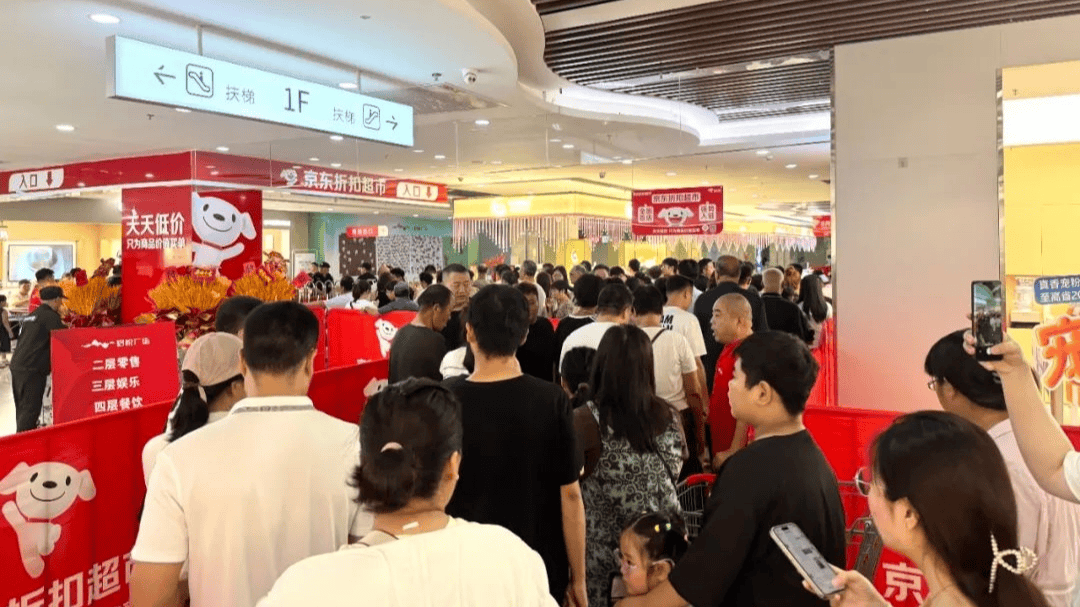
Core Viewpoint - The article discusses the strategic shifts of major platforms like Meituan, Ele.me, and JD.com in the instant retail sector, moving from price competition to value creation, emphasizing supply chain capabilities and channel expansion. Group 1: JD.com Initiatives - JD.com opened its first discount supermarket in Hebei, attracting over 100,000 customers in two days, which is about one-sixth of the city's population [2][4] - The company reported a threefold increase in foot traffic and a 100% increase in online orders for its Seven Fresh Food MALL since its opening [2][4] - JD.com is expanding its offline presence by collaborating with over ten cities and integrating its community dining service, Seven Fresh Kitchen [2][4] Group 2: Supply Chain Strategy - JD.com emphasizes its supply chain advantages, utilizing direct sourcing and self-owned brands to reduce costs and enhance product quality [5] - The acquisition of Hong Kong's Jia Bao Food Supermarket is a strategic move to strengthen its fresh supply chain in the Greater Bay Area and enhance local retail market presence [5] Group 3: Taobao's Approach - Taobao's Flash Purchase reported significant growth, with 66 brands achieving over 10 million in monthly sales in July, and a 110% increase in new brand entries [6][8] - The platform's collaboration with brands like Xiaomi and Miniso has led to a fourfold increase in daily orders since May, showcasing the effectiveness of near-field delivery [8] Group 4: Meituan and Douyin Strategies - Meituan's self-operated instant retail brand, Xiao Xiang Supermarket, has expanded its product range to over 10,000 SKUs, with a projected GMV of nearly 30 billion in 2024 [9] - Douyin is integrating "live streaming + instant delivery" to enhance its e-commerce capabilities, leveraging its content output for immediate consumer engagement [9] Group 5: Industry Trends - The shift from "price war" to "value creation" in instant retail is highlighted, with a focus on convenience, quality, and efficiency rather than capital-driven price competition [10]


京东七鲜首个品牌日收官!超500款自有品牌商品集中亮相
Zhong Jin Zai Xian· 2025-08-19 13:46
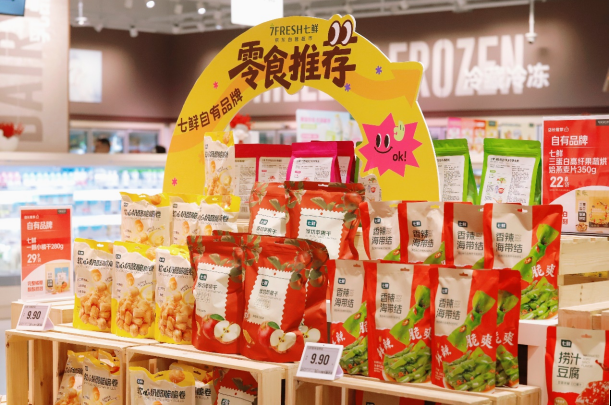
Core Insights - JD Qixian successfully launched its first brand day on August 17, showcasing over 500 self-owned brand products, with a notable 106% year-on-year sales growth in self-owned snack products within six months [1] Product Strategy - JD Qixian has established a comprehensive range of self-owned brand products across various categories, including beverages, grains, and daily necessities, with over 50% of consumers having purchased these products [3] - The "clean ingredient" label has become a significant selling point, with products like 100% NFC Gannan navel orange juice and fermented milk gaining popularity due to their health attributes [3][5] - The introduction of the "clean ingredient" series reflects a commitment to health-conscious consumer demands, with a 130% year-on-year increase in online sales for these products in the first two months [5] Quality and Innovation - JD Qixian emphasizes quality in product development, as seen in its organic peanut oil, which uses whole peanuts instead of crushed ones, ensuring a pure flavor and quality [5] - The company has successfully created social media "viral products," such as the wind oil candy developed in collaboration with Longhu, which has gained popularity among young consumers [6] Pricing Strategy - JD Qixian's self-owned brand products are competitively priced, offering significant savings compared to competitors, such as organic peanut oil priced at 29.9 yuan per bottle, which is over 20% cheaper than similar products [5][6] Market Trends - The focus on self-owned brands is becoming a trend in the instant retail industry, with companies needing to prioritize quality control, product innovation, and pricing advantages to stand out in a competitive market [7] - The establishment of a fixed "Qixian Brand Day" on the 17th of each month aims to reinforce the brand's commitment to delivering high-quality and affordable products, fostering consumer trust and loyalty [7]
安踏品牌与美团闪购达成合作:超千家门店入驻 运动装备30分钟到手
Zheng Quan Ri Bao· 2025-08-19 12:11
8月19日,美团闪购与安踏体育用品有限公司旗下安踏品牌宣布正式达成合作。目前超过1200家安踏门 店已入驻美团闪购,商品同步全量上线,向消费者提供"安踏好货30分钟到手"服务。双方预计,今年内 将有约5000家安踏门店入驻美团闪购营业,覆盖全国超过300个城市。 随着越来越多服饰和户外运动品牌入驻美团闪购,更多消费者买运动装备时不再等快递,选择"闪购下 单,30分钟到家"。特别是进入暑期后,户外运动热潮带动相关商品持续热销。 "安踏是中国运动行业的龙头企业,丰富、高质量的商品深受消费者欢迎。"美团闪购相关负责人表示, 双方的合作更好满足了美团闪购用户在不同场景下"即买即用"运动装备的需求,希望通过更快更好的购 物体验,为安踏带来更多生意新增量。 6月份开始,安踏联手美团闪购在山东、广东等地进行门店试营业,安踏商品在不同场景中均受到消费 者欢迎,许多订单的收货地址是健身房和学校,满足消费者购买健身装备、为孩子置办运动用品需求。 在看到闪购对线下门店业绩的显著拉升后,安踏决定加速在美团闪购的开店进程,在达成正式合作的基 础上,加速在年内推动5000家门店"闪购开业"。 "即时零售已成为大家购买运动装备的主流方式之 ...

苏州飞创品牌管理有限公司即时零售酒水业务成功完成不超过1500万元的天使轮融资
Sou Hu Cai Jing· 2025-08-17 09:03
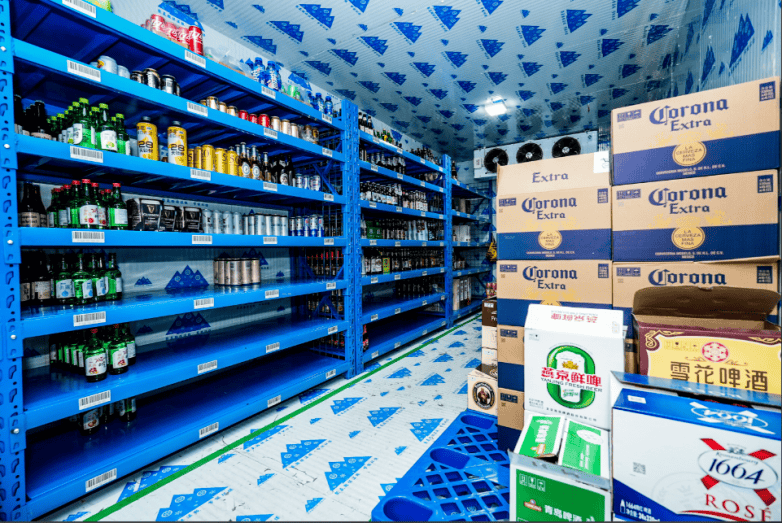
Core Insights - Suzhou Feichuang Brand Management Co., Ltd. has recently secured angel round financing of up to 15 million yuan to enhance its instant retail beverage business [1][3] - The funding will be allocated towards expanding the flash delivery warehouse business and optimizing supply chain integration to improve operational efficiency and stability [3][5] Company Strategy - The company aims to expand its flash delivery warehouse business by establishing more front warehouses in target areas to shorten delivery distances and enhance "minute-level" fulfillment capabilities [3][5] - Feichuang plans to deepen supply chain integration by optimizing procurement channels and strengthening strategic partnerships with brands and suppliers [3][5] - Future focus will be on core cities and high-potential areas, accelerating offline network expansion, and leveraging digital technology for supply chain management [3][5] Market Positioning - The company is positioned to capitalize on the growing demand for beverages in the instant retail sector, which is seen as a significant growth engine [5][7] - Feichuang intends to enhance user experience and operational efficiency through a robust warehousing and delivery system [5][7] - The company will implement a membership service system to analyze consumer preferences and provide personalized product recommendations [5][7] Competitive Advantage - To maintain its leading position in the instant beverage retail sector, Feichuang will optimize supply chain flexibility and improve inventory turnover efficiency [7] - The company will adopt data-driven marketing strategies to achieve precise user targeting and high conversion rates [7] - Feichuang plans to collaborate with local beverage brands to introduce regionally popular products, enhancing its product matrix and competitive differentiation [7]
美团优选网格仓大洗牌!30%转型社区团购逆袭,剩下老板何去何从
Sou Hu Cai Jing· 2025-08-16 13:16
Group 1 - Approximately 30%-40% of grid warehouse operators are choosing to transform into self-operated community group buying, leveraging existing sorting teams and delivery networks to build systems within a month after warehouse closure [3][9] - Meituan Youxuan had over 3,000 grid warehouse sites covering 90% of town markets before its planned withdrawal in June 2025, with daily order volumes peaking at tens of thousands but later declining to below 5,000 due to increasing losses [4][9] - The transformation relies on localized resources and community group buying system support, with successful transitions more likely for sites with mature supply chain capabilities [5][9] Group 2 - About 60%-70% of the sites are shifting towards non-community group buying areas, including instant retail delivery, third-party logistics services, and agricultural supply chain management [7][9] - Some low-efficiency sites are opting to sell off equipment or exit the market entirely, while self-operated community group buying incurs additional costs that may pressure smaller sites financially [7][9] - The competitive landscape for instant retail is dominated by giants like Meituan Shanguo and JD Daojia, necessitating grid warehouses to upgrade to front warehouses or join platform ecosystems for survival [7][9]
行业告别双寡头割据时代 京东外卖在战略预期下的破局
Jing Ji Guan Cha Wang· 2025-08-15 16:17
Core Insights - The article highlights the emergence of JD.com as a significant player in China's food delivery market, challenging the existing duopoly of Meituan and Ele.me by addressing key industry pain points such as high commissions and rider welfare [2][3][5] - JD.com's second-quarter earnings report shows a total revenue of 356.7 billion RMB, a year-on-year increase of 22.4%, with its new business segment driven by food delivery experiencing a staggering 199% revenue growth [2][3][8] - The management emphasizes a long-term strategy for the food delivery business, focusing on sustainable growth rather than short-term gains, aiming to create a win-win situation for merchants, riders, and consumers [5][14][18] Business Performance - JD.com’s food delivery service has expanded to cover 350 cities and over 1.5 million quality dining establishments, establishing a reliable service network for consumers [3][5] - The number of orders has surpassed 25 million, reflecting a strong internal operational strategy that enhances consumer experience and merchant services [5][15] - The company has reported a significant increase in active users and shopping frequency, with over 40% year-on-year growth in both metrics [7][8] Strategic Positioning - JD.com aims to innovate within the food delivery sector by leveraging its supply chain capabilities, moving away from the "two landlord" model to a self-operated brand approach [15][16] - The introduction of the "Seven Fresh Kitchen" model has shown promising results, with daily orders exceeding 1,000 and a repurchase rate significantly higher than the industry average [16] - The management's focus on long-term value creation is evident in their commitment to addressing the longstanding issues in the food delivery industry, aiming for a sustainable business model [14][18] Market Dynamics - The competitive landscape is intensifying, with JD.com opting not to engage in aggressive subsidy wars, instead focusing on building a robust operational framework [5][14] - The company’s strategic collaboration with quality restaurants aims to enhance the overall dining experience and drive growth for restaurant partners [16][18] - JD.com’s food delivery service is positioned as a critical component of its broader retail strategy, contributing to the overall growth of its core e-commerce business [10][18]
行业告别双寡头割据时代 京东外卖在战略预期下的破局
经济观察报· 2025-08-15 15:48
Core Viewpoint - The article emphasizes that JD's new business model in the food delivery sector has successfully withstood market tests, showcasing its strategic depth and value creation beyond just competing in a duopoly market [1][19]. Group 1: Market Context and Challenges - China is the world's largest food delivery market, yet it has faced issues such as declining prices, high commissions, and difficulties for riders, leading to a stagnant competitive landscape dominated by two major players [2]. - The entry of JD into the food delivery market is seen as a disruptive force, addressing industry pain points with a focus on zero commissions for merchants, quality delivery, and rider protections [2][9]. Group 2: Financial Performance and Growth - JD's Q2 2025 earnings report revealed total revenue of 356.7 billion RMB, a year-on-year increase of 22.4%, with the new business segment driven by food delivery seeing a staggering 199% revenue growth [2][11]. - The number of active users and purchase frequency on JD's platform increased by over 40% year-on-year, indicating strong user engagement and cross-purchase potential between food delivery and other retail categories [11]. Group 3: Strategic Development and Long-term Vision - JD's management emphasizes a long-term approach to its food delivery strategy, aiming to establish a sustainable business model over the next five to twenty years [4][6]. - The company has expanded its food delivery service to cover 350 cities and over 1.5 million quality dining establishments, creating a reliable service network for consumers [6][8]. Group 4: Competitive Positioning and Innovation - JD has positioned itself as a "third pole" in the food delivery market, effectively breaking the duopoly of Meituan and Ele.me, and is focused on enhancing user experience and merchant confidence [6][18]. - The company has chosen to avoid engaging in destructive subsidy wars, instead opting for a strategy that emphasizes quality and sustainability [9][18]. Group 5: Supply Chain and Operational Efficiency - JD's food delivery service leverages its supply chain capabilities to enhance operational efficiency and reduce costs, aiming to solve long-standing issues in the food delivery industry [18][21]. - The launch of the "Seven Fresh Kitchen" brand has shown promising results, with daily orders exceeding 1,000 and a repurchase rate significantly higher than the industry average [19]. Group 6: Future Outlook - JD's management believes that the food delivery business will play a crucial role in the company's overall strategy, particularly in enhancing its instant retail capabilities [21]. - The company is committed to exploring sustainable growth models that benefit all stakeholders in the food delivery ecosystem, including merchants, riders, and consumers [16][19].
京东外卖业务:品质为王,不恋价格战,着眼长远布局
Sou Hu Cai Jing· 2025-08-15 09:44
Core Viewpoint - JD.com reported a revenue of 356.7 billion RMB for the second quarter, representing a year-on-year growth of 22.4%, emphasizing its commitment to long-term strategic development in the competitive food delivery industry [1] Group 1: Financial Performance - The revenue for the second quarter reached 356.7 billion RMB, marking a 22.4% increase compared to the same period last year [1] Group 2: Strategic Focus - JD.com management highlighted the importance of food delivery and instant retail in the overall strategy, aiming to build a sustainable business model that can endure for five, ten, or even twenty years [1][3] - The company introduced the concept of "quality food delivery" as a differentiation strategy, focusing on enhancing platform systems and user experience rather than engaging in price wars [3] Group 3: User Engagement and Cross-Selling - There is an observed increase in cross-buying behavior among users of JD.com's food delivery service, indicating growing user stickiness and laying a solid foundation for long-term development [3] Group 4: Investment Strategy - While new business investments may impact short-term profit margins, management believes these will open up greater growth potential and create synergies with core businesses in the long run [3] - JD.com will maintain investment discipline and closely monitor return on investment (ROI) to ensure effective allocation of resources [3]