
基础化工

Search documents
热点追踪周报:由创新高个股看市场投资热点(第228 期)-20260123
Guoxin Securities· 2026-01-23 11:37
Quantitative Models and Construction Methods 1. Model Name: 250-Day New High Distance Model - **Model Construction Idea**: This model tracks the distance of stock prices or indices from their 250-day high to identify market trends and momentum. It is based on the principle that stocks or indices closer to their recent highs tend to exhibit stronger momentum and potential for future gains[11][19]. - **Model Construction Process**: The 250-day new high distance is calculated as follows: $ 250\text{-day new high distance} = 1 - \frac{Close_t}{ts\_max(Close, 250)} $ Where: - $ Close_t $ is the latest closing price - $ ts\_max(Close, 250) $ is the maximum closing price over the past 250 trading days If the latest closing price reaches a new high, the distance is 0. If the price has fallen from the high, the distance is a positive value representing the percentage drop[11]. - **Model Evaluation**: The model effectively captures momentum and trend-following characteristics, aligning with prior research on the predictive power of stocks near their 52-week highs[11][19]. 2. Model Name: Stable New High Stock Selection Model - **Model Construction Idea**: This model identifies stocks with stable price movements and consistent new highs, leveraging the idea that smoother price paths and sustained momentum yield better returns[27][29]. - **Model Construction Process**: Stocks are selected based on the following criteria: 1. **Analyst Attention**: At least five "Buy" or "Overweight" ratings in the past three months 2. **Relative Strength**: Top 20% in terms of 250-day price performance 3. **Price Stability**: - **Price Path Smoothness**: Measured by the ratio of price displacement to total price movement over the past 120 days - **Momentum Consistency**: Average 250-day new high distance over the past 120 days 4. **Trend Continuation**: Average 250-day new high distance over the past five days Stocks meeting these criteria are ranked, and the top 50 are selected[27][29]. - **Model Evaluation**: The model emphasizes the importance of smooth price paths and consistent momentum, which are less likely to attract excessive attention and thus may yield stronger returns[27]. --- Model Backtesting Results 1. 250-Day New High Distance Model - **Indices' 250-Day New High Distance**: - Shanghai Composite: 0.70% - Shenzhen Component: 0.00% - CSI 300: 1.84% - CSI 500: 0.00% - CSI 1000: 0.00% - CSI 2000: 0.00% - ChiNext Index: 1.15% - STAR 50 Index: 0.00%[12][13][34] 2. Stable New High Stock Selection Model - **Selected Stocks**: 50 stocks were identified, including Jiangbolong, Shengda Resources, and Yuanjie Technology. - **Sector Distribution**: - Cyclical Sector: 23 stocks (e.g., Basic Chemicals) - Technology Sector: 18 stocks (e.g., Electronics)[30][35] --- Quantitative Factors and Construction Methods 1. Factor Name: 250-Day New High Distance - **Factor Construction Idea**: Measures the proximity of a stock's price to its 250-day high, capturing momentum and trend-following characteristics[11]. - **Factor Construction Process**: $ 250\text{-day new high distance} = 1 - \frac{Close_t}{ts\_max(Close, 250)} $ Where: - $ Close_t $ is the latest closing price - $ ts\_max(Close, 250) $ is the maximum closing price over the past 250 trading days[11]. - **Factor Evaluation**: The factor is widely supported by academic research and practical applications, demonstrating strong predictive power for momentum strategies[11][19]. 2. Factor Name: Price Path Smoothness - **Factor Construction Idea**: Quantifies the smoothness of a stock's price movement, as smoother paths are associated with stronger momentum effects[27]. - **Factor Construction Process**: $ Price\ Path\ Smoothness = \frac{Price\ Displacement}{Total\ Price\ Movement} $ Where: - $ Price\ Displacement $ is the absolute change in price over 120 days - $ Total\ Price\ Movement $ is the sum of absolute daily price changes over 120 days[27]. - **Factor Evaluation**: This factor highlights the importance of consistent price movements, which are less likely to attract excessive attention and thus may yield stronger returns[27]. --- Factor Backtesting Results 1. 250-Day New High Distance Factor - **Indices' 250-Day New High Distance**: - Shanghai Composite: 0.70% - Shenzhen Component: 0.00% - CSI 300: 1.84% - CSI 500: 0.00% - CSI 1000: 0.00% - CSI 2000: 0.00% - ChiNext Index: 1.15% - STAR 50 Index: 0.00%[12][13][34] 2. Price Path Smoothness Factor - **Selected Stocks**: 50 stocks were identified, including Jiangbolong, Shengda Resources, and Yuanjie Technology. - **Sector Distribution**: - Cyclical Sector: 23 stocks (e.g., Basic Chemicals) - Technology Sector: 18 stocks (e.g., Electronics)[30][35]
揭秘涨停丨热门复牌股,封单资金近14亿元!
Zheng Quan Shi Bao Wang· 2026-01-23 11:24
Group 1 - The Shanghai Composite Index closed at 4136.16 points, up 0.33%, while the Shenzhen Component Index closed at 14439.66 points, up 0.79% [1] - Among the tradable A-shares, 3941 stocks rose, accounting for over 72%, while 1390 stocks fell, with 121 stocks hitting the daily limit up and 2 stocks hitting the limit down [1] - The industries with the highest number of limit-up stocks include electric power equipment (30 stocks), machinery equipment (12 stocks), and basic chemicals (9 stocks) [1] Group 2 - Mingyang Smart Energy received the most capital interest with a limit-up order of 64.43 million shares, followed by GCL-Poly Energy and Jiuquan Iron & Steel, with limit-up orders of 54.47 million shares and 47.31 million shares, respectively [1] - In terms of capital amount for limit-up orders, Mingyang Smart Energy, Goldwind Technology, and Junda Co., Ltd. had the highest amounts, with 1.395 billion yuan, 517 million yuan, and 446 million yuan, respectively [2] - Mingyang Smart Energy resumed trading today after announcing plans to issue shares and pay cash to acquire 100% equity of Dehua Chip, along with raising supporting funds not exceeding 100% of the transaction price [2]


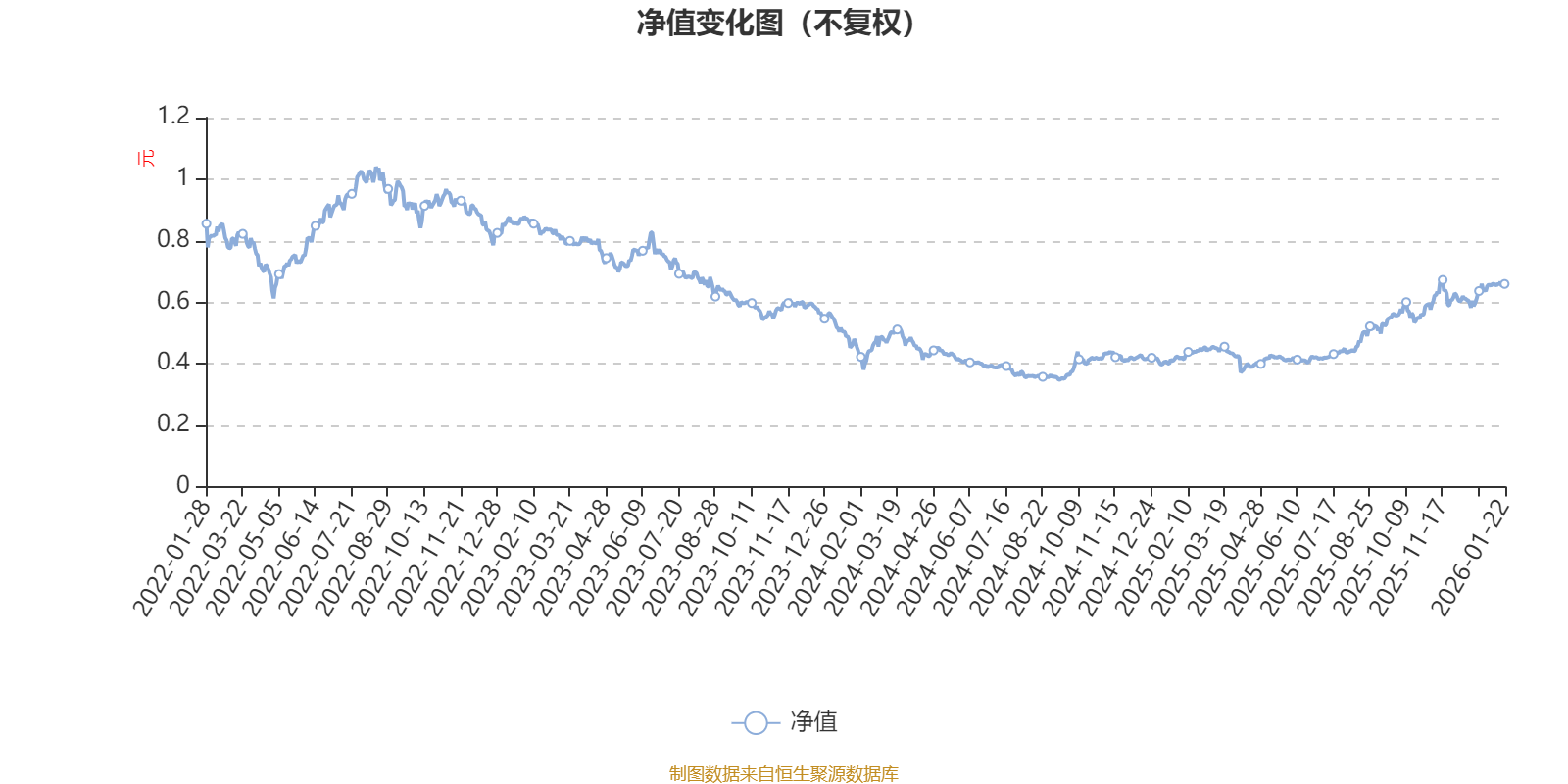
华商新能源汽车混合A:2025年第四季度利润2838.7万元 净值增长率6.86%
Sou Hu Cai Jing· 2026-01-23 10:32
Core Viewpoint - The AI Fund Huashang New Energy Vehicle Mixed A (013886) reported a profit of 28.387 million yuan for Q4 2025, with a weighted average profit per fund share of 0.0407 yuan. The fund's net value growth rate was 6.86%, and its total size reached 448 million yuan by the end of Q4 2025 [2][15]. Fund Performance - As of January 22, the unit net value of the fund was 0.659 yuan. The fund manager, Chen Xiaoqiong, oversees three funds, all of which have shown positive returns over the past year. The highest growth rate among these funds was 105.95% for Huashang High-end Equipment Manufacturing Stock A, while the lowest was 56.95% for Huashang New Energy Vehicle Mixed A [2][3]. Market Overview - In Q4 2025, the A-share market experienced fluctuations, with the Shanghai Composite Index oscillating between 3,800 and 4,030 points, briefly surpassing the 4,000-point mark in October. The Shanghai Composite Index, CSI 300, ChiNext Index, and STAR Market Index saw respective changes of 2.22%, -0.23%, -1.08%, and 10.1% [3]. Investment Strategy - The fund's investment strategy focuses on two main themes: growth and quality. Growth investments are centered around sectors such as lithium batteries, energy storage, solid-state batteries, and AIDC power equipment, with an emphasis on tracking industry developments and selective stock picking. The quality investments are directed towards assets with strong competitive advantages and sustainable profitability [3]. Fund Rankings - As of January 22, the fund's performance over various time frames ranked as follows among comparable funds: 20.14% growth over the last three months (40/621), 51.01% over the last six months (54/621), 56.95% over the last year (141/613), and -24.00% over the last three years (524/535) [3]. Risk Metrics - The fund's Sharpe ratio over the last three years was 0.0231, ranking 495 out of 526 comparable funds. The maximum drawdown during this period was 60.46%, with the largest single-quarter drawdown occurring in Q1 2024 at 32.7% [9][11]. Portfolio Composition - The average stock position of the fund over the last three years was 87.3%, slightly above the comparable average of 85.83%. The fund reached its highest stock position of 92.85% at the end of Q3 2025 and its lowest of 74.26% at the end of H1 2024 [14]. Top Holdings - As of the end of Q4 2025, the fund's top ten holdings included Ningde Times, Sunshine Power, Tianci Materials, Duofluor, Huasheng Lithium, Huayou Cobalt, Guocheng Mining, Xian Dao Intelligent, Penghui Energy, and Nord Shares [18].





资金周报:7个行业受青睐,主力资金净流入
Zheng Quan Shi Bao Wang· 2026-01-23 09:36
沪指本周上涨0.84%,深成指上涨1.11%,创业板指下跌0.34%,沪深300指数下跌0.62%。可交易A股 中,上涨的有4214只,占比77.04%,下跌的1229只。 资金面上,本周主力资金合计净流出1496.42亿元。其中,创业板主力资金净流出568.77亿元;科创板主 力资金净流出208.26亿元;沪深300成份股主力资金净流出557.03亿元。 本周主力资金流向概况(单位:亿元) | 日期 | 深沪两市 | 创业板 | 科创板 | 沪深300 | | --- | --- | --- | --- | --- | | 一周合计 | -1496.42 | -568.77 | -208.26 | -557.03 | | 1月23日 | -85.76 | 25.34 | -29.26 | -219.64 | | 1月22日 | -216.12 | -1.47 | -51.38 | -116.01 | | 1月21日 | 119.83 | -52.21 | 34.57 | 136.27 | | 1月20日 | -957.23 | -361.69 | -107.81 | -248.80 | | 1月19日 | ...
低价股一览 29股股价不足2元
Zheng Quan Shi Bao Wang· 2026-01-23 09:30
Group 1 - The average stock price of A-shares is 14.84 yuan, with 29 stocks priced below 2 yuan, the lowest being *ST Aowei at 0.73 yuan [1] - Among the low-priced stocks, 8 are ST stocks, accounting for 27.59% of the total [1] - In terms of market performance, 26 of the low-priced stocks increased in price, with *ST Changyao, *ST Lifang, and Yabo shares leading the gains at 19.48%, 13.91%, and 10.06% respectively [1] Group 2 - The stock price rankings of low-priced stocks show *ST Aowei at 0.73 yuan with a daily decline of 5.19%, while *ST Changyao and *ST Lifang have daily increases of 19.48% and 13.91% respectively [1] - The trading volume for *ST Changyao is notable with a turnover rate of 19.92%, while *ST Lifang has a turnover rate of 26.78% [1] - Other low-priced stocks include *ST Jinke at 1.49 yuan and Chongqing Steel at 1.54 yuan, with respective daily changes of 0.68% and 2.67% [1]





热点追踪周报:由创新高个股看市场投资热点(第228期)-20260123
Guoxin Securities· 2026-01-23 09:19
Quantitative Models and Construction Methods 1. Model Name: 250-Day New High Distance Model - **Model Construction Idea**: This model tracks the distance of stock prices or indices from their 250-day high to identify market trends and hotspots. It is based on the momentum and trend-following strategy, which has been validated by various studies[11][19]. - **Model Construction Process**: The 250-day new high distance is calculated as: $ 250 \text{-day new high distance} = 1 - \frac{Close_t}{ts\_max(Close, 250)} $ Where: - $ Close_t $ is the latest closing price - $ ts\_max(Close, 250) $ is the maximum closing price over the past 250 trading days If the latest closing price reaches a new high, the distance is 0. If the price falls from the high, the distance is a positive value representing the degree of decline[11]. - **Model Evaluation**: The model effectively identifies stocks or indices with strong momentum and highlights market leaders, aligning with the principles of momentum investing[11][19]. 2. Model Name: Stable New High Stock Selection Model - **Model Construction Idea**: This model refines the momentum strategy by focusing on stocks with smooth price paths and consistent new highs, leveraging the "smooth momentum" effect[27]. - **Model Construction Process**: Stocks are selected based on the following criteria: - Analyst Attention: At least 5 buy or overweight ratings in the past 3 months - Relative Strength: Top 20% in 250-day price performance - Price Stability: - Price path smoothness: Ratio of price displacement to total price movement - Consistency of new highs: Average 250-day new high distance over the past 120 days - Trend Continuation: Average 250-day new high distance over the past 5 days The top 50 stocks meeting these criteria are selected[27][29]. - **Model Evaluation**: The model emphasizes stocks with stable momentum and consistent performance, which are less likely to experience sharp reversals, making it a robust enhancement to traditional momentum strategies[27][29]. --- Model Backtesting Results 1. 250-Day New High Distance Model - **Indices' 250-Day New High Distance**: - Shanghai Composite Index: 0.70% - Shenzhen Component Index: 0.00% - CSI 300: 1.84% - CSI 500: 0.00% - CSI 1000: 0.00% - CSI 2000: 0.00% - ChiNext Index: 1.15% - STAR 50 Index: 0.00%[12][13][34] 2. Stable New High Stock Selection Model - **Selected Stocks**: 50 stocks were identified, including Jiangbolong, Shengda Resources, and Yuanjie Technology. - **Sector Distribution**: - Cyclical Sector: 23 stocks, with the highest concentration in basic chemicals - Technology Sector: 18 stocks, with the highest concentration in electronics[30][35] --- Quantitative Factors and Construction Methods 1. Factor Name: 250-Day New High Distance - **Factor Construction Idea**: Measures the relative position of a stock's price to its 250-day high, capturing momentum and trend-following characteristics[11]. - **Factor Construction Process**: $ 250 \text{-day new high distance} = 1 - \frac{Close_t}{ts\_max(Close, 250)} $ Where: - $ Close_t $ is the latest closing price - $ ts\_max(Close, 250) $ is the maximum closing price over the past 250 trading days[11]. - **Factor Evaluation**: The factor is widely recognized for its ability to identify stocks with strong momentum and potential for continued outperformance[11]. 2. Factor Name: Price Path Smoothness - **Factor Construction Idea**: Quantifies the stability of a stock's price movement, favoring stocks with smoother trajectories[27]. - **Factor Construction Process**: - Price path smoothness is calculated as the ratio of price displacement to the total price movement over a given period[27]. - **Factor Evaluation**: This factor enhances the momentum strategy by reducing exposure to volatile stocks, improving risk-adjusted returns[27]. 3. Factor Name: Consistency of New Highs - **Factor Construction Idea**: Measures the persistence of a stock's new high performance over time, emphasizing sustained momentum[27]. - **Factor Construction Process**: - Average 250-day new high distance over the past 120 days is used as a proxy for consistency[27]. - **Factor Evaluation**: This factor ensures that selected stocks exhibit reliable momentum, reducing the likelihood of short-term reversals[27]. --- Factor Backtesting Results 1. 250-Day New High Distance Factor - **Indices' 250-Day New High Distance**: - Shanghai Composite Index: 0.70% - Shenzhen Component Index: 0.00% - CSI 300: 1.84% - CSI 500: 0.00% - CSI 1000: 0.00% - CSI 2000: 0.00% - ChiNext Index: 1.15% - STAR 50 Index: 0.00%[12][13][34] 2. Price Path Smoothness Factor - **Selected Stocks**: 50 stocks were identified, including Jiangbolong, Shengda Resources, and Yuanjie Technology. - **Sector Distribution**: - Cyclical Sector: 23 stocks, with the highest concentration in basic chemicals - Technology Sector: 18 stocks, with the highest concentration in electronics[30][35] 3. Consistency of New Highs Factor - **Selected Stocks**: Same as the Price Path Smoothness Factor, as it is part of the composite selection criteria[30][35]


由创新高个股看市场投资热点
量化藏经阁· 2026-01-23 09:13
Group 1 - The report tracks stocks, industries, and sectors reaching new highs, indicating market trends and hotspots, with a focus on the effectiveness of momentum and trend-following strategies [1][4] - As of January 23, 2026, the Shanghai Composite Index, Shenzhen Component Index, and other major indices have varying distances from their 250-day highs, with the Shanghai Composite at 0.70% and the Shenzhen Component at 0.00% [5][25] - Among the CITIC first-level industry indices, sectors such as machinery, automotive, non-ferrous metals, textiles, and steel are closest to their 250-day highs, while food and beverage, banking, agriculture, pharmaceuticals, and non-bank financials are further away [8][25] Group 2 - A total of 1,464 stocks reached 250-day highs in the past 20 trading days, with the highest numbers in the machinery, electronics, and basic chemicals sectors [2][13] - The highest proportion of new high stocks is found in the defense, non-ferrous metals, and oil and petrochemicals sectors, with respective proportions of 63.11%, 61.79%, and 48.00% [13][15] - The manufacturing and technology sectors have the most stocks reaching new highs this week, with respective counts of 482 and 459 [15] Group 3 - The report identifies 50 stocks with stable new highs, focusing on analyst attention, relative strength, price path stability, and continuity of new highs, with the most stocks from the cyclical and technology sectors [3][20] - The cyclical sector has the highest number of new highs in the basic chemicals industry, while the technology sector has the most in the electronics industry [20][26]

近300家上市公司预喜,如何抓住“预增”主题投资机会?
Sou Hu Cai Jing· 2026-01-23 07:11
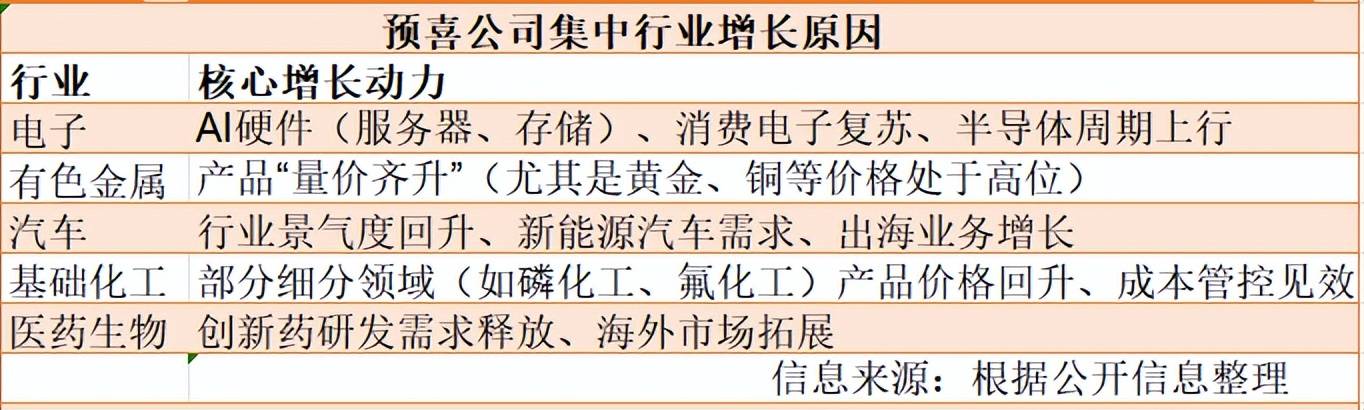
出品|公司研究室 å文|雪岩 据不完全统计,截至1月21日收盘时,A股共有587家上市公司披露了2025年度业绩预告。从净利润增幅上限来看,超五成上市公司业绩预喜(包括预增、略 增、续盈、扭亏)。 二级市场对个股业绩关注度升温,但 不少投资者不知道如何参与。目前,参与预喜机会的高效工具当属买进对应主题的投资基金。究竟哪些行业预喜公司 较为集中?哪些基金值得关注?应该如何买入? 业绩预喜公司 主要集中在哪些行业? 根据沪深两市业绩预告(尤其是2025年三季度及全年预告),A股预喜公司数量排名前五的行业是:电子、基础化工、汽车、医药生物、机械设备。这五大 行业的预喜公司合计数量,占目前已披露预喜公司总数的近56.6%。这主要反映了上述行业上市公司基数大、景气面广的特点。 从预喜率看,有色金属、钢铁、汽车、家用电器、基础化工这五大行业非常高。 此外,随着国家电网"十五五"期间投资4万亿更新设备的消息发布,电力设备&电网/核电相关公司成为市场热点。除了国家电网"十五五"投资预期升温,AI 数据中心高耗电推动核电采购(谷歌、微软、Meta布局),特高压、柔性直流输电项目落地也是重要原因。 业内人士分析,眼下正处于年报季 ...
公募基金2025年四季度持仓有哪些看点?
Yin He Zheng Quan· 2026-01-23 06:45
Group 1 - The stock position of actively managed equity funds decreased, while the A-share position continued to rise, with a total stock value of 3.39 trillion yuan at the end of Q4 2025, down by 0.19 trillion yuan from Q3 2025. The A-share market value was 2.91 trillion yuan, a decrease of 0.08 trillion yuan [2][8] - The stock allocation structure saw a decrease of 1.40 percentage points to 84.22%, remaining at a historically high level since 2005. The proportion of A-shares in asset allocation continued to rise, increasing by 0.66 percentage points to 72.18% [2][8] Group 2 - In Q4 2025, the allocation ratio for the ChiNext board increased from 23.62% to 24.83%, while the allocation ratios for other boards declined, with the Sci-Tech Innovation board down by 0.93 percentage points [12][13] - The large-cap style's holding value ratio increased by 1.24 percentage points, while the small-cap style decreased by 0.38 percentage points. Among the five major style indices, the cyclical style's holding value ratio rose by 3.23 percentage points [14][16] Group 3 - In terms of industry allocation, 18 primary industries saw an increase in holding value ratios, with notable increases in non-ferrous metals, communication, non-bank financials, basic chemicals, and machinery equipment, each rising by over 0.5 percentage points [17][20] - The top ten industries with increased holdings included communication equipment, industrial metals, insurance II, components, energy metals, general equipment, chemical products, minor metals, airport operations, and grid equipment [31][32] Group 4 - In the Hong Kong stock market, the allocation ratio for actively managed equity funds decreased to 16.10%, down by 3.09 percentage points from Q3 2025. The materials sector saw a significant increase in holding value ratio by 2.42 percentage points, while the financial sector increased by 2.33 percentage points [40][42] - The top five industries in the Hong Kong stock market included software services, medical biology, consumer discretionary retail, semiconductors, and non-ferrous metals, with respective holding values of 626 billion yuan, 430 billion yuan, 344 billion yuan, 237 billion yuan, and 213 billion yuan [45][46] Group 5 - The concentration of the top twenty stocks held by actively managed equity funds showed slight fluctuations, with 17 A-shares and 3 Hong Kong stocks. The number of stocks in the electronic and non-bank financial sectors increased by one, while those in the electric power equipment and medical biology sectors decreased by one [50][51]
国泰海通晨报-20260123
GUOTAI HAITONG SECURITIES· 2026-01-23 05:55
Group 1: Aviation Industry - The core viewpoint of the aviation industry report indicates that the demand for air travel in China remains strong, particularly during the Spring Festival travel season, with pre-sales already initiated for 2026 [3][5] - It is estimated that the passenger flow in China's civil aviation will grow by 5-6% year-on-year in 2025, with a cumulative increase of 17% compared to 2019 [3] - The report highlights that the airline industry is entering a low growth era, with structural changes in demand being a key issue, as the proportion of business travel remains below 2019 levels [3][4] Group 2: Netflix (NFLX.O) - The report on Netflix projects that the company's revenue for FY26-28 will be $51.1 billion, $57.6 billion, and $64.6 billion respectively, reflecting year-on-year growth of 13.2%, 12.7%, and 12.0% [7] - Netflix's content amortization cost guidance for 2026 indicates a 10% increase year-on-year, with a focus on enhancing advertising revenue and content quality [9] - The company is expected to maintain a net profit margin of 20.1% in Q4 2025, with a significant increase in advertising revenue projected for 2026 [8][9] Group 3: BAIC Blue Valley (北汽蓝谷) - The report provides a first coverage of BAIC Blue Valley, giving it an "Accumulate" rating with a target price of 11.49 yuan, driven by dual-brand synergy and a diversified product matrix [11][26] - The company is expected to achieve revenues of 29 billion, 58.2 billion, and 88.9 billion yuan for 2025, 2026, and 2027 respectively, with a projected net profit turning positive by 2027 [11][26] - BAIC Blue Valley's dual-brand strategy, focusing on the premium and luxury segments, is anticipated to drive revenue growth, with significant sales increases expected for its models [12][27]